

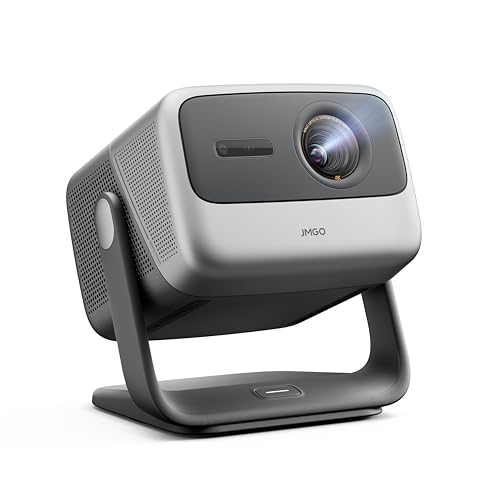



The portable projector market has undergone a remarkable transformation over the past few years. What once meant compromising significantly on image quality for the sake of convenience has evolved into distinct categories serving different needs. Today's comparison between the JMGO N1S Pro 4K and the Anker Nebula Mars 3 Air perfectly illustrates this evolution—one pushing the boundaries of what's possible in a relatively portable form factor, the other perfecting the art of true grab-and-go convenience.
Both projectors launched in 2024, representing the latest thinking in their respective categories. The JMGO N1S Pro 4K arrived as part of JMGO's premium N1S lineup, while the Mars 3 Air marked Anker's continued refinement of their successful Mars series. Understanding which one suits your needs requires diving deep into what makes each special—and where they make their biggest compromises.
Before diving into specifics, it's crucial to understand that these projectors occupy very different spaces in the portable projector ecosystem. The JMGO N1S Pro 4K represents what we might call a "lifestyle projector"—devices that prioritize image quality and advanced features while maintaining reasonable portability. The Mars 3 Air, on the other hand, epitomizes the "true portable" category, where battery power and ultimate convenience reign supreme.
This distinction matters because it shapes every design decision. Lifestyle projectors like the JMGO assume you'll have access to power and potentially want to replace or supplement a traditional home theater setup. True portables like the Mars 3 Air assume you'll be using them in varied environments where access to power isn't guaranteed—think camping trips, backyard movie nights, or hotel rooms.
The key considerations when choosing between these categories include image quality requirements, portability needs, budget constraints, and intended use cases. Neither approach is inherently better; they're optimized for different priorities.
The most significant gap between these projectors lies in their image quality capabilities, and the differences are substantial enough to influence your entire viewing experience.
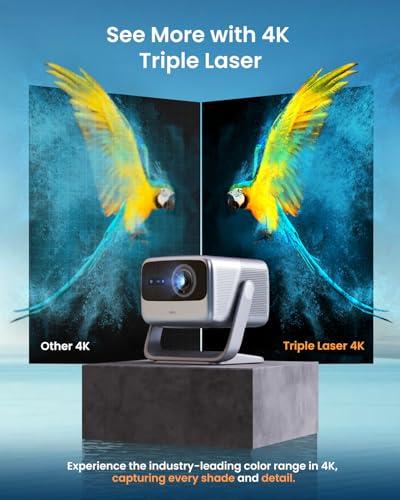
The JMGO N1S Pro 4K delivers true 4K UHD resolution at 3840x2160 pixels, while the Mars 3 Air maxes out at 1080p (1920x1080). This might seem like a straightforward spec comparison, but the real-world impact goes beyond just numbers. 4K resolution provides roughly four times the pixel density of 1080p, meaning text is sharper, fine details in movies are more visible, and the overall image appears cleaner, especially on larger screen sizes.
For content consumption, this difference becomes most apparent when viewing 4K Netflix shows, YouTube videos, or gaming content. The JMGO can display these sources at their native resolution, while the Mars 3 Air must downscale 4K content to fit its 1080p display engine. However, it's worth noting that much content is still produced in 1080p, and the Mars 3 Air handles this natively without any quality loss.
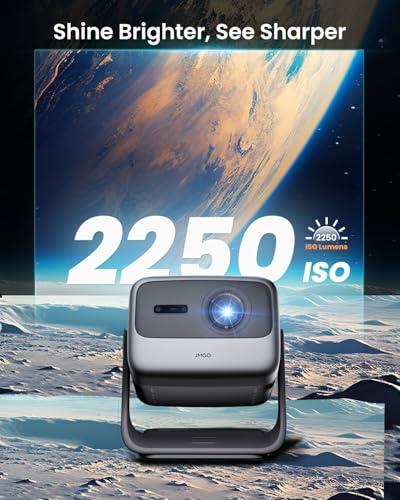
Perhaps even more important than resolution is brightness, measured in ANSI lumens (a standardized way of measuring light output that accounts for uniformity across the entire image). The JMGO N1S Pro 4K produces 2,400 ANSI lumens compared to the Mars 3 Air's 400 ANSI lumens—a six-fold difference that fundamentally changes how and where you can use each projector.
Higher brightness means the JMGO can produce watchable images in moderately lit rooms, making it viable for evening family viewing without completely darkening the space. The Mars 3 Air performs best in dim to dark environments, requiring you to control ambient light for optimal viewing.
This brightness difference also affects maximum screen size. While both projectors can technically produce large images, the Mars 3 Air's lower brightness means the image becomes increasingly washed out as size increases. The JMGO maintains image integrity at much larger sizes, supporting screens up to 180 inches with acceptable brightness levels.
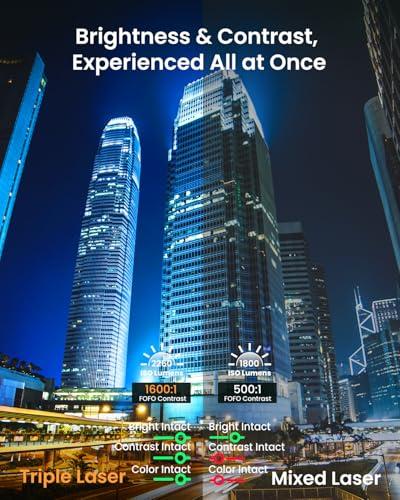
The JMGO N1S Pro 4K uses MALC 2.0 triple color laser technology—a sophisticated system employing separate red, green, and blue lasers to create the image. This approach offers several advantages: wider color gamut (covering 110% of the BT.2020 color space), longer lifespan (30,000 hours), and elimination of the rainbow effect that some users notice with single-chip DLP projectors.
The Mars 3 Air relies on LED illumination, which is more power-efficient and generates less heat—crucial for battery-powered operation. While LED technology has improved significantly in recent years, it typically can't match the color saturation and brightness potential of laser systems.
Based on expert reviews and user feedback, the JMGO produces notably more vibrant and saturated colors, though some reviewers note these colors can appear oversaturated rather than color-accurate. The Mars 3 Air delivers good color performance for an LED projector, though with a slightly narrower color gamut and a subtle red undertone in dark scenes that some users notice.
Contrast ratio—the difference between the brightest whites and darkest blacks a projector can produce—significantly impacts image quality, especially for movies and TV shows with dark scenes. The JMGO N1S Pro 4K specifies a 1,600:1 contrast ratio, while the Mars 3 Air lists 400:1.
Real-world testing by reviewers suggests these numbers should be taken with some skepticism, as measured contrast often falls short of specifications. However, the general relationship holds: the JMGO produces deeper blacks and brighter whites, resulting in more dynamic and engaging images. This becomes particularly noticeable when watching content with dramatic lighting, such as thriller movies or nature documentaries.
Both projectors embrace the modern expectation that devices should be intelligent and easy to use, but they implement smart features differently based on their target use cases.
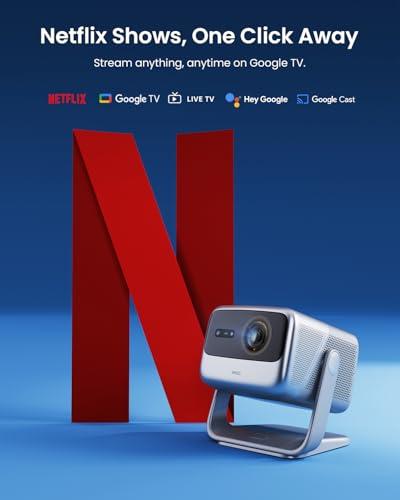
Both the JMGO N1S Pro 4K and Mars 3 Air run Google TV with built-in Netflix support—a significant advantage over projectors requiring external streaming devices. This integration means you can access Netflix, Prime Video, YouTube, and thousands of other apps directly from the projector's interface.
The JMGO leverages more powerful processing hardware (MediaTek MT9629 processor with 2GB RAM) to deliver a snappier interface experience, while the Mars 3 Air uses a quad-core ARM Cortex A53 processor with 2GB RAM that handles streaming adequately but occasionally shows minor lag during navigation.
Both support Google Assistant voice control and Chromecast functionality, allowing you to cast content from phones, tablets, or computers wirelessly. This feature has become essential for modern projector use, as it eliminates the need to connect devices physically for most content.
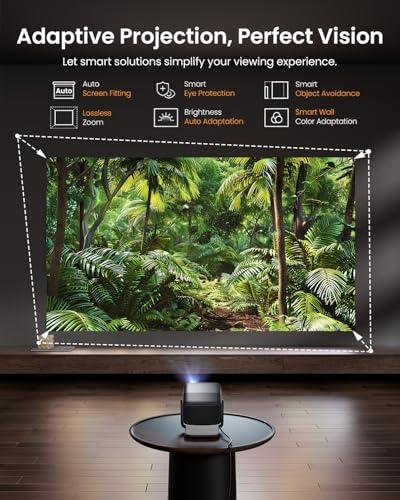
The JMGO N1S Pro 4K showcases advanced auto-adjustment capabilities through its Smart Adaptive System. This technology automatically optimizes brightness, color temperature, and image settings based on wall color, ambient lighting, and room conditions. It also includes smart eye protection that dims or shuts off the projector if someone walks into the beam—a thoughtful safety feature for households with children or pets.
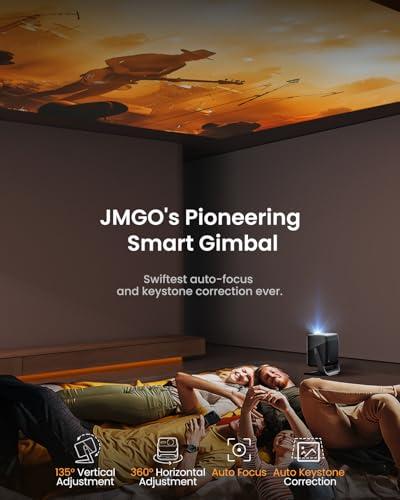
The unique gimbal design of the JMGO allows 360-degree horizontal and 135-degree vertical adjustment without moving the base unit. Combined with auto-focus, auto-keystone correction, and obstacle avoidance, this creates an unusually flexible setup experience. You can literally point the projector at any wall or ceiling and have it automatically adjust for optimal image quality.
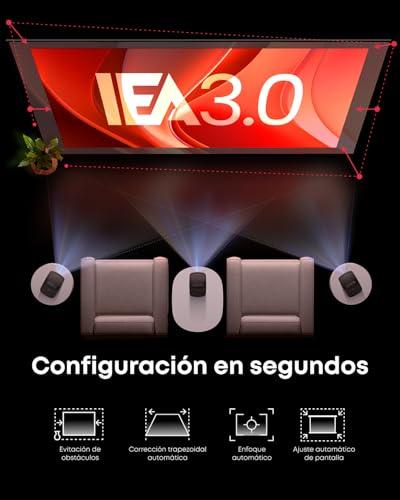
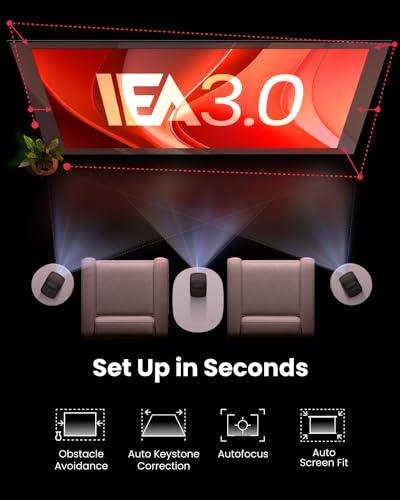
The Mars 3 Air includes Intelligent Environment Adaptation 3.0, which provides auto-focus, auto-keystone correction (up to 40 degrees), and basic obstacle avoidance. While less sophisticated than the JMGO's system, it delivers the essential automatic adjustments needed for quick setup in varied environments.
Projector audio often receives less attention than image quality, but it significantly impacts the overall entertainment experience. Both projectors recognize this with substantial built-in audio systems.
The JMGO N1S Pro 4K features 20W stereo speakers with Dolby Digital Plus support. Reviews consistently praise the audio quality, describing it as room-filling with surprisingly good bass response for a projector. The speakers are positioned to provide stereo separation and can adequately replace external speakers for casual viewing.
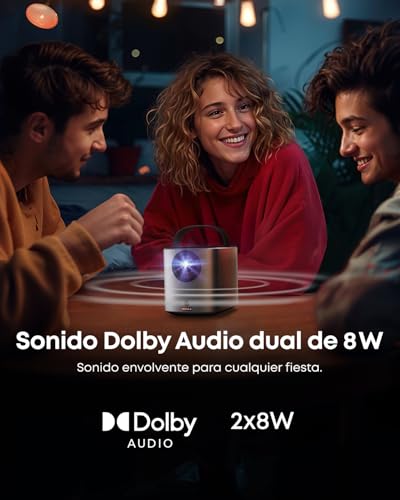
The Mars 3 Air includes dual 8W speakers with Dolby Audio support. While less powerful than the JMGO's system, reviewers note the audio quality exceeds expectations for a portable projector of this size. The Mars 3 Air also offers a unique Bluetooth speaker mode, allowing you to use it as a standalone speaker for up to eight hours when not projecting—a clever feature for outdoor gatherings or as background music.
For serious home theater use, both projectors offer audio output options: the JMGO includes HDMI eARC support for connecting soundbars, while the Mars 3 Air provides a 3.5mm audio jack for headphones or external speakers.
The portability comparison reveals fundamentally different design philosophies that align with each projector's intended use case.
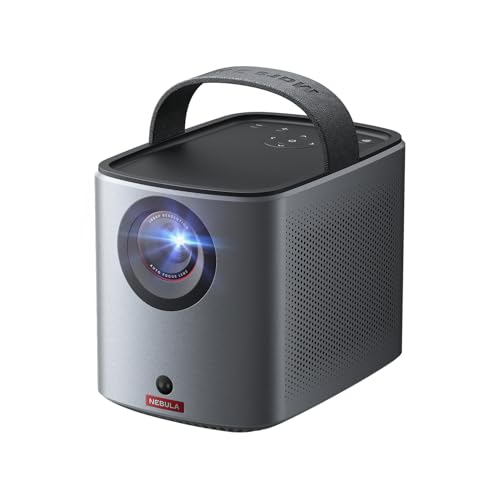
The Mars 3 Air weighs 3.7 pounds and includes a built-in 65.8Wh battery providing up to 2.5 hours of movie playback. It features a carrying handle and compact dimensions that fit easily in a backpack. This is genuine portability—you can take it camping, to a friend's house, or use it in a hotel room without worrying about power access.
The JMGO N1S Pro 4K weighs 9.9 pounds and requires constant AC power. While heavier, it's still reasonably portable for moving between rooms or taking to different locations with power access. The gimbal design actually enhances its practical portability by eliminating the need for precise positioning—you can set it on any surface and adjust the projection angle mechanically.
The Mars 3 Air excels in quick setup scenarios. Its lightweight design, auto-adjustments, and battery power mean you can be watching content within minutes of unpacking it. This makes it ideal for spontaneous movie nights or situations where elaborate setup isn't practical.
The JMGO requires more initial setup but offers greater flexibility once positioned. The gimbal system allows you to fine-tune the projection angle without physically moving the projector, while the more powerful auto-adjustment systems can handle challenging room layouts and lighting conditions.
Modern projectors need comprehensive connectivity options to integrate with various devices and use cases.
The JMGO N1S Pro 4K provides two HDMI 2.1 ports (one supporting eARC), USB-A ports, Wi-Fi 6, and Bluetooth 5.2. The HDMI 2.1 support enables higher refresh rates and is future-proof for gaming consoles and high-resolution content. For gaming, it offers low input lag and supports variable refresh rates.
The Mars 3 Air includes HDMI, USB-A, 3.5mm audio output, Wi-Fi (dual-band), and Bluetooth 5.1. While the connectivity is adequate for most use cases, it lacks the advanced HDMI features of the JMGO.
For gaming specifically, the JMGO provides a more responsive experience with lower input lag and higher resolution support. The Mars 3 Air handles casual gaming adequately but isn't optimized for competitive gaming scenarios.
At the time of writing, these projectors occupy different price tiers that reflect their distinct positioning and capabilities. The JMGO N1S Pro 4K commands a premium price typical of high-end lifestyle projectors, while the Mars 3 Air falls into the mid-range portable projector category.
The JMGO's higher price reflects its 4K resolution, laser technology, advanced features, and superior build quality. When compared to dedicated home theater projectors with similar specifications, it offers competitive value while adding portability and smart features those typically lack.
The Mars 3 Air represents excellent value in the battery-powered portable category. Its combination of Google TV, decent image quality, good audio, and true portability addresses the core needs of mobile users without unnecessary premium features.
The value equation ultimately depends on your priorities: the JMGO offers better performance per dollar if image quality and features matter most, while the Mars 3 Air provides better convenience per dollar if portability is paramount.
For home theater use, the differences between these projectors become particularly pronounced. The JMGO N1S Pro 4K can genuinely serve as a primary display for a dedicated home theater room or as a significant upgrade to a traditional TV setup. Its 4K resolution, high brightness, and large screen capability (up to 180 inches) create an immersive cinematic experience that rivals dedicated home theater projectors costing significantly more.
The gimbal design proves particularly valuable in home theater applications, allowing precise positioning without the mounting complexities typically associated with projector installation. You can place it on a shelf, coffee table, or dedicated stand and adjust the projection angle to hit your screen or wall perfectly.
The Mars 3 Air works better as a supplementary display for casual movie nights, kids' entertainment, or situations where you want a big screen experience but don't have the space or setup for a permanent installation. Its battery operation makes it perfect for backyard movie nights or basement entertainment areas where running power might be challenging.
After extensive research into user reviews, expert opinions, and technical specifications, clear use case patterns emerge for each projector.
Choose the JMGO N1S Pro 4K if you:
Choose the Mars 3 Air if you:
Both projectors represent 2024's technological advancement in their respective categories. The JMGO N1S Pro 4K showcases how laser technology has matured to enable high-performance projection in relatively compact packages, while the Mars 3 Air demonstrates the refinement of LED technology for battery-powered operation.
Looking forward, both categories will likely see continued improvements in brightness efficiency, battery technology, and smart features. However, the fundamental trade-off between performance and portability will persist, making the choice between these approaches a matter of personal priorities rather than one clearly superior option.
The choice between the JMGO N1S Pro 4K and Mars 3 Air ultimately comes down to understanding your primary use case and priorities. Both are excellent projectors within their categories, but they optimize for different user needs.
If you want the closest thing to a traditional home theater experience in a moveable package and don't mind the premium pricing and power requirements, the JMGO delivers exceptional performance that justifies its cost. If you prioritize convenience, true portability, and value while accepting some image quality compromises, the Mars 3 Air offers an outstanding balance of features and practicality.
Neither projector will disappoint users whose expectations align with their design goals, but choosing the wrong one for your needs will lead to frustration. Take time to honestly assess how and where you'll use your projector most often—that reality should guide your decision more than impressive specifications or attractive features you'll rarely utilize.
| JMGO N1S Pro 4K | Anker Nebula Mars 3 Air |
|---|---|
| Resolution - Higher resolution means sharper text and more detailed images | |
| True 4K UHD (3840 x 2160) - Future-proof and excellent for large screens | Full HD 1080p (1920 x 1080) - Sufficient for most content, lighter processing |
| Brightness - Most critical factor for room lighting tolerance and screen size | |
| 2,400 ANSI lumens - Works in moderately lit rooms, supports very large screens | 400 ANSI lumens - Requires dim lighting, best for smaller screens |
| Light Source Technology - Affects color quality, lifespan, and maintenance | |
| Triple RGB laser (30,000 hour life, wide color gamut, no rainbow effect) | LED (30,000 hour life, power efficient, cooler operation) |
| Portability - Determines where and how easily you can use the projector | |
| 9.9 lbs, requires AC power - Room-to-room portable with setup flexibility | 3.7 lbs with 2.5-hour battery - True grab-and-go portability |
| Audio Quality - Built-in speakers reduce need for external audio equipment | |
| 20W stereo speakers with room-filling sound and good bass | Dual 8W speakers, impressive for size, includes Bluetooth speaker mode |
| Smart Features - Advanced automation reduces setup time and improves usability | |
| Gimbal design, Smart Adaptive System, eye protection, obstacle avoidance | Auto-focus, auto-keystone, basic environment adaptation |
| Connectivity - More ports and newer standards support more devices | |
| 2x HDMI 2.1 (eARC), USB-A, Wi-Fi 6, Bluetooth 5.2 | HDMI, USB-A, 3.5mm out, Wi-Fi dual-band, Bluetooth 5.1 |
| Gaming Performance - Important for console gaming and low-lag applications | |
| 4K support, low input lag, HDMI 2.1 features for next-gen consoles | 1080p gaming capable, adequate input lag for casual gaming |
| Maximum Screen Size - Larger screens provide more immersive experience | |
| Up to 180" with good brightness - True home theater replacement potential | Up to 150" but brightness limited - Best for intimate viewing |
| Operating Noise - Lower noise improves viewing experience in quiet scenes | |
| <26 dB - Very quiet operation | 28 dB - Quiet enough for comfortable viewing |
| Color Performance - Wider color gamuts produce more vibrant, lifelike images | |
| 110% BT.2020 color gamut with vivid, saturated colors | Standard LED color gamut with good accuracy for the technology |
| Target Use Case - Understanding the intended purpose helps guide your decision | |
| Premium home theater replacement with placement flexibility | Mobile entertainment and outdoor viewing with battery convenience |
The JMGO N1S Pro 4K is significantly better for home theater applications. Its true 4K resolution, 2,400 ANSI lumens brightness, and ability to project up to 180-inch screens make it suitable as a primary home theater display. The Anker Nebula Mars 3 Air works better for casual movie nights or supplemental viewing due to its 1080p resolution and lower 400 ANSI lumens brightness that requires darker rooms.
Only the Anker Nebula Mars 3 Air is truly suitable for outdoor use thanks to its built-in battery providing 2.5 hours of runtime and lightweight 3.7-pound design. The JMGO N1S Pro 4K requires constant AC power and weighs nearly 10 pounds, making it impractical for most outdoor scenarios unless you have access to electricity.
The JMGO N1S Pro 4K delivers superior picture quality with its 4K resolution, triple RGB laser technology, and six times brighter output (2,400 vs 400 ANSI lumens). It produces more vibrant colors, deeper contrast, and sharper details. The Mars 3 Air offers good 1080p quality for its category but cannot match the JMGO's performance.
Yes, both the JMGO N1S Pro 4K and Anker Nebula Mars 3 Air run Google TV with built-in Netflix support. They provide access to thousands of streaming apps including Prime Video, YouTube, and Disney+. Both also support Google Assistant voice control and Chromecast for wireless content casting from mobile devices.
The Anker Nebula Mars 3 Air is much more portable, weighing only 3.7 pounds with a built-in battery for true grab-and-go convenience. The JMGO N1S Pro 4K weighs 9.9 pounds and requires AC power, making it better suited for room-to-room movement rather than travel or outdoor use.
The JMGO N1S Pro 4K at 2,400 ANSI lumens works well in moderately lit rooms and maintains good image quality even with some ambient light. The Mars 3 Air at 400 ANSI lumens requires dim to dark environments for optimal viewing. For bright living rooms, only the JMGO provides adequate brightness.
The JMGO N1S Pro 4K features superior 20W stereo speakers with room-filling sound and better bass response, suitable for most home theater scenarios without external speakers. The Mars 3 Air has respectable dual 8W speakers that are impressive for its portable size, plus a unique Bluetooth speaker mode for music playback.
Both projectors support gaming, but the JMGO N1S Pro 4K offers a better gaming experience with 4K resolution, HDMI 2.1 support for next-generation consoles, and low input lag. The Anker Nebula Mars 3 Air handles 1080p gaming adequately for casual use but lacks the advanced features serious gamers prefer.
Both the JMGO N1S Pro 4K and Anker Nebula Mars 3 Air use long-lasting light sources rated for 30,000 hours of operation. The JMGO uses triple RGB lasers while the Mars 3 Air uses LED technology. Both eliminate the need for frequent lamp replacements common in older projector technologies.
Value depends on your needs: the Anker Nebula Mars 3 Air offers excellent value for portable use with its battery operation, decent 1080p quality, and comprehensive smart features at a lower price point. The JMGO N1S Pro 4K provides better value for home theater enthusiasts who want premium 4K performance and are willing to pay more for superior image quality.
Neither the JMGO N1S Pro 4K nor Anker Nebula Mars 3 Air requires special screens. Both work well projecting onto white walls or dedicated projection screens. The JMGO benefits more from proper screens due to its higher brightness and 4K resolution, while the Mars 3 Air performs adequately on most light-colored surfaces.
Both projectors operate quietly, with the JMGO N1S Pro 4K rated at under 26 dB and the Anker Nebula Mars 3 Air at 28 dB. The difference is minimal in practice. The JMGO uses more advanced cooling but remains virtually silent during normal use, while the Mars 3 Air benefits from its lower power LED light source generating less heat.
We've done our best to create useful and informative comparisons to help you decide what product to buy. Our research uses advanced automated methods to create this comparison and perfection is not possible - please contact us for corrections or questions. These are the sites we've researched in the creation of this article: techradar.com - projectorcentral.com - gray9.in - projectorreviews.com - howtogeek.com - the-gadgeteer.com - projectorcentral.com - global.jmgo.com - global.jmgo.com - cnet.com - cnet.com - youtube.com - global.jmgo.com - avsforum.com - youtube.com - youtube.com - techradar.com - thesmarthomehookup.com - whathifi.com - thesmarthomehookup.com - cnet.com - whathifi.com - projectorreviews.com - youtube.com - youtube.com - versus.com - projectorcentral.com - practicalmotorhome.com - youtube.com - seenebula.com - us.seenebula.com - harveynorman.ie

Privacy Policy
Terms and Conditions - Affiliate Policy
Home Security
© Copyright 2008-2026.
11816 Inwood Rd #1211, Dallas, TX 75244