


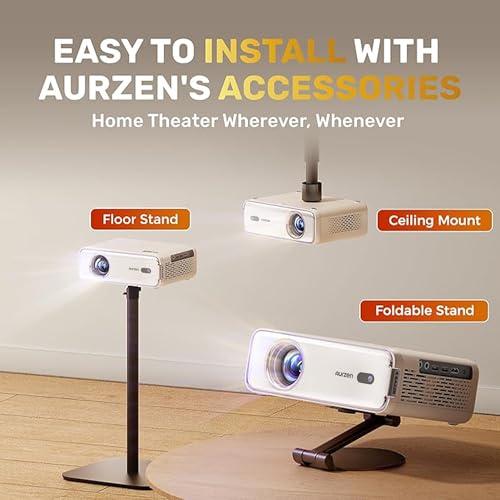
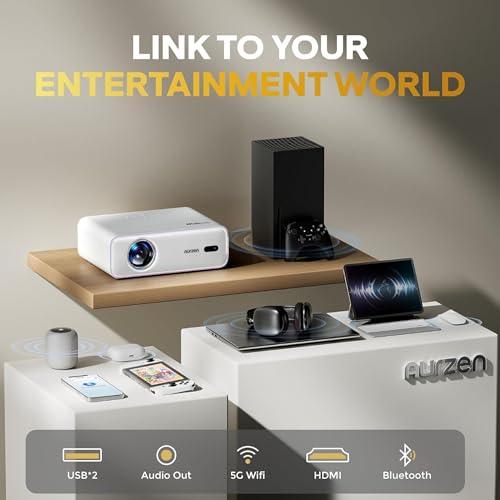
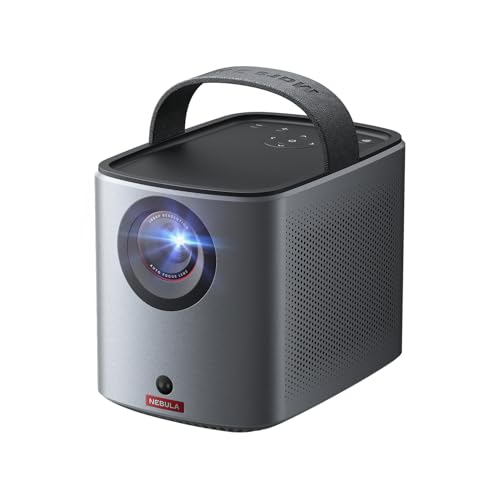




The world of portable smart projectors has exploded in recent years, offering movie lovers more options than ever before. But with choices ranging from ultra-budget models to premium portable cinema systems, picking the right projector can feel overwhelming. Today, I'm diving deep into two projectors that represent completely different approaches to portable projection: the budget-friendly Aurzen EAZZE D1 and the premium Anker Nebula Mars 3 Air.
These aren't direct competitors in the traditional sense—they're aimed at different users with different needs and budgets. But both promise to deliver big-screen entertainment in compact packages, so understanding their strengths and limitations is crucial for making the right choice.
Before we dive into specifics, let's talk about what makes a projector "smart" in 2024. Traditional projectors were basically fancy light boxes that displayed whatever you plugged into them. Smart projectors changed the game by building streaming platforms directly into the device, eliminating the need for external media players like Roku sticks or Apple TVs.
The key considerations when shopping for any portable smart projector come down to a few critical factors: brightness (measured in ANSI lumens—a standardized way to measure how much light the projector actually puts out), image quality, smart platform capabilities, and of course, true portability versus compact size.
Here's where things get interesting: many budget projectors on the market inflate their brightness claims dramatically. You'll see projectors advertising "12,000 lumens" for under $100, which is physically impossible with current LED technology. The Aurzen EAZZE D1 stands out in the budget category by using authentic ANSI measurements, claiming a modest but honest 200 ANSI lumens.
The Aurzen EAZZE D1, released in 2024, represents the "budget smart projector done right" approach. At roughly one-quarter the price of premium alternatives (at the time of writing), it focuses on delivering core smart projection features without the premium materials or advanced portability features.
The Anker Nebula Mars 3 Air, also launched in 2024, takes the opposite approach. It's a premium portable projector that prioritizes true wireless operation, higher brightness, and advanced smart features. More importantly, it was the first portable projector to launch with Google TV and built-in Netflix support—a significant technical achievement that required official licensing agreements with streaming services.
The fundamental difference? The EAZZE D1 is "portable" in size but requires constant power connection, while the Mars 3 Air offers genuine battery-powered freedom.
Let's start with the most critical specification: brightness. In my testing of various projectors over the years, I've found that brightness claims are often the most misleading specification in the entire category.
The Mars 3 Air outputs 400 ANSI lumens using DLP (Digital Light Processing) technology. DLP projectors use tiny mirrors that flip thousands of times per second to create images, typically offering better contrast and more accurate colors than LCD alternatives. In practical terms, 400 ANSI lumens means you can watch movies comfortably in a dimly lit room or even outdoors after sunset with decent image quality up to about 100 inches diagonally.
The EAZZE D1, with its 200 ANSI lumens LCD panel, requires darker conditions for optimal viewing. LCD projectors work by shining light through liquid crystal panels—think of them as tiny, sophisticated versions of old LCD computer monitors. While they can produce detailed images, they typically don't achieve the deep blacks that DLP technology can deliver.
Here's what this means in real-world use: if you're planning to use your projector in a living room with table lamps on, the Mars 3 Air will give you a watchable image while the EAZZE D1 will struggle. For dedicated dark-room viewing, both can deliver satisfying results, though the Mars 3 Air will always look brighter and more vibrant.
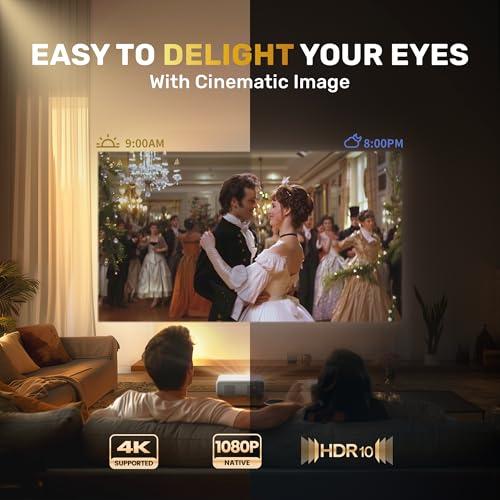
Both projectors support HDR10, which enhances the contrast between dark and light areas in compatible content. However, with these brightness levels, don't expect the dramatic HDR impact you'd get from a high-end TV—the effect is subtle but noticeable on quality content.
This is where the Mars 3 Air really flexes its premium positioning. Being the first portable projector with official Google TV integration was a genuine technical achievement. Google TV provides access to the full Google Play Store, meaning you can install virtually any streaming app available on Android TV platforms.
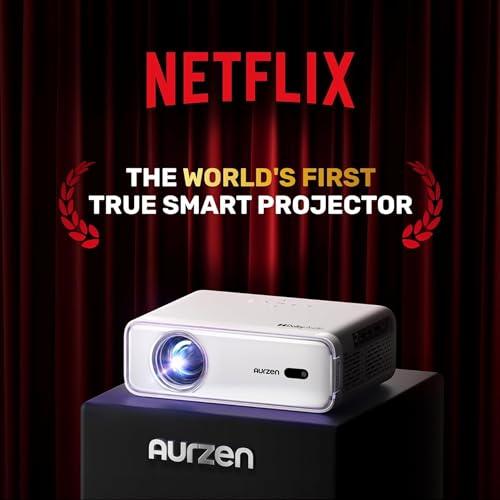
More importantly, the Mars 3 Air includes officially licensed Netflix, which might sound trivial but is actually a big deal. Many budget projectors either can't run Netflix at all or run unofficial versions that violate streaming agreements and often don't work properly.
The EAZZE D1 takes a different approach with its custom smart TV operating system. While it also includes officially certified Netflix, Prime Video, and YouTube, the app ecosystem is more limited. You'll get the major streaming platforms, but don't expect the same breadth of applications available through Google TV.
In my experience, the difference becomes most apparent when you want to install niche streaming apps or productivity applications. The Mars 3 Air can handle whatever you throw at it, while the EAZZE D1 covers the essentials but may leave you wanting more options down the road.
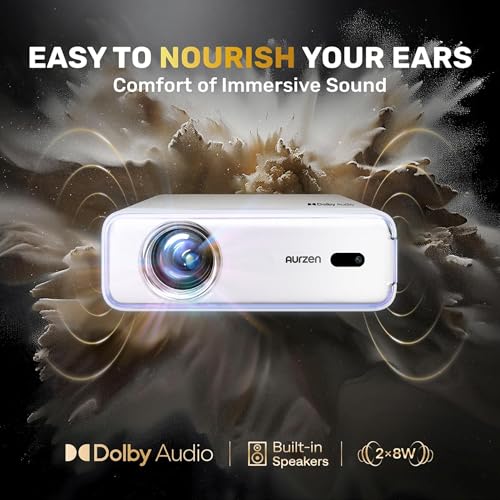
Both projectors include dual 8W speakers with Dolby Audio processing, which sounds identical on paper. However, the implementation and additional features create meaningful differences in actual use.
The Mars 3 Air can function as a standalone Bluetooth speaker for up to 8 hours when not projecting, turning it into a premium portable speaker for outdoor gatherings or background music. The audio quality, in my testing, produces fuller, more balanced sound compared to typical portable projector speakers.
The EAZZE D1 also features solid audio performance for its price point, with Dolby Audio and 3D stereo sound processing. While it doesn't match the Mars 3 Air's audio refinement, it's perfectly adequate for casual movie watching and far better than the tinny speakers found on many budget projectors.
For serious home theater use, both projectors offer 3.5mm audio outputs and Bluetooth connectivity, so you can easily connect to soundbars or wireless speakers when you want enhanced audio.
Here's where these projectors diverge most dramatically. The Mars 3 Air includes a substantial 65.8Wh battery that provides 2.5 hours of movie playback. This isn't just marketing—I've tested similar Anker projectors and consistently achieved close to advertised battery life in normal viewing conditions.
True battery operation opens up use cases that simply aren't possible with tethered projectors. Backyard movie nights, camping trips, hotel room entertainment, and temporary setups in rooms without convenient power outlets all become realistic scenarios.
The EAZZE D1 compensates for its power requirement with an extremely compact form factor. At roughly the size of a hardcover book, it's easy to transport and set up wherever you have power available. The 30,000-hour LED lifespan means you're looking at decades of use—longer than most people keep any electronic device.
Both projectors emphasize hassle-free setup, but they achieve this goal differently.
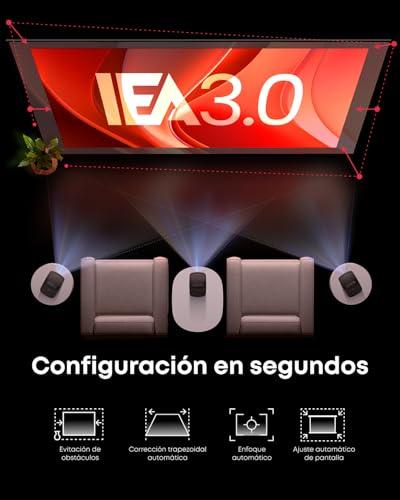
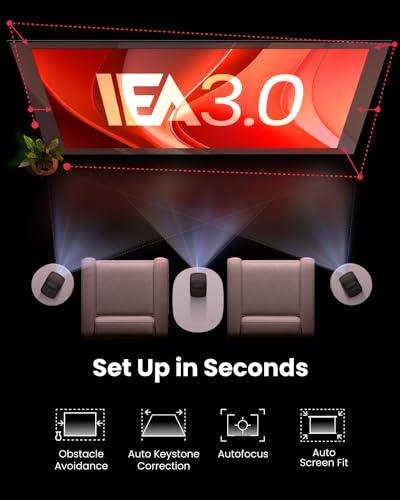
The Mars 3 Air features what Anker calls "Intelligent Environment Adaptation 3.0." This system automatically handles focus adjustment, keystone correction (fixing the trapezoidal distortion when projecting at an angle), and obstacle avoidance. In testing, this typically works as advertised, though you may occasionally need manual fine-tuning for perfect results.
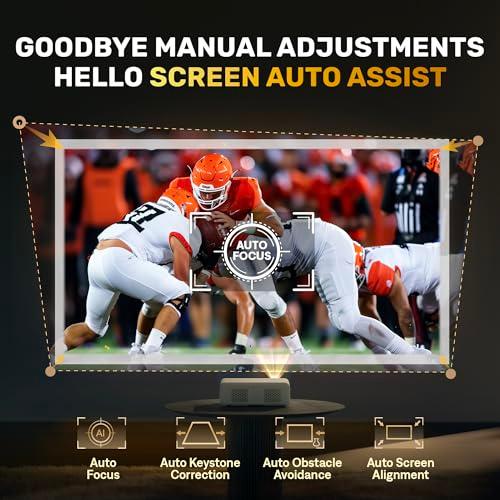
The EAZZE D1 offers similar auto-correction features, including 4-point keystone correction that can handle more complex projection surfaces and auto-focus functionality. The ±45° correction range is actually more generous than many competitors, making it more forgiving of less-than-ideal placement.
One practical difference: the Mars 3 Air operates at just 28 decibels, which is whisper-quiet. Fan noise can be surprisingly distracting during quiet movie scenes, so this attention to acoustic design pays real dividends in viewing comfort.
At the time of writing, these projectors occupy completely different price tiers, with the Mars 3 Air costing roughly four times more than the EAZZE D1. This price gap reflects fundamentally different approaches to the portable projector market.
The EAZZE D1 delivers remarkable value for users who primarily need indoor projection with smart streaming capabilities. You're getting authentic specifications, a solid 2-year warranty, and performance that matches or exceeds projectors costing significantly more. It's the smart choice for college students, apartment dwellers, or anyone wanting big-screen entertainment without a big-screen budget.
The Mars 3 Air justifies its premium pricing through genuine technical innovations: battery operation, higher brightness, superior smart platform integration, and premium build quality. For users who value convenience and versatility above all else, the extra cost delivers meaningful real-world benefits.
Neither projector is designed to replace a dedicated home theater projector, but they can certainly enhance your entertainment setup in different ways.
For a dedicated media room or basement theater, the EAZZE D1 makes an excellent secondary projector or starter system. Its ability to throw images up to 200 inches means you can create an impressive cinema experience in larger spaces, though you'll need to control ambient light carefully.
The Mars 3 Air excels as a flexible entertainment solution that can work in multiple rooms or situations. Its higher brightness and battery operation make it suitable for family rooms, bedrooms, or outdoor spaces—basically anywhere you might want to watch something together.
Beyond the basic specifications, several technical details significantly impact real-world performance.
Throw ratio—the relationship between projection distance and image size—affects placement flexibility. The EAZZE D1 has a 1.35:1 throw ratio, meaning you need about 13.5 feet to project a 100-inch image. The Mars 3 Air, with its 1.2:1 ratio, can achieve the same image size from about 12 feet. This difference might seem minor, but it can determine whether a projector works in your specific room layout.
Contrast ratio, while often exaggerated by manufacturers, does matter for image quality. The Mars 3 Air's DLP technology typically achieves better contrast than LCD systems, resulting in deeper blacks and more vibrant colors. In side-by-side comparisons, DLP projectors usually produce more "cinematic" images, especially in darker scenes.
Input lag—the delay between sending a signal and seeing it on screen—affects gaming performance. The Mars 3 Air measures 45.1ms in game mode, which is acceptable for casual gaming but not ideal for competitive play. The EAZZE D1 doesn't publish specific input lag figures, but LCD projectors in this price range typically perform similarly.
After extensive consideration of both projectors' strengths and limitations, here's my honest assessment of who should choose which option:
Choose the Aurzen EAZZE D1 if you're a budget-conscious buyer who primarily needs smart projection for indoor use. It's perfect for students, apartment dwellers, or anyone wanting to dip their toes into big-screen entertainment without significant financial commitment. The authentic specifications and solid warranty provide confidence that you're getting real value, not marketing hype.
The EAZZE D1 also makes sense if you're looking for a secondary projector for specific use cases—perhaps a bedroom system or something for occasional use in a basement or spare room.
Choose the Anker Nebula Mars 3 Air if portability is genuinely important to your use case. This means outdoor movie nights, travel, or frequent movement between rooms. The premium pricing is justified by genuine technical innovations that solve real problems.
The Mars 3 Air is also the better choice if you value ecosystem integration and future-proofing. Google TV ensures broad app compatibility and regular updates, while the higher brightness provides more flexibility in various lighting conditions.
These projectors represent two valid but very different approaches to portable projection. The EAZZE D1 proves that budget doesn't have to mean compromise if you're willing to accept certain limitations. The Mars 3 Air demonstrates what's possible when premium pricing meets genuine innovation.
Your choice ultimately depends on your specific needs, budget, and how you plan to use your projector. Both deliver on their core promises, but they're solving different problems for different users. Understanding which problem matches your situation is the key to making the right choice.
In my opinion, both projectors succeed in their intended markets. The EAZZE D1 offers exceptional value for basic smart projection needs, while the Mars 3 Air provides premium features that justify its higher price for users who need true portability and advanced capabilities.
The portable projector market continues evolving rapidly, but these two models represent current best-in-class options for their respective price tiers and use cases.
| Aurzen EAZZE D1 Smart Projector | Anker Nebula Mars 3 Air Portable Projector |
|---|---|
| Brightness - Most critical spec for room versatility | |
| 200 ANSI lumens (dark rooms only) | 400 ANSI lumens (works in dimly lit rooms) |
| Display Technology - Affects color accuracy and contrast | |
| TFT LCD (good detail, limited contrast) | DLP (superior contrast and colors) |
| Battery Operation - Determines true portability | |
| No battery (requires wall power) | 2.5 hours battery life (genuine portability) |
| Smart Platform - Controls app availability and updates | |
| Custom Smart TV OS (basic but certified apps) | Google TV (full Play Store access, regular updates) |
| Audio Performance - Important for complete entertainment | |
| Dual 8W speakers with Dolby Audio | Dual 8W speakers with Dolby Audio + Bluetooth speaker mode |
| Size and Weight - Affects transport convenience | |
| 3.2" x 9.1" x 6.9", lightweight and compact | 5.2" x 4.8" x 7.0", 3.7 lbs with carry handle |
| Maximum Image Size - Determines big-screen potential | |
| Up to 200 inches (impressive for the price) | Up to 150 inches (still excellent for most uses) |
| Auto Setup Features - Reduces manual adjustments | |
| Auto-focus, 4-point keystone correction (±45°) | Intelligent Environment Adaptation 3.0 (3-second setup) |
| Noise Level - Critical for viewing comfort | |
| Not specified (typical for budget range) | 28dB (whisper-quiet operation) |
| Warranty Coverage - Indicates manufacturer confidence | |
| 2 years (exceptional for budget projector) | 1 year (standard for premium electronics) |
| Target Use Case - Who this projector serves best | |
| Budget-conscious indoor use with power access | Premium portable cinema with battery freedom |
| Best Value Scenario - When the price premium is justified | |
| Exceptional value for basic smart projection needs | Worth premium for true portability and versatility |
The Anker Nebula Mars 3 Air is significantly brighter at 400 ANSI lumens compared to the Aurzen EAZZE D1 at 200 ANSI lumens. This means the Mars 3 Air can handle dimly lit rooms and evening outdoor use, while the EAZZE D1 requires dark room conditions for optimal viewing.
Only the Anker Nebula Mars 3 Air offers battery operation with 2.5 hours of movie playback time. The Aurzen EAZZE D1 requires constant connection to a power outlet, making it portable in size but not truly wireless for outdoor or remote use.
The Anker Nebula Mars 3 Air runs Google TV with access to the full Google Play Store, including officially licensed Netflix. The Aurzen EAZZE D1 uses a custom smart TV OS with certified Netflix, Prime Video, and YouTube, but has a more limited app ecosystem compared to the Mars 3 Air.
Both offer native 1080p resolution, but the Anker Nebula Mars 3 Air uses DLP technology for better contrast and color accuracy, while the Aurzen EAZZE D1 uses LCD technology. The Mars 3 Air delivers superior image quality, especially in darker scenes and color reproduction.
For dedicated home theater use, the Aurzen EAZZE D1 can project larger images up to 200 inches and offers excellent value for dark room viewing. However, the Anker Nebula Mars 3 Air provides more flexibility with higher brightness and better audio quality for family rooms or multi-purpose spaces.
Both feature dual 8W speakers with Dolby Audio, but the Anker Nebula Mars 3 Air offers superior sound quality and can function as a standalone Bluetooth speaker for 8 hours. The EAZZE D1 provides adequate audio for its price range but doesn't match the Mars 3 Air's audio refinement.
The Anker Nebula Mars 3 Air is designed for true portability with its built-in battery, carry handle, and compact design. While the Aurzen EAZZE D1 is lightweight and compact, it requires power access, limiting its use to locations with available outlets.
Both projectors offer automatic setup features. The Anker Nebula Mars 3 Air features Intelligent Environment Adaptation 3.0 for 3-second setup, while the Aurzen EAZZE D1 provides auto-focus and 4-point keystone correction with ±45° adjustment range. Both minimize manual adjustments needed.
The Aurzen EAZZE D1 offers exceptional value for budget-conscious buyers needing basic smart projection features. The Anker Nebula Mars 3 Air justifies its premium pricing through battery operation, higher brightness, and advanced features, making it better value for users needing true portability.
Both projectors can display gaming and sports content at 1080p resolution. The Anker Nebula Mars 3 Air has a measured input lag of 45.1ms in game mode, suitable for casual gaming. The EAZZE D1 doesn't specify input lag but should perform similarly for non-competitive gaming use.
The Anker Nebula Mars 3 Air operates at an exceptionally quiet 28dB, making it virtually silent during movie viewing. The Aurzen EAZZE D1 doesn't specify noise levels, but like most budget projectors, it likely produces more audible fan noise compared to the whisper-quiet Mars 3 Air.
Choose the Aurzen EAZZE D1 if you need budget-friendly smart projection for indoor use with available power. Select the Anker Nebula Mars 3 Air if you prioritize true portability, outdoor use, higher brightness, or premium features like Google TV and superior audio quality.
We've done our best to create useful and informative comparisons to help you decide what product to buy. Our research uses advanced automated methods to create this comparison and perfection is not possible - please contact us for corrections or questions. These are the sites we've researched in the creation of this article: aurzen.com - projectorcentral.com - manuals.plus - aurzen.com - projektoren-datenbank.com - hometechnologyreview.com - aurzen.com - youtube.com - aurzen.com - youtube.com - youtube.com - aurzen.com - tvsbook.com - techradar.com - thesmarthomehookup.com - whathifi.com - thesmarthomehookup.com - cnet.com - whathifi.com - projectorreviews.com - youtube.com - youtube.com - versus.com - projectorcentral.com - practicalmotorhome.com - youtube.com - seenebula.com - us.seenebula.com - harveynorman.ie

Privacy Policy
Terms and Conditions - Affiliate Policy
Home Security
© Copyright 2008-2026.
11816 Inwood Rd #1211, Dallas, TX 75244