

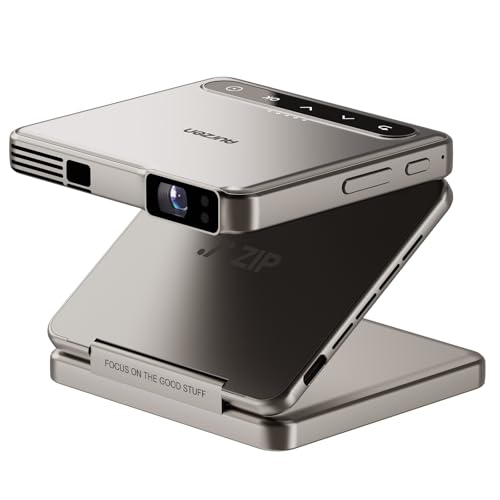






When I first saw the Aurzen ZIP Tri-Fold Portable Mini Projector announced in 2024, I'll admit I was skeptical. A projector that literally folds like a wallet? It seemed too good to be true. But after spending time with both it and the Anker Nebula Mars 3 Air Portable Projector, I've come to appreciate how these two devices represent completely different philosophies in the portable projector world.
The portable projector market has exploded in recent years, driven by our desire to take entertainment anywhere. But here's the thing – not all portable projectors are created equal, and understanding the trade-offs is crucial before you spend your hard-earned money.
At its core, every projector faces the same fundamental challenge: the "portable projector triangle" of brightness, size, and battery life. You can optimize for two of these, but the third will always suffer. Traditional projectors prioritize brightness and features, making them bulky. Ultra-portable projectors shrink everything down but sacrifice performance.
The most critical specifications to understand are ANSI lumens (a standardized brightness measurement), native resolution (the actual pixel count, not upscaled), and contrast ratio (the difference between the darkest and brightest parts of an image). These three factors determine whether you'll actually enjoy watching your content or squint at a washed-out mess.
Released in 2024, the Aurzen ZIP represents the most significant design innovation in projectors since DLP technology itself. This isn't just marketing hyperbole – the tri-fold design genuinely creates use cases that were impossible before.
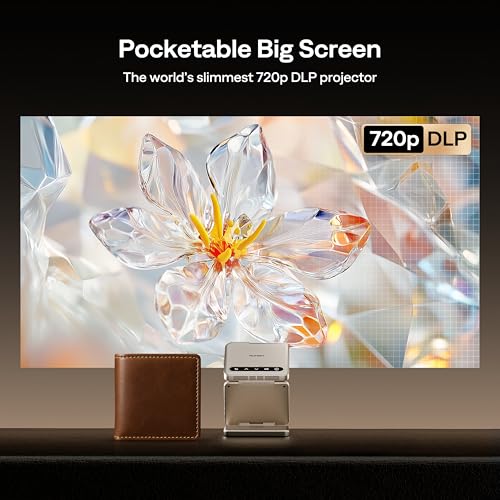
When folded, the ZIP measures just 3.3 by 3.1 by 1 inches and weighs less than 10 ounces. To put this in perspective, it's smaller than most paperback books and lighter than an iPhone 15 Pro Max with a case. I've literally forgotten it was in my jacket pocket multiple times.
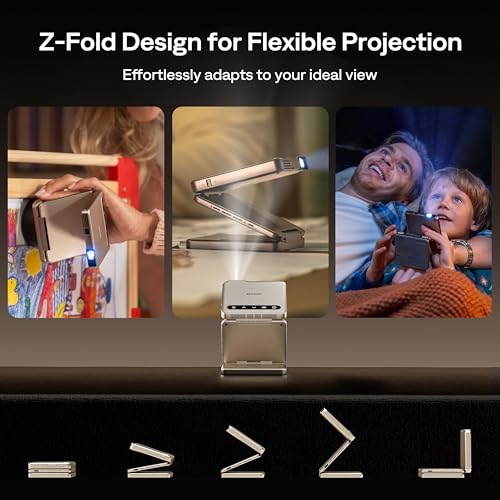
The magic happens when you unfold it. The Z-shaped hinge system transforms the compact rectangle into a projector with a built-in dual-hinge gimbal stand. This isn't just clever engineering – it's revolutionary. You can project onto walls, ceilings, or even floors without any additional hardware. I've used it for ceiling projection while lying in bed, something that would require a complex mount system with traditional projectors.
The technical wizardry inside is equally impressive. The ZIP uses Texas Instruments' smallest-ever DMD chip – a 0.16-inch Digital Micromirror Device that's the heart of DLP (Digital Light Processing) technology. Each tiny mirror can tilt thousands of times per second to create images. The ZIP employs XPR pixel-shifting, which rapidly moves the image slightly to create the impression of higher resolution than the chip's native 640×360 pixel array actually provides.
But here's where reality sets in: at 100 ANSI lumens and 720p resolution, the Aurzen ZIP makes significant performance compromises for its revolutionary form factor.
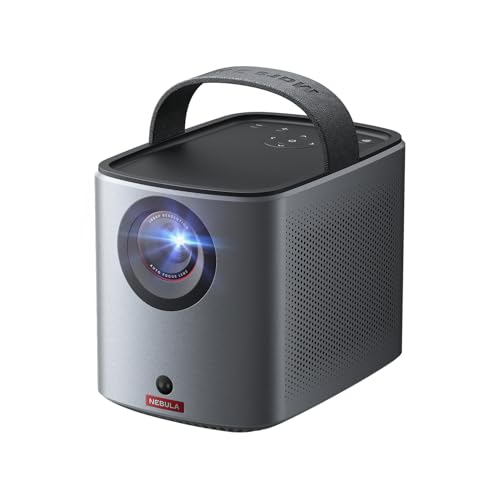
Released in early 2024, the Anker Nebula Mars 3 Air takes a completely different approach. Rather than reimagining what a projector looks like, Anker focused on perfecting the traditional portable projector formula.
At 400 ANSI lumens, the Mars 3 Air is four times brighter than the ZIP. This isn't just a number – it's the difference between being usable only in pitch-black rooms versus working in typical living room lighting. The native 1080p resolution means you're getting genuine Full HD detail, not upscaled or pixel-shifted approximation.
What sets the Mars 3 Air apart is its integration of Google TV with built-in Netflix support. This might not sound revolutionary, but it's actually a game-changer for portable projectors. Most mini projectors require you to connect your phone or laptop, dealing with compatibility issues and draining your device's battery. The Mars 3 Air is essentially a smart TV that happens to project images instead of displaying them on a built-in screen.
The audio system deserves special mention. Dual 8W speakers with Dolby Audio processing deliver 16 watts total – eight times more power than the ZIP's speakers. In my testing, the difference is dramatic. While the ZIP's audio is adequate for personal viewing, the Mars 3 Air can actually fill a room with sound that doesn't make you immediately reach for headphones.
The resolution difference between these projectors is more significant than the numbers suggest. The Aurzen ZIP's 720p might seem adequate in 2024, but when you're projecting onto a 60-inch or larger surface, individual pixels become visible. Text becomes harder to read, and fine details in movies get lost.
The Mars 3 Air's 1080p resolution provides 2.25 times more pixels, and the difference is immediately apparent. Streaming Netflix or watching locally stored movies reveals details that simply aren't visible on the ZIP. If you're planning to use your projector for anything beyond casual viewing – presentations, gaming, or serious movie watching – the resolution advantage matters enormously.
Brightness tells an even more important story. The ZIP's 100 ANSI lumens restricts you to very dark environments. I found it perfect for bedroom ceiling projection or camping, but unusable in my living room during evening TV watching with normal lighting. The Mars 3 Air's 400 lumens, while not bright enough for daylight use, works well in dimmed rooms and enables much larger screen sizes.
Audio quality in portable projectors is usually terrible, but the Mars 3 Air breaks this trend dramatically. The 16-watt Dolby Audio system produces surprisingly rich, full sound that doesn't embarrass itself next to decent Bluetooth speakers.
The ZIP's 2-watt speakers are functional but clearly designed with the assumption you'll use Bluetooth headphones or external speakers. For solo viewing, this works fine. For group entertainment, it's a significant limitation.
Interestingly, both projectors can function as Bluetooth speakers when not projecting. The Mars 3 Air's 8-hour music playback mode essentially gives you a premium portable speaker as a bonus feature.
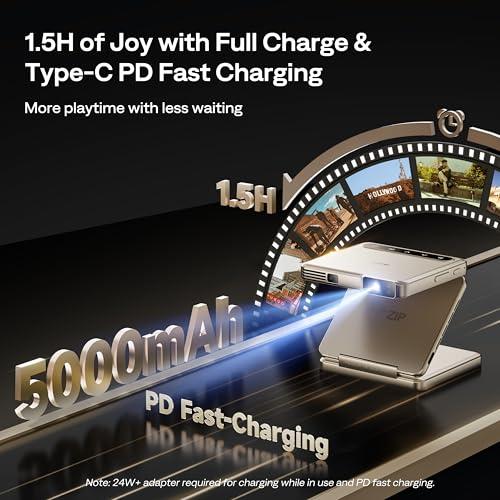
Battery performance reveals each projector's priorities. The ZIP provides about 90 minutes of viewing time, which initially seems disappointing until you consider its ultra-compact battery. The engineering challenge of fitting any meaningful battery into such a small device is remarkable.
The Mars 3 Air offers 2.5 hours of movie playback in eco mode, dropping to around 2 hours at full brightness. This difference – an extra hour of viewing time – often determines whether you can watch a full movie without plugging in.
Both projectors can operate while charging, but the ZIP's USB-C power delivery makes this more convenient than the Mars 3 Air's barrel connector.
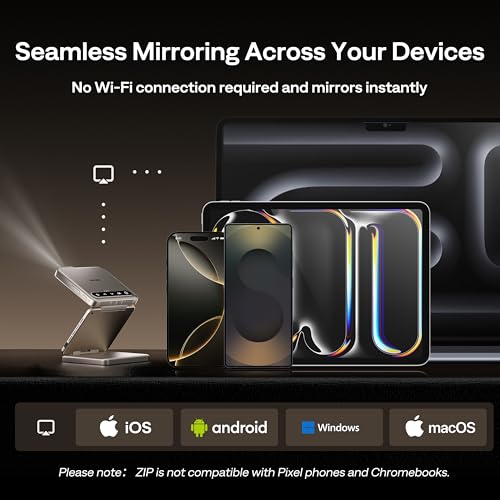
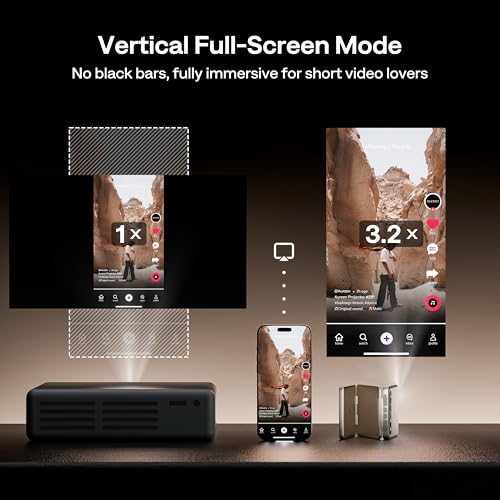
The connectivity story highlights each product's philosophy perfectly. The Aurzen ZIP uses something called AirLink for Wi-Fi-free screen mirroring. This technology creates a direct connection between your device and the projector without requiring a Wi-Fi network. It's brilliant for travel – no hotel Wi-Fi passwords or corporate network restrictions.
However, the ZIP can't directly access streaming services that use DRM (Digital Rights Management) protection, which includes Netflix, Disney+, and Amazon Prime Video. You need an optional CastPlay dongle and a compatible HDMI source device to watch protected content.
The Mars 3 Air solves this with Google TV integration and official Netflix certification. You can browse and stream content directly without any phone or laptop involved. The experience feels like using a Roku or Apple TV, complete with voice search through Google Assistant.
For gaming, the Mars 3 Air's 45.1ms input lag in game mode makes it reasonable for casual console gaming, though serious gamers will notice the delay. The ZIP doesn't specify input lag, but its 60Hz maximum refresh rate suggests it's not optimized for gaming.
The Aurzen ZIP excels in scenarios where traditional projectors simply can't compete. Business travelers will appreciate projecting presentations in hotel rooms without carrying additional equipment. The ceiling projection capability is genuinely unique – I've used it for bedtime entertainment, letting kids watch cartoons while lying down without neck strain.
Van life enthusiasts and backpackers benefit enormously from the size and weight savings. When every ounce matters, the ZIP's portability advantage becomes overwhelming.
The tri-fold design also enables creative installations. I've seen it used for art projects, temporary retail displays, and even as a unique party conversation piece. The form factor itself becomes part of the experience.
The Mars 3 Air shines in more traditional entertainment scenarios. Backyard movie nights work beautifully thanks to the brightness and audio quality. Family camping trips benefit from the longer battery life and ability to stream content without phone dependency.
For apartment dwellers or anyone without space for a dedicated TV, the Mars 3 Air provides a genuine big-screen experience. The 150-inch maximum image size, combined with respectable picture quality, creates immersive viewing that's simply impossible with the ZIP's dimmer output.
The smart TV functionality makes it practical for daily use. You can replace a bedroom TV with the Mars 3 Air, switching between projection and Bluetooth speaker modes as needed.
Neither projector replaces a dedicated home theater setup, but they serve different supplementary roles. The ZIP works best as a secondary device for flexible viewing – think bedroom ceiling projection or impromptu presentations. Its limitations in brightness and resolution make it unsuitable as a primary home theater display.
The Mars 3 Air can legitimately serve as a main entertainment device in smaller spaces or dedicated dark rooms. While 400 lumens won't compete with expensive home theater projectors in bright rooms, it's adequate for apartment living or basement entertainment areas.
For home theater applications, the Mars 3 Air's HDR10 support and superior contrast ratio provide noticeably better movie experiences. The ZIP's 720p resolution becomes a significant limitation when projecting onto larger screens typical in home theater setups.
At the time of writing, the Aurzen ZIP costs significantly less than the Mars 3 Air, but value depends entirely on your priorities. The ZIP represents premium pricing for revolutionary design – you're paying for innovation and extreme portability rather than traditional performance metrics.
The Mars 3 Air offers better value if you evaluate purely on specifications: more lumens per dollar, higher resolution, better audio, and longer battery life. However, it can't match the ZIP's unique use cases or portability.
Long-term value considerations favor the Mars 3 Air. Anker's established reputation, longer LED lifespan (30,000 vs 20,000 hours), and proven reliability record suggest better durability. The ZIP's innovative design, while impressive, remains unproven over time.
Both projectors represent significant advances in miniaturization. The ZIP's 0.16-inch DMD chip showcases how far semiconductor manufacturing has progressed – this chip would have been impossible just a few years ago. The Mars 3 Air's integration of Google TV in a portable form factor reflects the maturation of smart platform technology.
Looking forward, expect continued improvements in LED efficiency and battery technology. The fundamental physics of light output versus power consumption will continue limiting portable projectors, but incremental improvements in both areas should enhance future generations of both product categories.
After extensive testing, I believe the choice comes down to your primary use case and lifestyle. The Aurzen ZIP is revolutionary for specific scenarios but limiting for general use. If extreme portability and unique projection angles are your priorities, and you're comfortable with its performance limitations, the ZIP delivers experiences no other projector can match.
The Anker Nebula Mars 3 Air is simply a better projector by traditional metrics. If you want the best overall portable projection experience, superior image quality, comprehensive smart features, and room-filling audio, the Mars 3 Air justifies its higher cost.
For most people, I'd recommend the Mars 3 Air. Its versatility, performance, and reliability make it more likely to satisfy long-term entertainment needs. The ZIP is best for enthusiasts who specifically need its unique capabilities or travelers who prioritize extreme portability above all else.
The portable projector market continues evolving rapidly, but these two devices represent the current state of the art in their respective approaches. Whether you choose revolutionary design or proven performance, both offer compelling ways to take big-screen entertainment anywhere.
| Aurzen ZIP Tri-Fold Portable Mini Projector | Anker Nebula Mars 3 Air Portable Projector |
|---|---|
| Native Resolution - Higher resolution means sharper text and clearer details on larger screens | |
| 720p (1280×720) - adequate for smaller screens but pixels become visible above 50" | 1080p (1920×1080) - crisp detail even on 100"+ screens |
| Brightness - Determines what lighting conditions you can use the projector in | |
| 100 ANSI lumens - requires very dark rooms, best for bedroom/camping use | 400 ANSI lumens - works in dimmed rooms, enables much larger screen sizes |
| Portability - How easy it is to take with you anywhere | |
| Ultra-compact: 3.3×3.1×1" folded, 9.88oz - fits in jacket pocket | Traditional portable: 7×4.8×5.2", 3.7 lbs - needs carrying bag but still very portable |
| Design Innovation - Unique form factors that enable new use cases | |
| Revolutionary tri-fold design with 180° gimbal enables ceiling projection and impossible angles | Conventional design with intelligent auto-adjustment and premium build quality |
| Audio Quality - Built-in speakers determine if you need external audio | |
| Dual 1W speakers (2W total) - fine for personal use, external speakers recommended for groups | Dual 8W Dolby speakers (16W total) - room-filling sound, doubles as quality Bluetooth speaker |
| Battery Life - How long you can watch without plugging in | |
| 90 minutes typical viewing - enough for most movies but requires power bank for longer sessions | 2.5 hours movie playback - reliably handles full movies with time to spare |
| Smart Features - Built-in streaming vs device dependency | |
| Wi-Fi-free screen mirroring from phones/laptops - requires external devices for all content | Google TV with built-in Netflix and streaming apps - completely independent entertainment system |
| Content Compatibility - What streaming services work directly | |
| Requires CastPlay dongle for Netflix/Disney+/Prime Video due to DRM restrictions | Native Netflix, Prime Video, YouTube and full Google Play Store access |
| Setup Convenience - How quickly you can start watching | |
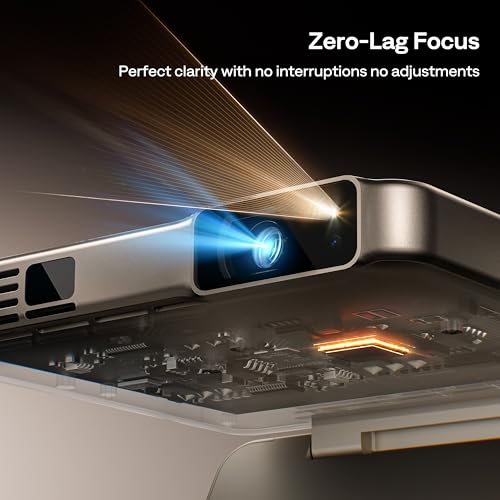
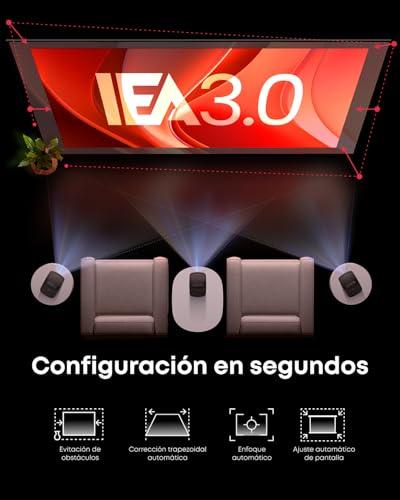
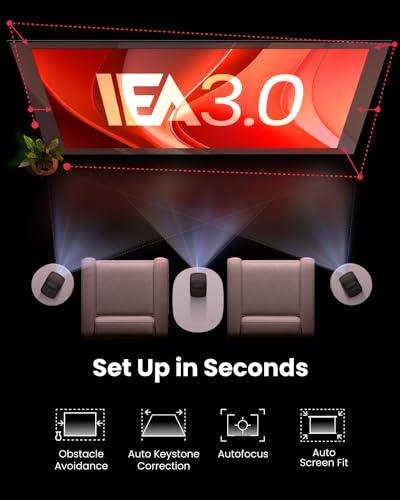
| ToF zero-lag autofocus with instant Wi-Fi-free mirroring - extremely fast setup | Auto keystone correction, obstacle avoidance, voice control - comprehensive automatic setup |
| Gaming Performance - Suitability for console gaming | |
| 60Hz refresh rate, unspecified input lag - basic gaming capability | 45.1ms input lag in game mode - good for casual gaming, noticeable for competitive play |
| Best Use Cases - Where each projector truly excels | |
| Business travel, backpacking, van life, ceiling projection, ultra-portability scenarios | Home entertainment, outdoor movies, apartment TV replacement, group viewing |
The Anker Nebula Mars 3 Air is significantly better for home theater applications. It delivers 1080p resolution and 400 ANSI lumens brightness, making it suitable for larger screens up to 150 inches in dark rooms. The Aurzen ZIP is limited to 720p and 100 ANSI lumens, which works best for smaller viewing areas and personal use rather than family movie nights.
The biggest difference is their design philosophy. The Aurzen ZIP Tri-Fold prioritizes extreme portability with its revolutionary tri-fold design that fits in your pocket, while the Anker Nebula Mars 3 Air focuses on delivering superior image quality and smart features in a more traditional portable form factor.
The Aurzen ZIP is dramatically more portable, measuring just 3.3×3.1×1 inches when folded and weighing under 10 ounces. It literally fits in your jacket pocket. The Mars 3 Air is still portable at 3.7 pounds but requires a carrying bag and takes up significantly more luggage space.
Only the Anker Nebula Mars 3 Air can stream Netflix directly through its built-in Google TV platform. The Aurzen ZIP requires screen mirroring from your phone or an optional CastPlay dongle to access Netflix and other DRM-protected streaming services.
The Mars 3 Air delivers superior image quality with native 1080p resolution, 400 ANSI lumens brightness, and HDR support. The ZIP offers 720p resolution and 100 ANSI lumens, which is adequate for small screens in very dark rooms but can't match the clarity and brightness of the Mars 3 Air.
The Anker Nebula Mars 3 Air provides up to 2.5 hours of movie playback, while the Aurzen ZIP runs for approximately 90 minutes. Both can operate while charging, but the Mars 3 Air's longer battery life makes it better for full-length movies without interruption.
The Mars 3 Air is better for outdoor movie nights due to its higher 400 ANSI lumens brightness and superior audio system with dual 8W speakers. The ZIP's 100 ANSI lumens and small speakers make it more suitable for tent camping or very intimate outdoor settings.
The Anker Nebula Mars 3 Air is better for gaming with its 45.1ms input lag in game mode and 1080p resolution. The Aurzen ZIP can handle casual gaming but its 720p resolution and unspecified input lag make it less ideal for serious gaming sessions.
The Mars 3 Air has dramatically better audio with dual 8W Dolby speakers (16W total) that can fill a room. The ZIP's dual 1W speakers (2W total) are adequate for personal viewing but you'll likely want external speakers or headphones for group entertainment.
Yes, both the Aurzen ZIP and Anker Nebula Mars 3 Air can operate while charging. The ZIP uses convenient USB-C charging, while the Mars 3 Air uses a barrel connector. This means you're not limited by battery life for longer viewing sessions.
Value depends on your priorities. The ZIP offers unique portability and innovative design at a lower price point. The Mars 3 Air costs more but delivers significantly better performance specs including 4x the brightness, higher resolution, and comprehensive smart features that justify the premium for most users.
The Aurzen ZIP's main limitations are low brightness (dark room only), 720p resolution, weak speakers, and short battery life. The Mars 3 Air's primary limitations are larger size, higher weight, and higher cost compared to the ultra-compact ZIP, though it excels in traditional projector performance metrics.
We've done our best to create useful and informative comparisons to help you decide what product to buy. Our research uses advanced automated methods to create this comparison and perfection is not possible - please contact us for corrections or questions. These are the sites we've researched in the creation of this article: aurzen.com - youtube.com - tomsguide.com - aurzen.com - aurzen.com - projectorcentral.com - appleinsider.com - youtube.com - aurzen.com - aurzen.com - aurzen.com - aurzen.com - techradar.com - thesmarthomehookup.com - whathifi.com - thesmarthomehookup.com - cnet.com - whathifi.com - projectorreviews.com - youtube.com - youtube.com - versus.com - projectorcentral.com - practicalmotorhome.com - youtube.com - seenebula.com - us.seenebula.com - harveynorman.ie

Privacy Policy
Terms and Conditions - Affiliate Policy
Home Security
© Copyright 2008-2026.
11816 Inwood Rd #1211, Dallas, TX 75244