




Portable projectors have transformed from novelty gadgets to serious entertainment devices over the past few years. Unlike the massive, lamp-based projectors of the past that required dark rooms and complex setups, today's portable projectors pack impressive technology into packages you can actually carry around. But with so many options available, choosing the right one can be overwhelming.
Today we're comparing two standout models that represent different philosophies in portable projection: the budget-friendly innovation of the TCL C1 Google TV Portable Projector and the premium performance of the Anker Nebula Mars 3 Air. Released in 2023 and 2024 respectively, both projectors showcase how far this category has come, but they take notably different approaches to solving the same core problem: bringing big-screen entertainment anywhere you go.
Before diving into specifics, it's worth understanding what makes a portable projector "good" in 2024. The fundamental challenge is physics—creating bright, sharp images requires powerful light sources and large lenses, which traditionally meant heavy, power-hungry devices. Modern portable projectors use LED light sources instead of traditional lamps, which last much longer (around 30,000 hours versus 3,000-5,000 for older lamp technology) and run cooler, allowing for smaller designs.
The key trade-offs revolve around brightness, measured in lumens. ANSI lumens (American National Standards Institute) provide the most accurate brightness measurement, while ISO lumens offer another standardized metric. Generally, you need at least 200-300 lumens for watchable images in dim rooms, and 400+ lumens for any ambient light tolerance. Traditional home theater projectors often exceed 2,000 lumens, but they're also the size of desktop computers and require dedicated installation.
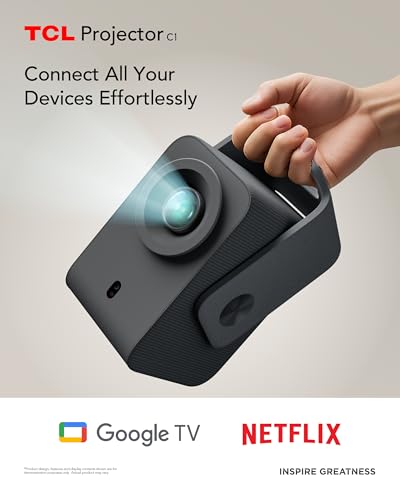
Smart features have become equally important. Both the TCL C1 and Anker Mars 3 Air run Google TV, essentially putting a complete streaming device inside the projector. This eliminates the need for external streaming sticks or complicated HDMI switching, though it does mean the projector's processor and software become part of the long-term value equation.
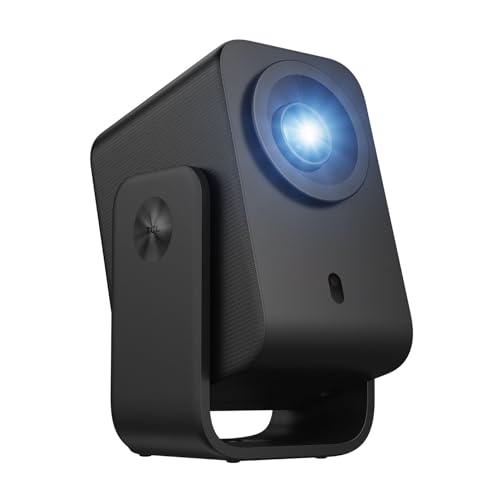
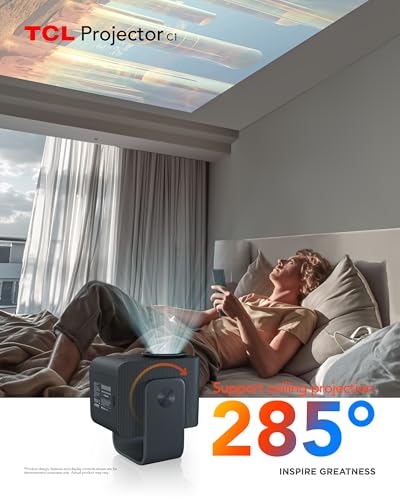
The TCL C1 immediately stands out with its unique gimbal design—essentially a motorized stand that lets the projector rotate 285 degrees in multiple directions. This might sound like a gimmick, but it's genuinely useful. Traditional projectors require you to position them precisely in front of your screen or wall, often involving awkward table placements or ceiling mounts. The C1's gimbal lets you place it almost anywhere and point the image where you need it, including directly overhead for ceiling projection—perfect for bed-bound movie watching.
This design innovation extends to the projector's overall philosophy. TCL took risks with the C1, incorporating features typically found in much more expensive devices while keeping the overall package affordable. The trade-off is that some components, like the single 8-watt speaker, represent necessary compromises to hit that price point.
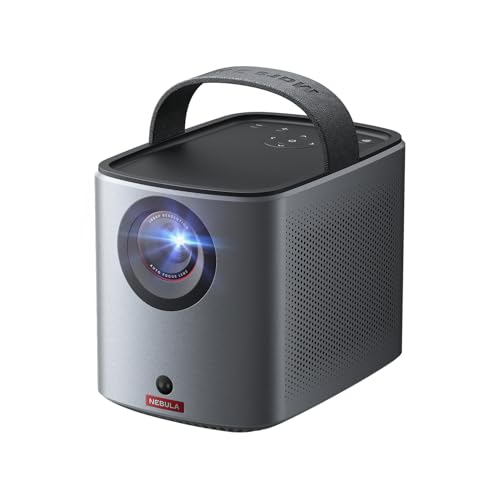
The Anker Mars 3 Air, by contrast, represents a more traditional approach executed at a high level. It looks and feels like what you'd expect from a premium portable projector—solid construction, thoughtful industrial design, and no experimental features that might not work perfectly. Anker's philosophy focuses on getting the fundamentals right: bright image, good sound, reliable operation, and true portability via built-in battery.
Image quality represents the most important differentiator between these projectors, and here the Anker Mars 3 Air takes a clear lead. At 400 ANSI lumens versus the TCL C1's 230 ISO lumens, the Mars 3 Air delivers approximately 75% more usable brightness. This translates directly into viewing flexibility—the Mars 3 Air remains watchable with some ambient light, while the C1 requires dimmer conditions for optimal viewing.
Both projectors offer native 1080p resolution, which represents the sweet spot for portable devices. You'll see 4K portable projectors advertised, but they typically accept 4K signals while actually projecting at lower resolutions. True 4K projection requires much larger, more expensive optical systems. The Mars 3 Air adds HDR10 and HLG support, which enhances contrast and color range when viewing compatible content, while the TCL C1 lacks HDR capability.
Contrast ratio specs can be misleading—the C1 claims 1500:1 while the Mars 3 Air lists 400:1—but real-world performance tells a different story. Based on comprehensive reviews and measurements, the Mars 3 Air actually delivers better shadow detail and overall image depth. This highlights why relying solely on specifications can be problematic; manufacturing tolerances, measurement methods, and optical design all influence final image quality.
Color accuracy matters more than many realize. Both projectors deliver reasonably accurate colors out of the box, though the Mars 3 Air shows slight advantages in maintaining color balance across different brightness levels. The TCL C1 can exhibit a minor red undertone in dark scenes, though this is only noticeable in direct comparisons or very dark content.
For home theater use, the Mars 3 Air's superior brightness and HDR support make it the better choice for serious movie watching, while the C1 works perfectly well for casual viewing in controlled lighting conditions.
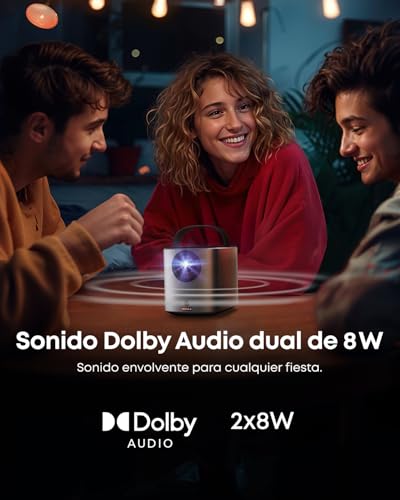
Audio quality often gets overlooked in projector reviews, but it significantly impacts the viewing experience. The Anker Mars 3 Air excels here with dual 8-watt speakers (16 watts total) enhanced by Dolby Audio processing. In practice, this creates surprisingly room-filling sound that works well for small to medium spaces without external speakers.
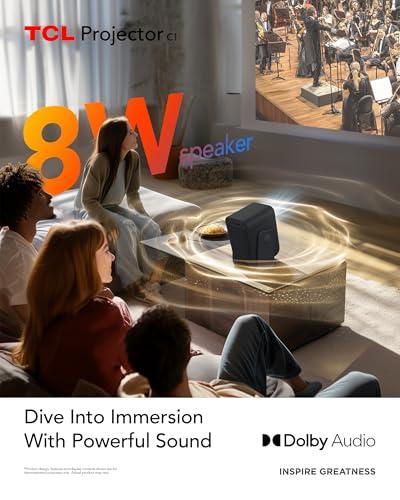
The TCL C1 includes a single 8-watt speaker, which proves adequate for personal viewing but lacks the presence needed for group watching or larger rooms. Both projectors can output audio to external speakers via Bluetooth or wired connections, but the Mars 3 Air's built-in audio quality reduces the need for additional equipment in many scenarios.
Importantly, the Mars 3 Air can function as a standalone Bluetooth speaker, offering up to 8 hours of music playback. This dual functionality adds value for users who want a single device for both visual and audio entertainment.
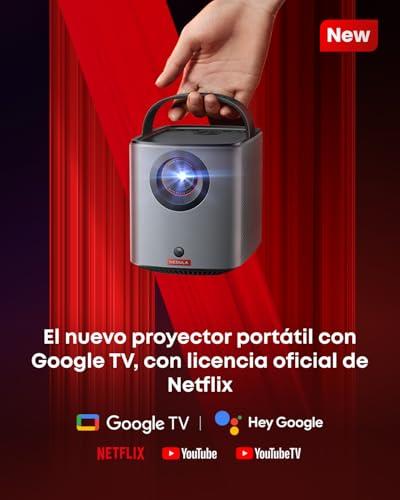
Both projectors run Google TV, representing a significant advantage over many competitors that use proprietary or limited operating systems. Google TV provides access to virtually all major streaming services, including official Netflix support—surprisingly rare in the projector world due to Netflix's strict certification requirements.
The user experience feels nearly identical between devices, with responsive interfaces and reliable voice control via Google Assistant. Both include Chromecast functionality, allowing easy content casting from phones and computers. The main difference lies in the included remotes—the Mars 3 Air features a backlit remote for easier navigation in dark rooms, while the C1 uses a standard remote without backlighting.
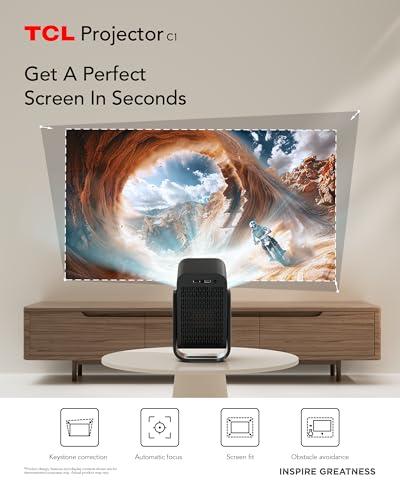
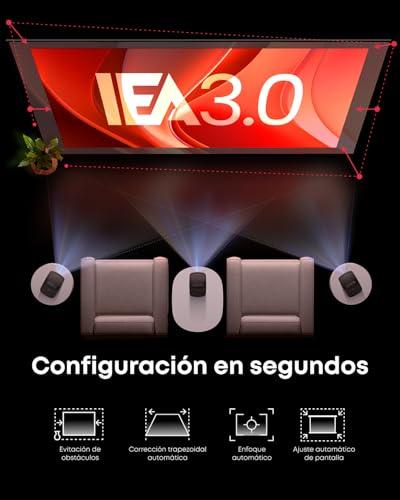
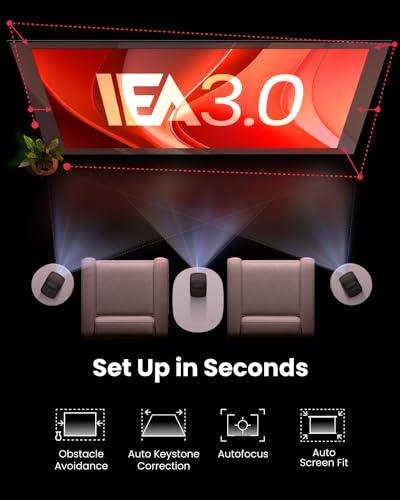
Auto-setup features represent another crucial usability factor. Both projectors include auto-focus and keystone correction (automatic image straightening when projecting at angles), but the TCL C1 adds obstacle avoidance and screen fitting. These features detect objects in the projection path and automatically adjust the image size and position accordingly. While somewhat gimmicky, they work well enough to simplify setup, especially for users unfamiliar with projector positioning.
Portability means different things to different users. The TCL C1 achieves ultra-portability through compact dimensions—roughly the size of a thick book—and light weight at 1.77 kg (3.9 lbs). However, it requires AC power, limiting true portability to locations with electrical outlets.
The Anker Mars 3 Air weighs slightly less at 1.7 kg but includes a built-in battery providing 2.5 hours of movie playback. This enables genuine wireless operation for outdoor movie nights, camping trips, or presentations where power isn't readily available. The trade-off is a larger overall footprint and the need to manage charging schedules.
For travel, the C1's smaller size makes it easier to pack, while the Mars 3 Air's battery eliminates power adapter concerns for short trips. The choice depends on your specific portability priorities—minimal size or maximum flexibility.
At the time of writing, the TCL C1 typically sells for significantly less than the Anker Mars 3 Air—often at roughly one-third to one-half the price. This creates very different value equations for potential buyers.
The C1 represents exceptional value for users wanting smart projector features without premium pricing. Its gimbal design, auto-setup capabilities, and Google TV integration would typically cost much more from other manufacturers. The compromises in brightness, audio, and build quality are reasonable given the significant price advantage.
The Mars 3 Air justifies its premium pricing through superior performance across most metrics—brighter image, better audio, premium build quality, and battery operation. For users who will use their projector regularly or need it to perform in challenging conditions, these improvements often prove worth the additional cost.
The TCL C1's sealed optical engine deserves special mention. Unlike many budget projectors that suffer from dust infiltration over time, potentially degrading image quality, the C1's fully sealed design prevents dust from reaching the internal optics. This engineering decision improves long-term reliability and reduces maintenance requirements—a significant advantage for a device at this price point.
The projector's TrueHue technology optimizes color and contrast frame-by-frame, essentially providing basic HDR-like processing for standard content. While not equivalent to true HDR support, this feature helps maximize image quality from older or lower-quality source material.
The Mars 3 Air incorporates Intelligent Environment Adaptation 3.0, Anker's sophisticated auto-setup system. This technology uses sensors and processing to automatically detect and correct for room conditions, projection surfaces, and ambient lighting. In practice, this means faster setup with fewer manual adjustments required.
The Mars 3 Air's DLP projection technology differs from the C1's LCD system. DLP typically provides better contrast and sharper text, while LCD offers potentially better color accuracy and fewer "rainbow effects" (brief color flashes some viewers notice with DLP projectors). Both technologies work well for movie watching, though DLP's advantages become more apparent for presentations or gaming.
For casual gaming, both projectors perform adequately, though neither targets serious gamers. The Mars 3 Air measures approximately 45ms input lag in game mode, while the TCL C1 shows similar performance. These figures work fine for turn-based games or casual console gaming but aren't responsive enough for competitive online gaming where every millisecond matters.
Both projectors accept 4K signals from gaming consoles and PCs, though they downscale to their native 1080p resolution. This ensures compatibility with modern devices while maintaining reasonable performance.
LED light sources in both projectors should last 20,000-30,000 hours before significant brightness degradation—equivalent to watching 3-4 hours daily for 15-20 years. This eliminates the lamp replacement costs and scheduling that plagued older projector technology.
The TCL C1's sealed optics and IP5X dust resistance suggest better long-term durability in typical home environments. The Mars 3 Air's premium build quality and more conservative design approach should also age well, though the built-in battery will eventually require replacement or lose capacity over time.
Software support becomes increasingly important as smart features represent major selling points. Both Google TV platforms should receive updates for several years, though Google's track record suggests longer support lifecycles than many proprietary projector operating systems.
Choose the TCL C1 if you want maximum features per dollar and don't mind AC power requirements. Its unique gimbal design, sealed optics, and comprehensive smart features create exceptional value for budget-conscious buyers or first-time projector users. The C1 works perfectly for bedroom entertainment, small apartment use, or situations where the projector stays in one location most of the time.
The Anker Mars 3 Air makes sense for users prioritizing image quality, audio performance, and true portability. If you plan regular outdoor use, frequently move your projector, or need the brightest possible image for varied lighting conditions, the Mars 3 Air's premium features justify its higher cost.
For dedicated home theater use, the Mars 3 Air's superior brightness and HDR support create a more cinema-like experience, while the C1's ceiling projection capability offers unique installation flexibility that traditional projectors can't match.
Both projectors represent excellent choices within their respective market segments. The decision ultimately comes down to whether you value innovation and affordability (TCL C1) or premium performance and complete portability (Anker Mars 3 Air). Either way, you're getting a capable device that would have seemed impossible just a few years ago—testament to how rapidly portable projector technology continues to evolve.
| TCL C1 Google TV Portable Projector | Anker Nebula Mars 3 Air Portable Projector |
|---|---|
| Brightness - Critical for room lighting flexibility | |
| 230 ISO lumens (requires dim/dark rooms) | 400 ANSI lumens (works with some ambient light) |
| Resolution & HDR - Image sharpness and color depth | |
| 1080p native, no HDR support | 1080p native with HDR10/HLG support |
| Audio System - Built-in sound quality | |
| Single 8W speaker (adequate for personal viewing) | Dual 8W speakers with Dolby Audio (room-filling sound) |
| Power Source - Determines true portability | |
| AC power only (must stay plugged in) | Built-in battery: 2.5 hours movie playback |
| Smart TV Platform - Streaming capabilities | |
| Google TV with Netflix certification | Google TV with Netflix certification |
| Design Innovation - Unique positioning features | |
| 285° gimbal stand with ceiling projection | Traditional portable design with carrying handle |
| Weight & Dimensions - Actual portability | |
| 1.77 kg, ultra-compact (CD case size) | 1.7 kg, larger footprint but includes battery |
| Auto Setup Features - Ease of use | |
| Auto-focus, keystone correction, obstacle avoidance | Auto-focus, keystone correction, environment adaptation |
| Build Quality & Durability - Long-term value | |
| Sealed optics, IP5X dust resistance | Premium materials, traditional sealed design |
| Connectivity Options - Device compatibility | |
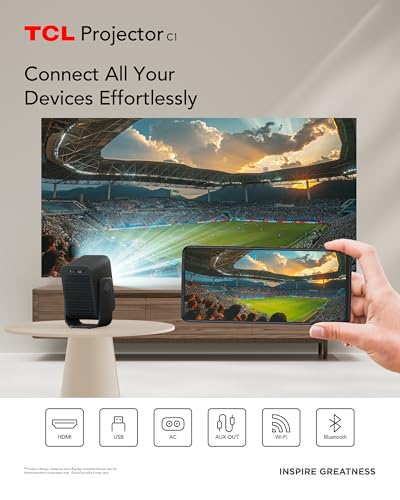
| HDMI 2.1, USB-A, Wi-Fi 5, Bluetooth 5.1 | HDMI, USB-A, Wi-Fi dual-band, Bluetooth 5.1 |
| Value Proposition - Cost vs features | |
| Exceptional features-per-dollar at entry price point | Premium performance justifies higher cost |
| Best Use Cases - Who should buy this | |
| Budget buyers, bedroom use, unique mounting needs | Outdoor entertainment, frequent movers, audio quality priority |
The Anker Nebula Mars 3 Air is significantly brighter at 400 ANSI lumens compared to the TCL C1's 230 ISO lumens. This makes the Mars 3 Air much more suitable for rooms with ambient light, while the C1 works best in dark or dimly lit environments.
No, only the Anker Nebula Mars 3 Air has a built-in battery that provides 2.5 hours of movie playback. The TCL C1 Google TV Portable Projector requires AC power at all times, so you'll need access to an electrical outlet.
The Anker Nebula Mars 3 Air has superior audio with dual 8W speakers and Dolby Audio processing, creating room-filling sound. The TCL C1 has a single 8W speaker that's adequate for personal viewing but may require external speakers for group watching.
Yes, both the TCL C1 Google TV Portable Projector and Anker Nebula Mars 3 Air run Google TV with official Netflix certification, plus access to YouTube, Prime Video, and thousands of other streaming apps without needing external devices.
The TCL C1 is more compact (CD case size) and lighter for packing, while the Anker Nebula Mars 3 Air offers true wireless portability with its built-in battery. Choose the C1 for minimal luggage space or the Mars 3 Air for power-free operation.
Both projectors have native 1080p resolution but can accept and downscale 4K signals. The Anker Nebula Mars 3 Air adds HDR10 support for enhanced color and contrast, while the TCL C1 lacks HDR capability.
The TCL C1 Google TV Portable Projector provides exceptional value with premium smart features at a budget price point. The Anker Nebula Mars 3 Air costs significantly more but justifies the premium with superior brightness, audio, and battery operation.
Yes, both the TCL C1 and Mars 3 Air work for casual gaming with around 45ms input lag. They accept 4K signals from modern consoles but aren't suitable for competitive gaming where response time is critical.
The TCL C1 Google TV Portable Projector excels here with its unique 285° gimbal design that allows easy ceiling projection - perfect for bedroom movie watching. The Anker Nebula Mars 3 Air uses traditional forward projection and would need creative mounting for ceiling use.
Both projectors offer auto-focus and keystone correction, but the TCL C1 adds obstacle avoidance that automatically adjusts the image around objects. The Mars 3 Air uses Intelligent Environment Adaptation for optimized setup based on room conditions.
The Anker Nebula Mars 3 Air is ideal for outdoor use with its built-in battery, brighter 400-lumen output, and superior audio system. The TCL C1 requires AC power, making it impractical for most outdoor scenarios without portable power sources.
The TCL C1 Google TV Portable Projector features sealed optics and IP5X dust resistance for long-term durability at its price point. The Anker Nebula Mars 3 Air offers premium materials and construction throughout, with more robust overall build quality justifying its higher cost.
We've done our best to create useful and informative comparisons to help you decide what product to buy. Our research uses advanced automated methods to create this comparison and perfection is not possible - please contact us for corrections or questions. These are the sites we've researched in the creation of this article: youtube.com - thegadgetflow.com - notebookcheck.net - shopabunda.com - youtube.com - youtube.com - youtube.com - youtube.com - tcl.com - androidauthority.com - manuals.plus - westcoast.co.uk - techradar.com - thesmarthomehookup.com - whathifi.com - thesmarthomehookup.com - cnet.com - whathifi.com - projectorreviews.com - youtube.com - youtube.com - versus.com - projectorcentral.com - practicalmotorhome.com - youtube.com - seenebula.com - us.seenebula.com - harveynorman.ie

Privacy Policy
Terms and Conditions - Affiliate Policy
Home Security
© Copyright 2008-2026.
11816 Inwood Rd #1211, Dallas, TX 75244