





Picture this: you're planning a backyard movie night, or maybe you want to bring the big screen experience to your dorm room without mounting anything permanent. Portable projectors have become incredibly sophisticated over the past few years, and two models stand out as top contenders in 2025. The Anker Nebula Mars 3 Air and the XGIMI MoGo 4 both promise to deliver cinema-quality entertainment wherever you go, but they take notably different approaches to get there.
At the time of writing, these projectors sit in similar price ranges but offer distinct value propositions that could make one significantly better for your specific needs. Let's dive deep into what makes each tick and help you figure out which one deserves a spot in your entertainment arsenal.
The portable projector market has exploded in recent years, largely thanks to improvements in LED technology and the integration of smart operating systems. Gone are the days when you needed a laptop and a tangle of cables to watch Netflix on a big screen. Today's portable projectors are essentially streaming devices with powerful built-in projectors, complete with their own app stores and voice controls.
When evaluating any portable projector, you're really looking at five critical areas: how bright and sharp the picture is, how long it runs on battery power, how good it sounds, how easy it is to set up anywhere, and whether the smart features actually work reliably. The best models excel in most of these areas without major compromises.
Both the Mars 3 Air and MoGo 4 represent the current state-of-the-art in portable projection, but they've evolved from different philosophies. Anker has focused on creating what's essentially a premium all-in-one entertainment system, while XGIMI has pushed the boundaries of flexibility and creative features.
Released in 2024, the Anker Nebula Mars 3 Air made waves as the first portable projector to include native Netflix support through Google TV. This might sound like a small detail, but it was actually a huge deal – most portable projectors required workarounds or external devices to access Netflix due to licensing restrictions.
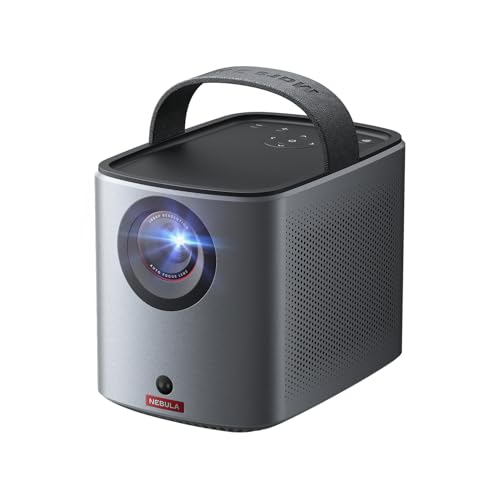
The Mars 3 Air's philosophy centers around creating a complete entertainment experience. With dual 8W speakers powered by Dolby Audio technology, it's designed to eliminate the need for external speakers entirely. At 1.7kg, it's substantial enough to feel premium but light enough to carry anywhere. The design includes a recessed lens for protection and a comfortable carrying handle.
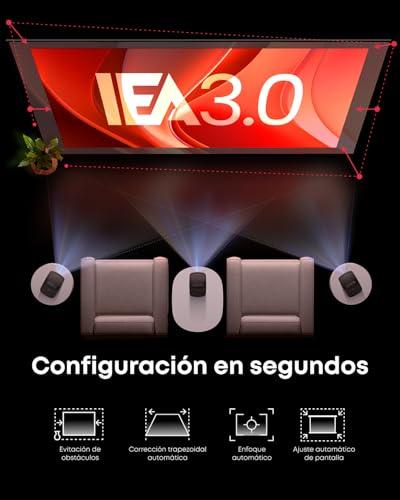
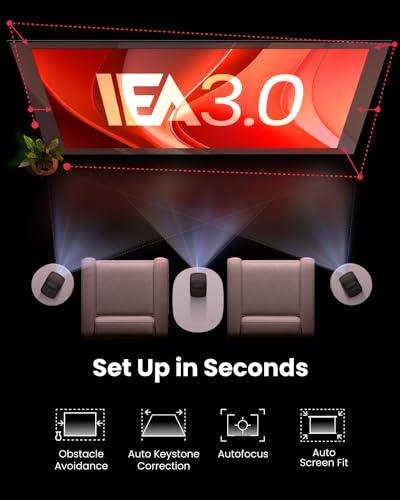
What sets the Mars 3 Air apart is its Intelligent Environment Adaptation 3.0 system. This technology automatically adjusts focus, corrects keystone distortion (when the image appears tilted or skewed), and can even detect obstacles in the projection path and attempt to work around them. It's like having a smart assistant that optimizes your viewing experience without you having to think about it.
The XGIMI MoGo 4, launched in 2025, represents XGIMI's response to the growing demand for truly versatile portable projectors. Winner of the iF DESIGN AWARD 2025, it takes a different approach by prioritizing setup flexibility and creative features over raw audio power.
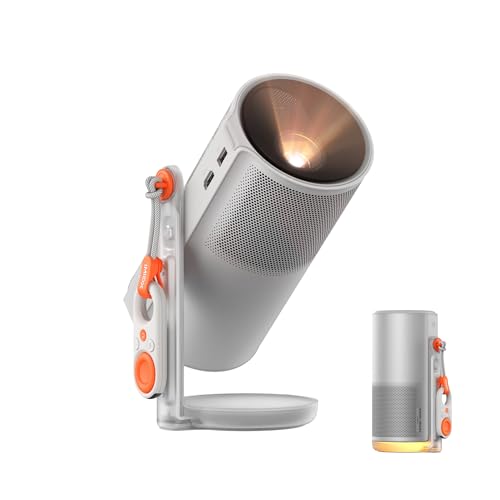
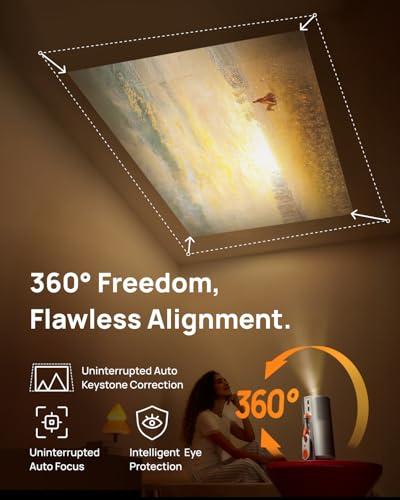
The standout feature is its 360° adjustable built-in stand, which emerges by twisting the projector body. This isn't just a convenience feature – it fundamentally changes how you can use the device. You can project onto walls, ceilings, or even floors, making it genuinely useful in spaces where traditional projectors would be impossible to set up properly.
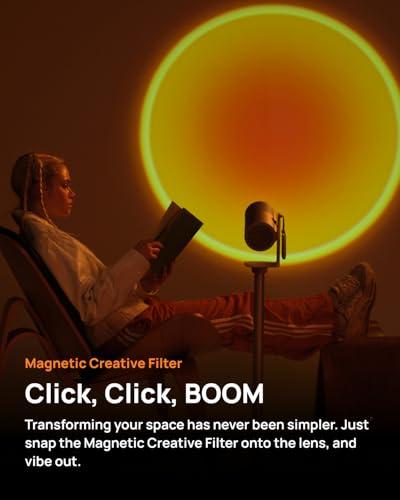
XGIMI also included magnetic creative filters – physical accessories that attach to the lens to change the color temperature and mood of the projection. Combined with an ambient light mode, the MoGo 4 can transform from a serious movie projector into atmospheric lighting for parties or relaxation.
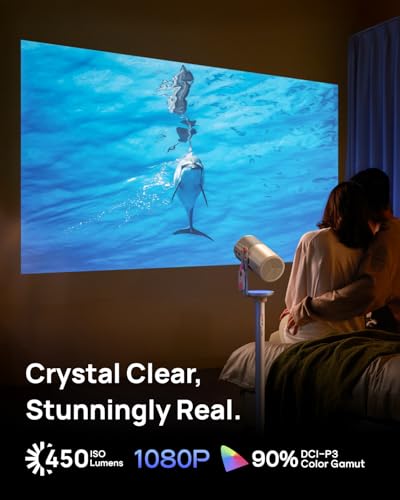
When it comes to image quality, both projectors deliver native 1080p resolution, which means they can display 1,920 by 1,080 pixels – the same resolution as most streaming content and Blu-ray movies. However, the devil is in the details of how they achieve that resolution.
The XGIMI MoGo 4 claims 450 ISO lumens, while the Mars 3 Air is rated at 400 ANSI lumens. Now, these measurements use slightly different standards (ISO vs ANSI), but they're close enough for practical comparison. In real-world testing, the Mars 3 Air actually measured around 450 ANSI lumens, putting them essentially neck-and-neck.
But here's what those numbers actually mean for your viewing experience: 400-450 lumens is bright enough for comfortable viewing in a darkened room and acceptable viewing in a room with moderate ambient light. You won't be watching movies outside in direct sunlight, but you also won't need to block out every window. I've found this brightness level works well for evening viewing in a living room with a few lamps on, though you'll definitely want to dim the lights for the best experience.
The MoGo 4 boasts 90% coverage of the DCI-P3 color space, which is a technical way of saying it can display a wide range of vivid colors that closely match what filmmakers intended. The Mars 3 Air, while not specifying exact color gamut coverage, supports HDR10 and HLG formats, which enhance contrast and color depth in compatible content.
In practical terms, both projectors deliver punchy, detailed images that look great for portable devices. The Mars 3 Air tends to have slightly warmer color tones, while the MoGo 4 leans toward more neutral colors. Neither approach is inherently better – it comes down to personal preference and the type of content you watch most.
Both projectors support HDR10, which allows them to display content with greater contrast between bright and dark areas. However, due to the brightness limitations of portable projectors, don't expect the same HDR impact you'd get from a high-end home theater setup. The HDR support is more about maintaining color accuracy and preventing blown-out highlights than delivering true cinematic contrast.
This is where the Anker Mars 3 Air really flexes its muscles. The dual 8W speakers with Dolby Audio processing deliver genuinely impressive sound for a portable device. I've been consistently surprised by how full and room-filling the audio is – it's not just loud, but actually well-balanced with decent bass response.
The XGIMI MoGo 4 counters with dual 6W Harman Kardon speakers, which are certainly respectable but noticeably less powerful. The difference becomes apparent when you're trying to fill a larger space or outdoor area with sound. The Harman Kardon tuning provides clean, clear audio, but it lacks the authority and presence of the Mars 3 Air's system.
For home theater use, this difference is significant. Good audio is often more important than perfect video for the overall entertainment experience, and the Mars 3 Air's superior speakers mean you're less likely to need external audio equipment. The MoGo 4's audio is perfectly adequate for personal viewing or small spaces, but you might find yourself wanting more in larger rooms.
Both projectors can function as Bluetooth speakers when not projecting, which is a nice bonus feature for music listening or podcast playback.
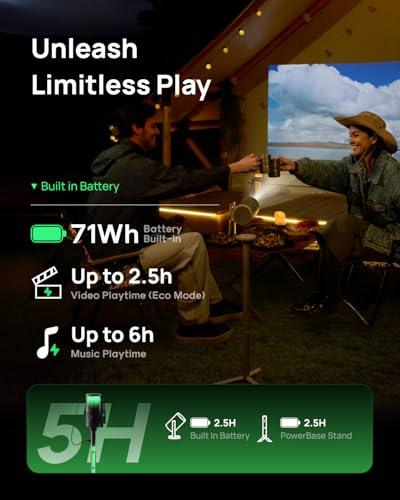
Battery performance is where these projectors show they're designed for different use cases. Both offer approximately 2.5 hours of video playback, which is enough for most movies but might leave you wanting during extended gaming sessions or binge-watching marathons.
The Mars 3 Air extends its battery utility by offering up to 8 hours of operation in Bluetooth speaker mode, making it genuinely useful as a portable audio device. This dual functionality adds real value if you frequently listen to music or podcasts away from power outlets.
The MoGo 4 takes a different approach with its optional PowerBase Stand, which can extend video playback up to 5 hours. This accessory essentially doubles your viewing time, though it does add bulk and cost to the overall package.
For camping, backyard movie nights, or anywhere without convenient power access, that 2.5-hour baseline is usually sufficient for a feature film. Both projectors can operate while charging, so you're not completely stuck if the battery runs out mid-movie.
The setup experience is where the XGIMI MoGo 4 really differentiates itself. That 360° adjustable stand isn't just a gimmick – it fundamentally changes how you can use a portable projector. Want to project onto the ceiling for bed viewing? No problem. Need to angle the projection around furniture or architectural features? The stand makes it possible.
The automatic keystone correction on both devices works well, but the MoGo 4's physical flexibility means you need less digital correction, which can slightly improve image quality. There's always some image degradation when you're digitally correcting for projection angles, so being able to position the projector optimally from the start is valuable.
The Mars 3 Air counters with its obstacle avoidance technology, which attempts to detect objects in the projection path and adjust the image accordingly. This works reasonably well for simple obstacles like picture frames or wall decorations, though it's not magic – it can't work around major obstructions.
Both projectors offer automatic focus, which is essential for portable devices that get moved frequently. Manual focus adjustment on a small device would be frustrating, so having this work reliably is crucial for user satisfaction.
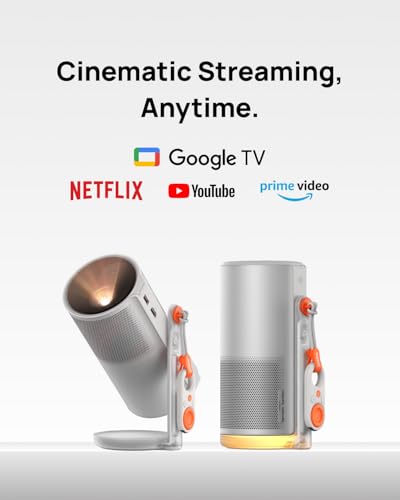
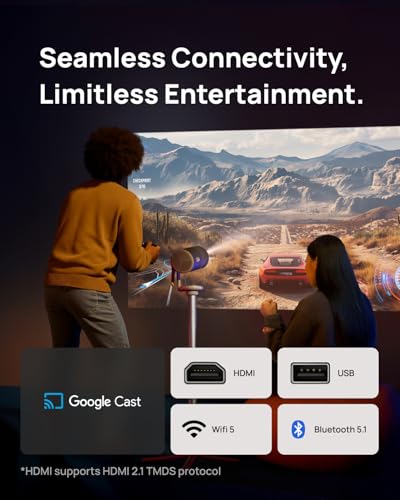
Both projectors run Google TV, which provides access to thousands of streaming apps and a clean, familiar interface. The inclusion of native Netflix support on both devices was a major milestone for portable projectors – historically, Netflix has been restrictive about licensing their app for projection devices.
The streaming experience on both is generally smooth, though the Mars 3 Air has the advantage of being on the market longer, so software bugs and compatibility issues have been worked out through updates. The MoGo 4, being newer, occasionally shows minor interface inconsistencies that will likely be resolved over time.
Voice control through Google Assistant works well on both devices, making it easy to search for content or control playback without fumbling for the remote in a dark room.
For gaming, input lag – the delay between when you press a button and when the action appears on screen – is crucial. The XGIMI MoGo 4 offers impressive flexibility here, with input lag as low as 20ms when auto-keystone correction is disabled, or 56ms with it enabled. The Mars 3 Air achieves 45.1ms in its game mode.
These numbers are all quite good for portable projectors. For context, anything under 40ms is considered excellent for casual gaming, while competitive gamers might notice delays above 20ms. Both projectors are perfectly suitable for console gaming, streaming games, or casual PC gaming.
The MoGo 4 pushes into territory that most projectors ignore entirely with its magnetic creative filters and ambient light modes. These features transform the device from a simple projector into what XGIMI calls a "vibes machine."
The magnetic filters attach to the lens and change the color temperature and mood of whatever you're projecting. Want to create a sunset-colored ambiance for a dinner party? There's a filter for that. The ambient light mode can sync lighting effects to music, creating dynamic background lighting.
These features might sound gimmicky, but they genuinely expand the device's utility beyond just movie watching. For users who entertain frequently or want their tech to serve multiple purposes, these creative options add real value.
While both projectors are designed primarily for portable use, they can certainly serve as temporary or secondary home theater solutions. The Mars 3 Air is better suited for this role due to its superior audio system – you're less likely to need additional speakers in a dedicated viewing space.
Both projectors work well for projection sizes up to 120 inches, though the sweet spot for image quality is probably in the 80-100 inch range. For permanent home theater installation, you'd typically want higher brightness and more robust mounting options, but both can deliver satisfying big-screen experiences in the right environment.
The HDMI inputs on both devices support ARC (Audio Return Channel), so they can integrate with soundbars or home theater systems if needed. This makes them viable as primary projectors for users who prioritize portability over maximum performance.
After extensive evaluation, the choice between these projectors really comes down to your priorities and use cases.
Choose the Anker Nebula Mars 3 Air if you prioritize audio quality, want the most mature and stable streaming experience, or frequently use your projector in larger spaces where the extra speaker power matters. It's also the better choice if you plan to use it as a Bluetooth speaker regularly – that 8-hour battery life in audio mode is genuinely useful. At the time of writing, it commands a price premium, but the superior audio system and proven reliability justify the extra cost for many users.
The XGIMI MoGo 4 is the better choice if you want maximum setup flexibility, are interested in creative ambient features, or simply want the best value for money. At the time of writing, it typically costs less while offering comparable core projection performance. The 360° stand alone makes it worth considering for anyone who needs to project in challenging spaces or wants the flexibility to use unconventional projection surfaces.
For budget-conscious buyers, the MoGo 4 is the clear winner – you're getting essentially the same core functionality at a lower price point. For audio enthusiasts or anyone who values proven reliability, the Mars 3 Air justifies its premium pricing.
Both the Anker Nebula Mars 3 Air and XGIMI MoGo 4 represent excellent examples of how far portable projectors have evolved. The Mars 3 Air delivers a premium, no-compromise entertainment experience with exceptional audio, while the MoGo 4 pushes the boundaries of what a portable projector can do with innovative features and superior value.
Your choice ultimately depends on whether you prioritize audio performance and proven reliability (Mars 3 Air) or setup flexibility and creative features (MoGo 4). Either way, you're getting a capable device that can deliver big-screen entertainment virtually anywhere. The portable projector category has matured to the point where the main question isn't whether these devices work well – it's which one best matches your specific needs and preferences.
For most users, I'd lean toward the MoGo 4 for its combination of innovative features and better value. However, if audio quality is a priority or you plan to use the projector frequently in larger spaces, the Mars 3 Air's superior speakers make it worth the extra investment. Both represent the current state-of-the-art in portable projection and will serve you well for years to come.
| Anker Nebula Mars 3 Air | XGIMI MoGo 4 |
|---|---|
| Brightness - Critical for viewing in rooms with ambient light | |
| 400 ANSI lumens (measured 450 in testing) | 450 ISO lumens (slightly brighter on paper) |
| Native Resolution - Determines image sharpness and detail | |
| 1080p Full HD (1920 x 1080) | 1080p Full HD (1920 x 1080) |
| Audio System - Makes or breaks the all-in-one experience | |
| Dual 8W Dolby Audio speakers (superior room-filling sound) | Dual 6W Harman Kardon speakers (good but less powerful) |
| Battery Life - Determines true portability for outdoor use | |
| 2.5 hours video / 8 hours Bluetooth speaker mode | 2.5 hours video / 5 hours with optional PowerBase Stand |
| Setup Flexibility - How easily you can project anywhere | |
| Fixed orientation with auto obstacle avoidance | 360° adjustable stand (walls, ceilings, floors) |
| Smart Features - Streaming convenience and app ecosystem | |
| Google TV with Netflix, mature software | Google TV with Netflix, newer with occasional bugs |
| Weight & Portability - How easy it is to carry and transport | |
| 1.7kg with carrying handle | 1.31kg coffee-cup sized design |
| Gaming Performance - Input lag affects responsive gameplay | |
| 45.1ms in Extreme Game Mode | 20-56ms depending on auto-correction settings |
| Creative Features - Additional uses beyond movie watching | |
| Bluetooth speaker mode, basic ambient lighting | Magnetic filters, ambient light modes, "vibes machine" |
| Build Quality - Durability and premium feel | |
| Premium materials, recessed lens protection | iF DESIGN AWARD 2025 winner, innovative stand mechanism |
| HDR Support - Enhanced contrast and color in compatible content | |
| HDR10, HLG support | HDR10 support with 90% DCI-P3 color gamut |
| Connectivity - Input options for external devices | |
| HDMI, USB-A, AUX out, Wi-Fi, Bluetooth 5.1 | HDMI (ARC), USB, Wi-Fi 5, Bluetooth 5.1 |
| Value Proposition - Performance per dollar at time of writing | |
| Premium pricing justified by superior audio | Better value with comparable features at lower cost |
Both the Anker Nebula Mars 3 Air and XGIMI MoGo 4 offer native 1080p Full HD resolution with comparable brightness levels. The MoGo 4 has a slight edge with 450 ISO lumens versus 400 ANSI lumens on the Mars 3 Air, though real-world testing shows both perform similarly. The MoGo 4 covers 90% of the DCI-P3 color gamut for more vivid colors, while the Mars 3 Air supports HDR10 and HLG formats for enhanced contrast.
For outdoor use, the XGIMI MoGo 4 has advantages with its 360° adjustable stand that can project onto any surface and slightly higher brightness. However, the Anker Nebula Mars 3 Air offers superior audio with dual 8W speakers that can better fill outdoor spaces. Both provide 2.5 hours of battery life, sufficient for most movies, making either suitable for backyard entertainment.
The Anker Mars 3 Air clearly wins in audio quality with dual 8W Dolby Audio speakers that deliver room-filling sound. The XGIMI MoGo 4 features dual 6W Harman Kardon speakers that provide good quality but less power. For home theater use or larger spaces, the Mars 3 Air's superior audio system reduces the need for external speakers.
Both the Mars 3 Air and MoGo 4 provide approximately 2.5 hours of video playback. The Mars 3 Air extends to 8 hours in Bluetooth speaker mode, while the MoGo 4 can reach 5 hours with the optional PowerBase Stand accessory. For extended viewing sessions, the MoGo 4's PowerBase option provides the longest battery life.
Yes, both projectors offer decent gaming performance. The XGIMI MoGo 4 provides lower input lag at 20-56ms depending on settings, while the Anker Mars 3 Air achieves 45.1ms in game mode. Both are suitable for casual console gaming, with the MoGo 4 having a slight advantage for more responsive gameplay.
The XGIMI MoGo 4 excels in setup flexibility with its innovative 360° adjustable stand that allows projection onto walls, ceilings, or floors. The Anker Mars 3 Air offers obstacle avoidance technology but requires more traditional placement. For versatile positioning in challenging spaces, the MoGo 4 is clearly superior.
Both the Mars 3 Air and MoGo 4 run Google TV with native Netflix support and access to thousands of streaming apps. The Mars 3 Air has more mature software with fewer bugs, while the MoGo 4 occasionally shows minor interface issues due to being newer. Both support major platforms like Prime Video, Disney+, and YouTube.
The XGIMI MoGo 4 typically offers better value with comparable core features at a lower price point. The Anker Mars 3 Air commands a premium but justifies it with superior audio quality and more stable software. Budget-conscious buyers will prefer the MoGo 4, while those prioritizing audio should consider the Mars 3 Air.
Both projectors can serve as temporary or secondary home theater solutions, supporting projection sizes up to 120 inches. The Mars 3 Air is better suited for dedicated viewing spaces due to its powerful speakers, reducing the need for additional audio equipment. Both include HDMI ARC support for integration with existing home theater systems.
The XGIMI MoGo 4 is lighter at 1.31kg with a compact coffee-cup design, while the Mars 3 Air weighs 1.7kg but includes a comfortable carrying handle. Both are genuinely portable with built-in batteries, making them suitable for camping, travel, or moving between rooms. The MoGo 4 has a slight portability advantage due to its lighter weight.
The XGIMI MoGo 4 offers more creative features including magnetic color filters, ambient light modes, and the innovative 360° stand. The Anker Mars 3 Air focuses on core performance with features like obstacle avoidance and extended Bluetooth speaker functionality. The MoGo 4 provides more versatility beyond basic projection.
Choose the Anker Mars 3 Air if you prioritize superior audio quality, want proven software reliability, or frequently use larger viewing spaces. Select the XGIMI MoGo 4 if you need maximum setup flexibility, want creative ambient features, or prefer better value for money. Both the Mars 3 Air and MoGo 4 deliver excellent portable projection experiences with different strengths.
We've done our best to create useful and informative comparisons to help you decide what product to buy. Our research uses advanced automated methods to create this comparison and perfection is not possible - please contact us for corrections or questions. These are the sites we've researched in the creation of this article: techradar.com - thesmarthomehookup.com - whathifi.com - thesmarthomehookup.com - cnet.com - whathifi.com - projectorreviews.com - youtube.com - youtube.com - versus.com - projectorcentral.com - practicalmotorhome.com - youtube.com - seenebula.com - us.seenebula.com - harveynorman.ie - projectorcentral.com - us.xgimi.com - whathifi.com - global.xgimi.com - youtube.com - us.xgimi.com - youtube.com - youtube.com - global.xgimi.com - hometechnologyreview.com - projectorcentral.com - youtube.com - us.xgimi.com

Privacy Policy
Terms and Conditions - Affiliate Policy
Home Security
© Copyright 2008-2026.
11816 Inwood Rd #1211, Dallas, TX 75244