

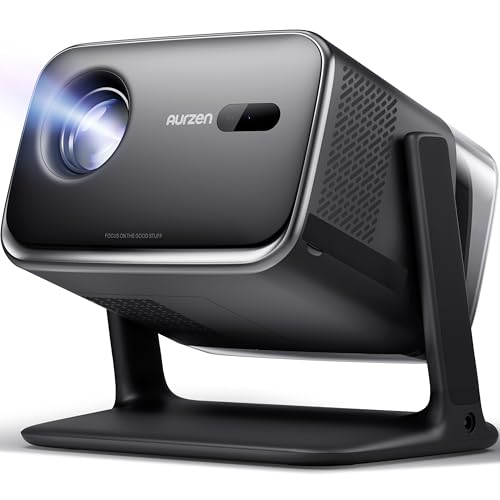

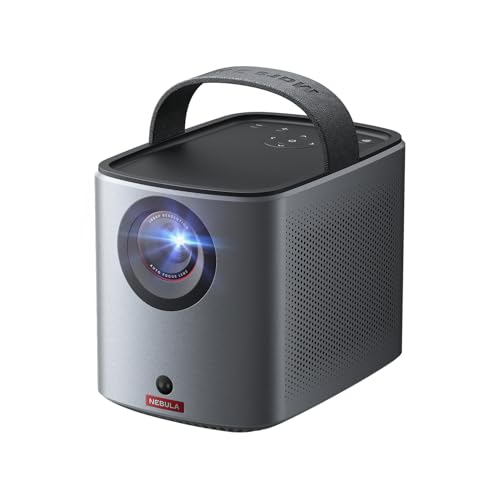




The portable projector market has exploded over the past few years, transforming from a niche category of expensive, dim gadgets into a legitimate alternative to traditional TVs. Two standout models that represent different approaches to this technology are the Aurzen BOOM Mini Smart Projector, released in 2025, and the Anker Nebula Mars 3 Air, which hit the market in 2024. These projectors might look similar on paper, but they're designed for completely different lifestyles and use cases.
Understanding which one fits your needs requires looking beyond the basic specs to understand what these differences mean in real-world use. The fundamental choice comes down to whether you want the best possible image quality for a dedicated entertainment space, or the freedom to take your movies anywhere.
Before diving into the comparison, it's helpful to understand what separates modern mini projectors from the dim, blurry devices of just a few years ago. Both the BOOM Mini and Mars 3 Air use LED light sources instead of traditional projector bulbs, which means they last around 30,000 hours (roughly 20 years of normal use) without needing replacement. This is a massive improvement over older projectors that required expensive bulb changes every 2,000-4,000 hours.
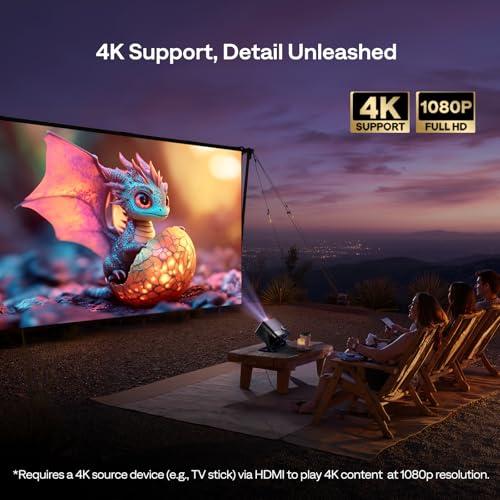
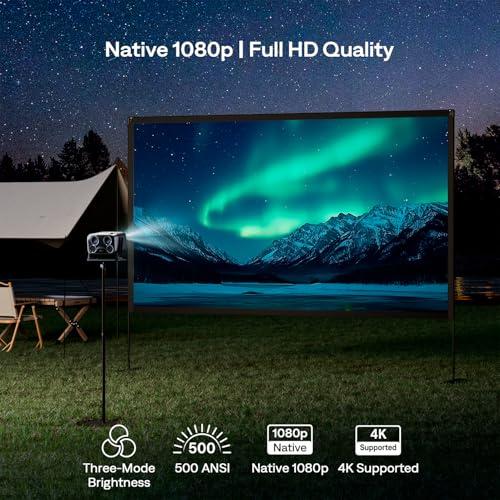
The key specs that matter most are brightness (measured in ANSI lumens - a standardized way to measure light output), contrast ratio (how well the projector displays the difference between bright whites and deep blacks), and resolution. Both projectors offer native 1080p resolution, meaning they display content at full high-definition quality without upscaling lower-resolution sources.
The most fundamental difference between these projectors is their approach to power. The Aurzen BOOM Mini requires a wall outlet and draws significant power (around 110 watts) to achieve its performance levels. This might seem like a limitation, but it's actually what enables its superior brightness and image quality.
The Anker Mars 3 Air, on the other hand, runs on an internal battery that provides about 2.5 hours of movie playback or up to 8 hours when used as a Bluetooth speaker. This battery operation is genuinely revolutionary for portable entertainment, but it comes with performance trade-offs due to power constraints.
Think of it like comparing a desktop computer to a laptop - the desktop delivers more power because it doesn't need to worry about battery life, while the laptop sacrifices some performance for mobility. The same principle applies here.
When it comes to pure image performance, the Aurzen BOOM Mini takes a clear lead. Its 500 ANSI lumens of brightness compared to the Mars 3 Air's 400 lumens might not sound dramatic, but that 25% difference becomes very noticeable in real-world viewing conditions.
More importantly, the BOOM Mini achieves a 1000:1 contrast ratio using LCD (Liquid Crystal Display) technology, while the Mars 3 Air manages only 400:1 with its DLP (Digital Light Processing) system. Contrast ratio is arguably more important than raw brightness for image quality - it determines how well you can see details in dark movie scenes and how vivid colors appear.
LCD technology, used in the BOOM Mini, excels at color reproduction and typically produces more natural-looking skin tones and vibrant landscapes. DLP, found in the Mars 3 Air, offers sharper text and can be more compact, but often struggles with what's called the "rainbow effect" - brief flashes of color that some viewers notice, particularly when moving their eyes quickly across the screen.
Based on our research into user experiences and professional reviews, the BOOM Mini consistently delivers more impressive visuals in side-by-side comparisons, with deeper blacks and more punchy colors that make movies feel more cinematic.
If the BOOM Mini wins on image quality, the Mars 3 Air absolutely dominates in portability. Weighing just 3.7 pounds with dimensions of roughly 5×5×7 inches, it's genuinely pocketable for a projector. The built-in carrying handle and protective design mean you can toss it in a backpack without worry.
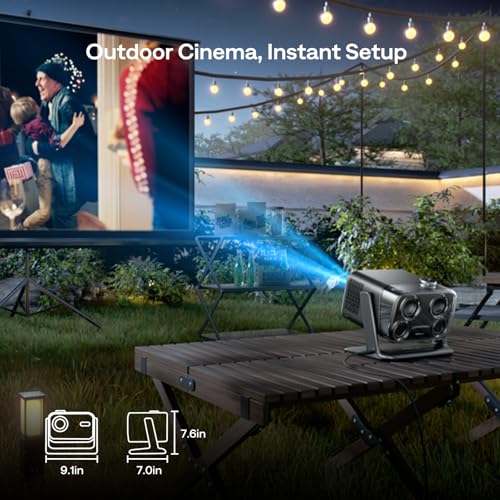
The battery operation changes everything about how you use the device. Want to watch movies in your backyard? No extension cord needed. Camping trip? Perfect for the tent. Hotel room with inconvenient outlet placement? No problem. This freedom is something you don't fully appreciate until you experience it.
The Mars 3 Air also operates at just 28 decibels - quieter than most bedroom air conditioning units. The BOOM Mini, while still reasonably quiet at 36 decibels, is noticeably louder during operation. In a bedroom setting or quiet environment, this 8-decibel difference is surprisingly significant.
Both projectors run Google TV, which represents a major leap forward from the clunky interfaces of earlier portable projectors. Having Google TV built-in means you can access Netflix, Disney+, YouTube, and thousands of other apps without connecting additional devices like a Roku or Fire TV stick.
The Mars 3 Air actually holds a unique distinction here - it's the world's first portable projector with built-in Netflix support. While this might seem like a minor detail, Netflix has historically been very restrictive about which devices can run their app, so this represents a significant achievement in partnerships and technical integration.
The BOOM Mini counters with more robust internal hardware: 2GB of RAM and 16GB of storage compared to unspecified (but likely lower) specs in the Mars 3 Air. In practice, this means the BOOM Mini might handle heavy apps or multitasking more smoothly, though both perform adequately for typical streaming use.
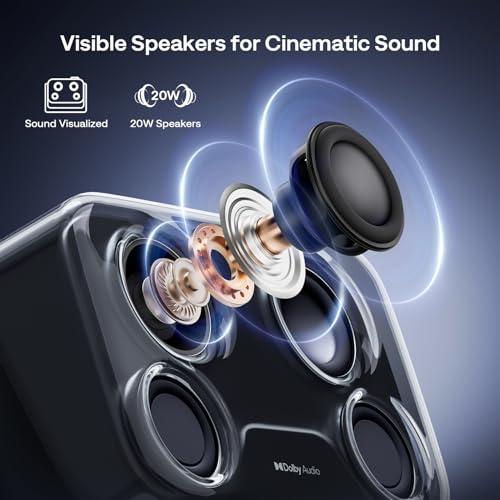
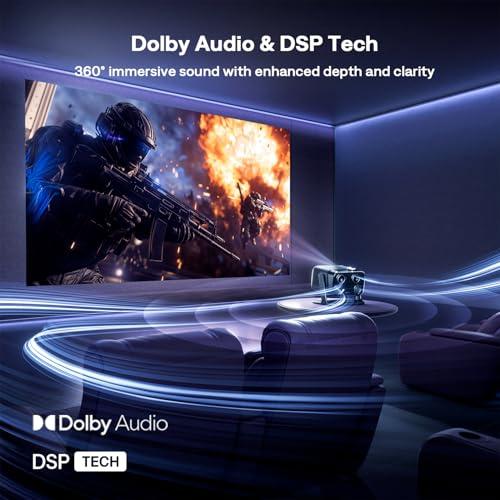
Audio often gets overlooked in projector reviews, but it's crucial for the complete entertainment experience. The BOOM Mini packs dual 10-watt speakers for 20 watts total, while the Mars 3 Air offers dual 8-watt speakers with Dolby Audio processing.
On paper, the BOOM Mini should sound better with its higher power output. User feedback suggests it does deliver fuller, more room-filling sound with better bass response. However, the Mars 3 Air's Dolby Audio processing helps it punch above its weight class, creating a more immersive soundscape despite lower wattage.
For most viewing scenarios, both projectors eliminate the need for external speakers, which is impressive for devices this compact. The Mars 3 Air also doubles as a Bluetooth speaker when not projecting, adding versatility for music listening.
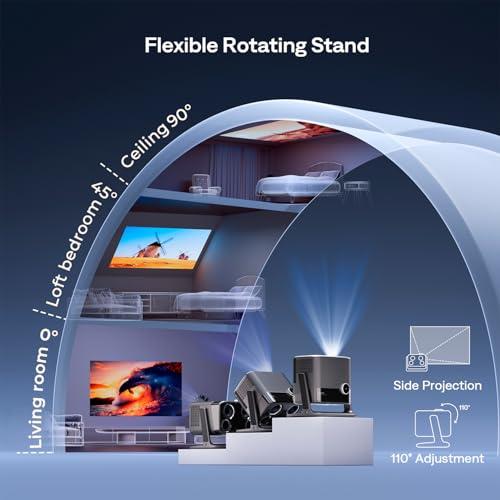
The BOOM Mini supports larger projection sizes, from 40 to 200 inches, compared to the Mars 3 Air's 30 to 150-inch range. This flexibility matters if you have a large wall or want to create a truly cinematic experience. The BOOM Mini also includes a clever 110-degree adjustable stand that enables ceiling projection - perfect for bedroom movie nights where you want to lie back and watch overhead.
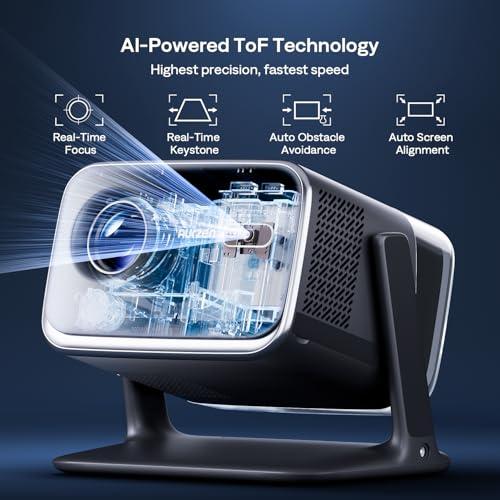
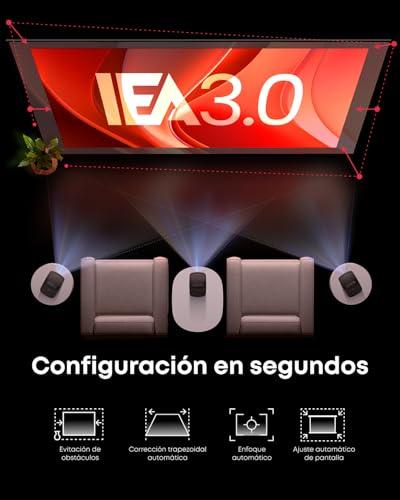
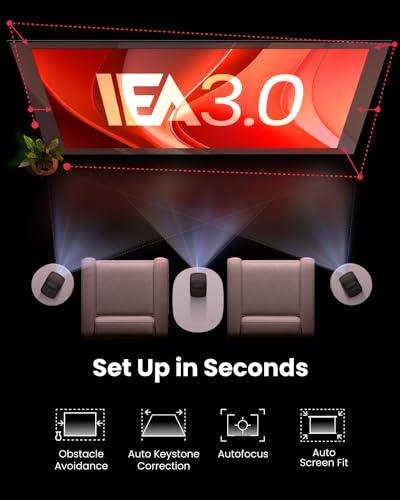
Both projectors feature automatic focus and keystone correction (technology that squares up the image even when projecting at an angle), but they implement these features differently. The BOOM Mini uses what it calls "real-time" adjustments that continuously optimize the image, while the Mars 3 Air employs "Intelligent Environment Adaptation" that quickly analyzes the room and makes corrections in about 3 seconds.
From user reports, both systems work well, but the Mars 3 Air's approach feels more polished and requires less user intervention during setup.
At the time of writing, the BOOM Mini typically costs around $70-80 less than the Mars 3 Air, making it the more budget-friendly option. However, comparing these projectors purely on price misses the bigger picture - they're optimized for different use cases.
The BOOM Mini delivers more performance per dollar if you're looking for a semi-permanent entertainment solution. Its superior brightness, contrast, and audio make it genuinely competitive with budget TVs in the same size range, while offering the flexibility of projection.
The Mars 3 Air commands a premium for its portability and battery operation. You're paying extra for engineering challenges like cramming a high-capacity battery into a compact form factor while maintaining reasonable performance. Whether that premium is worth it depends entirely on how much you value true mobility.
For dedicated home theater use, the BOOM Mini is the clear winner. Its higher brightness makes it more tolerant of ambient light, crucial if you can't achieve complete darkness. The superior contrast ratio produces more dramatic, cinema-like images with better shadow detail and color depth.
The ability to project up to 200 inches also matters in home theater contexts, where larger screens create more immersive experiences. The BOOM Mini's 110-degree adjustable stand opens up installation possibilities that might be impossible with traditional TVs.
However, the Mars 3 Air shouldn't be dismissed for home use. Its ultra-quiet operation makes it ideal for bedroom installations, and the battery backup means you can keep watching during power outages. The compact size also works well in smaller spaces where the BOOM Mini might feel bulky.
Based on extensive user feedback and professional reviews, here's how these projectors perform in common situations:
Family Movie Nights: The BOOM Mini creates a more cinematic experience with its brighter, more colorful image and fuller sound. Kids especially respond to the larger-than-life presentation.
Outdoor Entertainment: The Mars 3 Air excels here, with no cable management headaches and enough brightness for dusk viewing. The battery life handles most movies comfortably.
Business Presentations: Both work well, but the BOOM Mini's higher brightness provides more confidence in varied lighting conditions.
Gaming: Neither is optimized for competitive gaming due to input lag, but both handle casual console gaming adequately. The BOOM Mini's larger projection capability gives a more immersive gaming experience.
Travel Entertainment: The Mars 3 Air transforms hotel rooms and vacation rentals, while the BOOM Mini stays home due to its power requirements.
The choice between these projectors comes down to understanding your primary use case and lifestyle.
Choose the Aurzen BOOM Mini if you want the best possible image quality for dedicated home entertainment. It's perfect for users who have a specific room or area where they'll primarily use the projector, value superior brightness and contrast for movie watching, and want to maximize performance per dollar spent.
The Mars 3 Air is ideal if portability and convenience trump absolute performance. It suits users who want to use their projector in multiple locations, value ultra-quiet operation for bedroom use, need the flexibility of battery power, or frequently entertain outdoors or while traveling.
Both projectors represent excellent value in their respective categories, with real-world performance that exceeds their modest price points. The BOOM Mini offers the better pure entertainment experience, while the Mars 3 Air provides unmatched lifestyle flexibility. Your choice should align with which of these priorities matters more for your specific situation and viewing habits.
The portable projector category continues evolving rapidly, but both the BOOM Mini and Mars 3 Air represent mature, refined products that successfully address different market needs without major compromises in their intended use cases.
| Aurzen BOOM Mini Smart Projector | Anker Nebula Mars 3 Air Portable Projector |
|---|---|
| Power Source - Determines where and how you can use the projector | |
| AC plug-in only (requires wall outlet) | Built-in battery (2.5 hours movies, 8 hours music) |
| Brightness - Critical for visibility in rooms with ambient light | |
| 500 ANSI lumens (25% brighter, better for lit rooms) | 400 ANSI lumens (adequate for dark environments) |
| Display Technology - Affects color reproduction and image quality | |
| LCD with 1000:1 contrast ratio (vivid colors, deep blacks) | DLP with 400:1 contrast ratio (sharp text, more portable) |
| Audio System - Important for complete entertainment experience | |
| Dual 10W speakers (20W total, room-filling sound) | Dual 8W speakers with Dolby Audio (16W total, refined processing) |
| Projection Size Range - Determines screen size flexibility | |
| 40" to 200" (supports larger home theater setups) | 30" to 150" (good for most rooms, more compact throw) |
| Portability - Key factor for mobile entertainment | |
| 9.1×7×7.6 inches, requires power cable | 5.2×4.8×7.0 inches, 3.7 lbs with carry handle |
| Noise Level - Important for quiet environments and bedrooms | |
| ≤36dB (quiet but noticeable) | 28dB (ultra-quiet, bedroom-friendly) |
| Smart Features - Streaming capabilities and ease of use | |
| Google TV, 2GB RAM + 16GB storage | Google TV with built-in Netflix (world's first portable) |
| Special Features - Unique capabilities that set each apart | |
| 110° flexible stand for ceiling projection, real-time auto-adjustments | Battery-powered anywhere use, Bluetooth speaker mode |
| Best For - Target use cases where each excels | |
| Home theater setups, dedicated entertainment rooms, maximum image quality | Travel, outdoor events, bedroom use, ultimate portability |
The Aurzen BOOM Mini is significantly brighter at 500 ANSI lumens compared to the Anker Nebula Mars 3 Air's 400 ANSI lumens. This 25% brightness advantage makes the BOOM Mini better for rooms with ambient light, while the Mars 3 Air performs best in darker environments.
Only the Anker Nebula Mars 3 Air can operate on battery power, providing up to 2.5 hours of movie playback or 8 hours of music listening. The Aurzen BOOM Mini requires constant AC power through a wall outlet, making it less portable but enabling higher performance.
The Aurzen BOOM Mini delivers superior picture quality with its 1000:1 contrast ratio and LCD technology, producing more vivid colors and deeper blacks. The Mars 3 Air offers good image quality but with a lower 400:1 contrast ratio using DLP technology.
The BOOM Mini features more powerful audio with dual 10W speakers (20W total) for room-filling sound. The Mars 3 Air has dual 8W speakers (16W total) with Dolby Audio processing. Both eliminate the need for external speakers in most situations.
The Anker Nebula Mars 3 Air is specifically designed for outdoor use with its built-in battery, compact size, and carrying handle. The Aurzen BOOM Mini requires wall power, making it unsuitable for camping or locations without electrical outlets.
Yes, both the BOOM Mini and Mars 3 Air run Google TV with access to thousands of streaming apps. The Mars 3 Air notably features built-in Netflix support, making it the world's first portable projector with this capability.
The Anker Nebula Mars 3 Air operates at just 28dB, making it ultra-quiet and ideal for bedroom use. The Aurzen BOOM Mini runs at 36dB, which is still quiet but noticeably louder than the Mars 3 Air.
The BOOM Mini supports larger projection sizes from 40" to 200", making it better for home theater setups. The Mars 3 Air projects from 30" to 150", which covers most typical viewing needs while maintaining portability.
The Aurzen BOOM Mini excels at bedroom ceiling projection with its 110° flexible stand that enables overhead viewing. While the Mars 3 Air can project upward, it lacks the dedicated stand design for comfortable ceiling mounting.
Both projectors offer automatic focus and keystone correction for easy setup. The Mars 3 Air uses "Intelligent Environment Adaptation" for quick 3-second adjustments, while the BOOM Mini provides real-time continuous optimization throughout viewing.
For dedicated home theater use, the Aurzen BOOM Mini provides better value with superior brightness, contrast, and larger projection capabilities at a lower cost. The Mars 3 Air commands a premium for its portability features, which may not be necessary for stationary home theater setups.
The BOOM Mini is better suited to replace a TV due to its higher brightness, better contrast, and ability to handle ambient light. The Mars 3 Air works well as a TV replacement in dark rooms but may struggle in brighter living spaces where the BOOM Mini would perform better.
We've done our best to create useful and informative comparisons to help you decide what product to buy. Our research uses advanced automated methods to create this comparison and perfection is not possible - please contact us for corrections or questions. These are the sites we've researched in the creation of this article: aurzen.com - aurzen.com - the-gadgeteer.com - projectorcentral.com - aurzen.com - aurzen.com - youtube.com - bestbuy.com - bestbuy.com - youtube.com - aurzen.com - youtube.com - hometechnologyreview.com - youtube.com - aurzen.com - techradar.com - thesmarthomehookup.com - whathifi.com - thesmarthomehookup.com - cnet.com - whathifi.com - projectorreviews.com - youtube.com - youtube.com - versus.com - projectorcentral.com - practicalmotorhome.com - youtube.com - seenebula.com - us.seenebula.com - harveynorman.ie

Privacy Policy
Terms and Conditions - Affiliate Policy
Home Security
© Copyright 2008-2026.
11816 Inwood Rd #1211, Dallas, TX 75244