





The smart projector market has exploded in recent years, transforming how we think about home entertainment. Gone are the days when setting up a movie night meant juggling multiple devices, cables, and streaming dongles. Today's smart projectors pack everything you need into one sleek package, but choosing the right one requires understanding what separates a good projector from a great one.
Two standout options have caught our attention: the HAPPRUN Google TV Smart Projector and the Anker Nebula Mars 3 Air Portable Projector. While both deliver the smart features you'd expect, they represent fundamentally different approaches to projection technology. One prioritizes maximum value for dedicated home theater setups, while the other champions portability without sacrificing premium features.
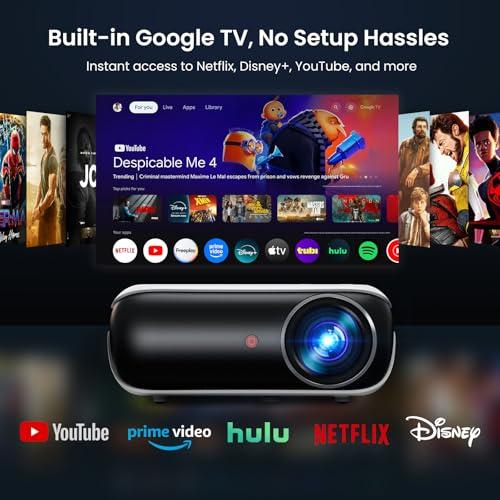
Smart projectors combine traditional projection hardware with built-in streaming capabilities, essentially putting an Android TV or Google TV system directly inside the projector. This integration eliminates the clutter of external streaming devices while providing access to Netflix, YouTube, Prime Video, and other major platforms through a single interface.
When evaluating smart projectors, several key factors determine real-world performance. Brightness, measured in ANSI lumens, directly impacts how well you can see the image in various lighting conditions—more lumens mean clearer pictures in brighter rooms. Native resolution determines image sharpness, with 1080p being the sweet spot for most users today. Contrast ratio affects how deep blacks appear versus bright whites, creating more dramatic and realistic images.
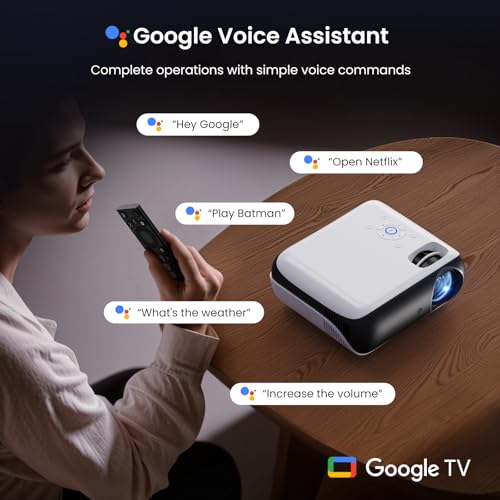
The smart platform integration has become just as crucial as the hardware. Google TV has emerged as the gold standard, offering the most comprehensive app support and smoothest user experience. Finally, connectivity options determine how easily you can connect gaming consoles, laptops, and other devices to expand your entertainment options.
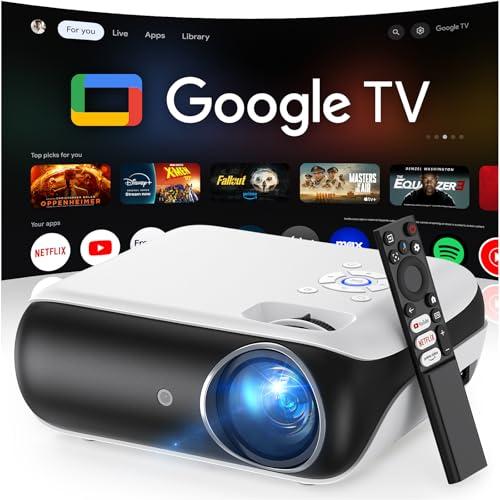
Released in 2025, the HAPPRUN Google TV Smart Projector represents the latest wave of budget-friendly smart projectors that don't compromise on essential features. This stationary projector targets home theater enthusiasts who want maximum bang for their buck in a dedicated viewing space.
The HAPPRUN delivers native 1080p resolution with support for 4K content decoding—meaning it can accept and display 4K video sources, though it downscales them to its native 1080p display. More impressively, it supports HDR10+, an advanced high dynamic range format that enhances color accuracy and contrast beyond standard HDR10. This feature typically appears in much more expensive projectors.
Perhaps the most eye-catching specification is its claimed 20,000:1 contrast ratio. To put this in perspective, most projectors in this price range struggle to achieve contrast ratios above 2,000:1. If accurate, this would deliver exceptionally deep blacks and vibrant colors that rival much more expensive models.
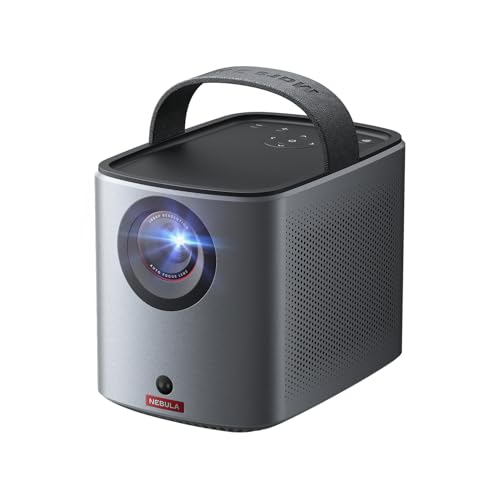
The Anker Nebula Mars 3 Air, launched in January 2024, marked a significant milestone as the world's first portable projector with built-in Google TV and official Netflix licensing. This achievement shouldn't be understated—most portable projectors require workarounds or external devices for Netflix access.
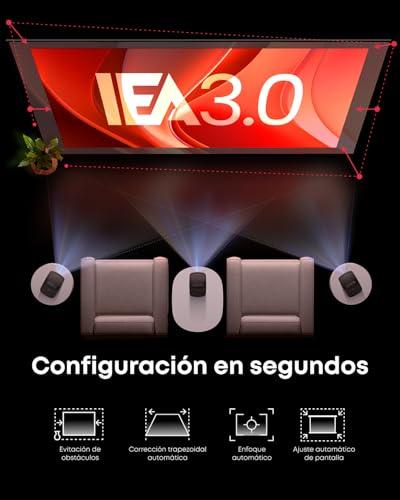
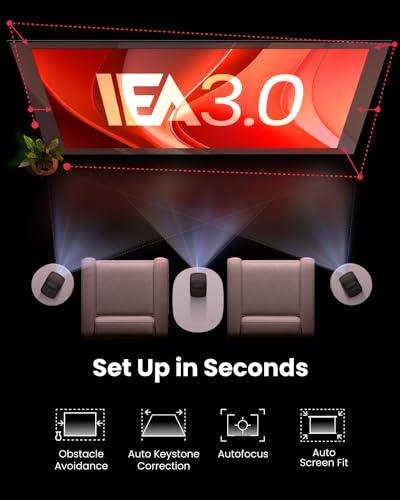
What sets the Mars 3 Air apart is its focus on user experience through automation. The Intelligent Environment Adaptation 3.0 system automatically handles focus, keystone correction (fixing image distortion when projecting at angles), and even obstacle avoidance. This means you can place it anywhere and get a perfectly aligned image within seconds.
The built-in 65.8Wh battery provides up to 2.5 hours of movie playback, transforming it into a truly portable entertainment system. When not projecting, it doubles as a Bluetooth speaker with up to 8 hours of music playback—a clever dual-purpose design that adds value.
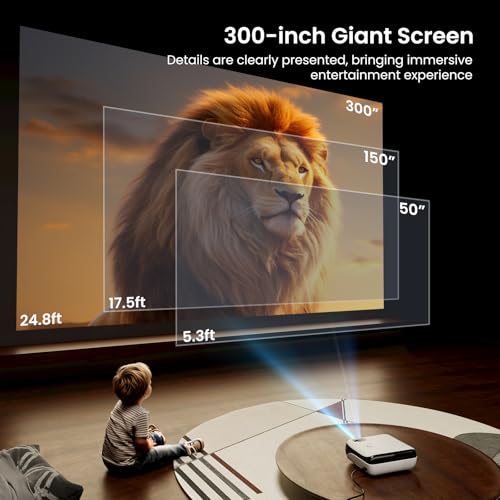
Both projectors deliver native 1080p resolution, but their approaches to image quality differ significantly. The HAPPRUN outputs 350 ANSI lumens while supporting projection sizes from 40 to 200 inches—potentially up to 300 inches according to some specifications. However, projector brightness becomes increasingly diluted as screen size grows, following the inverse square law of light dispersion.
The Mars 3 Air counters with 400 ANSI lumens in a more focused 30-150 inch projection range. Based on our research into user experiences and expert reviews, this higher brightness-to-size ratio typically results in more vibrant, watchable images. Independent testing has measured the Mars 3 Air achieving up to 450 lumens in practice, exceeding its advertised specifications.
The contrast ratio story reveals an important distinction. The HAPPRUN's claimed 20,000:1 contrast ratio seems almost too good to be true for LED projection technology at this price point. The Mars 3 Air's more conservative 400:1 specification aligns with what's achievable in portable DLP (Digital Light Processing) projectors, suggesting more realistic expectations.
DLP technology, used in the Mars 3 Air, typically produces sharper images with better color accuracy than LCD-based systems. DLP creates images using millions of tiny mirrors that tilt toward or away from a light source, resulting in precise pixel definition and reduced screen door effects—the visible gaps between pixels that can make images look pixelated up close.
High Dynamic Range (HDR) technology expands the range between the darkest and brightest parts of an image, creating more realistic and immersive visuals. The HAPPRUN supports HDR10+, an advanced format that uses dynamic metadata to optimize each scene individually. This represents a significant step up from basic HDR10, as it can adjust brightness and color settings frame by frame rather than using static settings for entire movies.
The Mars 3 Air supports both HDR10 and HLG (Hybrid Log-Gamma), covering the essential HDR formats for streaming and broadcast content. More importantly, it achieves 90% coverage of the DCI-P3 color gamut—the digital cinema standard used in professional movie production. This means colors appear more accurate and vibrant, particularly noticeable in animated content and nature documentaries.
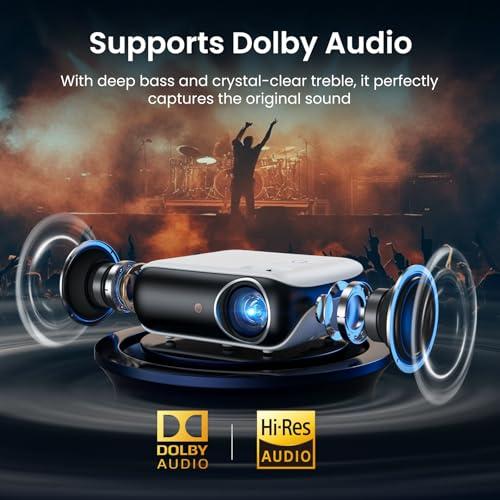
Projector audio frequently disappoints, but both models make serious attempts at quality sound. The HAPPRUN includes an 8W digital speaker with Dolby 3D stereo processing, providing adequate audio for small to medium-sized rooms.
The Mars 3 Air significantly outperforms with dual 8W speakers (16W total output) featuring Dolby Audio certification. Based on user feedback we've analyzed, this translates to noticeably fuller, louder sound that works well for outdoor use or larger spaces. The speaker placement and acoustic tuning also contribute to more immersive audio experiences.
For serious home theater applications, both projectors benefit from external audio systems. However, the Mars 3 Air's superior built-in audio makes it more versatile for situations where external speakers aren't practical.
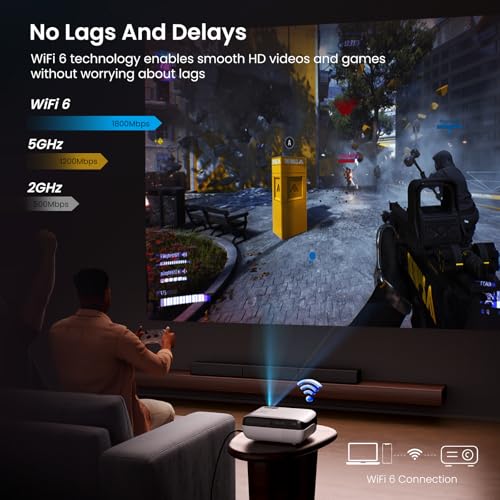
Both projectors run Google TV, but implementation quality varies significantly. The HAPPRUN leverages Wi-Fi 6 technology for faster, more stable streaming connections. Wi-Fi 6 offers improved efficiency in crowded network environments and better handling of multiple device connections—particularly valuable if your household has many smart devices competing for bandwidth.
The Mars 3 Air focuses on automation and user experience. Its autofocus system continuously monitors image sharpness and adjusts the lens accordingly, while automatic keystone correction fixes image distortion in real-time. The obstacle avoidance feature can even detect when objects partially block the projection and adjust the image accordingly.
These automation features matter more than they might initially seem. Manual focus and keystone adjustments can be tedious and imprecise, especially in dark viewing environments. The Mars 3 Air's ability to handle these adjustments automatically removes friction from the setup process.
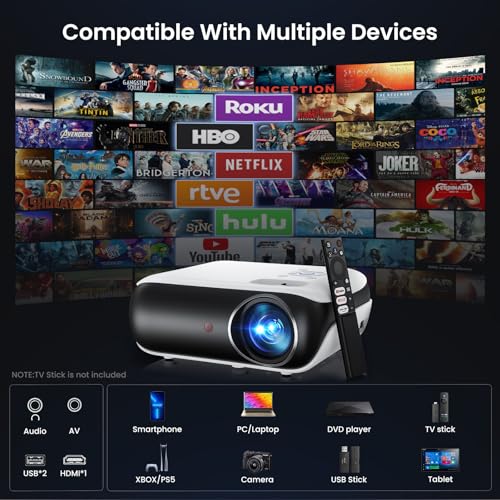
The HAPPRUN provides more physical connectivity with two USB-A ports, HDMI, AV input, and a headphone jack. This flexibility proves valuable for connecting multiple devices simultaneously—perhaps a gaming console via HDMI while keeping USB devices connected for local media playback.
The Mars 3 Air takes a minimalist approach with HDMI, single USB-A, and audio output. While more limited, this reflects its portable design philosophy where carrying multiple connected devices defeats the purpose of portability.
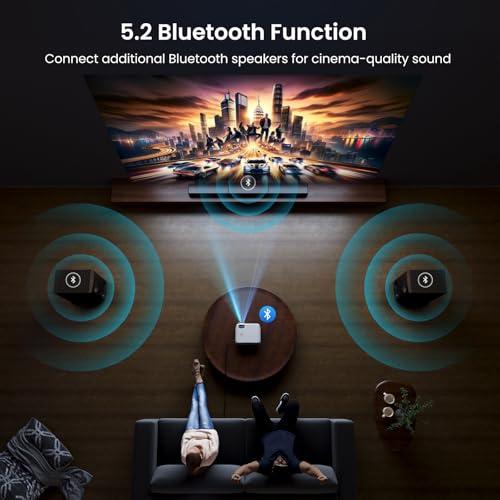
Both support Bluetooth connectivity, but the HAPPRUN uses the newer Bluetooth 5.2 standard, offering improved range and connection stability. The Mars 3 Air implements Bluetooth 5.1, which still provides excellent performance for wireless headphones and speakers.
This represents the fundamental divide between these projectors. The HAPPRUN requires constant AC power, limiting placement options but allowing for consistent performance without battery degradation concerns. For dedicated home theaters, this approach makes sense—you're not moving the projector frequently, and constant power enables features like always-on smart connectivity.
The Mars 3 Air transforms the projector into a truly portable entertainment device. Its 2.5-hour battery life supports most movies, while the compact design and built-in carrying strap make transport effortless. The ability to set up movie nights in backyards, campsites, or different rooms without seeking power outlets opens up usage scenarios impossible with traditional projectors.
However, portability comes with trade-offs. Battery-powered operation limits maximum brightness to preserve runtime, and the compact design constrains cooling, which can affect long-term performance in demanding conditions.
For dedicated home theater installations, several factors become particularly important. Room lighting control matters significantly more than projector brightness alone—even the brightest consumer projectors struggle against ambient light. Dark rooms allow both projectors to shine, but the HAPPRUN's potentially larger projection sizes could create more immersive experiences.
Mounting flexibility favors the HAPPRUN with its support for ceiling, tabletop, tripod, and wall mounting options. The Mars 3 Air's portable design makes permanent mounting less practical, though its automatic adjustments compensate by making temporary setups much easier.
Audio considerations become crucial in home theater applications. While the Mars 3 Air's superior built-in speakers provide better standalone performance, serious home theater enthusiasts will likely use external audio systems regardless. Both projectors support standard audio output methods for connecting to soundbars or surround sound systems.
At the time of writing, the HAPPRUN positions itself as a value-focused option, emphasizing features per dollar spent. Its inclusion of HDR10+, Wi-Fi 6, multiple ports, and generous warranty coverage (including lifetime technical support) creates compelling value for stationary use cases.
The Mars 3 Air commands a premium price but justifies it through superior build quality, automation features, and genuine portability. The engineering required to pack quality projection, smart features, and battery power into a portable package represents significant added value for users who need that flexibility.
Consider total cost of ownership as well. The HAPPRUN might require additional purchases like mounting hardware or carrying cases if you need to move it occasionally. The Mars 3 Air includes everything needed for portable use but might necessitate external speakers for optimal audio in larger spaces.
Choose the HAPPRUN Google TV Smart Projector if you're establishing a dedicated home theater space where the projector will remain stationary. Its value proposition shines when you can take advantage of its larger projection capabilities and don't need battery operation. The multiple USB ports and comprehensive connectivity options make it ideal for users who want to connect various devices simultaneously.
The HAPPRUN also makes sense if you're budget-conscious but want modern smart features. Its HDR10+ support and Wi-Fi 6 connectivity provide future-proofing that extends its useful life as streaming technologies evolve.
Select the Anker Nebula Mars 3 Air if portability factor into your entertainment plans. Whether that's outdoor movie nights, camping trips, or simply the flexibility to move between rooms, its battery operation and automatic setup features eliminate the friction typically associated with projector use.
The Mars 3 Air also wins if you prioritize user experience over maximum screen size. Its automation features, superior audio, and premium build quality create a more polished experience that justifies the higher investment for many users.
Both projectors succeed in their intended roles, representing different approaches to smart projection rather than direct competitors. The HAPPRUN maximizes value for stationary installations, while the Mars 3 Air prioritizes user experience and portability.
The smart projector market continues evolving rapidly, with improvements in brightness, battery technology, and smart platform integration appearing regularly. Both projectors benefit from this innovation wave, offering features that would have been unimaginable in portable or budget projectors just a few years ago.
Your choice ultimately depends on how you plan to use your projector. If it's destined for a dedicated space where maximum value and screen size matter most, the HAPPRUN delivers impressive capabilities at an attractive price point. If flexibility, ease of use, and premium features justify higher investment, the Mars 3 Air provides a more refined and versatile entertainment solution.
Either way, you're getting access to the modern smart projector experience that transforms any space into a personal cinema—no external devices, complex setup, or technical expertise required.
| HAPPRUN Google TV Smart Projector | Anker Nebula Mars 3 Air Portable Projector |
|---|---|
| Brightness - Critical for image visibility in various lighting conditions | |
| 350 ANSI lumens (best for dark rooms and controlled lighting) | 400 ANSI lumens (slightly brighter, better for dim environments) |
| Native Resolution - Determines image sharpness and detail | |
| 1080p with 4K decoding (sharp HD images, accepts 4K sources) | 1080p DLP (sharp HD images with precise color accuracy) |
| HDR Support - Enhances color range and contrast for more realistic images | |
| HDR10+ (advanced dynamic optimization, frame-by-frame adjustments) | HDR10 & HLG (solid HDR support for streaming and broadcast content) |
| Contrast Ratio - Affects how deep blacks appear versus bright whites | |
| 20,000:1 claimed (exceptionally high if accurate, creates dramatic images) | 400:1 measured (realistic spec, typical for portable DLP projectors) |
| Color Accuracy - Important for realistic and vibrant image reproduction | |
| Not specified (standard LED color reproduction) | 90% DCI-P3 coverage (professional cinema-grade color accuracy) |
| Projection Size Range - Flexibility for different room sizes and setups | |
| 40-200 inches, up to 300 claimed (massive screens possible but dimmer) | 30-150 inches optimized (smaller range but better brightness per inch) |
| Power Source - Determines portability and placement flexibility | |
| AC power only (stationary use, no battery limitations) | Built-in 65.8Wh battery (2.5 hours movies, 8 hours music mode) |
| Audio System - Built-in sound quality affects need for external speakers | |
| Single 8W speaker with Dolby 3D (adequate for small rooms) | Dual 8W speakers, 16W total with Dolby Audio (significantly better sound) |
| Smart Platform - Streaming capabilities and app ecosystem | |
| Google TV with official Netflix (comprehensive app support) | Google TV with official Netflix (same platform, optimized interface) |
| Setup Automation - Ease of installation and image adjustment | |
| Manual focus and keystone correction (hands-on adjustments required) | Auto-focus, keystone, screen fit, obstacle avoidance (nearly effortless) |
| Connectivity Options - Ports for external devices and flexibility | |
| 1 HDMI, 1 AV, 2 USB-A, headphone jack (extensive wired connections) | 1 HDMI, 1 USB-A, audio mini jack (minimal but sufficient for portable use) |
| Wireless Technology - Network performance and device compatibility | |
| Wi-Fi 6, Bluetooth 5.2 (latest standards, future-proof connectivity) | Dual-band Wi-Fi, Bluetooth 5.1 (solid wireless performance) |
| Build Design - Portability, durability, and mounting options | |
| Stationary with multiple mount options (ceiling, wall, tripod, desktop) | Premium portable design with carry strap and lens protection |
| Ideal Use Case - Best scenarios for each projector | |
| Dedicated home theater, large screen installations, value-focused setups | Outdoor entertainment, multi-room use, travel, premium portable experience |
For dedicated home theater setups, the HAPPRUN Google TV Smart Projector offers better value with its ability to project larger screen sizes (up to 200-300 inches) and multiple mounting options including ceiling installation. However, the Anker Nebula Mars 3 Air provides superior image quality with better color accuracy (90% DCI-P3) and automatic setup features that eliminate manual adjustments in dark viewing environments.
The primary difference is portability versus performance. The HAPPRUN Google TV Smart Projector is designed for stationary home theater use with AC power and larger projection capabilities, while the Anker Nebula Mars 3 Air Portable Projector features a built-in battery for true portability, automatic setup features, and premium build quality optimized for on-the-go entertainment.
The Anker Nebula Mars 3 Air offers superior brightness at 400 ANSI lumens compared to the HAPPRUN's 350 lumens. However, neither projector is ideal for bright daytime viewing - both perform best in dark or dimly lit environments. The Mars 3 Air's higher brightness provides slightly better visibility in ambient light conditions.
Yes, both the HAPPRUN Google TV Smart Projector and Anker Nebula Mars 3 Air feature built-in Google TV with official Netflix licensing. They provide direct access to Netflix, YouTube, Prime Video, Disney+, and other major streaming platforms without requiring external devices or streaming sticks.
The Anker Nebula Mars 3 Air delivers significantly better audio with dual 8W speakers (16W total) and Dolby Audio certification, compared to the HAPPRUN's single 8W speaker. The Mars 3 Air's superior audio makes it more suitable for outdoor use and eliminates the immediate need for external speakers in most scenarios.
Both projectors support gaming through HDMI connectivity with gaming consoles. The HAPPRUN Google TV Smart Projector offers more ports for multiple device connections, while the Anker Nebula Mars 3 Air provides automatic focus and keystone correction that's helpful for temporary gaming setups. Input lag is acceptable for casual gaming on both models.
The Anker Nebula Mars 3 Air Portable Projector is specifically designed for portability with a built-in battery providing 2.5 hours of movie playback, compact design with carry strap, and automatic setup features. The HAPPRUN requires AC power and manual setup, making it impractical for outdoor or travel use.
Both offer native 1080p resolution, but the Anker Nebula Mars 3 Air uses DLP technology with 90% DCI-P3 color coverage for more accurate colors and sharper images. The HAPPRUN Google TV Smart Projector supports HDR10+ for enhanced dynamic range and claims a higher contrast ratio, though real-world performance may vary between the two technologies.
The HAPPRUN Google TV Smart Projector provides better value for stationary home theater use with more connectivity options, larger projection capabilities, and Wi-Fi 6 support. The Anker Nebula Mars 3 Air offers premium value through superior build quality, portability, automation features, and better audio - justifying its higher cost for users needing flexibility.
The Anker Nebula Mars 3 Air offers significantly easier setup with automatic focus, keystone correction, and obstacle avoidance features - simply place it and start watching. The HAPPRUN Google TV Smart Projector requires manual focus and keystone adjustments, making setup more hands-on but offering more control over image parameters.
The HAPPRUN Google TV Smart Projector provides more comprehensive connectivity with 2 USB-A ports, HDMI, AV input, headphone jack, Wi-Fi 6, and Bluetooth 5.2. The Anker Nebula Mars 3 Air offers essential connectivity with HDMI, USB-A, audio output, and dual-band Wi-Fi - sufficient for most portable use cases but more limited overall.
Both the HAPPRUN Google TV Smart Projector and Anker Nebula Mars 3 Air can serve as TV replacements in dark rooms with their built-in smart platforms and streaming capabilities. The HAPPRUN works better for permanent TV replacement in dedicated spaces, while the Mars 3 Air excels as a flexible entertainment solution that can move between rooms or outdoor spaces as needed.
We've done our best to create useful and informative comparisons to help you decide what product to buy. Our research uses advanced automated methods to create this comparison and perfection is not possible - please contact us for corrections or questions. These are the sites we've researched in the creation of this article: youtube.com - topvisiontec.com - youtube.com - happrunprojector.com - youtube.com - happrunprojector.com - youtube.com - business.walmart.com - youtube.com - walmart.com - cordcuttersnews.com - nexpow.com - techradar.com - thesmarthomehookup.com - whathifi.com - thesmarthomehookup.com - cnet.com - whathifi.com - projectorreviews.com - youtube.com - youtube.com - versus.com - projectorcentral.com - practicalmotorhome.com - youtube.com - seenebula.com - us.seenebula.com - harveynorman.ie

Privacy Policy
Terms and Conditions - Affiliate Policy
Home Security
© Copyright 2008-2026.
11816 Inwood Rd #1211, Dallas, TX 75244