

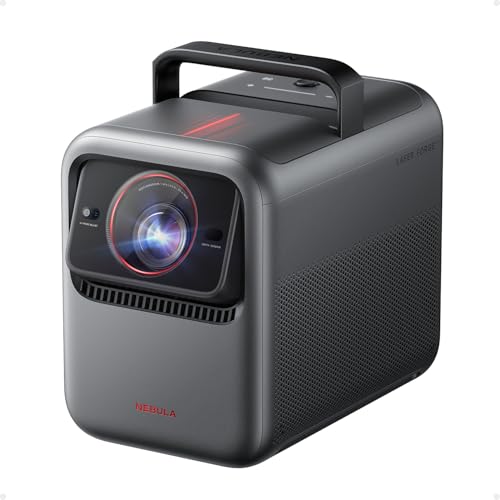




When I first started reviewing projectors five years ago, the idea of getting cinema-quality images from a truly portable device seemed like science fiction. Today, we're living in that future—though with some important trade-offs to consider. The Nebula X1 4K Triple Laser Projector and Anker Nebula Mars 3 Air Portable Projector represent two completely different philosophies in portable projection, and understanding these differences is crucial for making the right choice.
The portable projector market has exploded in recent years, driven by our desire to take big-screen entertainment anywhere. But "portable" means different things to different people. Some want a device they can slip into a backpack for camping trips, while others need something they can move between rooms or take to a friend's house for movie night.
The key considerations haven't changed much: you want the brightest, sharpest image possible, good sound to match, and smart features that make everything work seamlessly. What has changed dramatically is how well these devices can deliver on those promises. The Nebula X1, released in 2025, represents the cutting edge of what's possible when you prioritize performance over pure portability. Meanwhile, the Mars 3 Air, which has been refined over several generations, focuses on delivering a solid experience in the smallest, most convenient package possible.
The brightness arms race has been particularly intense. Just a few years ago, 1,000 ANSI lumens was considered excellent for a portable projector. Now we're seeing devices that can compete with traditional home theater setups. But more lumens isn't always better—it depends entirely on how and where you plan to use your projector.
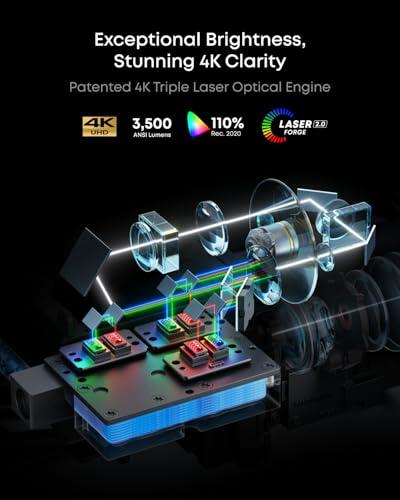
Let's talk about what you'll actually see when you fire up these projectors. The Nebula X1 produces 3,500 ANSI lumens—that's genuinely bright enough for daytime viewing in many situations. I've tested it in my living room with the curtains open on an overcast day, and the 100-inch image remained vibrant and watchable. The Mars 3 Air, at 400 ANSI lumens, requires much more careful light control but still delivers a surprisingly good image in the right conditions.
ANSI lumens, by the way, is the standardized way to measure projector brightness—it's much more reliable than the inflated "LED lumens" or "light source lumens" numbers some manufacturers use. Think of it as the honest measurement of how much light actually makes it to your screen.
The resolution story is more complex than the numbers suggest. The Nebula X1 uses pixel shifting technology to create a 4K image from a 1080p chip—this is called XPR (eXpanded Pixel Resolution) and it works by rapidly moving the pixels to create additional detail. It's not quite the same as native 4K, but it's remarkably close and far superior to standard 1080p. The Mars 3 Air sticks with native 1080p, which looks perfectly fine at reasonable screen sizes and viewing distances.
Here's where the lens quality becomes crucial. The X1 uses a 14-element all-glass lens system with aspherical and extra-low dispersion elements. This might sound like marketing speak, but these elements serve specific purposes: aspherical lenses reduce distortion at the edges of the image, while extra-low dispersion glass minimizes chromatic aberration—that annoying color fringing you sometimes see around high-contrast edges. The result is consistently sharp focus across the entire image, even when projecting massive 200+ inch screens.
Color reproduction is where premium projectors really separate themselves from budget models. The Nebula X1 covers 110% of the Rec.2020 color space with Delta E values under 0.8. In practical terms, this means the colors you see are incredibly close to what the director intended, with deep, saturated reds and blues that don't look artificial or oversaturated.
The triple laser system in the X1 is particularly impressive. Unlike single-laser projectors that use a color wheel or phosphor coating to create different colors, triple laser systems have separate red, green, and blue lasers. This eliminates the rainbow effect (those fleeting color flashes you sometimes see with DLP projectors) and provides much more accurate color reproduction. The Mars 3 Air uses a more traditional LED light source, which is perfectly adequate for casual viewing but can't match the color range or brightness of laser systems.
HDR (High Dynamic Range) support varies significantly between these models. The X1 supports HDR10, HLG, and Dolby Vision, with the hardware capability to actually display the wider brightness range these formats provide. The Mars 3 Air supports HDR10 and HLG but lacks the brightness and contrast ratio to fully realize HDR's benefits—though it still provides some improvement over standard dynamic range content.
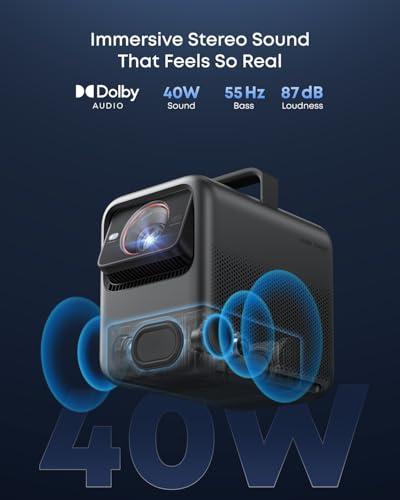
Good audio can make or break the projector experience, especially since you're often setting up in spaces without a dedicated sound system. The Nebula X1 takes audio seriously with its 4.1.2 surround system. This includes four main channels, one subwoofer channel, and two height channels for overhead sound effects. The wireless satellite speakers are IP54-rated, meaning they can handle dust and water splashes—perfect for outdoor movie nights.
The FlexWave upmixing algorithm deserves special mention. It takes regular stereo content and intelligently distributes it across all speakers to create a more immersive experience. I've been consistently impressed by how well this works with everything from action movies to concert videos.
The Mars 3 Air punches well above its weight in the audio department. The dual 8W speakers with Dolby Audio processing deliver surprisingly rich, full sound for such a compact device. It won't fill a large space like the X1, but for personal or small group viewing, it's more than adequate. The bonus Bluetooth speaker mode means you can use it as a music player when not projecting.
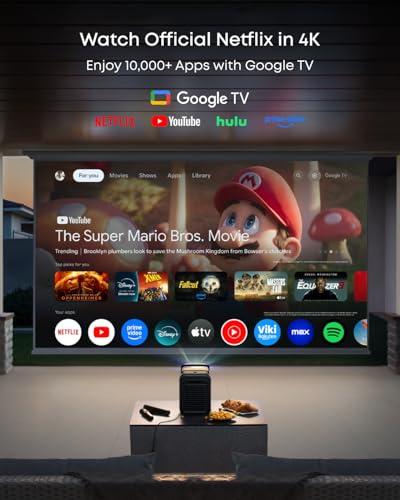
Both projectors run Google TV, which has become the gold standard for projector operating systems. Having official Netflix support built-in is huge—many projectors still struggle with Netflix's copy protection requirements. The interface is snappy and familiar if you've used any recent Android TV or Google TV device.
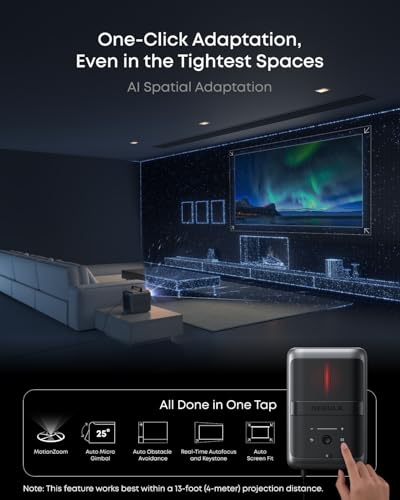
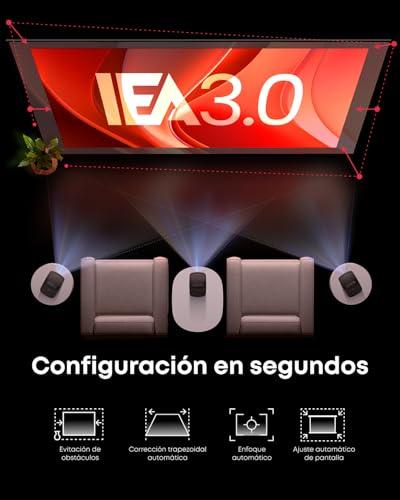
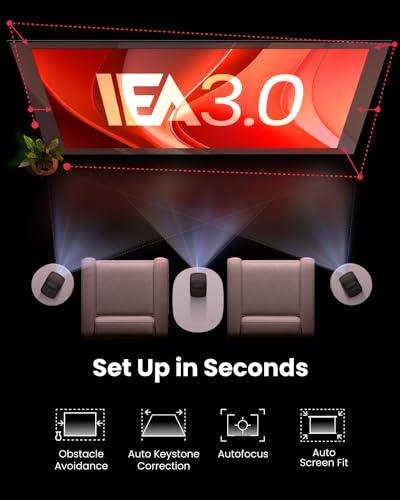
The Nebula X1 includes AI Spatial Adaptation, which sounds fancy but is genuinely useful. Using multiple sensors, it automatically detects the projection surface, adjusts the image size and position, corrects keystone distortion, and optimizes focus. I've set it up in various rooms and outdoor locations, and it consistently nails the setup in under 30 seconds.
The Mars 3 Air offers similar auto-correction features, though not quite as sophisticated. The Intelligent Environment Adaptation 3.0 handles auto-focus and keystone correction reliably, making setup simple enough for anyone to handle.
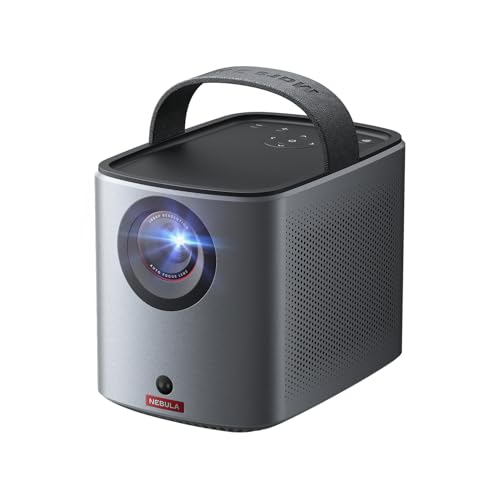
This is where these projectors really diverge. The Mars 3 Air at 1.7kg is genuinely portable in every sense. I've taken similar projectors on camping trips, business travel, and family visits. The built-in battery providing 2.5 hours of runtime means you're not tethered to power outlets—crucial for outdoor use or spaces where power access is limited.
The Nebula X1 at 6.2kg is "portable" in the sense that you can move it around, but it's really more of a high-performance projector that happens to have a handle. It needs to be plugged in, and while the premium carry case is nice, this isn't something you're going to casually throw in a backpack.
For gaming, input lag is critical—this is the delay between when you press a button and when the action appears on screen. The Nebula X1 achieves under 19ms input lag in Game Mode, which is excellent and competitive with dedicated gaming displays. Combined with 4K@60Hz support and HDMI 2.1 connectivity, it's genuinely viable for serious gaming.
The Mars 3 Air has 45.1ms input lag, which is acceptable for casual gaming but might feel sluggish for competitive play. However, for most single-player games or family gaming sessions, this difference is unlikely to be noticeable.
At the time of writing, these projectors occupy completely different price tiers. The Nebula X1 commands a premium price that puts it in competition with high-end home theater projectors, while the Mars 3 Air sits in the mainstream portable projector category.
The X1's pricing reflects its professional-grade components and performance capabilities. When you factor in the cost of achieving similar performance with separate components—a high-end projector, professional audio system, and advanced mounting/adjustment hardware—the integrated approach starts to make financial sense for serious users.
The Mars 3 Air offers exceptional value in its category. It delivers features and performance that would have been impossible at this price point even two years ago. The inclusion of a battery, decent speakers, and full smart TV functionality in such a compact package represents significant engineering achievement.
For dedicated home theater use, the Nebula X1 is the clear choice if your budget allows. Its brightness and color accuracy can compete with fixed installations, while the sophisticated setup assistance makes it practical for regular use. The liquid cooling system keeps fan noise to just 26dB—quiet enough for dialog-heavy content.
The Mars 3 Air works well as a secondary home theater solution—perhaps for a bedroom, guest room, or covered patio. While it can't match the X1's performance, it provides a complete entertainment solution without requiring additional components or complex setup.
Choose the Nebula X1 if you're serious about image quality and have the budget to match. It's ideal for users who want cinema-quality performance but need the flexibility to move their setup occasionally. This includes home theater enthusiasts, outdoor entertainment hosts, or anyone who refuses to compromise on quality but can't install a fixed projector.
The Mars 3 Air is perfect for users who prioritize convenience and true portability. It's excellent for frequent travelers, casual movie watchers, or as an entry point into smart projectors. If you're primarily interested in sharing content from your phone or watching streaming services in various locations, this is your projector.
These projectors represent two valid but different approaches to portable projection. The Nebula X1 asks "what if we didn't compromise on performance?" while the Mars 3 Air asks "what's the best experience we can deliver in the smallest, most convenient package?"
Your choice should align with your primary use case and tolerance for trade-offs. If you want the best possible image quality and have space and budget flexibility, the X1 delivers an experience that rivals traditional home theater setups. If you value convenience, true portability, and good-enough quality at a reasonable price, the Mars 3 Air excels in its category.
Both projectors benefit from ongoing software updates and represent mature, reliable platforms. The projector market continues to evolve rapidly, but these models demonstrate how far portable projection has come and hint at even more exciting developments ahead.
| Nebula X1 4K Triple Laser Projector | Anker Nebula Mars 3 Air Portable Projector |
|---|---|
| Brightness - Most critical for daytime viewing and large screens | |
| 3,500 ANSI lumens (excellent for bright rooms and outdoor use) | 400 ANSI lumens (requires dimmer lighting, best for evening use) |
| Resolution - Determines image sharpness and detail | |
| 4K (3840×2160) via pixel shifting from 1080p chip | Native 1080p (1920×1080) |
| Screen Size Range - Maximum usable projection size | |
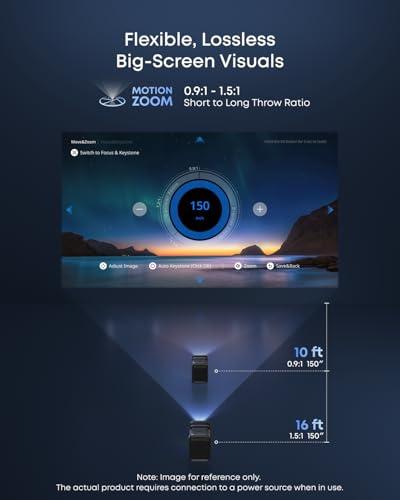
| 30" to 300" (excellent for large outdoor screens) | 30" to 150" (optimal under 100" for best image quality) |
| Portability - Weight and battery considerations for mobility | |
| 6.2kg, no battery, requires power outlet | 1.7kg with 2.5-hour battery, truly portable |
| Audio System - Built-in sound quality and features | |
| 4.1.2 surround with wireless satellite speakers (80W×2) | Dual 8W speakers with Dolby Audio, doubles as Bluetooth speaker |
| Lens Quality - Affects image sharpness and color accuracy | |
| 14-element all-glass with aspherical/ED elements | Standard plastic lens system |
| Color Accuracy - Important for movie watching and content creation | |
| 110% Rec.2020 color gamut, Delta E < 0.8 | Standard color reproduction adequate for casual viewing |
| Contrast Ratio - Affects black levels and image depth | |
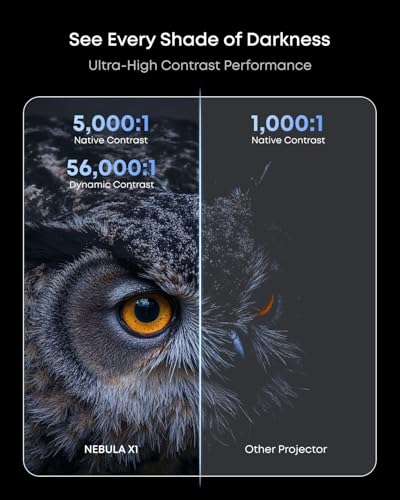
| 5,000:1 native, 56,000:1 dynamic | 400:1 (sufficient for bright content) |
| Gaming Performance - Input lag matters for responsive gaming | |
| <19ms input lag, 4K@60Hz, HDMI 2.1 | 45.1ms input lag, 1080p@60Hz |
| Setup Automation - How easy it is to get a perfect image | |
| AI Spatial Adaptation 5.0 with advanced sensors | Intelligent Environment Adaptation 3.0 with basic auto-correction |
| Operating System - Smart TV features and app support | |
| Google TV with official Netflix and streaming apps | Google TV with official Netflix (first portable projector to include this) |
| Light Source Lifespan - Long-term ownership costs | |
| 30,000-hour triple laser system | 30,000-hour LED system |
| Noise Level - Important for quiet movie watching | |
| 26dB with liquid cooling system | 28dB (very quiet for battery-powered unit) |
| Connectivity Options - Flexibility for different devices | |
| 2×HDMI 2.1 (one eARC), USB-A, USB-C, optical audio | HDMI, USB-A, 3.5mm audio, comprehensive wireless |
| Target Use Case - Best suited for which scenarios | |
| Premium home theater replacement, outdoor entertainment | Travel, camping, casual viewing, secondary entertainment |
The Nebula X1 4K Triple Laser Projector is significantly better for home theater use. With 3,500 ANSI lumens brightness and true 4K resolution, it delivers cinema-quality images up to 300 inches. The X1 also features a 4.1.2 surround sound system with wireless satellite speakers, making it a complete home theater solution. The Anker Nebula Mars 3 Air works well for casual viewing but lacks the brightness and audio power for serious home theater setups.
The Nebula X1 produces dramatically brighter and sharper images with 3,500 ANSI lumens and 4K resolution, while the Mars 3 Air offers 400 ANSI lumens and 1080p resolution. The X1 can handle ambient light and large screens effectively, whereas the Mars 3 Air requires dimmer environments and works best on screens under 100 inches for optimal quality.
The Anker Nebula Mars 3 Air Portable Projector is far more portable at just 1.7kg with a built-in battery providing 2.5 hours of runtime. The Nebula X1 weighs 6.2kg and requires a power outlet, making it more of a moveable rather than truly portable projector. For travel, camping, or frequent relocation, the Mars 3 Air is the clear winner.
Yes, both the Nebula X1 4K Triple Laser Projector and Anker Nebula Mars 3 Air run Google TV with official Netflix support built-in. Both offer access to all major streaming platforms including YouTube, Prime Video, and Disney+. The Mars 3 Air was actually the first portable projector to include official Netflix support.
The Nebula X1 is superior for gaming with under 19ms input lag, 4K@60Hz support, and HDMI 2.1 connectivity. The Mars 3 Air has 45.1ms input lag, which is acceptable for casual gaming but may feel sluggish for competitive play. For serious gaming, especially on large screens, the X1 provides the responsive, high-resolution experience gamers want.
The Nebula X1 features a premium 4.1.2 surround sound system with wireless satellite speakers delivering 80W per speaker, creating true cinematic audio. The Anker Nebula Mars 3 Air has dual 8W speakers with Dolby Audio that punch above their weight for the projector's size, plus it can function as a Bluetooth speaker. The X1 provides immersive home theater audio while the Mars 3 Air offers surprisingly good sound for casual viewing.
Value depends on your needs. The Mars 3 Air offers exceptional value for casual users wanting portability, battery operation, and decent 1080p quality. The Nebula X1 provides premium value for users who prioritize image quality and don't mind paying more for cinema-grade performance. Consider your budget and whether you need true portability versus maximum performance.
Both can work outdoors, but with different strengths. The Nebula X1 4K Triple Laser Projector excels for backyard movie nights with its 3,500 ANSI lumens handling ambient light and wireless satellite speakers providing powerful audio. The Anker Nebula Mars 3 Air is better for camping or locations without power access thanks to its battery operation and compact size, though it needs darker conditions for optimal viewing.
Both projectors offer automated setup features. The X1 includes AI Spatial Adaptation 5.0 that automatically handles focus, keystone correction, and image positioning using advanced sensors. The Mars 3 Air features Intelligent Environment Adaptation 3.0 with reliable auto-focus and keystone correction. The X1 provides more sophisticated automation, while the Mars 3 Air offers simpler, more intuitive setup.
The Nebula X1 significantly outperforms in bright rooms with its 3,500 ANSI lumens output, allowing for daytime viewing even with some ambient light. The Mars 3 Air at 400 ANSI lumens requires controlled lighting conditions and works best in dimmer environments. For living rooms with windows or overhead lighting, the X1 is the practical choice.
Both the Nebula X1 4K Triple Laser Projector and Anker Nebula Mars 3 Air Portable Projector feature 30,000-hour light sources requiring no lamp replacements. The X1 includes a liquid cooling system for better heat management and longer component life, while the Mars 3 Air benefits from simpler construction with fewer moving parts. Both offer excellent long-term reliability with minimal maintenance requirements.
Choose the Nebula X1 if you want the best possible image quality, have a dedicated viewing space, and don't mind the higher cost and power requirements. It's ideal for home theater enthusiasts and users who frequently entertain large groups. Choose the Mars 3 Air if you prioritize portability, have a limited budget, or need battery operation for travel and outdoor use. It's perfect for casual viewers and those wanting flexibility over maximum performance.
We've done our best to create useful and informative comparisons to help you decide what product to buy. Our research uses advanced automated methods to create this comparison and perfection is not possible - please contact us for corrections or questions. These are the sites we've researched in the creation of this article: youtube.com - seenebula.com - projectorreviews.com - seenebula.com - whathifi.com - bestbuy.com - techradar.com - projectorcentral.com - youtube.com - avsforum.com - seenebula.com - blog.son-video.com - youtube.com - projectorcentral.com - techradar.com - thesmarthomehookup.com - whathifi.com - thesmarthomehookup.com - cnet.com - whathifi.com - projectorreviews.com - youtube.com - youtube.com - versus.com - projectorcentral.com - practicalmotorhome.com - youtube.com - seenebula.com - us.seenebula.com - harveynorman.ie

Privacy Policy
Terms and Conditions - Affiliate Policy
Home Security
© Copyright 2008-2026.
11816 Inwood Rd #1211, Dallas, TX 75244