

The projector market has exploded in recent years, transforming from a niche hobby into mainstream entertainment. Walk into any electronics store today and you'll find everything from pocket-sized models under $200 to cinema-grade laser projectors exceeding $5,000. But here's what's fascinating: the sweet spots have shifted dramatically, with budget models now offering features that were premium-only just five years ago.
Two projectors perfectly illustrate this evolution: the JMGO N1S Pro 4K released in 2024, representing the premium tier at around $1,500, and the Aurzen BOOM 3, a budget champion at roughly $260. At first glance, spending six times more seems excessive. But as we'll explore, these projectors serve fundamentally different purposes and audiences.
Before diving into specifics, let's establish what matters most in projector performance. Unlike TVs where you're mainly comparing screen size and picture quality, projectors introduce variables like throw distance (how far back you need to place it), ambient light handling, and setup complexity.
The most critical specifications include native resolution (the actual pixels the projector can display), brightness measured in ANSI lumens (standardized light output), contrast ratio (difference between darkest and brightest parts), and color gamut coverage (how many colors it can reproduce). These technical measurements directly translate to real-world viewing experience.
Modern projectors also integrate smart features, eliminating the need for separate streaming devices. This convenience factor has become increasingly important, especially as setup complexity was historically a major barrier to projector adoption.
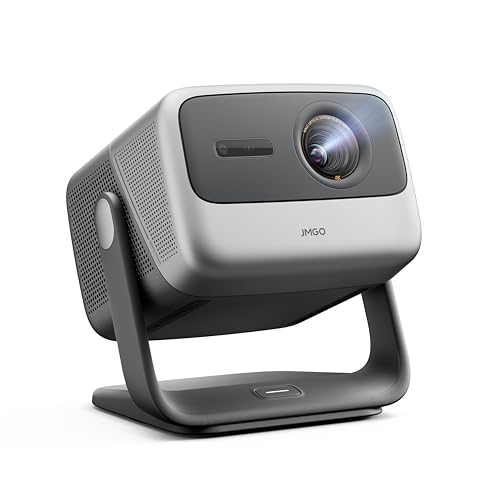
The JMGO N1S Pro 4K represents what happens when a relatively new company (JMGO launched in 2011) decides to challenge established premium brands. Released in 2024, this projector incorporates cutting-edge triple RGB laser technology - essentially three separate lasers creating red, green, and blue light instead of traditional LED or single-laser systems.
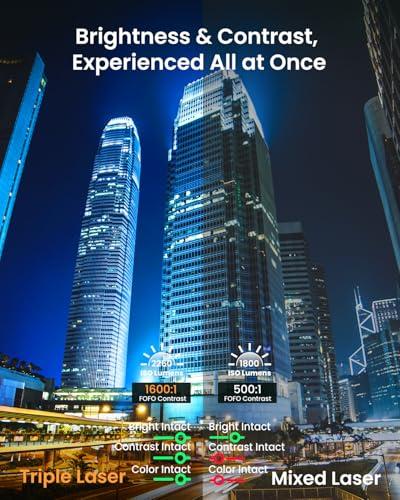
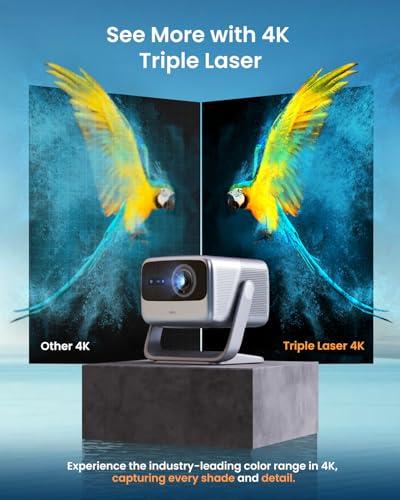
This MALC 2.0 (Mirakast Advanced Laser Cinema) technology isn't just marketing speak. Triple laser systems achieve wider color gamuts, meaning they can display more vivid and accurate colors. The N1S Pro covers 110% of the BT.2020 color space, which is the standard for 4K HDR content. To put this in perspective, most budget projectors struggle to achieve even 90% of the smaller Rec.709 color space used for standard HD content.
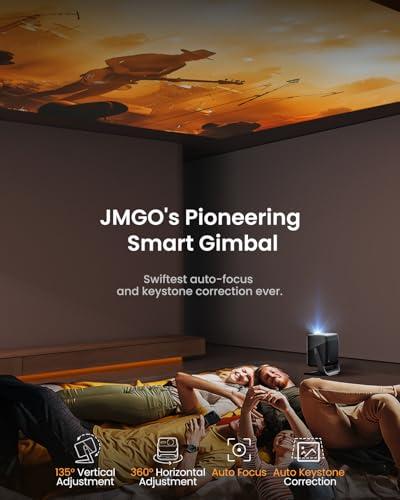
The standout feature is the gimbal mounting system - think of a camera stabilizer but for projectors. This allows 135-degree vertical and 360-degree horizontal adjustment without moving the base unit. I've always found projector placement to be the biggest setup headache, often requiring precise positioning or ceiling mounting. The JMGO N1S Pro solves this elegantly, letting you project onto walls, ceilings, or screens from virtually any angle.
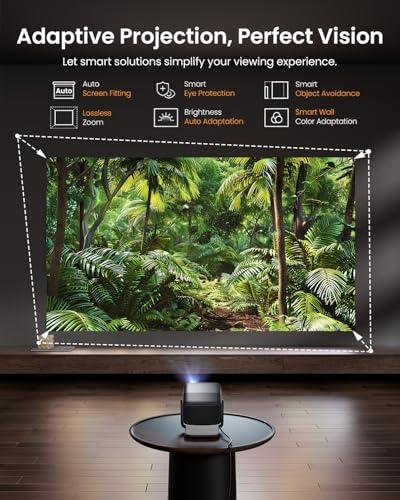
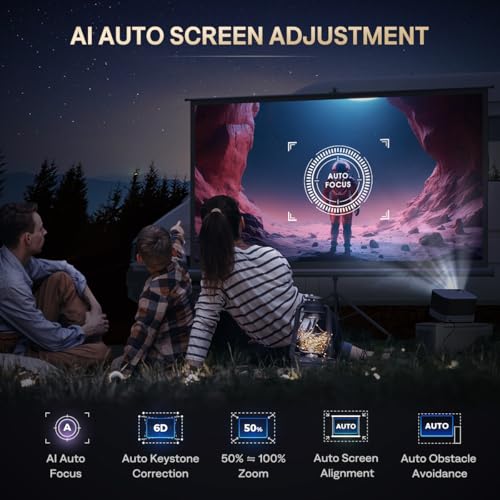
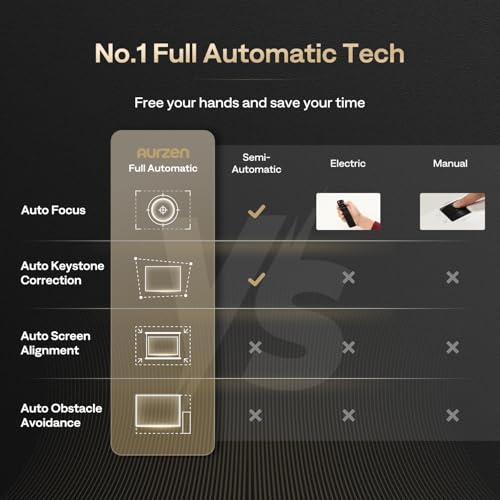
Combined with auto-focus using ToF (Time of Flight) sensors and automatic keystone correction (fixing image distortion when projecting at angles), setup becomes genuinely plug-and-play. The projector even features smart object avoidance, detecting when someone walks in front of the beam and temporarily dimming to prevent eye discomfort.
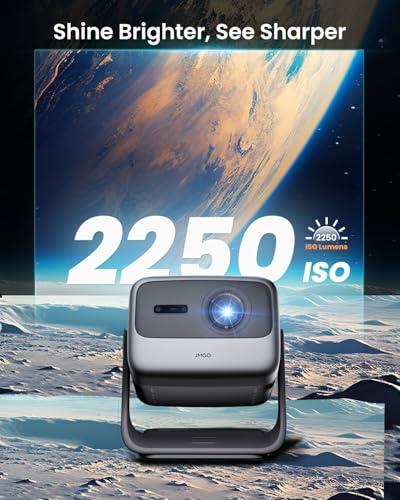
At 2,400 ANSI lumens, the N1S Pro delivers genuinely bright images. This brightness level allows comfortable viewing in rooms with some ambient light - crucial for daytime use or rooms where complete darkness isn't practical. The 1,600:1 contrast ratio, while not exceptional for laser projectors, provides decent black levels.
The native 4K resolution (3840×2160) with 10-bit color processing ensures sharp details and smooth color gradations. Gaming performance is solid with 35ms input lag - not the fastest available, but acceptable for casual gaming.
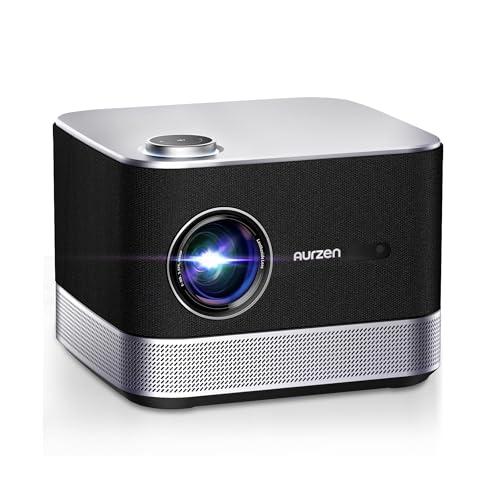
The Aurzen BOOM 3 takes a completely different approach. Released around 2023, this projector prioritizes value and ease of use over cutting-edge specifications. At roughly one-sixth the price of the JMGO, it makes several smart compromises.
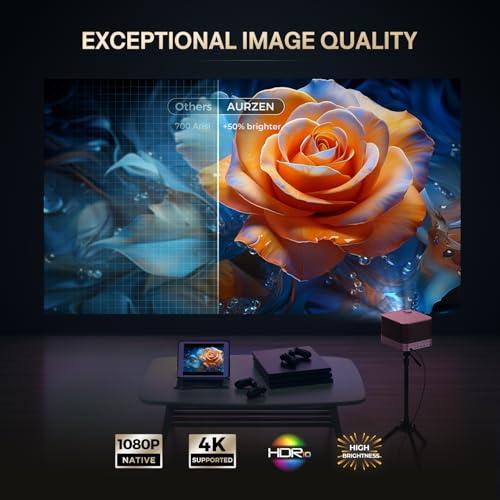
The LCD display technology uses traditional LED lighting rather than lasers. While this limits color gamut and brightness compared to premium models, modern LED implementations have improved significantly. The BOOM 3 achieves surprisingly vibrant colors for its price point, though it can't match laser projectors for color accuracy or brightness.
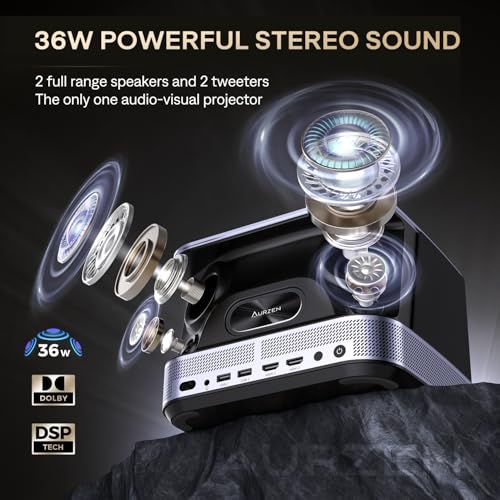
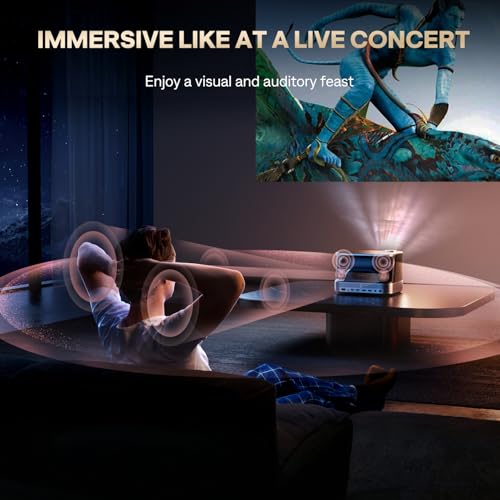
Where the Aurzen BOOM 3 truly shines is audio performance. The 36W 2.2-channel speaker system with four individual drivers delivers genuinely impressive sound. This matters more than you might expect - most projector speakers are afterthoughts, requiring external audio solutions that add cost and complexity.
The audio system includes DSP (Digital Signal Processing) technology and supports 3D Dolby Audio, creating surprisingly immersive soundscapes. Based on user feedback we've researched, the audio quality rivals standalone Bluetooth speakers costing $100-200. The projector can even function as a wireless speaker when not projecting, adding versatility for music listening.
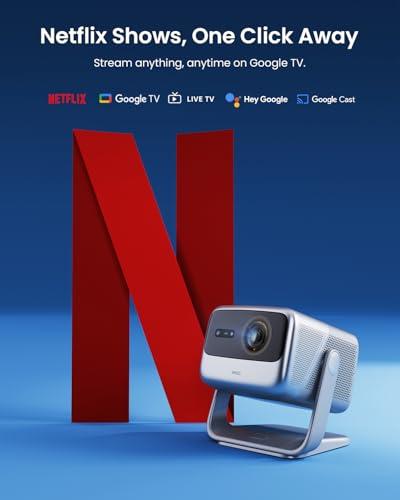
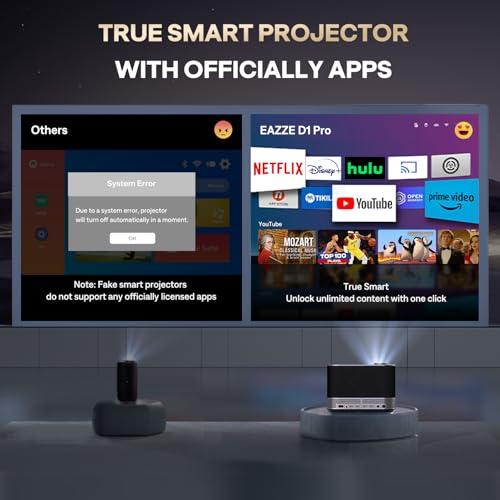
The BOOM 3 runs a proprietary Smart TV OS with officially licensed Netflix, Prime Video, and YouTube apps. While less comprehensive than Google TV or Android TV, having official app support is remarkable at this price point. Many budget projectors require sideloading apps or lack proper licensing, creating compatibility issues.
The AI-powered auto-focus using 9-directional gyroscopes and 6D keystone correction work surprisingly well for the price. The projector automatically adjusts image geometry from six directions, handling most placement scenarios effectively.
The performance gap between these projectors is most apparent in image quality. The JMGO N1S Pro delivers nearly five times the brightness (2,400 vs 500 ANSI lumens) and four times the resolution (4K vs 1080p). These aren't subtle improvements - they fundamentally change the viewing experience.
Brightness directly impacts usability. At 500 ANSI lumens, the Aurzen BOOM 3 requires dark or dim environments for optimal viewing. The image becomes washed out in rooms with significant ambient light. The N1S Pro at 2,400 ANSI lumens handles moderate room lighting comfortably, though direct sunlight still poses challenges.
Resolution differences become apparent on larger screens. While 1080p looks acceptable on 60-80 inch projected images, the pixel structure becomes visible on screens exceeding 100 inches. The BOOM 3 is optimized for 60-100 inch viewing, while the N1S Pro maintains sharpness up to 180 inches.
The triple laser system in the JMGO N1S Pro produces 110% BT.2020 color coverage with exceptional color accuracy. This translates to more lifelike skin tones, vibrant but natural landscapes, and proper color gradations in HDR content. The 10-bit color processing prevents banding in gradual color transitions.
The Aurzen BOOM 3's LED system achieves good color saturation but with less accuracy. Colors appear vibrant and pleasing but may not match the filmmaker's intent exactly. For casual viewing, this difference is often imperceptible, but movie enthusiasts will notice the superiority of the laser system.
Both projectors handle motion adequately for movies and TV shows, though neither excels for fast-paced sports or competitive gaming. The N1S Pro includes MEMC (Motion Estimation, Motion Compensation) technology that interpolates frames to reduce motion blur, though this can introduce the "soap opera effect" some viewers dislike.
For gaming, the JMGO's 35ms input lag is acceptable for single-player games but not ideal for competitive multiplayer. The BOOM 3 lacks published input lag specifications, suggesting it's not optimized for gaming performance.
The smart platform choice significantly impacts long-term usability. The N1S Pro's Google TV provides access to thousands of apps, regular updates, and seamless integration with Google services. The 2GB RAM and 32GB storage ensure smooth operation for most tasks, though heavy multitasking can cause slowdowns.
The BOOM 3's proprietary OS prioritizes simplicity over comprehensiveness. While it includes essential streaming apps, the limited app ecosystem may frustrate users wanting specialized content or international services. However, the straightforward interface appeals to users overwhelmed by complex smart TV platforms.
Both projectors support wireless screen mirroring and have multiple HDMI inputs, providing flexibility for external devices when smart features prove insufficient.
For dedicated home theater use, the JMGO N1S Pro clearly excels. The higher brightness allows larger screen sizes, the 4K resolution provides cinema-quality detail, and the gimbal system enables optimal placement regardless of room layout. The HDMI eARC support allows connection to high-end soundbars or AV receivers for audiophile-quality sound.
The laser light source offers 30,000-hour lifespan - essentially maintenance-free operation for decades of regular use. Traditional lamp-based projectors require expensive bulb replacements every 2,000-4,000 hours.
The Aurzen BOOM 3 excels for casual movie nights, outdoor entertainment, and apartment living. Its compact 5.5-pound design makes relocation effortless, while the excellent built-in audio eliminates setup complexity. For users primarily watching streaming content in controlled lighting, the 1080p resolution and 500 ANSI lumens prove sufficient.
The lower price point reduces commitment anxiety - first-time projector buyers can experience large-screen entertainment without substantial investment.
At the time of writing, the price differential represents a 6x investment for the N1S Pro. This premium buys genuinely superior technology: true 4K resolution, five times the brightness, advanced laser optics, and professional-grade color accuracy.
For users planning dedicated home theater installations, wanting maximum image quality, or using projectors in bright environments, this premium is justified. The JMGO competes directly with high-end televisions and often provides larger screen sizes at comparable or lower costs.
However, the BOOM 3's value proposition is compelling for budget-conscious users. It delivers big-screen entertainment with surprisingly good audio at a fraction of premium projector costs. For many users, the performance limitations are acceptable trade-offs for the price savings.
Both projectors benefit from recent technological advances. LED and laser light sources have largely replaced traditional projection lamps, eliminating maintenance hassles and improving color performance. Auto-adjustment features using AI and sensors have simplified setup dramatically compared to projectors from even five years ago.
The smart platform integration reflects the broader trend toward streaming-first entertainment. Both projectors acknowledge that most users want Netflix and YouTube access without additional devices, though they achieve this goal differently.
Looking forward, 8K content adoption may eventually favor native 4K projectors like the N1S Pro, though current content availability makes this a minor consideration for most users.
Choose the JMGO N1S Pro 4K if you're planning a dedicated home theater, frequently watch in rooms with ambient light, prioritize image quality above all else, or want a projector that can handle any content or room size. The premium price buys genuinely superior performance that will remain relevant for years.
Choose the Aurzen BOOM 3 if budget is the primary constraint, you mainly watch in dark rooms, excellent built-in audio is important, or you're experimenting with projector ownership before committing to higher-end models. It provides remarkable value for casual entertainment needs.
Both projectors succeed in their intended markets. The key is honestly assessing your usage patterns, room environment, and budget constraints rather than getting caught up in specification comparisons. Sometimes spending six times more is worth every penny - other times, the budget option delivers everything you actually need.
| JMGO N1S Pro 4K Projector | Aurzen BOOM 3 Smart Projector |
|---|---|
| Native Resolution - Determines image sharpness and detail, especially on large screens | |
| True 4K (3840×2160) - Sharp at any size | Native 1080p (1920×1080) - Best under 100" |
| Brightness - Most critical for daytime viewing and room flexibility | |
| 2,400 ANSI lumens (handles moderate ambient light) | 500 ANSI lumens (requires dark/dim rooms) |
| Display Technology - Affects color accuracy, brightness, and longevity | |
| MALC 2.0 Triple RGB Laser (professional-grade colors) | LCD with LED lighting (good colors, budget-friendly) |
| Color Performance - Impact on movie realism and HDR content | |
| 110% BT.2020, 10-bit processing (cinema-accurate) | HDR10 support, 8-bit processing (vibrant but less accurate) |
| Audio System - Built-in sound quality affects need for external speakers | |
| 20W stereo with HDMI eARC support | 36W 2.2-channel system (surprisingly excellent) |
| Smart Platform - Determines app selection and long-term usability | |
| Google TV with 2GB RAM (comprehensive app ecosystem) | Proprietary OS (official Netflix/Prime/YouTube only) |
| Installation Flexibility - How easily you can get optimal placement | |
| Revolutionary gimbal system (360° horizontal, 135° vertical) | Standard placement with 6D keystone correction |
| Auto-Setup Features - Reduces manual adjustments needed | |
| AI focus, keystone, screen alignment, object avoidance | AI focus with 9-directional gyros, 6D keystone |
| Connectivity - Ports and wireless capabilities | |
| 2x HDMI 2.1 (eARC), Wi-Fi 6, Bluetooth 5.2 | 2x HDMI, 2x USB, Wi-Fi, Bluetooth 5.2 |
| Image Size Range - Flexibility for different rooms and setups | |
| 85" - 180" (optimized for larger screens) | 60" - 250" (optimized for 60" - 100") |
| Light Source Lifespan - Long-term maintenance costs | |
| 30,000 hours laser (virtually maintenance-free) | LED lifespan (good longevity, no replacement bulbs) |
| Best Use Cases - Who should choose each projector | |
| Dedicated home theaters, bright rooms, 4K content | Budget home theater, dark rooms, casual entertainment |
The JMGO N1S Pro 4K Projector is significantly better for dedicated home theater setups. It offers true 4K resolution, 2,400 ANSI lumens brightness, and professional-grade triple laser technology that delivers cinema-quality images. The Aurzen BOOM 3 Smart Projector works well for casual home theater use in dark rooms but is limited by its 1080p resolution and 500 ANSI lumens brightness.
The primary difference is performance tier and price. The JMGO N1S Pro 4K Projector is a premium laser projector with true 4K resolution and five times the brightness of the Aurzen BOOM 3 Smart Projector. The BOOM 3 is a budget-friendly option that prioritizes value and excellent built-in audio over maximum image quality.
The JMGO N1S Pro 4K Projector handles bright rooms much better with its 2,400 ANSI lumens output, allowing comfortable viewing with moderate ambient light. The Aurzen BOOM 3 at 500 ANSI lumens requires dark or dimly lit rooms for optimal viewing, as the image becomes washed out in bright environments.
Both projectors offer good audio, but in different ways. The Aurzen BOOM 3 Smart Projector excels with its 36W 2.2-channel system that delivers surprisingly powerful, immersive sound. The JMGO N1S Pro 4K has capable 20W speakers but focuses more on providing HDMI eARC support for connecting external sound systems.
Both projectors offer excellent auto-setup features. The JMGO N1S Pro 4K Projector has a revolutionary gimbal system allowing 360-degree adjustment plus auto-focus and keystone correction. The Aurzen BOOM 3 provides AI-powered auto-focus with 9-directional gyros and 6D keystone correction. Both eliminate most manual adjustments needed with traditional projectors.
Yes, both projectors support direct Netflix streaming. The JMGO N1S Pro 4K Projector runs Google TV with access to thousands of apps including official Netflix. The Aurzen BOOM 3 Smart Projector has a simpler proprietary OS but includes officially licensed Netflix, Prime Video, and YouTube apps.
The JMGO N1S Pro 4K Projector is better for gaming with its 4K resolution, higher brightness, and 35ms input lag that's acceptable for casual gaming. The Aurzen BOOM 3 can handle gaming but lacks published input lag specifications and is limited to 1080p resolution, making it less ideal for serious gaming.
The JMGO N1S Pro 4K Projector supports 85-180 inch screens and maintains sharpness at larger sizes due to its 4K resolution. The Aurzen BOOM 3 Smart Projector technically supports 60-250 inch screens but is optimized for 60-100 inches, as the 1080p resolution becomes less sharp on very large screens.
This depends on your needs and budget. The Aurzen BOOM 3 Smart Projector offers exceptional value for budget-conscious buyers, providing big-screen entertainment with great audio at a fraction of premium projector costs. The JMGO N1S Pro 4K provides better value for those wanting premium performance, as it delivers professional-grade features typically found in much more expensive projectors.
Neither projector requires traditional lamp replacements. The JMGO N1S Pro 4K Projector uses triple RGB lasers rated for 30,000 hours of virtually maintenance-free operation. The Aurzen BOOM 3 uses LED lighting technology that also provides long lifespan without bulb replacement needs.
The Aurzen BOOM 3 Smart Projector is more portable at 5.5 pounds with compact dimensions, making it easy to move between rooms or take outdoors. The JMGO N1S Pro 4K Projector is heavier at nearly 10 pounds but still reasonably portable, though its premium build suggests more permanent installation.
Choose the JMGO N1S Pro 4K Projector if you watch 4K content, want future-proof technology, plan screen sizes over 100 inches, or prioritize maximum image quality. The Aurzen BOOM 3's 1080p resolution is sufficient for most streaming content and smaller screens under 100 inches, especially when budget is the primary concern.
We've done our best to create useful and informative comparisons to help you decide what product to buy. Our research uses advanced automated methods to create this comparison and perfection is not possible - please contact us for corrections or questions. These are the sites we've researched in the creation of this article: techradar.com - projectorcentral.com - gray9.in - projectorreviews.com - howtogeek.com - the-gadgeteer.com - projectorcentral.com - global.jmgo.com - global.jmgo.com - cnet.com - cnet.com - youtube.com - global.jmgo.com - avsforum.com - youtube.com - youtube.com - youtube.com - projectorcentral.com - aurzen.com - aurzen.com - newegg.com - youtube.com - bestbuy.com - aurzen.com - youtube.com - aurzen.com - projectorcentral.com - youtube.com - youtube.com - criticalpopcorn.com - aurzen.com - bestbuy.com - aurzen.com - manuals.plus - youtube.com

Privacy Policy
Terms and Conditions - Affiliate Policy
Home Security
© Copyright 2008-2026.
11816 Inwood Rd #1211, Dallas, TX 75244