

When shopping for a portable projector in 2024, you're essentially choosing between two very different philosophies. Do you want cinema-quality visuals with some portability, or maximum convenience in an ultra-compact package? The JMGO N1S Pro 4K and XGIMI Elfin Flip represent these opposing approaches perfectly, and understanding their differences will help you make the right choice for your specific needs.
The portable projector market has matured significantly over the past few years. What used to be a choice between "mediocre and portable" or "good and heavy" has evolved into distinct categories serving different users. At the premium end, you have lifestyle projectors like the JMGO N1S Pro that deliver near-traditional projector performance in a relatively compact package. At the other extreme, ultra-portable models like the XGIMI Elfin Flip prioritize convenience above all else.
The key considerations when choosing between these categories haven't changed much: brightness (measured in lumens - essentially how powerful the light source is), resolution (the number of pixels that create the image), color accuracy, ease of setup, and of course, actual portability. What has changed is how much performance you can get at each price point and size category.
Both projectors launched in 2024, reflecting the latest improvements in LED and laser projection technology, along with more sophisticated smart TV platforms. The timing matters because 2024 marked a significant leap in portable projector capabilities, with better processors enabling more advanced auto-correction features and improved streaming integration.
The most obvious difference between the JMGO N1S Pro and XGIMI Elfin Flip lies in their display specifications, and this is where your viewing priorities really matter.
The N1S Pro delivers true 4K resolution at 3840×2160 pixels - that's four times more detail than the Elfin Flip's 1080p Full HD resolution. In practical terms, this means sharper text, more defined textures in movies, and better future-proofing as 4K content becomes standard. However, the resolution advantage only matters if you're sitting close enough to notice the difference or projecting onto larger screens above 100 inches.
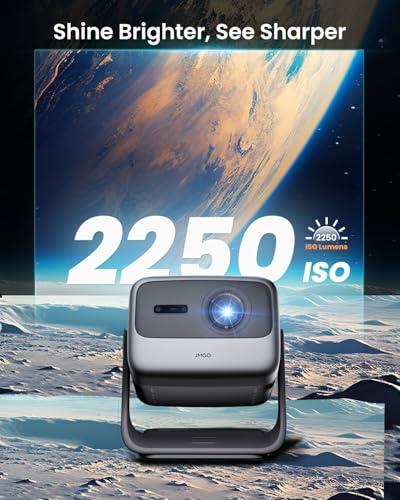
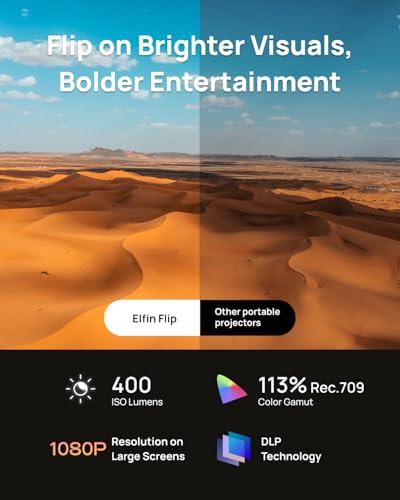
More important for day-to-day use is brightness, and here the gap is substantial. The N1S Pro outputs 2,400 ANSI lumens compared to the Elfin Flip's 400 ISO lumens. ANSI and ISO are different measurement standards, but roughly speaking, the N1S Pro is about five times brighter. This isn't just about numbers - it's the difference between watching comfortably with some ambient light versus needing to dim or darken your room completely.
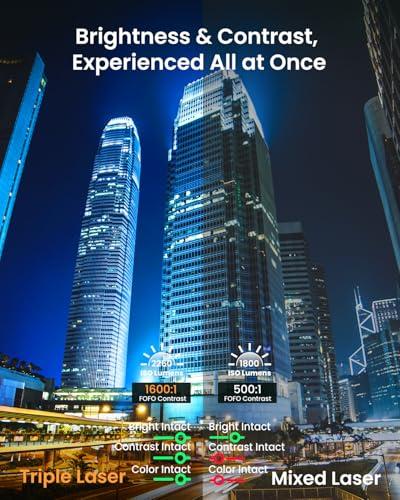
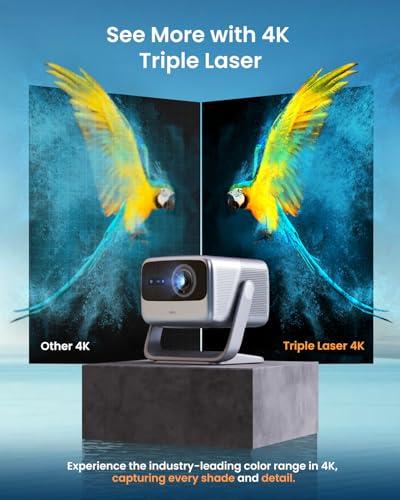
The N1S Pro achieves this brightness through its MALC 2.0 triple-color laser system, which uses separate red, green, and blue lasers to create the image. This technology delivers more vibrant colors and maintains brightness over time better than LED systems. The Elfin Flip uses a more traditional LED light source, which is perfectly adequate for its intended use but simply can't match laser brightness or longevity.
Color performance also differs significantly. The N1S Pro covers 110% of the BT.2020 color space (the standard for HDR content), while the Elfin Flip covers 113% of the smaller Rec.709 space (standard HD TV colors). Think of color spaces like paint palettes - BT.2020 is a much larger palette that can reproduce more vivid, lifelike colors, especially in HDR content.
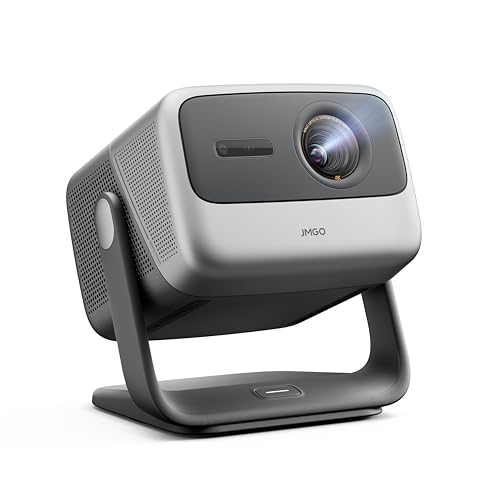
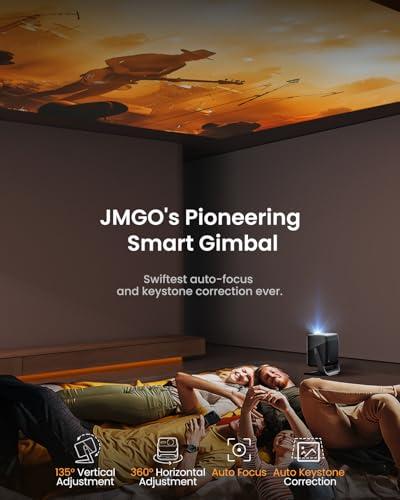
The physical design of these projectors reflects their intended use cases perfectly. The JMGO N1S Pro weighs nearly 10 pounds and measures roughly 8×9×9 inches - substantial but manageable. Its standout feature is the gimbal system, which allows the projector head to rotate 360 degrees horizontally and 135 degrees vertically without moving the base. This means you can project onto walls, ceilings, or screens with mechanical precision rather than trying to position the entire unit.
The gimbal design addresses one of the biggest frustrations with traditional projectors: getting the image exactly where you want it. Instead of moving furniture or finding the perfect table height, you simply adjust the projector head. For home theater use, this flexibility is genuinely game-changing, especially in smaller spaces where optimal placement might otherwise be impossible.
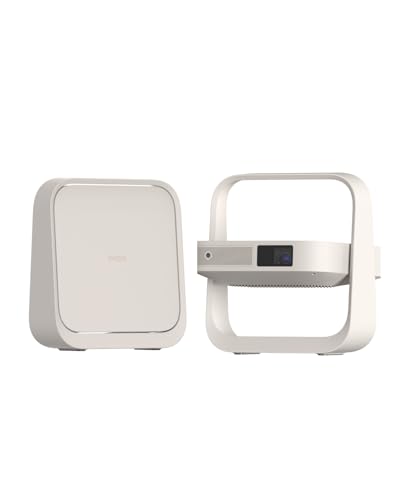
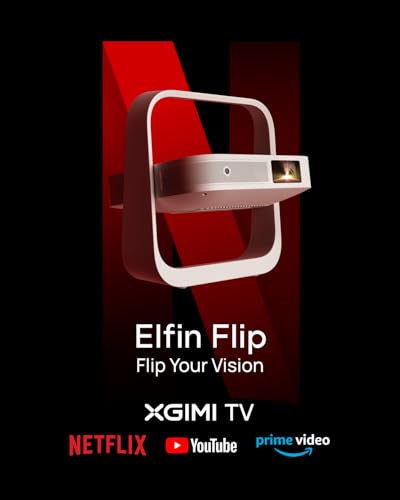
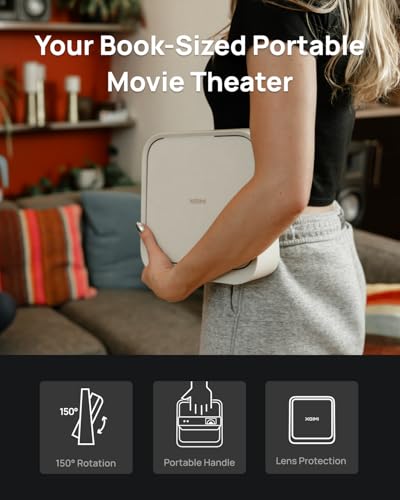
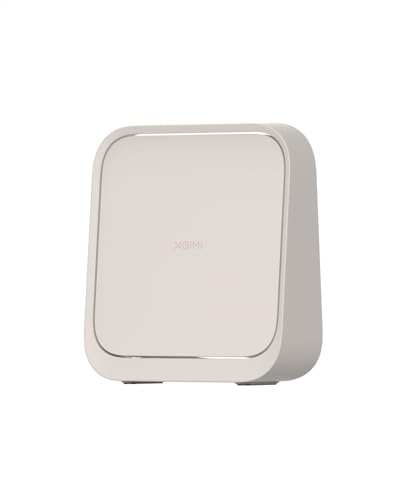
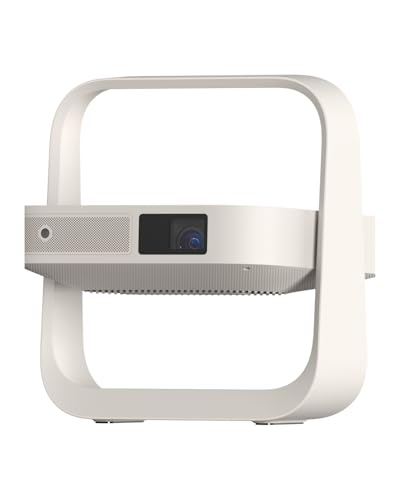
In contrast, the XGIMI Elfin Flip embraces true portability at 2.6 pounds and roughly the size of a thick book. Its flip mechanism serves dual purposes: the stand provides up to 150 degrees of vertical adjustment, and when folded, it protects the lens during transport. The integrated handle makes it genuinely grab-and-go portable in a way the N1S Pro simply isn't.
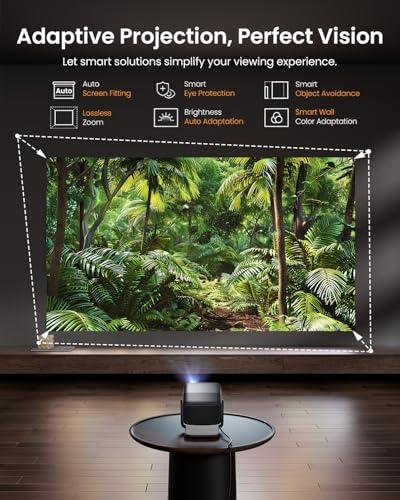
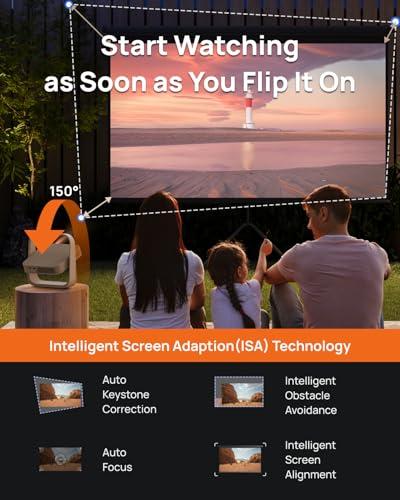
Both projectors include sophisticated auto-setup features that have improved dramatically in recent years. Auto-focus ensures the image stays sharp, auto-keystone correction fixes geometric distortion when projecting at angles, and obstacle avoidance detects objects in the projection path and adjusts accordingly. The N1S Pro takes this further with wall color compensation and smart eye protection that dims the laser when someone walks in front.
Both projectors run Google TV, but their implementations differ in meaningful ways. The N1S Pro includes 2GB of RAM and 32GB of storage, which might sound modest but provides smoother navigation and app performance than many budget projectors. The Elfin Flip uses standard Android TV specifications that are adequate for basic streaming but can occasionally stutter with demanding apps.
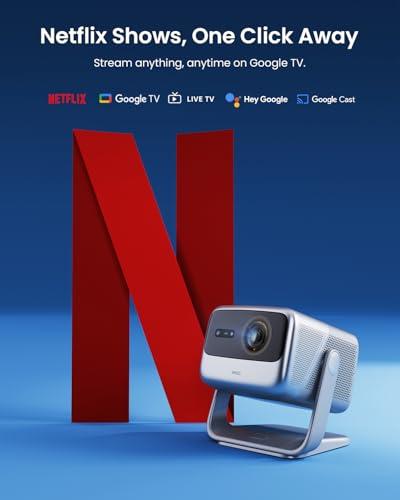
Having officially licensed Netflix is crucial for both models - many cheaper projectors lack this licensing and require workarounds. Both support the major streaming services natively, along with Chromecast for wireless casting from phones and tablets. The smart platform experience has improved significantly across all projectors since 2023, with faster processors enabling more responsive interfaces.
For gaming, the N1S Pro offers HDMI 2.1 connectivity with support for higher refresh rates and variable refresh rate technology, making it more suitable for console gaming. The Elfin Flip includes a low-latency game mode that reduces input delay to around 10ms, which is respectable for casual gaming but not quite console-quality.
Projector audio often gets overlooked, but it's particularly important for portable models where you might not want to set up separate speakers. The N1S Pro includes 20-watt stereo speakers with Dolby Digital Plus support, delivering surprisingly good directional sound and clear dialogue. Based on expert reviews, the audio quality genuinely reduces the need for external speakers in smaller rooms.
The Elfin Flip's 6-watt speakers are adequate for casual viewing but lack the depth and clarity for serious movie watching. This makes sense given the size constraints, but it's worth considering whether you'll need to invest in portable speakers or headphones for the full experience.
After reviewing extensive user feedback and professional testing, clear patterns emerge about where each projector performs best. The N1S Pro excels in moderately lit environments and with larger screen sizes. Users consistently report good image quality up to 150+ inches, with vibrant colors and sharp detail that holds up well even with some ambient light.
However, the N1S Pro does show limitations typical of single-chip DLP projectors. Black levels aren't as deep as OLED or high-end LCD TVs, and fast motion can show some artifacts. Color accuracy, while vibrant, tends toward oversaturation rather than reference-quality precision. For home theater use, these are minor compromises given the convenience and screen size capabilities.
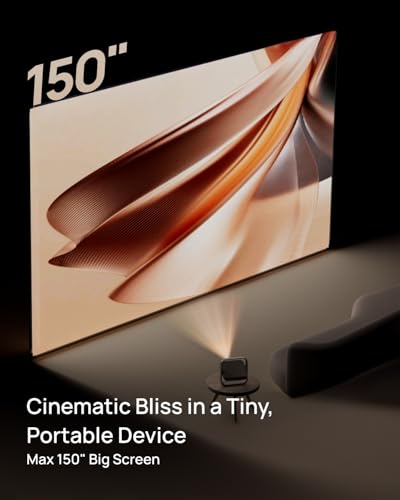
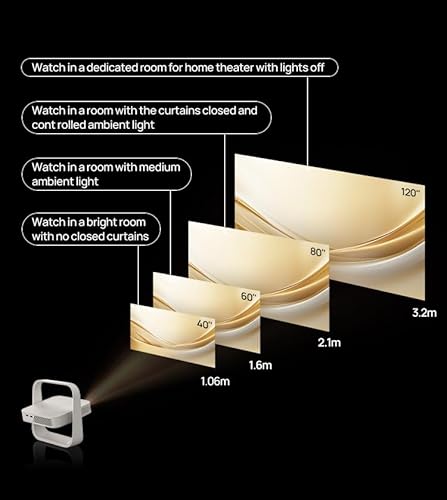
The Elfin Flip performs admirably within its intended scope. In dark or dimmed rooms, the 1080p image quality is sharp and colorful, particularly effective for animated content or presentations. The 150-inch maximum screen size is genuinely usable, though 100 inches or smaller provides the best balance of brightness and detail.
Where the Elfin Flip struggles is in any environment with ambient light. Even table lamps or overhead lighting can wash out the image significantly. This isn't necessarily a flaw - it's the inevitable trade-off for extreme portability and affordability.
For dedicated home theater use, the JMGO N1S Pro makes more sense despite its higher cost at the time of writing. The 4K resolution, higher brightness, and gimbal flexibility address the main challenges of projector setup in living spaces. The ability to ceiling-mount or place on furniture while adjusting the projection angle mechanically is particularly valuable in apartments or homes where optimal placement is difficult.
The built-in audio quality also matters more in home theater scenarios where you want cinema-like immersion without complex setups. While serious enthusiasts will eventually add dedicated speakers, the N1S Pro's audio is genuinely good enough to postpone that investment.
The Elfin Flip works better as a secondary entertainment device or for specific use cases like outdoor movie nights, bedroom viewing, or presentations. Its true portability makes it excellent for situations where you need to set up quickly and move frequently, but the brightness limitations mean it can't replace a traditional TV or dedicated home theater setup.
At the time of writing, these projectors sit in different price brackets that reflect their capabilities and target markets. The N1S Pro commands premium pricing comparable to high-end 4K TVs, while the Elfin Flip costs roughly the same as a mid-range tablet or budget laptop.
The N1S Pro's value proposition centers on delivering near-traditional projector performance in a more flexible package. You're paying for the triple-laser technology, 4K resolution, advanced gimbal system, and higher build quality. For users who want a primary viewing device with the convenience of portability, the premium makes sense.
The Elfin Flip offers exceptional value in the ultra-portable category. You're getting smart TV functionality, decent 1080p performance, and genuine portability at a price point that makes it accessible as a secondary device or for users who prioritize convenience over ultimate performance.
Both projectors benefit from the significant technological improvements that occurred in 2023-2024. Laser technology has become more affordable and efficient, while LED systems have improved in brightness and color quality. Auto-correction features that were clunky or unreliable just a few years ago now work seamlessly in most scenarios.
The smart TV platform improvements are particularly noteworthy. The integration with major streaming services has become much more seamless, and the processing power in even budget projectors now supports smooth 4K streaming and responsive interfaces.
Looking ahead, both technologies continue to improve rapidly. Laser projectors are becoming brighter and more affordable, while ultra-portable LED projectors are closing the brightness gap. However, the fundamental trade-offs between size, brightness, and cost remain unchanged.
The JMGO N1S Pro 4K makes sense if you're looking for a primary or secondary viewing device that can handle serious movie watching, gaming, or entertainment. The 4K resolution and higher brightness mean you won't quickly outgrow its capabilities, and the gimbal system provides setup flexibility that's genuinely useful in real homes. It's particularly appealing if you're in an apartment, rental, or situation where permanent installation isn't practical.
Choose the N1S Pro if you have a moderate to high budget, want 4K performance, need flexibility in placement, and plan to use it regularly in your main living space. The premium cost is justified if projector performance is important to your entertainment setup.
The XGIMI Elfin Flip excels for users who need true portability, have budget constraints, or want a projector for specific use cases rather than primary entertainment. It's excellent for business presentations, outdoor use, travel, dorm rooms, or as a secondary device for bedrooms or guest areas.
Choose the Elfin Flip if you need genuine portability under 3 pounds, have a smaller budget, primarily watch in dark environments, or want a projector for occasional rather than daily use. The 1080p resolution and lower brightness are perfectly adequate for many users, and the convenience factor is unmatched.
After evaluating both projectors' capabilities, user feedback, and real-world performance, the choice comes down to your specific priorities and budget. The JMGO N1S Pro delivers genuinely impressive performance that can serve as a primary entertainment device, while the XGIMI Elfin Flip offers unmatched convenience and accessibility.
For most users serious about home entertainment, the N1S Pro represents better long-term value despite the higher upfront cost. The 4K resolution, higher brightness, and advanced features provide more capability and future-proofing. However, if true portability or budget constraints are your primary concerns, the Elfin Flip delivers remarkable performance for its size and cost.
The portable projector market has evolved to offer genuine choices rather than compromises. Whether you choose premium performance or maximum portability, both approaches can deliver satisfying viewing experiences when matched to appropriate use cases and expectations.
| JMGO N1S Pro 4K Projector | XGIMI Elfin Flip Portable Projector |
|---|---|
| Resolution - 4K provides sharper detail on screens over 100 inches | |
| True 4K UHD (3840×2160) - Future-proof for streaming content | Full HD 1080p (1920×1080) - Adequate for most portable use |
| Brightness - Critical for room lighting flexibility and larger screens | |
| 2,400 ANSI lumens - Works in moderately lit rooms | 400 ISO lumens - Requires dark environments |
| Light Source Technology - Affects color quality and lifespan | |
| Triple RGB laser (30,000 hour life) - Premium color accuracy | LED (25,000 hour life) - Good color for the price |
| Weight & Portability - Determines actual mobility between locations | |
| 9.9 lbs - Semi-portable, needs planning to move | 2.6 lbs - True grab-and-go portability |
| Projection Flexibility - How easily you can position the image where needed | |
| 360°/135° gimbal system - Project anywhere without moving base | 150° flip stand - Good vertical adjustment only |
| Audio Quality - Reduces need for external speakers | |
| 20W stereo with Dolby Digital Plus - Genuinely good sound | 6W dual speakers - Basic audio, may need headphones |
| Smart Platform Performance - Affects streaming responsiveness | |
| 2GB RAM, Google TV - Smooth app performance | Standard Android TV - Occasional stuttering |
| Maximum Screen Size - Bigger isn't always better without adequate brightness | |
| Up to 180 inches (sweet spot: 120-150") | Up to 150 inches (sweet spot: 80-120") |
| Connectivity Options - Important for multiple devices | |
| 2× HDMI 2.1 (one with eARC), USB, Wi-Fi 6 | 1× HDMI, USB, Wi-Fi 5 - Limited for multi-device setups |
| Setup Convenience - Auto-correction features save time and frustration | |
| Advanced auto-focus, keystone, obstacle avoidance, eye protection | Standard auto-focus, keystone correction |
| Power Requirements - Affects where and how you can use it | |
| Requires AC power outlet (180W consumption) | Requires AC power outlet (65W consumption) |
| Price Category - Value depends on your specific needs and usage | |
| Premium pricing - Justified for primary entertainment use | Budget-friendly - Excellent value for occasional/portable use |
The JMGO N1S Pro 4K Projector is significantly better for home theater use due to its true 4K resolution, 2,400 ANSI lumens brightness, and superior audio system. The gimbal design allows ceiling projection and flexible placement, while the triple laser technology delivers cinema-quality colors. The XGIMI Elfin Flip works better as a secondary device for casual viewing in dark rooms.
The JMGO N1S Pro offers true 4K resolution (3840×2160) compared to the XGIMI Elfin Flip's 1080p resolution. More importantly, the N1S Pro is about 5x brighter at 2,400 ANSI lumens versus 400 ISO lumens, making it usable in moderately lit rooms while the Elfin Flip requires dark environments for optimal viewing.
The XGIMI Elfin Flip Portable Projector is much more portable at just 2.6 pounds and book-sized dimensions, with an integrated handle and flip design that protects the lens. The JMGO N1S Pro weighs nearly 10 pounds and is better described as "moveable" rather than truly portable, designed more for semi-permanent setups.
Yes, both the JMGO N1S Pro 4K Projector and XGIMI Elfin Flip run Google TV with official Netflix licensing and access to major streaming services like Disney+, Prime Video, and YouTube. The N1S Pro offers smoother performance with 2GB of RAM, while the Elfin Flip provides adequate streaming for most users.
The JMGO N1S Pro is much better for bright rooms with its 2,400 ANSI lumens output and triple laser technology. It can handle moderate ambient lighting and still produce watchable images. The XGIMI Elfin Flip requires dimmed or dark environments due to its 400 ISO lumens brightness limitation.
The JMGO N1S Pro 4K Projector can project up to 180 inches with optimal quality around 120-150 inches. The XGIMI Elfin Flip supports up to 150 inches but performs best at 80-120 inches due to brightness limitations. Both use similar throw ratios requiring 7-15 feet of distance.
The JMGO N1S Pro features excellent 20W stereo speakers with Dolby Digital Plus that can genuinely replace external speakers for most users. The XGIMI Elfin Flip Portable Projector has basic 6W speakers adequate for casual viewing but you'll likely want headphones or external speakers for movies.
Both projectors offer auto-focus and keystone correction, but the JMGO N1S Pro 4K Projector provides more advanced features including smart obstacle avoidance, wall color compensation, and eye protection. The gimbal system also allows precise positioning without moving the base unit, while the XGIMI Elfin Flip focuses on quick, simple setup.
Both the JMGO N1S Pro and XGIMI Elfin Flip require AC power outlets - neither has built-in batteries. The N1S Pro consumes 180W while the Elfin Flip uses 65W. For true battery-powered portability, you'd need to consider other models like the XGIMI MoGo series.
The JMGO N1S Pro 4K Projector is better for gaming with dual HDMI 2.1 ports supporting higher refresh rates and variable refresh rate technology. The XGIMI Elfin Flip offers a decent 10ms low-latency game mode suitable for casual gaming but lacks the advanced gaming features of the N1S Pro.
The JMGO N1S Pro sits in the premium price category reflecting its 4K resolution, laser technology, and advanced features. The XGIMI Elfin Flip Portable Projector is significantly more affordable, offering excellent value in the ultra-portable category. Your choice depends on whether you prioritize performance or budget-friendly portability.
Choose the JMGO N1S Pro 4K Projector if you want a primary entertainment device with 4K quality, flexible placement, and don't mind the higher cost and weight. Pick the XGIMI Elfin Flip if you need true portability, have budget constraints, primarily watch in dark rooms, or want a secondary projector for travel and presentations.
We've done our best to create useful and informative comparisons to help you decide what product to buy. Our research uses advanced automated methods to create this comparison and perfection is not possible - please contact us for corrections or questions. These are the sites we've researched in the creation of this article: techradar.com - projectorcentral.com - gray9.in - projectorreviews.com - howtogeek.com - the-gadgeteer.com - projectorcentral.com - global.jmgo.com - global.jmgo.com - cnet.com - cnet.com - youtube.com - global.jmgo.com - avsforum.com - youtube.com - youtube.com - us.xgimi.com - projectorcentral.com - tvsbook.com - us.xgimi.com - bikmantech.com - projectorreviews.com - tvsbook.com - us.xgimi.com - youtube.com - youtube.com - richersounds.com - us.xgimi.com - youtube.com - walmart.com - global.xgimi.com - youtube.com - global.xgimi.com - us.xgimi.com

Privacy Policy
Terms and Conditions - Affiliate Policy
Home Security
© Copyright 2008-2026.
11816 Inwood Rd #1211, Dallas, TX 75244