

The portable projector market has exploded in recent years, offering everything from pocket-sized units you can toss in a backpack to powerful "portable" models that deliver near-theater quality. But here's the thing—not all portable projectors are created equal, and the two we're comparing today represent completely different approaches to the same basic need: big-screen entertainment anywhere.
The JMGO N1S Pro 4K and XGIMI MoGo 4 might both carry the "portable projector" label, but they're solving different problems. One prioritizes image quality above all else, while the other focuses on true grab-and-go convenience. Understanding which philosophy matches your needs will save you from buyer's remorse.
Before diving into specifics, let's establish what makes a portable projector worthwhile. The key considerations boil down to five areas: image quality, actual portability, setup convenience, versatility across different environments, and value for money.
Image quality encompasses resolution (how sharp the picture looks), brightness (can you see it with lights on?), color accuracy (do reds look red?), and contrast ratio (the difference between the brightest whites and darkest blacks). Portability isn't just about weight—it's about battery life, size, and whether you need to hunt for power outlets. Setup convenience covers auto-focus, keystone correction (fixing the trapezoid shape when projecting at an angle), and how quickly you can go from box to movie.
The portable projector category has matured significantly since 2020. Early models often forced you to choose between decent image quality or true portability—you couldn't have both. Today's projectors have largely solved the brightness problem that plagued earlier LED models, though significant trade-offs remain.
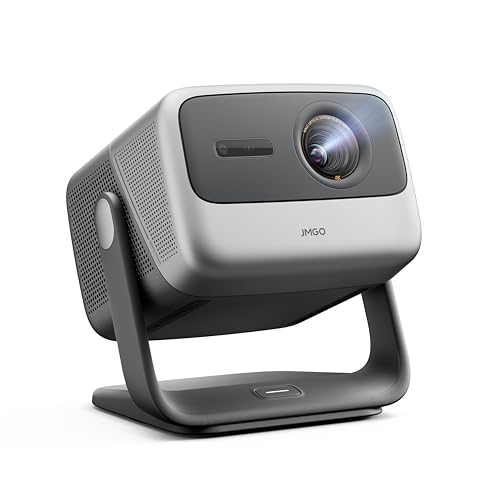
The JMGO N1S Pro 4K, released in 2024, represents the premium end of "lifestyle projectors." It's the kind of device that sits permanently on your coffee table, ready to transform any wall into a massive screen. Despite lacking an internal battery, JMGO considers it portable because of its compact footprint and unique gimbal mounting system.
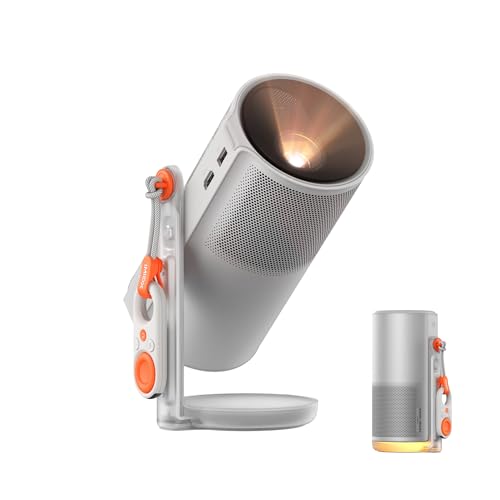
The XGIMI MoGo 4, also hitting the market in recent years, takes the opposite approach. It's designed as a true portable companion—battery-powered, lightweight, and sized like a large water bottle. XGIMI built their reputation on ultra-portable projectors, and the MoGo 4 represents their latest thinking on grab-and-go projection.
This is where the JMGO N1S Pro 4K immediately pulls ahead. Its native 4K resolution (3840×2160 pixels) provides four times the detail of the XGIMI MoGo 4's 1080p display. But here's what that actually means in practice: on screens larger than 80 inches, you'll notice the difference immediately. Text appears sharper, movie details pop, and the overall viewing experience feels more immersive.
The 1080p resolution of the MoGo 4 isn't necessarily bad—it's perfectly adequate for most content, especially if you're projecting onto smaller screens or sitting further back. But if you're planning to project onto a wall for movie nights or sports viewing, that extra resolution becomes increasingly valuable.
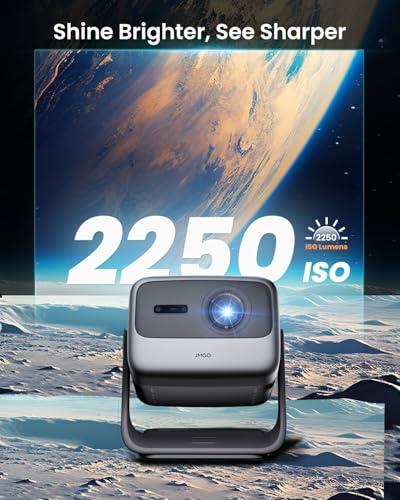
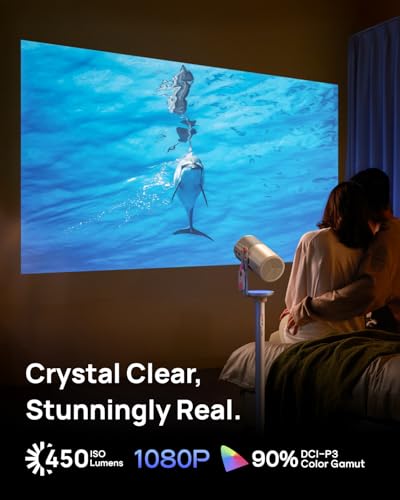
Here's where projector shopping gets tricky. The JMGO N1S Pro 4K claims 2,400 ANSI lumens, while the XGIMI MoGo 4 delivers 450-550 ISO lumens depending on the variant. These different measurement standards make direct comparison difficult, but the real-world performance gap is substantial.
Based on professional testing and user consensus, the N1S Pro 4K delivers enough brightness for comfortable viewing in moderately lit rooms—think family room with curtains drawn during the day. You won't need to turn off every light or wait for sunset. The MoGo 4, despite XGIMI's improvements over earlier models, still requires near-darkness for the best experience. This isn't necessarily a deal-breaker, but it limits when and where you can use it.
Brightness matters more than many people realize. A dim projector forces you to completely control your environment, while a bright projector adapts to your lifestyle. If you want to watch the game on Sunday afternoon with some ambient light filtering in, brightness becomes critical.
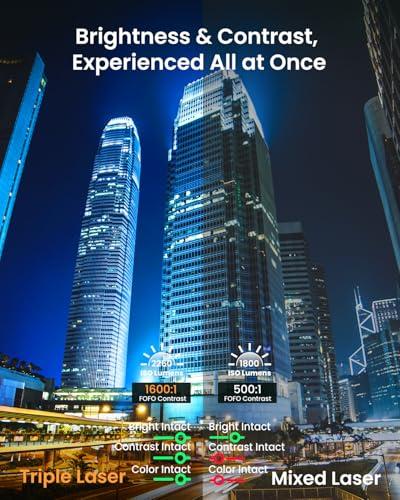
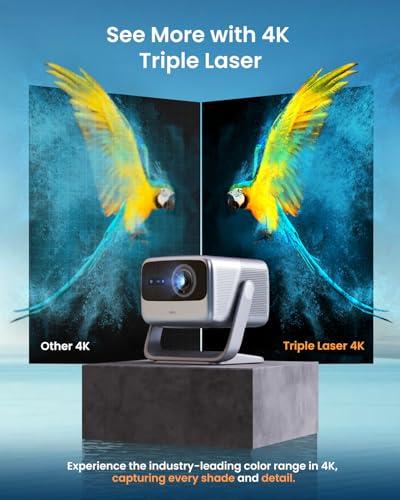
The JMGO N1S Pro 4K uses MALC 2.0 triple-laser technology—essentially three separate laser light sources for red, green, and blue. This approach eliminates the rainbow effect (those flickering color artifacts some people see with DLP projectors) while delivering exceptionally vibrant colors. The projector covers 110% of the BT.2020 color space, which is the wide color standard for 4K HDR content.
Translation: colors pop without looking oversaturated, and you get the full benefit of HDR content from streaming services and 4K Blu-rays.
The XGIMI MoGo 4 takes a more traditional approach with LED or standard laser light sources, depending on the variant. While it can't match the color volume of the triple-laser system, it delivers respectable color reproduction for its size and price class. The laser variant gets closer to the N1S Pro's color performance, but the LED version falls noticeably behind.
Contrast ratios tell a similar story. The N1S Pro 4K delivers deeper blacks and brighter whites, creating more dynamic, engaging images. This becomes especially important for movie viewing, where contrast helps create that cinematic feel.
Most people underestimate projector audio until they experience good built-in speakers. The JMGO N1S Pro 4K includes 20W stereo speakers with Dolby Digital Plus processing. This isn't just marketing speak—the audio system produces genuinely room-filling sound with decent bass response. For casual viewing, you might not need external speakers at all.
The XGIMI MoGo 4 packs dual 6W Harman Kardon speakers into its compact chassis. Given the size constraints, the audio quality impresses—it's clear and well-balanced, though naturally limited in volume and bass extension. The MoGo 4 can double as a Bluetooth speaker, which adds versatility for music listening.
For home theater use, audio quality matters more than you might think. Good built-in speakers eliminate setup complexity and additional equipment costs. Bad speakers force you into the soundbar market immediately.
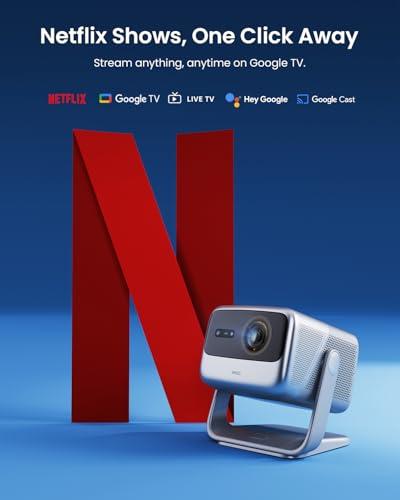
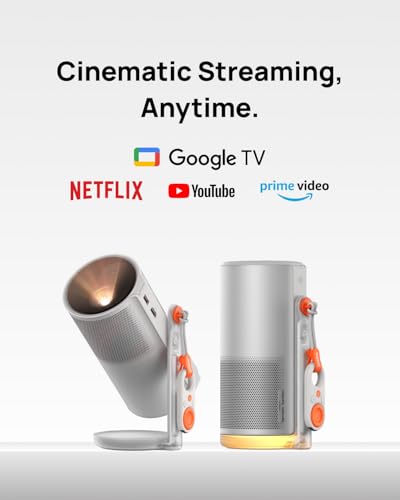
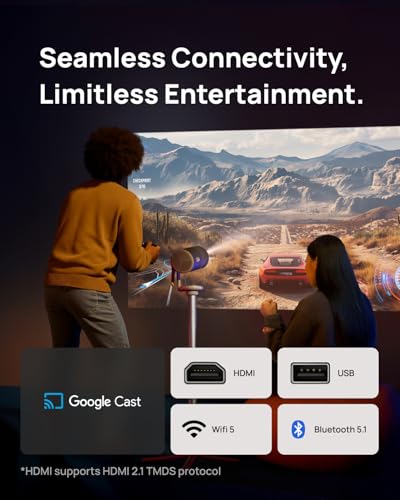
Both projectors run Google TV, providing access to Netflix, YouTube, Disney+, and thousands of other apps. This eliminates the need for external streaming devices in most cases. However, implementation details matter.
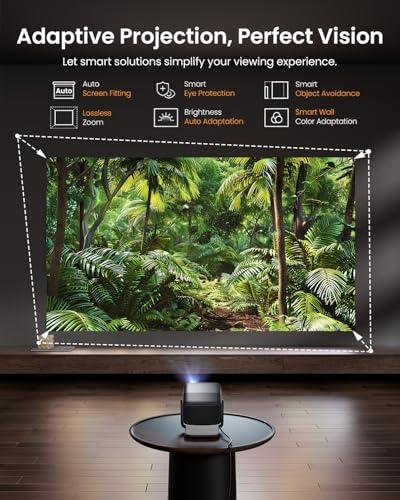
The JMGO N1S Pro 4K includes more advanced auto-adjustment features. Its computer vision system can detect and avoid obstacles, automatically adjust for wall color, and even dim the projector if someone walks in front of it (a safety feature called Smart Eye Protection). The autofocus and keystone correction work quickly and accurately, minimizing setup time.
The XGIMI MoGo 4 offers ISA (Intelligent Screen Adaptation) technology, which handles basic auto-focus and keystone correction. While not as sophisticated as JMGO's system, it gets the job done for most situations.
Both projectors support HDMI connections for gaming consoles, laptops, and other devices. The N1S Pro 4K includes HDMI 2.1 with eARC support, enabling high-bandwidth 4K gaming and simplified soundbar connections.
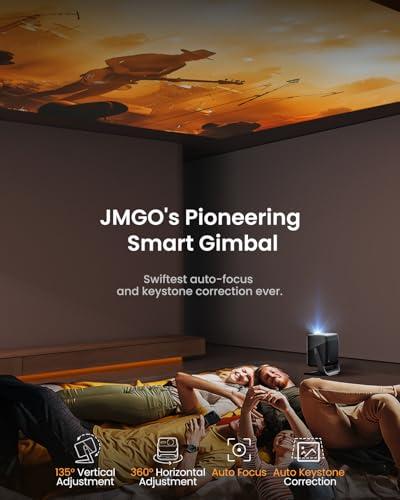
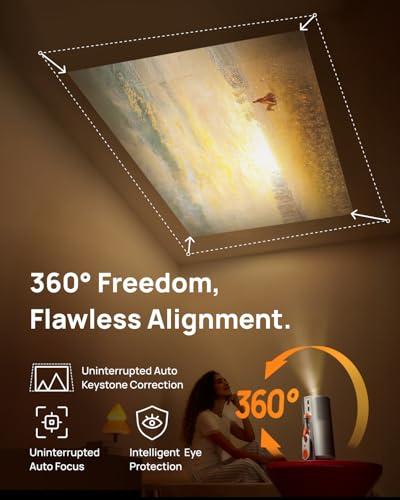
The JMGO N1S Pro 4K features a unique gimbal mounting system that rotates 360 degrees horizontally and 135 degrees vertically. This enables projection onto ceilings, walls, or traditional screens without moving the base unit. It's clever engineering that solves real usability problems—you can project a movie onto the ceiling for bedtime viewing, then rotate to the wall for weekend sports.
However, the N1S Pro requires constant AC power and weighs about 4.4 pounds. It's "portable" in the sense that you can move it between rooms, but it's not something you'll casually pack for a weekend trip.
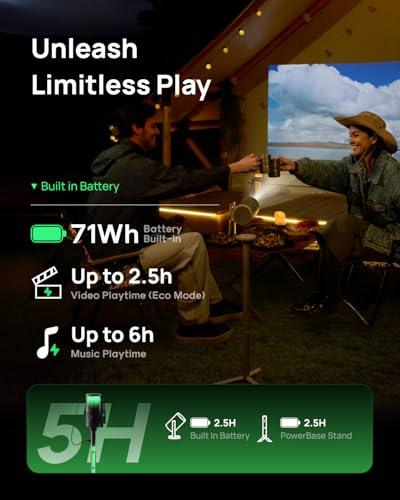
The XGIMI MoGo 4 prioritizes true portability with a built-in 71.28 Wh battery providing 2.5 hours of video playback. At 2.9 pounds and roughly the size of a large thermos, it genuinely travels well. The 360-degree adjustable stand enables flexible positioning, though you'll need to physically move and readjust the projector for different projection angles.
For dedicated home theater use, the JMGO N1S Pro 4K makes more sense. The 4K resolution shows its value on large screens (100+ inches), the high brightness handles family room lighting, and the gimbal system enables permanent installation flexibility. You can set it on a side table and project onto any wall without complex mounting or repositioning.
The MoGo 4 works for home theater use, but with significant limitations. The lower brightness requires light control, and the 1080p resolution becomes more apparent on large screens. It's better suited for bedroom viewing or small apartment situations where screen size stays under 80 inches.
This is where the XGIMI MoGo 4 shines. The built-in battery enables camping trips, hotel room entertainment, or backyard movie nights without hunting for power outlets. The compact size fits in carry-on luggage, and setup takes minutes.
The N1S Pro 4K struggles here due to its AC power requirement. While the image quality would be superior, the practical limitations make it unsuitable for most portable scenarios.
Both projectors handle casual gaming adequately. The JMGO N1S Pro 4K supports 4K gaming through HDMI 2.1, making it compatible with current-generation consoles at full resolution. The XGIMI MoGo 4 tops out at 1080p/60Hz but maintains low input lag (56ms) for responsive gameplay.
For serious gaming, projectors generally lag behind dedicated gaming TVs in terms of input lag and variable refresh rate support. But for weekend gaming sessions or party games, either projector delivers an enjoyable big-screen experience.
At the time of writing, the JMGO N1S Pro 4K commands a premium price—roughly three times the cost of the XGIMI MoGo 4. This price difference reflects the fundamental performance gap between these devices.
The N1S Pro 4K delivers genuinely premium performance. The 4K resolution, high brightness, advanced color reproduction, and sophisticated feature set justify the higher cost for users who prioritize image quality. When you factor in the excellent built-in audio and smart features, it represents solid value in the lifestyle projector category.
The XGIMI MoGo 4 offers impressive value for ultra-portable projection. While it can't match the image quality of premium models, it delivers adequate performance at a much more accessible price point. The true portability and battery operation enable use cases that higher-end projectors simply can't address.
The projector market has advanced rapidly since 2020. LED light sources have become brighter and more efficient, while laser technology has become more affordable. Both projectors benefit from these improvements, but they represent different stages of market evolution.
The JMGO N1S Pro 4K incorporates cutting-edge triple-laser technology that wasn't available in consumer projectors just a few years ago. This enables the wide color gamut and high brightness that define premium projection today.
The XGIMI MoGo 4 represents the maturation of ultra-portable projection. Earlier battery-powered projectors often delivered dim, washed-out images. While brightness limitations remain, current models like the MoGo 4 provide genuinely usable image quality in appropriate conditions.
Your decision should align with how you actually plan to use the projector. Be honest about your priorities and usage patterns.
Choose the JMGO N1S Pro 4K if you want the best possible image quality and plan to use it primarily in a fixed location. The 4K resolution, high brightness, and advanced features create a genuinely premium viewing experience. The higher price makes sense if you're replacing a TV or building a dedicated entertainment setup.
Choose the XGIMI MoGo 4 if portability and flexibility matter more than ultimate image quality. The battery operation and compact size enable unique use cases—camping trips, hotel stays, spontaneous backyard movie nights. The more modest performance becomes acceptable when weighed against the convenience factor.
Consider your viewing environment carefully. If you can control lighting conditions and don't mind the size/weight trade-offs, the MoGo 4 delivers impressive value. If you want to use the projector in various lighting conditions or project large images regularly, the N1S Pro 4K becomes worth the premium.
The performance gap between these projectors is substantial—this isn't a close comparison where either choice works equally well. The JMGO N1S Pro 4K delivers genuinely superior image quality, while the XGIMI MoGo 4 offers unmatched portability. Choose based on which advantage matters more to your specific situation.
Both projectors represent solid values within their respective categories, but they serve different needs. The key is matching the projector's strengths to your priorities and usage patterns. Done correctly, either choice will deliver years of big-screen entertainment.
| JMGO N1S Pro 4K | XGIMI MoGo 4 |
|---|---|
| Resolution - Higher resolution provides sharper detail on large screens | |
| Native 4K (3840×2160) - Future-proof and excellent for 100"+ screens | 1080p (1920×1080) - Adequate for smaller screens under 80" |
| Brightness - Critical for viewing in rooms with ambient light | |
| 2,400 ANSI lumens - Works well in moderately lit rooms | 450-550 ISO lumens - Requires near-complete darkness |
| Power Source - Determines true portability and placement flexibility | |
| AC power only - Limits to areas with outlets but no battery degradation | Built-in battery (2.5 hours) - True portability for travel/outdoor use |
| Weight & Size - Affects how easily you can move and transport the projector | |
| 4.4 lbs, coffee table sized - Portable between rooms but not travel-friendly | 2.9 lbs, thermos sized - Genuinely portable for camping/travel |
| Light Source - Affects color quality, brightness consistency, and lifespan | |
| Triple RGB laser (MALC 2.0) - Superior color accuracy and no rainbow effect | LED/Laser variants - Good color but can't match triple-laser performance |
| Color Gamut - Determines how vibrant and accurate colors appear | |
| 110% BT.2020 - Exceptional color range for HDR content | 90-110% DCI-P3 (variant dependent) - Good but more limited color range |
| Audio System - Quality affects whether you need external speakers | |
| 20W stereo with Dolby Digital Plus - Room-filling sound, may eliminate need for soundbar | Dual 6W Harman Kardon - Impressive for size but limited volume/bass |
| Mounting/Positioning - How flexibly you can position the projector | |
| 360° gimbal system - Project on any surface without moving base unit | 360° adjustable stand - Flexible but requires repositioning for different angles |
| Smart Platform - Determines app availability and streaming convenience | |
| Google TV with 2GB RAM - Smooth operation, native Netflix support | Google TV with basic specs - Adequate performance, same app selection |
| Auto-Adjustment Features - Reduces setup time and manual adjustments | |
| Advanced: Auto-focus, keystone, object avoidance, eye protection | Basic: ISA auto-focus and keystone correction |
| Gaming Performance - Important for console gaming and low-latency applications | |
| 4K/60Hz via HDMI 2.1 - Full current-gen console support | 1080p/60Hz, 56ms latency - Good for casual gaming |
| Value Proposition - Which offers better performance per dollar | |
| Premium price for premium performance - Best for image quality priority | Budget-friendly with unique portability - Best for convenience priority |
The JMGO N1S Pro 4K is significantly better for home theater applications. Its native 4K resolution provides exceptional detail on large screens (100+ inches), while the 2,400 ANSI lumens brightness allows comfortable viewing in moderately lit rooms. The triple-laser technology delivers superior color accuracy and contrast for movies, and the 20W audio system may eliminate the need for external speakers.
The XGIMI MoGo 4 is much better suited for outdoor movie nights due to its built-in battery providing 2.5 hours of runtime. However, both projectors require very dark conditions for outdoor viewing. The JMGO N1S Pro 4K offers brighter images but needs an AC power source, limiting placement options.
The XGIMI MoGo 4 is genuinely portable at 2.9 pounds with a built-in battery, making it perfect for travel, camping, or moving between rooms. The JMGO N1S Pro 4K weighs 4.4 pounds and requires AC power, making it more of a "relocatable" projector suitable for permanent or semi-permanent setups.
The JMGO N1S Pro 4K delivers four times the detail of the XGIMI MoGo 4's 1080p resolution. This difference becomes very noticeable on screens larger than 80 inches, with sharper text, clearer movie details, and better overall clarity. For smaller screens or distant viewing, 1080p remains adequate.
The JMGO N1S Pro 4K performs much better in bright environments with its 2,400 ANSI lumens output, allowing comfortable viewing with curtains drawn or moderate ambient lighting. The XGIMI MoGo 4 requires near-complete darkness due to its lower 450-550 lumen brightness.
Only the XGIMI MoGo 4 has a built-in battery, providing approximately 2.5 hours of video playback or up to 6 hours for music with projection off. The JMGO N1S Pro 4K requires constant AC power and has no battery option.
The JMGO N1S Pro 4K offers superior gaming with native 4K resolution and HDMI 2.1 support for current-generation consoles. The XGIMI MoGo 4 handles casual gaming well with 1080p/60Hz and 56ms input lag, but lacks the resolution for serious gaming enthusiasts.
The JMGO N1S Pro 4K features powerful 20W speakers with Dolby Digital Plus that provide room-filling sound adequate for most viewing scenarios. The XGIMI MoGo 4 has smaller 6W speakers that sound impressive for the size but may require external audio for large rooms or bass-heavy content.
Value depends on your priorities. The XGIMI MoGo 4 offers excellent value for users needing true portability and basic projection needs. The JMGO N1S Pro 4K provides better value for those prioritizing image quality, brightness, and home theater performance despite its higher price.
Both projectors offer automatic setup features. The JMGO N1S Pro 4K includes advanced auto-focus, keystone correction, and obstacle avoidance with its gimbal system allowing projection without moving the base. The XGIMI MoGo 4 provides basic auto-focus and keystone correction through its ISA technology.
The XGIMI MoGo 4 suits small apartments better due to its compact size, quiet operation, and ability to work in completely dark rooms. However, if you have space and can control lighting, the JMGO N1S Pro 4K delivers superior image quality for regular entertainment use.
The JMGO N1S Pro 4K can effectively replace a TV for many users, offering 4K resolution, high brightness for daytime viewing, and excellent built-in audio. The XGIMI MoGo 4 works as a TV replacement only in dedicated dark rooms or for users who primarily watch content in controlled lighting conditions.
We've done our best to create useful and informative comparisons to help you decide what product to buy. Our research uses advanced automated methods to create this comparison and perfection is not possible - please contact us for corrections or questions. These are the sites we've researched in the creation of this article: techradar.com - projectorcentral.com - gray9.in - projectorreviews.com - howtogeek.com - the-gadgeteer.com - projectorcentral.com - global.jmgo.com - global.jmgo.com - cnet.com - cnet.com - youtube.com - global.jmgo.com - avsforum.com - youtube.com - youtube.com - projectorcentral.com - whathifi.com - us.xgimi.com - whathifi.com - global.xgimi.com - youtube.com - us.xgimi.com - youtube.com - youtube.com - thesmarthomehookup.com - global.xgimi.com - hometechnologyreview.com - projectorcentral.com - youtube.com - us.xgimi.com

Privacy Policy
Terms and Conditions - Affiliate Policy
Home Security
© Copyright 2008-2026.
11816 Inwood Rd #1211, Dallas, TX 75244