

The portable smart projector market has exploded in recent years, transforming how we think about home entertainment. Gone are the days when you needed a dedicated home theater room and thousands of dollars to enjoy a big-screen experience. Today's smart projectors pack powerful processors, streaming capabilities, and surprisingly good audio into compact packages that can turn any wall into your personal cinema.
But with so many options flooding the market, choosing the right projector can feel overwhelming. Two models that perfectly illustrate the current landscape are the JMGO N1S Pro 4K and the BenQ GV50. Released in 2024, these projectors represent two completely different philosophies: premium performance versus specialized affordability. Understanding their strengths and weaknesses will help you make the right choice for your specific needs and budget.
Before diving into specifics, it's worth understanding what makes modern smart projectors so appealing. Unlike traditional projectors that required separate media players and complex setups, today's smart projectors are essentially Android TVs with built-in projection capabilities. They connect to your Wi-Fi network, run streaming apps like Netflix and Disney+, and can even respond to voice commands.
The key considerations when shopping for a smart projector haven't changed much from traditional models: brightness (measured in ANSI lumens), resolution, color accuracy, and throw ratio (how far the projector needs to be from the screen to create a specific image size). What has changed is the integration of smart features, improved audio systems, and innovative design approaches that make setup and daily use much more convenient.
The JMGO N1S Pro 4K and BenQ GV50 couldn't be more different in their market positioning, despite both being portable smart projectors. At the time of writing, the JMGO N1S Pro commands a premium price point—roughly double that of the BenQ GV50. This price difference reflects fundamental differences in their target audiences and technical capabilities.
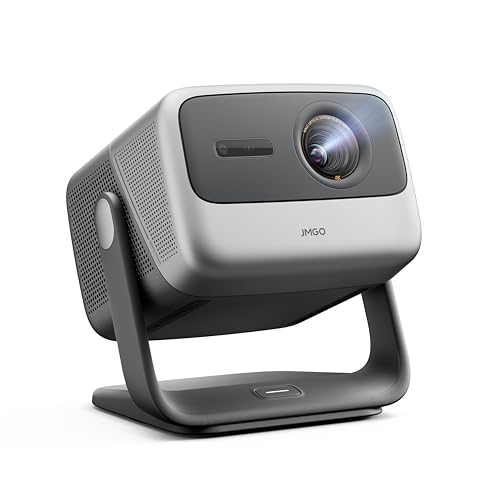
The JMGO N1S Pro takes the "no compromises" approach, packing true 4K resolution, professional-grade brightness levels, and advanced laser technology into a relatively compact package. It's designed for users who want the best possible image quality and are willing to pay for it.
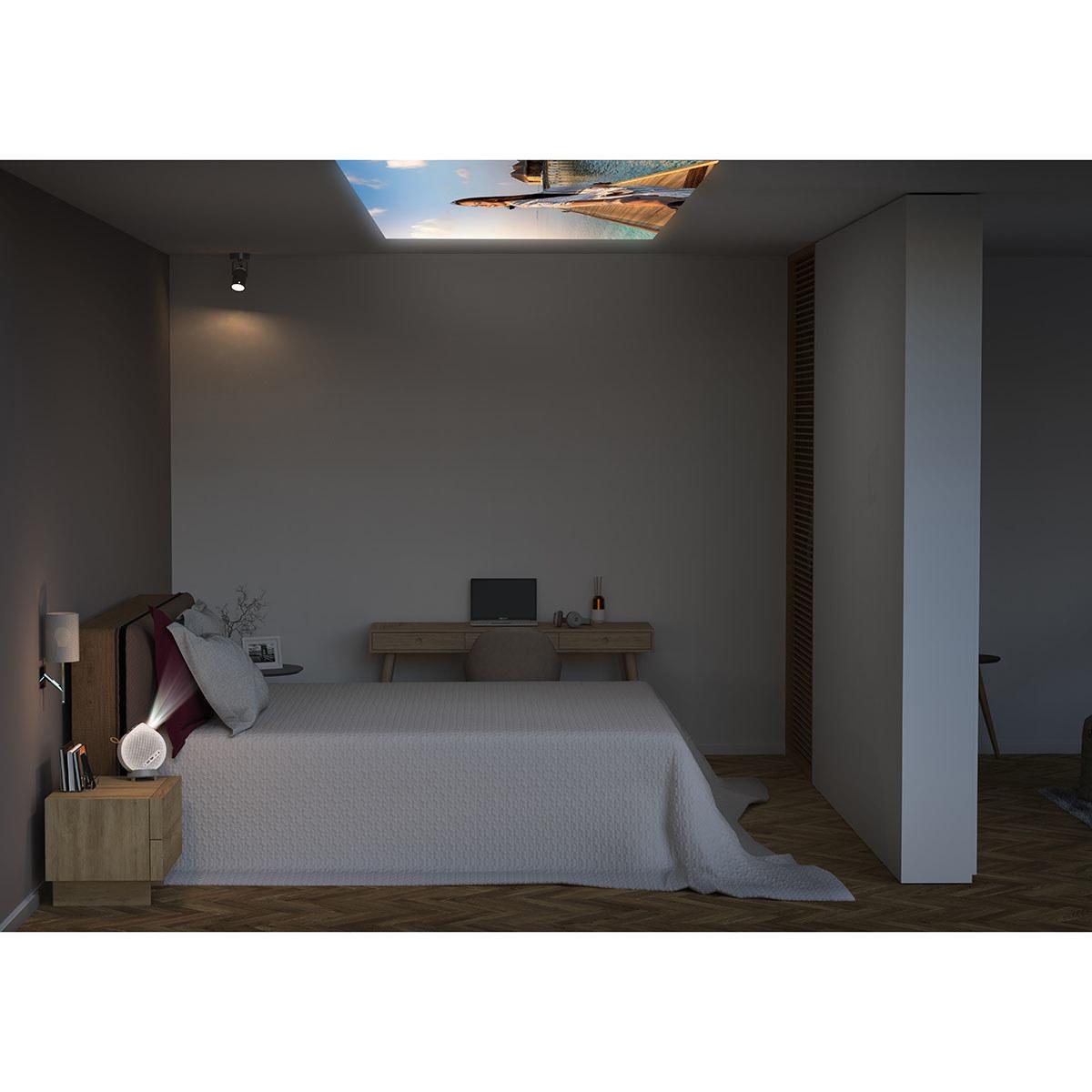
The BenQ GV50, on the other hand, focuses on solving a specific problem exceptionally well: ceiling projection for bedroom use. Rather than trying to compete on raw specifications, BenQ optimized everything around this particular use case, resulting in a more affordable and specialized solution.
When it comes to image quality, the differences between these projectors are immediately apparent. The JMGO N1S Pro 4K delivers true 4K resolution at 3840×2160 pixels, while the BenQ GV50 provides Full HD at 1920×1080. In practical terms, this means the JMGO has four times as many pixels packed into the same screen area.
This resolution difference becomes most noticeable on larger screens. If you're planning to project images larger than 100 inches, the 4K advantage of the JMGO N1S Pro becomes substantial. Text appears sharper, fine details in movies are more apparent, and the overall viewing experience feels more immersive. However, on smaller screens—say, 80 inches or less—the resolution difference becomes less critical, especially from typical viewing distances.
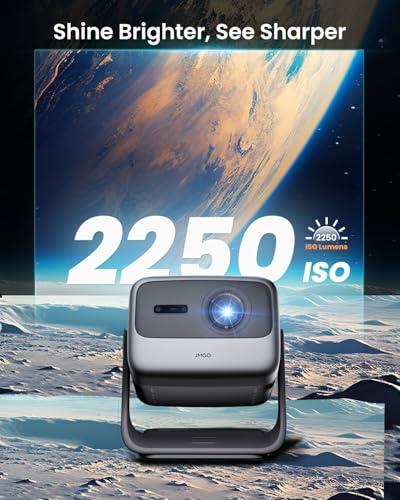
Brightness is arguably the most important specification for any projector, and here the JMGO N1S Pro 4K absolutely dominates with 2,400 ANSI lumens compared to the BenQ GV50's 500 ANSI lumens. To put this in perspective, that's nearly five times brighter.
ANSI lumens measure the actual light output across the entire projected image, not just the brightest point. Most home theater enthusiasts consider 1,500+ ANSI lumens necessary for comfortable viewing with moderate ambient light, while 500 lumens requires a very dark room to produce an acceptable image.
This brightness difference dramatically affects where and when you can use each projector. The JMGO N1S Pro can handle family movie nights with the lights dimmed but not completely off, or even outdoor movie screenings at dusk. The BenQ GV50 really shines (pun intended) in dark bedroom environments or as a cozy late-night viewing companion.
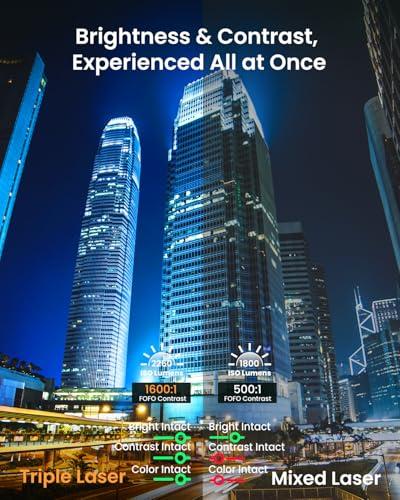
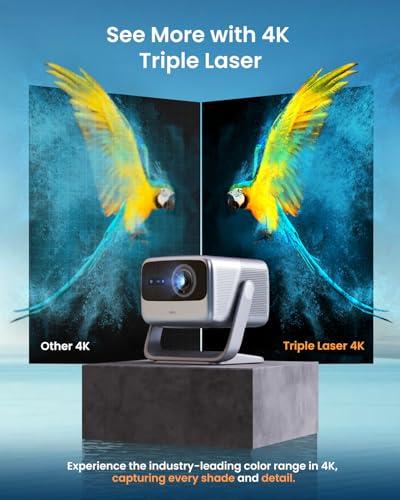
The JMGO N1S Pro employs MALC 2.0 triple RGB laser technology—essentially three separate lasers (red, green, and blue) that combine to create the full color spectrum. This approach typically produces more vibrant, saturated colors and can reproduce a wider color gamut (the range of colors a display can show). Specifically, it covers 110% of the BT.2020 color space, which is the standard for HDR content.
The BenQ GV50 uses a more traditional laser-phosphor light source. While this doesn't achieve the same color vibrancy as triple-laser systems, it's more cost-effective and still provides good color accuracy for everyday viewing. The trade-off is that HDR content won't pop quite as much, but for standard streaming content, the difference may not be dramatic.
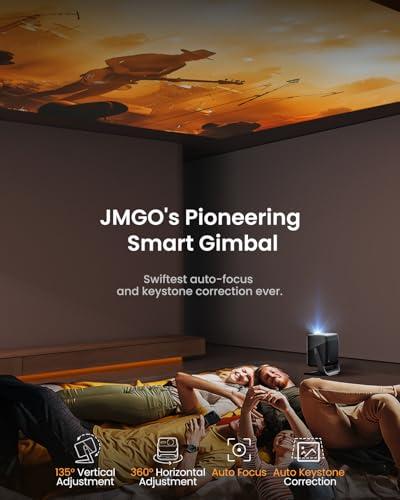
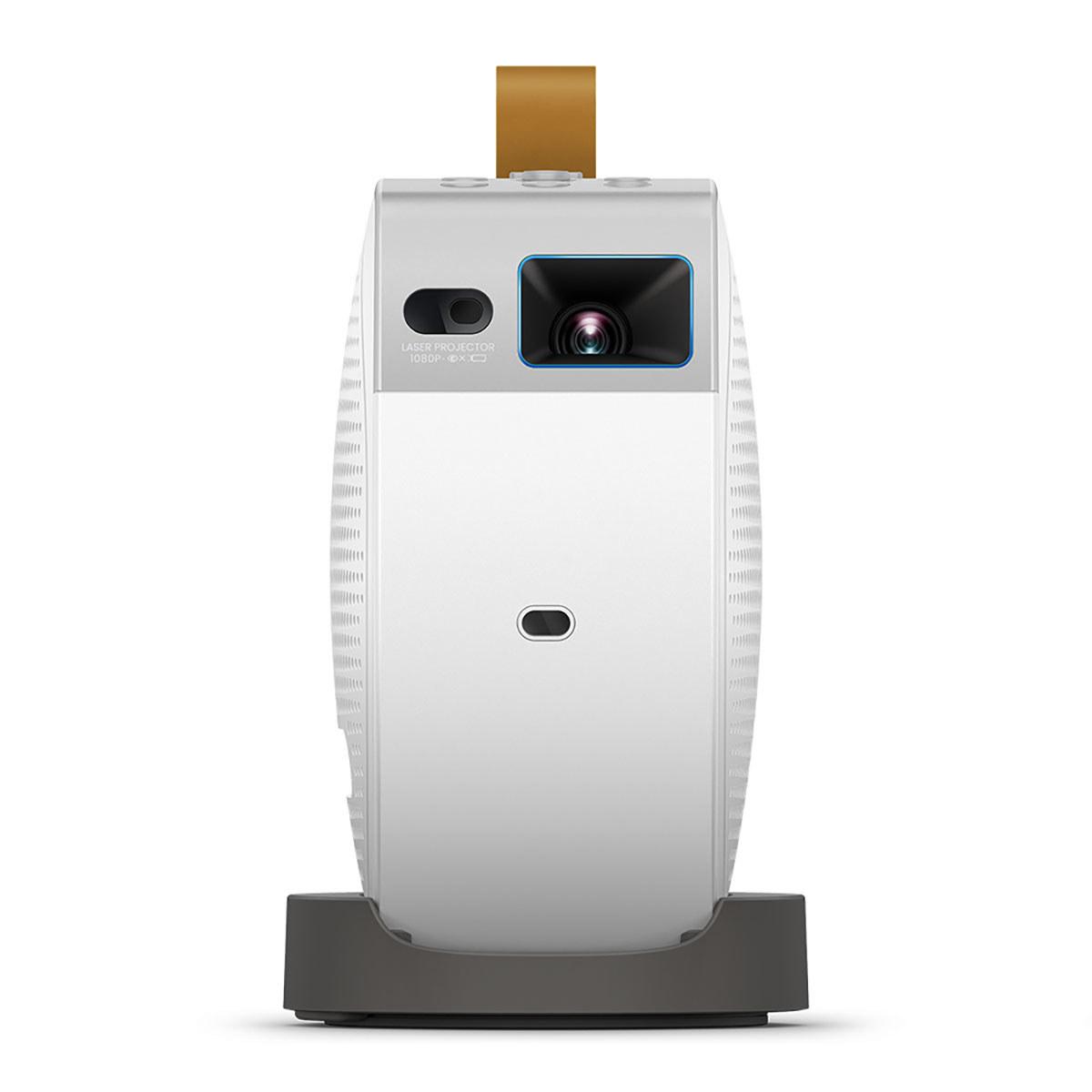
One of the most innovative aspects of the JMGO N1S Pro is its gimbal-based design. Think of it like the stabilizing mechanism in a smartphone camera, but for an entire projector. This allows 360-degree horizontal rotation and 135-degree vertical adjustment, meaning you can place the projector in one spot and aim it virtually anywhere without physically moving the base.
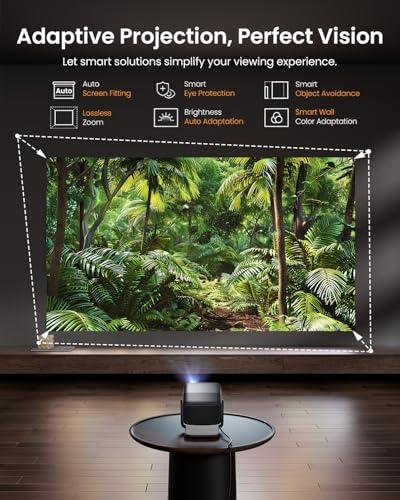
This flexibility is genuinely useful in real-world scenarios. You might want to project onto the wall for movie night, then swivel to the ceiling for ambient visuals during a party, or angle toward a different wall when rearranging furniture. The auto-focus and keystone correction (automatic image straightening) work together to maintain a sharp, properly aligned image regardless of angle.
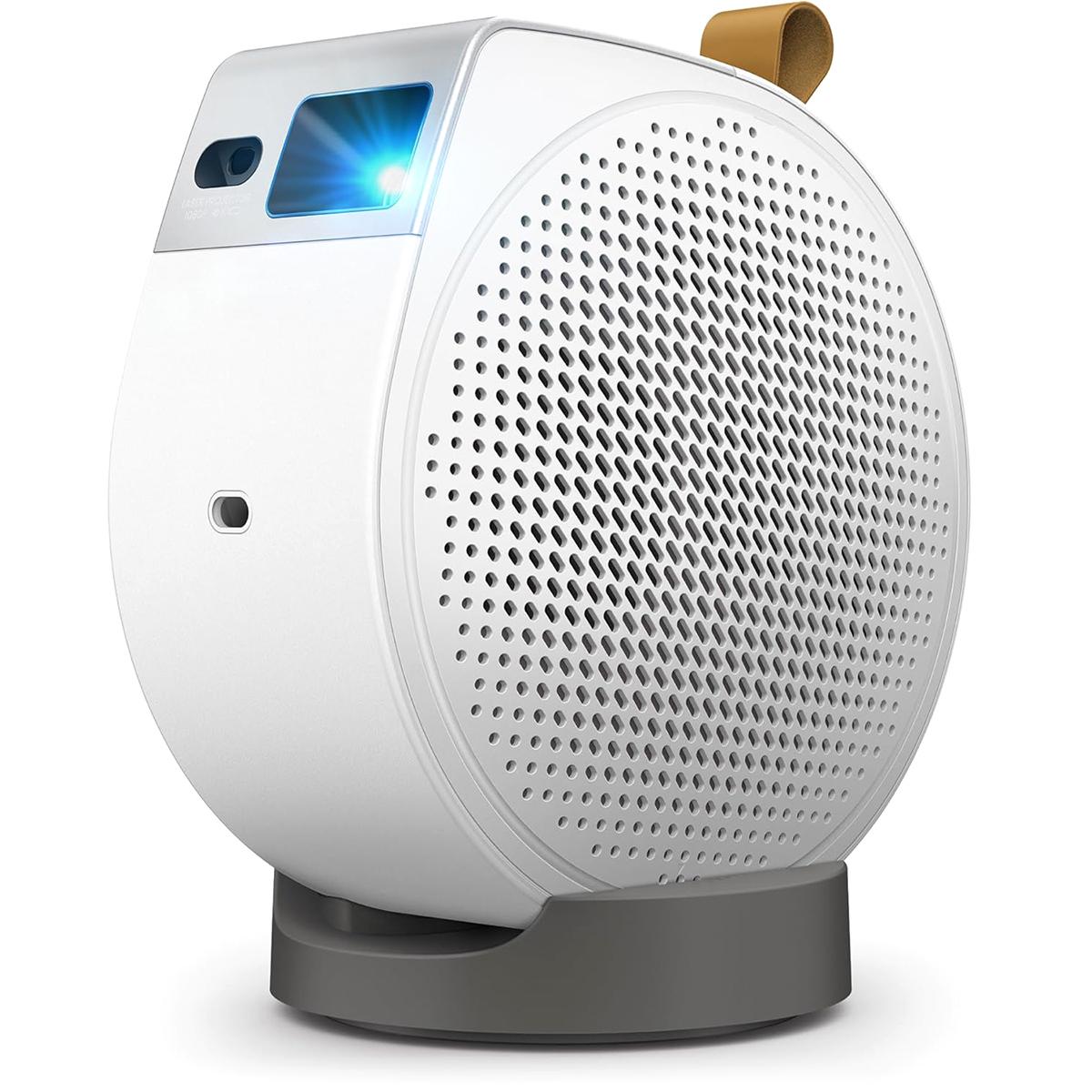
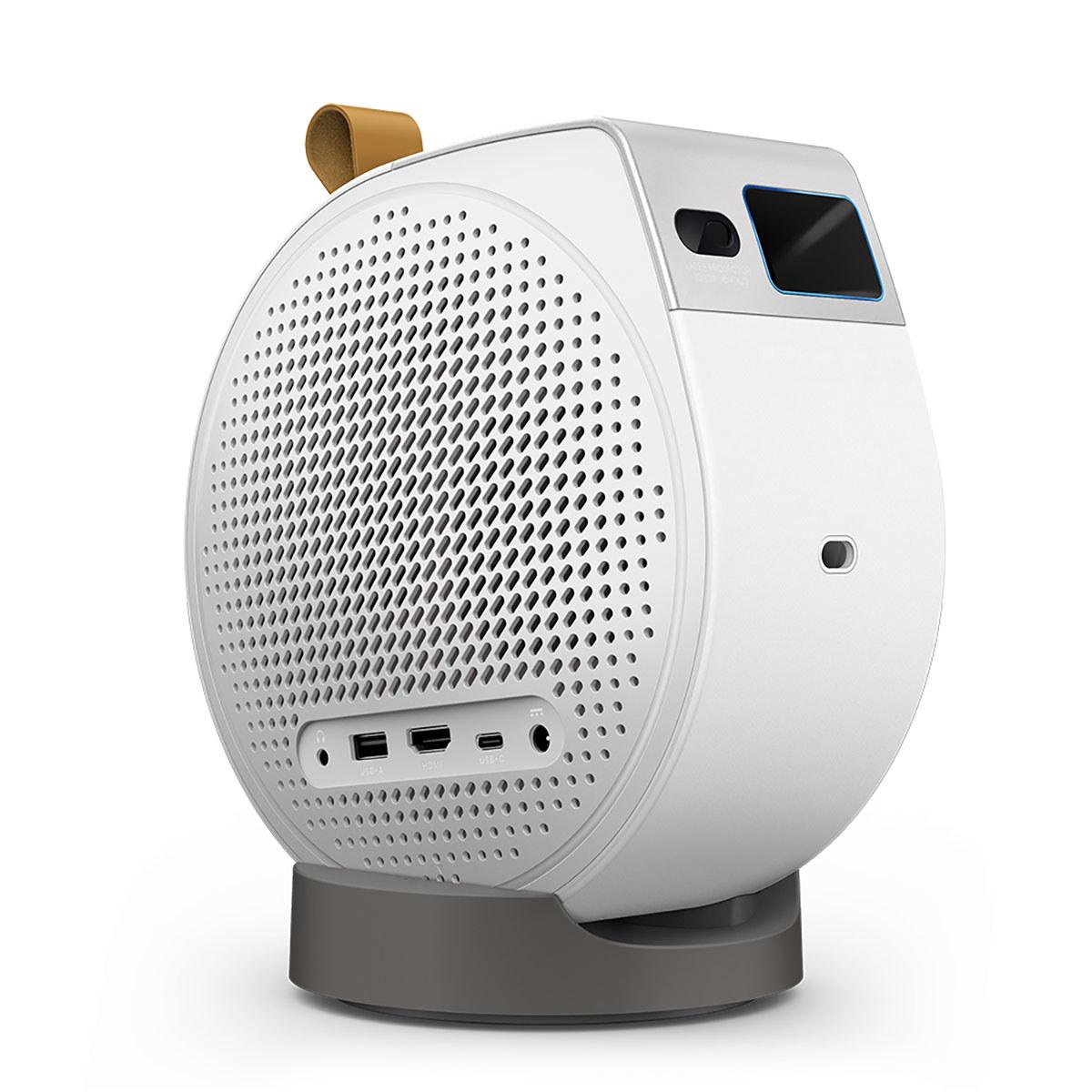
The BenQ GV50 takes a more focused approach, literally and figuratively. Its design prioritizes ceiling projection for bedroom use. While it offers some adjustment capability, it's specifically optimized for the angles and distances typical of bedside ceiling projection. This specialization allows BenQ to fine-tune aspects like the audio system's "Ceiling Cinema Sound Mode," which adjusts the audio characteristics to account for how sound travels when you're lying down with the projector positioned beside your bed.
Both projectors include built-in audio systems, but they take different approaches. The BenQ GV50 actually has a more sophisticated audio setup despite being the less expensive option. It features an 18-watt 2.1-channel system with dual 4-watt speakers and a dedicated 10-watt subwoofer. This provides better bass response and overall audio depth than you'd expect from such a compact device.
The JMGO N1S Pro includes 20 watts of audio power with Dolby Digital Plus support, but it's configured as a stereo system rather than the 2.1 setup in the BenQ. For casual viewing, both systems are adequate and eliminate the need for external speakers in many scenarios. However, serious home theater enthusiasts will likely want to connect external audio equipment regardless of which projector they choose.
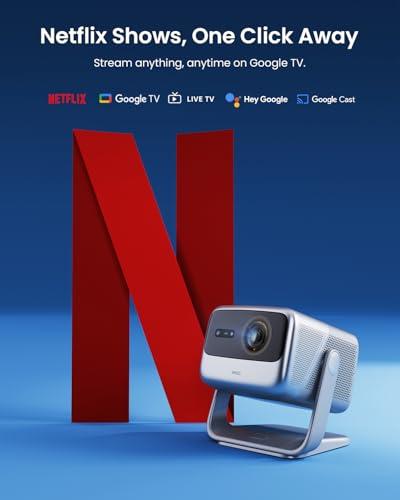
Both projectors run Google TV, Google's latest smart TV platform that replaced Android TV. This means access to thousands of apps, including native Netflix support (which isn't available on all projectors), Disney+, YouTube, and other major streaming services. Google Assistant integration allows voice control for basic functions.
Where they differ significantly is in connectivity options. The JMGO N1S Pro provides two HDMI 2.1 ports, with one supporting eARC (enhanced Audio Return Channel) for connecting soundbars or AV receivers. It also includes Wi-Fi 6 and Bluetooth 5.2 for faster, more stable wireless connections.
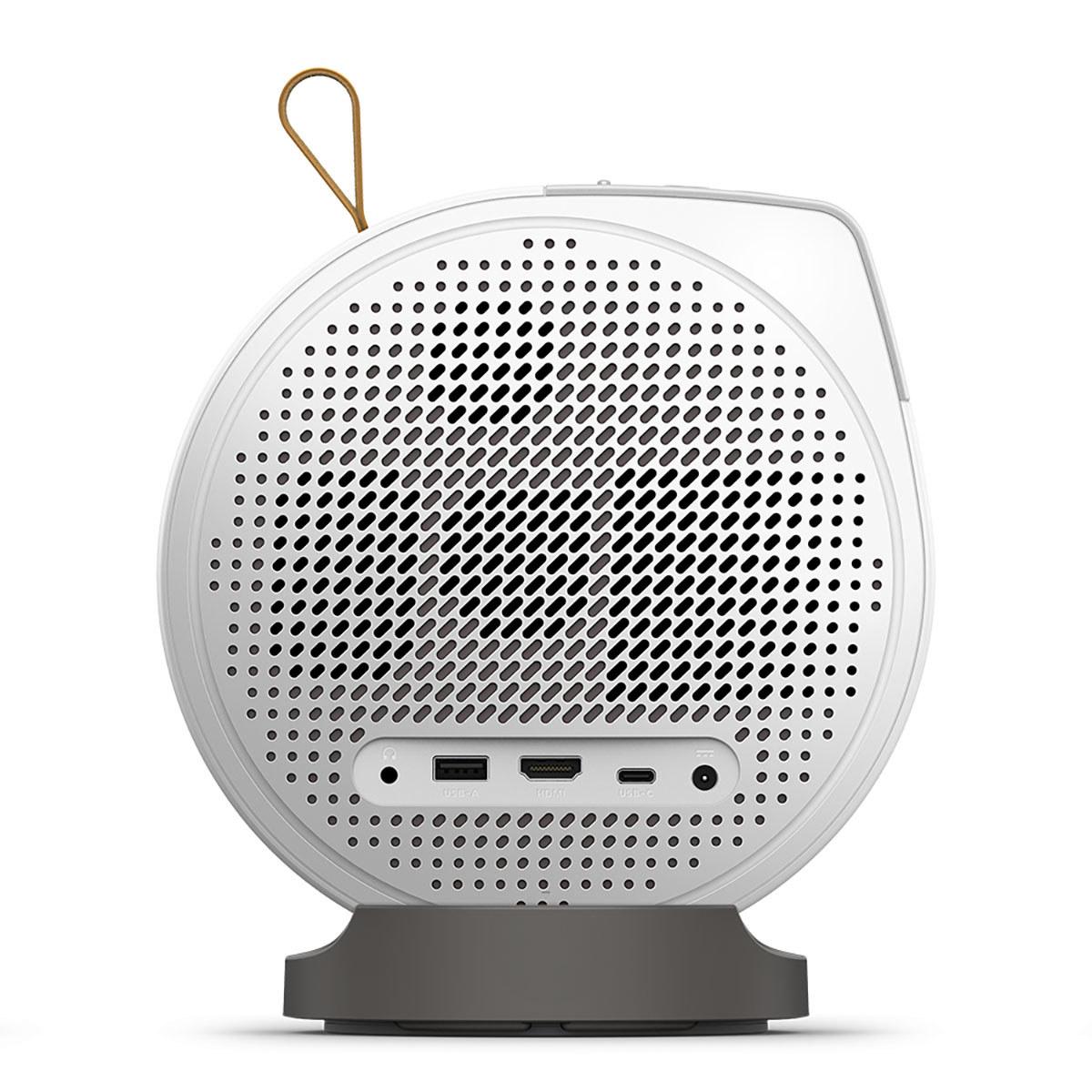
The BenQ GV50 offers more basic connectivity with a single HDMI 2.0b port, Wi-Fi 5, and Bluetooth 5.0. For most users, this is perfectly adequate, but gamers or those with multiple devices might appreciate the JMGO's additional connectivity options.
For gaming enthusiasts, the JMGO N1S Pro 4K has clear advantages. Its 4K resolution showcases modern games at their best, and HDMI 2.1 support enables features like Variable Refresh Rate (VRR) and Auto Low Latency Mode (ALLM) when connected to PlayStation 5 or Xbox Series X/S consoles.
However, our research into user experiences suggests that motion handling—how well the projector displays fast-moving scenes—is actually a weak point for the JMGO N1S Pro. Some users report noticeable judder or stutter in action scenes or sports content. The BenQ GV50 generally handles motion better, though at the cost of overall detail due to its lower resolution.
Based on extensive review analysis and user feedback, both projectors have their strengths and limitations that don't always align with specifications. The JMGO N1S Pro 4K excels in bright scenes and detailed content, making it excellent for nature documentaries, bright animated films, and daytime viewing. However, its black level performance—how deep and rich dark scenes appear—is only average for its price class.
The BenQ GV50 consistently receives praise for its shadow detail and tone mapping. Professional reviewers noted that it "avoided the muddy gray black levels" common in budget projectors. This makes it particularly good for darker content like horror films or dramatic movies with lots of nighttime scenes.
Both projectors use laser light sources, which is excellent news for long-term ownership costs. The JMGO N1S Pro rates its laser system at 30,000 hours, while the BenQ GV50 claims 20,000-30,000 hours depending on usage mode. At typical viewing patterns (2-3 hours daily), either projector should last well over a decade before requiring service.
This represents a significant improvement over older lamp-based projectors, which required expensive bulb replacements every 2,000-5,000 hours. The laser systems also maintain brightness and color consistency better over time.
The decision between these projectors ultimately comes down to your specific needs and budget constraints.
Choose the JMGO N1S Pro 4K if you want the best possible image quality and have the budget to match. It's ideal for users with larger rooms who plan to use the projector as their primary TV replacement. The 4K resolution and high brightness make it suitable for everything from family movie nights to gaming sessions to backyard movie screenings. The gimbal design adds genuine value if you appreciate setup flexibility or plan to use the projector in multiple configurations.
The BenQ GV50 makes more sense if you have a specific use case in mind—particularly bedroom ceiling projection—and want excellent value for money. It's also the better choice for apartment dwellers or anyone working with space constraints. The lower brightness actually becomes an advantage for late-night viewing, as it won't overwhelm your eyes in a dark room.
For dedicated home theater use, the JMGO N1S Pro 4K is clearly the better choice, despite its higher cost. The 4K resolution, high brightness, and wider color gamut create a more cinematic experience that better justifies a large-screen setup. However, serious home theater enthusiasts should consider that both projectors have limitations compared to dedicated home theater projectors costing significantly more.
Neither projector offers the deep black levels, color accuracy, or advanced image processing found in high-end home theater projectors. They're both better characterized as lifestyle projectors that prioritize convenience and smart features over ultimate image quality.
At the time of writing, both the JMGO N1S Pro 4K and BenQ GV50 represent strong values in their respective market segments. The JMGO justifies its premium pricing with significantly better resolution, brightness, and versatility. The BenQ offers an excellent entry point into smart projection with thoughtful design optimizations for its target use case.
The technology improvements we've seen in 2024—better processors, more stable wireless connectivity, and improved smart TV interfaces—benefit both projectors equally. The real question is whether you need the extra performance the JMGO N1S Pro provides, or if the BenQ GV50's more focused approach better matches your needs and budget.
For most users, the decision comes down to room conditions and budget. If you have ambient light during typical viewing times or want to project images larger than 100 inches, the JMGO N1S Pro is worth the investment. If you're primarily interested in cozy bedroom viewing or need to stay within a tighter budget, the BenQ GV50 delivers surprising performance and thoughtful features at its price point.
Either way, you're getting a glimpse into the future of home entertainment—one where the walls themselves become your entertainment system.
| JMGO N1S Pro 4K | BenQ GV50 |
|---|---|
| Resolution - Determines image sharpness, especially on screens over 100 inches | |
| True 4K (3840 x 2160) - Four times sharper than Full HD | Full HD (1920 x 1080) - Adequate for smaller screens and budget setups |
| Brightness - Most critical factor for room lighting compatibility | |
| 2,400 ANSI lumens - Handles ambient light well for family viewing | 500 ANSI lumens - Requires dark rooms but excellent for bedtime viewing |
| Light Source Technology - Affects color vibrancy and lifespan | |
| MALC 2.0 Triple RGB Laser - Exceptional color gamut (110% BT.2020) | Laser Phosphor - Good color accuracy, more cost-effective technology |
| Projection Flexibility - How easily you can position and aim the projector | |
| 360° gimbal with auto-focus and keystone correction | 135° vertical tilt optimized specifically for ceiling projection |
| Screen Size Range - Determines viewing experience possibilities | |
| 85" to 180" (throw distance 7.4' to 15.7') | 30" to 120" (throw distance 2.6' to 10.5') |
| Audio System - Important for users who don't want external speakers | |
| 20W stereo with Dolby Digital Plus | 18W 2.1 channel with dedicated 10W subwoofer (better bass response) |
| Connectivity - Matters for gaming and multiple device setups | |
| 2x HDMI 2.1 (one with eARC), Wi-Fi 6, Bluetooth 5.2 | 1x HDMI 2.0b, Wi-Fi 5, Bluetooth 5.0 |
| Smart Platform - Both offer comprehensive streaming capabilities | |
| Google TV with 10,000+ apps and Google Assistant | Google TV with Google Assistant and ceiling-optimized interface |
| Portability Features - Important for flexible usage scenarios | |
| AC-powered only, 9.9 lbs, quiet operation ( | Built-in battery (2.5 hours), 4.6 lbs, ultra-quiet (26-28 dB) |
| Laser Lifespan - Long-term ownership costs and reliability | |
| 30,000 hours (over 10 years of typical use) | 20,000-30,000 hours depending on mode |
| Target Use Case - Who each projector serves best | |
| Primary TV replacement for living rooms and home theaters | Specialized bedroom ceiling projection and small space entertainment |
The JMGO N1S Pro 4K delivers superior image quality with true 4K resolution (3840×2160) compared to the BenQ GV50's Full HD (1920×1080). The JMGO also produces 2,400 ANSI lumens versus 500 ANSI lumens from the BenQ GV50, making it much brighter for well-lit rooms.
The JMGO N1S Pro 4K can handle rooms with ambient lighting thanks to its 2,400 ANSI lumens brightness. The BenQ GV50 requires dark or dimly lit environments due to its 500 ANSI lumens output, making it ideal for bedroom use but not suitable for bright living rooms.
For dedicated home theater setups, the JMGO N1S Pro 4K is the clear winner with its 4K resolution, high brightness, and 110% BT.2020 color gamut coverage. It supports larger screen sizes (up to 180") and provides the cinematic experience most home theater enthusiasts want.
The JMGO N1S Pro 4K projects images from 85" to 180" with a throw distance of 7.4' to 15.7'. The BenQ GV50 creates smaller images from 30" to 120" with a closer throw distance of 2.6' to 10.5', making it better suited for small rooms and bedrooms.
Yes, both the JMGO N1S Pro 4K and BenQ GV50 run Google TV with access to Netflix, Disney+, YouTube, and thousands of other apps. Both include Google Assistant for voice control and wireless casting capabilities.
The BenQ GV50 has a more sophisticated audio system with an 18W 2.1-channel setup including a dedicated 10W subwoofer. The JMGO N1S Pro 4K offers 20W stereo speakers with Dolby Digital Plus but lacks the dedicated bass response of the BenQ's system.
The JMGO N1S Pro 4K is better for gaming with its 4K resolution and dual HDMI 2.1 ports supporting modern consoles. The BenQ GV50 can handle gaming but is limited to Full HD resolution and has only one HDMI 2.0b port.
The BenQ GV50 is more portable at 4.6 pounds with a built-in battery providing 2.5 hours of viewing time. The JMGO N1S Pro 4K weighs 9.9 pounds and requires AC power, making it less suitable for truly portable use.
The JMGO N1S Pro 4K features a unique gimbal design allowing 360° horizontal and 135° vertical adjustment with auto-focus and keystone correction. The BenQ GV50 offers 135° vertical tilt specifically optimized for ceiling projection in bedrooms.
Both projectors use laser technology for longevity. The JMGO N1S Pro 4K rates its laser at 30,000 hours, while the BenQ GV50 provides 20,000-30,000 hours depending on usage mode. Both should last over 10 years with typical use.
The BenQ GV50 offers excellent value for budget-conscious buyers and specialized bedroom use, while the JMGO N1S Pro 4K justifies its premium positioning with significantly better image quality, brightness, and versatility for serious home entertainment.
The JMGO N1S Pro 4K works well for outdoor movie nights thanks to its high brightness output, though it requires power access. The BenQ GV50 has battery power for portability but lacks sufficient brightness for outdoor use unless in very dark conditions.
We've done our best to create useful and informative comparisons to help you decide what product to buy. Our research uses advanced automated methods to create this comparison and perfection is not possible - please contact us for corrections or questions. These are the sites we've researched in the creation of this article: techradar.com - projectorcentral.com - gray9.in - projectorreviews.com - howtogeek.com - the-gadgeteer.com - projectorcentral.com - global.jmgo.com - global.jmgo.com - cnet.com - cnet.com - youtube.com - global.jmgo.com - avsforum.com - youtube.com - youtube.com - thewellnessinsider.asia - bhphotovideo.com - thetechnovore.com - howtogeek.com - projectorcentral.com - projectorcentral.com - techradar.com - adorama.com - projectorcentral.com - thesmarthomehookup.com - youtube.com - youtube.com - whathifi.com - youtube.com - cdw.com - projectorcentral.com - youtube.com

Privacy Policy
Terms and Conditions - Affiliate Policy
Home Security
© Copyright 2008-2026.
11816 Inwood Rd #1211, Dallas, TX 75244