

The world of portable smart projectors has exploded in recent years, offering everything from ultra-budget models to premium powerhouses that rival dedicated home theater setups. Today's smart projectors combine projection technology with built-in streaming platforms, eliminating the need for external devices and creating truly plug-and-play entertainment systems.
In this detailed comparison, we're examining two projectors that represent opposite ends of the market spectrum: the JMGO N1S Pro 4K, a premium triple-laser projector released in 2024, and the Aurzen BOOM Mini Smart Projector, a budget-friendly LCD model that entered the market around the same time. These aren't direct competitors—they're designed for completely different users and budgets—but understanding their differences will help you determine which approach suits your needs and wallet.
Before diving into specifics, it's worth understanding what separates today's smart projectors from the business presentation projectors of the past. Modern portable smart projectors integrate several key technologies that make them suitable for home entertainment.
The display technology forms the foundation of any projector's performance. Traditional projectors used bulky lamp systems that generated significant heat, required frequent replacement, and produced inconsistent brightness over time. Today's portable models typically use either LED (Light Emitting Diode) or laser light sources. LEDs are cost-effective and compact but have brightness limitations. Laser systems, particularly the newer RGB (Red, Green, Blue) laser setups, can produce much brighter, more color-accurate images while lasting significantly longer—often 30,000 hours compared to traditional lamp systems that might last 3,000-5,000 hours.
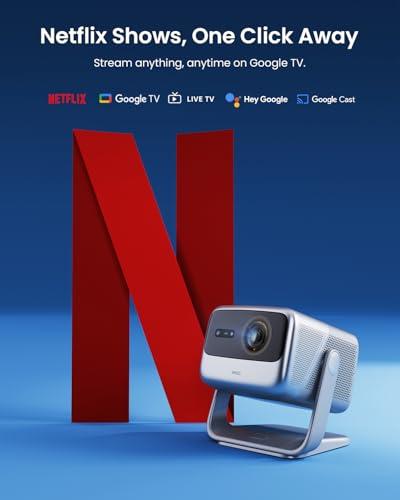
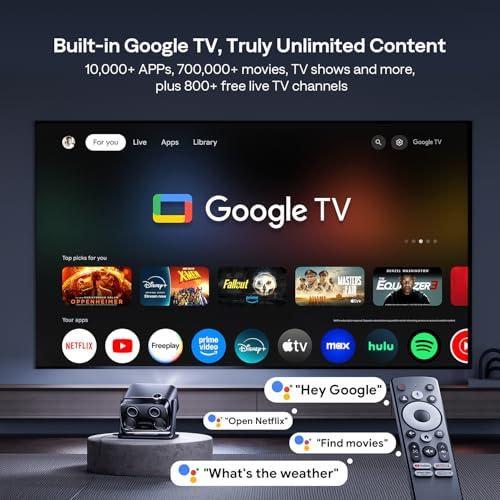
The smart platform integration has transformed how we use projectors. Instead of requiring external streaming devices, today's models run operating systems like Google TV or Android TV directly, giving you immediate access to Netflix, Disney+, YouTube, and thousands of other apps. This integration includes features like voice control through Google Assistant and wireless casting from smartphones and tablets.
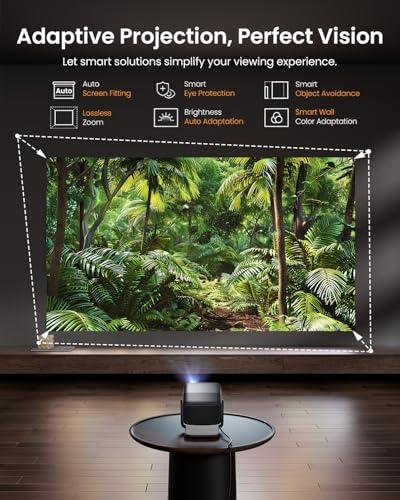
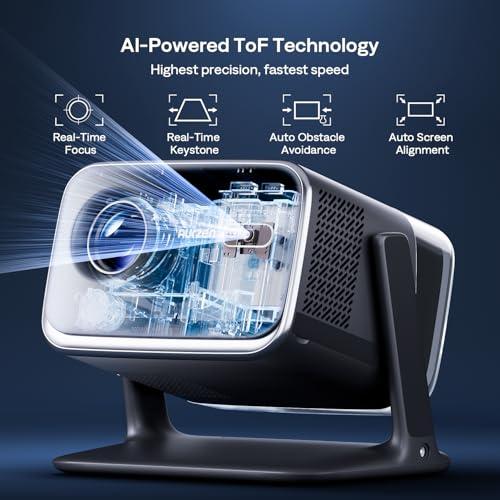
Automatic setup features represent another major advancement. Modern projectors use sensors and processing power to automatically focus the image, correct geometric distortion (called keystone correction), and even avoid projecting onto objects or people. These features make setup nearly foolproof compared to older projectors that required manual adjustment for everything.
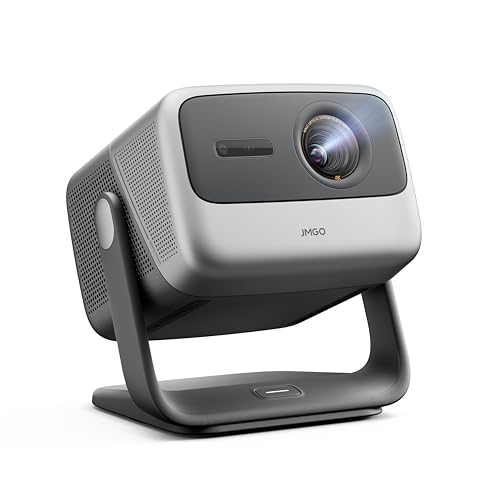
The JMGO N1S Pro 4K represents what happens when a company decides to pack professional-grade technology into a portable form factor. Released in 2024, this projector showcases several cutting-edge technologies that were either unavailable or prohibitively expensive in portable projectors just a few years ago.
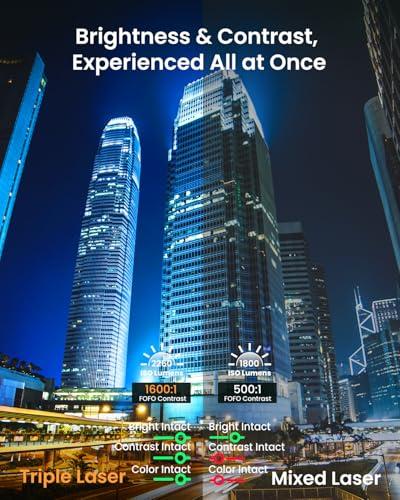
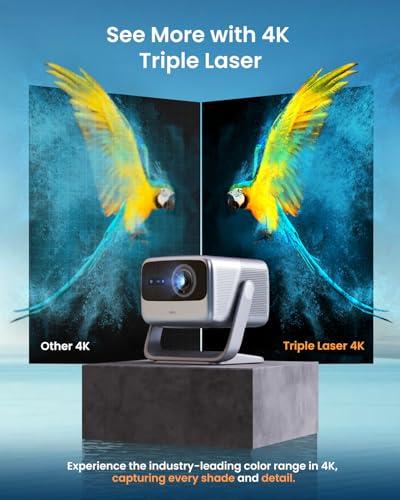
The most significant technical advancement in the JMGO N1S Pro 4K is its MALC 2.0 triple RGB laser system. Unlike single-laser or LED systems that create colors by filtering white light, this setup uses three separate lasers—one each for red, green, and blue light. This approach allows the projector to create much more accurate and vibrant colors while achieving higher brightness levels.
The color gamut performance is particularly impressive. The N1S Pro 4K covers 110% of the BT.2020 color standard, which is the wide color gamut used for 4K HDR content. For context, many budget projectors struggle to achieve even 90% of the older Rec. 709 color standard used for regular HD content. This wider color gamut means you'll see more lifelike skin tones, deeper blues in ocean scenes, and more vibrant reds in sunset shots.
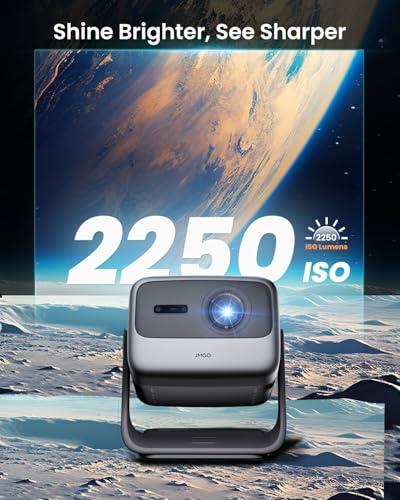
The brightness output of around 2,400 ANSI lumens (though real-world measurements typically show closer to 1,200-1,600 lumens in accurate color modes) makes the JMGO N1S Pro 4K suitable for rooms with some ambient light. ANSI lumens represent a standardized measurement that provides more accurate brightness comparisons between projectors than the inflated "lumens" numbers you might see from lesser-known brands.
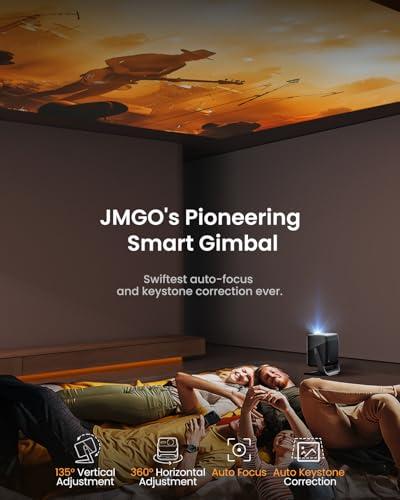
Perhaps the most unique feature of the JMGO N1S Pro 4K is its motorized gimbal system, which allows 135-degree vertical and 360-degree horizontal rotation. This isn't just a tilting stand—it's a precision positioning system that lets you project onto walls, ceilings, or screens without physically moving the projector base.
Combined with advanced auto-focus and keystone correction systems, this gimbal enables projection scenarios that would be impossible or extremely difficult with traditional projectors. Want to watch a movie on the ceiling while lying in bed? The gimbal handles it automatically. Need to project onto a side wall in a cramped room? No problem. This flexibility is particularly valuable in small apartments, dorm rooms, or spaces where permanent installation isn't possible.
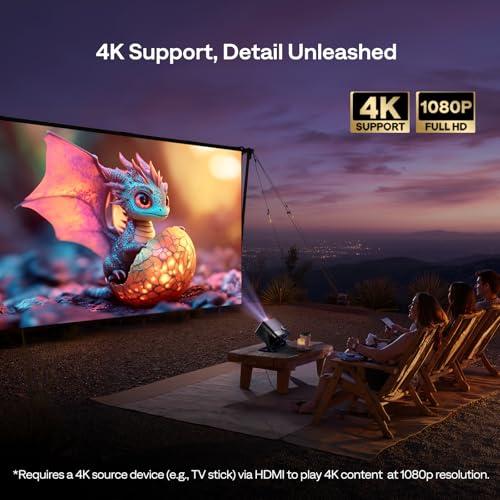
The native 4K UHD resolution (3840×2160 pixels) of the JMGO N1S Pro 4K delivers genuinely sharp images, especially noticeable when projecting large screen sizes of 100 inches or more. Many budget projectors claim "4K support" but actually use 1080p panels and upscale the image, which doesn't provide the same level of detail.
For gaming enthusiasts, the N1S Pro 4K supports 4K gaming at 60Hz with about 35ms of input lag. While this isn't quite fast enough for competitive esports gaming, it's perfectly acceptable for single-player games and casual multiplayer sessions. The projector's HDMI 2.1 ports ensure compatibility with PlayStation 5 and Xbox Series X consoles at full resolution.
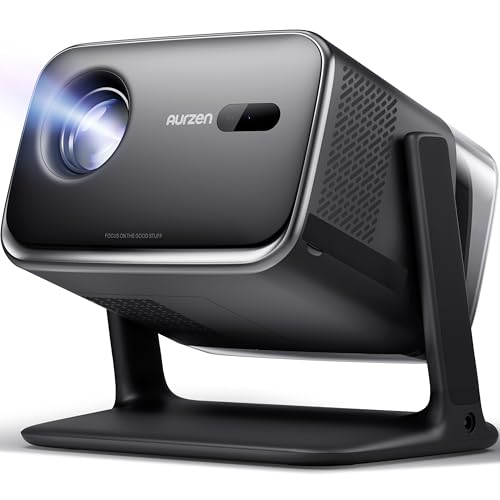
The Aurzen BOOM Mini takes a completely different approach, focusing on delivering core smart projector functionality at an accessible price point. Released in recent years as portable projectors gained mainstream popularity, it represents the maturation of budget projection technology.
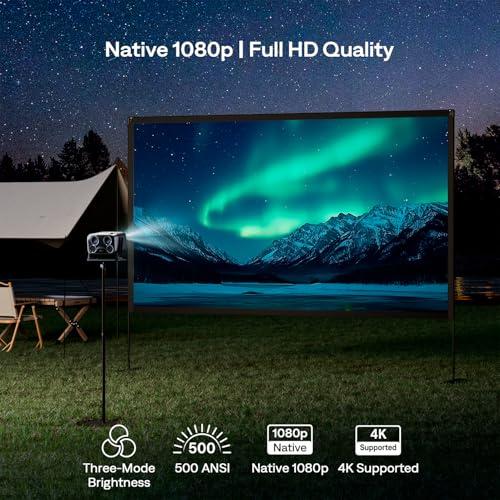
The BOOM Mini uses a single LCD (Liquid Crystal Display) panel with LED backlighting, a time-tested approach that keeps costs down while delivering decent image quality. The native 1080p resolution (1920×1080 pixels) provides sharp images for most content, and the projector can accept 4K input signals and downscale them to its native resolution.
The 500 ANSI lumens brightness rating is honestly specified—a refreshing change in a market where some manufacturers inflate their brightness claims. This output level is adequate for dark room viewing and can handle some ambient light in smaller rooms, though it's nowhere near the brightness of premium models like the JMGO N1S Pro 4K.
The 1,000:1 contrast ratio is respectable for an LCD projector at this price point. Contrast ratio measures the difference between the darkest blacks and brightest whites the projector can display. Higher contrast ratios generally produce more realistic images with better depth and dimensionality.
Despite its budget positioning, the Aurzen BOOM Mini includes impressive smart features. The built-in Google TV platform provides access to the same streaming apps as premium models, including native Netflix support—something that wasn't common in budget projectors until recently.
The real-time autofocus and keystone correction systems use Time-of-Flight (ToF) sensors to measure distances and automatically adjust the image. This technology, which was expensive just a few years ago, has become affordable enough to include in budget models, dramatically improving the user experience.
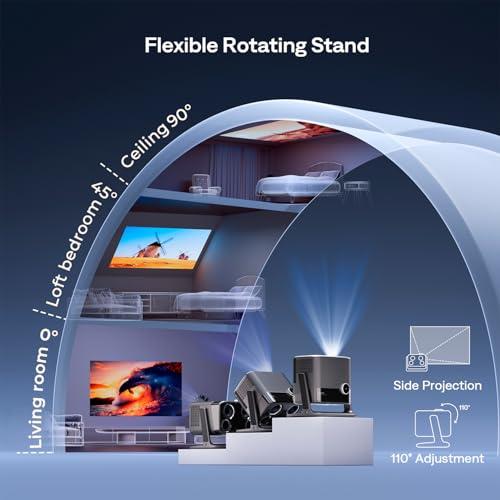
The 110-degree flexible stand allows projection onto walls and ceilings, though it's manually adjustable rather than motorized like the JMGO's gimbal system. For many users, this manual adjustment is perfectly adequate and eliminates potential mechanical failure points.
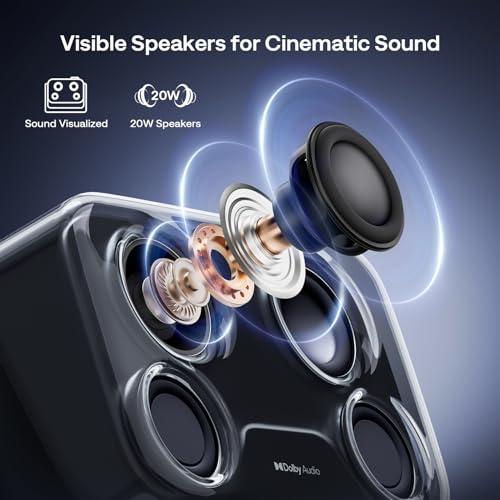
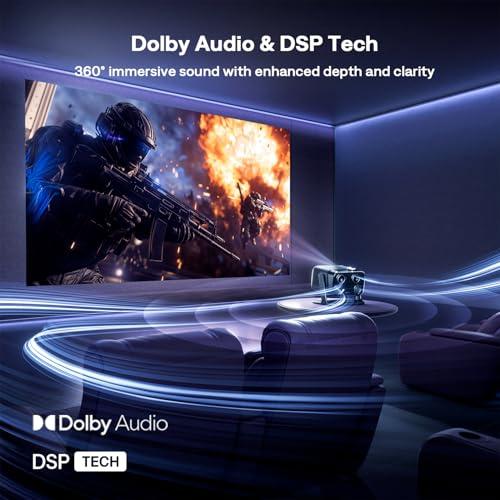
Both projectors include built-in speakers, but their approaches differ significantly. The BOOM Mini's dual 10W speakers (20W total) with Dolby Audio provide room-filling sound that's surprisingly good for casual viewing. The speakers can even function as a standalone Bluetooth speaker when the projector isn't in use.
The JMGO N1S Pro 4K's 20W stereo system with Dolby Digital Plus delivers notably superior audio quality with better bass response and clearer dialogue. Professional reviewers consistently praise its audio performance as eliminating the need for external speakers in many setups—a significant advantage for a portable projector.
The performance gap between these projectors is most apparent in image quality. The JMGO N1S Pro 4K delivers genuinely cinematic visuals with sharp 4K detail, vibrant colors that exceed broadcast standards, and enough brightness for varied lighting conditions.
The Aurzen BOOM Mini produces perfectly watchable 1080p images that look good in dark rooms but can't match the N1S Pro's detail level, color vibrancy, or ambient light performance. However, for many users watching streaming content on screens under 120 inches, the 1080p resolution is entirely adequate.
Brightness becomes crucial when considering room usage. The JMGO's higher output allows comfortable viewing with table lamps on or during evening hours with some window light. The BOOM Mini really needs a dark room to shine, making it better suited for dedicated movie nights rather than casual background entertainment.
Motion handling—how well the projector displays fast-moving scenes without blur or stutter—varies significantly between these models. The JMGO N1S Pro 4K includes motion enhancement processing (MEMC - Motion Estimation, Motion Compensation) but still shows some limitations with very fast motion, particularly in sports content.
The Aurzen BOOM Mini, lacking advanced motion processing, can show more noticeable motion blur in action scenes. For gaming, the N1S Pro's 4K capability and faster processing make it substantially better for modern console gaming, while the BOOM Mini is adequate for casual gaming but not optimal for fast-paced titles.
Both projectors run Google TV, but their performance differs due to processing power. The JMGO N1S Pro 4K includes 32GB of storage and more powerful processing, resulting in smoother app navigation and faster loading times. The BOOM Mini's 16GB storage and more basic processor occasionally show slight hesitation with demanding apps, though day-to-day streaming performance is generally smooth.
The N1S Pro's additional connectivity options, including two HDMI 2.1 ports with eARC support, provide more flexibility for complex setups with soundbars, gaming consoles, and streaming devices. The BOOM Mini's single HDMI port and dual USB ports cover basic connectivity needs but limit expansion options.
For dedicated home theater use, these projectors serve different purposes. The JMGO N1S Pro 4K can function as the centerpiece of a serious home theater setup, delivering image quality that competes with entry-level dedicated home theater projectors while maintaining portability.
The projector's gimbal system and automatic adjustment features make it particularly suitable for spaces that serve multiple purposes—a living room that transforms into a theater, or a bedroom where you want ceiling projection capabilities. The superior brightness and color performance mean you don't need to completely light-proof the room.
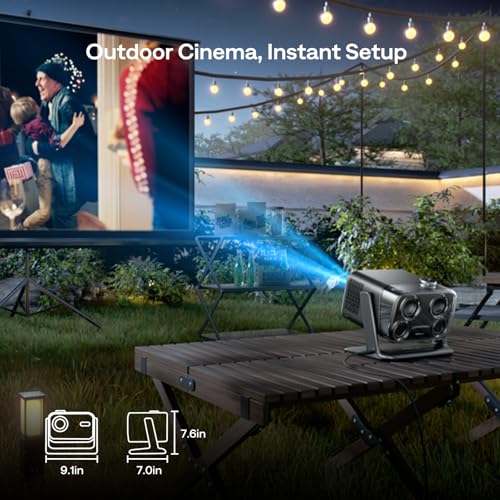
The Aurzen BOOM Mini works better as a secondary entertainment solution or for spaces where a full home theater setup isn't practical. It excels in bedrooms, dorm rooms, small apartments, or as a portable projector for outdoor movie nights. The lower brightness and 1080p resolution limit its effectiveness in larger, brighter spaces but make it perfect for intimate viewing experiences.
The JMGO N1S Pro 4K represents a serious investment in entertainment technology. At the time of writing, it costs roughly six times more than the BOOM Mini, but delivers genuinely premium performance that justifies the price for users who prioritize image quality and advanced features.
The BOOM Mini offers remarkable value, delivering core smart projector capabilities at an accessible price point. It proves that you don't need to spend premium money to enjoy big-screen entertainment, as long as you understand its limitations and use it appropriately.
These projectors represent two valid but completely different approaches to portable entertainment. The JMGO N1S Pro 4K pushes technological boundaries to deliver professional-grade performance in a portable package, while the Aurzen BOOM Mini focuses on making smart projector technology accessible to mainstream users.
Your choice should align with your budget, image quality expectations, and intended use cases. The N1S Pro is a legitimate alternative to traditional home theater projectors with the added benefit of portability, while the BOOM Mini is perfect for users who want to explore big-screen entertainment without a major financial commitment.
Both projectors succeed in their respective markets, and the rapid advancement of portable projector technology means we're likely to see even more impressive capabilities at both price points in the coming years. The key is understanding what level of performance you actually need and choosing the projector that best matches your specific requirements and budget.
| JMGO N1S Pro 4K Projector | Aurzen BOOM Mini Smart Projector Google TV |
|---|---|
| Resolution - Determines image sharpness and detail, especially on large screens | |
| Native 4K UHD (3840×2160) with true pixel-level detail | Native 1080p (1920×1080) with 4K input downscaling |
| Brightness - Critical for viewing in rooms with ambient light | |
| 2,400 ANSI lumens (measured ~1,200-1,600 in accurate modes) | 500 ANSI lumens (requires dark room for best experience) |
| Light Source Technology - Affects color quality, brightness consistency, and longevity | |
| MALC 2.0 Triple RGB Laser (30,000 hour lifespan) | LED with LCD panel (30,000 hour lifespan) |
| Color Performance - Determines how vibrant and accurate colors appear | |
| 110% BT.2020 color gamut coverage for cinema-grade colors | Standard LCD color reproduction, adequate for casual viewing |
| Contrast Ratio - Controls depth and richness of dark scenes | |
| 1,600:1 (measured ~926:1) with good black levels | 1,000:1, typical for LCD technology |
| Projection Flexibility - How easily you can position and adjust the image | |
| Motorized gimbal: 135° vertical, 360° horizontal auto-adjustment | Manual 110° flexible stand for wall/ceiling projection |
| Smart Platform - Built-in streaming capabilities and app selection | |
| Google TV with Netflix, 32GB storage, 2GB RAM | Google TV with Netflix, 16GB storage, 2GB RAM |
| Audio System - Built-in sound quality for complete entertainment | |
| 20W stereo with Dolby Digital Plus, excellent bass and clarity | Dual 10W speakers (20W total) with Dolby Audio, good room fill |
| Gaming Performance - Console compatibility and input responsiveness | |
| 4K 60Hz gaming, 35ms input lag, HDMI 2.1 support | 1080p gaming, basic HDMI connectivity |
| Connectivity Options - Ports and wireless capabilities for various devices | |
| 2× HDMI 2.1 (eARC), USB, Wi-Fi 6, Bluetooth 5.2 | 1× HDMI, 2× USB, dual-band Wi-Fi, Bluetooth 5.1 |
| Size and Portability - Physical footprint and ease of moving | |
| 9.48" × 9.29" × 7.99", 9.9 lbs with carrying case | 9.1" × 7.6" × 7", 4.7 lbs, highly portable |
| Projection Size Range - Screen size flexibility for different rooms | |
| 85" – 180" optimal range with 1.2:1 throw ratio | 40" – 200" range with 1.36:1 throw ratio |
| Setup Convenience - How quickly you can get watching | |
| Advanced auto-focus, keystone, object avoidance with gimbal precision | Real-time ToF autofocus and keystone correction, plug-and-play simple |
| Target User - Who gets the most value from each approach | |
| Home theater enthusiasts wanting premium portable performance | Budget-conscious users seeking smart projector basics |
The JMGO N1S Pro 4K Projector is significantly better for dedicated home theater setups. It delivers native 4K resolution with triple laser technology, producing cinema-quality images with vibrant colors and enough brightness for rooms with some ambient light. The Aurzen BOOM Mini Smart Projector Google TV works well for casual movie nights in dark rooms but lacks the resolution and brightness needed for serious home theater applications.
The picture quality difference is substantial. The JMGO N1S Pro 4K offers true 4K resolution with 2,400 ANSI lumens and 110% BT.2020 color coverage, delivering sharp, vibrant images. The Aurzen BOOM Mini provides 1080p resolution with 500 ANSI lumens, which is adequate for casual viewing but can't match the detail and color performance of the premium model.
The JMGO N1S Pro 4K Projector can handle moderately lit rooms thanks to its higher brightness output and laser technology. The Aurzen BOOM Mini Smart Projector Google TV requires darker environments to perform well - it's best suited for evening viewing or rooms where you can control the lighting effectively.
The Aurzen BOOM Mini is more portable, weighing about 4.7 pounds compared to the JMGO N1S Pro 4K's 9.9 pounds. Both are considered portable projectors, but the BOOM Mini is easier to carry between rooms or take to different locations for outdoor movie nights.
Yes, both the JMGO N1S Pro 4K Projector and Aurzen BOOM Mini Smart Projector Google TV run Google TV with native Netflix support. You can stream directly without needing additional devices like streaming sticks or boxes, plus access thousands of other apps.
The JMGO N1S Pro 4K is superior for gaming with 4K 60Hz support, HDMI 2.1 connectivity, and compatibility with PlayStation 5 and Xbox Series X at full resolution. The Aurzen BOOM Mini handles basic gaming but is limited to 1080p resolution and has fewer advanced gaming features.
Both projectors offer automatic setup features, but they work differently. The JMGO N1S Pro 4K Projector has a motorized gimbal system with advanced auto-focus and keystone correction for precise positioning. The Aurzen BOOM Mini Smart Projector Google TV uses ToF sensors for quick autofocus and manual stand adjustment - simpler but still very user-friendly.
The JMGO N1S Pro 4K provides superior audio with 20W stereo speakers featuring Dolby Digital Plus, delivering clear dialogue and good bass. The Aurzen BOOM Mini has decent 20W speakers with Dolby Audio that work well for casual viewing, though they don't match the premium model's audio performance.
Value depends on your needs and budget. The Aurzen BOOM Mini Smart Projector Google TV offers exceptional value for budget-conscious buyers wanting basic smart projector features. The JMGO N1S Pro 4K Projector provides premium performance that justifies its higher cost for users prioritizing image quality and advanced features.
Yes, both support ceiling projection. The JMGO N1S Pro 4K uses a motorized gimbal system for automated ceiling projection with precise positioning. The Aurzen BOOM Mini has a manual 110° flexible stand that allows ceiling projection with manual adjustment.
The JMGO N1S Pro 4K Projector works well with screen sizes from 85" to 180", with its 4K resolution showing clear benefits on larger screens. The Aurzen BOOM Mini Smart Projector Google TV supports 40" to 200" screens but performs best under 120" where its 1080p resolution remains sharp.
The Aurzen BOOM Mini is ideal for first-time projector buyers due to its affordable entry point, simple setup, and plug-and-play operation. It lets you experience big-screen entertainment without a major investment. The JMGO N1S Pro 4K is better suited for buyers who know they want premium performance and have the budget to match.
We've done our best to create useful and informative comparisons to help you decide what product to buy. Our research uses advanced automated methods to create this comparison and perfection is not possible - please contact us for corrections or questions. These are the sites we've researched in the creation of this article: techradar.com - projectorcentral.com - gray9.in - projectorreviews.com - howtogeek.com - the-gadgeteer.com - projectorcentral.com - global.jmgo.com - global.jmgo.com - cnet.com - cnet.com - youtube.com - global.jmgo.com - avsforum.com - youtube.com - youtube.com - aurzen.com - aurzen.com - the-gadgeteer.com - projectorcentral.com - aurzen.com - aurzen.com - youtube.com - bestbuy.com - bestbuy.com - youtube.com - aurzen.com - youtube.com - hometechnologyreview.com - youtube.com - aurzen.com

Privacy Policy
Terms and Conditions - Affiliate Policy
Home Security
© Copyright 2008-2026.
11816 Inwood Rd #1211, Dallas, TX 75244