

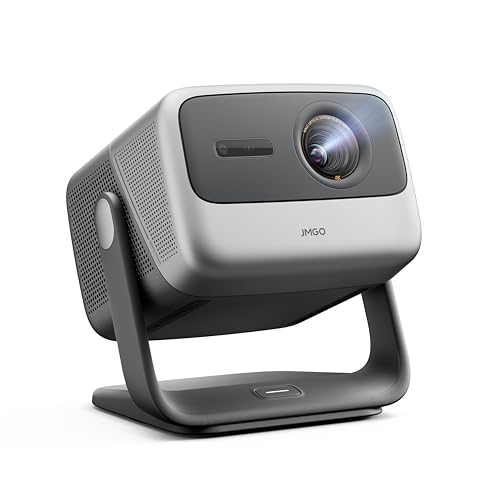

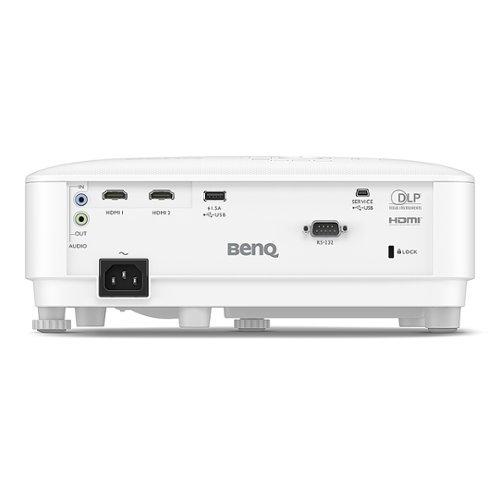
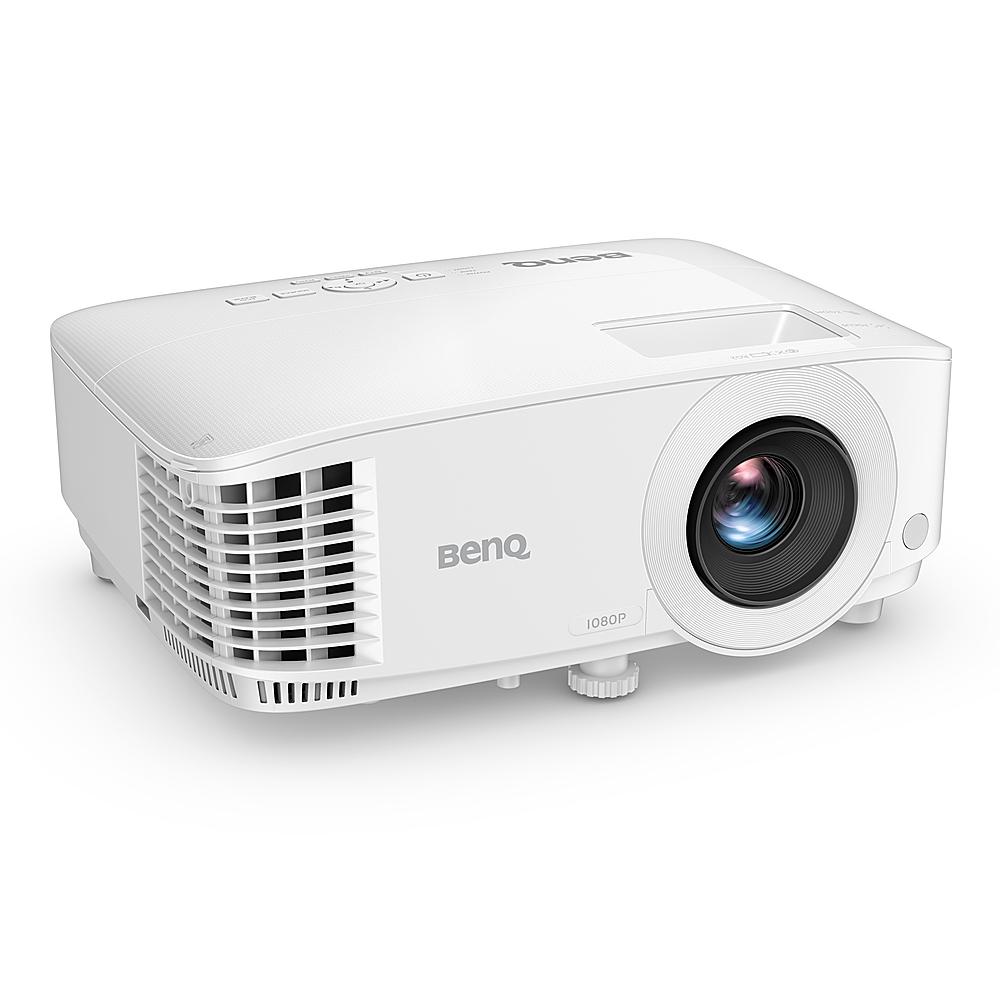
When shopping for a projector in 2024, you're facing more choices than ever before. The projector market has evolved dramatically over the past few years, with laser technology becoming more affordable and gaming-specific features becoming standard expectations rather than luxury add-ons. Two projectors that perfectly illustrate this evolution are the JMGO N1S Pro 4K, released in 2024, and the BenQ TH575, which hit the market in 2022.
These projectors represent fundamentally different approaches to the same goal: delivering an excellent big-screen experience. The JMGO N1S Pro 4K embodies the latest in laser projection technology with true 4K resolution and smart features, while the BenQ TH575 focuses on proven lamp-based performance optimized specifically for gaming. Understanding which approach suits your needs requires diving into what makes each projector tick.
Before we compare these specific models, it's worth understanding the key technologies at play. Traditional projectors use high-intensity discharge (HID) lamps—essentially very bright light bulbs—that shine through color wheels or LCD panels to create images. These lamps get extremely hot, require cooling fans, and gradually dim over time before eventually burning out.
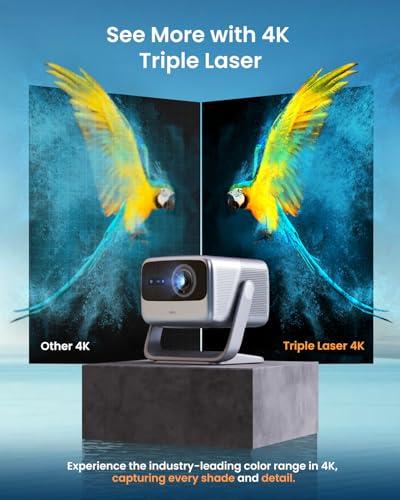
Laser projectors like the JMGO N1S Pro 4K work differently. They use precisely controlled laser light sources—in this case, separate red, green, and blue lasers—to create images. This eliminates the color wheel entirely, prevents the "rainbow effect" some people see with single-chip DLP projectors, and allows for much longer operational life without brightness degradation.
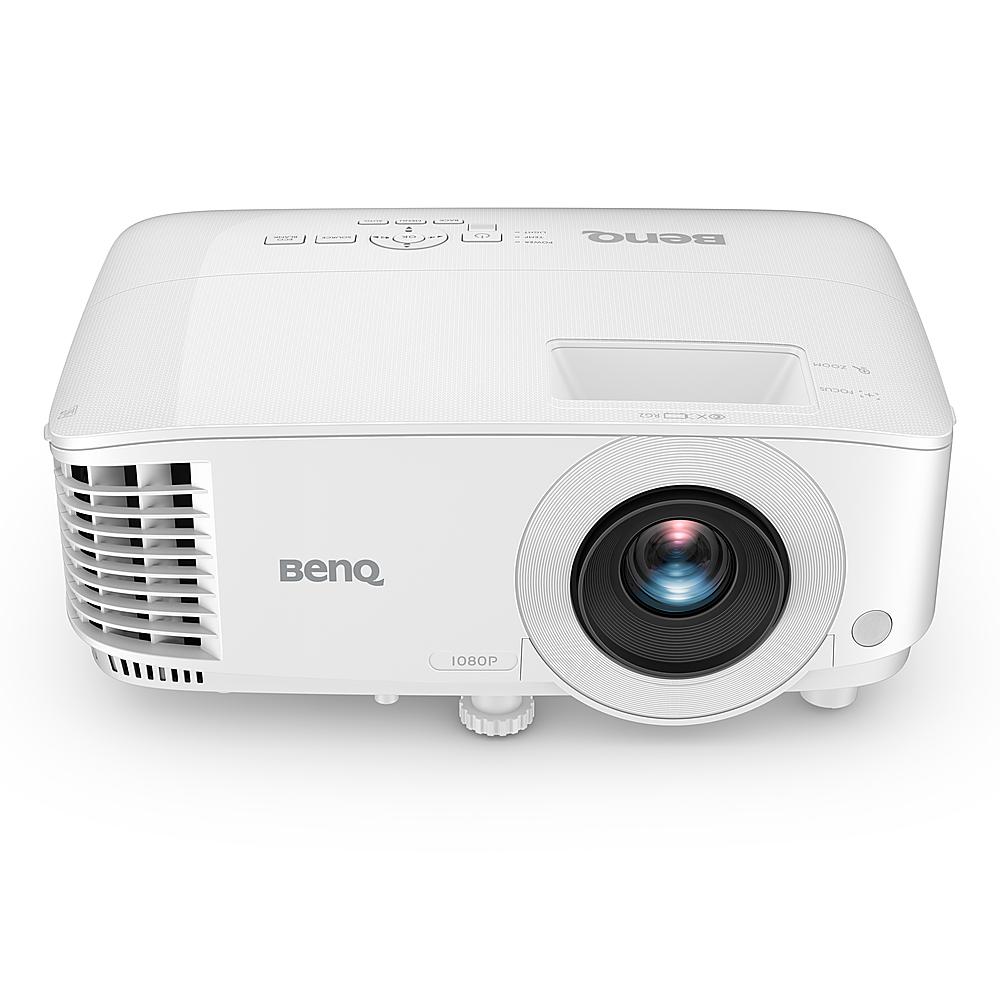
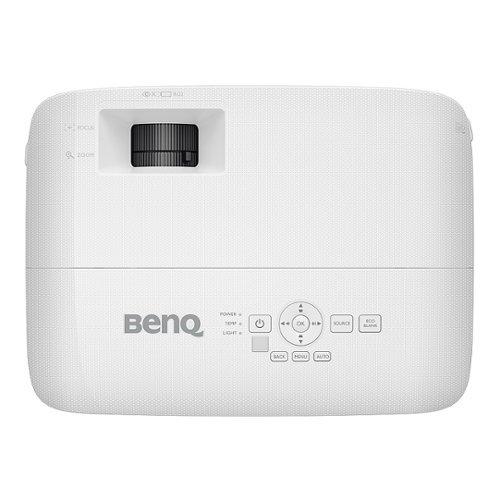
The BenQ TH575 uses a more traditional approach with a 203-watt metal halide lamp combined with DLP (Digital Light Processing) technology. DLP uses millions of tiny mirrors on a chip to reflect light and create images. It's a mature, reliable technology that produces sharp, vibrant images, though it typically requires more maintenance over time.
The most obvious difference between these projectors is resolution. The JMGO N1S Pro 4K delivers true 4K UHD at 3840x2160 pixels, while the BenQ TH575 maxes out at Full HD 1920x1080. This isn't just a numbers game—the difference is immediately visible when viewing detailed content.
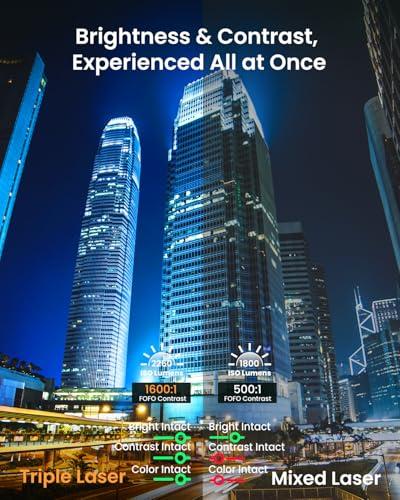
At typical home theater viewing distances, 4K resolution becomes increasingly important as screen sizes grow beyond 100 inches. Text appears crisp and readable, fine details in movies remain sharp, and the overall image has a more refined, film-like quality. The JMGO N1S Pro 4K's triple laser system (called MALC 2.0 by JMGO) produces exceptionally vibrant colors, covering 110% of the BT.2020 color standard. For context, BT.2020 is the color standard for 4K content, representing a much wider range of colors than older standards.
However, the BenQ TH575 shouldn't be dismissed based on resolution alone. Its 1080p image quality is excellent, with sharp detail that satisfies most viewers, especially for gaming and sports content. More importantly, it delivers a contrast ratio of 15,000:1 compared to the JMGO's 1,600:1. Contrast ratio measures the difference between the darkest blacks and brightest whites a projector can produce—higher numbers mean more dramatic, punchy images with better shadow detail.
Based on our research into user experiences and expert reviews, the BenQ TH575 produces notably deeper blacks and more dramatic image depth, particularly beneficial for dark movie scenes and atmospheric gaming. The JMGO N1S Pro 4K trades some contrast performance for resolution and color accuracy, resulting in images that are detailed and colorful but sometimes appear slightly flatter in dark scenes.
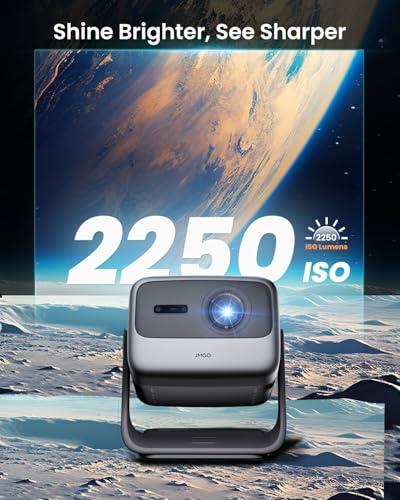
Brightness, measured in ANSI lumens, determines how well a projector performs in various lighting conditions. This is where the BenQ TH575 shows its strength, producing 3,800 ANSI lumens compared to the JMGO's 2,400. That 1,400-lumen difference translates to significantly better performance in bright rooms, making the BenQ suitable for daytime viewing or well-lit gaming sessions.
For perspective, most home theater enthusiasts consider 2,000-2,500 lumens adequate for controlled lighting environments, while 3,000+ lumens opens up more flexible viewing scenarios. The BenQ TH575's higher brightness also means it can fill larger screens effectively—you could reasonably project a 150-inch image in a moderately lit room and still maintain good image quality.
The JMGO N1S Pro 4K performs best in darker environments where its 2,400 lumens provide adequate brightness while allowing its superior color accuracy and resolution to shine. In our evaluation of user feedback, owners consistently report that the JMGO requires more attention to room lighting to achieve optimal results, while BenQ owners appreciate the flexibility to watch content without closing blinds or dimming lights.
Both projectors excel at gaming, but they take different approaches. Gaming performance centers around input lag—the delay between when you press a button and when the action appears on screen. Both projectors achieve excellent input lag figures: the BenQ TH575 measures 16.7ms at 1080p/60Hz, while the JMGO N1S Pro 4K achieves 17ms with support for higher refresh rates up to 240Hz.
These sub-20ms figures put both projectors in competitive gaming territory. For reference, most TVs range from 10-30ms, with anything under 20ms considered excellent for gaming. The tiny difference between these projectors won't be noticeable to most gamers.
Where they differ is in gaming-specific features. The BenQ TH575 includes a dedicated Game Mode that optimizes image settings for different game types, enhancing visibility in dark areas—crucial for spotting enemies in shadow corners or finding hidden items. This feature, combined with the projector's high brightness, makes it particularly effective for competitive gaming where environmental visibility matters.
The JMGO N1S Pro 4K approaches gaming differently, focusing on image quality and resolution. Modern gaming consoles like the PlayStation 5 and Xbox Series X support 4K gaming, and the JMGO can display these games at their native resolution. The visual difference is striking—game worlds appear more detailed, text is razor-sharp, and the overall experience feels more immersive.
This is where the generational difference between these projectors becomes apparent. The JMGO N1S Pro 4K, released in 2024, includes comprehensive smart features that reflect how we consume content today. It runs Google TV, providing access to Netflix, Disney+, YouTube, and thousands of other apps without requiring external devices.
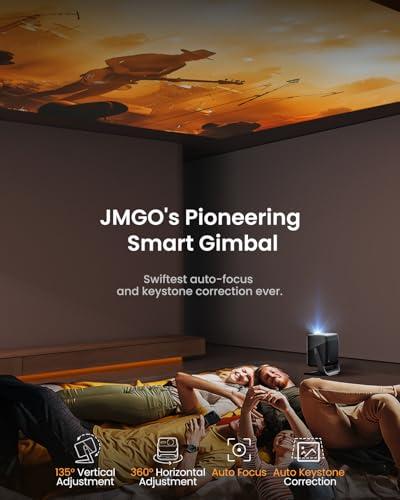
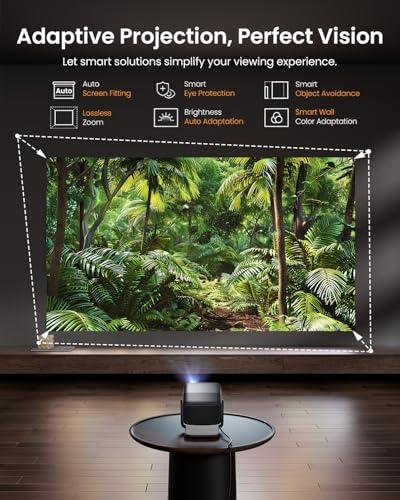
More impressively, the JMGO N1S Pro 4K includes advanced auto-adjustment features that would have been science fiction just a few years ago. Its built-in cameras and sensors automatically detect the projection surface, adjust focus, correct keystone distortion (the trapezoidal warping that occurs when projecting at an angle), and even avoid projecting on people or objects that might walk into the beam.
The projector's gimbal design—essentially a motorized mount that allows 360-degree horizontal and 135-degree vertical adjustment—enables placement flexibility impossible with traditional projectors. You can position the unit centrally and project on any wall or even the ceiling without physically moving the projector.
The BenQ TH575, being a 2022 release focused on gaming performance, lacks smart TV features entirely. You'll need to connect gaming consoles, streaming devices, or media players to access content. While this might seem limiting, many users actually prefer this approach, as dedicated devices often provide better performance and more frequent updates than built-in smart systems.
The fundamental difference in light source technology creates vastly different ownership experiences. The JMGO N1S Pro 4K's laser light source is rated for over 20,000 hours of operation while maintaining consistent brightness. That translates to roughly 10-15 years of typical use without any maintenance. The lasers also operate much cooler than traditional lamps, allowing the projector to run nearly silently at just 26 decibels—quieter than a whisper.
Traditional lamp projectors like the BenQ TH575 require more consideration for long-term ownership. The metal halide lamp will last 6,000 hours in standard mode or up to 15,000 hours in eco mode (reduced brightness). Replacement lamps typically cost between $200-300, and the projector operates at 29-34 decibels depending on the cooling mode—audible but not intrusive in most viewing scenarios.
At the time of writing, this creates an interesting value proposition. The JMGO N1S Pro 4K commands a significant price premium but includes maintenance-free operation and smart features that eliminate the need for additional devices. The BenQ TH575 offers immediate value with lower upfront costs but requires budgeting for eventual lamp replacement.
For dedicated home theater use, both projectors have merits, but they suit different setups and preferences. The JMGO N1S Pro 4K excels in controlled lighting environments where its 4K resolution, accurate colors, and whisper-quiet operation create an immersive cinema experience. The built-in streaming capabilities mean you can enjoy Netflix's 4K content without additional devices cluttering your setup.
The projector's compact size and gimbal design make it ideal for flexible installations—you could easily move it between rooms or adjust the projection angle for different viewing scenarios. However, its lower brightness means careful attention to ambient lighting and screen selection for optimal results.
The BenQ TH575 takes a more traditional home theater approach, excelling with its high brightness and contrast performance. It's particularly effective for larger screens or rooms where complete darkness isn't always practical. The superior contrast ratio creates more dramatic, engaging images for movie content, while the high brightness ensures good visibility even with some ambient light.
Sports viewing particularly benefits from the BenQ's strengths—bright, punchy images that maintain visibility during day games or when watching with friends in a social setting where lights might be on.
The JMGO N1S Pro 4K represents the direction projector technology is heading. Laser light sources, 4K resolution, and smart features are becoming standard expectations rather than premium options. The projector's MALC 2.0 triple laser system eliminates rainbow effects entirely—a common complaint with single-chip DLP projectors that some people find distracting.
The auto-focus and environmental detection features, while impressive, occasionally struggle with complex room layouts or unusual projection surfaces based on user feedback we've analyzed. When they work correctly, they create an almost magical setup experience, but they're not infallible.
The BenQ TH575 represents refined traditional technology. While it lacks cutting-edge features, its lamp-based DLP system is thoroughly understood, easily serviced, and provides predictable performance. For users who prefer proven technology over the latest innovations, this approach offers peace of mind.
The JMGO N1S Pro 4K makes the most sense for users who prioritize convenience, modern features, and future-proofing. If you want a projector that works like a smart TV with minimal setup hassle, delivers 4K quality for streaming and gaming, and operates silently in a home theater environment, the JMGO justifies its premium pricing. It's particularly appealing if you value the flexibility of the gimbal design or plan to use the projector in multiple locations.
The BenQ TH575 is the better choice for gaming enthusiasts, budget-conscious buyers, or anyone who needs maximum brightness flexibility. If you primarily game, watch sports, or need a projector that performs well in various lighting conditions, the BenQ delivers exceptional value. It's also preferable if you already own streaming devices and don't need built-in smart features.
For dedicated home theater use in a controlled environment, I lean toward the JMGO N1S Pro 4K for its resolution advantage and silent operation. For multipurpose use, gaming focus, or challenging lighting conditions, the BenQ TH575 provides better practical performance.
Both projectors succeed in their intended roles—the choice comes down to whether you prioritize cutting-edge convenience and resolution or proven performance and value. At the time of writing, either represents a solid investment, just for different types of users with different priorities and budgets.
| JMGO N1S Pro 4K Projector | BenQ TH575 1080p Gaming Projector |
|---|---|
| Resolution - Determines image sharpness and detail, especially on screens over 100 inches | |
| True 4K UHD (3840x2160) - Future-proof for 4K content | Full HD (1920x1080) - Sufficient for most gaming and movies |
| Brightness - Critical for ambient light performance and screen size flexibility | |
| 2,400 ANSI lumens (requires controlled lighting for optimal viewing) | 3,800 ANSI lumens (excellent for bright rooms and larger screens) |
| Light Source Technology - Impacts maintenance costs and longevity | |
| Triple RGB laser (20,000+ hour lifespan, no lamp replacement) | Metal halide lamp (6,000-15,000 hours, requires replacement) |
| Gaming Input Lag - Lower numbers mean more responsive gaming | |
| 17ms (excellent for competitive gaming with 240Hz support) | 16.7ms (excellent for gaming with dedicated Game Mode) |
| Contrast Ratio - Higher numbers mean deeper blacks and more dramatic images | |
| 1,600:1 (good detail but lighter blacks) | 15,000:1 (excellent dramatic contrast and shadow detail) |
| Smart Features - Built-in streaming vs external device requirements | |
| Google TV with 10,000+ apps, auto-focus, gimbal positioning | None (requires external streaming devices or game consoles) |
| Noise Level - Important for quiet home theater environments | |
| 26 dB (whisper quiet, ideal for bedrooms) | 29-34 dB (audible but not intrusive during viewing) |
| Installation Flexibility - Ease of setup and positioning options | |
| 360° motorized gimbal with auto-keystone correction | Traditional fixed mount with manual adjustments |
| Total Cost of Ownership - Initial price plus long-term maintenance | |
| Premium upfront cost, no ongoing maintenance expenses | Lower initial cost, budget $200-300 for lamp replacement |
Both projectors excel at gaming with nearly identical input lag performance. The BenQ TH575 has a slight edge with 16.7ms input lag and dedicated Game Mode features that enhance visibility in dark scenes. However, the JMGO N1S Pro 4K supports higher refresh rates up to 240Hz and displays games in native 4K resolution. For competitive gaming, choose the BenQ TH575. For console gaming with visual quality priority, the JMGO N1S Pro 4K is superior.
The JMGO N1S Pro 4K displays true 4K resolution (3840x2160 pixels) while the BenQ TH575 maxes out at 1080p (1920x1080). This means the JMGO shows four times more detail, making text sharper and images clearer, especially on screens larger than 100 inches. The difference is most noticeable when streaming 4K content or gaming on modern consoles.
The BenQ TH575 significantly outperforms in bright ambient lighting with 3,800 ANSI lumens compared to the JMGO N1S Pro 4K's 2,400 lumens. This extra brightness allows the BenQ to maintain good image quality during daytime viewing or in well-lit rooms, while the JMGO requires controlled lighting for optimal results.
The JMGO N1S Pro 4K uses laser technology with no bulb replacement needed for 20,000+ hours of use. The BenQ TH575 uses a traditional lamp that lasts 6,000-15,000 hours before requiring replacement, typically costing $200-300. Over time, the JMGO has lower maintenance costs despite higher upfront pricing.
The JMGO N1S Pro 4K operates at whisper-quiet 26 decibels, making it ideal for bedrooms or quiet home theater environments. The BenQ TH575 runs at 29-34 decibels depending on cooling mode, which is audible but not intrusive. For dedicated home theaters where silence matters, the JMGO is the clear winner.
The JMGO N1S Pro 4K includes built-in Google TV with access to Netflix, Disney+, YouTube, and thousands of other apps without additional devices. The BenQ TH575 has no smart features and requires external streaming devices, game consoles, or media players for content access.
The BenQ TH575 delivers superior contrast with a 15,000:1 ratio compared to the JMGO N1S Pro 4K's 1,600:1. This means the BenQ produces deeper blacks and more dramatic images, particularly beneficial for dark movie scenes and atmospheric gaming. The JMGO trades contrast for resolution and color accuracy.
The JMGO N1S Pro 4K features automatic focus, keystone correction, and a motorized gimbal for easy positioning without manual adjustments. The BenQ TH575 requires traditional manual setup including focus adjustment and keystone correction. The JMGO offers significantly more convenience for users who frequently adjust or move their projector.
Value depends on your priorities. The BenQ TH575 offers excellent gaming performance and brightness at a lower upfront cost, making it great immediate value. The JMGO N1S Pro 4K costs more initially but includes 4K resolution, smart features, and maintenance-free operation, providing better long-term value for home theater enthusiasts.
Yes, both the JMGO N1S Pro 4K and BenQ TH575 support Full HD 3D content playback. However, you'll need compatible 3D glasses and 3D source material. The JMGO can potentially upscale 3D content to its 4K display, while the BenQ displays 3D at native 1080p resolution.
The JMGO N1S Pro 4K is more portable at 4.4 pounds with a compact design and 360-degree gimbal positioning system. This allows easy room-to-room movement and flexible projection angles. The BenQ TH575 weighs 5.5 pounds and requires traditional mounting, making it less suitable for frequent relocation but perfectly adequate for permanent installations.
The JMGO N1S Pro 4K uses triple laser technology covering 110% of BT.2020 color space, delivering exceptional color accuracy and vibrancy without rainbow effects. The BenQ TH575 produces punchy, vibrant colors with good accuracy but may show occasional rainbow effects due to its single-chip DLP design. For color-critical applications, the JMGO is superior.
We've done our best to create useful and informative comparisons to help you decide what product to buy. Our research uses advanced automated methods to create this comparison and perfection is not possible - please contact us for corrections or questions. These are the sites we've researched in the creation of this article: techradar.com - projectorcentral.com - gray9.in - projectorreviews.com - howtogeek.com - the-gadgeteer.com - projectorcentral.com - global.jmgo.com - global.jmgo.com - cnet.com - cnet.com - youtube.com - global.jmgo.com - avsforum.com - youtube.com - youtube.com - lifeisxbox.eu - ai-techreport.com - electronics.woot.com - ai-techreport.com - laurentwillen.com - bestbuy.com - bestbuy.com - projectorcentral.com - tvsbook.com - shidirect.com - blog.richersounds.com - memoryexpress.com - versus.com - adorama.com - avsforum.com - shi.com - bestbuy.com - bhphotovideo.com - cdw.com - insight.com - shi.ca - projectorcentral.com - insight.com - specsradar.com - touchboards.com

Privacy Policy
Terms and Conditions - Affiliate Policy
Home Security
© Copyright 2008-2026.
11816 Inwood Rd #1211, Dallas, TX 75244