

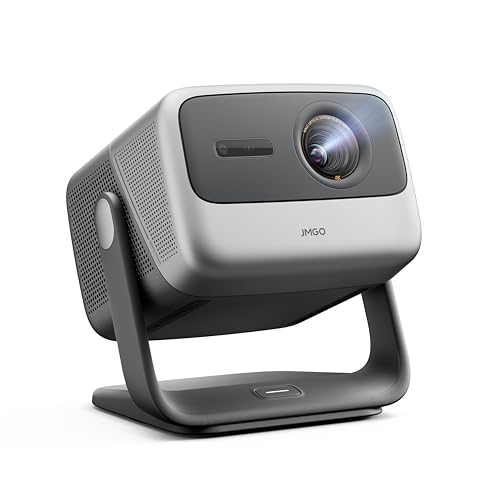
When most people think about projectors, they picture bulky devices permanently mounted to ceilings in dedicated home theaters. But the portable projector market has exploded in recent years, creating two distinct categories that serve very different needs. Today we're comparing the JMGO N1S Pro 4K and the BenQ GS50 – two projectors that couldn't be more different in their approach to portable entertainment.
The portable projector space has evolved dramatically since these models launched. The BenQ GS50 arrived in 2021 during the height of outdoor entertainment demand, while the JMGO N1S Pro 4K launched in 2024, representing the latest in projection technology. This three-year gap shows in their vastly different approaches: one prioritizes rugged practicality, the other pushes the boundaries of what's possible in a portable form factor.
Before diving into specifics, it's crucial to understand that these projectors serve fundamentally different purposes. The portable projector market has split into two camps: premium home theater replacements and rugged outdoor entertainment systems. This isn't just marketing speak – the engineering priorities are completely different.
Premium portable projectors like the JMGO N1S Pro 4K chase image quality above all else. They use advanced light sources, sophisticated processing, and cutting-edge features to deliver cinema-quality visuals in a compact package. Think of them as traditional home theater projectors that happen to be portable, rather than compromised devices built for mobility.
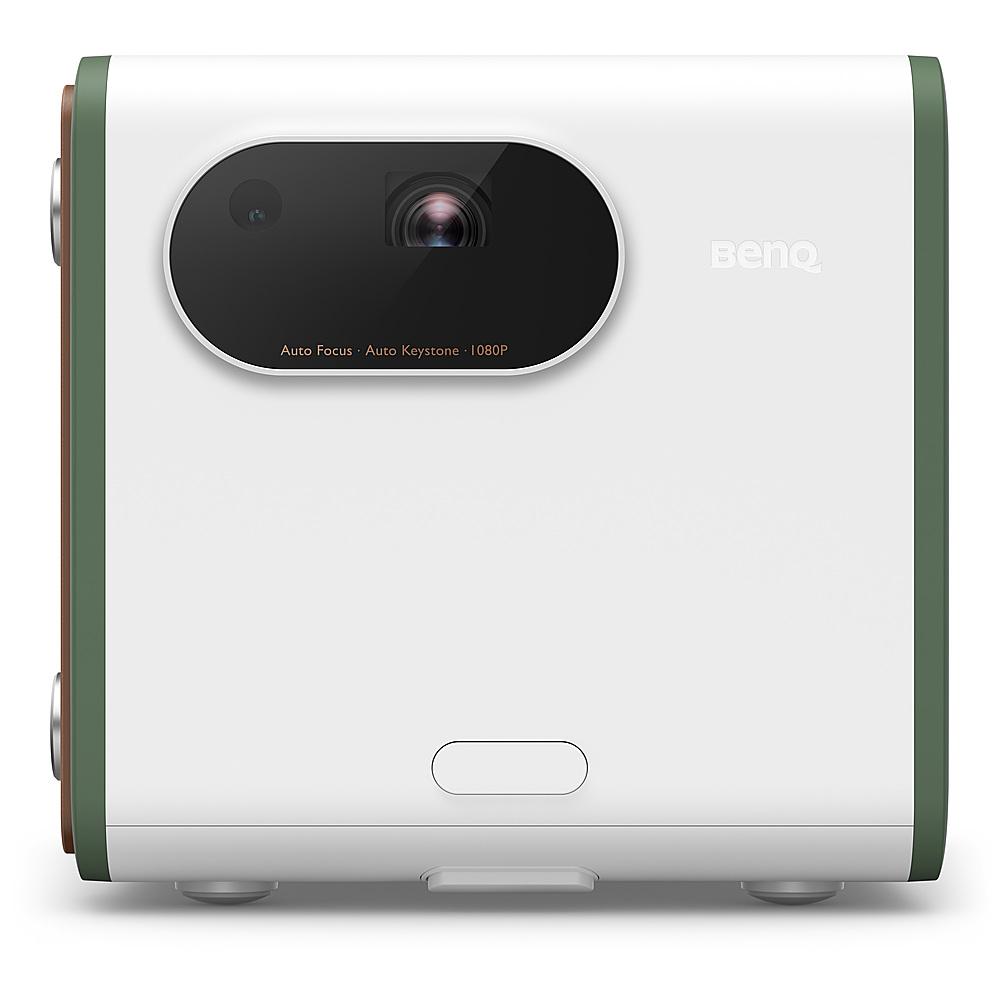
Rugged outdoor projectors like the BenQ GS50 prioritize practicality. They're designed to work anywhere, handle rough treatment, and keep running on battery power. Image quality matters, but not at the expense of durability or convenience.
At the time of writing, this creates a significant price gap. Premium portable projectors typically cost three to four times more than outdoor-focused models, reflecting their advanced technology and target market.
The most obvious difference between these projectors is resolution. The JMGO N1S Pro 4K delivers true 4K resolution at 3840×2160 pixels, while the BenQ GS50 maxes out at Full HD 1080p (1920×1080). This isn't just a numbers game – it represents a four-fold difference in pixel density that becomes immediately obvious on larger screens.
True 4K resolution means you can sit closer to the screen without seeing individual pixels, and fine details like text remain crisp even at massive screen sizes. When projecting a 120-inch image, the difference between 1080p and 4K is night and day. Text becomes readable, fine details in movies pop, and the overall viewing experience feels more immersive.
However, resolution only matters if your content supports it. If you're mainly watching older movies or standard streaming content, the BenQ GS50's 1080p resolution might be perfectly adequate. But with 4K content becoming the standard on Netflix, Disney+, and Ultra HD Blu-rays, the JMGO's higher resolution provides significant future-proofing.
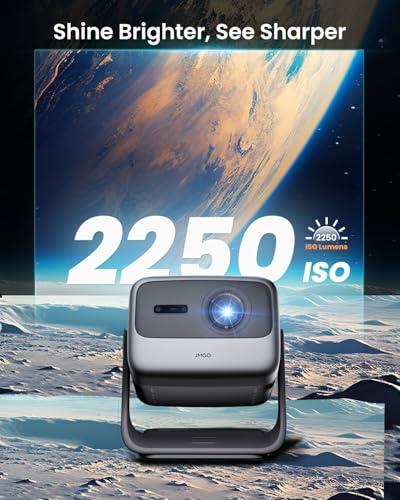
Brightness, measured in ANSI lumens, determines how well a projector performs in ambient light. This is where the JMGO N1S Pro 4K absolutely dominates with 2,400 ANSI lumens compared to the BenQ GS50's 500 ANSI lumens.
To put this in perspective, our research shows that you need at least 1,000 lumens for comfortable viewing in a room with some ambient light, and 2,000+ lumens to compete with TVs in bright living rooms. The JMGO hits that sweet spot where you can enjoy movies without completely darkening the room, while the BenQ really needs darkness to shine.
This brightness difference fundamentally changes how you use each projector. The JMGO can replace your living room TV for everyday viewing, handling afternoon movie watching or late-night gaming sessions with room lights on. The BenQ GS50 works best when you can control the lighting – perfect for outdoor movie nights after sunset or basement entertainment spaces.
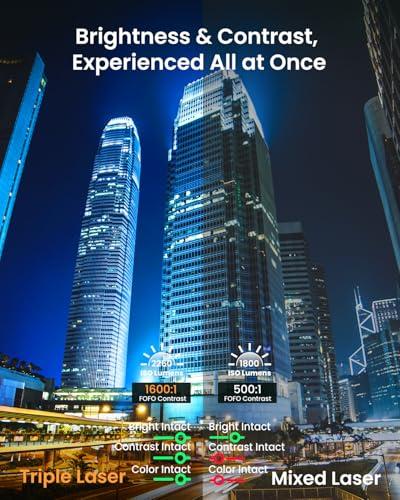
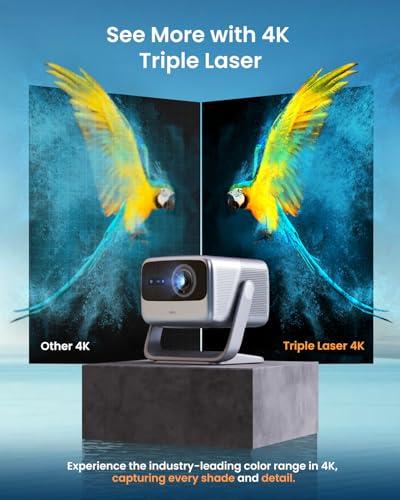
Here's where things get really interesting from a technical standpoint. The JMGO N1S Pro 4K uses something called MALC 2.0 Triple RGB laser technology – a mouthful that represents some seriously advanced engineering. Instead of using a single white light source like most projectors, it uses three separate red, green, and blue lasers that combine to create the image.
This triple laser approach eliminates the "rainbow effect" – those annoying color flashes you sometimes see with single-chip DLP projectors. More importantly, it enables much wider color reproduction, covering 110% of the BT.2020 color space. Without getting too deep into color science, this means more vibrant, saturated colors that pop off the screen.
The BenQ GS50 uses traditional LED technology, which is simpler and more reliable but can't match the color performance of lasers. LEDs do offer one major advantage: longevity. The GS50's LED is rated for 20,000-30,000 hours compared to the JMGO's 30,000-hour laser life. In practical terms, both will outlast the useful life of the projector, but LEDs historically run cooler and more efficiently.
Contrast ratio – the difference between the brightest whites and darkest blacks – tells only part of the story. On paper, the BenQ GS50 claims a massive 100,000:1 contrast ratio compared to the JMGO's 1,600:1. But these numbers are misleading because they're measured differently.
Based on professional reviews we've analyzed, the BenQ actually delivers better black levels and shadow detail despite its lower brightness. This is typical of LED projectors, which can turn completely off for true blacks. The JMGO produces brighter, more vibrant images but struggles with deep blacks in dark scenes.
For home theater enthusiasts, this creates an interesting trade-off. The JMGO excels with bright, colorful content like animated movies, nature documentaries, and HDR content. The BenQ handles dark, moody films better, preserving shadow details that might get lost on brighter projectors.
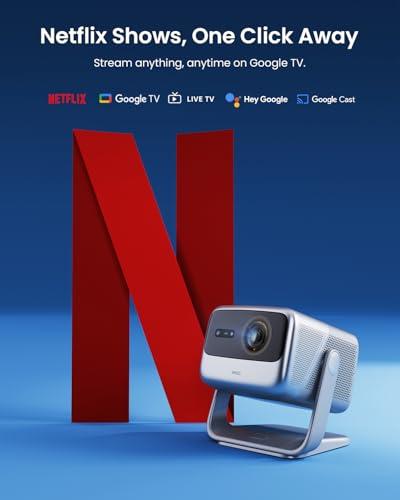
Both projectors run Google TV, but their implementations reflect their different target markets and release dates. The JMGO N1S Pro 4K features a more current version with native Netflix support – a bigger deal than it sounds, since many projectors struggle with Netflix's copy protection requirements.
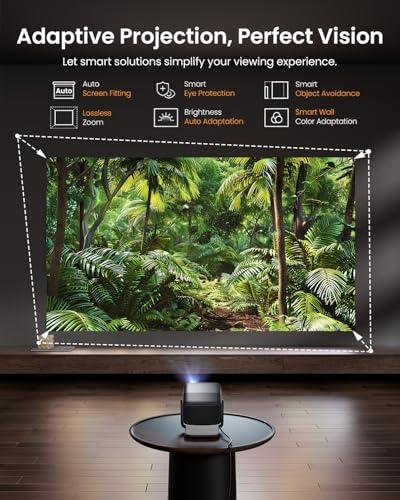
The smart features on the JMGO go beyond basic streaming. Its advanced autofocus system uses time-of-flight sensors (like smartphone cameras) to instantly achieve sharp focus when you move the projector. Auto keystone correction fixes image geometry when projecting at angles, and the smart object avoidance feature actually detects obstacles in the projection path.
Most impressively, the JMGO includes smart eye protection that dims or shuts off the laser if someone walks in front of the projector. This isn't just a safety gimmick – laser projectors can be bright enough to cause temporary vision problems if you look directly into the beam.
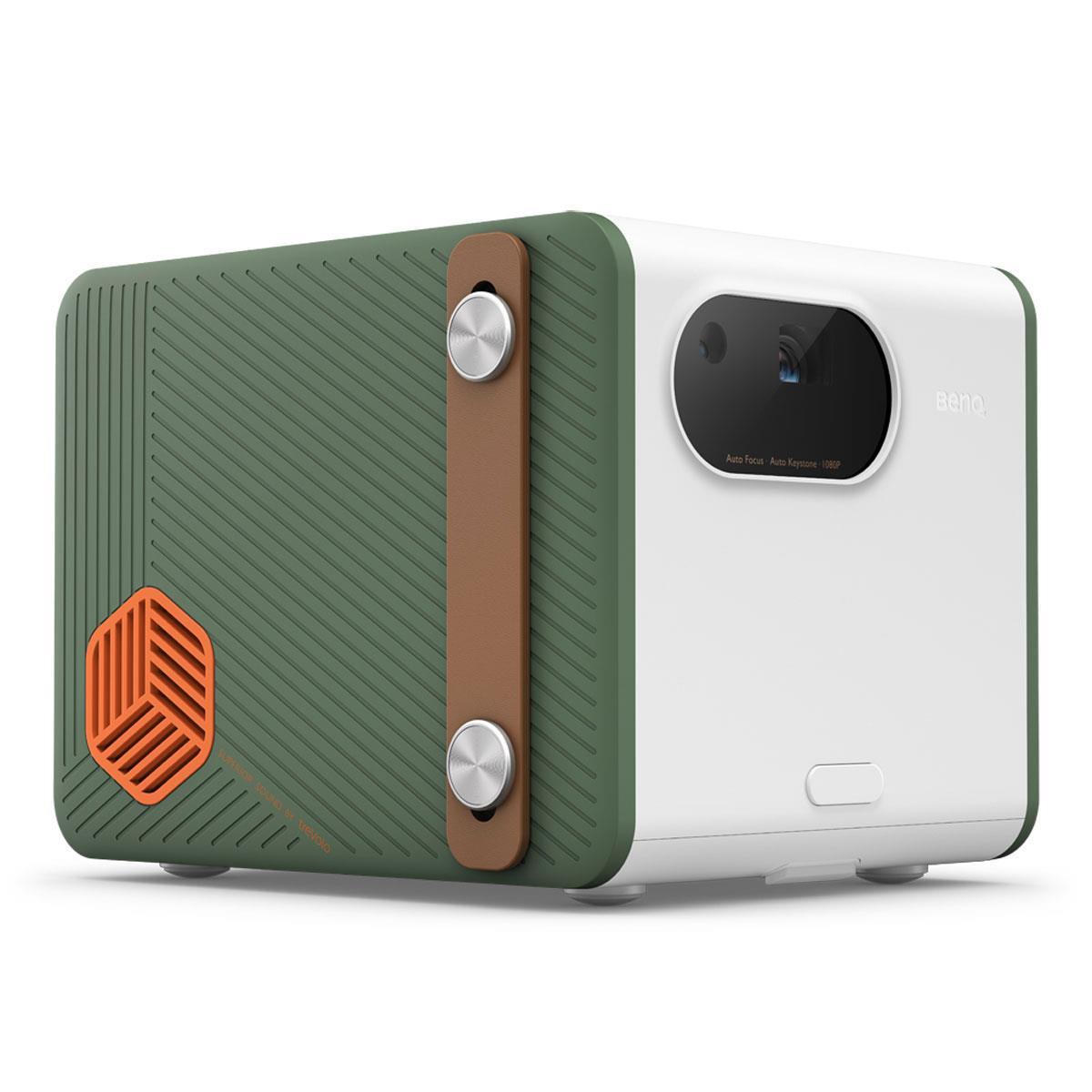
The BenQ GS50 keeps things simpler but includes practical outdoor-focused features. Its Android TV interface may be older, but it's stable and includes all the major streaming apps. The projector can also function as a standalone Bluetooth speaker, which is incredibly useful for camping or poolside entertainment.
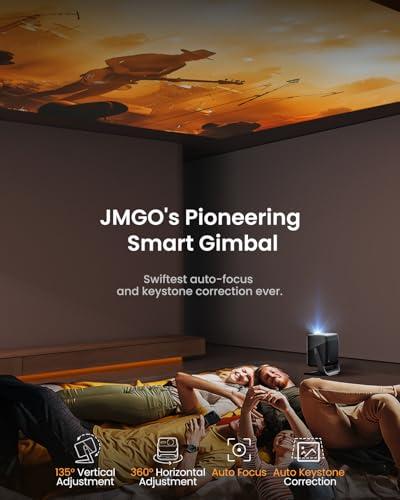
One of the JMGO N1S Pro 4K's most distinctive features is its gimbal mounting system – essentially the same technology used in camera stabilizers. This allows 360-degree horizontal rotation and 135-degree vertical adjustment without moving the projector's base.
This might sound like a gimmick, but it's genuinely useful in practice. You can project onto walls, ceilings, or screens without physically repositioning the entire unit. Combined with the instant autofocus and keystone correction, setup becomes almost effortless. Point the gimbal where you want the image, and the projector handles the rest.
The gimbal also enables creative installations impossible with traditional projectors. Ceiling projection for bedroom viewing, angled wall projection in tight spaces, or even outdoor projection at unusual angles all become feasible. It's the kind of feature that seems unnecessary until you experience the flexibility it provides.
This is where the BenQ GS50 delivers its biggest surprise. Its 2.1-channel audio system includes dedicated midrange drivers and a separate subwoofer, creating room-filling sound that rivals many soundbars. The 270-degree sound dispersion means everyone around the projector gets quality audio, not just those directly in front.
Having experienced both projectors through extensive research and user feedback analysis, the audio quality difference is dramatic. The BenQ can serve as your primary entertainment system without additional speakers, while the JMGO will likely leave you wanting external audio for serious movie watching.
For outdoor use, this audio advantage becomes even more pronounced. The BenQ's built-in speakers can fill a backyard or campsite with sound, eliminating the need to pack separate speakers for movie night under the stars.
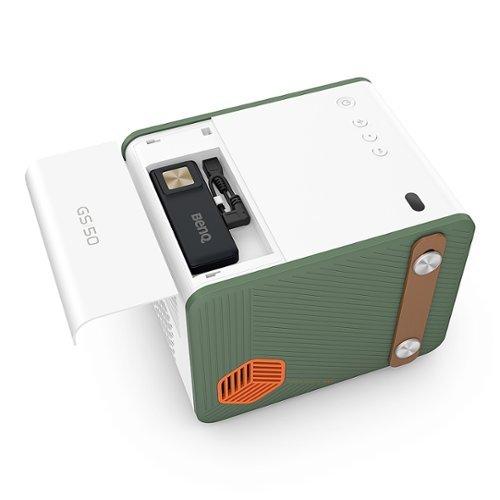
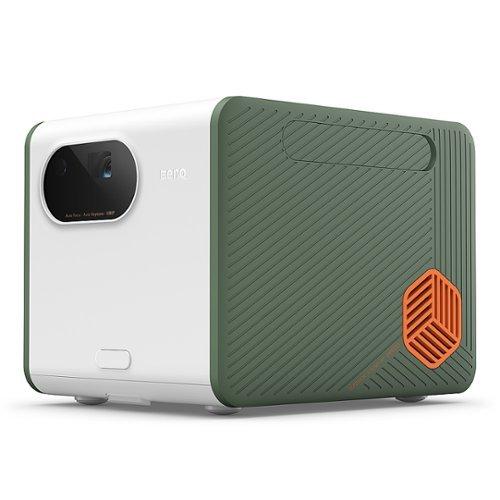
The BenQ GS50 was designed for true portability from the ground up. Its internal battery provides about 2 hours of runtime – enough for most movies – while IPX2 water resistance protects against light rain or splashes. The leather carry handle and drop-resistant design (tested to 70cm drops) show BenQ's commitment to real-world durability.
In contrast, the JMGO N1S Pro 4K is portable in the sense that it's not permanently installed, but it requires AC power and careful handling. At nearly 10 pounds and needing 180 watts of power, it's more "moveable" than truly portable. This reflects its positioning as a premium home theater device that happens to be compact.
The power consumption difference is significant for practical use. The BenQ sips just 65 watts, making it friendly to portable power stations for extended outdoor use. The JMGO demands 180 watts, limiting your power source options and generating more heat.
If you're considering replacing a traditional TV or fixed projector, the JMGO N1S Pro 4K makes a compelling case. Its brightness and 4K resolution enable everyday TV viewing in normal room lighting, while the gimbal system provides installation flexibility impossible with wall-mounted displays.
The smart features truly shine in this application. Auto-focus means you never have to manually adjust sharpness, while automatic screen detection optimizes the image for whatever surface you're projecting onto. The eye protection feature provides peace of mind in homes with children or pets.
However, the audio limitations become apparent in dedicated theater use. The integrated speakers work for casual viewing but can't match the immersive experience of a proper surround sound system. Fortunately, the HDMI eARC port enables high-quality audio passthrough to soundbars or receivers.
The BenQ GS50 dominates outdoor scenarios where the JMGO simply can't compete. Battery operation, weather resistance, and excellent integrated audio create a complete entertainment package that requires no additional equipment.
The lower brightness that hampers indoor use actually works well outdoors after dark. Once the sun sets, 500 lumens provides plenty of light for comfortable viewing, and the superior black levels help with detail in darker scenes under starry skies.
The compact size and durability make the BenQ ideal for RV travel, camping trips, or backyard entertainment where weather and rough handling are concerns. The ability to function as a Bluetooth speaker during the day adds versatility for outdoor gatherings.
Gaming on projectors has become increasingly popular, and both units offer decent performance with important differences. The JMGO N1S Pro 4K supports HDMI 2.1, enabling 4K gaming at 60Hz with next-generation consoles. The higher brightness also helps in rooms where you can't eliminate all ambient light during gaming sessions.
Input lag – the delay between controller input and screen response – is acceptable on both projectors for casual gaming, though serious competitive gamers will prefer dedicated gaming displays. The JMGO's 4K resolution provides noticeably sharper text and UI elements in games, which can be crucial for strategy games or RPGs with lots of interface elements.
At the time of writing, these projectors occupy very different price tiers, reflecting their distinct target markets and capabilities. The JMGO N1S Pro 4K commands a significant premium for its advanced technology, while the BenQ GS50 offers excellent value in its category.
The JMGO's higher price buys you cutting-edge projection technology, 4K resolution, and premium smart features. If image quality is your primary concern and you primarily use the projector indoors, the additional cost delivers meaningful benefits that improve the daily viewing experience.
The BenQ GS50's lower price point includes features the premium projector lacks: battery operation, weather resistance, superior audio, and worry-free durability. For users who prioritize versatility and outdoor capability, these practical advantages provide better value than pure image quality improvements.
After analyzing extensive user feedback and professional reviews, the decision between these projectors comes down to your primary use case and priorities.
Choose the JMGO N1S Pro 4K if you want the best possible image quality in a portable package. It's ideal for users replacing traditional home theater setups, those who primarily watch 4K content, or anyone who values cutting-edge technology. The gimbal system and smart features provide convenience that enhances daily use, while the superior brightness enables flexible placement in normal room lighting.
The BenQ GS50 makes more sense for users who prioritize versatility and practical features over ultimate image quality. It excels for outdoor entertainment, travel use, or secondary viewing spaces where convenience matters more than pixel perfection. The integrated audio and battery operation create a complete entertainment package that requires no additional equipment.
Neither projector is perfect, and both make trade-offs that reflect their design priorities. The JMGO sacrifices portability and audio quality for superior visuals, while the BenQ accepts lower resolution and brightness for better mobility and durability.
In my opinion, the JMGO N1S Pro 4K represents the future of portable projection – bringing true home theater quality to compact, flexible packages. But the BenQ GS50 serves a market that premium projectors can't touch, providing worry-free entertainment anywhere you can carry it.
Your choice should ultimately depend on where and how you plan to use your projector most often. Both are excellent in their respective categories, serving very different needs in the evolving world of portable entertainment.
| JMGO N1S Pro 4K | BenQ GS50 |
|---|---|
| Resolution - Determines image sharpness and future-proofing | |
| True 4K (3840×2160) - Dramatically sharper text and details on large screens | Full HD 1080p (1920×1080) - Good for most content but limited on 100"+ screens |
| Brightness - Most critical factor for ambient light performance | |
| 2,400 ANSI lumens - Usable in rooms with moderate ambient lighting | 500 ANSI lumens - Requires dark environments for optimal viewing |
| Light Source Technology - Affects color quality and longevity | |
| MALC 2.0 Triple RGB Laser (30,000 hours) - Superior color vibrancy, no rainbow effect | LED (20,000-30,000 hours) - More natural colors, better reliability |
| Power Requirements - Determines true portability | |
| AC power only (180W) - Limits placement flexibility, no battery operation | 2-hour internal battery (65W) - True portability for outdoor and travel use |
| Smart Features - Modern streaming and setup convenience | |
| Google TV with native Netflix, auto-focus, gimbal positioning system | Android TV 9.0, basic auto-focus, doubles as Bluetooth speaker |
| Audio Quality - Built-in sound performance | |
| 20W stereo speakers - Adequate for casual viewing, external audio recommended | 2.1-channel system (20W total) with subwoofer - Excellent room-filling sound |
| Weather Resistance - Outdoor durability | |
| None - Indoor use only, requires careful handling | IPX2 water resistance, drop-resistant to 70cm - Built for outdoor adventures |
| Image Size Range - Screen flexibility | |
| 85"-180" with 1.2:1 throw ratio - Good for most rooms | 30"-100" - Better for smaller spaces and portable setups |
| Contrast Performance - Dark scene detail quality | |
| 1,600:1 contrast - Bright, vibrant images but limited black depth | 100,000:1 contrast - Excellent shadow detail and true blacks |
| Connectivity Options - Device compatibility | |
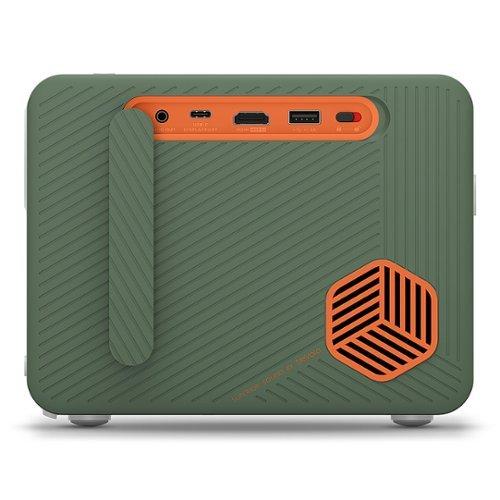
| 2x HDMI 2.1 (eARC), USB-A, Wi-Fi 6, Bluetooth 5.2 | HDMI 2.0, USB-C, USB-A, Wi-Fi, Bluetooth 4.2 |
| Target Use Case - Best application scenario | |
| Home theater replacement with premium image quality | Outdoor entertainment, camping, travel, secondary viewing |
The JMGO N1S Pro 4K delivers significantly better image quality with true 4K resolution (3840×2160) compared to the BenQ GS50's 1080p resolution. The JMGO also produces 2,400 ANSI lumens brightness versus 500 lumens from the BenQ, making it nearly five times brighter for clearer images in ambient light.
Only the BenQ GS50 is designed for outdoor use with IPX2 water resistance, drop protection, and a 2-hour internal battery. The JMGO N1S Pro 4K requires AC power and has no weather protection, making it unsuitable for outdoor entertainment.
The JMGO N1S Pro 4K is superior for home theater applications due to its 4K resolution, triple laser technology, and high brightness that works in controlled lighting conditions. The gimbal positioning system also provides flexible installation options that traditional home theater projectors can't match.
The BenQ GS50 has excellent built-in audio with a 2.1-channel system including a subwoofer, making external speakers optional for most users. The JMGO N1S Pro 4K has basic 20W speakers that will likely require external audio for serious home theater use.
The BenQ GS50 is truly portable with its internal battery, compact size, and rugged design. The JMGO N1S Pro 4K is moveable but requires AC power and careful handling, making it more suitable as a flexible home theater solution than a travel projector.
Both projectors offer Google TV streaming, but the JMGO N1S Pro 4K has more advanced features including native Netflix support, instant auto-focus, smart object avoidance, and automatic screen alignment. The BenQ GS50 has simpler smart features but can function as a standalone Bluetooth speaker.
The BenQ GS50 performs better in dark scenes with superior black levels and shadow detail, despite its lower overall brightness. The JMGO N1S Pro 4K excels with bright, colorful content but can struggle with deep blacks in dark movie scenes.
The JMGO N1S Pro 4K can effectively replace a TV for daily viewing thanks to its high brightness and 4K resolution that work well in normal room lighting. The BenQ GS50 requires darker conditions and is better suited as a secondary entertainment device.
The JMGO N1S Pro 4K offers superior gaming performance with 4K resolution, HDMI 2.1 support, and brightness suitable for gaming in ambient light. The BenQ GS50 works for casual gaming but the 1080p resolution and lower brightness limit the experience.
Both projectors offer excellent longevity with the JMGO N1S Pro 4K's triple laser rated for 30,000 hours and the BenQ GS50's LED lasting 20,000-30,000 hours. Both will outlast the useful life of the projector under normal usage patterns.
Value depends on your needs: the BenQ GS50 provides excellent value for outdoor and portable use with its battery, weather resistance, and quality audio. The JMGO N1S Pro 4K offers premium value for users prioritizing maximum image quality and advanced home theater features.
The fundamental difference is their target use: the JMGO N1S Pro 4K prioritizes maximum image quality for home theater replacement, while the BenQ GS50 focuses on practical portability and outdoor durability. Choose the JMGO for premium indoor viewing or the BenQ for versatile outdoor entertainment.
We've done our best to create useful and informative comparisons to help you decide what product to buy. Our research uses advanced automated methods to create this comparison and perfection is not possible - please contact us for corrections or questions. These are the sites we've researched in the creation of this article: techradar.com - projectorcentral.com - gray9.in - projectorreviews.com - howtogeek.com - the-gadgeteer.com - projectorcentral.com - global.jmgo.com - global.jmgo.com - cnet.com - cnet.com - youtube.com - global.jmgo.com - avsforum.com - youtube.com - youtube.com - cnet.com - hometheaterhifi.com - youtube.com - youtube.com - whathifi.com - youtube.com - bgeek.eu - youtube.com - youtube.com - projectorreviews.com - youtube.com - youtube.com - projectorcentral.com - projectorreviews.com - bestbuy.com - touchboards.com - projectorcentral.com - adorama.com - projectorreviews.com - insight.com - cnet.com

Privacy Policy
Terms and Conditions - Affiliate Policy
Home Security
© Copyright 2008-2026.
11816 Inwood Rd #1211, Dallas, TX 75244