

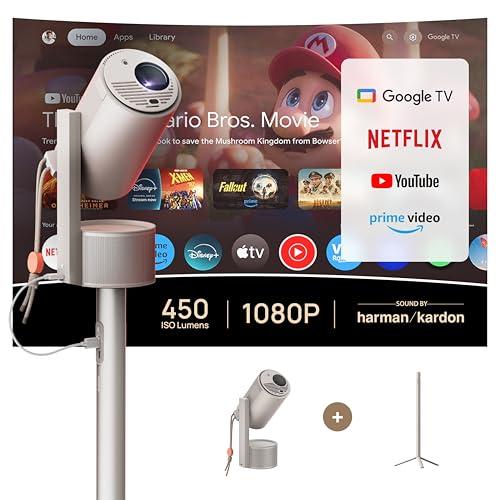
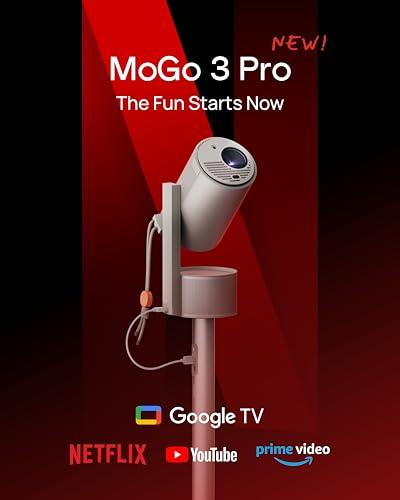

The portable projector market has exploded in recent years, transforming from niche gadgets into legitimate home theater alternatives. But "portable" means different things to different manufacturers, and that's perfectly illustrated by comparing two 2024 releases: the premium JMGO N1S Pro 4K and the ultra-portable XGIMI MoGo 3 Pro.
These projectors represent completely different philosophies about what portable projection should be. Understanding their approaches – and which aligns with your needs – is crucial for making the right choice.
Before diving into specifics, let's establish what we're really comparing. The portable projector category splits into distinct segments based on user priorities. At one end, you have ultra-portable devices prioritizing convenience above all else. At the other, premium portables focus on image quality while maintaining reasonable mobility.
The key trade-offs remain consistent across the category: image quality versus true portability, brightness versus battery life, and comprehensive features versus affordability. Modern projectors also need to nail the smart TV experience – gone are the days when you'd accept clunky interfaces or missing streaming apps.
Based on our research into user reviews and expert evaluations, the most important factors when choosing a portable projector are brightness (measured in ANSI lumens – essentially how much light the projector can output), resolution quality, ease of setup, and audio performance. The viewing environment matters enormously too; a projector perfect for camping might disappoint in a living room with windows.
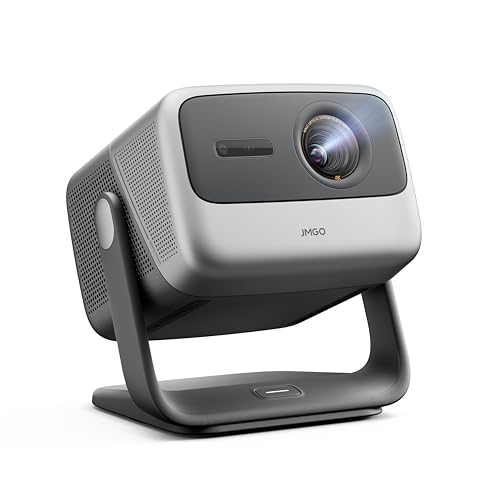
The JMGO N1S Pro 4K launched in 2024 as JMGO's flagship portable projector, positioning itself as a premium home theater solution that happens to be moveable. At the time of writing, it commands a premium price reflecting its professional-grade components and 4K capabilities.
The XGIMI MoGo 3 Pro, also released in 2024, takes the opposite approach. XGIMI designed it as a true travel companion – lightweight, affordable, and optimized for spontaneous viewing anywhere. Its pricing reflects this accessibility-first philosophy, typically costing less than one-third of the JMGO.
These aren't just different points on the same spectrum; they're fundamentally different products solving different problems.
When it comes to visual performance, the JMGO N1S Pro 4K operates in a completely different league. Its true 4K UHD resolution (3840×2160 pixels) delivers the sharp, detailed images you'd expect from premium displays. More importantly, it achieves this through genuine 4K processing rather than upscaling lower-resolution content – a distinction that becomes immediately apparent with high-quality source material.
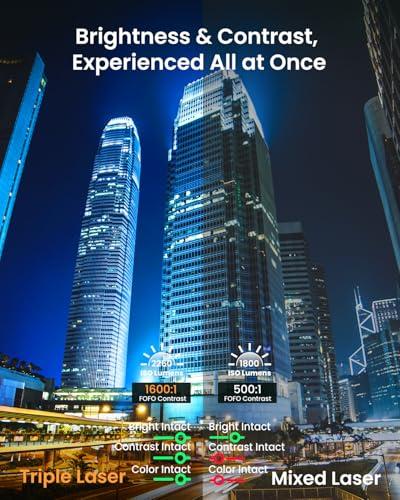
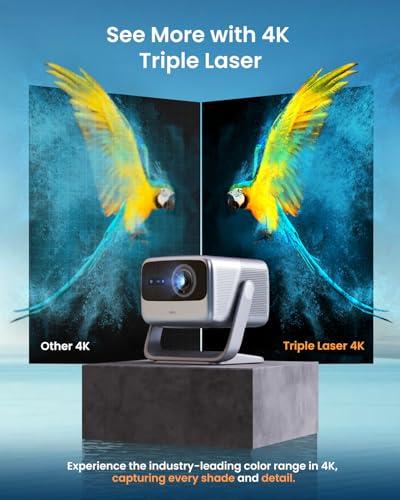
The real technical breakthrough lies in JMGO's MALC 2.0 triple RGB laser system. Traditional portable projectors use single LED or laser sources, which can create rainbow artifacts (brief flashes of red, green, and blue that some viewers notice, especially during eye movements) and limit color accuracy. The JMGO N1S Pro 4K's three separate lasers for red, green, and blue eliminate these issues entirely while achieving 110% BT.2020 color gamut coverage – essentially meaning it can display a wider range of colors than most displays, approaching what you'd see in commercial cinemas.
The contrast ratio of 1600:1 might not sound impressive compared to OLED TVs, but for projectors, this represents excellent performance. Combined with the laser light source, it delivers genuinely deep blacks and bright whites that create convincing HDR (High Dynamic Range) imagery with enhanced contrast and color depth.
In contrast, the XGIMI MoGo 3 Pro delivers solid 1080p performance that's perfectly adequate for most content but operates within inherent limitations. Its LED light source produces 90% DCI-P3 color coverage – good for a portable projector but noticeably less vibrant than the JMGO. The single-chip DLP (Digital Light Processing) design can exhibit rainbow artifacts, though most users won't find this problematic during normal viewing.
Based on user feedback we've analyzed, the image quality difference becomes most apparent with high-resolution content like 4K movies or gaming. The JMGO N1S Pro 4K reveals detail and texture that simply isn't visible on 1080p displays, while its color accuracy makes skin tones appear natural rather than oversaturated.
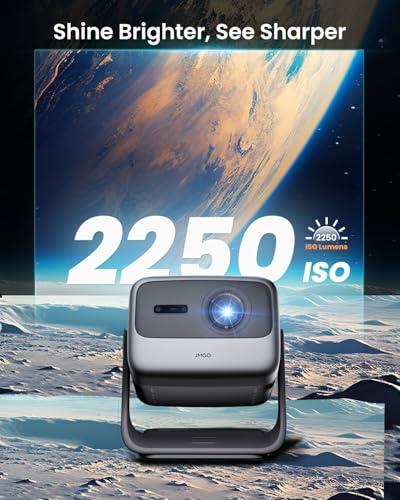
Brightness measurement can be confusing because manufacturers use different standards, but the practical difference here is dramatic. The JMGO N1S Pro 4K outputs approximately 2,400 ANSI lumens – enough light to create watchable images even in rooms with moderate ambient lighting. This means you can enjoy movies during daytime hours with curtains drawn, or use it for presentations in conference rooms with overhead lights.
The XGIMI MoGo 3 Pro produces around 450 ISO lumens (roughly equivalent to 390 ANSI lumens), which requires essentially complete darkness for optimal viewing. User reviews consistently emphasize this limitation – the projector performs admirably in pitch-black rooms but struggles with even modest ambient light.
This six-fold brightness difference fundamentally changes how and when you can use each projector. The JMGO N1S Pro 4K offers flexibility for various viewing conditions, while the XGIMI MoGo 3 Pro demands environmental control.
The technical explanation involves light output efficiency and power consumption. Laser projectors like the JMGO can achieve higher brightness levels while maintaining color accuracy, whereas LED projectors face physics limitations that trade brightness for longevity and heat management.
Projector audio often gets overlooked, but it significantly impacts the viewing experience. The JMGO N1S Pro 4K incorporates 20W stereo speakers with Dolby Digital Plus processing, delivering genuinely impressive sound for a projector. Based on user reports, the audio quality rivals many soundbars, with clear dialogue, substantial bass response, and enough volume to fill large rooms.
The XGIMI MoGo 3 Pro features dual 5W Harman Kardon speakers that sound good for their size but face physical limitations. The compact design simply cannot move enough air for deep bass or room-filling volume. However, it includes a clever Ambient Light Mode that transforms the projector into a Bluetooth speaker with customizable lighting – perfect for background music during parties.
For home theater use, the JMGO N1S Pro 4K's superior audio means you might not need external speakers for casual viewing. The XGIMI MoGo 3 Pro works fine for personal viewing but benefits from headphones or external speakers for group experiences.
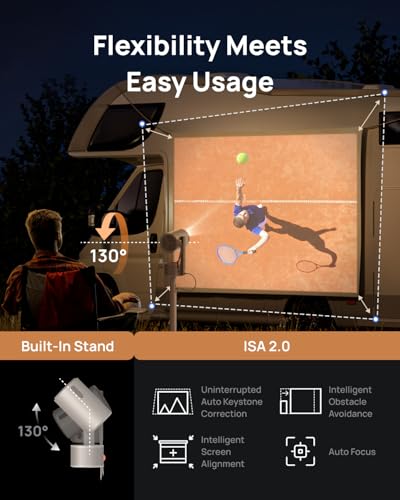
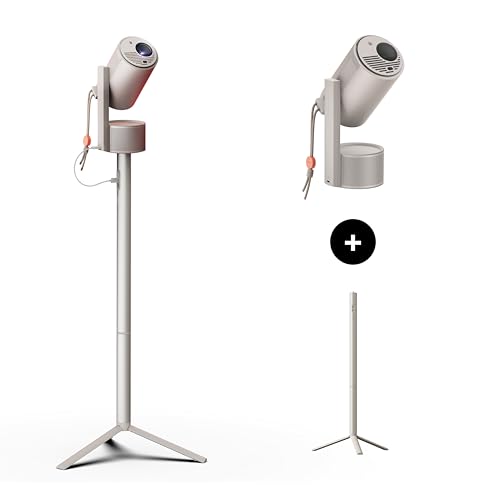
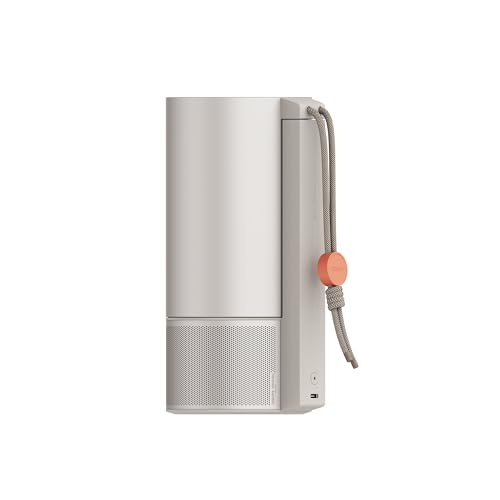
Here's where the philosophical differences become most apparent. The XGIMI MoGo 3 Pro weighs just 2.4 pounds and fits easily in most backpacks. Its cylindrical design includes a 130-degree adjustable stand that eliminates the need for tripods or careful positioning. You can literally grab it and go, setting up movie nights wherever you land.
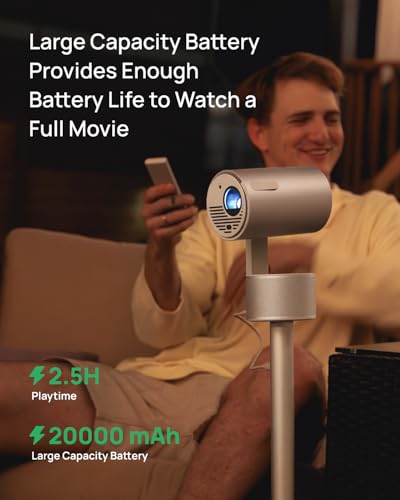
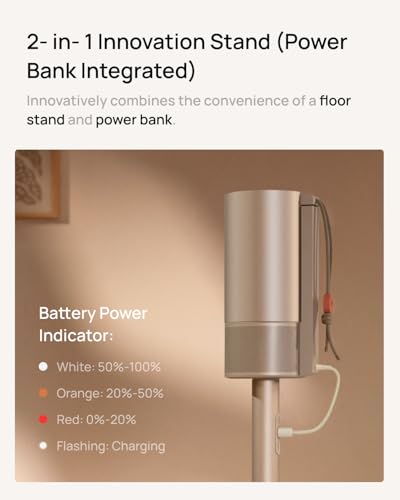
The USB-C power delivery support means it can run from high-capacity power banks, and the optional PowerBase accessory adds a built-in battery for up to 2.5 hours of viewing. This makes it genuinely suitable for camping, travel, or spontaneous outdoor movie nights.
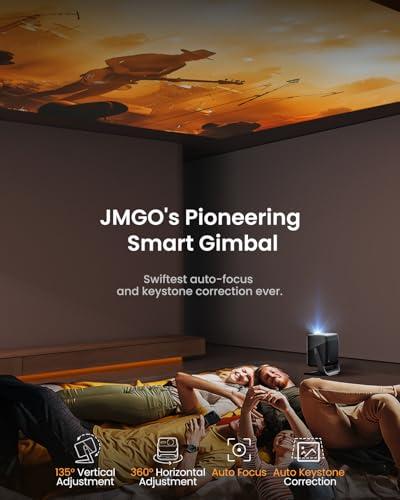
The JMGO N1S Pro 4K, while still portable compared to traditional home theater projectors, weighs nearly 10 pounds and requires more deliberate setup. Its gimbal mounting system offers excellent positioning flexibility, but you're not casually throwing this in a travel bag. It needs wall power and benefits from more careful placement optimization.
Think of it this way: the XGIMI MoGo 3 Pro is smartphone-portable, while the JMGO N1S Pro 4K is laptop-portable. Both work, but they enable different usage patterns.
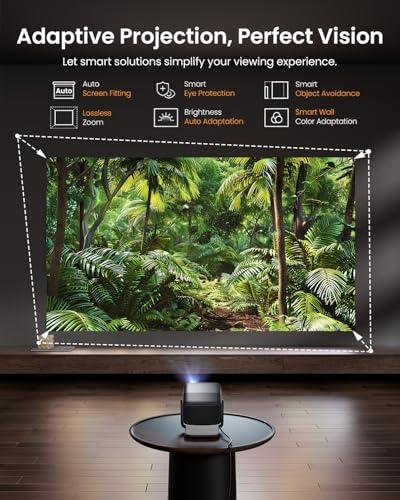
Both projectors excel at automated setup, though they emphasize different aspects. The JMGO N1S Pro 4K focuses on precision, with instant autofocus that continuously adjusts for optimal sharpness, intelligent keystone correction that eliminates image distortion from angled projection, and smart object avoidance that reshapes the image to avoid obstacles like wall fixtures or picture frames.
Its wall color adaptation feature automatically adjusts color temperature based on the projection surface – crucial for maintaining accurate colors whether you're projecting onto white walls, colored surfaces, or portable screens. The smart eye protection function dims or shuts off the laser when people move in front of the projector, addressing safety concerns with high-brightness laser sources.
The XGIMI MoGo 3 Pro implements ISA 2.0 (Intelligent Screen Adaptation), which handles most setup tasks automatically but with less precision than the JMGO. User reviews suggest the auto-keystone correction sometimes requires manual fine-tuning, and the obstacle avoidance works better with simple obstructions than complex wall textures.
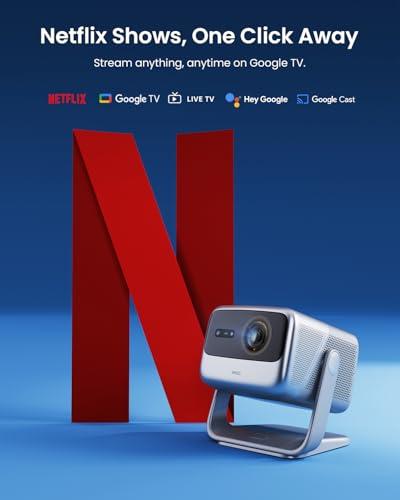
Both projectors run Google TV with native Netflix support – a significant improvement over older models that required workarounds for major streaming services. The JMGO N1S Pro 4K's more powerful processor handles the smart TV interface more smoothly, while the XGIMI MoGo 3 Pro occasionally shows lag during heavy multitasking.
The JMGO N1S Pro 4K offers more comprehensive connectivity with two HDMI 2.1 ports (supporting the latest gaming consoles and high-resolution content), Wi-Fi 6 for faster streaming, and Bluetooth 5.2 for accessories. One HDMI port supports eARC (enhanced Audio Return Channel), allowing connection to advanced sound systems.
The XGIMI MoGo 3 Pro includes basic connectivity with a micro HDMI port, single USB-A connection, and Wi-Fi 5. While adequate for most uses, the micro HDMI requirement might necessitate adapter purchases for some devices.
For gaming enthusiasts, the JMGO N1S Pro 4K supports true 4K gaming at 60Hz with relatively low input lag, making it suitable for console gaming on large screens. The brightness levels work well even in gaming rooms with some ambient lighting.
The XGIMI MoGo 3 Pro handles 1080p gaming adequately but requires completely dark rooms for optimal visibility. Its compact size makes it interesting for portable gaming setups, especially when combined with handheld consoles or laptops.
The JMGO N1S Pro 4K makes sense for users wanting a primary or secondary home theater solution. It works well in dedicated media rooms, living rooms with controllable lighting, or as a premium outdoor entertainment system. The image quality and audio performance can genuinely replace traditional TVs for movie watching, while the 4K resolution provides long-term value as content libraries increasingly shift to higher resolutions.
The XGIMI MoGo 3 Pro excels for travelers, students, renters who can't install permanent entertainment systems, or as a supplementary device for specific situations. It's perfect for hotel room entertainment, camping trips, backyard movie nights, or spontaneous viewing sessions anywhere in your home.
Choose the JMGO N1S Pro 4K if image quality is your primary concern, you have a semi-permanent setup location, and you're willing to pay premium pricing for professional-grade performance. It's ideal for replacing traditional TVs or creating impressive home theater experiences.
Choose the XGIMI MoGo 3 Pro if true portability matters most, you primarily watch in dark environments, budget is a significant concern, or you want to explore projector ownership without major financial commitment.
The price difference – roughly three times more for the JMGO at the time of writing – reflects genuinely different product categories rather than simple feature upgrades. Consider your primary use cases, viewing environment, and whether 4K resolution provides meaningful value for your content consumption habits.
Both projectors represent solid value within their respective segments, but they solve fundamentally different problems. The key is honestly assessing which set of trade-offs better matches your specific needs and usage patterns.
| JMGO N1S Pro 4K Projector | XGIMI MoGo 3 Pro Portable Projector |
|---|---|
| Resolution - Higher resolution means sharper detail and future-proofing | |
| True 4K UHD (3840×2160) with native processing | Full HD 1080p (1920×1080) - adequate for most content |
| Brightness - Most critical factor for ambient light tolerance | |
| 2,400 ANSI lumens (usable in rooms with moderate lighting) | 450 ISO lumens (~390 ANSI) - requires near-complete darkness |
| Light Source Technology - Affects color accuracy, lifespan, and rainbow artifacts | |
| MALC 2.0 triple RGB laser (eliminates rainbow effect, 30,000 hrs) | Single LED source (some rainbow artifacts possible, 25,000 hrs) |
| Color Performance - Impact on image vibrancy and accuracy | |
| 110% BT.2020 color gamut with cinema-grade accuracy | 90% DCI-P3 color gamut - good but less accurate |
| Weight & Portability - Determines actual mobility and use cases | |
| 9.9 lbs - semi-portable, needs dedicated carrying | 2.4 lbs - truly portable, fits in backpacks easily |
| Audio Quality - Built-in sound capability reduces need for external speakers | |
| 20W stereo Dolby Digital Plus (room-filling sound) | Dual 5W Harman Kardon (adequate for personal viewing) |
| Smart Platform - Streaming convenience and app availability | |
| Google TV with native Netflix, 2GB RAM for smooth performance | Google TV with native Netflix, standard performance |
| Connectivity - Future-proofing and device compatibility | |
| 2× HDMI 2.1 (eARC), USB-A, Wi-Fi 6, Bluetooth 5.2 | Micro HDMI, USB-A, USB-C power, Wi-Fi 5, Bluetooth 5.1 |
| Power Requirements - Affects placement flexibility and portability | |
| Wall power required (180W consumption) | USB-C power delivery, power bank compatible, optional battery base |
| Setup Features - Convenience and precision of automated adjustments | |
| Gimbal design, instant autofocus, smart object avoidance, wall color adaptation | 130° adjustable stand, ISA 2.0 auto setup, mixed keystone reliability |
| Target Price Range - Value positioning at time of writing | |
| Premium pricing reflecting professional-grade components | Budget-friendly pricing for accessible entry point |
| Best Use Cases - Ideal scenarios for each projector | |
| Home theater replacement, bright room viewing, 4K content consumption | Travel entertainment, camping, dorm rooms, dark room casual viewing |
The JMGO N1S Pro 4K Projector is significantly better for dedicated home theater setups. It delivers true 4K resolution, 2,400 ANSI lumens brightness for viewing with some ambient light, and premium 20W Dolby audio that can fill a room. The XGIMI MoGo 3 Pro works for casual home viewing but requires complete darkness and has limited audio power for larger spaces.
The biggest difference is resolution and brightness. The JMGO N1S Pro 4K Projector offers true 4K UHD with triple laser technology for cinema-quality colors, while the XGIMI MoGo 3 Pro Portable Projector provides 1080p resolution with standard LED projection. The JMGO also delivers 6x more brightness, making images much more visible in normal lighting conditions.
The XGIMI MoGo 3 Pro Portable Projector is far more portable at just 2.4 pounds with a compact cylindrical design that fits in most backpacks. It can run on USB-C power banks and has an optional battery base. The JMGO N1S Pro 4K Projector weighs nearly 10 pounds and requires wall power, making it semi-portable rather than truly travel-friendly.
The JMGO N1S Pro 4K Projector can handle rooms with moderate ambient light thanks to its 2,400 ANSI lumens output, though it still performs best with controlled lighting. The XGIMI MoGo 3 Pro requires near-complete darkness due to its much lower 450 ISO lumens brightness - it struggles significantly in any bright environment.
This depends on your needs. The XGIMI MoGo 3 Pro Portable Projector offers excellent value for ultra-portable, casual viewing with Google TV and decent 1080p quality at an accessible price point. The JMGO N1S Pro 4K Projector provides premium value with professional-grade 4K performance, superior brightness, and cinema-quality audio, justifying its higher cost for serious home theater use.
Yes, both the JMGO N1S Pro 4K Projector and XGIMI MoGo 3 Pro Portable Projector run Google TV with official Netflix licensing and access to thousands of streaming apps. The JMGO has a more powerful processor for smoother performance, while the XGIMI occasionally shows interface lag during heavy use.
The JMGO N1S Pro 4K Projector is better for gaming with true 4K support, higher brightness for gaming rooms with ambient light, and low input lag suitable for console gaming. The XGIMI MoGo 3 Pro handles 1080p gaming adequately but requires completely dark rooms and is better suited for portable gaming setups with handhelds or laptops.
The JMGO N1S Pro 4K Projector has significantly better audio with 20W stereo Dolby Digital Plus speakers that can fill large rooms without external speakers. The XGIMI MoGo 3 Pro Portable Projector has decent 5W Harman Kardon speakers for its size but lacks the volume and bass for room-scale audio, though it includes a unique Bluetooth speaker mode with ambient lighting.
Both offer excellent automation, but with different strengths. The JMGO N1S Pro 4K Projector provides more precise autofocus, keystone correction, and smart object avoidance with wall color adaptation. The XGIMI MoGo 3 Pro offers convenient ISA 2.0 setup with its 130° adjustable stand, though users report the auto-keystone sometimes needs manual fine-tuning.
The XGIMI MoGo 3 Pro Portable Projector is ideal for outdoor use thanks to its lightweight design, USB-C power compatibility with power banks, and optional battery base. The JMGO N1S Pro 4K Projector can work outdoors but requires AC power and is less convenient to transport, though its higher brightness performs better at dusk or in partially lit outdoor environments.
The JMGO N1S Pro 4K Projector offers more comprehensive connectivity with two HDMI 2.1 ports (one with eARC), Wi-Fi 6, and Bluetooth 5.2 for better future-proofing. The XGIMI MoGo 3 Pro has basic connectivity with micro HDMI, USB-A, USB-C power, Wi-Fi 5, and Bluetooth 5.1 - adequate but may require adapters for some devices.
For first-time buyers wanting to explore projectors affordably, the XGIMI MoGo 3 Pro Portable Projector offers an accessible entry point with good 1080p performance and maximum convenience. If you're serious about replacing a TV or creating a dedicated home theater and can invest more upfront, the JMGO N1S Pro 4K Projector provides professional-grade performance that will satisfy long-term.
We've done our best to create useful and informative comparisons to help you decide what product to buy. Our research uses advanced automated methods to create this comparison and perfection is not possible - please contact us for corrections or questions. These are the sites we've researched in the creation of this article: techradar.com - projectorcentral.com - gray9.in - projectorreviews.com - howtogeek.com - the-gadgeteer.com - projectorcentral.com - global.jmgo.com - global.jmgo.com - cnet.com - cnet.com - youtube.com - global.jmgo.com - avsforum.com - youtube.com - youtube.com - projectorcentral.com - techradar.com - androidcentral.com - tvsbook.com - techradar.com - thesmarthomehookup.com - whathifi.com - youtube.com - youtube.com - projectorcentral.com - projectorcentral.com - youtube.com - global.xgimi.com - us.xgimi.com - youtube.com - us.xgimi.com - us.xgimi.com

Privacy Policy
Terms and Conditions - Affiliate Policy
Home Security
© Copyright 2008-2026.
11816 Inwood Rd #1211, Dallas, TX 75244