

The projector world has never been more exciting—or confusing. In 2024, we're seeing everything from pocket-sized miracles to laser-powered home theater beasts, each targeting completely different needs. The JMGO N1S Pro 4K and Aurzen ZIP Tri-Fold represent the extreme ends of this spectrum, and choosing between them isn't about finding the "better" projector—it's about understanding which approach fits your life.
Before diving into these specific models, it's worth understanding what separates today's projectors from the bulky, dim units your teacher wheeled into class years ago. Modern projectors use three main light sources: traditional lamps (mostly phased out), LEDs, and lasers. Each has trade-offs in brightness, color accuracy, and lifespan.
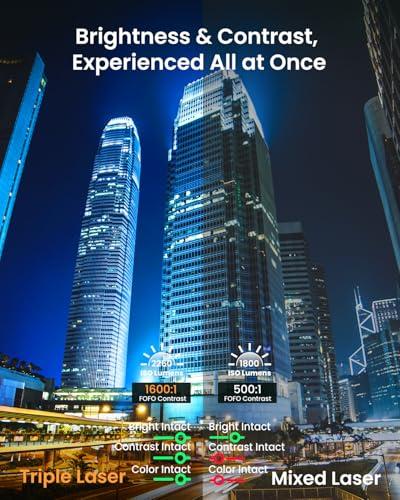
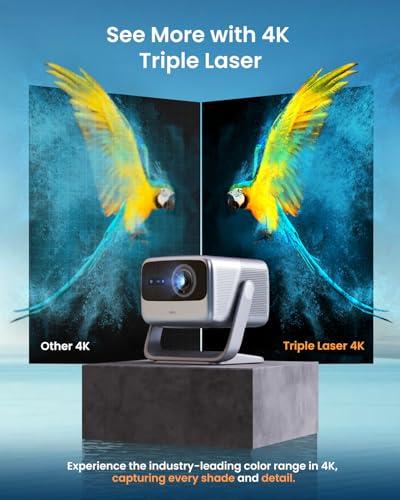
The JMGO N1S Pro 4K uses what's called MALC 2.0 triple RGB laser technology—essentially three separate laser beams (red, green, and blue) that combine to create incredibly vibrant colors. This is significantly more complex and expensive than single-laser or LED systems, but it delivers color accuracy that can rival high-end TVs. The laser setup also lasts around 30,000 hours, meaning you could watch three hours daily for 27 years before needing replacement.
The Aurzen ZIP takes a completely different approach with a 2-channel LED system. Instead of three separate colors, it uses green and red LEDs while creating blue by blending the two. It's simpler, cheaper, and enables the ultra-compact design, but sacrifices color range and brightness. The 20,000-hour LED lifespan is still excellent for casual use.
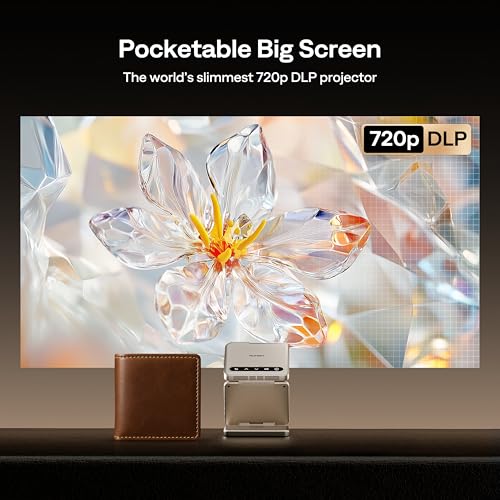
The resolution difference is equally dramatic. True 4K means 3840×2160 pixels—four times the detail of 1080p. The JMGO N1S Pro 4K delivers genuine 4K using a large DLP chip (DLP stands for Digital Light Processing, where millions of tiny mirrors flip to create the image). The Aurzen ZIP uses XPR pixel-shifting technology, which takes a native 640×360 image and rapidly shifts it to simulate 1280×720 (720p). It's clever engineering that maximizes detail from a tiny chip, but it's not true 720p and definitely not close to 4K sharpness.
Here's where things get interesting—and where marketing often misleads consumers. Projector brightness is measured in ANSI lumens (American National Standards Institute), which provides standardized testing conditions. But manufacturer claims rarely match real-world performance.
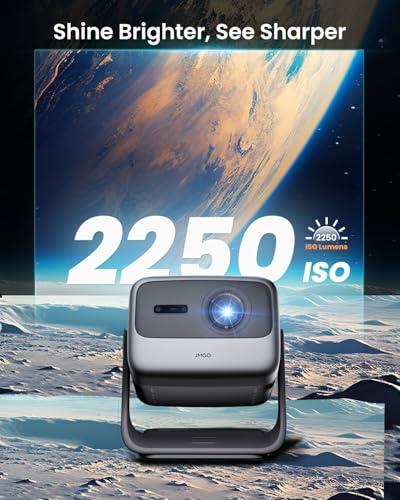
The JMGO N1S Pro 4K claims 2,400 ANSI lumens, though independent testing typically measures closer to 1,600 lumens in peak brightness modes. This is still excellent for a portable projector and allows comfortable viewing in rooms with ambient light. You could watch during the day with curtains drawn, or even with some overhead lighting for casual viewing.
The Aurzen ZIP produces just 100 ANSI lumens—and that's likely accurate given its tiny LED system. This brightness level requires nearly complete darkness for optimal viewing. Think bedroom ceiling projection, camping trips after sunset, or hotel room entertainment. It's the difference between a projector that can replace your TV versus one that creates unique viewing experiences in specific situations.
Based on extensive user feedback and professional reviews, brightness is the single most important factor determining where and when you can use a projector. Every additional 100 lumens opens up more viewing scenarios, which is why the gulf between these models is so significant.
Both projectors feature gimbal systems—essentially pivoting mounts that allow flexible projection angles—but they execute this concept very differently.
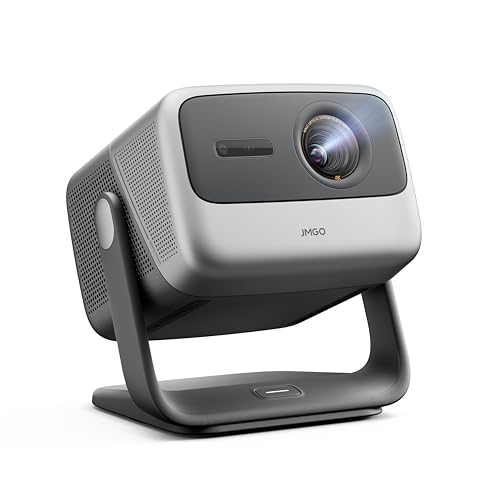
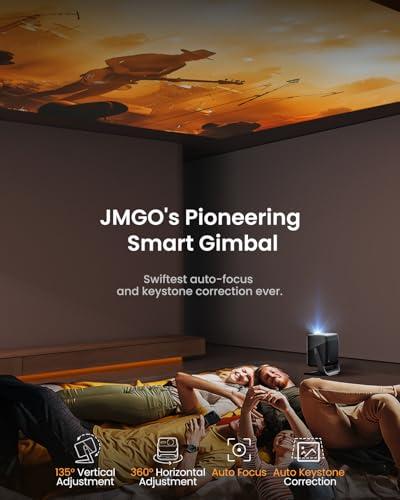
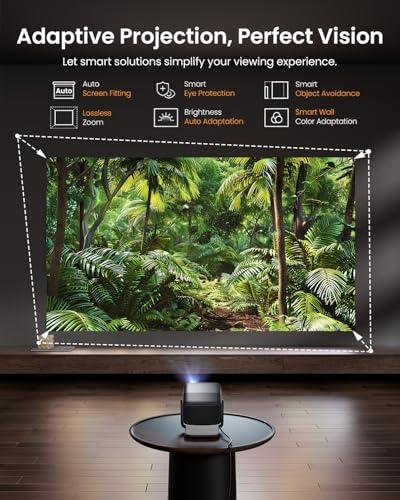
The JMGO N1S Pro 4K released in 2024 with an auto-stabilized gimbal that provides 360° horizontal and 135° vertical adjustment. Combined with instant autofocus and automatic keystone correction (which fixes the trapezoidal distortion when projecting at angles), you can position this projector almost anywhere and get a perfectly rectangular image within seconds. The system uses a D ToF (Direct Time-of-Flight) sensor that measures distance 30 times per second, ensuring the image stays sharp even if you bump the projector.
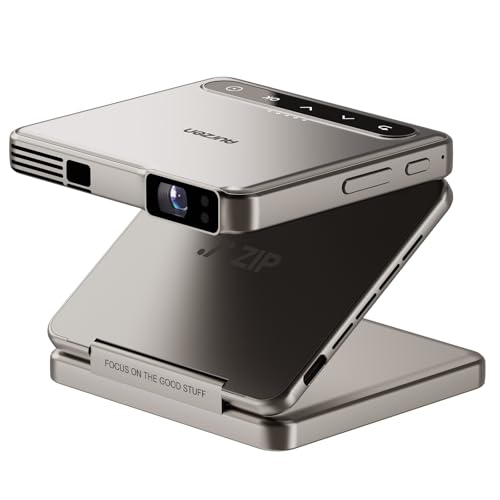
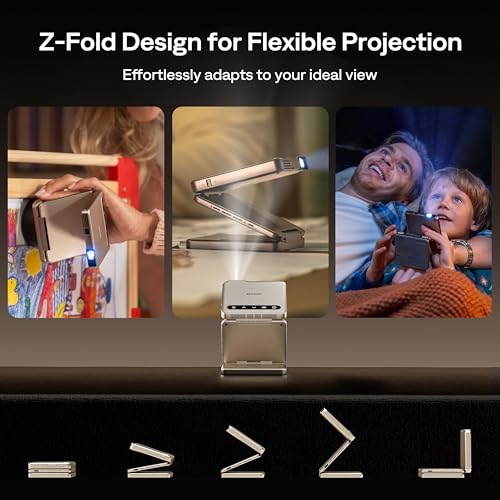
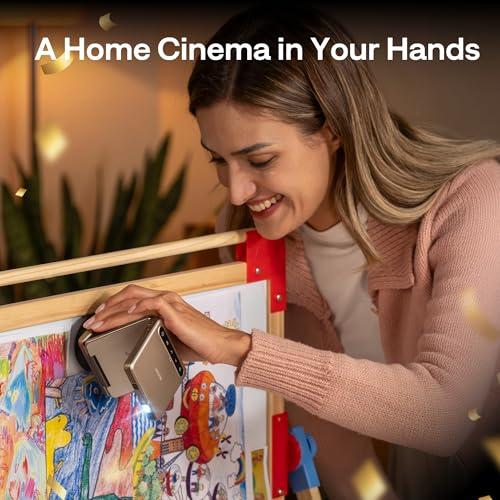
The Aurzen ZIP's tri-fold design is genuinely revolutionary. When folded, it's smaller than most smartphones at just 84×78×26mm and 280 grams. The three sections contain the projector optics (top), speakers and connectivity (middle), and battery with magnetic base (bottom). The integrated gimbal allows 180° of adjustment, and the magnetic base can attach to metal surfaces or work with an optional suction cup for creative mounting.
From a practical standpoint, the JMGO N1S Pro 4K offers more precise positioning and better stability for extended viewing, while the Aurzen ZIP enables projection scenarios that simply aren't possible with larger units—like spontaneous ceiling projection in bed or quick setup presentations in cramped spaces.
This is where the fundamental differences become most apparent. The JMGO N1S Pro 4K delivers what professional reviewers consistently describe as surprisingly good image quality for a portable projector. The triple laser system covers 110% of the BT.2020 color space (BT.2020 is the standard for HDR content), producing vibrant, saturated colors that pop off the screen. The 4K resolution means text is crisp, movie details are sharp, and the image holds up well even on screens approaching 150 inches.
However, like most DLP projectors in this class, black levels aren't perfect—dark scenes can appear slightly gray rather than truly black, with a measured contrast ratio around 926:1 in real-world testing. Motion handling also shows some limitations, with fast-paced action occasionally displaying stuttering or artifacts. For most content, especially movies and TV shows, these limitations are minor. For critical viewing or professional color work, they're worth noting.
The Aurzen ZIP produces what users describe as "surprisingly good for the size" image quality. The 720p resolution looks sharp on screens up to about 60 inches, and colors are pleasant if not particularly accurate. The 300:1 contrast ratio means blacks are noticeably gray, and fine details in movies are lost compared to higher-resolution projectors. But for casual viewing—checking social media, watching YouTube videos, or displaying photos—it's entirely adequate.
The key insight from user reviews is that image quality expectations should align with use cases. If you're replacing a TV or building a dedicated home theater, the JMGO N1S Pro 4K delivers performance that justifies the investment. If you're adding projection capability to situations where it previously wasn't possible, the Aurzen ZIP's image quality feels impressive rather than limiting.
Audio is where both projectors exceed expectations, though in different ways. The JMGO N1S Pro 4K features dual 10W speakers with Dolby Digital Plus processing. Professional reviewers consistently praise the audio quality as superior to most projectors in this category, with clear dialogue, decent bass response, and stereo imaging that enhances the viewing experience. For casual viewing, the built-in audio eliminates the need for external speakers.
The Aurzen ZIP's dual 1W speakers are obviously limited by size constraints, but they're surprisingly loud and clear for their dimensions. More importantly, the Bluetooth 5.4 connectivity makes pairing with wireless headphones or portable speakers seamless. This wireless audio approach actually suits the projector's ultra-portable nature—you can quickly connect your existing audio gear rather than relying on built-in speakers.
For home theater use, the JMGO N1S Pro 4K includes an HDMI eARC port for connecting soundbars or AV receivers, while the Aurzen ZIP relies entirely on Bluetooth connectivity for enhanced audio.
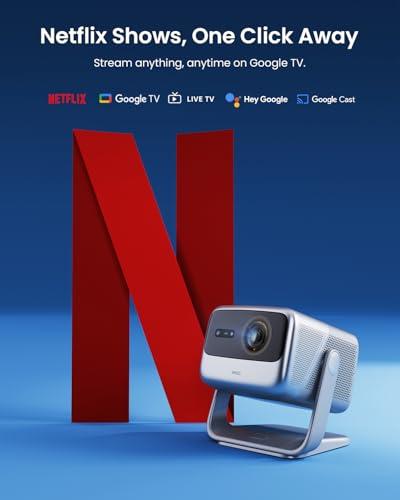
Both projectors run Google TV, providing access to Netflix, Disney+, Prime Video, and thousands of other apps directly from the projector. This eliminates the need for external streaming devices in most cases. However, their connectivity approaches differ significantly.
The JMGO N1S Pro 4K offers comprehensive connectivity with two HDMI 2.1 ports, USB-A, Wi-Fi 6, and Bluetooth 5.2. This supports gaming consoles, laptops, streaming devices, and external storage. The HDMI 2.1 specification enables 4K gaming at higher refresh rates, making it suitable for PlayStation 5 or Xbox Series X gaming.
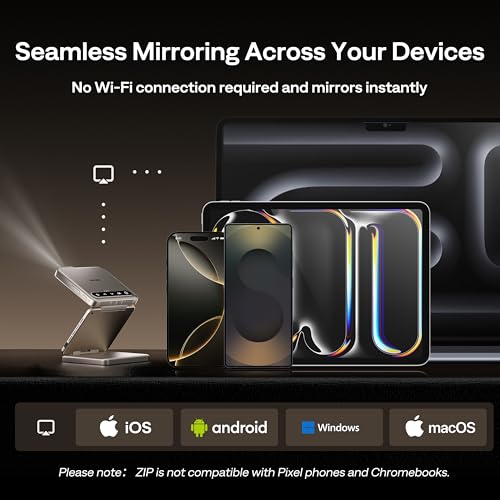
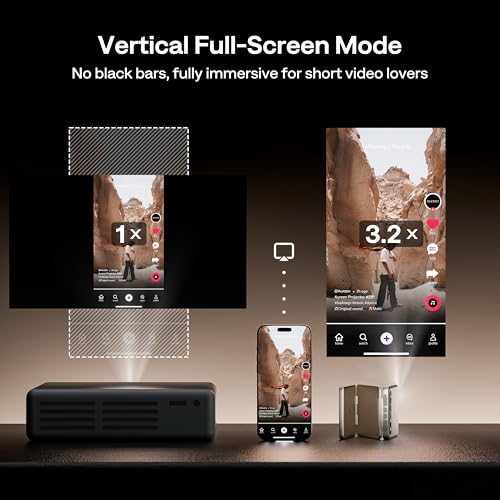
The Aurzen ZIP focuses on wireless connectivity with its AirLink technology—a Wi-Fi-free screen mirroring system that connects to phones, tablets, and laptops without requiring network setup. Simply tap "mirror" and content appears on the projector within seconds. It's remarkably simple and reliable, though it doesn't support DRM-protected content from streaming apps (you need to use the built-in Google TV apps for Netflix, etc.). An optional CastPlay Wireless HDMI Dongle adds wireless HDMI capability for gaming consoles.
The connectivity philosophy reflects each projector's intended use: the JMGO N1S Pro 4K serves as a comprehensive entertainment hub, while the Aurzen ZIP prioritizes quick, wireless content sharing from mobile devices.
This is where the fundamental design philosophies create the starkest contrast. The JMGO N1S Pro 4K requires 180W of AC power, meaning it needs to stay plugged into the wall. This enables the high-brightness laser system but limits placement flexibility. It's portable in the sense that you can move it between rooms or pack it for travel, but you're always tethered to an outlet.
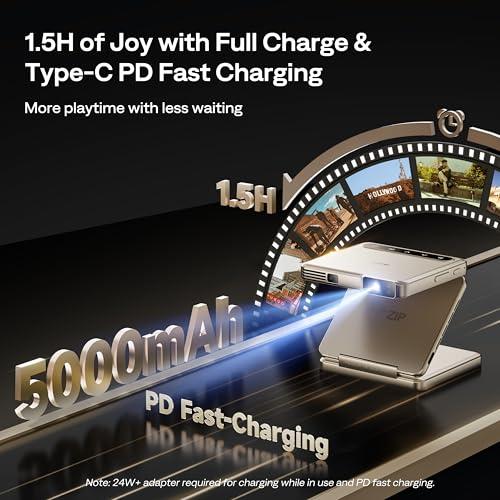
The Aurzen ZIP runs entirely on its 5,000mAh internal battery for approximately 1.5 hours—enough for most movies but requiring planning for longer content. The 22W USB-C charging supports power banks, and an optional 10,000mAh magnetic battery pack extends runtime to about 3 hours. This true wireless capability enables use cases that are simply impossible with AC-powered projectors.
The weight difference tells the story: the JMGO N1S Pro 4K is manageable but substantial, while the Aurzen ZIP literally fits in your pocket and weighs less than most tablets.
If you're considering either projector for dedicated home theater use, the JMGO N1S Pro 4K is the clear choice—and it's not particularly close. The 4K resolution, high brightness, and comprehensive connectivity make it suitable as a primary entertainment system. With a proper screen and darkened room, it delivers an experience that rivals mid-range home theater projectors costing significantly more.
The gimbal system actually works well in fixed installations, allowing precise adjustment for ceiling mounting or shelf placement without requiring complex mounts. The automatic focus and keystone correction handle minor positioning adjustments, and the variety of inputs supports everything from gaming consoles to streaming devices to Blu-ray players.
For home theater use, invest in a proper projector screen rather than projecting onto a wall. The JMGO N1S Pro 4K's brightness and color accuracy benefit significantly from a quality screen surface, and the improvement in perceived contrast and color saturation is dramatic.
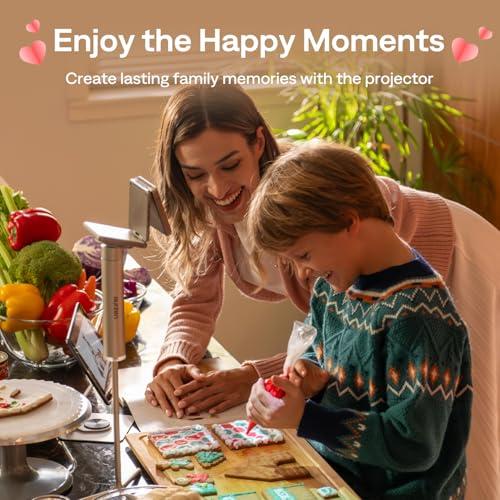
The Aurzen ZIP simply isn't designed for primary home theater use. Its brightness and resolution limitations make it unsuitable for screens larger than about 80 inches, and the short battery life creates practical limitations for movie watching. However, it excels at creating secondary viewing experiences—bedroom ceiling projection, kids' entertainment, or unique installations where traditional projectors won't work.
At the time of writing, the JMGO N1S Pro 4K represents solid value in the premium portable projector category. Its triple laser technology typically costs significantly more in competing models, and the combination of 4K resolution, high brightness, and smart features creates a package that justifies the premium pricing for users who need the performance.
The Aurzen ZIP occupies a unique position where it's creating an entirely new product category. The ultra-portable design and innovative tri-fold mechanism represent genuine innovation, and the pricing reflects both the engineering achievement and the specialized use cases it enables. You're paying for capabilities that simply don't exist elsewhere in the market.
Choose the JMGO N1S Pro 4K if you want a projector that can serve as your primary entertainment system or deliver consistently excellent image quality across various viewing scenarios. It's ideal for users who have identified a specific location for projection use—whether that's a living room, bedroom, or outdoor entertainment area—and who value image quality enough to accept the size and power requirements.
The Aurzen ZIP is perfect for users who prioritize flexibility and unique use cases over maximum image quality. If you travel frequently, live in small spaces, want bedroom ceiling projection, or need truly portable presentation capability, its innovative design enables experiences that larger projectors simply can't provide.
These projectors aren't really competitors—they're solutions to different problems. The JMGO N1S Pro 4K delivers excellent performance in a relatively portable package, making it ideal for users who want high-quality projection without the size and complexity of traditional home theater projectors. The Aurzen ZIP sacrifices performance for unprecedented portability, creating new possibilities for projection use.
Your choice should align with your primary use case. If image quality and brightness matter most, and you have a dedicated space for projection, the JMGO N1S Pro 4K provides excellent value and performance. If you need projection capability in situations where size and power requirements rule out traditional projectors, the Aurzen ZIP offers unique capabilities that justify its compromises.
Both represent significant technological achievements in their respective categories, and both serve their intended audiences well. The key is understanding which audience you belong to before making your decision.
| JMGO N1S Pro 4K Projector | Aurzen ZIP Tri-Fold Portable Mini Projector |
|---|---|
| Resolution - Higher resolution means sharper text and more detailed images | |
| True 4K (3840×2160) with 10-bit color processing | 720p via pixel-shifting technology (effectively 1280×720) |
| Brightness - Determines where and when you can use the projector | |
| 2,400 ANSI lumens (measured ~1,600 lumens - good for rooms with ambient light) | 100 ANSI lumens (requires dark environments only) |
| Light Source Technology - Affects color quality, lifespan, and maintenance | |
| MALC 2.0 triple RGB laser (30,000 hours, vivid colors, no bulb replacement) | 2-channel LED system (20,000 hours, basic color reproduction) |
| Screen Size Capability - Maximum usable projection size | |
| 85" to 180" optimal range | 40-60" optimal (80" maximum in very dark rooms) |
| Portability - How easily you can move and set up the projector | |
| 7.99" × 9.29" × 9.48", requires AC power (transportable but not pocket-sized) | 84×78×26mm when folded, 280g, fits in pocket with 1.5-hour battery |
| Color Accuracy - Important for movies and professional content | |
| 110% BT.2020 color gamut with 1,600:1 contrast (vibrant, cinema-like colors) | 300:1 contrast with basic LED color reproduction (adequate for casual viewing) |
| Audio Quality - Built-in sound performance | |
| Dual 10W speakers with Dolby Digital Plus (eliminates need for external speakers) | Dual 1W speakers (requires Bluetooth headphones/speakers for good audio) |
| Smart Features - Streaming and connectivity options | |
| Google TV with 2× HDMI 2.1, Wi-Fi 6, comprehensive gaming support | Google TV with Wi-Fi-free screen mirroring, optimized for mobile devices |
| Setup Convenience - How quickly you can get a perfect image | |
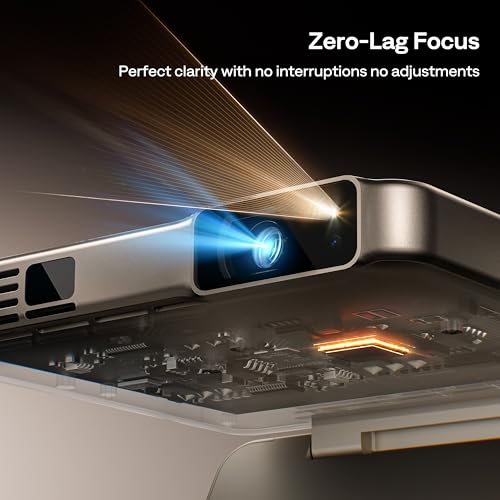
| Auto-focus, auto-keystone, gimbal system with 360°/135° adjustment | ToF zero-lag auto-focus, tri-fold design with 180° gimbal adjustment |
| Primary Use Cases - Where each projector excels | |
| Home theater replacement, gaming, outdoor entertainment, bright room viewing | Travel, hotel rooms, bedroom ceiling projection, camping, presentations |
| Value Positioning - What you're paying for | |
| Premium performance in portable form - JMGO N1S Pro 4K competes with much larger home theater projectors | Innovation premium for unprecedented portability - Aurzen ZIP creates entirely new use cases |
The JMGO N1S Pro 4K Projector is significantly better for home theater applications. It delivers true 4K resolution, 2,400 ANSI lumens brightness, and triple laser technology that produces cinema-quality colors. The Aurzen ZIP Tri-Fold Portable Mini Projector is limited to 720p resolution and 100 ANSI lumens, making it unsuitable for large screens or primary home entertainment systems.
The image quality difference is substantial. The JMGO N1S Pro 4K Projector offers true 4K resolution with vivid colors and can project clear images up to 180 inches. The Aurzen ZIP Tri-Fold Portable Mini Projector provides 720p resolution that's best suited for screens under 60 inches in very dark environments.
The Aurzen ZIP Tri-Fold Portable Mini Projector is dramatically more portable, folding to just 84×78×26mm and weighing only 280 grams - small enough to fit in your pocket. The JMGO N1S Pro 4K Projector is transportable between rooms but requires AC power and is much larger at nearly 8×9×9 inches.
The JMGO N1S Pro 4K Projector can handle rooms with ambient light thanks to its 2,400 ANSI lumens brightness, making it suitable for daytime viewing with curtains drawn. The Aurzen ZIP Tri-Fold Portable Mini Projector requires nearly complete darkness due to its 100 ANSI lumens output.
The JMGO N1S Pro 4K Projector has superior built-in audio with dual 10W speakers and Dolby Digital Plus processing, eliminating the need for external speakers in most cases. The Aurzen ZIP Tri-Fold Portable Mini Projector has basic 1W speakers that work for the projector's size but benefit from Bluetooth headphones or external speakers.
Yes, both the JMGO N1S Pro 4K Projector and Aurzen ZIP Tri-Fold Portable Mini Projector run Google TV with native Netflix support and access to thousands of streaming apps, eliminating the need for external streaming devices.
The JMGO N1S Pro 4K Projector is better for gaming with its 4K resolution, higher brightness, two HDMI 2.1 ports, and support for gaming consoles like PlayStation 5 and Xbox Series X. The Aurzen ZIP Tri-Fold Portable Mini Projector can handle casual gaming but is limited by its 720p resolution and requires the optional wireless HDMI dongle for console connectivity.
The JMGO N1S Pro 4K Projector uses triple laser technology rated for 30,000 hours of use, while the Aurzen ZIP Tri-Fold Portable Mini Projector uses LED technology lasting 20,000 hours. Both offer maintenance-free operation for many years of typical use.
The JMGO N1S Pro 4K Projector works well for outdoor entertainment in backyards with its high brightness, but requires AC power limiting placement options. The Aurzen ZIP Tri-Fold Portable Mini Projector is perfect for camping or outdoor use after dark thanks to its battery operation, but needs very dark conditions.
Value depends on your needs. The JMGO N1S Pro 4K Projector offers excellent value for users wanting home theater quality in a portable package. The Aurzen ZIP Tri-Fold Portable Mini Projector provides unique value for ultra-portability and creates viewing opportunities that larger projectors can't match.
The JMGO N1S Pro 4K Projector requires constant AC power with no battery operation. The Aurzen ZIP Tri-Fold Portable Mini Projector runs on a built-in 5,000mAh battery for approximately 1.5 hours, with optional battery packs available to extend runtime to about 3 hours.
The Aurzen ZIP Tri-Fold Portable Mini Projector is specifically designed for travel with its pocket-sized form factor, battery operation, and instant setup capabilities - perfect for hotel rooms, presentations, or camping. The JMGO N1S Pro 4K Projector can travel but requires luggage space and AC power, making it better suited for vacation rentals or extended stays.
We've done our best to create useful and informative comparisons to help you decide what product to buy. Our research uses advanced automated methods to create this comparison and perfection is not possible - please contact us for corrections or questions. These are the sites we've researched in the creation of this article: techradar.com - projectorcentral.com - gray9.in - projectorreviews.com - howtogeek.com - the-gadgeteer.com - projectorcentral.com - global.jmgo.com - global.jmgo.com - cnet.com - cnet.com - youtube.com - global.jmgo.com - avsforum.com - youtube.com - youtube.com - aurzen.com - youtube.com - tomsguide.com - aurzen.com - aurzen.com - projectorcentral.com - appleinsider.com - youtube.com - aurzen.com - aurzen.com - aurzen.com - aurzen.com

Privacy Policy
Terms and Conditions - Affiliate Policy
Home Security
© Copyright 2008-2026.
11816 Inwood Rd #1211, Dallas, TX 75244