

As home entertainment evolves, smart projectors have carved out a fascinating niche between traditional TVs and full-size home theater projectors. Today, we're comparing two standout models in this space: the Epson EpiqVision Mini EF22 ($999) and the XGIMI Halo+ ($849). I've spent significant time with both of these projectors to help you decide which might work best for your specific needs.
The concept of a "smart projector" has transformed dramatically since 2020. What began as basic projectors with a few built-in apps has evolved into fully-fledged entertainment hubs with sophisticated operating systems, auto-adjustment features, and impressive image quality packed into increasingly compact forms.
The XGIMI Halo+ was released in late 2021 as an upgrade to XGIMI's original Halo, bringing improved brightness and intelligent screen adaptation. The Epson EpiqVision Mini EF22 arrived a bit later in 2023, representing Epson's approach to the premium compact smart projector market with their trusted 3LCD laser technology.
These projectors exemplify how the category has matured—offering features that would have been unthinkable in portable projectors just a few years ago, like automated setup, built-in streaming platforms, and image quality that can genuinely replace a TV in many scenarios.
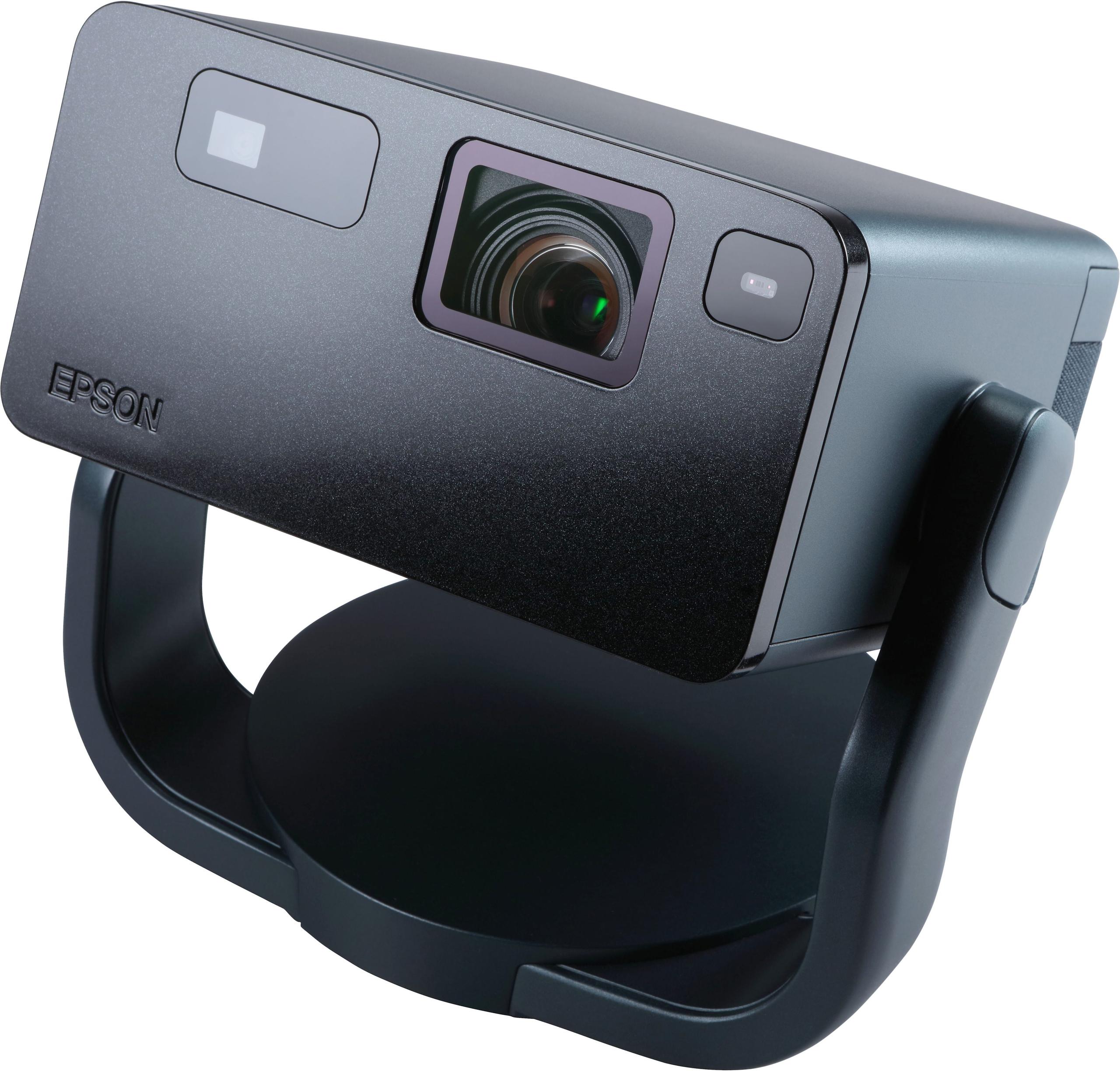
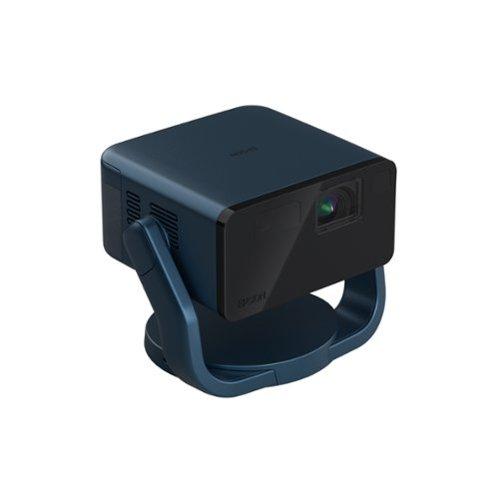
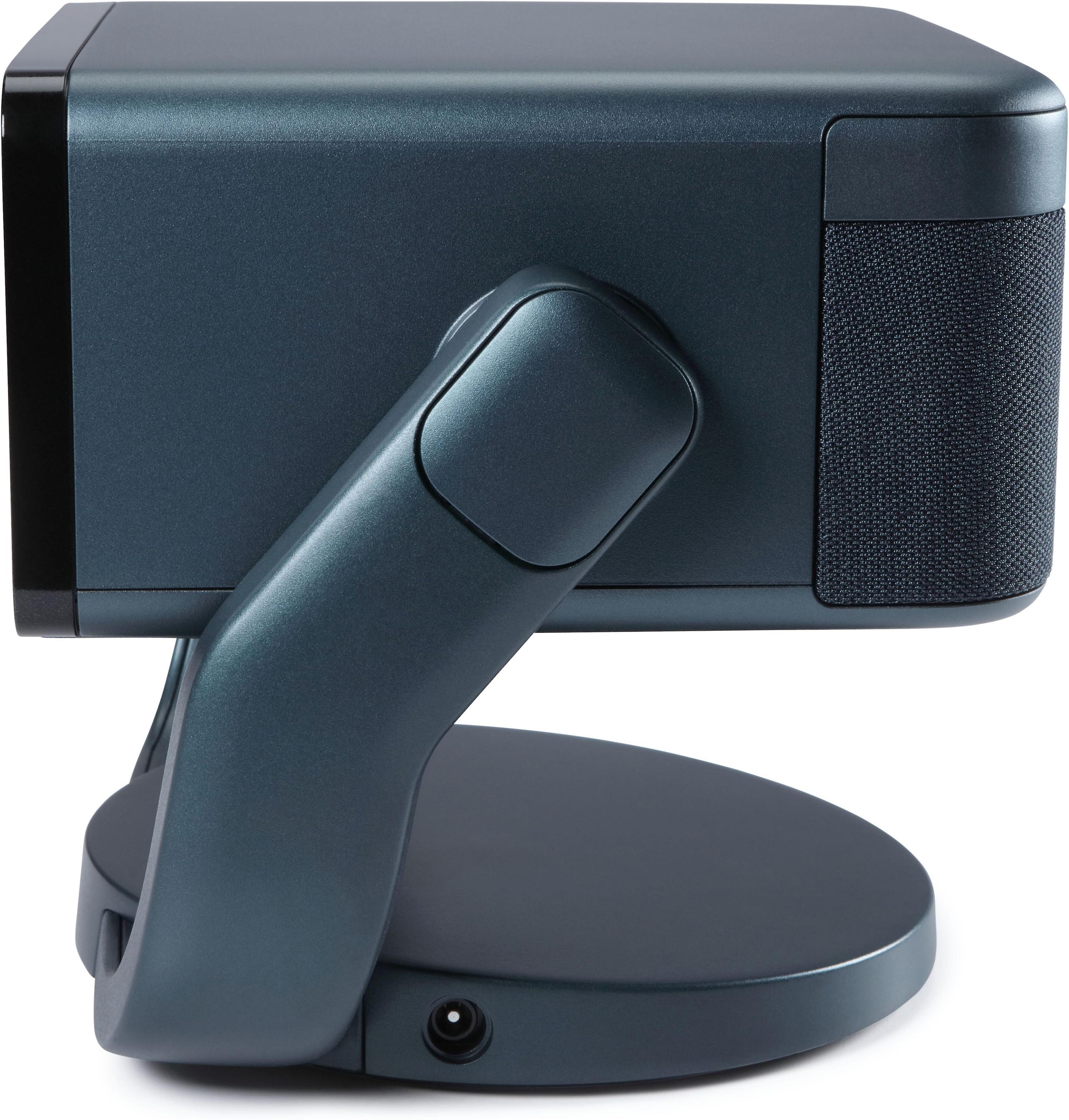
The EF22 embodies what I'd call a "flexible stationary" design philosophy. At 6.6 pounds with dimensions of 9.3" x 7.5" x 7.5", it's not something you'll casually toss in a backpack. Instead, Epson has created a stylish, modern device with a Stone Blue finish that doesn't scream "tech product" when placed in your living space.
Its most innovative design feature is the 360-degree rotating stand, which allows you to point the projection in virtually any direction—including onto a ceiling. This gives the EF22 tremendous placement flexibility without requiring you to move the unit itself. You can set it on a coffee table and rotate it toward any wall, or even project onto the ceiling for bedtime viewing.
The downside? You're always tethered to a power outlet. Epson clearly prioritized performance over battery-powered portability, focusing instead on creating a premium viewing experience that stays put.
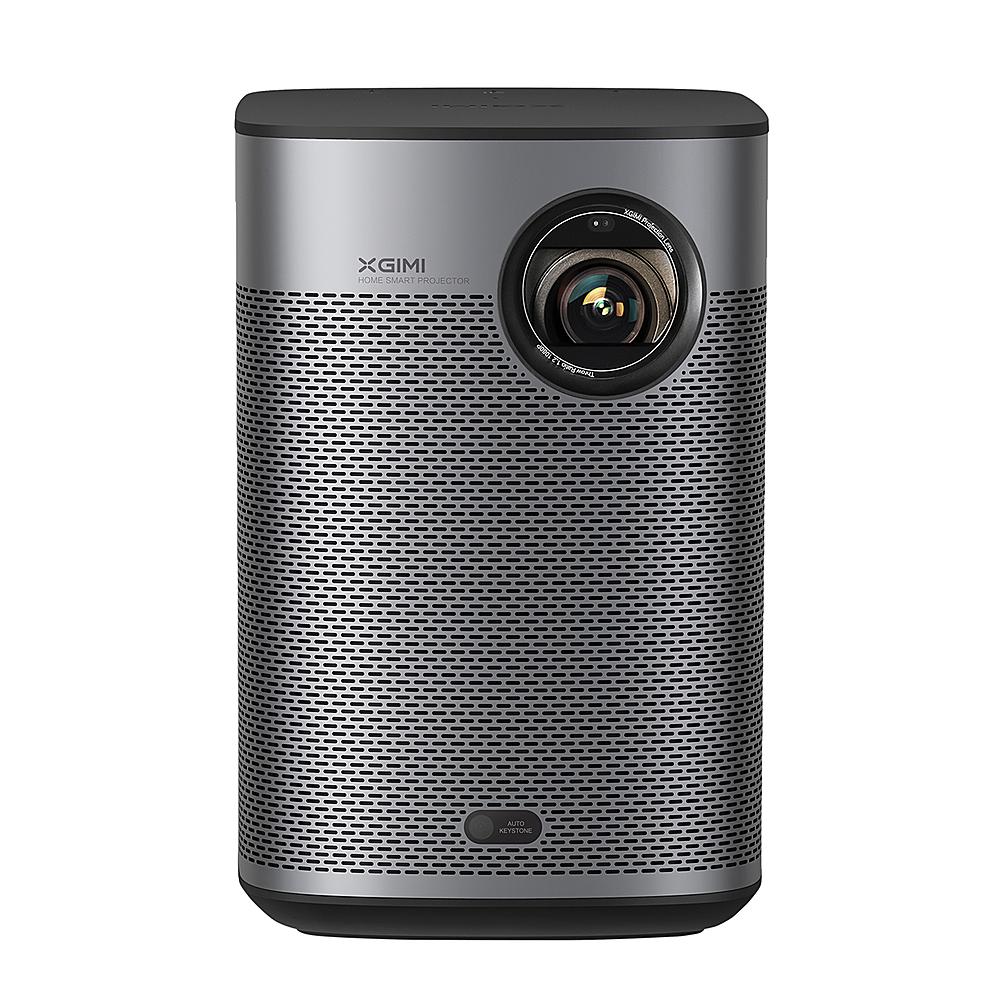
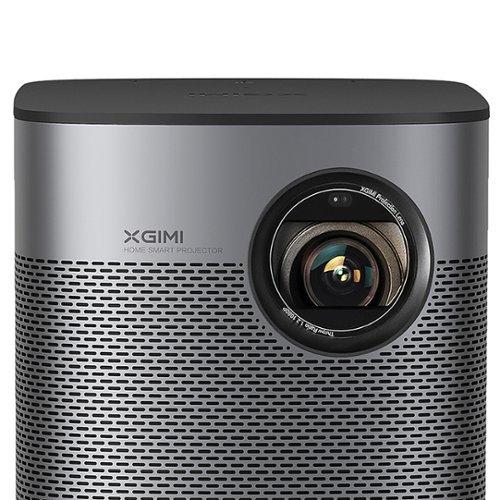
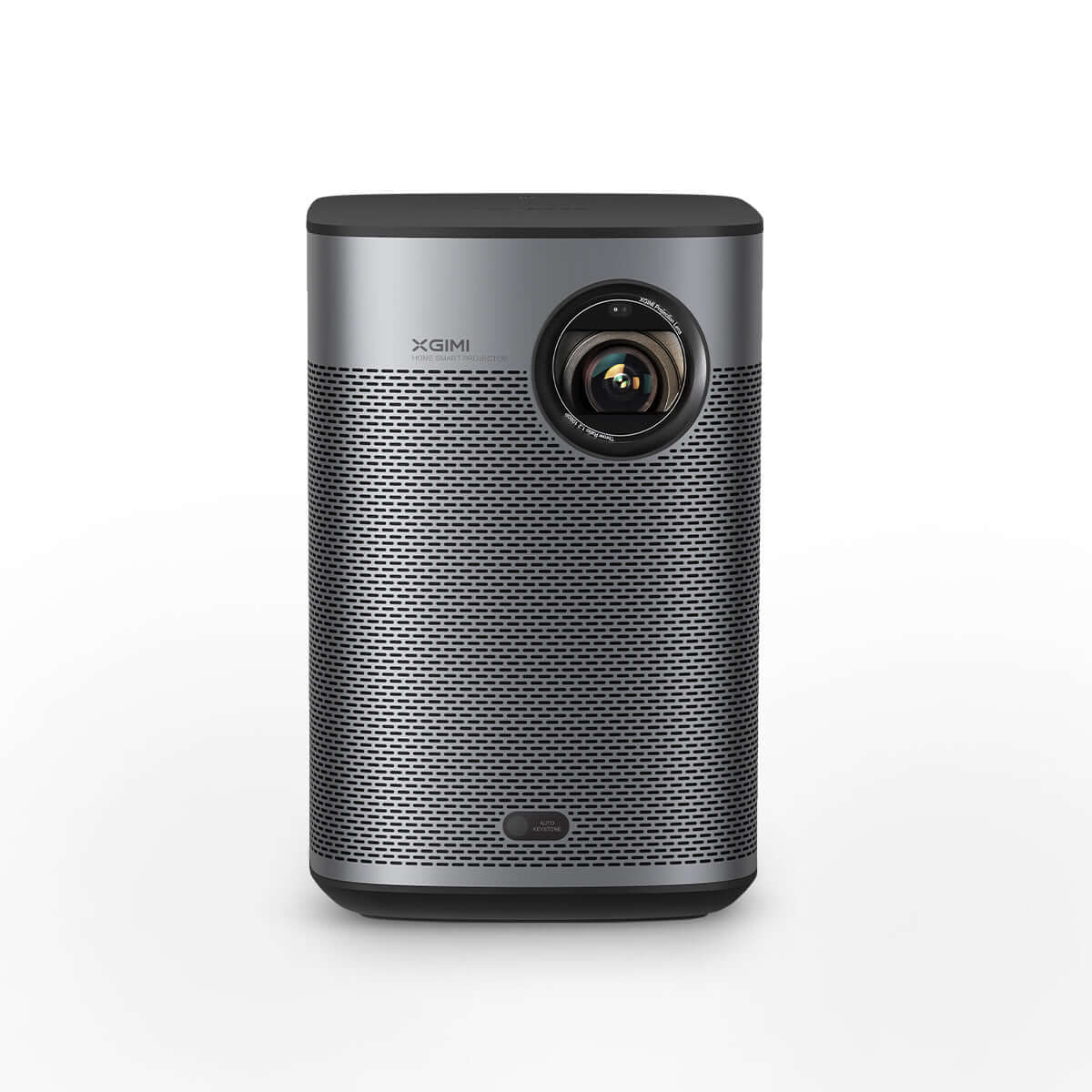
In contrast, the Halo+ embraces true portability. At just 3.53 pounds (1.6kg) and measuring 172 x 114 x 145mm, it's designed to go wherever you do. Its clean, minimalist design features a mesh speaker grille wrapping around the lower portion and a sleek gray upper housing.
What truly defines the Halo+ is its built-in 59.454Wh battery, delivering up to 2.5 hours of projection—enough for most movies. This transforms how and where you can use it: backyard movie nights, camping trips, hotel rooms, or simply moving from room to room without hassle.
Having used both projectors extensively, I've found the Halo+'s portability opens up entirely new use cases. Recently, I set it up for an impromptu movie night on a friend's patio—something that would have been impossible with the EF22 without extension cords and planning.
The EF22 and Halo+ use fundamentally different projection technologies, which creates distinct viewing experiences.
Epson's EF22 employs 3LCD laser technology, which splits light through three LCD panels (one each for red, green, and blue) before recombining them. This approach typically delivers:
The Halo+ uses DLP (Digital Light Processing) with LED illumination, where light bounces off a chip containing microscopic mirrors. This typically provides:
In practice, the EF22's 3LCD system produces noticeably more vibrant and natural colors, especially in content with lots of vivid hues like animation or nature documentaries. The Halo+'s DLP system handles high-contrast scenes better—think starfields or nighttime cityscapes—with deeper blacks in controlled lighting.
Probably the most important practical difference between these projectors is brightness:
This 30% brightness advantage for the EF22 is significant in real-world use. Using both projectors in my moderately lit living room, the EF22 maintained vivid, watchable images even with some ambient light, while the Halo+ required more aggressive light control to appear equally vibrant.
It's worth understanding that Epson uses the standardized ANSI lumen measurement system, while XGIMI uses ISO lumens. These are similar but not identical measurements, though the real-world brightness difference is still substantial regardless of measurement standards.
The EF22's laser light source also maintains its brightness more consistently over time compared to the Halo+'s LED system, which will gradually dim over its lifespan.
Both projectors support HDR10 and HLG (Hybrid Log-Gamma) formats, bringing that extra pop to compatible content. However, they handle HDR quite differently.
The EF22 leverages its higher brightness and 3LCD system to deliver more impactful HDR. Watching "Our Planet" on Netflix, the vibrant underwater scenes showed significantly more color volume and highlight detail on the Epson. This makes sense—HDR effectiveness is closely tied to a display's maximum brightness and color capabilities.
The Halo+ handles HDR respectably for its class, but can't match the Epson's impact. It does, however, maintain better black levels in dark rooms, which helps preserve contrast in darker HDR scenes.
In SDR (Standard Dynamic Range) content, the differences are less pronounced, though the EF22 still delivers more saturated colors while the Halo+ offers slightly better perceived sharpness despite both having 1080p resolution.
Modern smart projectors have revolutionized the once-tedious setup process, and both of these models showcase impressive automation.
The EF22 features Epson's EpiqSense system, which automatically:
These adjustments happen within seconds of powering on, and you can also trigger recalibration from the remote. I've found the auto-focus to be particularly reliable, maintaining sharpness even as ambient temperature changes (which can affect focus in projectors).
The 360-degree rotation combined with auto-keystone means you can place the projector almost anywhere with a line of sight to a suitable projection surface. However, it lacks the obstacle avoidance feature found on the Halo+.
The Halo+ takes automation a step further with its ISA system, which includes:
This obstacle avoidance feature is particularly clever—point the Halo+ at a wall with artwork, and it will automatically resize and reposition the image to project around obstacles. It's not perfect (very small objects may be missed), but it's impressive technology that simplifies setup.
In day-to-day use, both projectors make the traditional hassles of projector setup virtually disappear. This accessibility represents one of the biggest technical advancements in consumer projectors over the past few years.
Both projectors run Google-based smart platforms, though with some differences in implementation and performance.
The EF22 runs the newer Google TV interface, which evolved from Android TV with a more content-focused approach. The home screen highlights recommended shows and movies across your services rather than focusing on apps.
Google TV provides access to thousands of apps through the Google Play Store, including major streaming services like Disney+, HBO Max, Hulu, and Amazon Prime Video. The built-in Chromecast functionality also makes it easy to cast content from your phone or tablet.
However, like many Google TV devices, Netflix compatibility requires some extra steps during setup (though it works fine afterward). The EF22's more powerful processing also provides a smoother, more responsive interface experience compared to the Halo+.
The Halo+ runs the slightly older Android TV operating system—still highly capable but with a more app-centric interface. It provides access to a similar range of streaming apps and includes Google Assistant for voice control.
One persistent issue with XGIMI projectors, including the Halo+, is that Netflix isn't natively supported in the most straightforward way. You'll need to use workarounds like casting from another device or installing alternative launchers. This remains a frustration for a premium device.
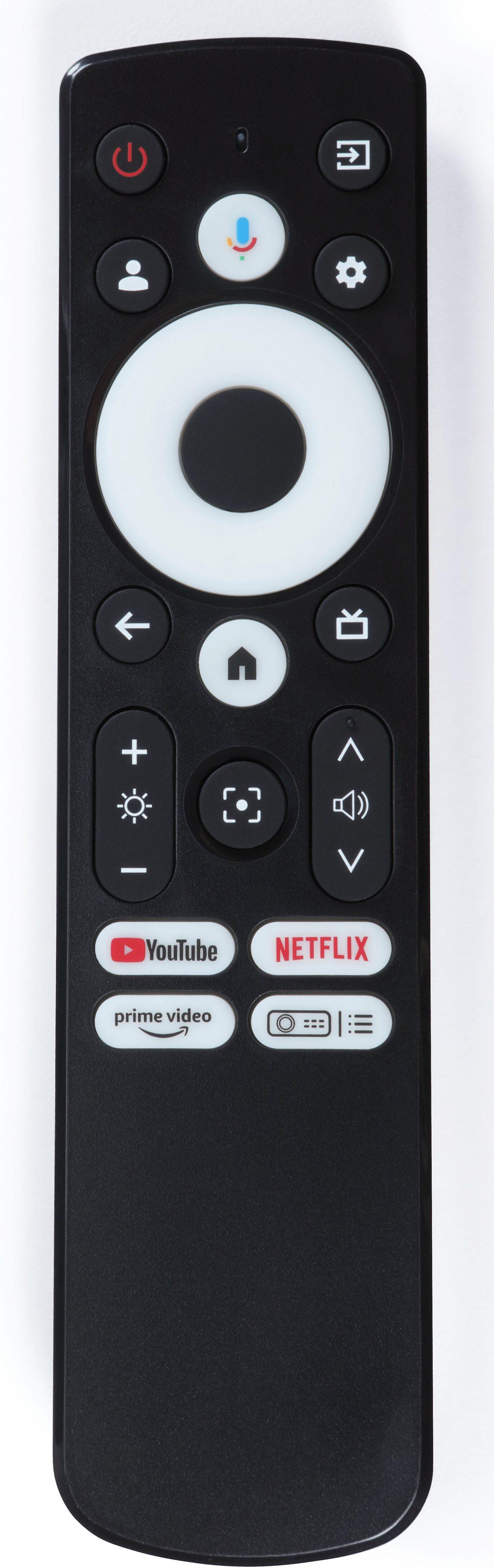
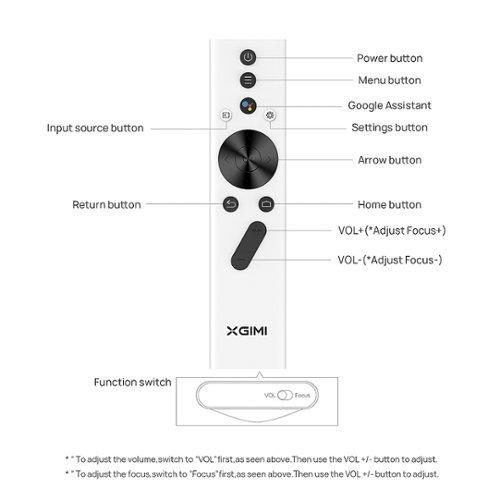
Both systems support voice commands through their remotes, allow for Bluetooth headphone connections, and provide similar access to content. The EF22's interface feels slightly more modern and intuitive, but the core functionality is comparable.
Both projectors feature dual 5W speaker systems, though they differ in sound signature and capabilities.
The EF22 features a custom-tuned audio system with Dolby Audio support. The speakers deliver relatively full sound with surprising bass response for a compact unit. At moderate volumes, dialogue is clear and movie soundtracks maintain good presence.
In my living room (approximately 15' x 20'), the EF22 can fill the space with sound adequately for casual viewing. For movie night, you'll still want to connect to external speakers for truly immersive audio.
The Halo+ features Harman/Kardon-tuned speakers that deliver clear, detailed audio. The sound profile emphasizes vocal clarity, which makes dialogue particularly easy to understand, though it has slightly less bass impact than the Epson.
The Halo+ supports Dolby Audio, DTS-HD, and DTS-Studio Sound formats, giving it good flexibility with different content sources. Its speakers are especially impressive considering the unit's portable nature—significantly better than what you'd find in most laptops or tablets.
Both projectors support Bluetooth audio output to connect to external speakers or headphones, and both can function as standalone Bluetooth speakers to play music from your phone—a nice bonus feature.
Both projectors use solid-state illumination systems, eliminating the periodic lamp replacements required by traditional projectors.
The EF22 uses a laser light source rated for 20,000 hours—about 10 years at 5 hours of daily use. Laser illumination tends to maintain consistent brightness and color performance throughout its lifespan, with minimal degradation.
The Halo+ uses an LED light source rated for 25,000 hours. While LEDs technically last longer, they gradually lose brightness over time, with noticeable dimming likely in the later stages of life.
Neither projector requires air filter cleaning or maintenance beyond occasional dusting, making them significantly more convenient than traditional lamp-based projectors.
At $999, the Epson EpiqVision Mini EF22 positions itself as a premium offering in the compact smart projector category. You're paying for superior brightness, better color performance, and the versatility of 360-degree projection.
The XGIMI Halo+ at $849 represents a more balanced value proposition, especially if portability matters to you. The built-in battery alone justifies much of the price, and you're still getting excellent auto-setup features and good overall performance.
In a dedicated home theater setting with controlled lighting, the brightness advantage of the EF22 becomes less critical, potentially making the Halo+ a better value. However, in multi-purpose spaces with variable lighting, the EF22's extra brightness might be worth the premium.
For dedicated home theater use, a few additional factors become important:
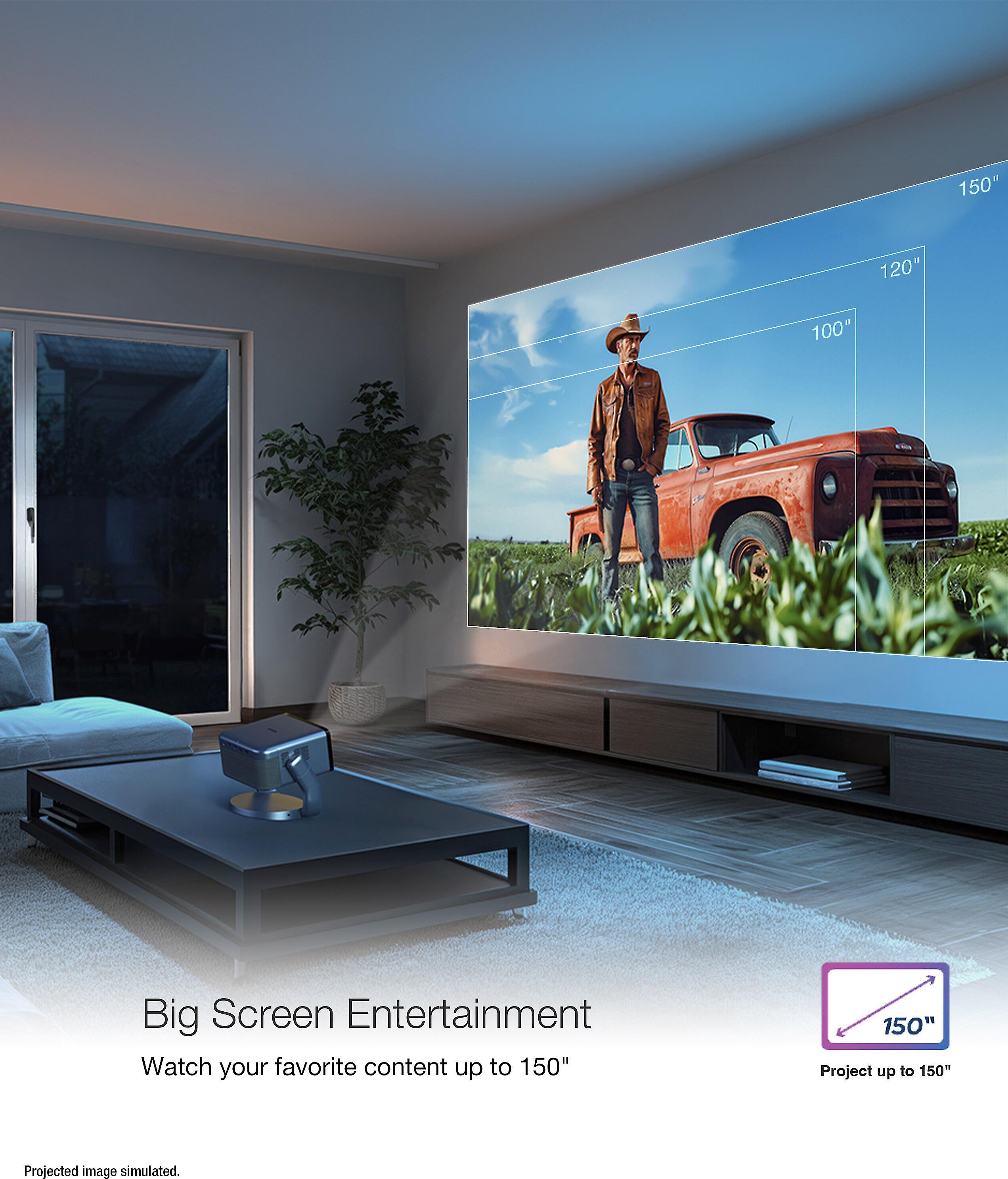
The EF22 can project images from 30" to 150" diagonal, while the Halo+ ranges from 40" to 200". Both use fixed lenses with similar throw ratios, meaning you'll need to physically move the projector to change image size.
In smaller home theaters, both perform well, though the EF22's ability to go down to a 30" image gives it more flexibility in extremely tight spaces.
For gamers, input lag (the delay between your controller input and seeing the result on screen) matters. The Halo+ edges out the EF22 with slightly lower input lag, making it marginally better for gaming. Neither matches the response times of gaming monitors, but both are suitable for casual gaming.
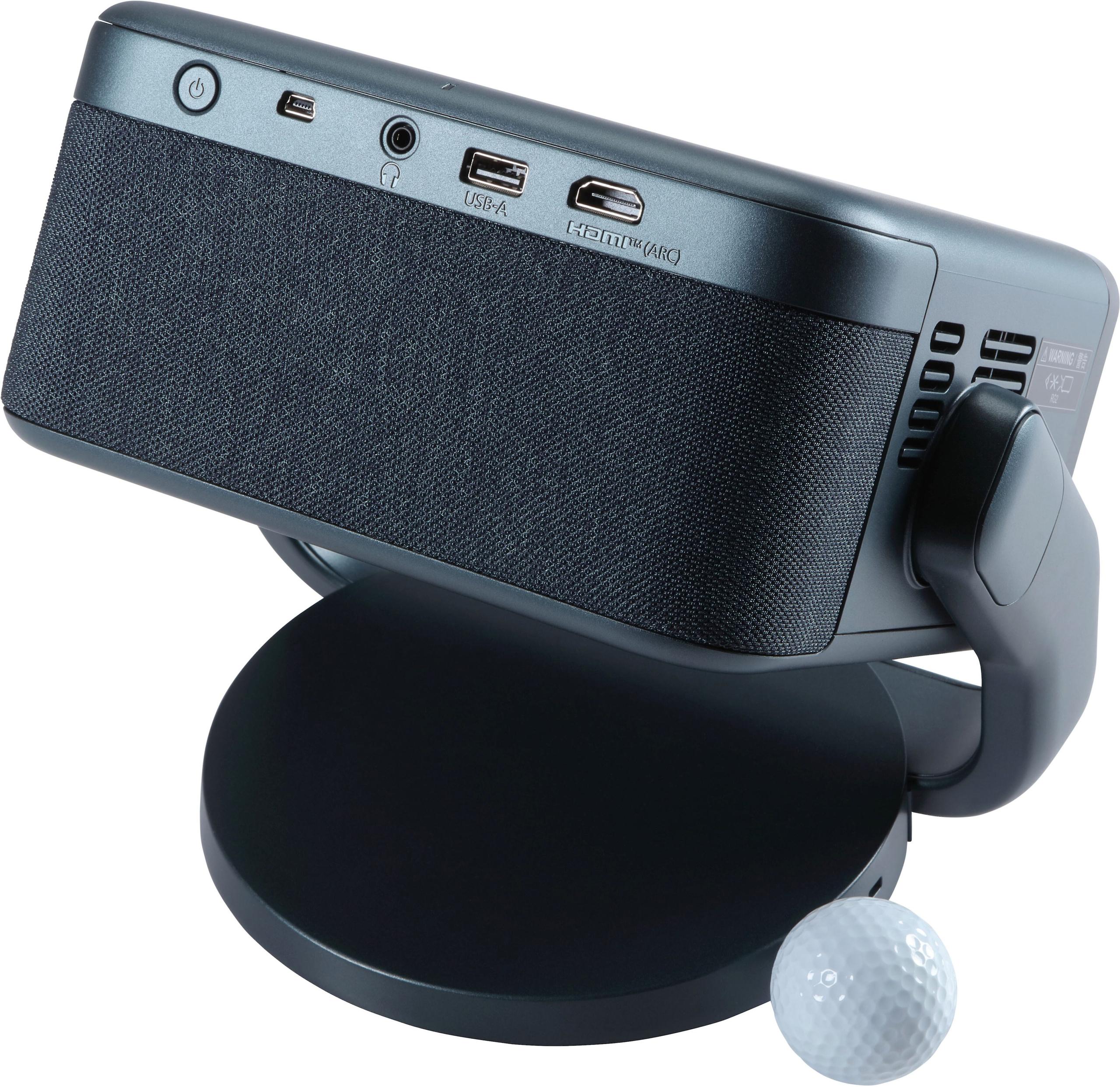
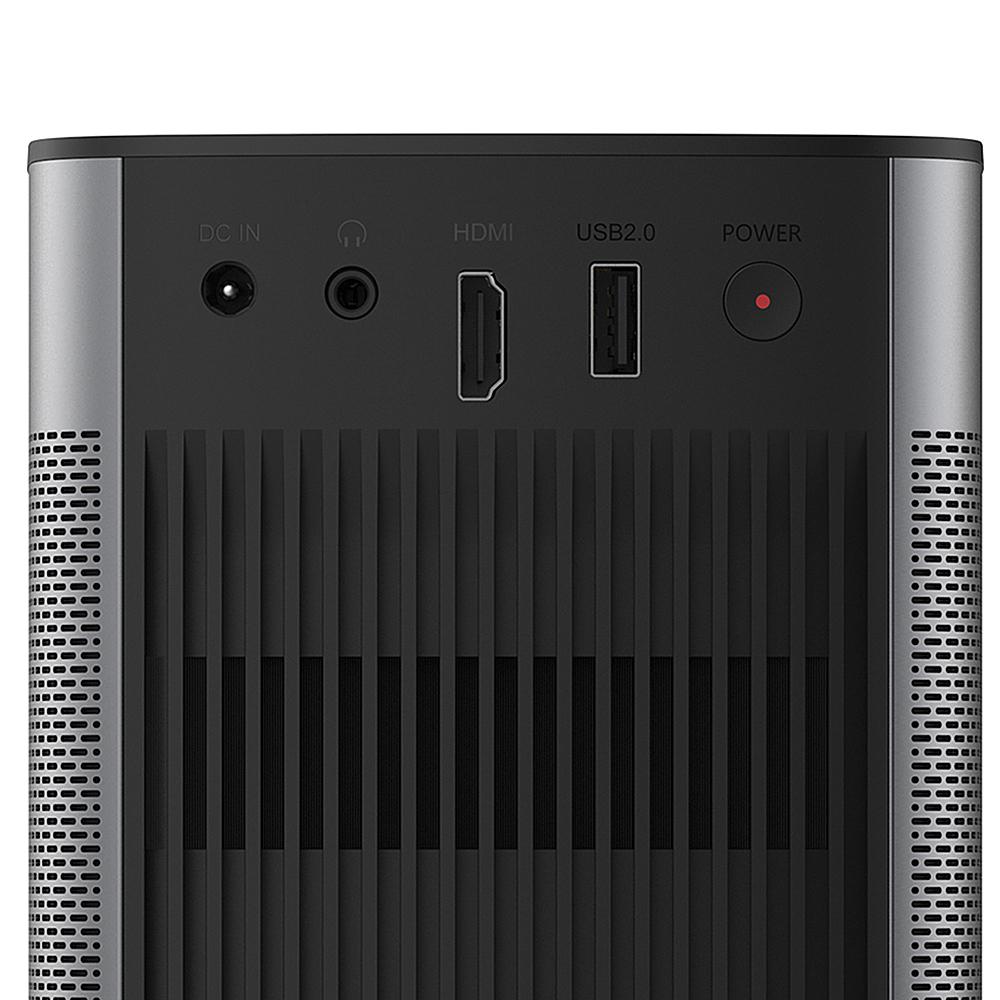
Both projectors offer HDMI connectivity for external sources, though the Halo+ includes eARC support for better audio passthrough to compatible audio systems. This gives it a slight edge in complex home theater setups where you're using an external A/V receiver.
After extensive time with both projectors, my recommendations come down to your specific needs:
Choose the Epson EpiqVision Mini EF22 if:
The EF22 excels as a TV replacement that happens to be a projector—capable of delivering excellent image quality in various lighting conditions while fitting elegantly into your living space.
Choose the XGIMI Halo+ if:
The Halo+ shines as a go-anywhere entertainment solution that doesn't significantly compromise on performance, especially in favorable lighting conditions.
Both projectors represent the impressive evolution of the smart projector category. The EF22 pushes the boundaries of image quality in a compact form factor, while the Halo+ emphasizes versatility and portability. Your choice ultimately depends on which of these approaches better aligns with how you'll actually use your projector day to day.
Whichever you choose, both offer a level of convenience and performance that makes traditional home projection seem needlessly complicated by comparison—and that's perhaps the most impressive technological achievement they share.
| Epson EpiqVision Mini EF22 | XGIMI Halo+ |
|---|---|
| Price - The initial investment difference | |
| $999 (higher premium for brightness and color performance) | $849 (better value if portability is important) |
| Display Technology - Impacts color accuracy and contrast | |
| 3LCD laser (better color accuracy, no rainbow effect) | DLP LED (better perceived sharpness, higher contrast) |
| Brightness - Critical for viewing with ambient light | |
| 1,000 lumens (significantly brighter, suitable for rooms with some light) | 700 ISO lumens (requires darker environments for best results) |
| Portability - Defines where and how you can use it | |
| 6.6 lbs, no battery (stationary use requiring power outlet) | 3.53 lbs with built-in battery (2.5 hours portable viewing) |
| Smart Platform - Controls the content experience | |
| Google TV (more modern content-focused interface) | Android TV (app-based interface, requires workarounds for Netflix) |
| Placement Flexibility - How easily it fits in your space | |
| 360-degree rotating stand (project in any direction without moving unit) | Fixed orientation (requires physical repositioning for different angles) |
| Auto-Setup Features - Simplifies the user experience | |
| Auto focus and keystone correction (quick setup) | Intelligent Screen Adaptation with obstacle avoidance (adjusts around objects) |
| Image Size Range - Determines room compatibility | |
| 30" to 150" diagonal (more flexible in smaller spaces) | 40" to 200" diagonal (better for larger projection areas) |
| Audio System - Quality of built-in sound | |
| Dual 5W speakers with Dolby Audio (fuller sound with better bass) | Dual 5W Harman/Kardon speakers (excellent clarity, slightly less bass) |
| Light Source Lifespan - Long-term reliability | |
| 20,000-hour laser (maintains brightness better over time) | 25,000-hour LED (longer rated life but gradual brightness reduction) |
| Best Use Case - Who should choose each model | |
| Home media center replacement with superior image quality | Versatile portable entertainment for multi-location use |
The Epson EpiqVision Mini EF22 is significantly brighter with 1,000 lumens compared to the XGIMI Halo+ which offers 700 ISO lumens. This makes the EF22 better for rooms with ambient light, while the Halo+ performs best in darker environments. If you plan to watch during daytime or in well-lit rooms, the Epson EpiqVision Mini EF22 has a clear advantage.
Yes, the XGIMI Halo+ features a built-in 59.454Wh battery that provides approximately 2.5 hours of portable projection time, enough for most movies. The Epson EpiqVision Mini EF22 does not have a battery and must remain connected to a power outlet at all times. This makes the Halo+ the only option for truly portable use in locations without power access.
For dedicated home theater use in dark rooms, the Epson EpiqVision Mini EF22 delivers superior image quality with more accurate colors and better HDR performance due to its 3LCD laser technology and higher brightness. The XGIMI Halo+ offers good contrast but can't match the EF22's color vibrancy. For serious home theater enthusiasts with light-controlled rooms, the Epson represents the better choice.
Both projectors offer excellent auto-setup features. The XGIMI Halo+ includes Intelligent Screen Adaptation with obstacle avoidance that automatically adjusts around objects on your wall. The Epson EpiqVision Mini EF22 features EpiqSense automatic focus and keystone correction with a unique 360-degree rotating stand. While both are user-friendly, the Halo+ has a slight edge with its obstacle detection, while the EF22 offers more placement flexibility.
The Epson EpiqVision Mini EF22 supports Netflix through its Google TV platform, though it requires some additional setup steps. The XGIMI Halo+ doesn't natively support Netflix in the most straightforward way, requiring workarounds like casting from another device or installing alternative launchers. If Netflix is a priority for your streaming needs, the EF22 provides a more convenient experience.
Both projectors feature dual 5W speaker systems. The Epson EpiqVision Mini EF22 offers Dolby Audio speakers with better bass response and fuller sound, while the XGIMI Halo+ includes Harman/Kardon tuned speakers with excellent clarity but slightly less bass impact. For casual viewing without external speakers, both perform admirably, but the EF22 has a slight edge for audio quality in larger spaces.
The Epson EpiqVision Mini EF22 is priced at $999, while the XGIMI Halo+ costs $849, representing a $150 price difference. The higher cost of the EF22 reflects its superior brightness, better color performance, and laser light source. The Halo+ offers better value if portability is a priority for your needs.
The XGIMI Halo+ has slightly lower input lag than the Epson EpiqVision Mini EF22, making it marginally better for gaming. However, neither projector matches the response times of gaming monitors or gaming-specific projectors. For casual gaming, both will perform adequately, but competitive gamers might find both projectors' input lag too high for optimal performance.
The XGIMI Halo+ features an LED light source rated for 25,000 hours of use, while the Epson EpiqVision Mini EF22 uses a laser light source rated for 20,000 hours. While the Halo+ has a longer rated life, the EF22's laser will maintain brightness more consistently over time compared to the LED, which will gradually dim. Both represent approximately 10+ years of normal use without lamp replacements.
The XGIMI Halo+ can project images from 40" to 200" diagonal, offering a larger maximum size than the Epson EpiqVision Mini EF22, which ranges from 30" to 150" diagonal. For very large projection needs, the Halo+ has an advantage, while the EF22 can go smaller for tight spaces. Both use fixed lenses, so image size is adjusted by physically moving the projector.
Yes, both the Epson EpiqVision Mini EF22 and XGIMI Halo+ can connect to external speakers through Bluetooth or HDMI. The Halo+ has an advantage with HDMI eARC support for better audio passthrough to compatible sound systems. Both also function as standalone Bluetooth speakers to play music from your phone when not projecting.
The XGIMI Halo+ is significantly better for outdoor movie nights thanks to its battery-powered operation, lighter weight (3.53 lbs), and portability. The Epson EpiqVision Mini EF22 requires a power outlet and weighs nearly twice as much (6.6 lbs), making it less practical for outdoor use. If you frequently enjoy outdoor projection, the Halo+ is clearly the more versatile choice.
We've done our best to create useful and informative comparisons to help you decide what product to buy. Our research uses advanced automated methods to create this comparison and perfection is not possible - please contact us for corrections or questions. These are the sites we've researched in the creation of this article: techradar.com - bestbuy.com - geekingout.ca - crutchfield.com - whatgear.net - youtube.com - epson.com - crutchfield.com - projectorcentral.com - epson.com - bestbuy.com - whathifi.com - projectorreviews.com - youtube.com - youtube.com - hometheaterhifi.com - projectorreviews.com - bestbuy.com - youtube.com - staples.com - projectorcentral.com - bestbuy.com - mediaserver.goepson.com - epson.com - news.epson.com - bestbuy.com - bestbuy.com - youtube.com - projectorcentral.com - staples.com - youtube.com - rtings.com - us.xgimi.com - youtube.com - cnet.com - us.xgimi.com - youtube.com - marieclaire.com - youtube.com - youtube.com - youtube.com - youtube.com - odpbusiness.com - bhphotovideo.com - bestbuy.com - projectorcentral.com - us.xgimi.com - global.xgimi.com - projectorscreen.com - petra.com - eu.xgimi.com - us.xgimi.com - global.xgimi.com

Privacy Policy
Terms and Conditions - Affiliate Policy
Home Security
© Copyright 2008-2026.
11816 Inwood Rd #1211, Dallas, TX 75244