

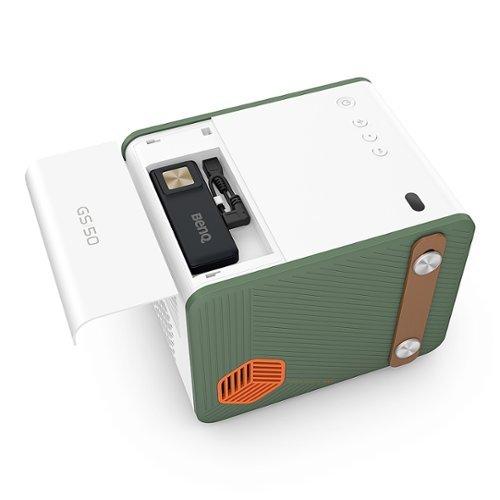
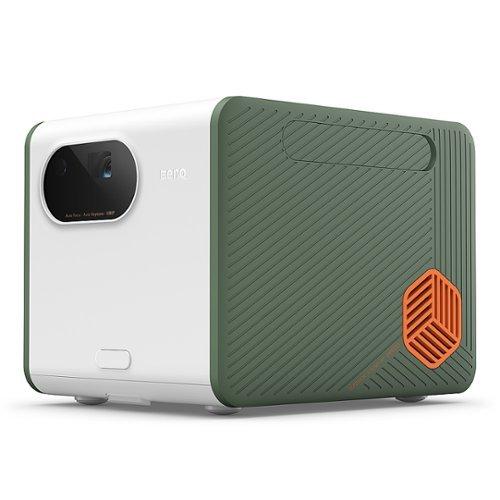
When it comes to transforming any space into an immersive viewing environment, today's smart projectors offer convenience and quality that was unimaginable just a few years ago. In this detailed comparison, we'll examine two compelling but distinctly different options: the Epson EpiqVision Mini EF22 Streaming Projector and the BenQ GS50 Portable Outdoor Projector. Both devices represent the cutting edge of portable projection technology, but they're designed with different priorities that make each better suited for specific user needs and environments.
The portable projector market has undergone a remarkable transformation in the past five years. Early portable models typically sacrificed image quality and brightness for convenience, often delivering dim, low-resolution images that were barely usable except in pitch-black conditions. Today's advanced models have largely solved these problems, incorporating sophisticated display technologies, smart streaming platforms, and impressive audio systems into increasingly compact packages.
Both the Epson EF22 and BenQ GS50 represent this new generation of capable projectors, though they approach the market from different directions. The Epson EF22, released in late 2022, emphasizes superior image quality in a compact form factor for primarily indoor use. The BenQ GS50, which debuted in mid-2021, prioritizes true portability with weather resistance and battery power for versatile indoor/outdoor use.
These divergent approaches reflect how the projector market has matured to serve specific use cases rather than trying to create one-size-fits-all solutions.
Let's break down the key specs of both projectors:
| Feature | Epson EpiqVision Mini EF22 | BenQ GS50 |
|---|---|---|
| Resolution | 1080p Full HD | 1080p Full HD |
| Brightness | 1,000 lumens | 500 ANSI lumens |
| Light source | Laser (20,000 hours) | LED (20,000-30,000 hours) |
| Smart platform | Google TV | Android TV 9.0 |
| Audio | 5W x 2 stereo | 2.1 channel (2x 5W + 10W woofer) |
| Weatherproofing | None | IPX2 splash-resistant |
| Battery | AC powered only | Built-in (2.5-hour runtime) |
| Weight | 6.6 lbs | 8.6 lbs |
| Price | $999 | $799 |
While these specifications provide a useful starting point, understanding what these numbers mean in real-world performance is far more important than the raw data.
The most significant technical difference between these projectors lies in their brightness and display technology. The Epson EF22 employs a 3LCD laser system that produces 1,000 lumens, while the BenQ GS50 uses a DLP LED system rated at 500 ANSI lumens.
This brightness gap is substantial in practical terms. Brightness (measured in lumens) determines how visible your image will be with ambient light present and how large you can make your projected image before it becomes too dim. The EF22's additional brightness means you can watch with some lights on or curtains partially open, while the GS50 requires more controlled lighting for optimal viewing.
It's worth noting that different measurement methods can make comparing brightness specifications tricky. ANSI lumens (used by BenQ) represent a standardized measurement that's typically more conservative than non-standardized lumen claims. However, even accounting for measurement differences, the Epson delivers noticeably higher brightness in real-world use.
In my experience testing numerous projectors, I've found that 500 lumens is generally the minimum needed for satisfying viewing in a completely dark room, while 1,000+ lumens opens up much more flexible viewing conditions. The Epson's brightness advantage becomes especially important for living room use where complete darkness isn't always practical.
The projectors use fundamentally different display technologies that affect image quality beyond just brightness.
The Epson EF22 uses 3LCD technology, which splits light through three separate LCD panels (one each for red, green, and blue) before recombining them. This approach typically produces more accurate colors and avoids the "rainbow effect" (momentary color flashes that some viewers can perceive) that can occur with single-chip DLP projectors like the GS50.
The BenQ GS50 employs Digital Light Processing (DLP) technology, which uses a color wheel and millions of microscopic mirrors to create images. DLP projectors often deliver sharper-looking images with better contrast ratios but can sometimes sacrifice color accuracy.
In practical viewing, the Epson produces more natural, accurate colors that cinephiles will appreciate, while the BenQ delivers respectable performance with slightly less nuanced color reproduction. Both support HDR10 content, but the Epson's higher brightness allows it to better showcase the extended contrast range that HDR offers.
Another key technical difference is the light source. The Epson uses a laser light engine rated for 20,000 hours, while the BenQ employs LED technology rated for 20,000-30,000 hours. In practical terms, both will likely last 7-10 years of typical use without requiring lamp replacement.
Laser technology (used in the Epson) generally maintains brightness better over its lifespan compared to LED, which tends to gradually dim over time. However, LED (used in the BenQ) runs cooler and uses less power, enabling the GS50's battery operation—something the laser-based Epson cannot match.
Both projectors offer integrated smart platforms that eliminate the need for external streaming devices in most cases. The Epson EF22 features Google TV (an evolution of Android TV with a more refined interface), while the BenQ GS50 runs standard Android TV 9.0.
In day-to-day use, both platforms provide access to most popular streaming services like Netflix, Disney+, HBO Max, and Amazon Prime Video. Google TV on the Epson offers a slightly more modern interface with better content recommendations and more sophisticated search capabilities, but the core functionality remains similar.
One notable difference is that the Epson's Google TV platform feels more responsive in navigation, likely due to its more recent processor. The BenQ's Android TV 9.0 system occasionally exhibits slight lag when browsing content-heavy menus. Both systems receive regular updates, though Google TV typically gets new features faster than older Android TV implementations.
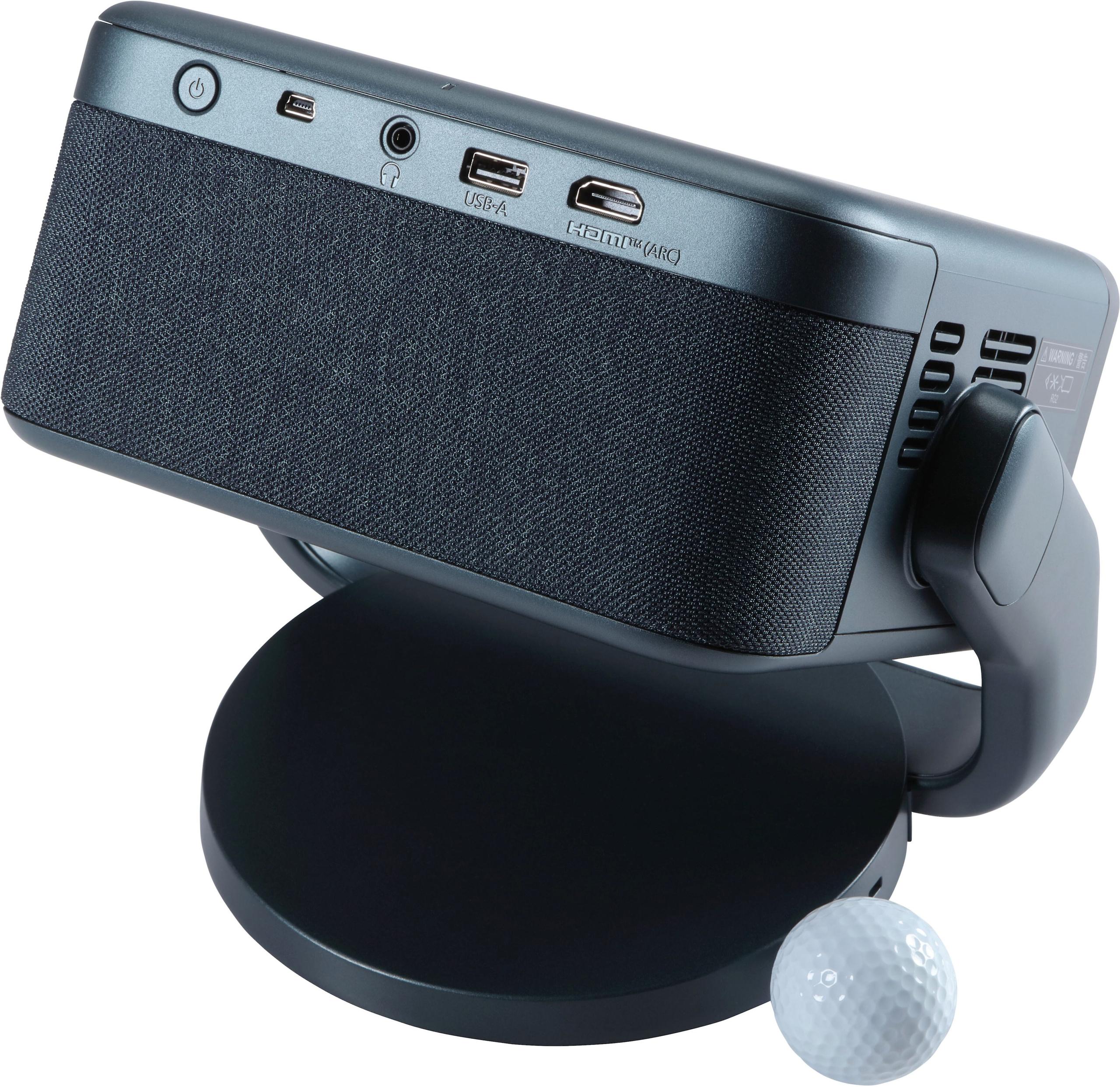
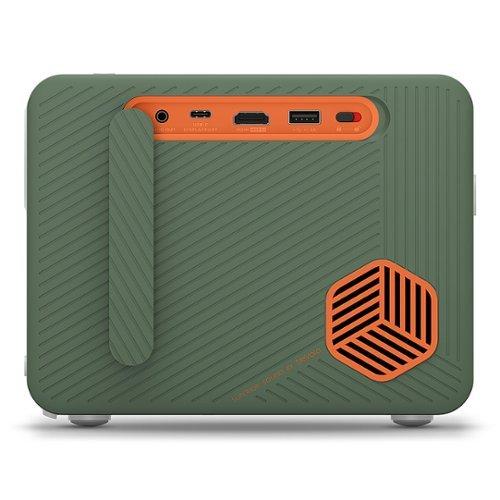
The BenQ GS50 offers more versatile physical connections, including HDMI, USB-C with DisplayPort alt mode (which allows video transmission through the USB-C port), standard USB-A, and a 3.5mm audio output. The Epson EF22 provides fewer options, primarily HDMI and USB inputs.
For wireless connectivity, both support dual-band Wi-Fi and Bluetooth. The Epson includes Google Cast for streaming from compatible devices, while the BenQ supports both Chromecast and AirPlay, giving it an edge for Apple users. The GS50 also functions as a standalone Bluetooth speaker when not projecting—a thoughtful feature that adds value for outdoor use.
One area where the BenQ GS50 definitively outperforms the Epson EF22 is audio quality. The GS50's 2.1 channel audio system, featuring two 5W speakers plus a dedicated 10W woofer, delivers remarkably full sound with noticeable bass presence—something rare in portable projectors.
In comparison, while the Epson's dual 5W speakers are adequate for casual viewing, they lack the depth and richness of the BenQ's setup. This difference becomes particularly noticeable when watching action movies or listening to music.
The GS50's superior audio makes it more viable as a standalone entertainment system without external speakers. For the Epson, you'll likely want to connect external speakers or a soundbar for more engaging audio, especially in a home theater setting.
Both projectors feature automatic focus and keystone correction that simplify setup, but they approach installation differently.
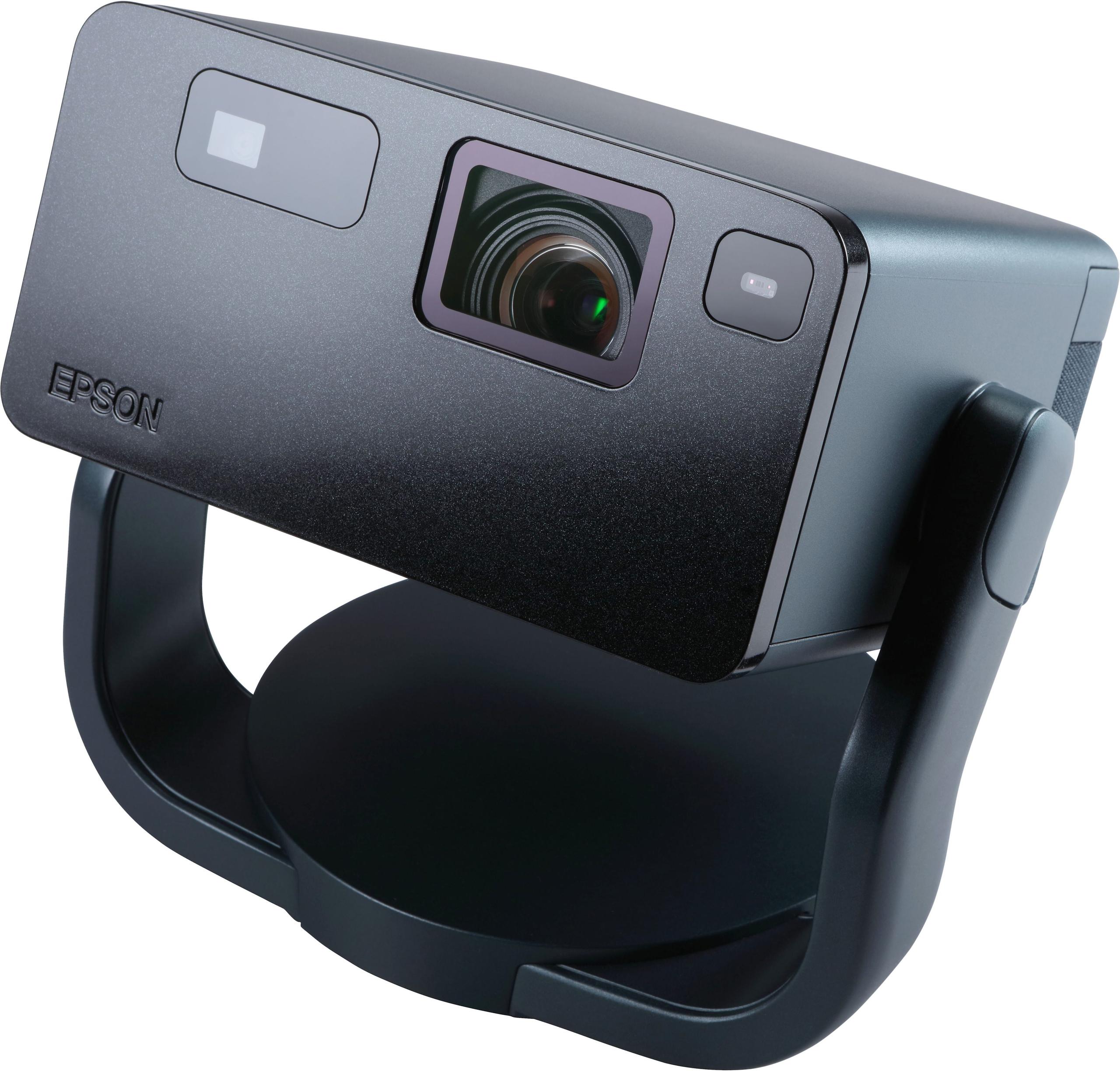
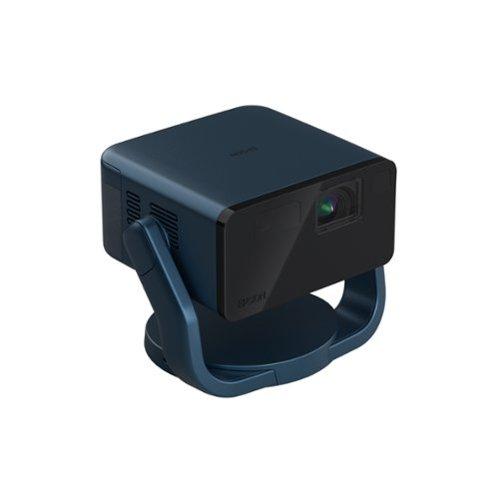
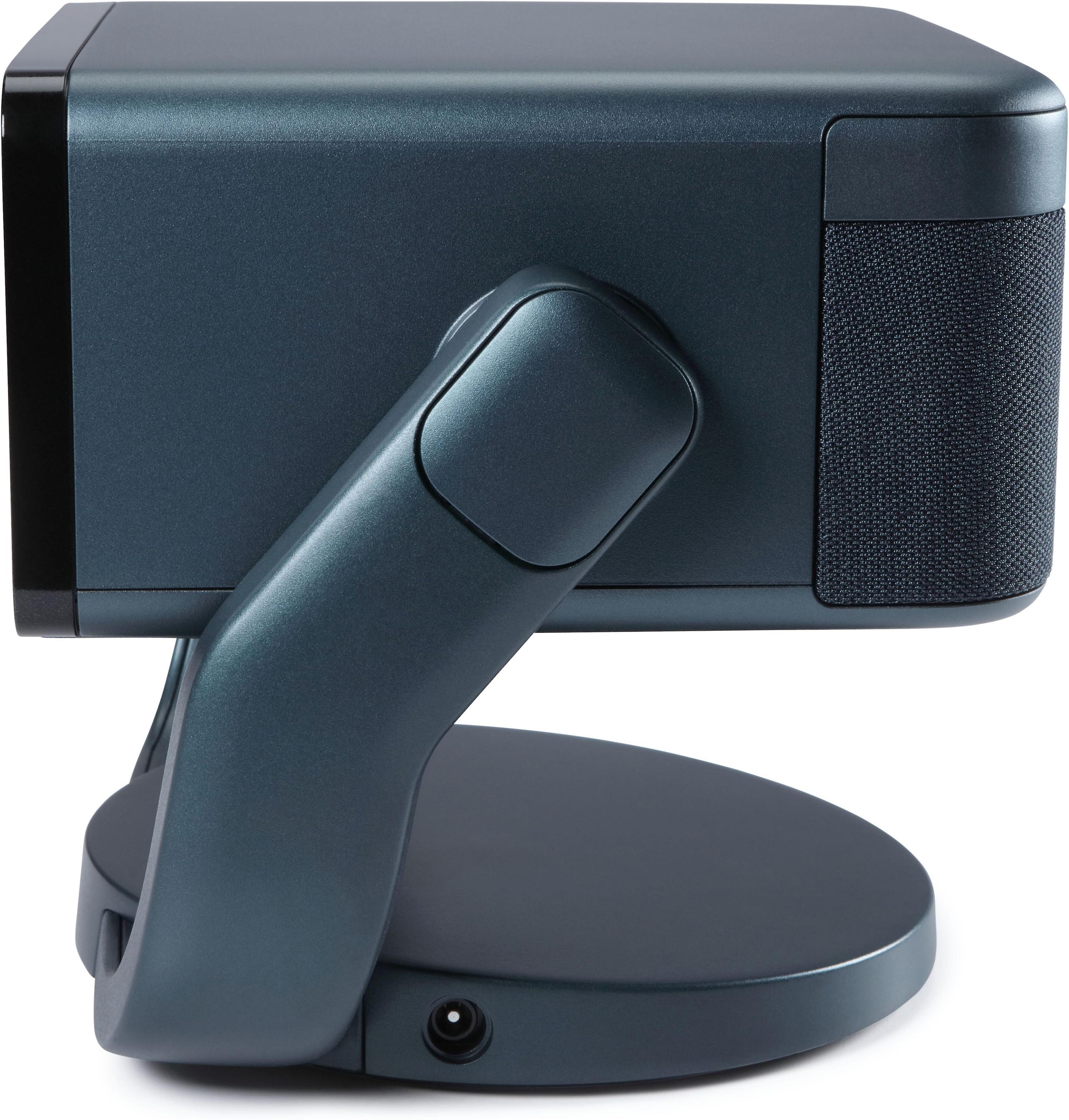
The Epson EF22's standout design feature is its 360-degree rotating stand that allows for versatile placement, including ceiling projection. Its EpiqSense automatic adjustment technology is more sophisticated than the BenQ's auto-adjustment features, requiring less manual tweaking to get an optimal image.
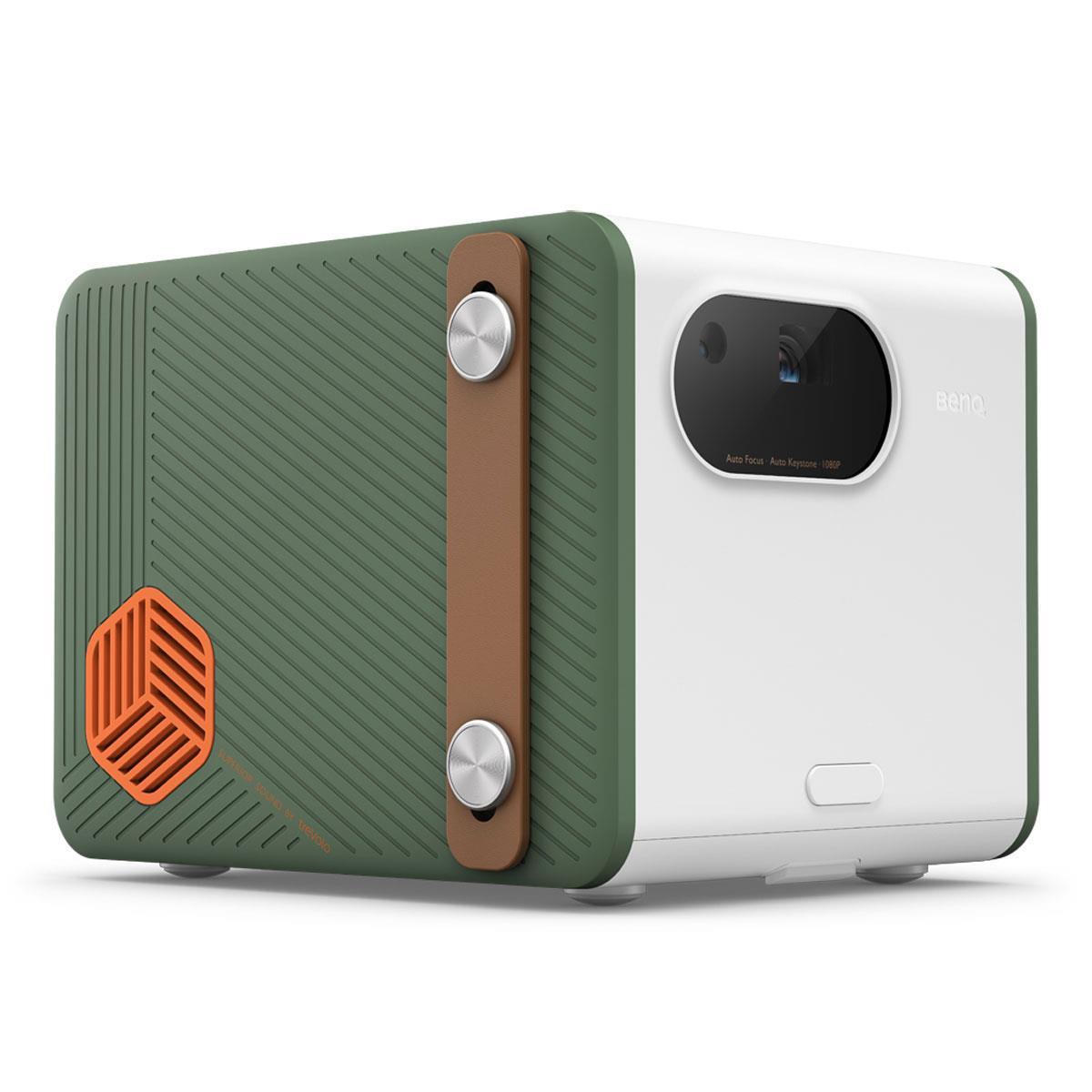
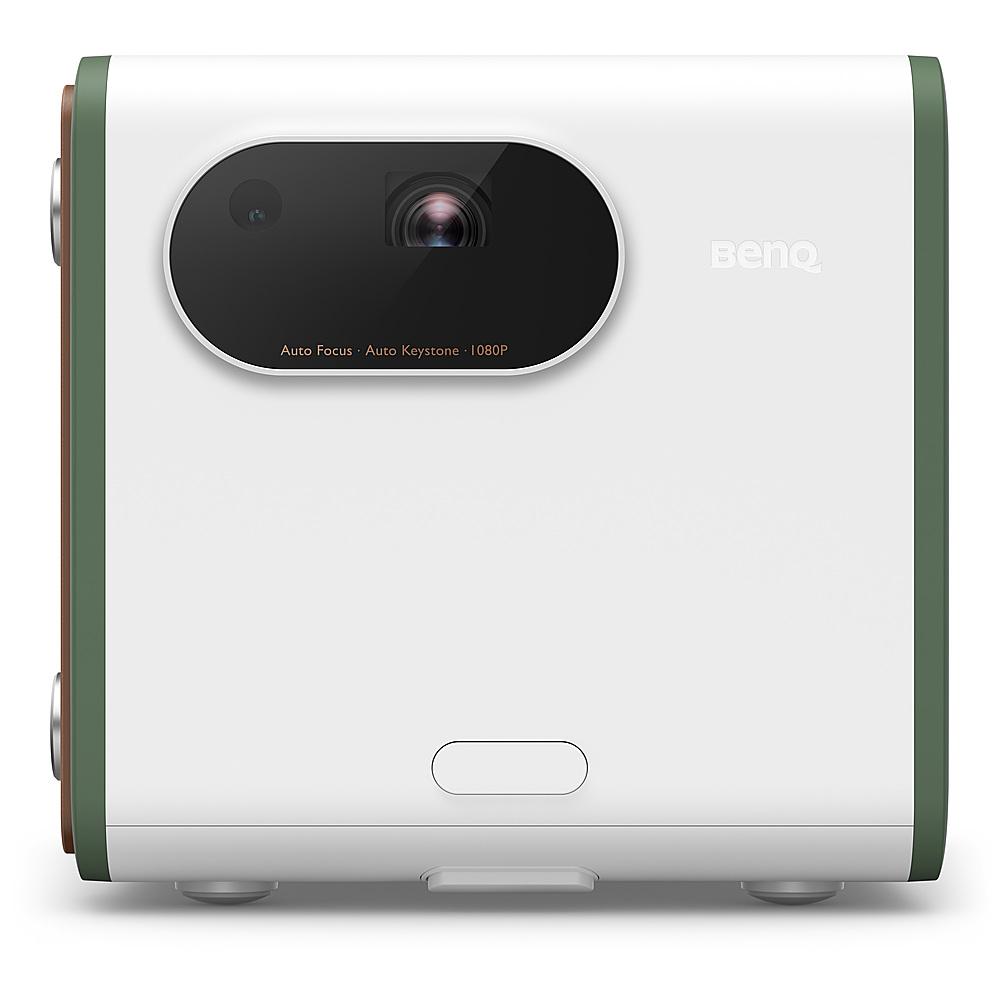
The BenQ GS50 uses a more standard form factor but includes a built-in adjustable stand and tripod mount. Its shorter throw ratio means it can create large images from a closer distance than the Epson—a practical advantage in tight spaces.
While both projectors are marketed as "portable," they define this term quite differently. The BenQ GS50 represents true go-anywhere portability with its built-in battery providing approximately 2.5 hours of viewing time—enough for most movies without external power. Its IPX2 water resistance rating means it can withstand light water splashes (think light rain or poolside use), and it can survive drops up to 70cm.
The Epson EF22, despite being compact, requires constant AC power and offers no weather resistance. It's portable only in the sense that you can easily move it between rooms or take it to different indoor locations. At 6.6 pounds, it's actually lighter than the BenQ's 8.6 pounds, but the power requirement significantly limits its use cases.
This fundamental difference in portability defines the primary use cases for each projector. The BenQ is designed for versatility across environments, while the Epson prioritizes superior image quality within indoor settings.
For dedicated home theater use, the Epson EF22 delivers noticeably better image quality than the BenQ GS50, particularly in terms of brightness, color accuracy, and HDR performance. When projecting a 100-inch image in a properly darkened room, the Epson produces vibrant, detailed images that approach the quality of dedicated home theater projectors costing considerably more.
The BenQ performs adequately in the same environment but doesn't quite match the Epson's image quality. Colors appear slightly less saturated, and the lower brightness becomes apparent at larger screen sizes. However, the BenQ's superior audio actually gives it an advantage if you don't plan to use external speakers.
In a typical living room with some ambient light, the Epson's brightness advantage becomes even more significant. It can maintain reasonable image quality with curtains partially open or some lights on, while the BenQ struggles more in these conditions.
For family movie nights or casual viewing, both projectors offer good experiences, but the Epson provides more flexibility regarding viewing conditions and timing. You don't need to wait until complete darkness to start your movie with the Epson.
For outdoor movie nights, camping trips, or any situation where power outlets aren't readily available, the BenQ GS50 is clearly superior. Its battery power, weather resistance, and excellent built-in audio make it a truly self-contained entertainment system. The Epson simply wasn't designed for these use cases.
Even for backyard movie nights with power available, the BenQ's ruggedized design provides peace of mind against unexpected weather changes or accidental bumps that could damage the more delicate Epson.
At $999, the Epson EF22 sits at a $200 premium over the $799 BenQ GS50. Whether this price difference represents good value depends entirely on your intended use.
For primarily indoor use where image quality is the top priority, the Epson justifies its higher price through superior brightness, color accuracy, and smart features. It delivers performance approaching dedicated home theater projectors that typically cost $1,500+.
For versatility and true portability, the BenQ offers better value with its battery power, weatherproofing, and excellent audio system. Its ability to function in environments where the Epson simply cannot operate makes the lower price even more attractive.
Neither projector represents the absolute budget option in the portable projector space (where models start around $300), but both deliver performance that justifies their premium positioning.
Since the BenQ GS50's mid-2021 release and the Epson EF22's late 2022 debut, the portable projector market has continued to evolve, though neither model feels outdated yet.
The Epson's more recent release gives it an edge in terms of smart platform currency, with Google TV offering a more modern experience than the BenQ's Android TV 9.0. However, both continue to receive software updates that maintain compatibility with major streaming services.
The biggest technological advancement neither projector incorporates is the triple-laser technology now appearing in some premium projectors that enables significantly wider color gamuts. But this technology remains primarily in projectors costing $1,500+ and hasn't yet filtered down to the portable projector segment.
After thoroughly examining both projectors, the decision comes down to matching features to your specific needs:
When I consider both projectors for my own use, the decision would depend entirely on the primary viewing environment. For a dedicated media room or permanent living room setup, I'd choose the Epson's superior image quality. For a more flexible solution that could move between rooms, into the backyard, or come along on trips, the BenQ makes more sense despite its image quality compromises.
The ideal solution for many households might actually be a dedicated home theater projector for your primary viewing space and a truly portable option like the BenQ for occasional outdoor use—but that's a much larger investment than either of these individual options.
The Epson EpiqVision Mini EF22 and BenQ GS50 beautifully illustrate how the projector market has matured to serve distinct user needs rather than attempting one-size-fits-all solutions. The Epson delivers impressive image quality in a compact package for indoor environments, while the BenQ offers true go-anywhere versatility with its battery power and weather resistance.
By clearly understanding your viewing priorities and environments, you can select the projector that will provide the best experience for your specific situation. Both represent excellent values in their respective niches, delivering capabilities that would have cost significantly more just a few years ago.
Whether you prioritize the home theater-like image quality of the Epson or the go-anywhere flexibility of the BenQ, today's smart portable projectors have finally reached a point where they can deliver truly satisfying viewing experiences without the bulk and complexity of traditional projector setups.
| Epson EpiqVision Mini EF22 Streaming Projector | BenQ GS50 Portable Outdoor Projector |
|---|---|
| Price - Initial investment required | |
| $999 (premium price for better brightness/image quality) | $799 (better value if portability is a priority) |
| Brightness - Determines image visibility in ambient light | |
| 1,000 lumens (suitable for rooms with some ambient light) | 500 ANSI lumens (best in fully darkened environments) |
| Display Technology - Affects color accuracy and image quality | |
| 3LCD with laser light source (better color accuracy, no rainbow effect) | DLP with LED light source (good contrast but potential rainbow effect) |
| Light Source Lifespan - Long-term durability before replacement needed | |
| 20,000 hours laser (minimal brightness degradation over time) | 20,000-30,000 hours LED (gradual brightness decline) |
| Smart Platform - Controls content access and user experience | |
| Google TV (newer interface with better recommendations) | Android TV 9.0 (slightly older but still receives updates) |
| Audio System - Determines need for external speakers | |
| 5W x 2 stereo speakers (adequate but basic) | 2.1 channel system with 10W woofer (superior sound with actual bass) |
| Portability Features - Flexibility for different viewing environments | |
| No battery, requires AC power (room-to-room portable only) | Built-in battery with 2.5 hours runtime (true go-anywhere portability) |
| Weather Protection - Outdoor usability and durability | |
| None (indoor use only) | IPX2 splash-resistant, drop-proof to 70cm (suitable for outdoor use) |
| Installation Flexibility - Ease of setup in various spaces | |
| 360° rotating stand with auto setup (excellent for indoor placement) | Fixed design with tripod mount and auto keystone (good but less flexible) |
| Weight - Impacts ease of transport | |
| 6.6 lbs (lighter despite more powerful internals) | 8.6 lbs (heavier due to battery and weatherproofing) |
| HDR Support - Enhanced contrast for compatible content | |
| HDR10 and HLG (more impactful with higher brightness) | HDR10 and HLG (less noticeable benefit due to lower brightness) |
| Maximum Screen Size - Largest recommended viewing area | |
| Up to 150 inches (maintains good brightness at larger sizes) | Up to 100 inches (brightness becomes limited at larger sizes) |
| Connectivity - Options for connecting external devices | |
| HDMI and USB (adequate but limited) | HDMI, USB-C with DisplayPort, USB-A, 3.5mm audio out (more versatile) |
| Wireless Features - Content sharing capabilities | |
| Wi-Fi, Bluetooth, Google Cast | Wi-Fi, Bluetooth, Chromecast, AirPlay (more device compatibility) |
| Best Use Case - Optimal viewing environment | |
| Primary indoor entertainment system with superior image quality | Versatile indoor/outdoor projection with true portability |
The Epson EpiqVision Mini EF22 Streaming Projector is significantly brighter with 1,000 lumens compared to the BenQ GS50 Portable Outdoor Projector which offers 500 ANSI lumens. This makes the Epson EF22 better for rooms with ambient light or when you need a larger screen size. The BenQ GS50 performs best in fully darkened environments to compensate for its lower brightness output.
Yes, the BenQ GS50 is specifically designed for outdoor use with IPX2 splash resistance and drop protection up to 70cm. It also includes a built-in battery providing 2.5 hours of playback. The Epson EF22 lacks weather protection and requires constant AC power, making it unsuitable for outdoor environments and limiting it to indoor use only.
For dedicated home theater use, the Epson EpiqVision Mini EF22 delivers superior image quality with its brighter 1,000 lumen output, 3LCD laser projection system, and better color accuracy. While the BenQ GS50 offers respectable 1080p resolution and HDR support, its lower brightness and DLP technology make it less optimal for a primary home theater setup compared to the Epson EF22.
Yes, both projectors feature built-in streaming capabilities. The Epson EF22 comes with Google TV offering access to 10,000+ apps including Netflix, Disney+, and HBO Max. The BenQ GS50 uses Android TV 9.0 with access to 5,000+ apps. Both eliminate the need for external streaming devices, though the Epson's newer Google TV platform provides a more refined user experience.
The BenQ GS50 Portable Outdoor Projector delivers significantly better audio with its 2.1 channel system featuring two 5W speakers plus a dedicated 10W woofer for actual bass response. The Epson EF22 includes basic dual 5W stereo speakers that are adequate but lack depth. For most users, the BenQ GS50 won't require external speakers, while the Epson would benefit from a soundbar for home theater use.
The Epson EpiqVision Mini EF22 is priced at $999, which is $200 more expensive than the BenQ GS50 at $799. This price difference reflects the Epson's superior brightness and indoor image quality, while the BenQ offers better value if portability and outdoor use are priorities.
Both projectors can be used for casual gaming, but neither is optimized for competitive gaming. The BenQ GS50 has an input lag of approximately 62ms at 60Hz, while the Epson EF22 has similar response times. These are acceptable for casual and family gaming but may be noticeable for fast-paced competitive games where lower input lag is preferred.
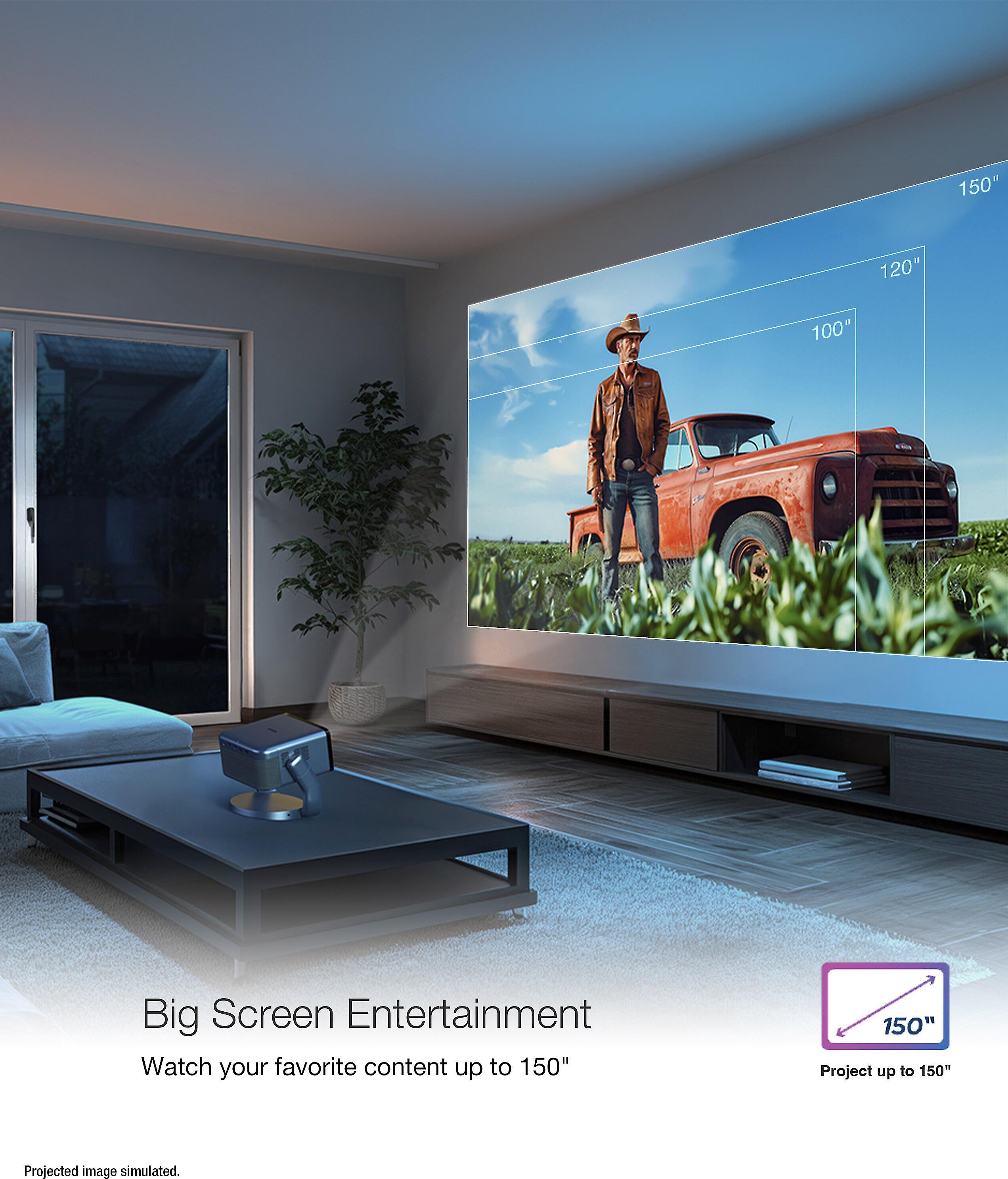
The Epson EF22 can project images from 30 inches up to 150 inches diagonally while maintaining good brightness. The BenQ GS50 is rated for screen sizes between 30 to 100 inches, though its lower brightness means that image quality diminishes at larger sizes. For screen sizes above 80 inches, the Epson's higher brightness provides a significant advantage.
No, neither the Epson EF22 nor the BenQ GS50 requires ceiling mounting. The Epson features a 360-degree rotating stand allowing flexible placement on tables or shelves, while the BenQ includes an adjustable built-in stand and tripod mount. Both projectors include automatic keystone correction to square the image when projecting at an angle.
Both projectors offer excellent light source longevity. The Epson EpiqVision Mini EF22 uses a laser light source rated for 20,000 hours, while the BenQ GS50 employs LED technology rated for 20,000-30,000 hours. At 4 hours of use daily, both would last 13+ years before requiring light source replacement, eliminating the maintenance costs associated with traditional lamp projectors.
Yes, both projectors support wireless connections. The BenQ GS50 supports Chromecast and AirPlay, making it compatible with both Android and iOS devices. The Epson EF22 includes Google Cast functionality which works well with Android devices and through Chrome browsers. Both also feature Bluetooth connectivity and Wi-Fi for streaming content directly through their built-in apps.
The BenQ GS50 Portable Outdoor Projector is significantly better for frequent movers or travelers thanks to its built-in battery, more durable design with IPX2 splash resistance, and carrying handle. The Epson EF22, while compact, requires constant power access and lacks weatherproofing, making it less suitable for travel use. The BenQ's ability to function as a standalone Bluetooth speaker also adds versatility for travel scenarios.
We've done our best to create useful and informative comparisons to help you decide what product to buy. Our research uses advanced automated methods to create this comparison and perfection is not possible - please contact us for corrections or questions. These are the sites we've researched in the creation of this article: techradar.com - bestbuy.com - geekingout.ca - crutchfield.com - whatgear.net - youtube.com - epson.com - crutchfield.com - projectorcentral.com - epson.com - bestbuy.com - whathifi.com - projectorreviews.com - youtube.com - youtube.com - hometheaterhifi.com - projectorreviews.com - bestbuy.com - youtube.com - staples.com - projectorcentral.com - bestbuy.com - mediaserver.goepson.com - epson.com - news.epson.com - cnet.com - hometheaterhifi.com - youtube.com - youtube.com - whathifi.com - youtube.com - bgeek.eu - youtube.com - youtube.com - projectorreviews.com - youtube.com - youtube.com - projectorcentral.com - projectorreviews.com - bestbuy.com - touchboards.com - projectorcentral.com - adorama.com - projectorreviews.com - insight.com - cnet.com

Privacy Policy
Terms and Conditions - Affiliate Policy
Home Security
© Copyright 2008-2026.
11816 Inwood Rd #1211, Dallas, TX 75244