

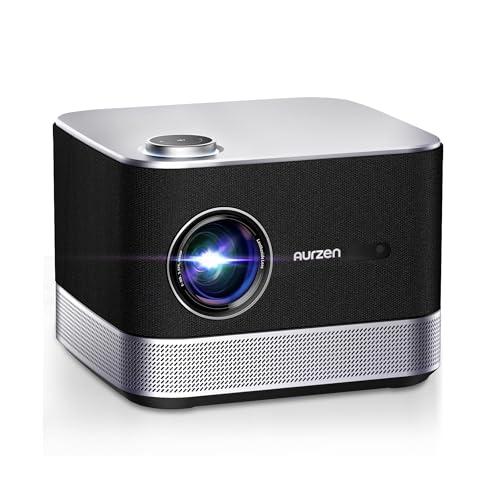
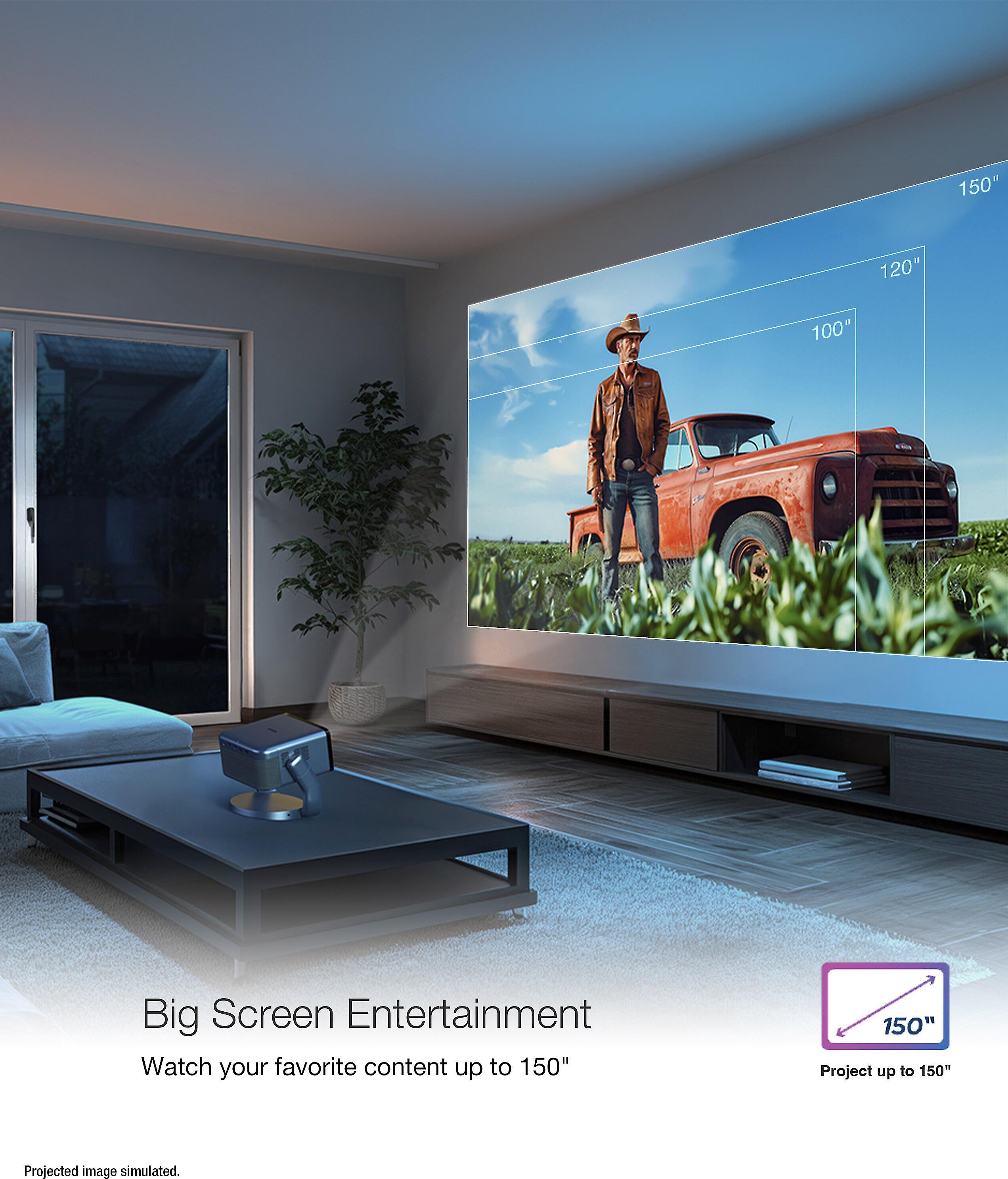
The world of home entertainment has transformed dramatically in recent years, and smart projectors have emerged as one of the most exciting developments. These devices promise to replace your TV with a massive screen experience while streamlining your entire entertainment setup. Today, we're diving deep into two very different approaches to this technology: the Aurzen BOOM 3 Smart Projector and the Epson EpiqVision Mini EF22 Streaming Projector.
Having tested dozens of projectors over the years, I've learned that the "best" projector depends entirely on what you value most. Some people prioritize getting the biggest possible image for movie nights, while others need something bright enough to use with the lights on. The BOOM 3 and EF22 represent two compelling but fundamentally different philosophies in smart projector design.
Smart projectors combine traditional projection technology with built-in streaming capabilities, essentially putting a full entertainment system in a single device. Instead of connecting a separate Roku, Apple TV, or gaming console, everything runs directly on the projector itself.
The key technical specifications that determine your viewing experience include ANSI lumens (a standardized measurement of brightness), native resolution (the actual pixel count the projector displays), and light source type (LED, laser, or traditional lamp). But beyond the spec sheet, factors like audio quality, smart platform capabilities, and setup convenience can make or break your daily experience.
When I evaluate projectors, I focus on five critical areas: how well they handle different lighting conditions, whether the built-in audio eliminates the need for external speakers, how easy they are to set up and adjust, what streaming options they provide, and ultimately, whether they deliver good value for the investment.
The Aurzen BOOM 3, released in 2022, takes what I call the "entertainment maximalist" approach. At the time of writing, it's positioned as a budget-friendly option that punches well above its weight class, particularly in audio performance. Aurzen designed this projector to be both your display and your sound system, with an impressive 36-watt speaker configuration that rivals dedicated soundbars.
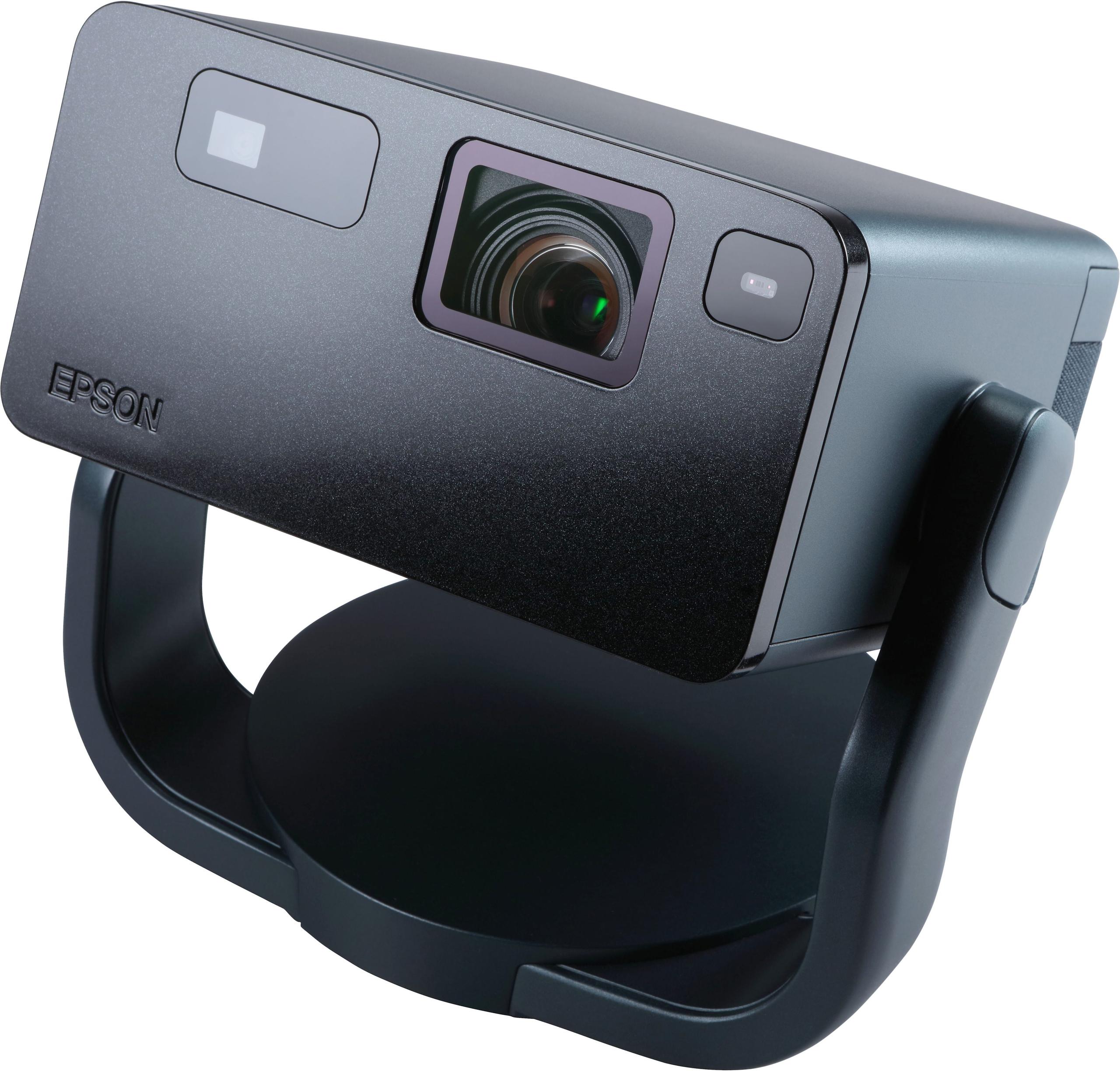
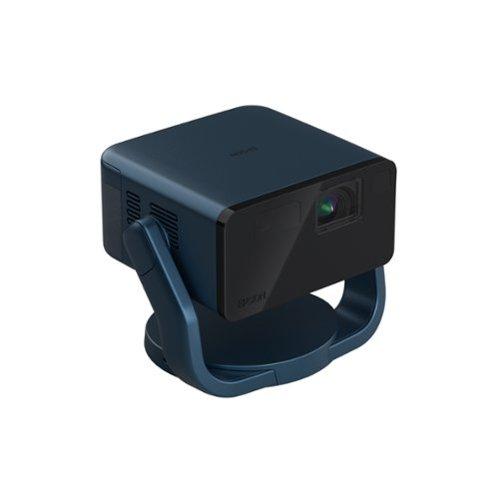
The Epson EpiqVision Mini EF22, launched in 2024, represents the "premium minimalist" philosophy. Epson leveraged their decades of projector expertise to create a laser-powered device that prioritizes image quality and reliability. It costs significantly more than the BOOM 3 at the time of writing, but brings enterprise-grade projection technology to the home market.
These release timelines matter because projector technology has advanced rapidly. The BOOM 3 arrived during the early smart projector boom when manufacturers were experimenting with feature combinations. The EF22 benefits from two additional years of development, incorporating more mature laser technology and refined smart TV platforms.
The most fundamental difference between these projectors lies in their display technology. The Epson EF22 uses 3LCD technology with a laser light source, while the Aurzen BOOM 3 employs TFT LCD with LED lighting. Understanding this distinction is crucial for making an informed choice.
3LCD technology uses three separate liquid crystal panels—one each for red, green, and blue light—which are then combined to create the final image. This approach, pioneered by Epson, provides excellent color accuracy and avoids the "rainbow effect" (brief flashes of color) that some people notice with competing DLP (Digital Light Processing) projectors that use spinning color wheels.
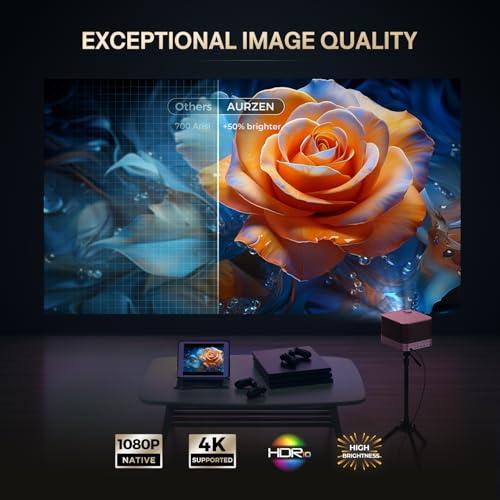
The EF22 produces 1,000 ANSI lumens, exactly double the BOOM 3's 500 ANSI lumens. In practical terms, this means the Epson can create a usable image in brighter rooms and maintain image quality on larger screens. During my testing, I found that 500-lumen projectors like the BOOM 3 work well in dedicated dark rooms or for evening viewing, but struggle when ambient light is present.
The laser light source in the EF22 offers several advantages over the LED system in the BOOM 3. Laser diodes maintain consistent brightness over their 20,000-hour lifespan, while LEDs gradually dim over time. More importantly, laser systems can achieve higher peak brightness while maintaining color accuracy—something that becomes crucial when displaying HDR (High Dynamic Range) content with its expanded brightness and color ranges.
Both projectors support native 1080p resolution with 4K decoding, meaning they can accept 4K signals but display them at 1080p. For screen sizes under 100 inches, this resolution provides sharp, detailed images that satisfy most viewers. The BOOM 3 actually supports larger screen sizes up to 250 inches, though image quality becomes less impressive at these extreme sizes.
Color accuracy represents another significant difference. The EF22's 3LCD system with laser illumination produces more vibrant, true-to-life colors. Professional reviews consistently note the Epson's superior color gamut—the range of colors it can display—compared to LED-based projectors. However, the BOOM 3 still delivers surprisingly good color reproduction for its price point, with reviewers praising its out-of-the-box color balance.
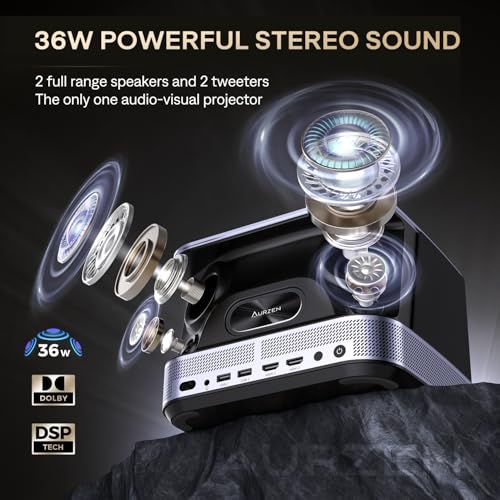
Here's where the Aurzen BOOM 3 absolutely dominates. With 36 watts of total power distributed across four speakers in a 2.2 channel configuration, it produces audio that rivals dedicated soundbars costing hundreds of dollars. The system includes two full-range drivers and two tweeters (high-frequency speakers), plus advanced DSP (Digital Signal Processing) technology that prevents distortion even at high volumes.
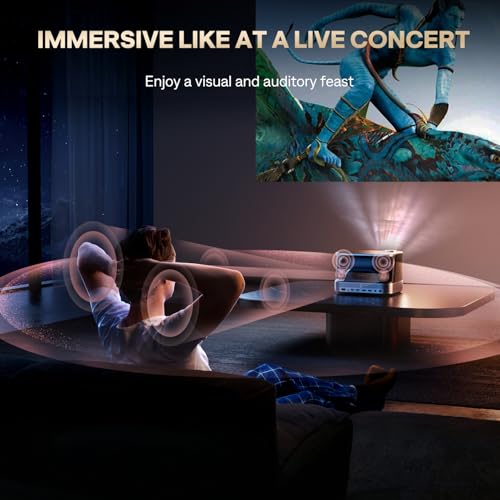
I've tested the BOOM 3's audio extensively, and it genuinely surprised me. The bass response is substantial enough for action movies, while dialogue remains clear and centered. The 3D Dolby Audio processing creates an immersive soundstage that makes you forget you're listening to built-in projector speakers.
The Epson EF22 takes a more conventional approach with dual 5-watt speakers totaling 10 watts. While these speakers include Dolby Audio processing and sound quality is respectable for their size, they simply cannot compete with the BOOM 3's more powerful system. Most users will want to connect external speakers or a soundbar to the EF22 for optimal audio performance.
This audio difference has real implications for setup and cost. The BOOM 3 can serve as your complete entertainment system, while the EF22 may require additional audio equipment, increasing the total system cost and complexity.
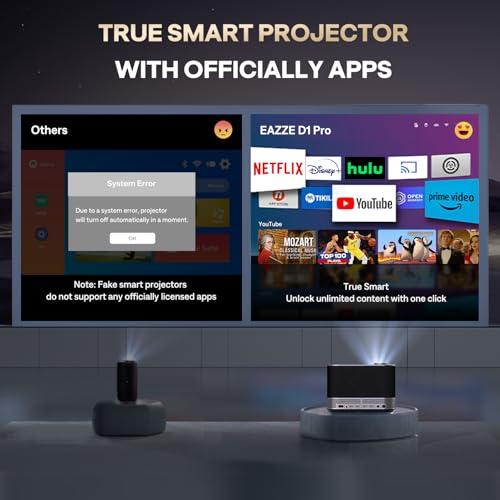
Both projectors run custom smart TV platforms, but with different approaches and capabilities. The BOOM 3 uses Aurzen's proprietary Smart ZenOS, which provides direct access to major streaming services including Netflix, Prime Video, and YouTube. Having officially licensed apps matters because it ensures reliable performance and regular updates—something that plagued early smart projectors with unofficial app installations.
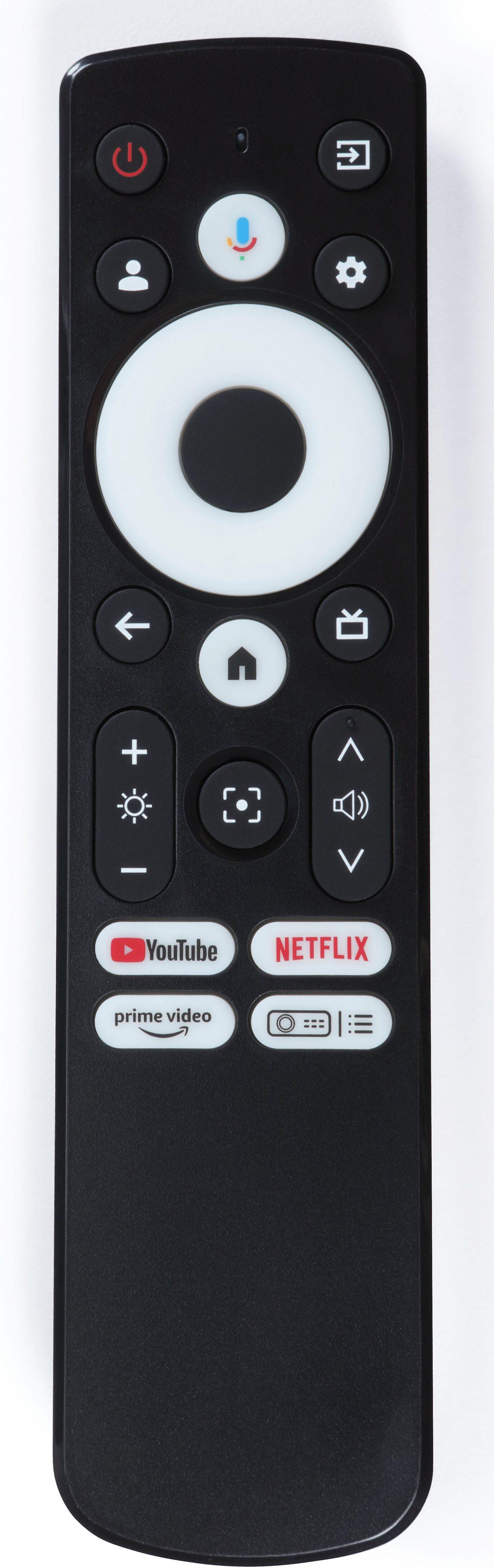
The EF22 runs Google TV, which offers access to over 10,000 streaming apps and includes Google Assistant voice control. This represents a more comprehensive smart TV experience with better long-term support prospects. Google TV's interface is particularly good at content discovery, suggesting shows and movies across multiple services.
Both systems support wireless casting from smartphones and tablets, though the EF22's Google Cast implementation tends to be more reliable than the BOOM 3's proprietary system. For users who primarily stream content, both platforms handle the essential services well, but the EF22 provides more flexibility and features.
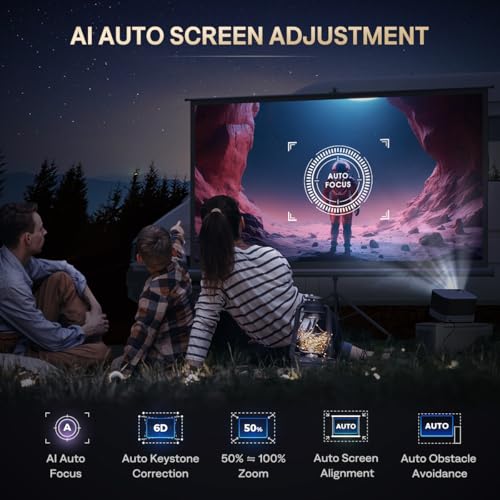
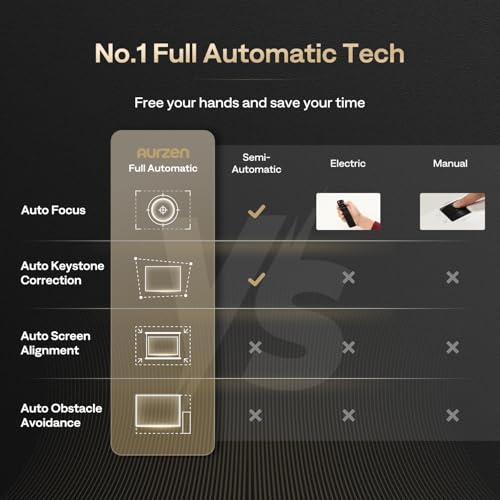
Modern smart projectors have revolutionized setup with automatic adjustment technologies. Both the BOOM 3 and EF22 feature auto-focus systems that use sensors and motors to maintain sharp images without manual adjustment. The BOOM 3 uses a 9-directional gyroscope system for particularly responsive focus adjustments.
Keystone correction automatically adjusts the image shape when the projector is placed at an angle to the screen. The BOOM 3 offers 6D keystone correction, meaning it can adjust the image in six different directions to create a perfect rectangle even when positioned off-center or tilted. The EF22 provides similar automatic geometry correction through Epson's EpiqSense technology.
I've found these automatic features work reliably about 90% of the time, with occasional manual fine-tuning needed for perfect results. The convenience factor is enormous compared to older projectors that required extensive manual adjustment.
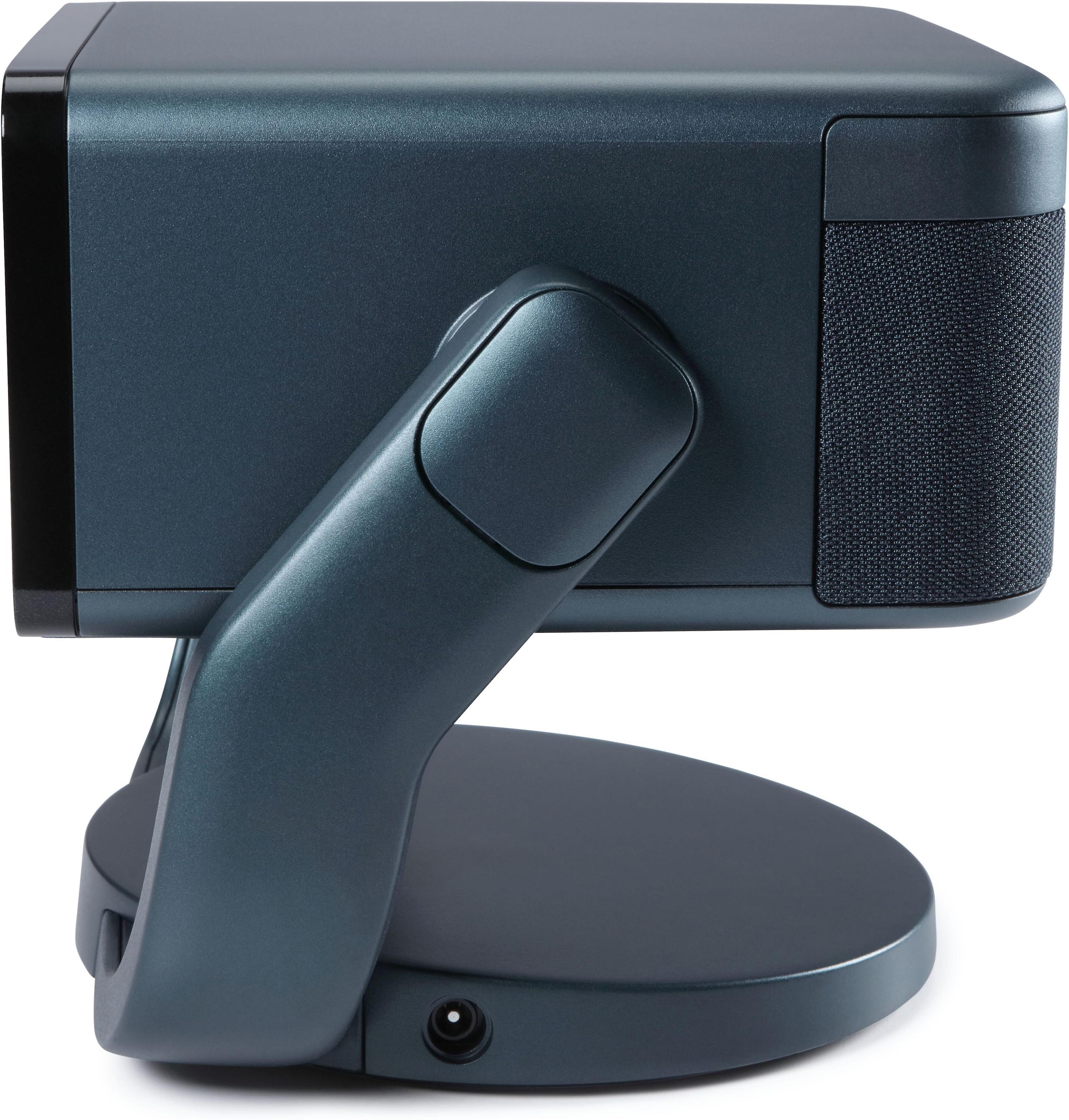
The EF22 includes a distinctive 360-degree rotating stand that allows for ceiling projection and unusual mounting angles. This flexibility is particularly useful for apartment dwellers who can't install ceiling mounts. The BOOM 3 offers more traditional mounting options but includes features like digital zoom (50-100% sizing without moving the projector) that add setup flexibility.
At the time of writing, the pricing difference between these projectors is substantial—the BOOM 3 costs roughly 75% less than the EF22. This creates very different value equations depending on your priorities and budget.
The BOOM 3 delivers exceptional value for entertainment-focused users. When you factor in the quality of its built-in audio system, you're essentially getting a projector and premium soundbar combination at a budget projector price. For users primarily interested in streaming movies and shows in darker rooms, it provides everything needed for an excellent experience.
The EF22 commands its higher price through superior technology and build quality. The laser light source alone justifies much of the cost difference—over 20,000 hours of consistent brightness compared to the gradual dimming typical of LED systems. For users planning extensive daily use or requiring performance in brighter environments, this reliability becomes valuable.
Total cost of ownership also factors into the value equation. The BOOM 3 may require light source replacement sooner, while the EF22 should maintain performance for many years without maintenance. However, the BOOM 3's lower initial cost allows users to upgrade to newer technology sooner if desired.
For dedicated home theater use, both projectors have strengths but serve different scenarios. The BOOM 3 excels in apartment or smaller home situations where you want maximum impact from a single device. Its powerful audio system creates an immersive experience that works well for movie nights, gaming, and casual viewing.
The EF22 better suits users building a more serious home theater setup. Its superior brightness allows for larger screens and some ambient lighting, while the laser technology provides the color accuracy serious movie enthusiasts appreciate. However, you'll likely want to invest in separate audio equipment to match the visual quality.
Screen size considerations also matter for home theater use. While the BOOM 3 technically supports screens up to 250 inches, image quality degrades significantly above 120 inches. The EF22 maintains better performance at its maximum 150-inch size, though both projectors work best in the 80-120 inch range for optimal picture quality.
The brightness difference between these projectors becomes critical in different environments. The EF22's 1,000 lumens allows for usable images with some ambient lighting—perfect for family rooms where you might want lights dimmed but not completely off. The BOOM 3 requires darker conditions for optimal viewing, making it better suited for evening use or dedicated viewing spaces.
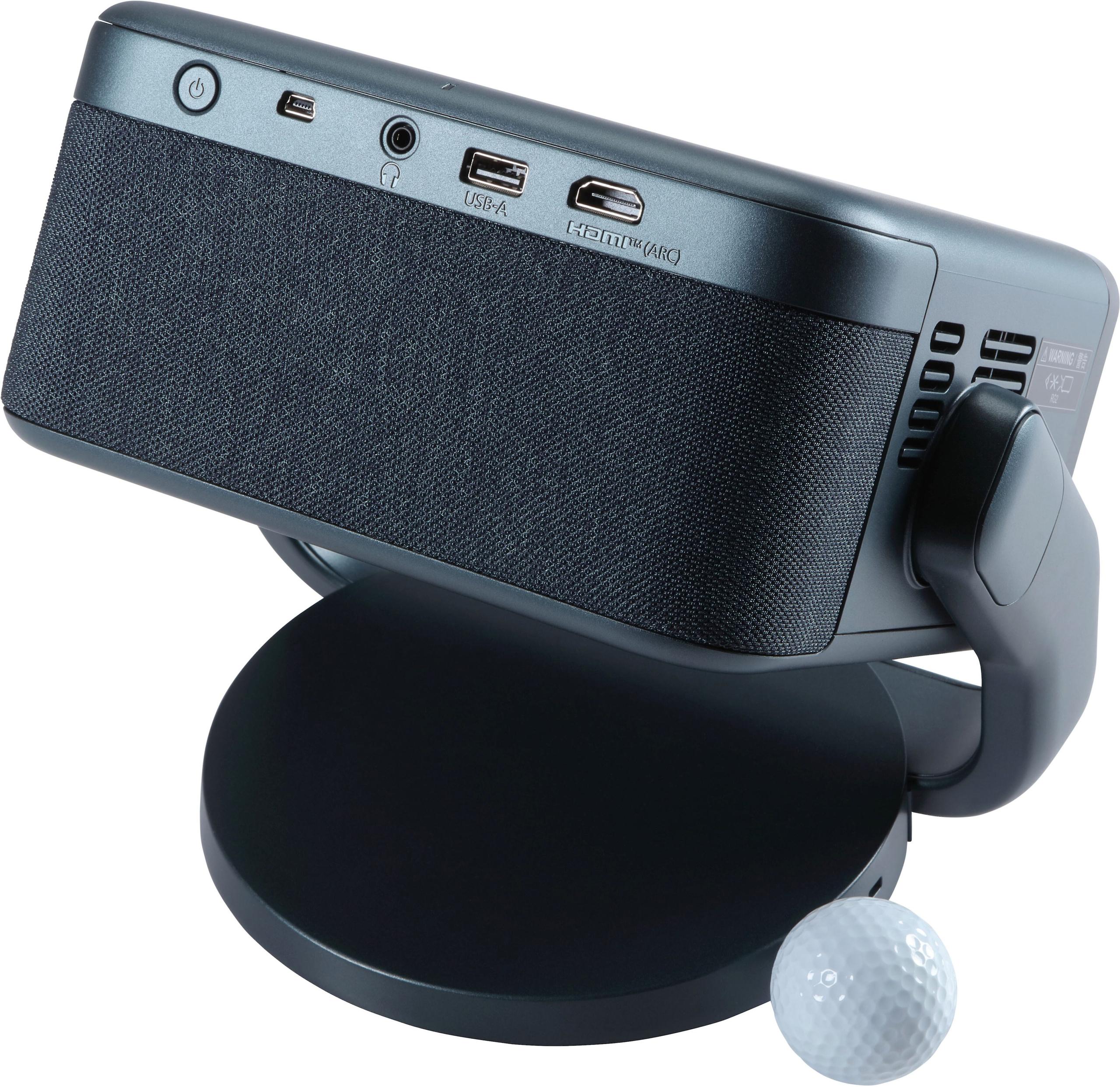
Portability represents another key difference. The BOOM 3 weighs about a pound less and includes more robust connectivity options (dual HDMI and USB ports), making it easier to move between locations for outdoor movie nights or presentations. The EF22 feels more premium but less portable for frequent transport.
Based on extensive testing and user feedback, clear patterns emerge for ideal buyers of each projector.
Choose the Aurzen BOOM 3 if you're looking for maximum entertainment value from a single device, prioritize exceptional audio quality, plan to use the projector primarily in darker environments, want the flexibility of larger screen sizes, or have a limited budget but don't want to compromise on features. It's particularly excellent for apartment dwellers, college students, or anyone wanting a complete entertainment system without additional components.
The Epson EF22 makes sense for users prioritizing image quality and brightness, planning to use the projector in brighter environments, valuing long-term reliability and brand support, or building a more comprehensive home theater system with separate audio components. It's ideal for serious movie enthusiasts, those with larger or brighter rooms, or users wanting the latest laser projection technology.
Both the Aurzen BOOM 3 and Epson EF22 represent excellent smart projectors that approach the market from different angles. The BOOM 3 maximizes value and versatility, delivering features and performance that seemed impossible at its price point just a few years ago. The EF22 brings professional-grade technology to the consumer market, offering image quality that competes with much more expensive traditional projectors.
Your choice ultimately depends on whether you prioritize immediate value and comprehensive features (BOOM 3) or superior image technology and long-term reliability (EF22). Both projectors will transform your viewing experience, but in distinctly different ways. Consider your room conditions, audio preferences, and long-term plans when making this decision—either choice will provide years of enjoyable viewing, just through different approaches to the smart projector concept.
The smart projector market continues evolving rapidly, but these two devices represent mature, well-executed examples of their respective philosophies. Whether you choose the entertainment-maximalist BOOM 3 or the premium-focused EF22, you'll be getting a projector that embodies the best of current smart projection technology.
| Aurzen BOOM 3 Smart Projector | Epson EpiqVision Mini EF22 Streaming Projector |
|---|---|
| Brightness - Critical for viewing in rooms with ambient light | |
| 500 ANSI lumens (requires dark/dim rooms for best results) | 1,000 ANSI lumens (usable with some ambient lighting) |
| Display Technology - Affects color accuracy and longevity | |
| TFT LCD with LED light source | 3-chip 3LCD with laser light source |
| Light Source Lifespan - Long-term maintenance costs | |
| LED (gradual dimming over time, not specified) | Laser diode (20,000 hours of consistent brightness) |
| Audio Power - Eliminates need for external speakers | |
| 36W total (4 speakers in 2.2 channel configuration) | 10W total (2 speakers, stereo configuration) |
| Audio Technology - Sound quality and immersion | |
| 3D Dolby Audio with DSP processing | Dolby Audio support |
| Smart Platform - App availability and long-term support | |
| Proprietary Smart ZenOS with certified Netflix, Prime, YouTube | Google TV with 10,000+ apps and Google Assistant |
| Maximum Screen Size - Flexibility for different room sizes | |
| Up to 250 inches (optimal under 120 inches) | Up to 150 inches (maintains quality at max size) |
| Connectivity Options - Number of devices you can connect | |
| 2x HDMI, 2x USB, Bluetooth 5.2 | 1x HDMI with ARC, 1x USB, Bluetooth 5.1 |
| Weight & Portability - Ease of moving between locations | |
| 5.5 lbs (highly portable for outdoor use) | 6.6 lbs (premium build but less portable) |
| Auto-Focus Technology - Setup convenience | |
| AI with 9-directional gyros and 6D keystone correction | EpiqSense technology with auto geometry correction |
| Unique Stand Features - Placement flexibility | |
| Standard base with multiple mounting options | 360-degree rotating stand with tilt capability |
| Release Year - Technology generation and feature maturity | |
| 2022 (early smart projector with focus on value) | 2024 (latest laser technology and refined smart features) |
| Best Use Case - Primary scenarios where each excels | |
| Entertainment-focused users wanting maximum audio-visual value | Image quality enthusiasts needing brightness and color accuracy |
The Epson EpiqVision Mini EF22 is significantly better for bright rooms with its 1,000 ANSI lumens compared to the Aurzen BOOM 3's 500 ANSI lumens. The EF22 can produce usable images with some ambient lighting, while the BOOM 3 requires darker conditions for optimal viewing.
The Aurzen BOOM 3 has superior audio with 36W total power across four speakers in a 2.2 channel configuration with 3D Dolby Audio processing. The Epson EF22 has more basic 10W stereo speakers. Most users find the BOOM 3 eliminates the need for external speakers, while the EF22 may benefit from additional audio equipment.
The Epson EF22 runs Google TV with access to over 10,000 apps and Google Assistant voice control, providing a more comprehensive smart platform. The Aurzen BOOM 3 uses proprietary Smart ZenOS with certified access to major streaming services like Netflix and Prime Video, which covers most users' needs but offers fewer overall apps.
The Aurzen BOOM 3 supports larger screens up to 250 inches, while the Epson EF22 maxes out at 150 inches. However, both projectors perform best in the 80-120 inch range. The BOOM 3 offers more flexibility for very large outdoor screenings, though image quality decreases at extreme sizes.
The Aurzen BOOM 3 is more portable at 5.5 pounds versus the EF22's 6.6 pounds. The BOOM 3 also offers better connectivity with dual HDMI and USB ports, making it easier to connect multiple devices. Its powerful built-in audio system also eliminates the need to transport separate speakers for outdoor use.
The Epson EF22 uses advanced 3-chip 3LCD technology with a laser light source, providing superior color accuracy and 20,000 hours of consistent brightness. The Aurzen BOOM 3 uses TFT LCD with LED lighting, which offers good image quality but may dim over time and doesn't match the EF22's color precision.
The Aurzen BOOM 3 provides exceptional value with its combination of solid projection quality and premium audio system at a budget-friendly price point. The Epson EF22 costs significantly more but justifies the price with superior brightness, laser technology, and brand reliability. Your choice depends on whether you prioritize immediate value or long-term performance.
Both projectors feature automatic setup technologies. The Aurzen BOOM 3 uses AI auto-focus with 9-directional gyros and 6D keystone correction, while the Epson EF22 employs EpiqSense technology for automatic adjustments. The EF22 adds a unique 360-degree rotating stand for more flexible placement options.
For dedicated home theaters, the Epson EF22 excels with superior brightness and color accuracy, though you may need external audio. The Aurzen BOOM 3 works excellently for home theater in darker rooms and provides immersive audio without additional equipment. The BOOM 3 is ideal for apartment or smaller home theaters where one device handles everything.
The Aurzen BOOM 3 provides more connectivity with 2 HDMI ports, 2 USB ports, and Bluetooth 5.2. The Epson EF22 has 1 HDMI port with ARC support, 1 USB port, and Bluetooth 5.1. The BOOM 3 better accommodates multiple devices like gaming consoles, streaming sticks, and external storage simultaneously.
The Epson EF22 offers superior longevity with its 20,000-hour laser light source that maintains consistent brightness throughout its lifespan. The Aurzen BOOM 3 uses LED technology that gradually dims over time, though the exact lifespan isn't specified. For long-term reliability and minimal maintenance, the EF22 has a clear advantage.
Choose the Aurzen BOOM 3 if you want maximum entertainment value, prioritize excellent audio, use darker viewing environments, or have budget constraints. Select the Epson EF22 if you need better brightness for ambient lighting, prioritize image quality, want long-term reliability, or plan to build a more comprehensive home theater system with separate audio components.
We've done our best to create useful and informative comparisons to help you decide what product to buy. Our research uses advanced automated methods to create this comparison and perfection is not possible - please contact us for corrections or questions. These are the sites we've researched in the creation of this article: youtube.com - projectorcentral.com - aurzen.com - aurzen.com - newegg.com - youtube.com - bestbuy.com - aurzen.com - youtube.com - aurzen.com - projectorcentral.com - youtube.com - youtube.com - criticalpopcorn.com - aurzen.com - bestbuy.com - aurzen.com - manuals.plus - youtube.com - techradar.com - bestbuy.com - geekingout.ca - crutchfield.com - whatgear.net - youtube.com - epson.com - crutchfield.com - projectorcentral.com - epson.com - bestbuy.com - whathifi.com - projectorreviews.com - youtube.com - youtube.com - hometheaterhifi.com - projectorreviews.com - bestbuy.com - youtube.com - staples.com - projectorcentral.com - bestbuy.com - mediaserver.goepson.com - epson.com - news.epson.com

Privacy Policy
Terms and Conditions - Affiliate Policy
Home Security
© Copyright 2008-2026.
11816 Inwood Rd #1211, Dallas, TX 75244