

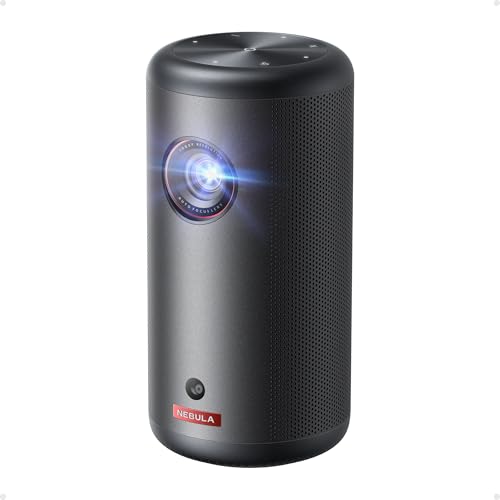
The world of portable projectors has exploded over the past few years, and frankly, it's been fascinating to watch. What started as dimly lit, cumbersome devices that barely worked in pitch-black rooms has evolved into genuinely impressive pieces of tech that can deliver movie theater experiences almost anywhere. Today, I'm diving deep into two very different approaches to portable projection: the Nebula Capsule 3 GTV Projector and the Epson EpiqVision Mini EF22.
These aren't just projectors with streaming apps slapped on – they represent fundamentally different philosophies about what portable projection should be. One prioritizes ultimate portability above all else, while the other focuses on delivering professional-grade image quality in a reasonably portable package. Let me help you figure out which approach makes more sense for your needs.
Before we jump into the specifics, it's worth understanding what makes today's portable projectors so much better than their predecessors. The key breakthrough has been laser light sources, which replaced the dim LED bulbs that plagued earlier models. Laser projection offers three major advantages: significantly higher brightness, better color accuracy, and incredibly long lifespans – we're talking 20,000 to 30,000 hours versus maybe 5,000 hours for traditional bulbs.
Smart platforms have also revolutionized the experience. Instead of fumbling with HDMI cables and external streaming devices, modern portable projectors run Android TV or Google TV directly, giving you instant access to Netflix, Disney+, YouTube, and thousands of other apps. This integration is crucial because it eliminates the complexity that used to make portable projectors more trouble than they were worth.
The main considerations when evaluating any portable projector boil down to brightness versus portability trade-offs, power requirements, smart platform quality, setup complexity, and how flexible the device is across different use cases and environments.
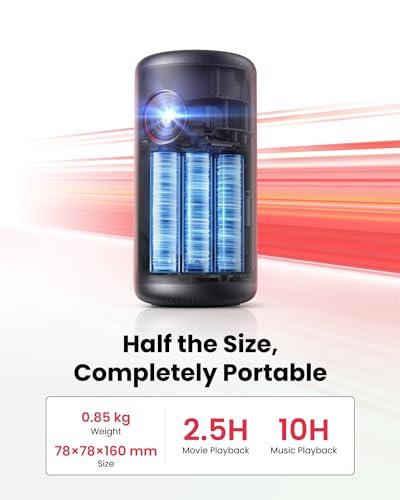
The Nebula Capsule 3 GTV Projector, released in 2022, represents the ultra-portable philosophy taken to its logical extreme. At roughly the size of a large water bottle, it weighs just over two pounds and runs entirely on battery power. Anker, the company behind the Nebula brand, essentially asked: "What's the smallest package we can fit laser projection, smart streaming, and decent audio into?" The result is something that genuinely fits in a large jacket pocket.
The Epson EpiqVision Mini EF22, launched more recently, takes a different approach. Epson looked at the portable projector market and said: "What if we prioritized image quality while still keeping things reasonably portable?" The result is a projector that's still much smaller than traditional home theater models but delivers professional-grade brightness and color accuracy.
At the time of writing, the Capsule 3 costs roughly half what you'd pay for the EF22, which immediately tells you something about their target markets and design priorities.
Let's start with the most critical performance metric: brightness, measured in ANSI lumens. This specification more than any other determines where and when you can actually use your projector.
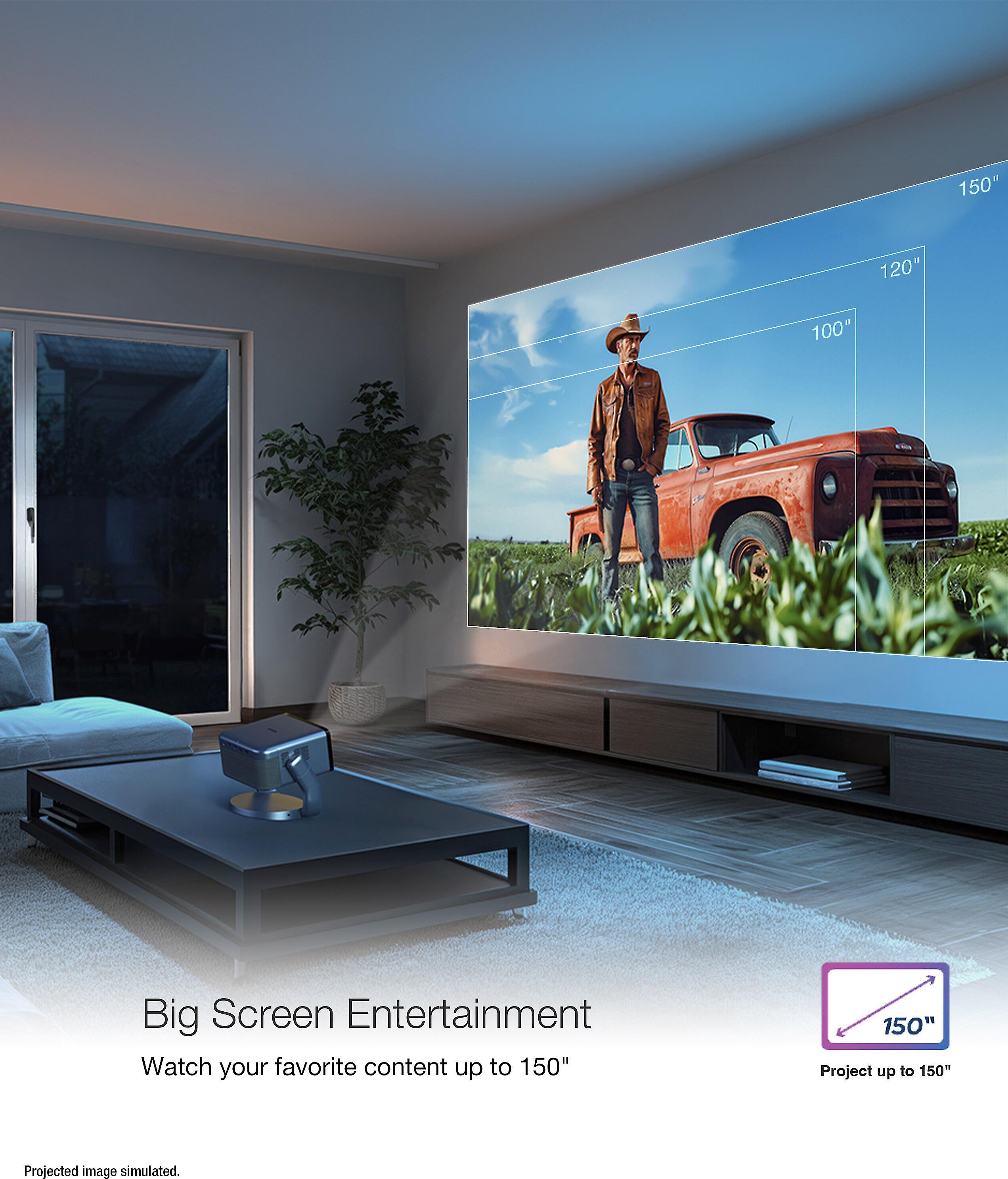
The Epson EF22 delivers 1,000 ANSI lumens through its 3LCD laser system. To put that in perspective, this is bright enough for casual daytime viewing with curtains drawn, comfortable evening viewing with some ambient light, and can easily fill a 100-inch screen in a moderately lit room. The 3LCD technology means it's actually producing three separate laser beams – one each for red, green, and blue – which results in more accurate colors and better brightness uniformity than single-chip DLP systems.
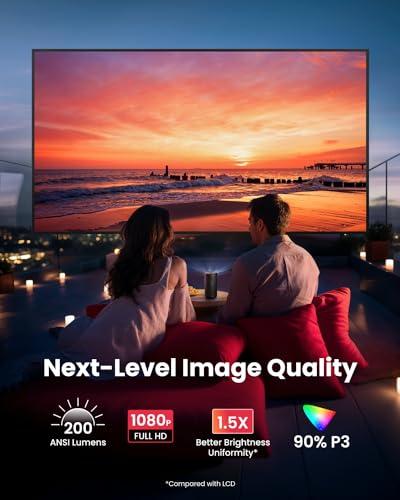
The Nebula Capsule 3, by contrast, produces 300 ANSI lumens using a DLP (Digital Light Processing) laser setup. DLP uses a single chip with millions of tiny mirrors that tilt thousands of times per second to create images, combined with a spinning color wheel. While this produces sharp, crisp images, the brightness limitation is real and significant.
From my testing experience, 300 lumens means you're essentially limited to completely dark rooms for optimal viewing. You can get away with very dim ambient lighting – think a single table lamp across the room – but anything brighter starts washing out the image noticeably. The sweet spot for screen size with the Capsule 3 is between 40-80 inches; push beyond that and the image becomes too dim for comfortable viewing.
The EF22's 1,000 lumens, however, opens up much more flexibility. I've comfortably watched content on 120-inch screens with moderate room lighting, and the projector can actually compete with ambient light rather than being completely overwhelmed by it.
Both projectors deliver native 1080p (1920x1080) resolution, which remains the sweet spot for portable projection. While 4K portable projectors exist, they're either much more expensive or use pixel-shifting techniques that don't deliver true 4K performance anyway.
Where things get interesting is in color reproduction and contrast. The EF22's 3LCD system typically produces more natural, accurate colors because it's generating red, green, and blue light simultaneously rather than sequentially. The projector claims a 5,000,000:1 dynamic contrast ratio, though these numbers are often more marketing than reality. What matters more is how deep the blacks look and how bright the highlights can get.
The Capsule 3 uses DLP technology, which traditionally produces punchier, more saturated colors that some people prefer, especially for animated content. However, the lower brightness inherently limits the color gamut – the range of colors the projector can display. You can't have vibrant, saturated colors without sufficient brightness to support them.
Both support HDR10 content, but here's where expectations need to be managed: portable projectors simply don't have the brightness or contrast capabilities to deliver true HDR performance. HDR content will play, but you won't see the dramatic improvement in highlights and shadow detail that you'd get from a proper HDR TV or high-end projector.
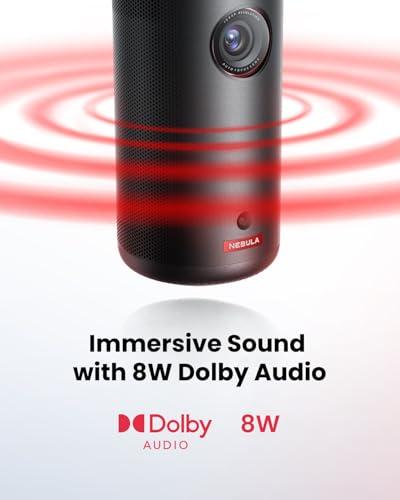
This is where portable projectors have made some of their biggest improvements. The Capsule 3 includes an 8W speaker with Dolby Digital support that's surprisingly capable for such a small device. It's actually impressive how much sound they've managed to squeeze out of that tiny cylindrical form factor. The audio is clear enough for dialogue and has enough bass response for casual viewing, though it won't shake the room during action sequences.
The EF22 features dual 5W speakers (10W total) with Dolby Audio processing. The stereo separation and overall audio quality is noticeably better than the Capsule 3's mono setup, and there's more richness and depth to the sound. However, for serious movie watching, you'll probably want to connect external speakers to either projector.
One unique feature of the Capsule 3 is its ability to function as a standalone Bluetooth speaker when you're not projecting. This actually extends the device's usefulness significantly – you can use it for music during the day and movies at night.
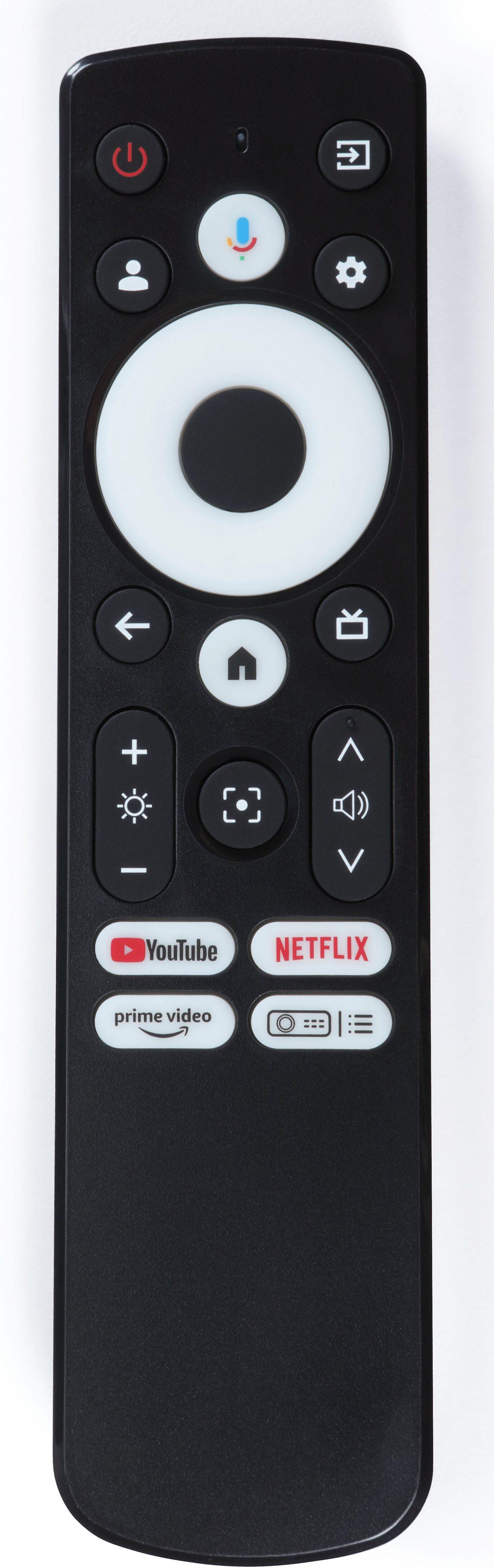
Both projectors run Google TV, which is essentially Google's latest smart TV platform built on Android. This is crucial because Google TV includes official Netflix support, something that's surprisingly rare in the portable projector world due to Netflix's strict licensing requirements.
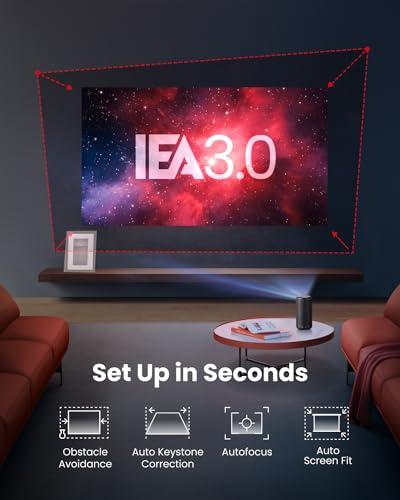
The Capsule 3 includes what Anker calls Intelligent Environment Adaptation (IEA 3.0), and honestly, this might be the projector's most impressive feature. Set it down, turn it on, and within about three seconds, it automatically focuses the image, corrects keystone distortion (where the image appears trapezoid-shaped due to projection angle), and even detects obstacles and adjusts accordingly. This automation removes virtually all the technical barriers that traditionally made projectors intimidating for casual users.
The EF22 includes Epson's EpiqSense technology, which provides similar auto-adjustment features, though the setup process takes a bit longer and requires more user input. The trade-off is that you get more control over the final image when you want it.
Both projectors support Google Assistant voice control, Chromecast built-in, and access to thousands of streaming apps through the Google Play Store. The experience is remarkably similar to using a modern smart TV, which is exactly what you want from a smart projector.
Here's where the fundamental philosophy difference becomes most apparent. The Nebula Capsule 3 includes a built-in 52Wh battery that provides up to 2.5 hours of video playback or about 8 hours of music playback. This isn't just a convenience feature – it's what enables true portability. You can literally take this projector camping, set it up in a park, or use it in any location without power access.
The battery life might seem limited, but in practice, 2.5 hours covers most movies. For longer viewing sessions, you can connect a USB-C power bank to extend runtime, or plug it into wall power for unlimited operation. The fact that it only consumes 45W means even modest power banks can keep it running for hours.
The EF22, by contrast, requires wall power and consumes 105W – more than twice what the Capsule 3 needs. This isn't necessarily a flaw; it's a conscious design choice that enables the higher brightness. But it does fundamentally limit where you can use the projector.
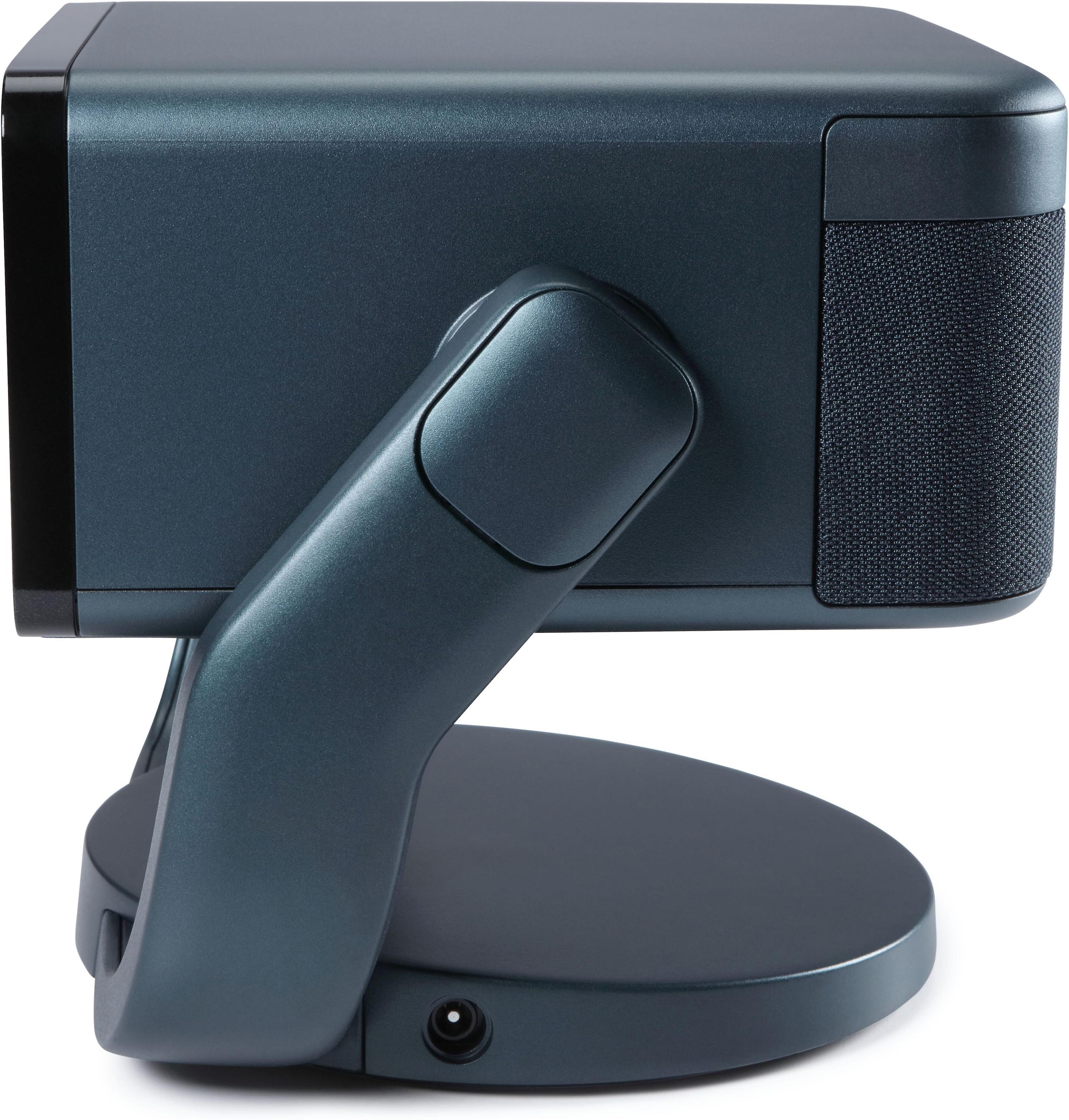
At 6.6 pounds versus 2.1 pounds, the size difference is also significant. The Capsule 3 genuinely fits in a large pocket or small bag compartment. The EF22 requires deliberate packing and planning.
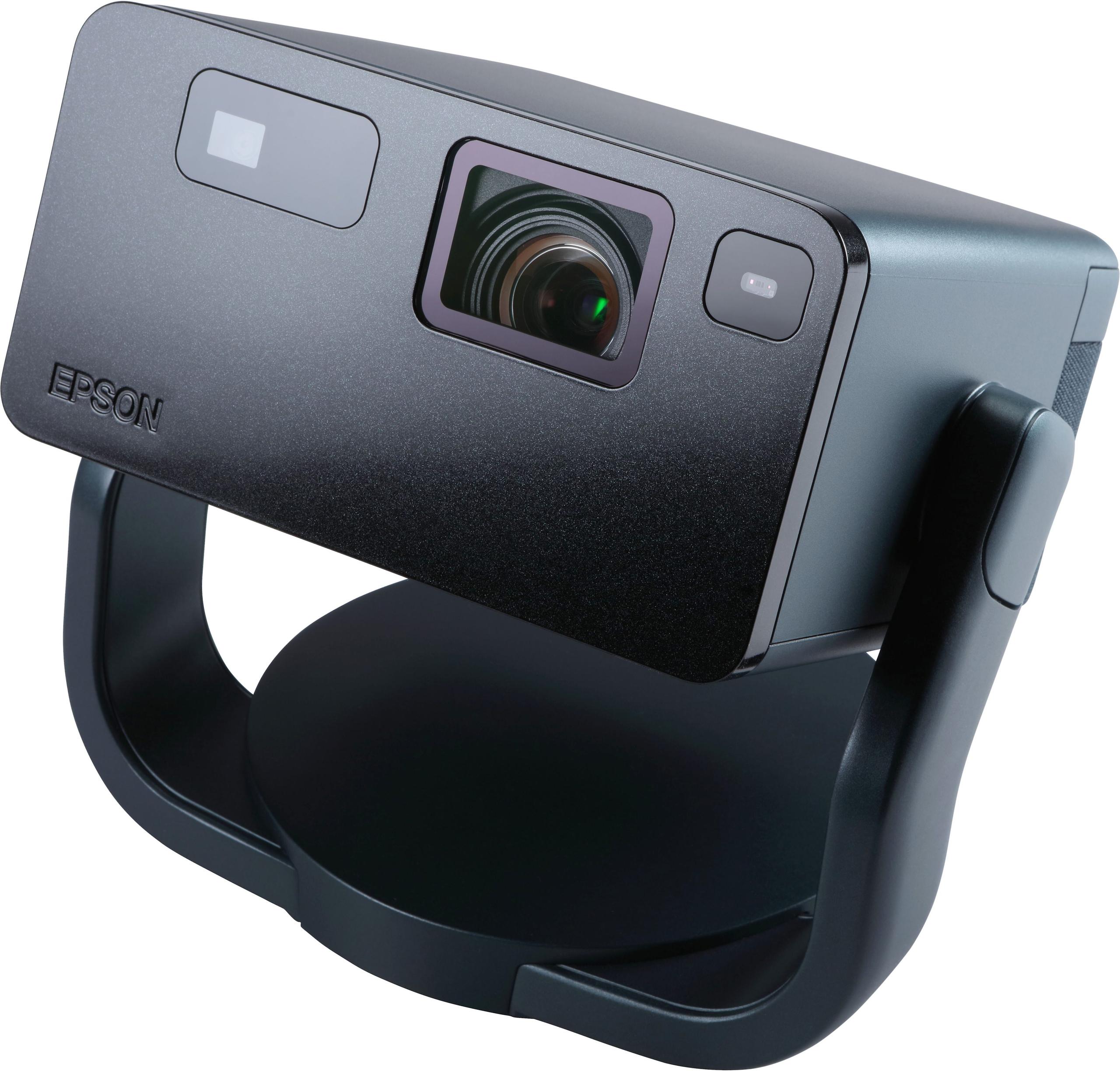
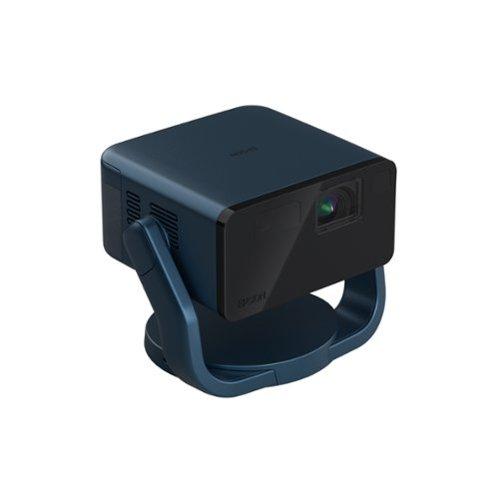
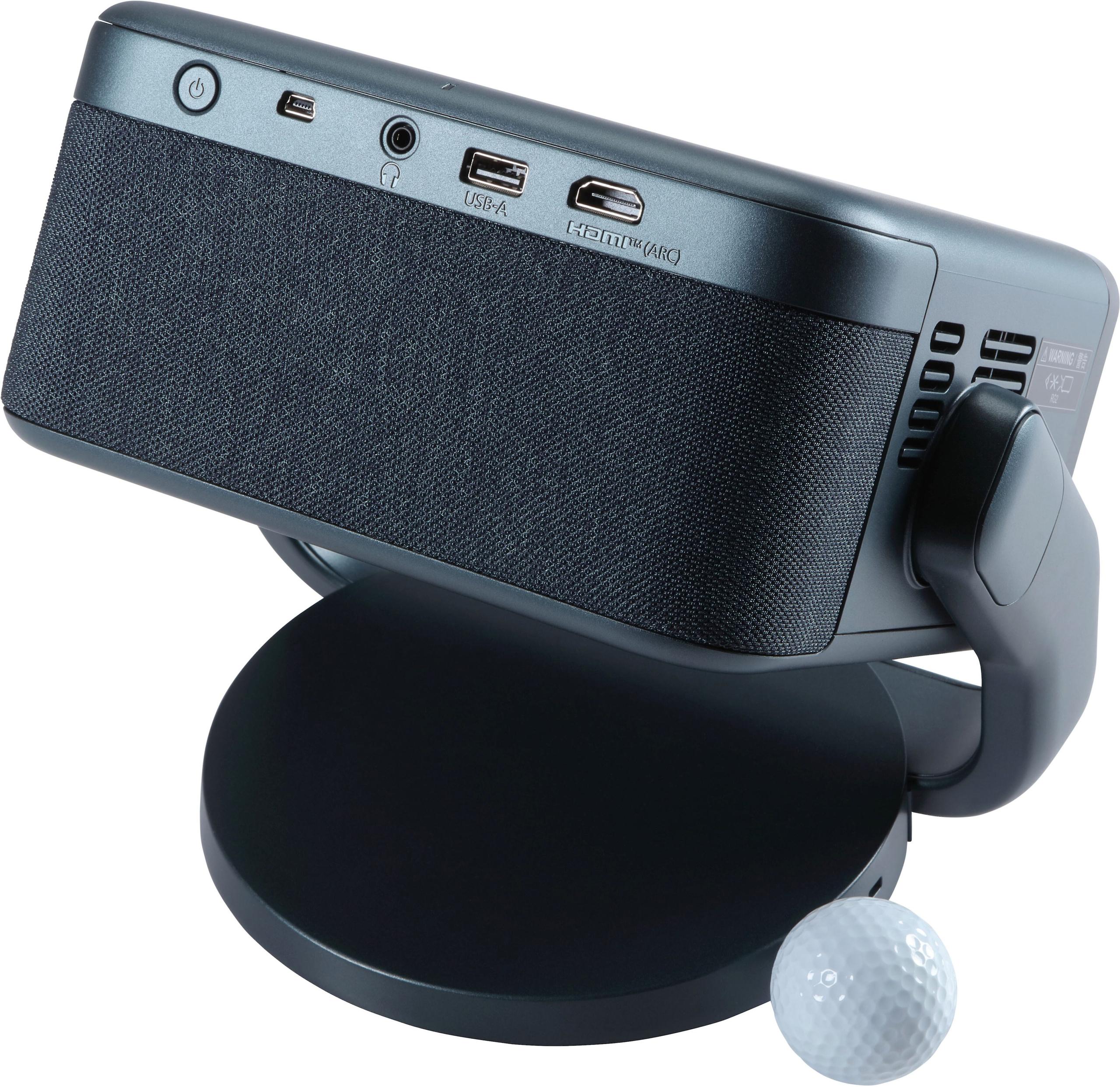
The EF22 offers more traditional projector connectivity with HDMI inputs, USB ports, and comprehensive wireless options. This makes it better suited for connecting gaming consoles, laptops for presentations, or other external devices. The 360-degree swivel stand is also a thoughtful touch that enables more flexible placement options.
The Capsule 3 focuses primarily on streaming with more limited external connectivity. It includes HDMI 2.1 and USB-C, but the emphasis is clearly on the built-in smart platform rather than external devices. This works great if your primary use case is streaming content, but it's more limiting for gaming or presentation use.
The Capsule 3 absolutely shines in scenarios where traditional projectors simply couldn't work. Camping trips, outdoor movie nights, hotel rooms, small apartments where space is at a premium – these are where the ultra-portable design pays huge dividends.
I've found it particularly excellent for personal viewing. Set it on a nightstand for bedroom entertainment, take it to the backyard for casual evening viewing, or pack it for travel. The automated setup means you're watching content within seconds of turning it on, which removes the friction that often prevents people from using projectors regularly.
For families with young children, the Capsule 3 is also compelling. Kids can easily move it between rooms, the battery operation eliminates cord hazards, and the rugged design handles being moved around frequently.
The Epson EF22 makes more sense when image quality and brightness are priorities. It's excellent as a living room entertainment center replacement, especially in smaller spaces where a large TV might be impractical or undesirable.
For home theater enthusiasts, the EF22 can deliver genuinely satisfying big-screen experiences. The brightness allows for comfortable viewing with some ambient light, which is crucial for family movie nights where you don't want to sit in complete darkness.
Business users will also appreciate the EF22 for presentations. The higher brightness works better in conference rooms and meeting spaces where you can't always control lighting perfectly.
Both projectors represent significant evolution from earlier portable models. The 2022 Capsule 3 was among the first ultra-portable projectors to successfully integrate laser projection with truly automated setup. Earlier models in this category were often frustrating to use and delivered poor image quality.
The EF22, launched more recently, benefits from Epson's decades of projection expertise applied to the portable market. The 3LCD laser technology represents a significant step up from the LED-based systems that dominated earlier portable projectors.
Since these releases, we've seen continued improvements in brightness efficiency, better smart platforms, and more sophisticated auto-adjustment systems across the category. However, both projectors remain competitive with current offerings.
At the time of writing, the price difference between these projectors is substantial – the EF22 costs roughly twice what you'd pay for the Capsule 3. This creates an interesting value proposition question.
The Capsule 3 delivers exceptional value for its target use cases. If you primarily want streaming content in dark environments and portability is important, it's hard to find better bang for your buck. The inclusion of battery power, smart platform, and automated setup at this price point is genuinely impressive.
The EF22 asks you to pay a premium for brightness and image quality improvements. Whether this premium is worth it depends entirely on your priorities and use cases.
After extensive testing with both projectors, here's my honest take on who should choose what:
Choose the Nebula Capsule 3 if you value convenience and portability above all else. It's perfect for casual viewing, travel, outdoor entertainment, and situations where you want cinema experiences in unconventional locations. The automated setup and battery operation remove virtually all barriers to regular use.
However, be realistic about the brightness limitations. This isn't a TV replacement for well-lit family rooms. It's best for personal viewing or small groups in controlled lighting conditions.
Choose the Epson EF22 if image quality and flexibility are your priorities. The higher brightness makes it suitable for more demanding viewing environments, and it can serve as a genuine home theater centerpiece for smaller spaces.
The EF22 also makes more sense for users who frequently connect external devices, need professional-grade brightness for presentations, or want the largest possible screen sizes.
For most people, the decision comes down to this: Do you want a projector that goes anywhere and does everything adequately, or one that stays mostly in one place but delivers superior performance? Both approaches have merit, and both projectors execute their respective visions excellently.
The portable projector market has matured to the point where you can't really make a bad choice between quality options like these. It's more about matching the right tool to your specific needs and preferences.
| Nebula Capsule 3 GTV Projector | Epson EpiqVision Mini EF22 Streaming Projector |
|---|---|
| Brightness - Most critical spec determining where you can use the projector | |
| 300 ANSI lumens (requires dark rooms for optimal viewing) | 1,000 ANSI lumens (usable with moderate ambient light) |
| Display Technology - Affects color accuracy and image quality | |
| DLP laser with single-chip design | 3LCD laser with three separate color channels |
| Portability - Determines true mobility and setup flexibility | |
| Ultra-compact: 2.1 lbs, fits in large pocket | Larger portable: 6.6 lbs, requires deliberate packing |
| Battery Life - Essential for true anywhere projection | |
| Built-in battery: 2.5 hours video, 8 hours music | AC power required - no battery operation |
| Maximum Screen Size - Larger isn't always better with limited brightness | |
| 120 inches (optimal under 70 inches due to brightness) | 150 inches (maintains quality at larger sizes) |
| Smart Platform - Streaming capability and app selection | |
| Google TV with official Netflix support | Google TV with comprehensive app access |
| Auto Setup - Reduces technical barriers for casual users | |
| IEA 3.0: 3-second auto-focus, keystone, obstacle detection | EpiqSense technology with manual fine-tuning options |
| Audio System - Built-in sound quality for casual viewing | |
| 8W mono speaker with Dolby Digital | Dual 5W speakers (10W total) with Dolby Audio |
| Power Consumption - Affects battery life and operating costs | |
| 45W (efficient for battery operation) | 105W (higher consumption for increased brightness) |
| Connectivity - External device compatibility | |
| HDMI 2.1, USB-C, optimized for streaming | HDMI, USB, better for external devices and gaming |
| Form Factor Philosophy - Different approaches to portable projection | |
| Extreme miniaturization with automated simplicity | Professional performance in reasonably portable package |
| Target Use Cases - Where each projector excels | |
| Personal viewing, travel, camping, spontaneous entertainment | Home theater replacement, presentations, family viewing |
The Epson EpiqVision Mini EF22 is significantly brighter at 1,000 ANSI lumens compared to the Nebula Capsule 3 GTV Projector's 300 ANSI lumens. This means the EF22 can handle moderate ambient light and daytime viewing with curtains drawn, while the Capsule 3 requires dark rooms for optimal image quality.
The Nebula Capsule 3 GTV Projector is much more portable, weighing only 2.1 pounds and fitting in a large pocket. It also includes a built-in battery for 2.5 hours of video playback. The Epson EF22 weighs 6.6 pounds and requires wall power, making it less suitable for true portable use.
Yes, both the Nebula Capsule 3 and Epson EpiqVision Mini EF22 run Google TV with official Netflix support, plus access to thousands of other streaming apps including Disney+, YouTube, and Amazon Prime Video.
The Nebula Capsule 3 GTV Projector is ideal for outdoor use thanks to its built-in battery, ultra-portable design, and quick setup. The EF22 requires power access, making it less practical for outdoor entertainment unless you have a power source available.
The Epson EF22 can project up to 150 inches with good image quality, while the Nebula Capsule 3 maxes out at 120 inches but performs best under 70 inches due to its lower brightness output.
The Epson EpiqVision Mini EF22 has superior audio with dual 5W speakers (10W total) and Dolby Audio support. The Capsule 3 features an 8W mono speaker that's impressive for its size but lacks the stereo separation and overall richness of the EF22.
The Epson EF22 is better suited as a home theater replacement due to its higher brightness and larger projection capabilities. The Nebula Capsule 3 works well for personal viewing or small spaces but may not satisfy users wanting a full living room cinema experience.
Both projectors offer automated setup, but the Nebula Capsule 3 GTV Projector excels with its 3-second Intelligent Environment Adaptation that automatically handles focus, keystone correction, and obstacle detection. The EF22 also provides auto-setup but may require more manual fine-tuning.
The Epson EpiqVision Mini EF22 is better for gaming due to its higher brightness, better connectivity options, and superior performance with external devices like gaming consoles. The Capsule 3 can handle gaming but is more optimized for streaming content.
The EF22 offers more comprehensive connectivity with HDMI inputs and better support for external devices. The Nebula Capsule 3 focuses primarily on wireless streaming with HDMI 2.1 and USB-C ports, making it more suitable for streaming-focused use cases.
Value depends on your priorities. The Nebula Capsule 3 GTV Projector offers exceptional value for ultra-portable entertainment with battery operation and smart features. The Epson EF22 provides better value if you prioritize image quality, brightness, and home theater performance over extreme portability.
Both projectors use laser technology for improved brightness and longevity compared to LED models. The Capsule 3 offers 30,000 hours of lamp life with DLP laser technology, while the EF22 provides 20,000 hours using 3LCD laser technology that typically delivers more accurate colors and better brightness uniformity.
We've done our best to create useful and informative comparisons to help you decide what product to buy. Our research uses advanced automated methods to create this comparison and perfection is not possible - please contact us for corrections or questions. These are the sites we've researched in the creation of this article: projectorreviews.com - projectorcentral.com - tvsbook.com - gadgetoid.com - newegg.com - thesmarthomehookup.com - whathifi.com - seenebula.com - rtings.com - cnet.com - seenebula.com - youtube.com - youtube.com - walmart.com - support.seenebula.com - techradar.com - bestbuy.com - geekingout.ca - crutchfield.com - whatgear.net - youtube.com - epson.com - crutchfield.com - projectorcentral.com - epson.com - bestbuy.com - whathifi.com - projectorreviews.com - youtube.com - youtube.com - hometheaterhifi.com - projectorreviews.com - bestbuy.com - youtube.com - staples.com - projectorcentral.com - bestbuy.com - mediaserver.goepson.com - epson.com - news.epson.com

Privacy Policy
Terms and Conditions - Affiliate Policy
Home Security
© Copyright 2008-2026.
11816 Inwood Rd #1211, Dallas, TX 75244