

The home entertainment landscape has evolved dramatically over the past few years. What was once a luxury item—the home projector—has become increasingly accessible, diversified, and specialized. Today's projectors aren't just scaled-down versions of commercial cinema equipment; they're purpose-built devices designed for specific use cases.
When we look at devices like the Epson EpiqVision Mini EF22 and the BenQ TH575, we're comparing two fundamentally different approaches to home projection technology that were both released in 2022, representing the current state of their respective categories.
In today's market, projectors generally fall into one of several categories: portable pico projectors, smart lifestyle projectors, gaming projectors, and dedicated home theater units. Each category makes specific trade-offs to excel in its intended use case. The EF22 and TH575 represent two of these distinct approaches—lifestyle streaming and gaming performance, respectively.
Before diving into specifics, it's worth understanding that projector technology has made significant strides in recent years. Improvements in light sources (with laser technology becoming more affordable), smart platforms becoming more integrated, and performance-focused features like low input lag becoming standard in gaming-oriented models have all expanded what's possible in the projector market.
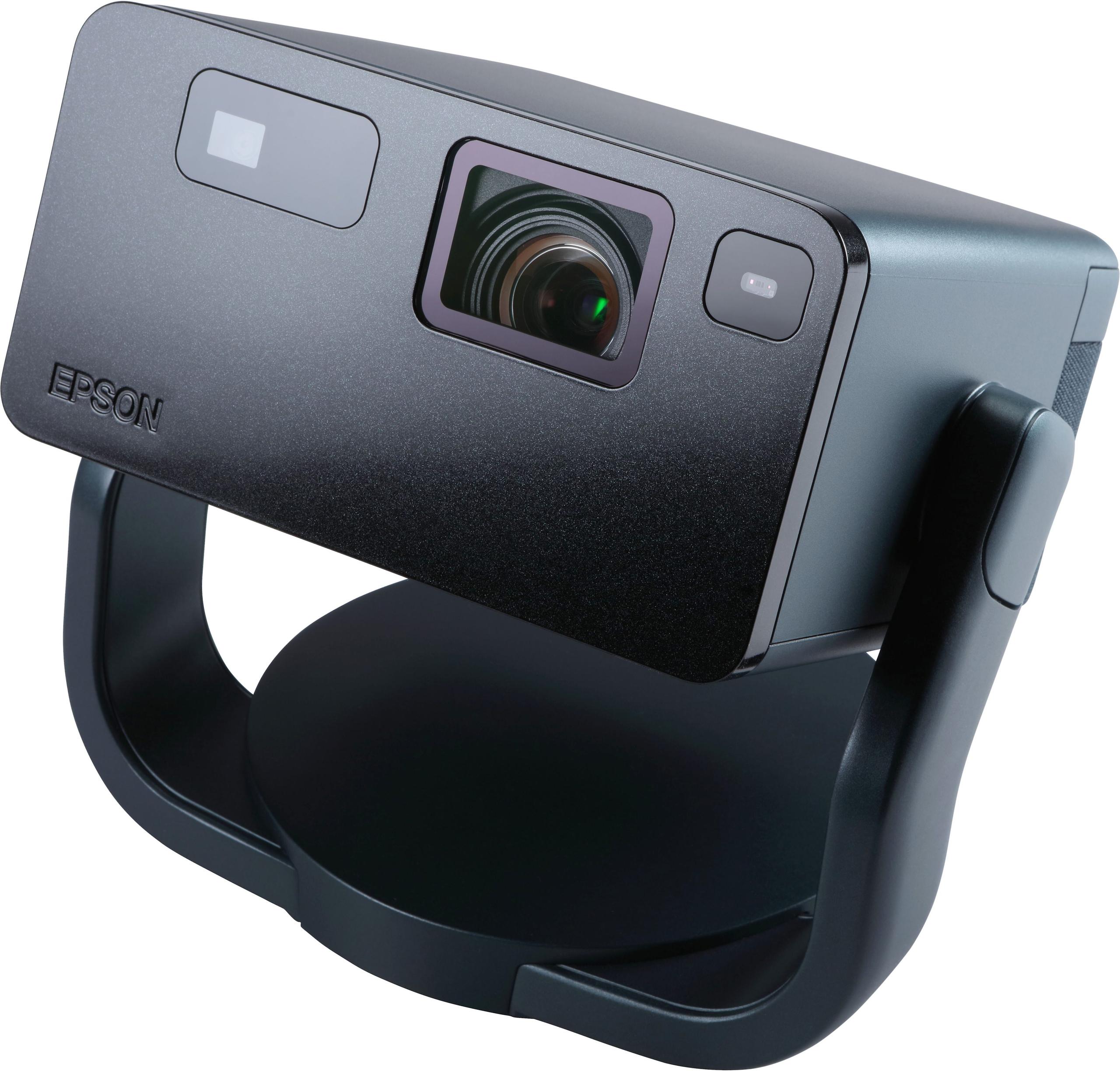
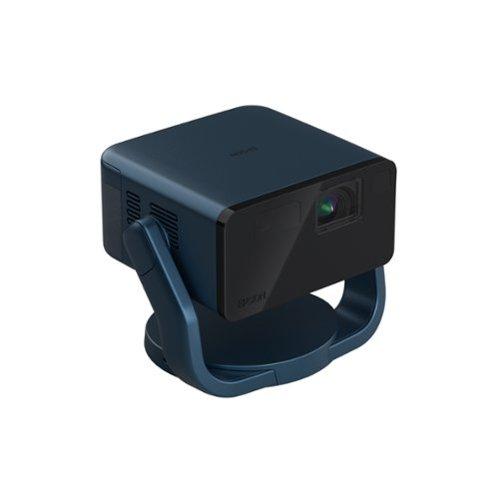
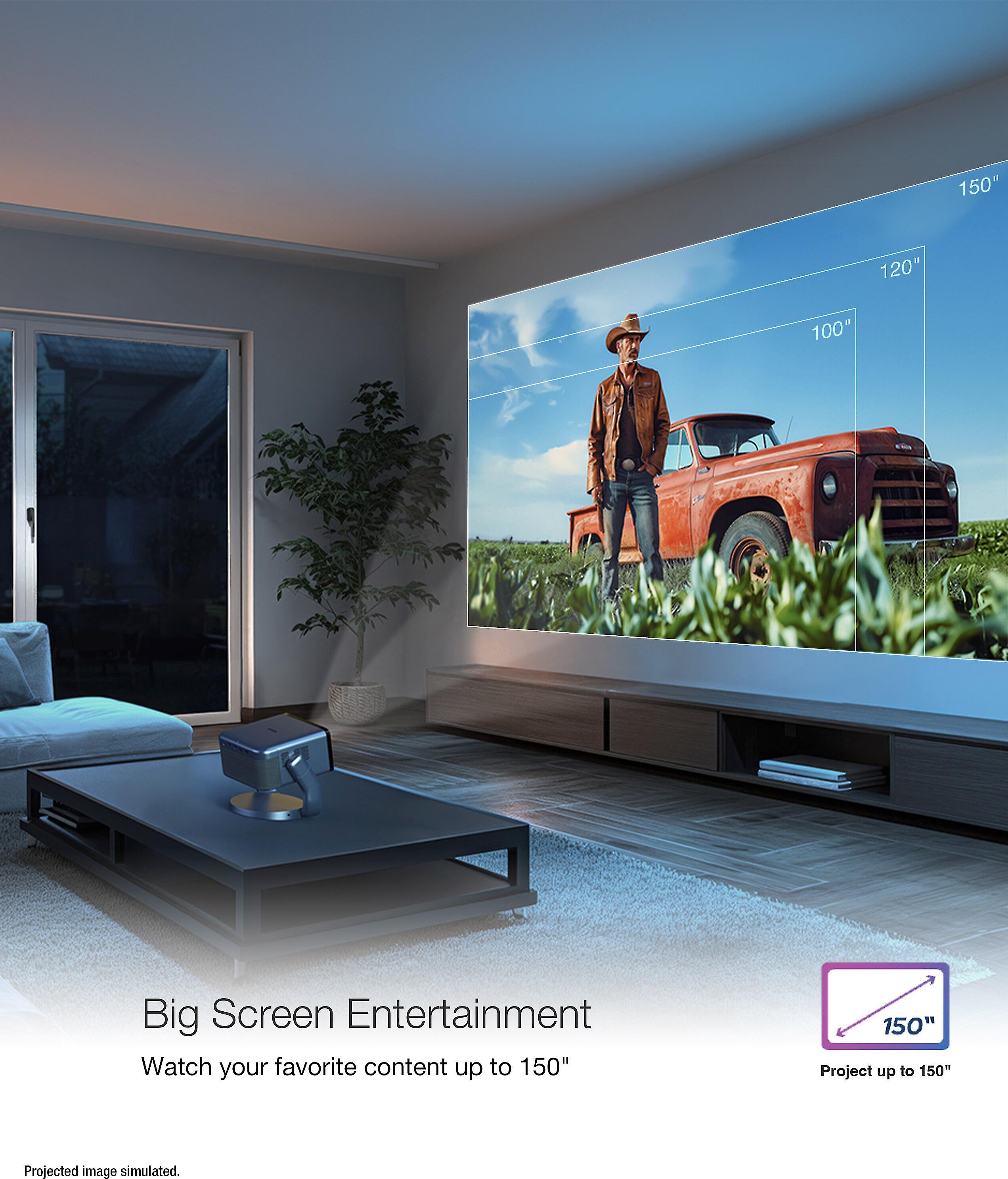
Released in mid-2022, the Epson EF22 (priced at $999) represents Epson's vision of what a modern lifestyle projector should be. It's part of their EpiqVision Mini line that focuses on combining elegant design with smart functionality. The EF22 is designed to blend into your living space rather than dominate it, featuring a distinctive cylindrical design with a 360-degree rotatable stand.
What makes the EF22 stand out is its use of 3LCD laser technology—a significant upgrade over traditional lamp-based projectors. This projector is aimed at consumers who want a hassle-free, all-in-one entertainment solution that doesn't require a dedicated home theater room.
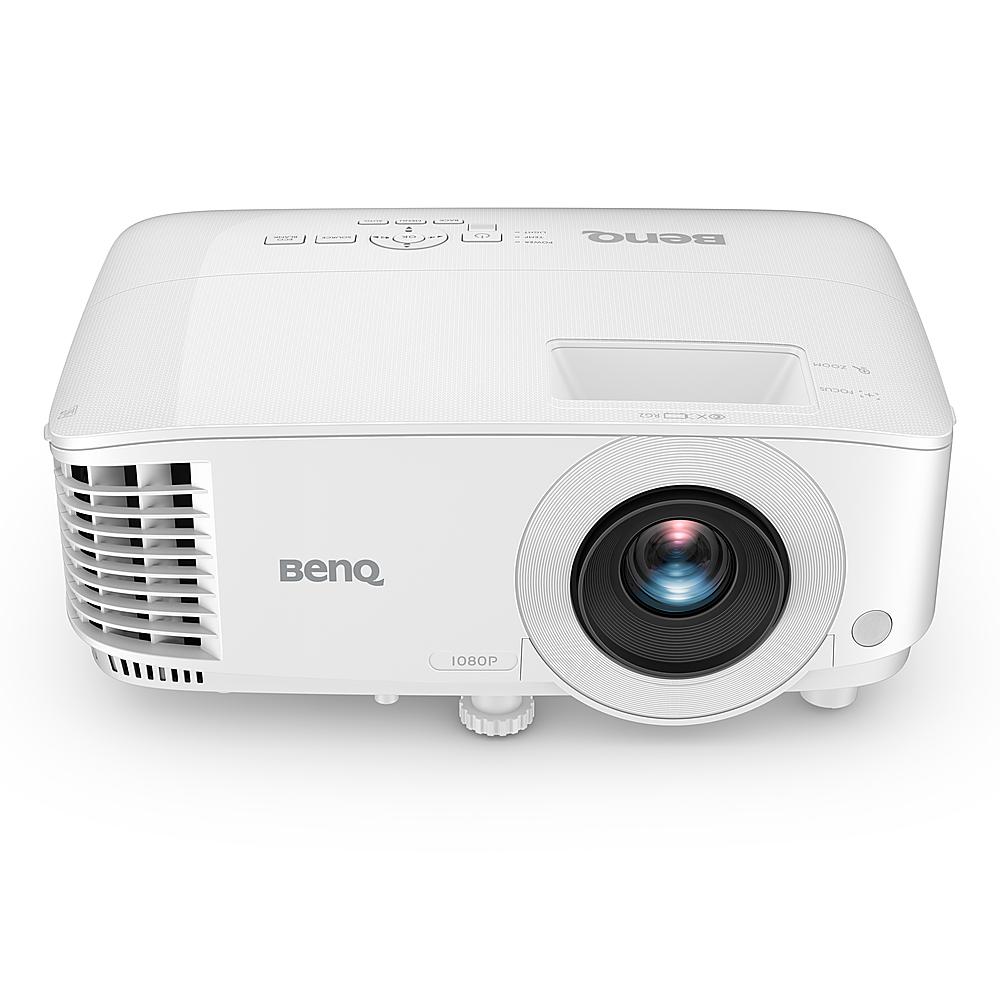
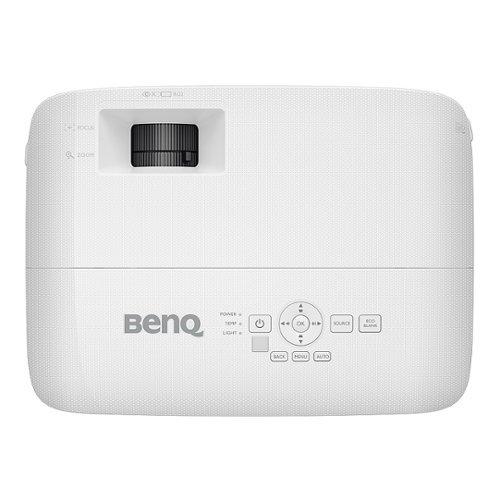
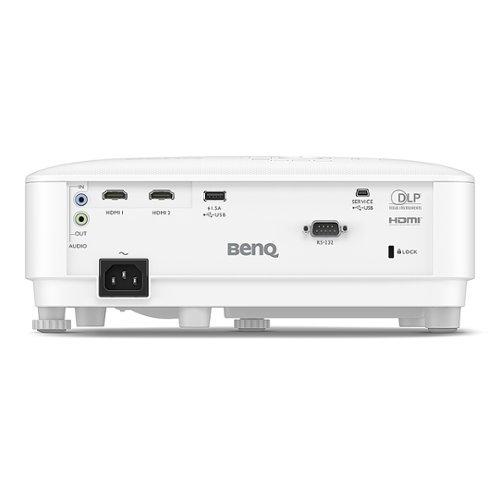
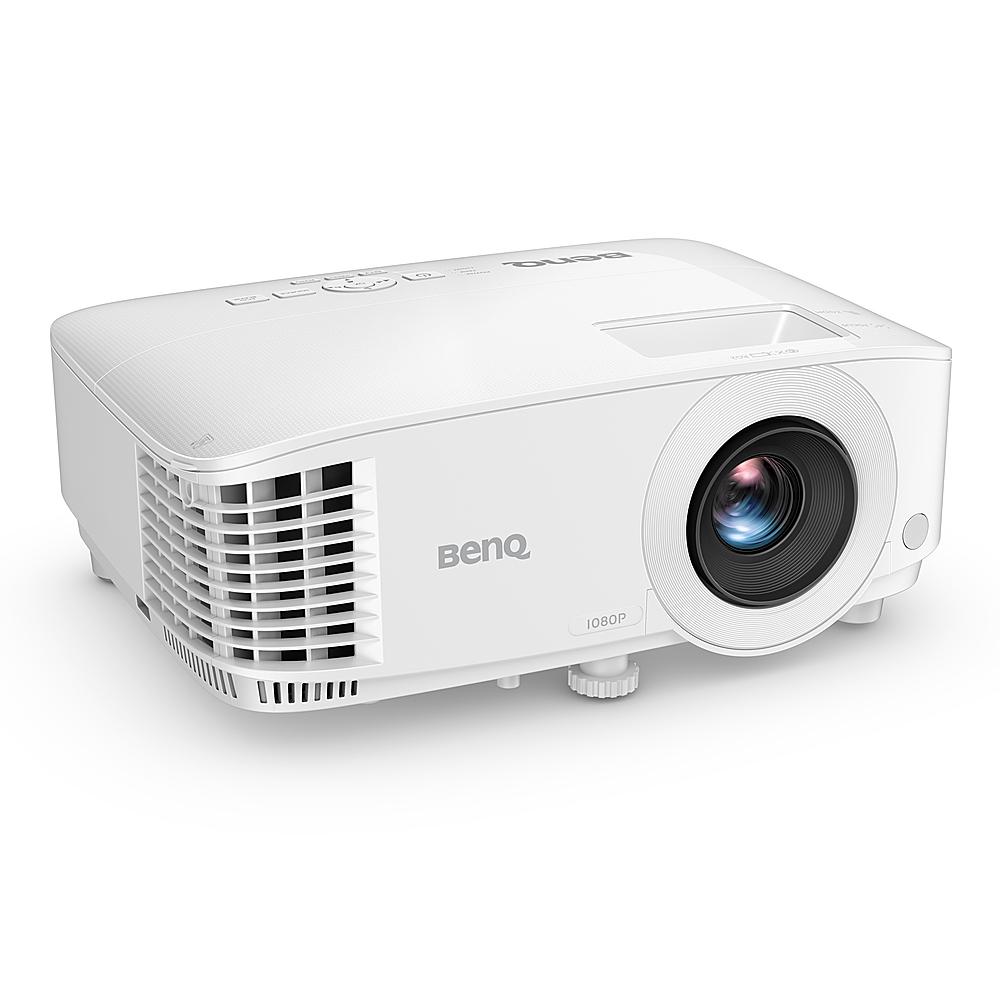
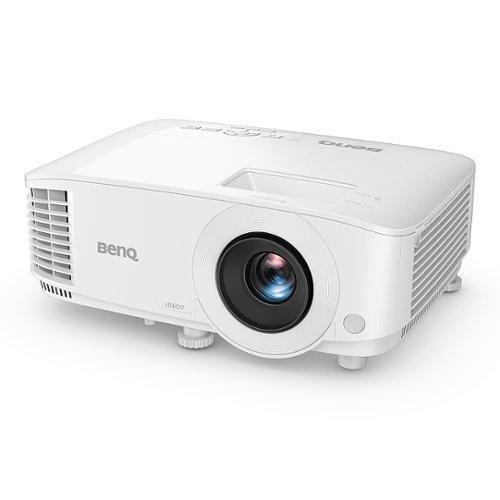
The BenQ TH575 (priced at $649) hit the market in early 2022 as part of BenQ's gaming-focused projector lineup. Unlike the EF22, the TH575 doesn't try to hide what it is—it's a projector first and foremost, designed with a traditional form factor that prioritizes performance over aesthetics.
The TH575 uses DLP (Digital Light Processing) technology with a conventional lamp. It's aimed at gamers who want a large-screen experience without the input lag that has historically plagued projectors, and at a price point that's considerably more accessible than competitors with similar gaming performance.
The most fundamental difference between these projectors lies in their display technologies, which affects everything from image quality to maintenance requirements.
The Epson EF22 uses 3LCD technology, which splits light through three separate LCD panels—one each for red, green, and blue colors—before recombining them to create the final image. This approach has several advantages: it produces equal color and white brightness (meaning colors look as vibrant as white areas), eliminates the "rainbow effect" (where some viewers see momentary color separation), and typically provides more accurate color reproduction.
The BenQ TH575 uses DLP technology, which works by reflecting light off a chip containing millions of tiny mirrors, each representing a pixel. This light then passes through a color wheel before projecting onto the screen. DLP projectors typically offer better contrast ratios, sharper images, and less visible pixel structure than comparable LCD models. However, some viewers (estimated at about 5-10% of the population) may notice a "rainbow effect" during fast motion sequences.
Having used both technologies extensively, I find 3LCD produces a more natural image that's easier on the eyes for extended viewing, while DLP often creates a more "cinematic" look with deeper blacks. Your personal sensitivity to the rainbow effect should be a consideration if you're prone to visual discomfort.
Perhaps even more significant than the imaging technology is the light source difference. The EF22 uses a laser light source rated for 20,000 hours—that's over 13 years of use at 4 hours per day. Laser light sources maintain consistent brightness throughout their lifespan and require no replacement.
In contrast, the TH575 uses a traditional UHP (Ultra High Performance) lamp rated for 6,000 hours in normal mode and up to 15,000 hours in eco mode. Lamps gradually dim over time and eventually require replacement, typically costing between $149-249 depending on the model.
This difference has real-world implications for long-term ownership. If you plan to use your projector extensively, the initial price difference might be offset by the elimination of lamp replacement costs with the Epson model.
One of the most noticeable differences between these projectors is their brightness output, which directly impacts where and when you can comfortably use them.
The BenQ TH575 boasts an impressive 3,800 ANSI lumens brightness—a standardized measurement of light output. This is substantially brighter than the Epson EF22's 1,000 lumens. However, there's a nuance here: Epson's 3LCD technology delivers equal color and white brightness, while DLP projectors like the BenQ typically have lower color brightness than their rated white brightness.
Even accounting for this difference, the BenQ still delivers substantially more light output, making it far more versatile for use in rooms with ambient light. In my experience testing similar projectors, the difference is dramatic—the BenQ-level brightness allows for comfortable viewing even with some lights on or during daytime with curtains drawn, while the Epson requires a more controlled lighting environment.
For a typical living room that sees mixed use throughout the day, the BenQ's higher brightness provides more flexibility. You won't need to completely darken the room for casual TV watching or gaming sessions during the day.
The Epson, while less bright, is perfectly adequate for evening viewing or in rooms where light control is possible. Its 1,000 lumens can create a beautiful image on screens up to about 100 inches diagonal in darker environments.
If gaming is a priority, the differences between these projectors become particularly significant.
Input lag—the delay between when your controller sends a signal and when that action appears on screen—is perhaps the single most important specification for gaming projectors. The BenQ TH575 excels here with an exceptionally low 16.7ms input lag at 1080p/60Hz, putting it on par with many gaming monitors.
The Epson EF22 doesn't publish an official input lag specification, but based on similar models in their lineup, it likely falls in the 30-50ms range. This difference is noticeable in fast-paced games where timing matters, such as fighting games, first-person shooters, or rhythm games.
To put this in perspective, one frame at 60fps takes 16.7ms to display. The BenQ effectively introduces a one-frame delay between your input and the on-screen result, while the Epson might introduce 2-3 frames of delay. Competitive gamers will immediately notice this difference, though casual gamers might not find it problematic.
Beyond raw input lag, the BenQ offers gaming-specific features like "Game Mode," which optimizes image settings for better visibility in dark scenes—crucial for spotting enemies hiding in shadows. It also includes a "Black Detail Enhancement" feature that improves contrast in dark areas without washing out the entire image.
The Epson lacks these gaming-specific optimizations, reflecting its different target audience and use case.
Raw specifications tell only part of the story when it comes to image quality. Both projectors offer Full HD 1080p resolution, but they create noticeably different images.
The Epson EF22's 3LCD technology generally produces more accurate colors out of the box, with better color volume and more natural skin tones. Its support for HDR10 and HLG (Hybrid Log-Gamma) content means it can display a wider range of brightness and color when fed compatible content.
The BenQ TH575 supports 1.07 billion colors (30-bit) and offers good color performance for a DLP projector, though it typically requires more calibration to achieve accurate colors. It lacks the HDR support of the Epson, meaning HDR content will be tone-mapped to SDR (Standard Dynamic Range).
Contrast ratio—the difference between the brightest whites and darkest blacks a projector can produce—significantly impacts perceived image quality, especially for movie content with dark scenes.
The Epson claims an impressive 5,000,000:1 contrast ratio, though this is likely a dynamic contrast measurement rather than native contrast. In practice, the laser light source allows it to dim dark scenes effectively, but it still struggles with producing deep blacks compared to dedicated home theater projectors.
The BenQ offers a more modest 15,000:1 contrast ratio, which is respectable for its price point and technology. In darker viewing environments, the BenQ actually produces better perceived contrast than you might expect from the specifications.
The differences in approach become most apparent when comparing the smart features and overall user experience of these projectors.
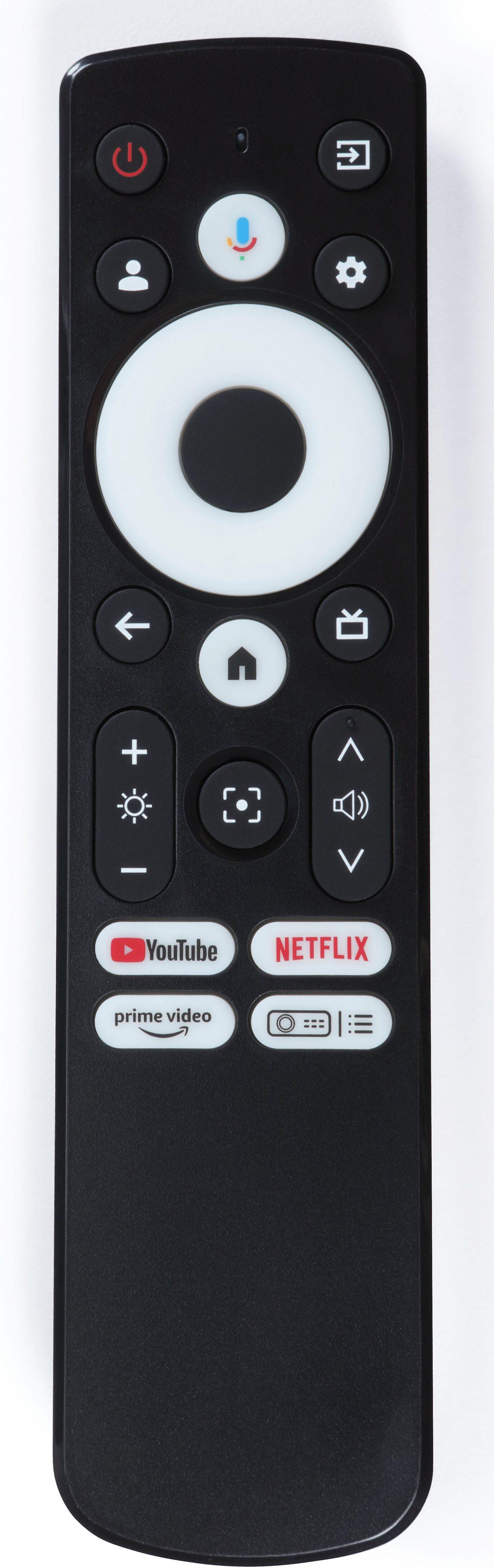
The Epson EF22 functions as a complete entertainment system with built-in Google TV, eliminating the need for external streaming devices. This integrated approach means you can access Netflix, Disney+, YouTube, and thousands of other apps directly from the projector itself. The included voice-enabled remote control allows you to search for content across services or control smart home devices through Google Assistant.
The Google TV interface is substantially improved from earlier Android TV implementations, with better content recommendations and a more intuitive interface. The projector also supports Google Cast for streaming from mobile devices and Bluetooth audio output for connecting headphones or external speakers.
The BenQ TH575 takes a fundamentally different approach, focusing exclusively on being a display rather than an all-in-one entertainment system. It has no smart features, built-in apps, or voice control capabilities.
This means you'll need to connect external sources—like streaming sticks, gaming consoles, or Blu-ray players—to use it. While this might seem like a disadvantage, it actually offers greater flexibility and future-proofing. If streaming technology or interfaces improve, you can simply update your external device rather than replacing the entire projector.
How easy a projector is to set up and adjust can significantly impact your day-to-day experience, especially if you don't have a permanent installation.
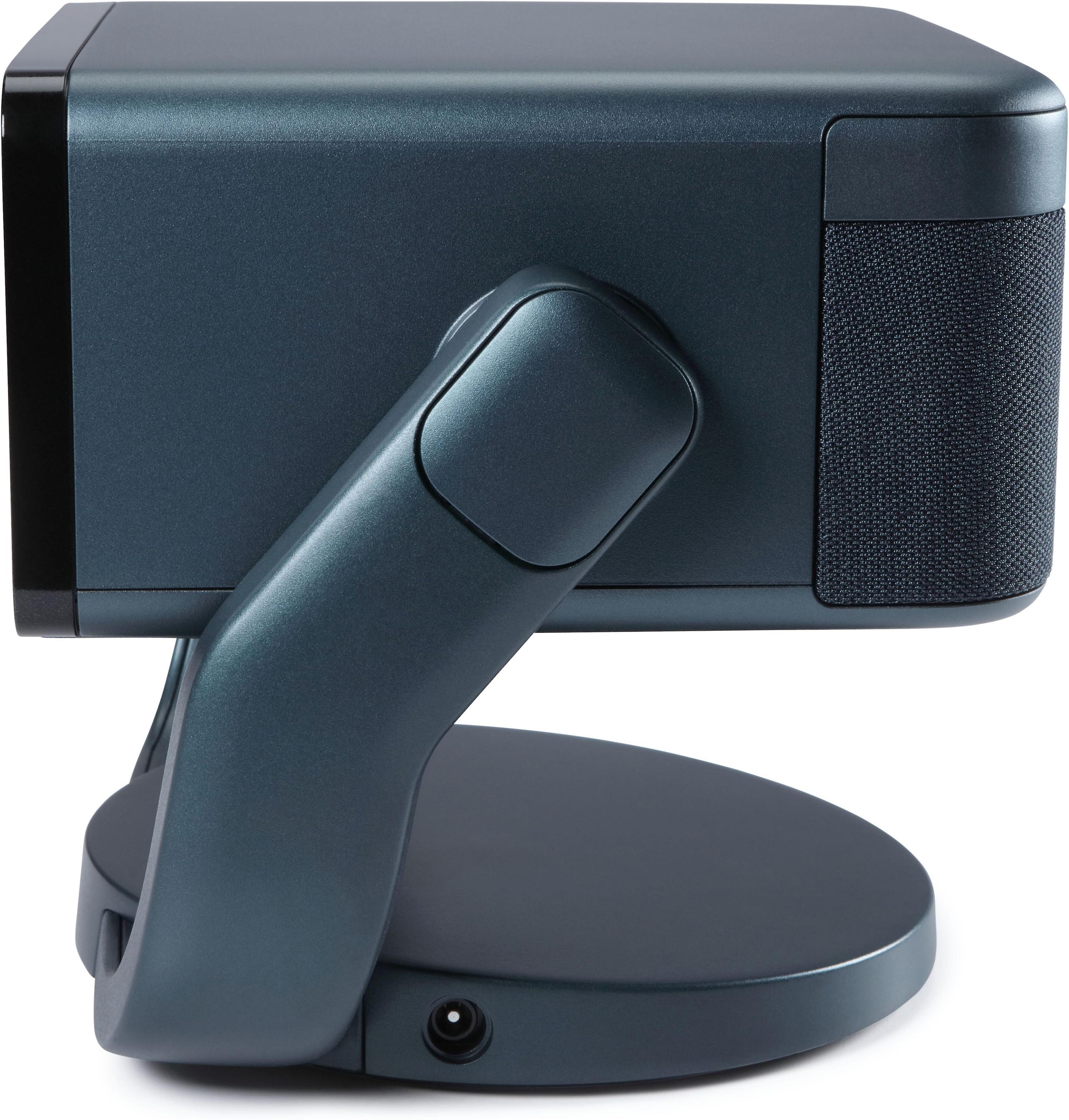
The Epson EF22's innovative design includes a 360-degree rotatable stand that allows you to point the projection in virtually any direction—including onto ceilings for bedtime viewing. This flexibility, combined with automatic focus and keystone correction (which adjusts the image shape when projecting at an angle), makes the EF22 extraordinarily simple to set up in different locations.
The auto-setup features use what Epson calls "EpiqSense" technology, which automatically scans the projection surface and adjusts accordingly. In practice, this means you can place the projector almost anywhere, turn it on, and have a properly aligned image within seconds—no manual adjustments needed.
The BenQ TH575 takes a more conventional approach to projector setup, with a fixed projection angle and manual zoom (1.1x). It does include automatic vertical keystone correction, but lacks the comprehensive auto-setup features of the Epson.
The BenQ's throw ratio of 1.49-1.64:1 means it needs to be placed roughly 8-10 feet from the screen to create a 100-inch image. This is typical for projectors in this class but requires more space than ultra-short-throw models.
Most projectors include some form of built-in audio, though expectations should be managed regarding sound quality compared to dedicated speaker systems.
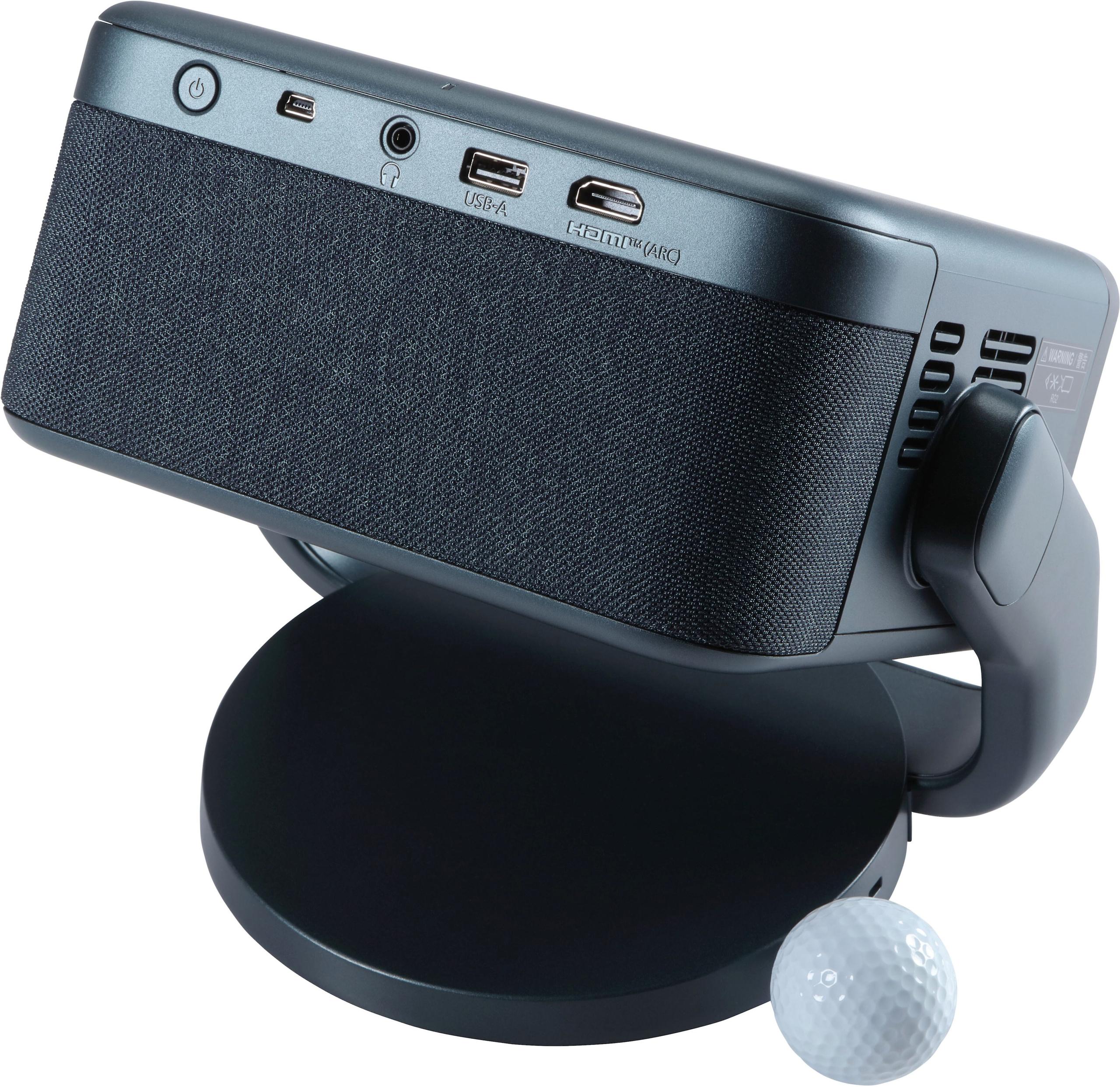
The Epson EF22 features stereo speakers (5W x 2) with Dolby Audio support. The speaker placement and tuning provide surprisingly good sound for such a compact device, with decent stereo separation and clarity that's adequate for casual viewing.
In my experience with similar Epson models, the audio is notably better than most projector built-in speakers, though still not comparable to even a basic soundbar. For bedroom viewing or occasional use, however, it's perfectly serviceable.
The BenQ TH575 includes a single 10W mono speaker that, while more powerful on paper than either of the Epson's speakers individually, lacks the stereo separation and audio processing of the Epson system.
The audio is clear enough for dialogue and basic sound effects but lacks depth for music or immersive movie experiences. Most users will want to connect external audio via the 3.5mm output or through HDMI ARC (Audio Return Channel).
When comparing the $999 Epson EF22 to the $649 BenQ TH575, it's important to consider both initial and ongoing costs.
The Epson's laser light source eliminates the need for lamp replacements, saving approximately $200-400 over the life of the projector compared to the BenQ, which will require 1-3 lamp replacements depending on usage patterns.
Additionally, the Epson's built-in streaming capabilities eliminate the need to purchase separate streaming devices (approximately $30-100), though this is only relevant if you don't already own such devices.
For someone primarily interested in gaming with occasional movie watching, the BenQ TH575 offers exceptional value at its price point. Its superior brightness and ultra-low input lag provide core performance where it matters most for gaming applications.
For those seeking an elegant, maintenance-free solution for streaming content with maximum convenience, the Epson EF22 justifies its premium pricing through superior design, built-in smart features, and zero maintenance requirements.
When choosing between these projectors, consider these factors to guide your decision:
Both the Epson EpiqVision Mini EF22 and BenQ TH575 are excellent projectors that excel in their intended use cases. Neither is objectively "better" than the other—they simply prioritize different aspects of the projection experience.
The Epson represents the future of lifestyle projection: elegant, smart, and maintenance-free. Its design and features make it appealing to those who value convenience and aesthetics alongside performance.
The BenQ exemplifies focused performance engineering: delivering exceptional brightness and gaming response at a competitive price point. It's the perfect choice for gamers and those who prioritize raw performance over smart features.
Your perfect choice depends entirely on how you plan to use your projector and which aspects of performance matter most to you. Whichever model you choose, both the Epson EF22 and BenQ TH575 represent the current state of the art in their respective categories, delivering impressive projection experiences that were unimaginable at these price points just a few years ago.
| Epson EpiqVision Mini EF22 Streaming Projector | BenQ TH575 1080p Gaming Projector |
|---|---|
| Price - Initial investment consideration | |
| $999 (higher upfront cost but no lamp replacement needed) | $649 (more affordable entry point) |
| Display Technology - Impacts color reproduction and image characteristics | |
| 3LCD with laser light source (more accurate colors, no rainbow effect) | DLP with traditional lamp (higher contrast, may show rainbow artifacts) |
| Brightness - Determines usability in different lighting conditions | |
| 1,000 lumens (suitable for dark to moderately lit rooms) | 3,800 ANSI lumens (excellent for rooms with ambient light) |
| Light Source Lifespan - Affects long-term maintenance costs | |
| 20,000-hour maintenance-free laser (never needs replacement) | 6,000-15,000 hour lamp (will require $149-249 replacement) |
| Input Lag - Critical for gaming responsiveness | |
| Not specified (estimated 30-50ms, acceptable for casual gaming) | 16.7ms at 1080p/60Hz (excellent for competitive gaming) |
| Smart Features - Convenience for content access | |
| Built-in Google TV with 10,000+ apps and voice control | No smart features (requires external streaming device) |
| Setup Flexibility - Ease of installation and adjustment | |
| 360-degree rotatable stand with auto focus and keystone correction | Traditional fixed projection with vertical keystone correction |
| Audio System - Quality of built-in sound | |
| Dual 5W speakers with Dolby Audio support | Single 10W mono speaker |
| HDR Support - Enhanced contrast and color for compatible content | |
| HDR10 and HLG support | No HDR support |
| Design Aesthetic - Visual integration with living spaces | |
| Premium lifestyle design in Stone Blue finish | Standard utilitarian projector design |
| Connectivity - Options for connecting devices | |
| HDMI, USB, Wi-Fi, Bluetooth | 2x HDMI, 2x USB, 3.5mm audio |
| Best Use Case - Ideal scenario for each projector | |
| Elegant streaming solution for controlled lighting environments | High-performance gaming and bright-room viewing on a budget |
The BenQ TH575 1080p Gaming Projector is significantly better for gaming with its ultra-low 16.7ms input lag, which is essential for responsive gameplay. The Epson EpiqVision Mini EF22 has higher input lag (likely 30-50ms), making the BenQ TH575 the clear choice for serious gamers who need minimal delay between controller inputs and on-screen action.
The BenQ TH575 with its 3,800 ANSI lumens performs much better in bright environments compared to the Epson EpiqVision Mini EF22 which offers 1,000 lumens. If you'll be watching content during daytime or in a room with ambient lighting, the BenQ TH575's substantially higher brightness will provide a more visible image without requiring complete darkness.
The Epson EpiqVision Mini EF22 uses a maintenance-free laser light source rated for 20,000 hours that never needs replacement. The BenQ TH575 uses a traditional lamp rated for 6,000-15,000 hours (depending on mode) that will eventually require replacement at additional cost ($149-249). For long-term ownership, the Epson eliminates maintenance concerns.
The Epson EpiqVision Mini EF22 has fully integrated Google TV with access to 10,000+ streaming apps including Netflix, Disney+, and YouTube. The BenQ TH575 has no smart features or built-in streaming capabilities, requiring an external streaming device like a Roku or Fire TV Stick to access content. If you want an all-in-one solution, the Epson is the only option.
For dedicated home theater use in a dark room, the Epson EpiqVision Mini EF22 offers better color accuracy, HDR support, and superior audio with its dual speakers and Dolby Audio. However, the BenQ TH575 provides brighter images and better contrast that some viewers may prefer. For a true cinema experience focusing on color accuracy and HDR content, the Epson has the advantage.
The Epson EpiqVision Mini EF22 costs $999, while the BenQ TH575 is priced at $649. The $350 difference reflects the Epson's laser light source, built-in streaming platform, and premium design. When considering long-term value, remember the BenQ will require lamp replacements while the Epson won't.
The Epson EpiqVision Mini EF22 is significantly easier to set up with its 360-degree rotatable stand and automatic focus and keystone correction. The BenQ TH575 uses a traditional fixed projection approach with manual adjustments. If you plan to move your projector between rooms or positions frequently, the Epson's auto-setup features offer much greater convenience.
For color accuracy and HDR content, the Epson EpiqVision Mini EF22 produces better image quality with its 3LCD technology and HDR10/HLG support. For brightness and contrast in non-HDR content, some may prefer the BenQ TH575. If you're primarily watching movies and TV shows in controlled lighting, the Epson typically provides more natural and accurate images.
Both projectors can connect to game consoles, Blu-ray players, and other HDMI devices. The BenQ TH575 offers two HDMI inputs, while the Epson EpiqVision Mini EF22 has one HDMI port but adds wireless connectivity options including Bluetooth and Wi-Fi for casting. Both can serve as display devices for any modern gaming console or media player.
The Epson EpiqVision Mini EF22 delivers better audio with its dual 5W stereo speakers and Dolby Audio support, providing more immersive sound. The BenQ TH575 has a single 10W mono speaker that lacks stereo separation. While neither matches a dedicated sound system, the Epson provides a better built-in audio experience for those not using external speakers.
The Epson EpiqVision Mini EF22 with its 20,000-hour laser light source should provide up to 13+ years of use at 4 hours daily without any maintenance. The BenQ TH575 has a lamp rated for 6,000-15,000 hours depending on the mode used, requiring replacements over the same period. Both projectors should last many years, but the Epson offers longer maintenance-free operation.
For casual everyday use, the Epson EpiqVision Mini EF22 offers greater convenience with built-in streaming, easier setup, and zero maintenance. The BenQ TH575 provides better brightness for casual daytime viewing and excellent gaming performance at a lower price. Your priority between convenience features (Epson) versus brightness and gaming performance (BenQ) should guide your decision.
We've done our best to create useful and informative comparisons to help you decide what product to buy. Our research uses advanced automated methods to create this comparison and perfection is not possible - please contact us for corrections or questions. These are the sites we've researched in the creation of this article: techradar.com - bestbuy.com - geekingout.ca - crutchfield.com - whatgear.net - youtube.com - epson.com - crutchfield.com - projectorcentral.com - epson.com - bestbuy.com - whathifi.com - projectorreviews.com - youtube.com - youtube.com - hometheaterhifi.com - projectorreviews.com - bestbuy.com - youtube.com - staples.com - projectorcentral.com - bestbuy.com - mediaserver.goepson.com - epson.com - news.epson.com - lifeisxbox.eu - ai-techreport.com - electronics.woot.com - ai-techreport.com - laurentwillen.com - bestbuy.com - bestbuy.com - projectorcentral.com - tvsbook.com - shidirect.com - blog.richersounds.com - memoryexpress.com - versus.com - adorama.com - avsforum.com - shi.com - bestbuy.com - bhphotovideo.com - cdw.com - insight.com - shi.ca - projectorcentral.com - insight.com - specsradar.com - touchboards.com

Privacy Policy
Terms and Conditions - Affiliate Policy
Home Security
© Copyright 2008-2026.
11816 Inwood Rd #1211, Dallas, TX 75244