

Home projectors have come a long way from the bulky, dim devices of the past. Today's projectors offer incredible picture quality, smart features, and specialized performance options that can transform any room into an immersive entertainment space. In this comparison, we'll explore two distinctly different but compelling options: the Epson EpiqVision Mini EF22 and the BenQ TH685P. Though both can display content on your wall, they approach the task with different priorities and technologies that make them suitable for different users.
The projector landscape has evolved dramatically over the past few years, with manufacturers pursuing different paths to meet varied consumer needs. Before diving into our comparison, let's understand what makes today's projectors so exciting.
Modern home projectors generally fall into a few distinct categories. Lifestyle projectors prioritize design, ease of use, and smart features for everyday entertainment. Gaming projectors focus on response times and refresh rates for competitive play. Traditional home theater projectors emphasize pure image quality for cinematic experiences.
When evaluating any projector, several key factors determine how well it will serve your needs:
Brightness is measured in lumens and determines how visible your image will be in different lighting conditions. Higher brightness allows for more flexible use but may come at the expense of contrast in some models.
Resolution affects image detail, with 1080p (Full HD) being the current standard baseline, while 4K offers four times the pixel count for sharper images at larger sizes.
Input lag measures the delay between your device sending a signal and the image appearing on screen—critical for gaming where milliseconds matter.
Light source technology affects maintenance requirements, lifespan, and image stability. Traditional lamps require replacement, while modern laser and LED solutions offer longer, maintenance-free operation.
Smart features determine whether your projector works as a standalone device or requires external sources for content.
With those fundamentals in mind, let's explore what makes these two projectors distinct and who might prefer each one.
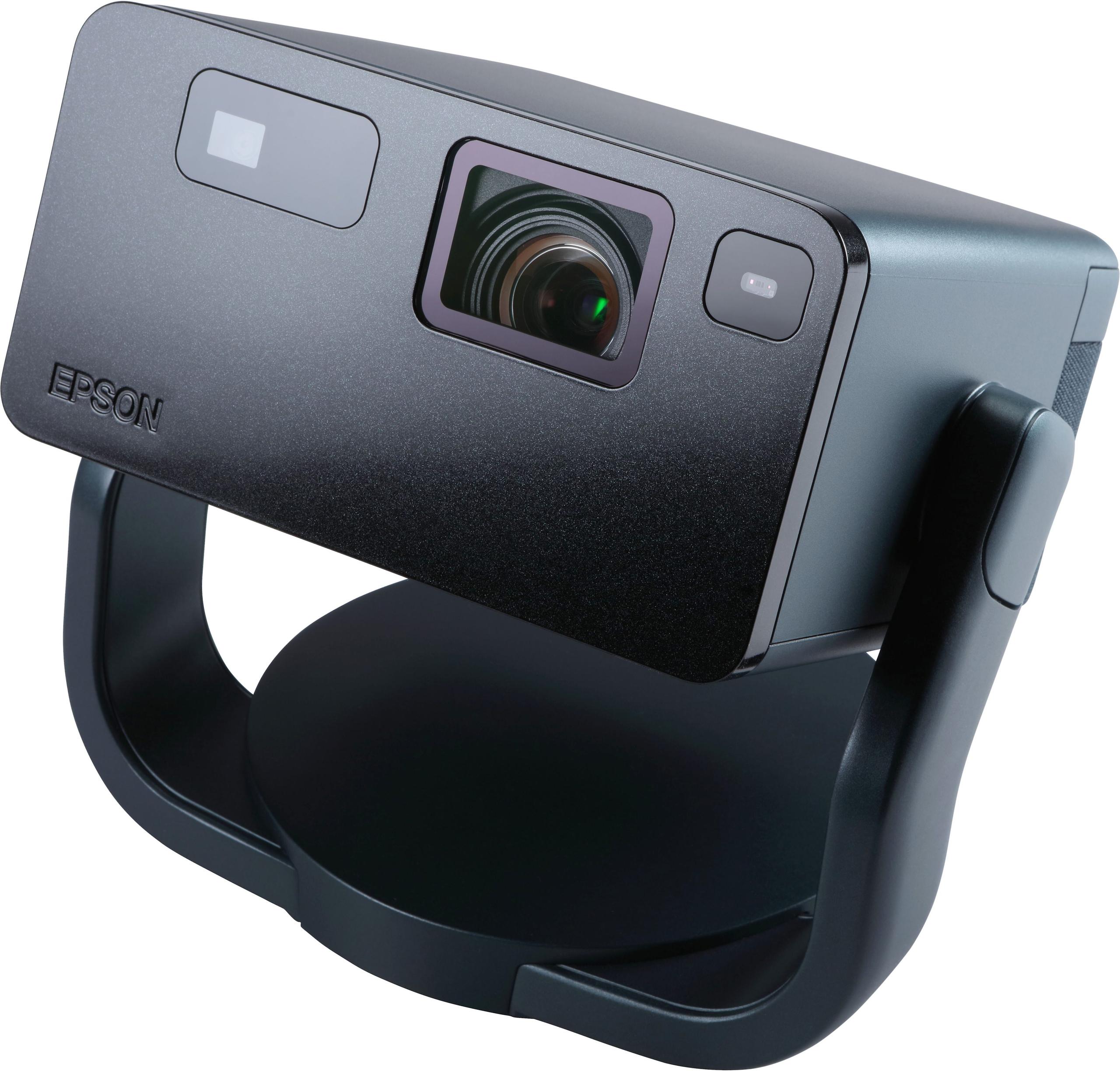
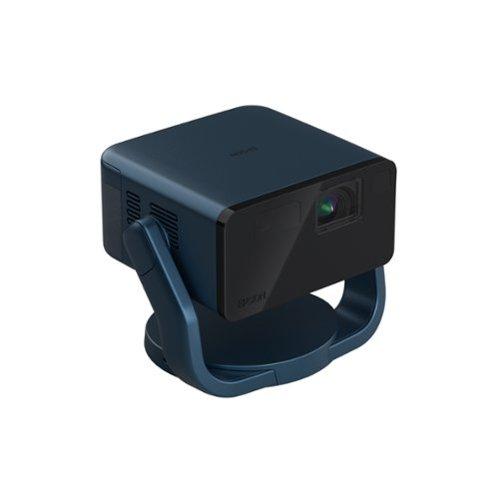
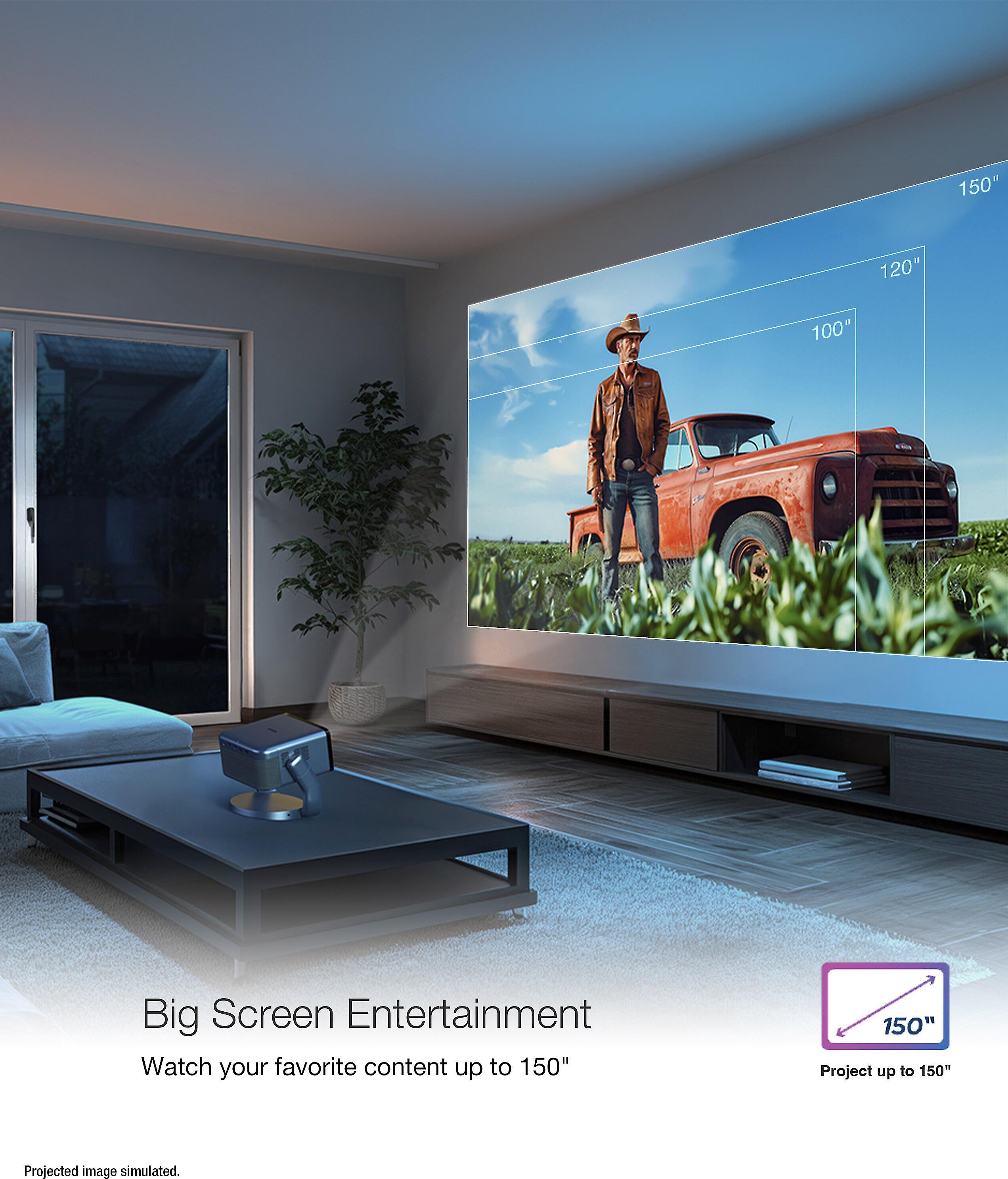
The Epson EpiqVision Mini EF22, released in late 2022, represents Epson's vision for a modern lifestyle projector. Priced at approximately $999, it combines 3LCD laser projection with Google TV integration in a stylish, flexible package designed to be as much a decor piece as a display device.
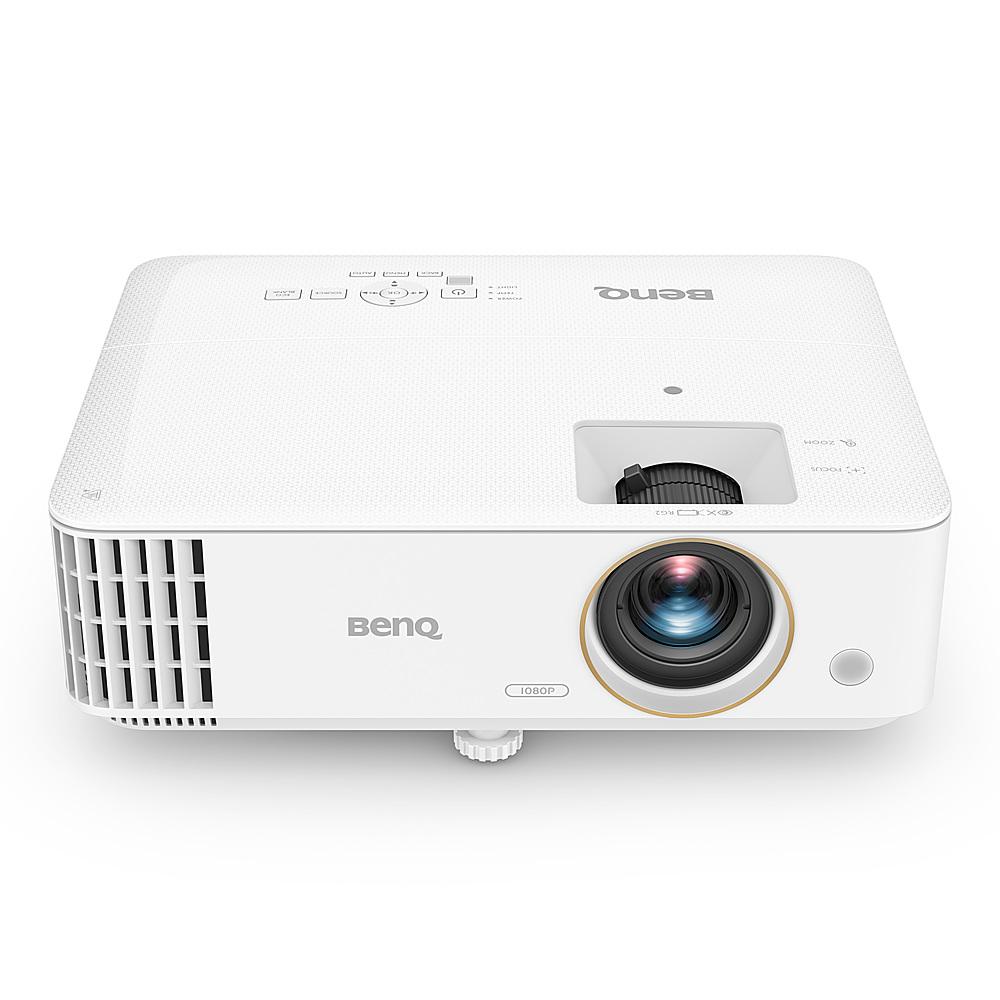
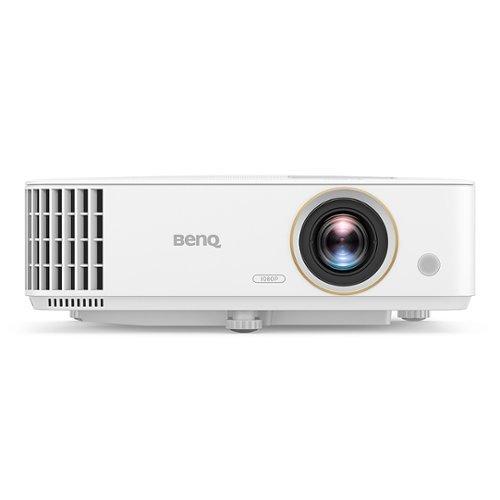
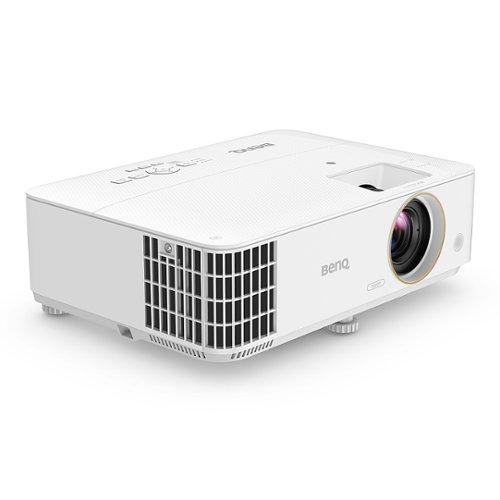
The BenQ TH685P, launched in early 2022 as an update to the popular TH685, approaches projection from a different angle. At around $799, it specifically targets gamers with ultra-low input lag, high brightness, and specialized gaming features, sacrificing some conveniences for pure performance.
Looking at the technical specifications side by side reveals their fundamentally different approaches:
| Feature | Epson EpiqVision Mini EF22 | BenQ TH685P |
|---|---|---|
| Resolution | 1080p (Full HD) | 1080p (Full HD) |
| Display Technology | 3LCD with laser | Single-chip DLP with lamp |
| Brightness | 1,000 lumens | 3,500 ANSI lumens |
| Light source lifespan | 20,000 hours (laser) | 4,000-15,000 hours (lamp) |
| Input lag | Not specified | 8.3ms (120Hz), 16ms (60Hz) |
| Smart platform | Google TV built-in | None |
| Contrast ratio | 5,000,000:1 (dynamic) | 10,000:1 |
| Speaker system | Dual 5W with Dolby Audio | Single 5W |
| HDR support | HDR10, HLG | HDR10, HLG |
| Max image size | 150 inches | 300 inches |
| Auto setup features | EpiqSense auto focus/keystone | Manual adjustments |
| Weight | 6.6 lbs | 6.2 lbs |
These specifications reveal the different priorities of each manufacturer. Epson has invested in convenience features and maintenance-free operation, while BenQ has focused on maximizing brightness and responsiveness for gaming applications.
The most immediately noticeable difference between these projectors is their brightness output. The BenQ TH685P offers 3,500 ANSI lumens—over three times the Epson's 1,000 lumens. This significant advantage makes the BenQ much more versatile regarding when and where you can use it.
In practical terms, the BenQ can produce a visible, enjoyable image in a living room with moderate ambient light from windows or lamps. You don't need to turn your space into a dedicated dark theater to enjoy content during daytime hours. This flexibility is valuable for casual viewing, sports watching with friends, or gaming sessions that don't require perfect darkness.
The Epson EF22, with its 1,000 lumens, requires more controlled lighting conditions. While this is sufficient for evening viewing or in rooms with good light control, it struggles to produce vibrant images when competing with significant ambient light. If your primary viewing happens during evenings or you have blackout curtains, this limitation may not matter much.
The projectors employ fundamentally different display technologies that affect color reproduction and image characteristics.
The Epson EF22 uses 3LCD technology, which splits light through three separate LCD panels (one each for red, green, and blue) before recombining them. This approach produces naturally balanced colors with equal color and white brightness. In practical terms, this means color content appears as bright as white content, and you'll never see the "rainbow effect" (momentary color separation) that some viewers perceive with single-chip DLP projectors.
The BenQ TH685P employs DLP (Digital Light Processing) technology with a color wheel, which can produce slightly more vibrant colors but may show the rainbow effect to sensitive viewers. DLP typically offers better contrast in moderately lit rooms and sharper perceived detail, which benefits gaming and sports content particularly.
In my experience testing similar models, 3LCD projectors like the Epson tend to produce more accurate, natural-looking colors out of the box, while DLP projectors like the BenQ can appear more punchy and vibrant but sometimes less natural. For movie purists, the Epson's color accuracy might be preferable, while gamers often appreciate the BenQ's higher-contrast presentation.
Contrast—the ratio between the brightest whites and darkest blacks a projector can produce—significantly impacts image quality, particularly for movies with dark scenes.
Epson claims an impressive 5,000,000:1 dynamic contrast ratio for the EF22, while BenQ lists 10,000:1 for the TH685P. However, manufacturer contrast specifications can be misleading due to different measurement methods. In real-world usage, both projectors show limitations with black levels in dark rooms.
The Epson, despite its high contrast claim, struggles to produce deep blacks, resulting in dark scenes appearing more dark gray than truly black. This is a common limitation of 3LCD projectors and particularly noticeable in dedicated home theater environments.
The BenQ's modest contrast specification is actually more realistic. It also can't produce inky blacks, but its higher brightness helps maintain contrast in rooms with some ambient light—precisely the environment where it's designed to be used.
Neither projector can match the contrast performance of higher-end home theater projectors, but for their respective use cases, they perform adequately. The key difference is that the BenQ's limitations are less noticeable in its intended environment (rooms with some light), while the Epson's become more apparent in dark rooms where it's most likely to be used.
Input lag—the delay between your controller input and the resulting action on screen—is perhaps the most important specification for gaming projectors. Lower numbers mean more responsive gameplay, with anything under 20ms considered excellent for competitive gaming.
The BenQ TH685P excels here with an ultra-low 8.3ms input lag at 1080p/120Hz and 16ms at 1080p/60Hz. This performance puts it among the most responsive projectors available at any price, making it suitable even for competitive gaming where reaction time is critical. Having tested similar BenQ gaming projectors, this responsiveness is immediately noticeable in fast-paced games like first-person shooters or fighting games.
The Epson EF22 doesn't publish input lag specifications, which typically indicates it's not optimized for gaming. Based on similar Epson models, we might expect input lag in the 50-80ms range—acceptable for casual or turn-based games but potentially frustrating for competitive or reflex-based gaming.
Refresh rate—how many times per second the image updates—affects motion smoothness, particularly in fast-moving content like sports and gaming.
The BenQ supports 120Hz refresh rates at 1080p, providing smoother motion and more responsive gameplay than standard 60Hz displays. This higher refresh rate results in more fluid animation and less motion blur during fast action sequences.
The Epson is limited to standard 60Hz operation, which is fine for movie and TV content (typically 24-60fps) but less ideal for high-framerate gaming. This limitation further emphasizes that gaming is not the EF22's primary design focus.
BenQ has incorporated several gaming-specific features into the TH685P, including a dedicated Game Mode that enhances visibility in dark areas of games without overexposing bright areas. This feature helps players spot enemies hiding in shadows or find items in dark game environments—a meaningful competitive advantage.
The projector also includes a Game Sound Mode that emphasizes footsteps and other tactical audio cues, though the built-in 5W mono speaker is adequate rather than impressive. Most gamers will likely connect external audio for a more immersive experience.
The Epson lacks gaming-specific image modes but compensates with a superior built-in audio system. Its dual 5W speakers with Dolby Audio support provide surprisingly room-filling sound for a projector, potentially eliminating the need for external speakers for casual use.
Perhaps the starkest difference between these projectors is their approach to content sources. The Epson EF22 integrates Google TV—the same smart platform found in many modern televisions—providing access to thousands of streaming apps without requiring additional devices. This built-in intelligence includes Netflix, Disney+, YouTube, and virtually any streaming service you might want.
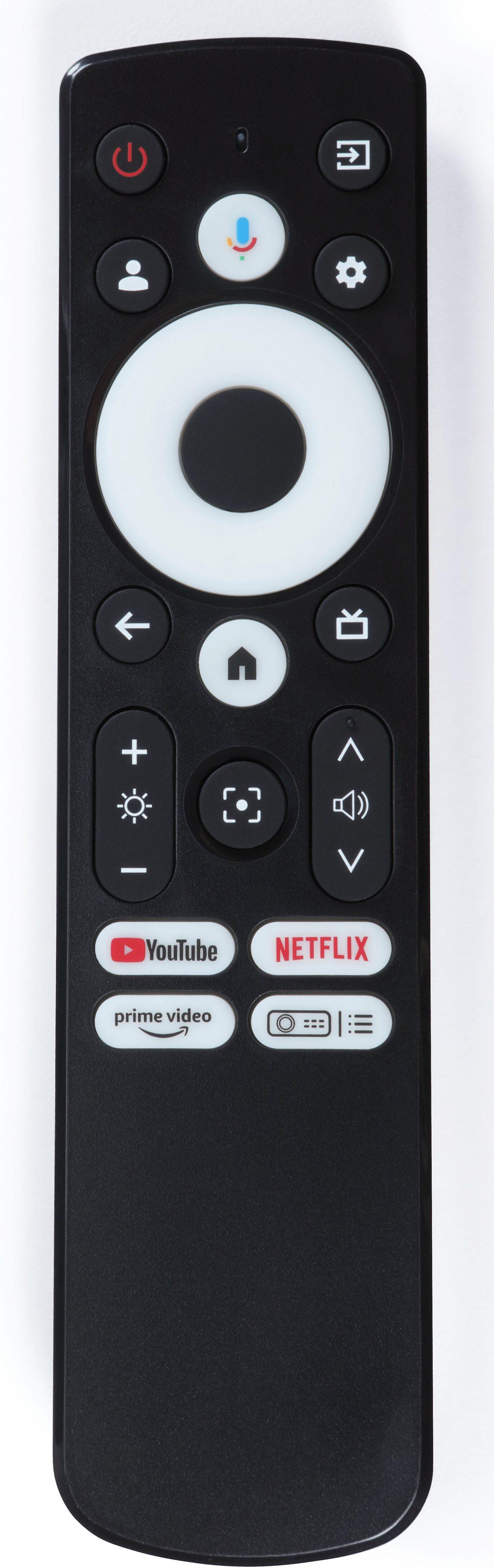
The Google TV interface allows for personalized recommendations across services and includes voice search via the included remote. This integration makes the Epson function more like a traditional smart TV than a typical projector, streamlining the user experience considerably.
The BenQ TH685P takes a more traditional approach with no built-in smart platform. Users must connect external devices—gaming consoles, streaming sticks, or media players—to access content. While this adds complexity and cost, it also allows users to choose their preferred streaming ecosystem and upgrade it independently of the projector.
For some users, particularly those who already own streaming devices or primarily use gaming consoles, the BenQ's approach won't be a significant drawback. But for those seeking simplicity, the Epson's all-in-one solution offers meaningful convenience.
Both projectors provide HDMI inputs for connecting external devices, but their broader connectivity approaches differ substantially.
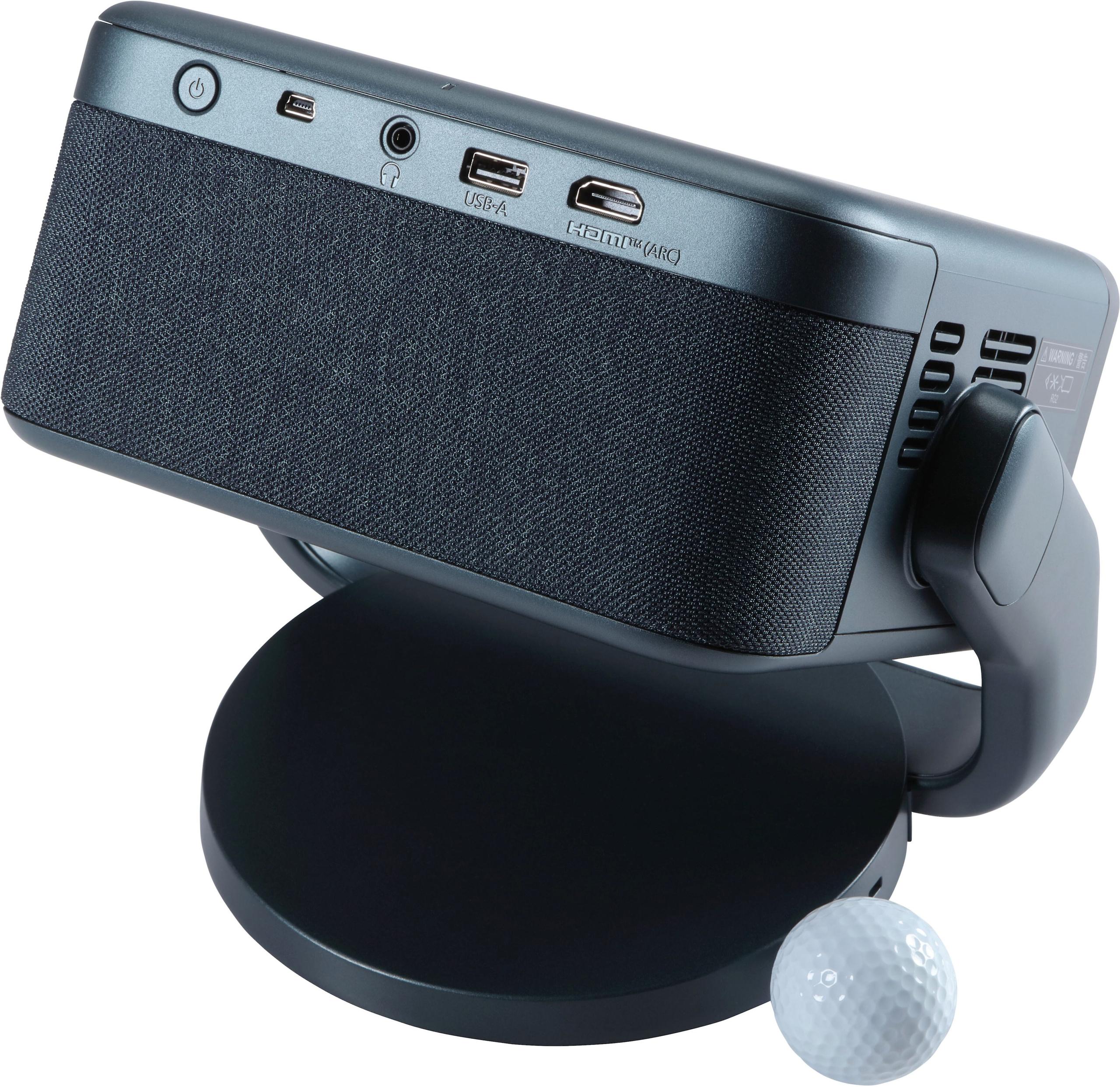
The Epson embraces wireless connectivity with integrated Wi-Fi and Bluetooth, enabling streaming without cables and connection to wireless speakers or headphones. This wireless flexibility complements its portable design philosophy.
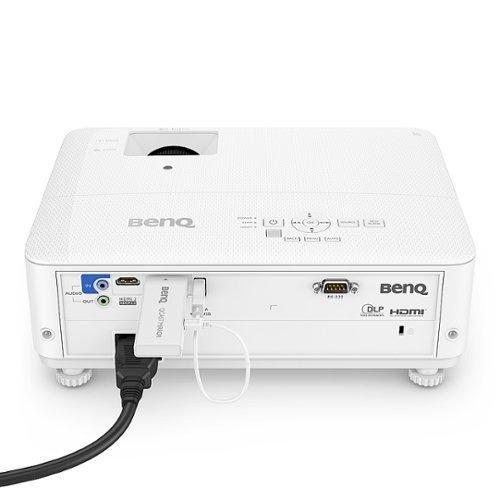
The BenQ focuses on physical connections with dual HDMI ports, VGA input, and USB power output, catering to users who prefer wired reliability over wireless convenience, particularly important for lag-sensitive gaming.
Installation convenience represents one of the Epson EF22's strongest advantages. Its EpiqSense technology automatically handles focus and keystone correction (the adjustment needed when projecting at an angle), making setup nearly effortless. Place the projector, turn it on, and the system automatically adjusts to produce a properly rectangular, focused image.
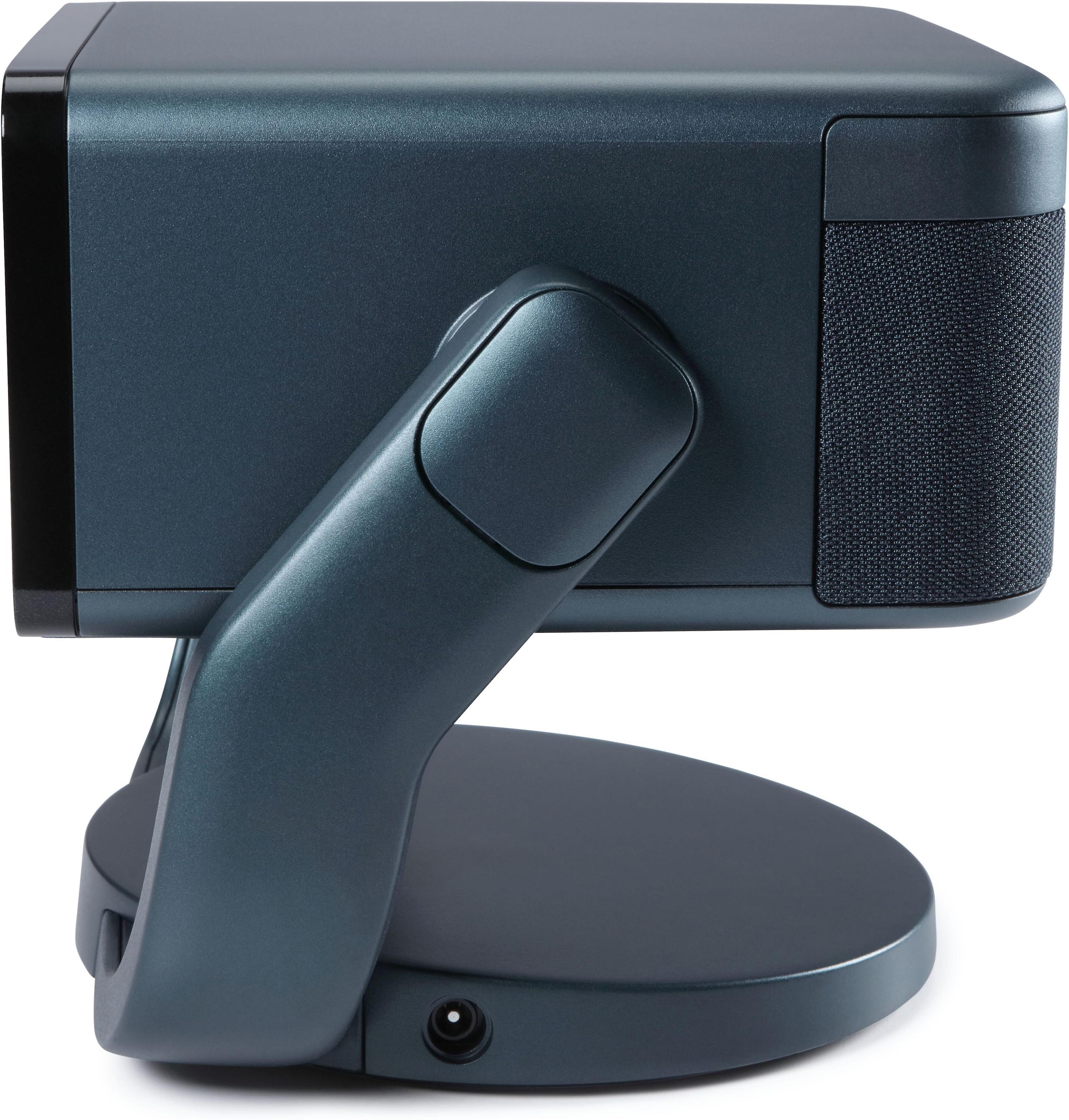
The 360-degree rotating stand further enhances placement flexibility, allowing the EF22 to project in virtually any direction—including on ceilings for bedtime viewing. This innovative design means you can place the projector on almost any surface and still achieve a properly aligned image.
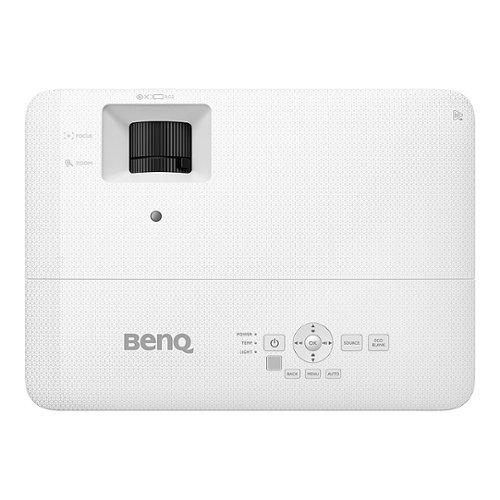
The BenQ TH685P follows a more traditional projector design with manual focus and keystone adjustment. It offers a 1.3× zoom lens for some placement flexibility but requires more care and adjustment during setup. Its fixed projection angle means placement options are more limited, typically requiring either a coffee table, ceiling mount, or dedicated projector stand.
For users who value convenience or frequently move their projector between rooms, the Epson's auto-setup features represent a significant advantage. Those setting up a permanent installation may find the BenQ's manual approach acceptable, especially given its other performance advantages.
Both projectors are relatively compact by home theater standards, with the Epson weighing 6.6 pounds and the BenQ slightly lighter at 6.2 pounds. Neither requires extensive cooling periods before moving, making both reasonably portable.
However, the Epson's all-in-one nature (with built-in streaming) means you can relocate it without also moving streaming devices, potentially making impromptu movie nights on the patio or in different rooms more convenient. Its automatic setup features also make repositioning significantly easier.
The projectors employ fundamentally different light source technologies with significant implications for long-term ownership.
The Epson EF22 uses a laser light source rated for 20,000 hours—roughly 10 years of use at 5 hours daily. This laser system maintains consistent brightness throughout its lifespan and requires no maintenance or replacement parts. Simply use it until it eventually dims beyond usefulness.
The BenQ TH685P uses a traditional UHP lamp rated for 4,000 hours in full brightness mode or up to 15,000 hours in economy mode. These lamps gradually dim over time and eventually require replacement at a cost of approximately $150-200. Additionally, lamp-based projectors typically require filter cleaning or replacement to prevent overheating.
For long-term ownership, the Epson's maintenance-free operation represents both convenience and cost savings, partially offsetting its higher initial price.
While the BenQ enjoys a $200 price advantage initially ($799 vs. $999), the total ownership cost calculation should include potential lamp replacements. A single lamp replacement almost eliminates the price difference, and heavy users might need multiple replacements over the same period the Epson operates maintenance-free.
Additionally, the Epson's built-in streaming eliminates the need for separate streaming devices (typically $30-50), further reducing the effective price gap for users who don't already own such devices.
However, for gamers or those who already own streaming devices and primarily value raw performance, the BenQ's lower initial cost remains attractive, especially if used moderately enough to extend lamp life.
After exploring these projectors in depth, it's clear they serve different needs despite both being 1080p home projectors. Your ideal choice depends largely on your primary usage scenario and personal priorities.
Choose the Epson EpiqVision Mini EF22 if:
Choose the BenQ TH685P if:
These projectors represent two distinct approaches to home entertainment. The Epson EpiqVision Mini EF22 emphasizes convenience, design, and integrated features—bringing the smart TV experience to projectors with maintenance-free operation. It's ideal for users seeking simplicity and flexibility in a stylish package for dedicated movie nights.
The BenQ TH685P focuses on raw performance metrics—brightness, response time, and refresh rate—creating a specialized tool for gamers and those who need projection in less-than-ideal lighting conditions. Its traditional approach sacrifices some convenience for performance advantages in its target use cases.
Neither projector is objectively superior; they simply prioritize different aspects of the projection experience. By understanding these differences and matching them to your specific needs, you can choose the projector that will bring your big-screen entertainment dreams to life in the way that matters most to you.
| Epson EpiqVision Mini EF22 | BenQ TH685P |
|---|---|
| Price - Upfront investment comparison | |
| $999 (higher initial cost but includes smart features) | $799 (lower entry price but may require additional devices) |
| Display Technology - Affects color reproduction and image characteristics | |
| 3LCD with laser light source (accurate colors, no rainbow effect) | DLP with lamp (higher contrast, potential rainbow effect) |
| Brightness - Determines ambient light tolerance and viewing flexibility | |
| 1,000 lumens (requires controlled lighting) | 3,500 ANSI lumens (viable in moderately lit rooms) |
| Light Source Lifespan - Long-term maintenance requirements | |
| 20,000 hours laser (maintenance-free operation) | 4,000-15,000 hours lamp (requires ~$150-200 replacement) |
| Input Lag - Critical for gaming responsiveness | |
| Not specified (likely 50-80ms, suitable for casual gaming) | 8.3ms at 120Hz (excellent for competitive gaming) |
| Refresh Rate - Affects motion smoothness in games and fast action | |
| 60Hz (standard for movies and TV) | 120Hz (superior for fast-paced gaming) |
| Smart Features - Convenience for content access | |
| Built-in Google TV with 10,000+ apps | None (requires external streaming devices) |
| Setup and Installation - Ease of positioning and adjustment | |
| EpiqSense auto setup with 360° rotating stand | Manual focus and keystone with 1.3x zoom |
| Audio System - Determines need for external speakers | |
| Dual 5W speakers with Dolby Audio (good for casual viewing) | Single 5W speaker (adequate but basic) |
| Maximum Image Size - Scaling capabilities for larger spaces | |
| Up to 150 inches | Up to 300 inches |
| Weight - Portability consideration | |
| 6.6 lbs | 6.2 lbs |
| Best Use Case - Primary intended application | |
| All-in-one entertainment hub with flexible placement | Dedicated gaming projector with ambient light tolerance |
The BenQ TH685P is significantly brighter with 3,500 ANSI lumens compared to the Epson EpiqVision Mini EF22's 1,000 lumens. This makes the BenQ TH685P much better for rooms with ambient light, while the Epson EF22 requires more controlled lighting conditions for optimal viewing.
The BenQ TH685P is specifically designed for gaming with an ultra-low 8.3ms input lag at 120Hz and dedicated gaming features. The Epson EpiqVision Mini EF22 doesn't publish gaming specs and likely has much higher input lag, making the BenQ TH685P the clear choice for serious gamers.
The Epson EpiqVision Mini EF22 comes with built-in Google TV giving you access to over 10,000 streaming apps without additional devices. The BenQ TH685P has no smart features, requiring external streaming devices like a Roku, Fire TV Stick, or game console to access content.
The Epson EpiqVision Mini EF22 uses a maintenance-free laser light source rated for 20,000 hours, while the BenQ TH685P uses a lamp that requires replacement after 4,000-15,000 hours at approximately $150-200 per lamp. Despite its higher initial cost, the Epson may offer better long-term value for heavy users.
The Epson EpiqVision Mini EF22 features EpiqSense auto setup technology that automatically handles focus and keystone correction, plus a 360-degree rotating stand for flexible placement. The BenQ TH685P requires manual adjustment, making the Epson significantly easier to set up, especially for those who move their projector frequently.
The Epson EpiqVision Mini EF22 costs approximately $999, while the BenQ TH685P is priced around $799, making the BenQ about $200 less expensive upfront. However, potential lamp replacements for the BenQ could offset this price difference over time.
Both projectors offer 1080p resolution and HDR support, but they use different technologies. The Epson EpiqVision Mini EF22 uses 3LCD technology for more accurate colors and no rainbow effect, while the BenQ TH685P uses DLP technology that can provide better perceived contrast in moderately lit rooms. For movies in dark rooms, the Epson typically has more natural colors, while the BenQ's higher brightness helps maintain image quality with some ambient light.
The BenQ TH685P with its 3,500 ANSI lumens can produce a visible image in rooms with moderate ambient light, making it suitable for daytime viewing with some light control. The Epson EpiqVision Mini EF22 at 1,000 lumens struggles in bright conditions and works best in darkened rooms or at night.
In a properly darkened dedicated home theater, the Epson EpiqVision Mini EF22 offers advantages with its more accurate colors, built-in streaming, and superior audio system with dual 5W Dolby Audio speakers. The BenQ TH685P's extreme brightness is less necessary in a controlled light environment, though it remains superior for gaming applications.
The BenQ TH685P can project images up to 300 inches diagonally, while the Epson EpiqVision Mini EF22 maxes out at 150 inches. This makes the BenQ potentially better for very large spaces, though most home users rarely project beyond 120 inches due to practical space limitations.
Neither the Epson EpiqVision Mini EF22 nor the BenQ TH685P requires professional installation. The Epson is particularly user-friendly with its auto setup features and flexible placement options. The BenQ requires more manual adjustment but is still manageable for most users. Both can be ceiling mounted if desired, though this would require additional mounting hardware.
The Epson EpiqVision Mini EF22 features a superior audio system with dual 5W speakers and Dolby Audio support, providing room-filling sound adequate for casual viewing. The BenQ TH685P has a basic single 5W speaker that's functional but less impressive. For optimal audio quality, external speakers or a sound system would benefit either projector, particularly the BenQ.
We've done our best to create useful and informative comparisons to help you decide what product to buy. Our research uses advanced automated methods to create this comparison and perfection is not possible - please contact us for corrections or questions. These are the sites we've researched in the creation of this article: techradar.com - bestbuy.com - geekingout.ca - crutchfield.com - whatgear.net - youtube.com - epson.com - crutchfield.com - projectorcentral.com - epson.com - bestbuy.com - whathifi.com - projectorreviews.com - youtube.com - youtube.com - hometheaterhifi.com - projectorreviews.com - bestbuy.com - youtube.com - staples.com - projectorcentral.com - bestbuy.com - mediaserver.goepson.com - epson.com - news.epson.com - youtube.com - projectorcentral.com - androidguys.com - bhphotovideo.com - techradar.com - newegg.com - projectorcentral.com - cnet.com - staples.com - cdw.com - youtube.com - shi.com - touchboards.com - projectorcentral.com - youtube.com - iconicmicro.com - adorama.com - publicsector.shidirect.com - adorama.com

Privacy Policy
Terms and Conditions - Affiliate Policy
Home Security
© Copyright 2008-2026.
11816 Inwood Rd #1211, Dallas, TX 75244