

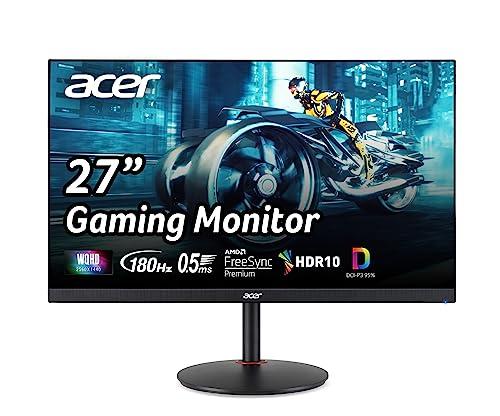
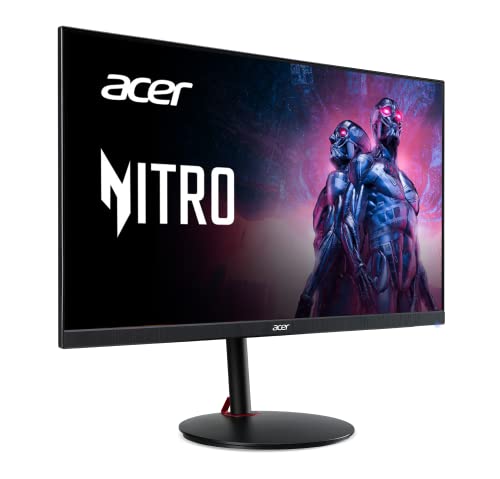
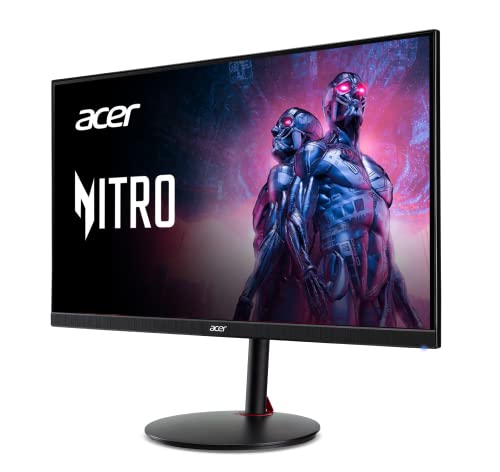
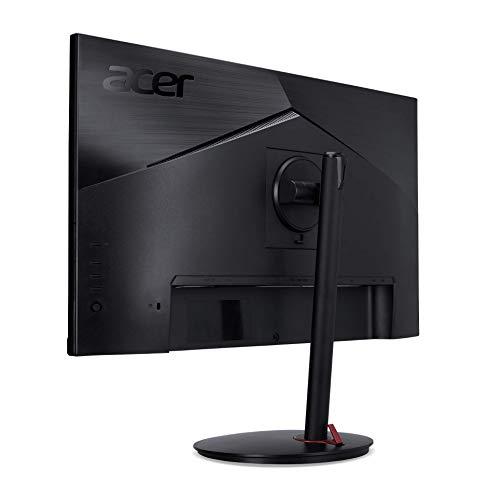
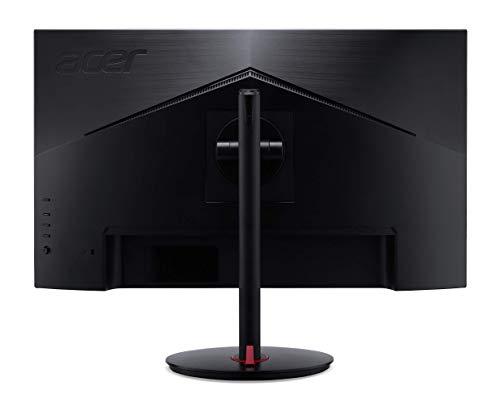
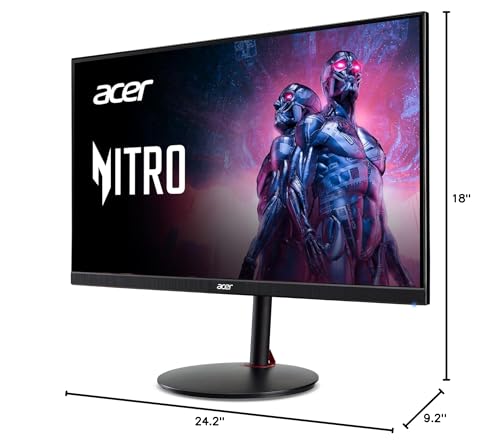
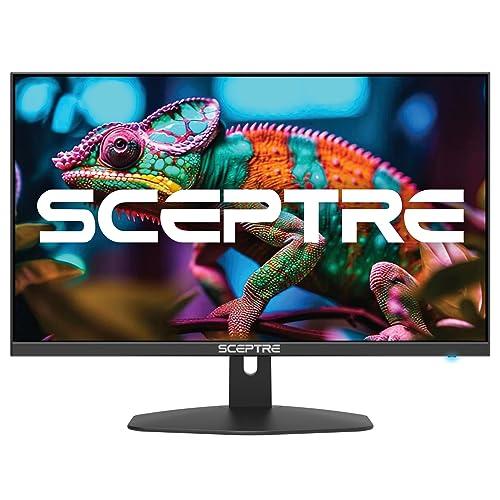
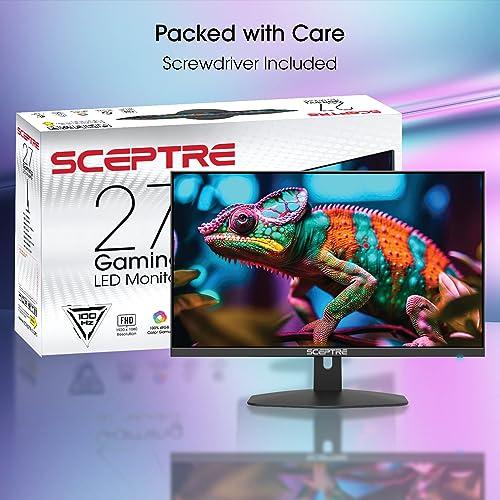
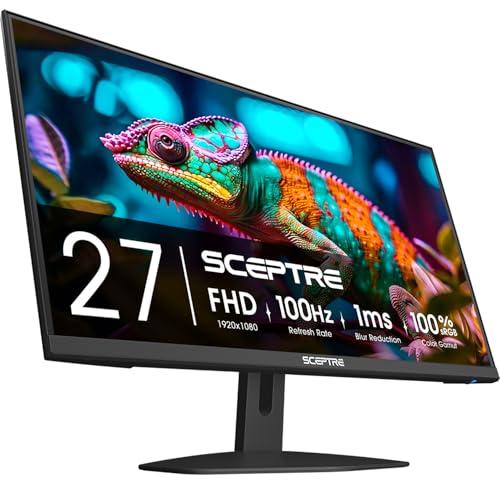
When shopping for a gaming monitor in 2024, you're faced with a classic dilemma: spend more for cutting-edge performance, or find a budget option that covers the basics. The Acer Nitro XV1 27" WQHD 180Hz IPS Gaming Monitor and Sceptre E275W-FW100T 27-inch Gaming Monitor represent two completely different approaches to this question.
Released in 2022, the Acer Nitro XV1 arrived during gaming's transition to higher refresh rates and 1440p resolution becoming mainstream. The Sceptre E275W-FW100T, also from around the same timeframe, positioned itself as an affordable entry point into higher refresh rate gaming. Since then, we've seen 1440p become the sweet spot for PC gaming, while 1080p monitors have increasingly moved toward budget territory.
At the time of writing, these monitors represent vastly different price points—the Acer costs roughly twice as much as the Sceptre. But does that price difference translate to meaningful performance gains, or are you paying for features you don't need?
Before diving into specifics, let's establish what actually matters in a gaming monitor. The most critical specifications aren't just marketing numbers—they directly impact your gaming experience and daily computer use.
Refresh rate measures how many times per second your monitor can display a new image, expressed in hertz (Hz). A 60Hz monitor refreshes 60 times per second, while a 180Hz monitor refreshes 180 times. Higher refresh rates create smoother motion, especially noticeable when tracking fast-moving objects in games or simply moving your mouse cursor across the screen.
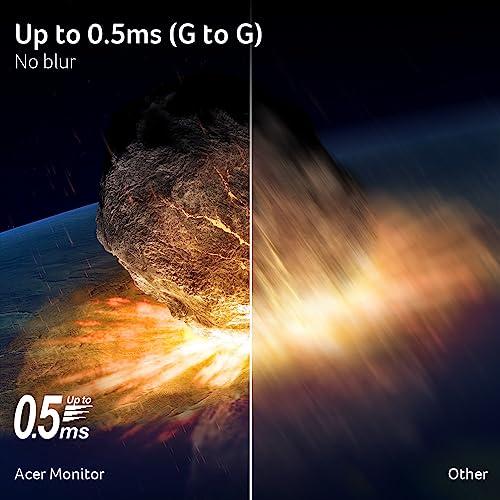
Response time indicates how quickly individual pixels can change from one color to another, measured in milliseconds (ms). Slower response times create "ghosting"—faint trails behind moving objects that blur fast action. This becomes particularly problematic in competitive gaming where split-second reactions matter.
Resolution determines image sharpness through pixel density. On a 27-inch display, 1080p provides about 82 pixels per inch (PPI), while 1440p delivers roughly 108 PPI. The difference becomes immediately apparent when reading text or viewing detailed game environments.
Panel technology affects everything from color accuracy to viewing angles. IPS (In-Plane Switching) panels offer consistent colors from different viewing angles but typically have lower contrast ratios. VA (Vertical Alignment) panels provide superior contrast and deeper blacks but may exhibit color shifts when viewed off-center.
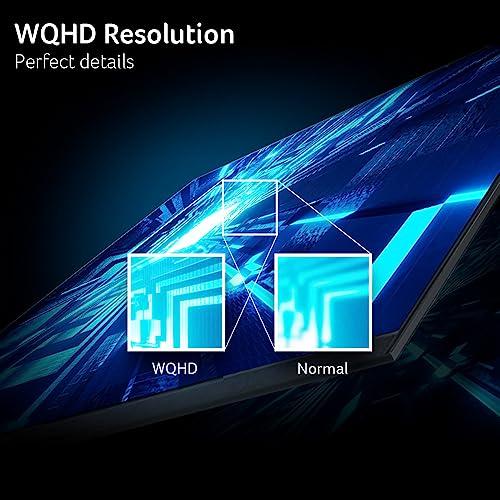
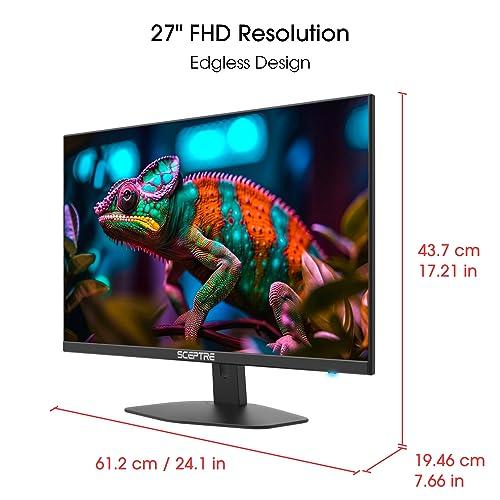
The most fundamental difference between these monitors lies in their resolution capabilities. The Acer Nitro XV1 delivers 2560×1440 pixels across its 27-inch panel, while the Sceptre stretches 1920×1080 pixels across the same screen size. This isn't just a numbers game—it dramatically affects daily usability.
Having used both 1080p and 1440p monitors extensively, the difference in text clarity is immediately obvious. On the Sceptre's 27-inch 1080p display, individual pixels become visible during normal use. Text appears slightly fuzzy, particularly smaller fonts in web browsers, spreadsheets, or document editing. This pixel structure becomes even more apparent in games, where distant details lose definition and fine textures appear blocky.
The Acer's 1440p resolution provides 1.78 times more pixels than 1080p, creating noticeably sharper images. Text remains crisp at smaller sizes, making it more comfortable for extended productivity work. In games, you'll see more detail in distant environments, cleaner texture rendering, and overall improved visual fidelity.
This resolution advantage extends beyond gaming into everyday computing tasks. If you spend significant time reading documents, browsing the web, or working with detailed content, the Acer's higher pixel density reduces eye strain and improves the overall experience.
However, there's a performance trade-off to consider. Your graphics card must render 1.78 times more pixels with 1440p, potentially reducing frame rates in demanding games. Modern mid-range graphics cards handle this well, but older or entry-level hardware might struggle to maintain high frame rates at 1440p compared to 1080p.
Here's where the fundamental differences between these monitors become most apparent. The Acer Nitro XV1 targets serious gamers with its 180Hz refresh rate and 1ms response time, while the Sceptre offers a more modest 100Hz refresh rate with 5ms response time.
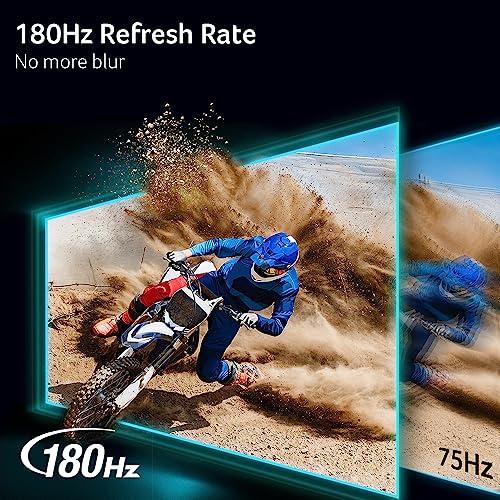
The 180Hz capability of the Acer represents current high-end gaming standards. When your graphics card can push frame rates above 100 fps, the difference between 100Hz and 180Hz becomes noticeable—motion appears more fluid, tracking moving targets feels more natural, and the overall gaming experience feels more responsive. This advantage is most apparent in competitive first-person shooters, racing games, and other fast-paced genres.
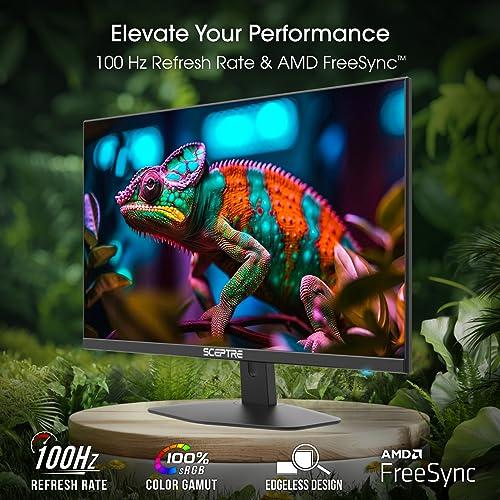
The Sceptre's 100Hz refresh rate still provides a meaningful upgrade over standard 60Hz monitors. The jump from 60Hz to 100Hz is actually more noticeable than from 100Hz to 180Hz, so casual gamers will still experience improved smoothness. However, as gaming technology continues advancing and higher refresh rates become more common, 100Hz may feel increasingly dated.
Response time differences tell a similar story. The Acer's 1ms gray-to-gray specification virtually eliminates ghosting artifacts. Fast-moving objects maintain sharp edges without trailing blur, crucial for competitive gaming where visual clarity can impact performance.
The Sceptre's 5ms response time, while acceptable for casual gaming, introduces visible ghosting during rapid motion. This becomes most apparent when quickly turning in first-person games or tracking fast-moving objects across the screen. While not game-breaking for casual play, competitive gamers will notice this limitation.
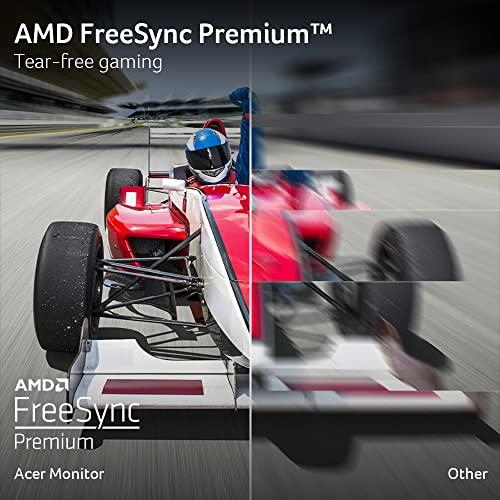
Both monitors support AMD FreeSync technology, which synchronizes the monitor's refresh rate with your graphics card's frame output to eliminate screen tearing—horizontal lines that appear when frame rates and refresh rates don't align. The Acer includes FreeSync Premium certification, indicating better performance across wider frame rate ranges.
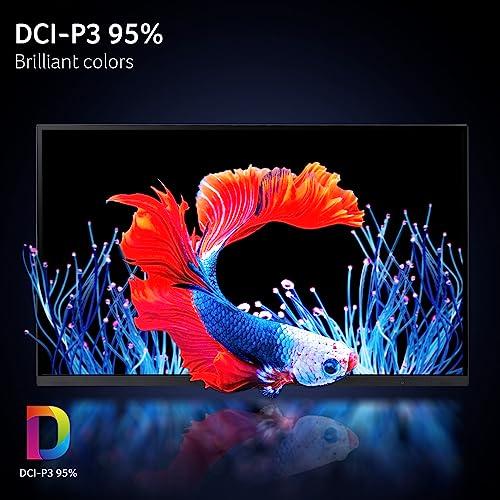
Color reproduction represents another area where these monitors take different approaches. The Acer Nitro XV1 uses an IPS panel covering 95% of the DCI-P3 color space, while the Sceptre employs a VA panel covering 100% of the smaller sRGB color space.
DCI-P3 is a wider color gamut used in professional video production and modern content creation. The Acer's coverage of this color space means it can display more vibrant and accurate colors, particularly beneficial for content creators or users who want the most visually impressive gaming experience. The IPS panel technology also ensures consistent color reproduction from different viewing angles—colors won't shift when you view the screen from the side.
The Sceptre's 100% sRGB coverage provides accurate colors for web content, office applications, and standard gaming. While sRGB represents a smaller color space than DCI-P3, it remains the standard for most content you'll encounter daily. The VA panel technology delivers the Sceptre's biggest visual advantage: a 3000:1 contrast ratio compared to the Acer's 1000:1.
This contrast difference has real-world implications. The Sceptre produces deeper, more convincing blacks, making dark scenes in movies and games appear more immersive. The improved contrast also enhances overall image depth and dimensionality. However, VA panels can exhibit color shifts when viewed from angles, potentially limiting the monitor's versatility in shared viewing situations.
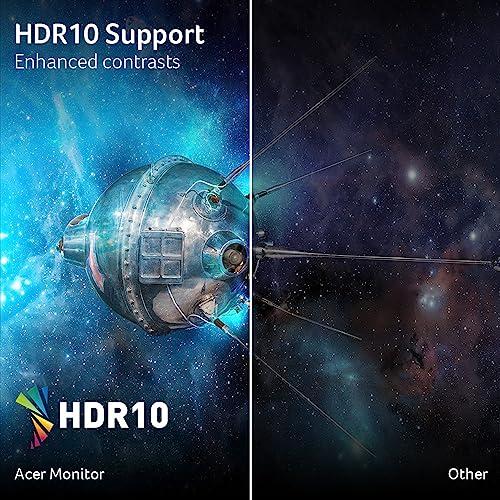
For HDR content, only the Acer offers HDR10 support. While neither monitor achieves the brightness levels needed for truly impressive HDR performance, the Acer's HDR capability provides improved highlight detail and expanded dynamic range with compatible content.
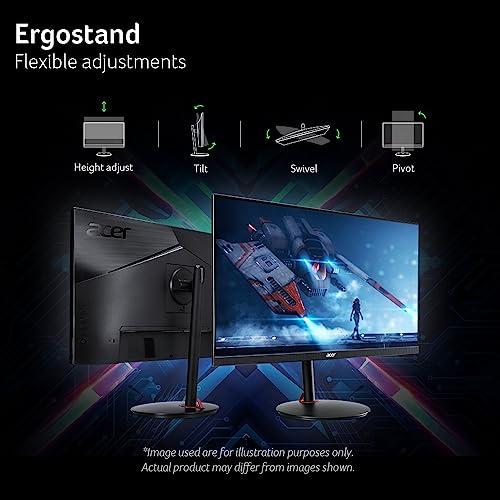
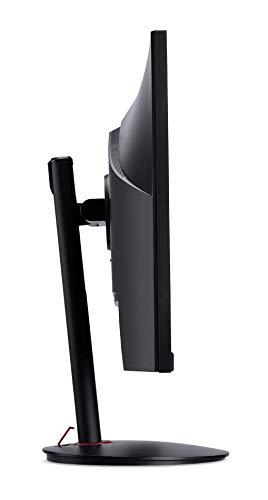
Extended gaming sessions demand comfortable viewing angles, and this is where the monitors' approaches diverge significantly. The Acer Nitro XV1 includes a fully adjustable stand offering height adjustment up to 4.7 inches, tilt ranging from -5° to 25°, complete swivel rotation, and pivot capability for portrait orientation.
This adjustability isn't just convenience—it's essential for ergonomic health during long gaming or work sessions. The ability to position the screen at eye level reduces neck strain, while swivel adjustment accommodates different seating positions or shared viewing scenarios.
The Sceptre provides only tilt adjustment, limiting positioning options considerably. While both monitors support VESA mounting for aftermarket stands or wall mounting, the Sceptre's basic stand may require additional investment in ergonomic accessories for comfortable extended use.
Build quality differences extend beyond adjustability. The Acer's construction feels more substantial and premium, with smoother adjustment mechanisms and a more stable base. The Sceptre maintains adequate build quality for its price point but doesn't match the Acer's refinement.
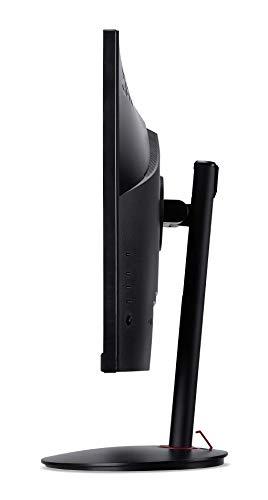
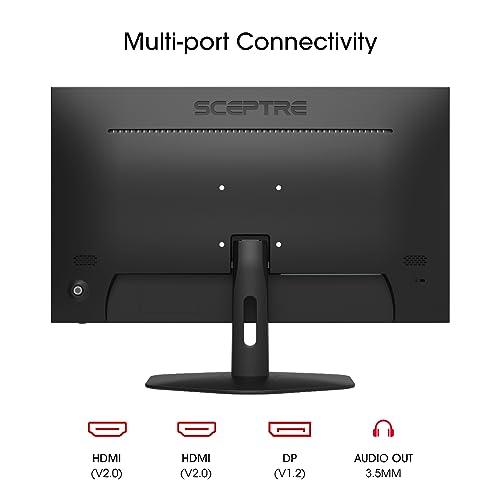
Both monitors provide adequate connectivity options, though with slight variations. The Acer Nitro XV1 includes one DisplayPort 1.2 and two HDMI 2.0 ports, while the Sceptre offers similar connectivity with one DisplayPort and two HDMI ports.
For maximum refresh rate performance, DisplayPort connections are typically preferred. The Acer achieves its full 180Hz refresh rate through DisplayPort, dropping to 144Hz over HDMI. The Sceptre maintains its 100Hz refresh rate through both connection types.
Both monitors include basic built-in speakers—adequate for system sounds and casual use but insufficient for serious gaming or entertainment. Most users will prefer dedicated speakers or headphones for better audio quality.
The Acer incorporates additional gaming-focused features including customizable crosshair overlays for improved aiming precision, refresh rate displays, and advanced picture adjustments through both on-screen menus and desktop software. The Sceptre provides more basic gaming modes optimized for FPS and RTS genres.
For users considering these monitors in home theater or console gaming setups, several factors come into play. The Acer's 1440p resolution and higher refresh rate make it more future-proof for next-generation consoles, though current consoles typically target 4K or 1080p resolution rather than 1440p.
The Sceptre's superior contrast ratio provides advantages for movie viewing and dark room gaming scenarios. VA panels generally deliver more cinematic blacks, enhancing the viewing experience for video content.
However, both monitors' 27-inch size limits their effectiveness as primary home theater displays. Most users seeking home theater functionality would benefit from larger displays, though these monitors can serve as excellent gaming-focused screens in bedroom or secondary entertainment setups.
After extensive research into user experiences and expert reviews, clear usage patterns emerge for each monitor. The Acer Nitro XV1 consistently receives praise from users who prioritize gaming performance and text clarity, while the Sceptre satisfies buyers focused primarily on value and basic gaming functionality.
Choose the Acer Nitro XV1 if you:
Choose the Sceptre E275W-FW100T if you:
Both monitors serve their intended markets effectively, but they target fundamentally different users. The Acer Nitro XV1 delivers genuinely superior gaming performance and daily usability that justifies its higher price for users who can appreciate these advantages. The resolution bump alone significantly improves the computing experience, while the refresh rate and response time advantages provide competitive gaming benefits.
The Sceptre E275W-FW100T offers remarkable value for budget-conscious buyers, delivering functional gaming performance and decent image quality at an accessible price point. While it can't match the Acer's specifications, it provides enough performance for casual gaming and basic computing tasks.
The decision ultimately comes down to how you'll use the monitor and what you value most. If gaming performance, text clarity, and long-term relevance matter to you, the Acer represents better value despite its higher price. If you need basic gaming functionality at minimal cost, the Sceptre delivers impressive capability for its price point.
In the rapidly evolving world of gaming displays, the Acer Nitro XV1 positions itself as a future-ready investment, while the Sceptre E275W-FW100T provides an affordable entry point into higher refresh rate gaming. Both serve their purposes well—the key is understanding which purpose aligns with your needs and budget.
| Acer Nitro XV1 27" WQHD 180Hz IPS Gaming Monitor | Sceptre 27-inch Gaming Monitor E275W-FW100T Display |
|---|---|
| Resolution - Determines text sharpness and gaming detail on 27" screens | |
| 2560 x 1440 (WQHD) - Sharp text, future-proof | 1920 x 1080 (Full HD) - Pixelated text, older standard |
| Refresh Rate - Higher numbers mean smoother motion in fast games | |
| 180Hz (DisplayPort) / 144Hz (HDMI) - Elite gaming performance | 100Hz - Good improvement over 60Hz but lags modern standards |
| Response Time - Lower numbers reduce ghosting and blur | |
| 1ms GTG - Virtually eliminates ghosting | 5ms GTG - Visible ghosting in fast motion |
| Panel Technology - Affects viewing angles and contrast | |
| IPS - Consistent colors from all angles, professional quality | VA - Superior contrast but color shifts at angles |
| Brightness - Important for well-lit rooms | |
| 250 nits - Adequate for most lighting conditions | 280 nits - 30 nits brighter, better for bright environments |
| Contrast Ratio - Affects black depth and image immersion | |
| 1,000:1 - Typical IPS contrast | 3,000:1 - 3x deeper blacks, more cinematic |
| Color Gamut - Determines color vibrancy and accuracy | |
| 95% DCI-P3 - Professional color space, content creation ready | 100% sRGB - Standard web colors, good for basic use |
| HDR Support - Enhanced contrast and color in compatible content | |
| HDR10 - Improved dynamic range | None - Standard dynamic range only |
| Stand Adjustability - Critical for ergonomic comfort | |
| Full adjustment (height, tilt, swivel, pivot) - Professional flexibility | Tilt only - Limited positioning, may need aftermarket stand |
| Adaptive Sync - Eliminates screen tearing | |
| AMD FreeSync Premium (40-180Hz range) - Premium tier | AMD FreeSync (48-100Hz range) - Basic tier |
| Target User - Who benefits most from each monitor | |
| Competitive gamers, content creators, productivity users | Casual gamers, budget-conscious buyers, secondary displays |
| Value Proposition - Performance per dollar consideration | |
| Higher cost but significantly better performance and longevity | Exceptional budget value with functional gaming features |
The Acer Nitro XV1 27" WQHD 180Hz IPS Gaming Monitor is significantly better for gaming, especially competitive gaming. It offers a 180Hz refresh rate compared to the Sceptre's 100Hz, plus a faster 1ms response time versus 5ms. The Acer also provides 1440p resolution for sharper gaming visuals, while the Sceptre E275W-FW100T is limited to 1080p.
The primary differences are resolution and performance level. The Acer Nitro XV1 delivers 1440p resolution with 180Hz refresh rate targeting serious gamers, while the Sceptre E275W-FW100T offers 1080p resolution with 100Hz refresh rate for budget-conscious casual gamers. The Acer costs roughly twice as much but provides significantly better performance.
Yes, the Sceptre E275W-FW100T works well for casual gaming. The 100Hz refresh rate is a noticeable improvement over standard 60Hz monitors, and it includes AMD FreeSync to reduce screen tearing. However, the 5ms response time may show some ghosting in very fast-paced games, making the Acer Nitro XV1 better for competitive gaming.
For movie watching, the Sceptre E275W-FW100T actually has an advantage with its VA panel providing a 3,000:1 contrast ratio for deeper blacks. However, the Acer Nitro XV1 offers higher 1440p resolution for sharper detail and HDR10 support. The Acer also has better color accuracy with 95% DCI-P3 coverage.
Yes, both the Acer Nitro XV1 and Sceptre E275W-FW100T work with modern gaming consoles through HDMI connections. The Acer can display console games at up to 144Hz over HDMI, while the Sceptre supports up to 100Hz. Both monitors will enhance console gaming compared to standard 60Hz displays.
The Acer Nitro XV1 27" WQHD 180Hz IPS Gaming Monitor is much better for office work due to its 1440p resolution providing sharper text on the 27-inch screen. The Sceptre's 1080p resolution appears pixelated for text at this screen size. The Acer also offers full stand adjustability for ergonomic comfort during long work sessions.
The Acer Nitro XV1 offers superior color accuracy with 95% DCI-P3 color gamut coverage, making it suitable for content creation and professional work. The Sceptre E275W-FW100T covers 100% sRGB, which is adequate for general use but represents a smaller color space. The Acer's IPS panel also maintains consistent colors from different viewing angles.
Yes, the Acer Nitro XV1 features a premium build with full ergonomic adjustability including height, tilt, swivel, and pivot functions. The Sceptre E275W-FW100T has a more basic build with only tilt adjustment available. Both monitors support VESA mounting, but the Acer feels more substantial and refined overall.
This depends on your needs. The Sceptre E275W-FW100T offers exceptional budget value for casual gamers and basic computing needs. The Acer Nitro XV1 costs significantly more but provides much better performance that justifies the price for serious gamers, content creators, and users wanting long-term future-proofing.
Both the Acer Nitro XV1 and Sceptre E275W-FW100T officially support AMD FreeSync to eliminate screen tearing. The Acer has FreeSync Premium certification for better performance. While neither has official G-Sync certification, the Acer works well with NVIDIA graphics cards in G-Sync compatible mode.
The Acer Nitro XV1 27" WQHD 180Hz IPS Gaming Monitor is far superior for competitive esports. Its 180Hz refresh rate and 1ms response time provide the performance advantages needed for competitive play. The higher 1440p resolution also offers more visual information in games. The Sceptre E275W-FW100T simply cannot match this level of performance for serious competitive gaming.
The Acer Nitro XV1's main drawbacks are its higher price point and typical IPS panel limitations like lower contrast ratio (1,000:1) compared to VA panels. The Sceptre E275W-FW100T's key limitations include pixelated text due to 1080p on 27 inches, slower 5ms response time causing ghosting, and basic stand with limited adjustability. The Sceptre also lacks HDR support.
We've done our best to create useful and informative comparisons to help you decide what product to buy. Our research uses advanced automated methods to create this comparison and perfection is not possible - please contact us for corrections or questions. These are the sites we've researched in the creation of this article: bestbuy.com - tomshardware.com - displayninja.com - youtube.com - youtube.com - youtube.com - store.acer.com - manuals.plus - displayspecifications.com - pangoly.com - pcpartpicker.com - casariolab.art - store.acer.com - versus.com - youtube.com - pcvarge.com - walmart.com - cubed.run - productchart.com - displayninja.com - target.com - youtube.com - versus.com - youtube.com - youtube.com - sceptre.com - sceptre.com

Privacy Policy
Terms and Conditions - Affiliate Policy
Home Security
© Copyright 2008-2026.
11816 Inwood Rd #1211, Dallas, TX 75244