



Gaming monitors have evolved dramatically over the past few years, with technologies that were once reserved for professional displays now appearing in consumer products. But with prices ranging from under $100 to over $400 for similar-sized screens, it's natural to wonder whether paying more actually gets you better performance where it counts.
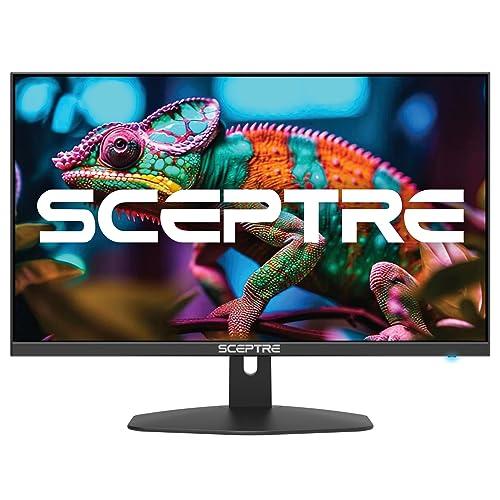
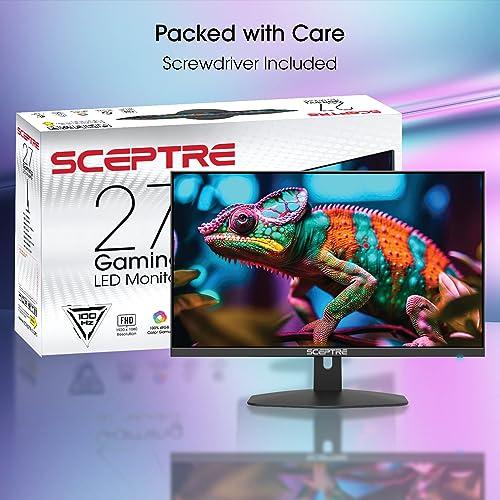
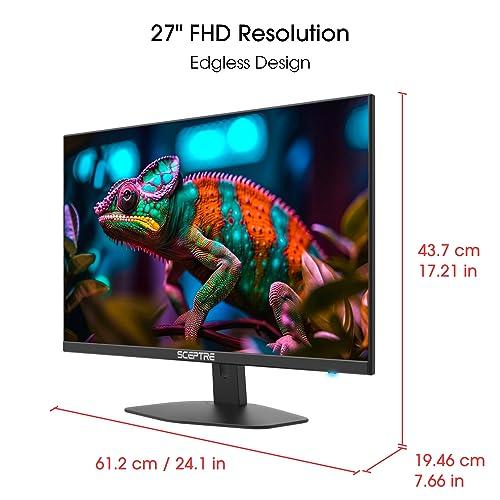
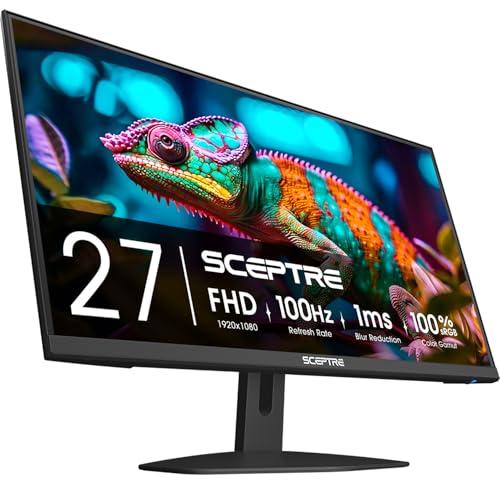
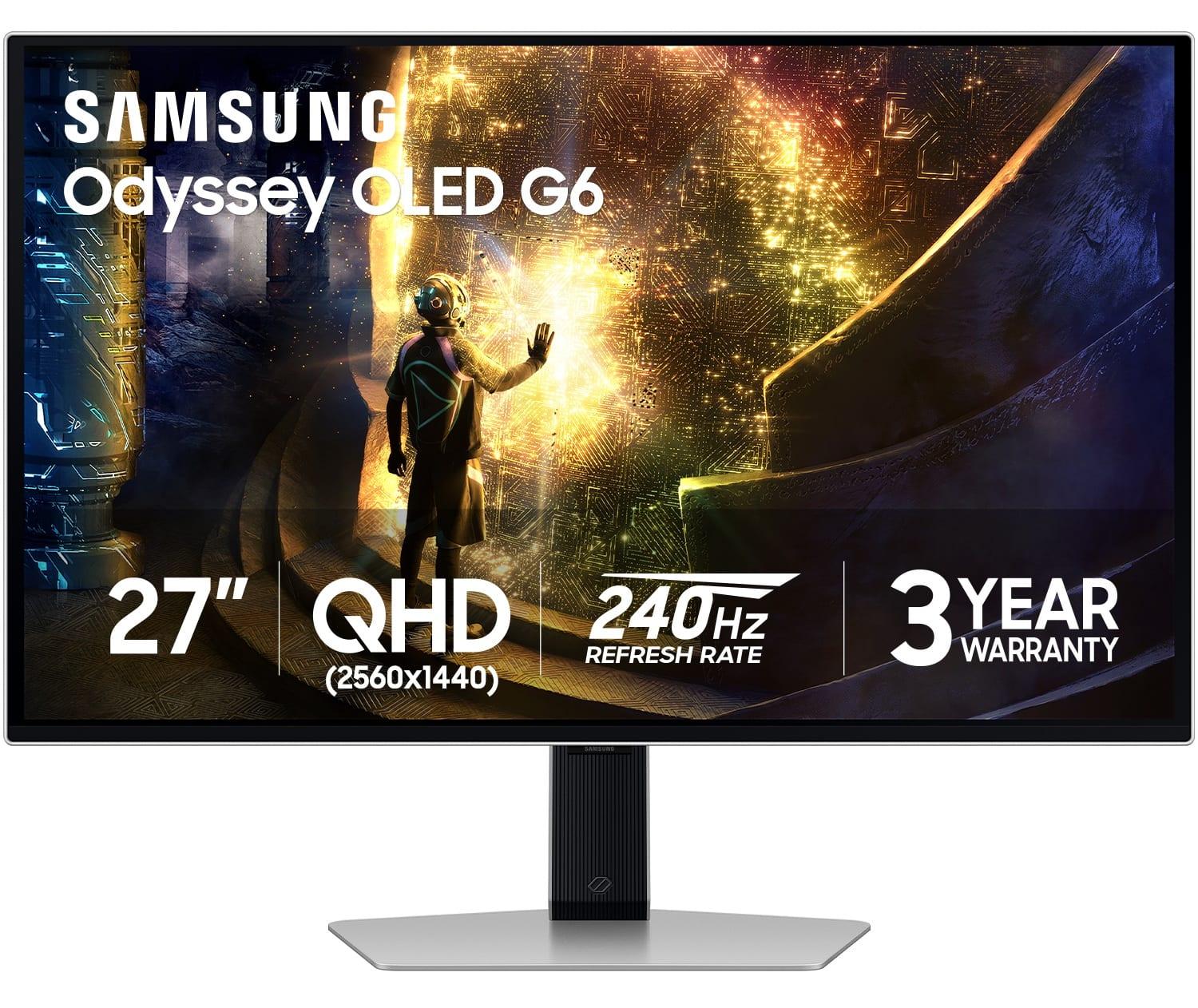
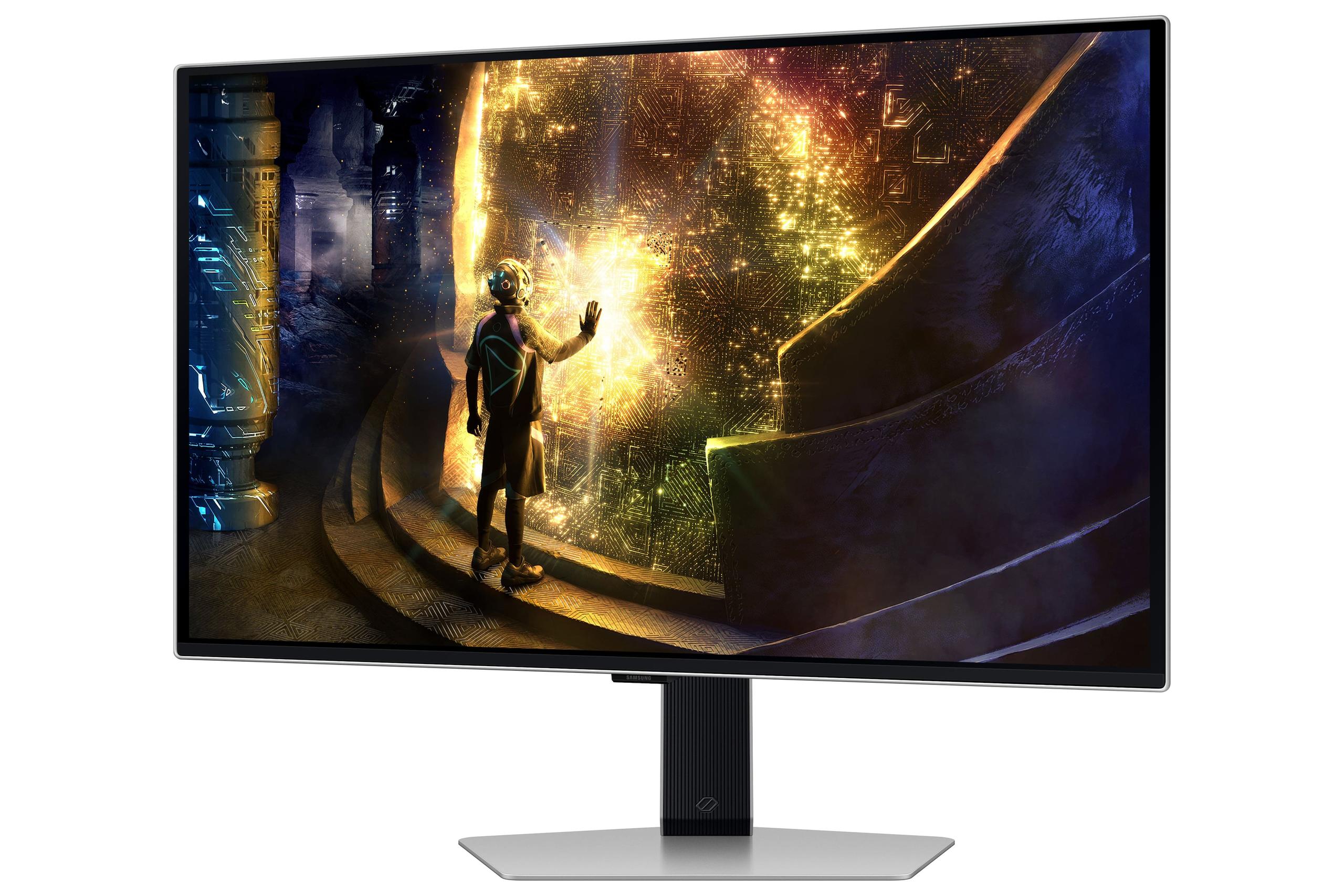
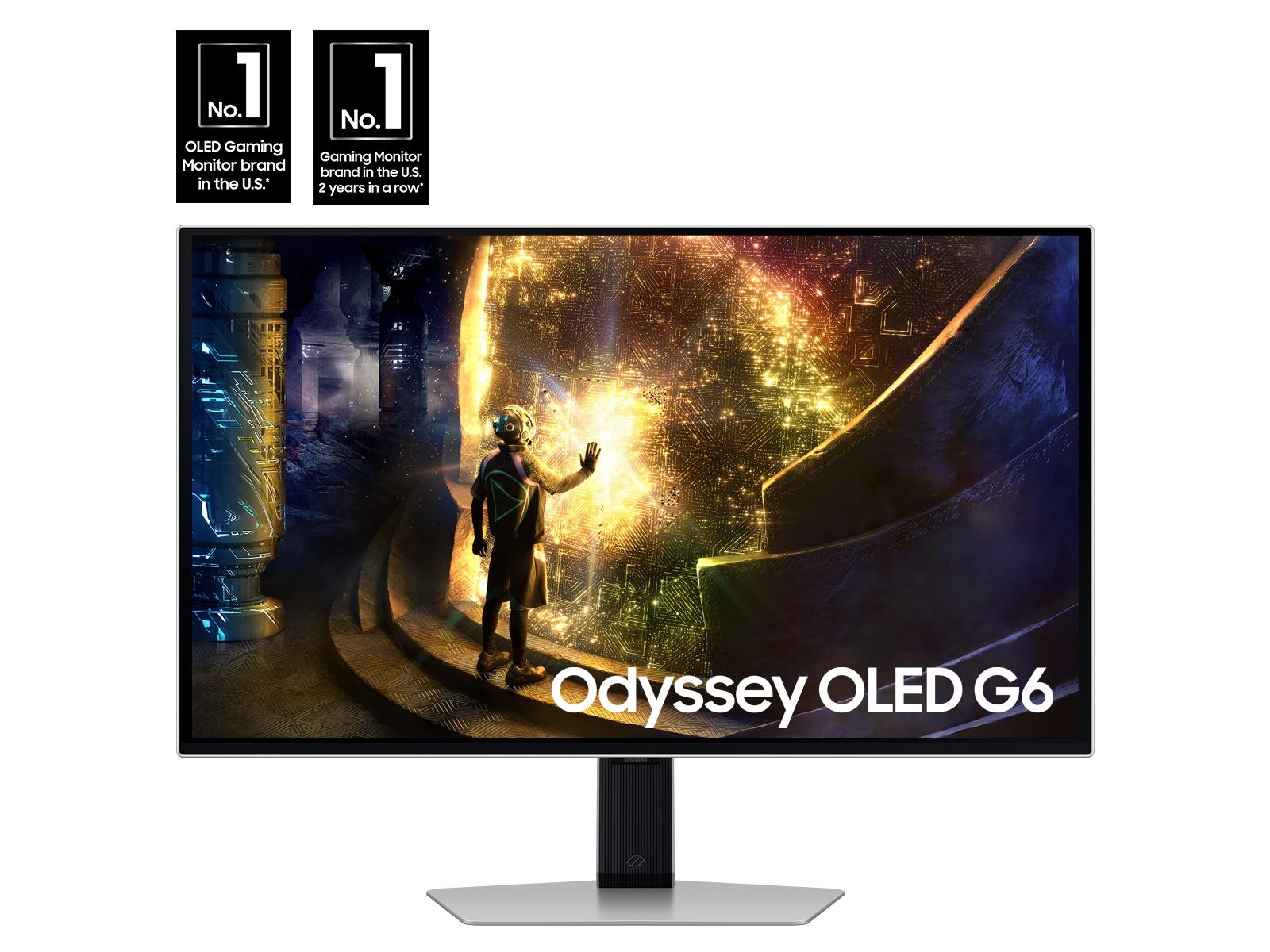
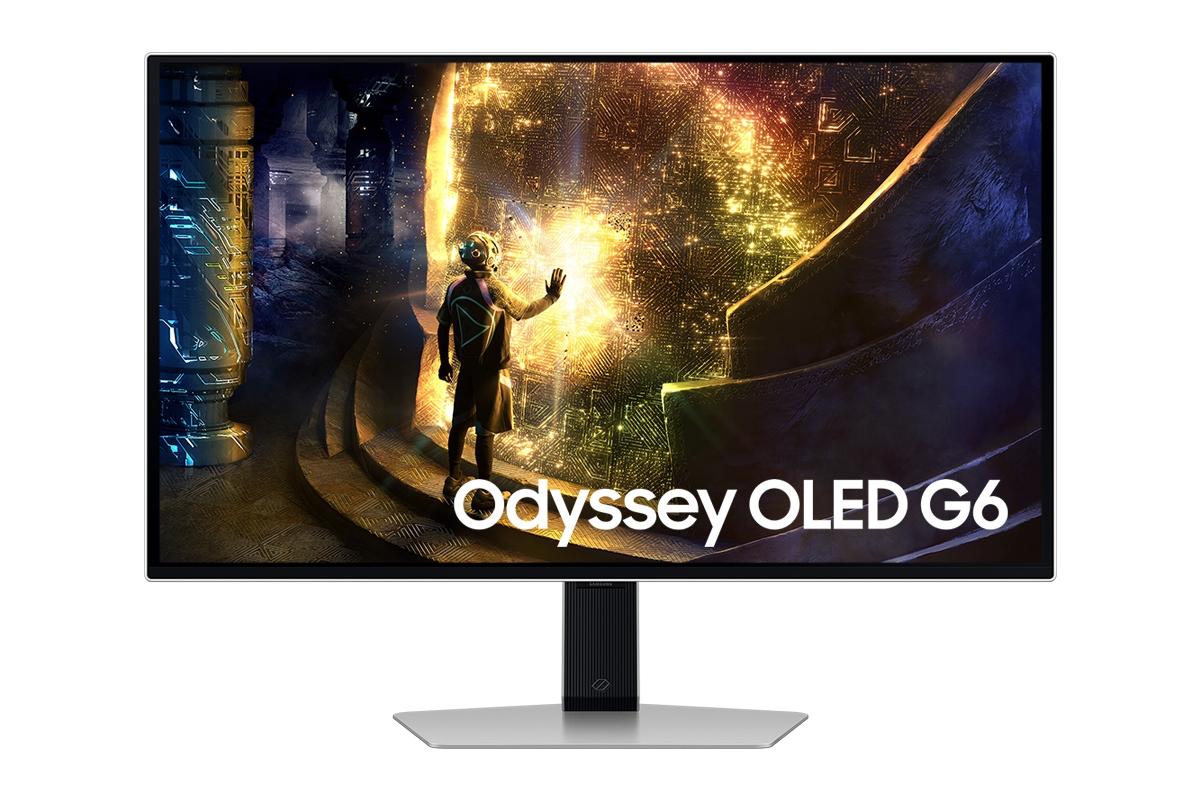
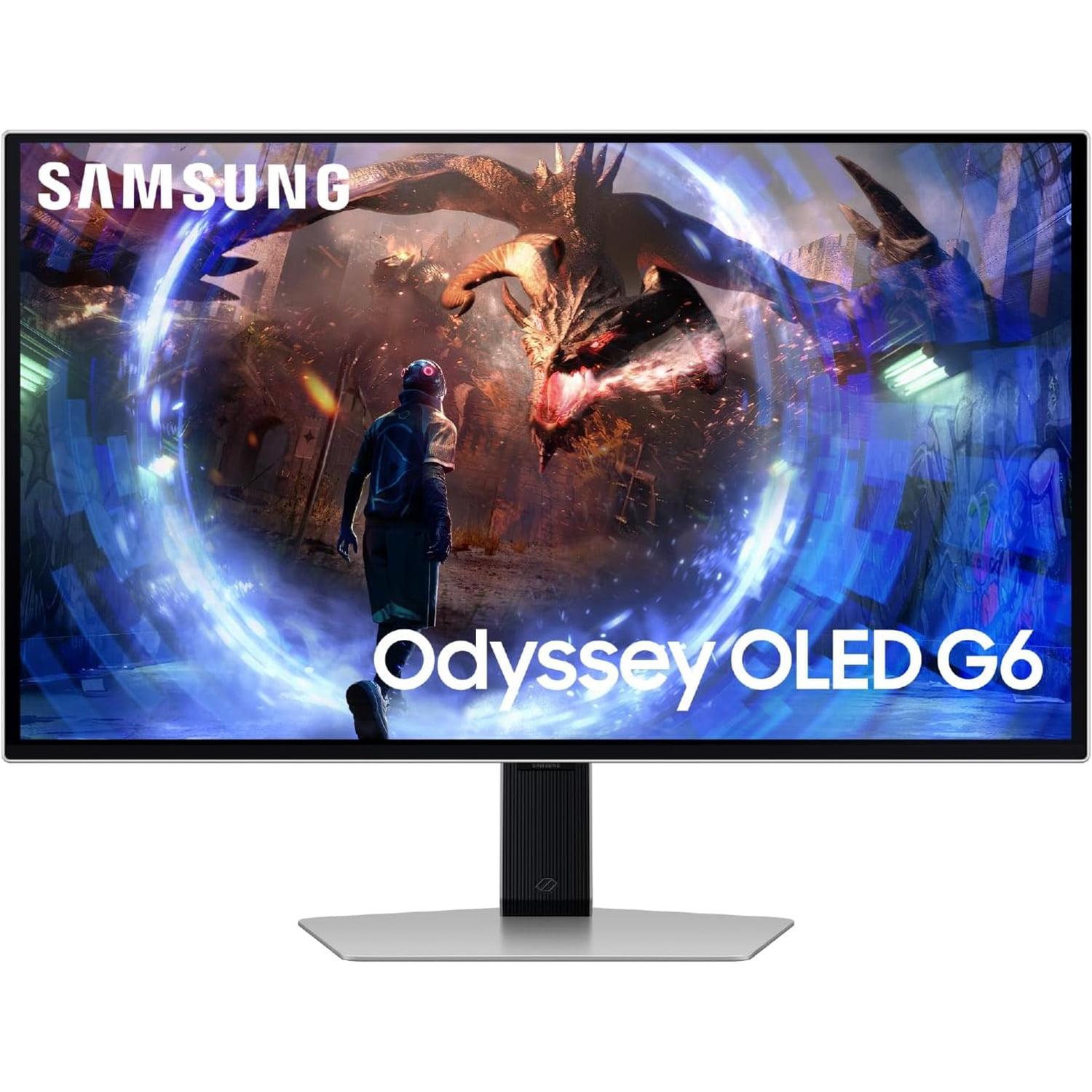
Today we're comparing two 27-inch gaming monitors that represent opposite ends of the market: the Sceptre E275W-FW100T, a budget VA panel released in 2023, and the Samsung Odyssey OLED G6, a premium QD-OLED display that launched in 2024. The price difference between these monitors is substantial – at the time of writing, you're looking at roughly four times the cost to step up from the Sceptre to the Samsung.
Before diving into specifics, it's worth understanding what separates a gaming monitor from a regular display. Gaming monitors prioritize three key performance areas: response time (how quickly pixels can change colors), refresh rate (how many times per second the screen updates), and input lag (the delay between your action and seeing it on screen).
These factors directly impact your gaming experience. A slow response time creates ghosting – those blurry trails behind moving objects that can make fast-paced games feel sluggish. Low refresh rates can make motion appear choppy, especially when your graphics card is capable of rendering more frames than your monitor can display. High input lag can mean the difference between landing that crucial headshot or missing entirely in competitive games.
Panel technology plays a huge role here. VA (Vertical Alignment) panels like the one in the Sceptre E275W-FW100T offer excellent contrast ratios but traditionally struggle with response times. OLED panels, like in the Samsung Odyssey OLED G6, can switch individual pixels on and off instantly, achieving response times that were impossible just a few years ago.
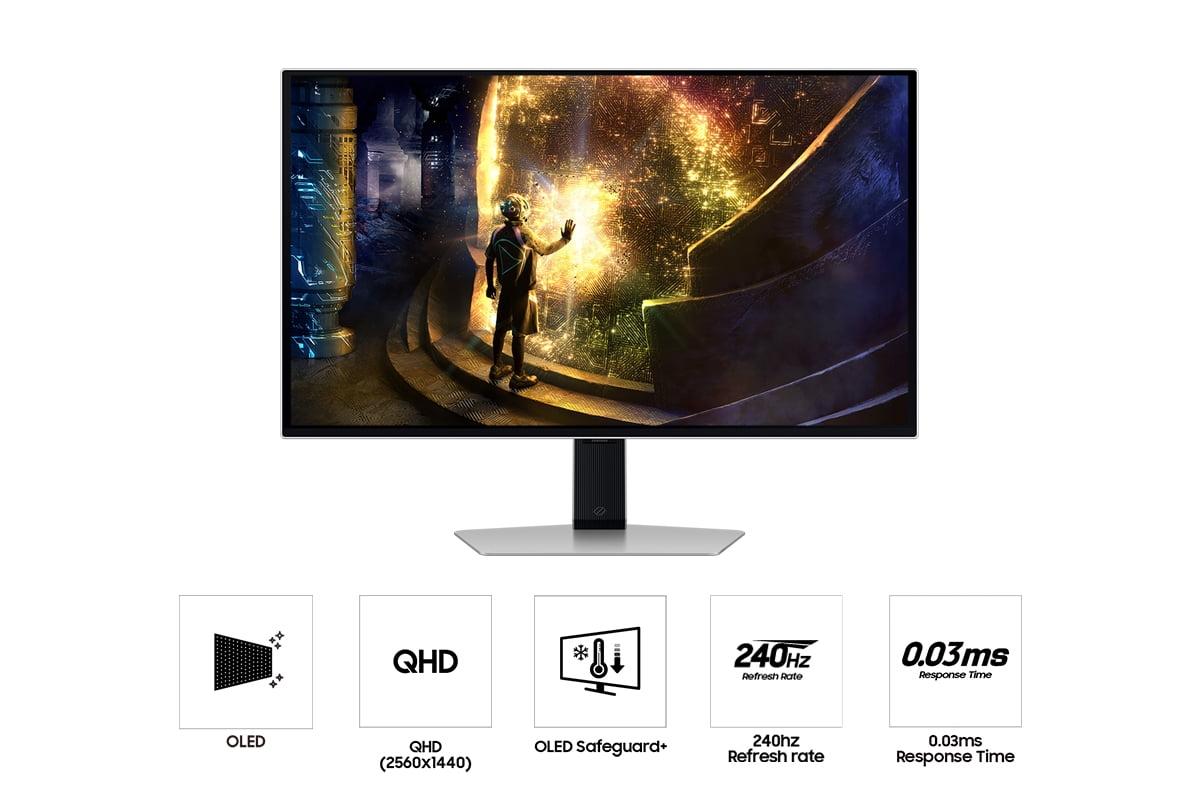
The most obvious difference between these monitors is resolution. The Sceptre E275W-FW100T uses a 1920×1080 Full HD panel, while the Samsung Odyssey OLED G6 steps up to 2560×1440 QHD resolution. On a 27-inch screen, this translates to a significant difference in pixel density – roughly 82 pixels per inch versus 109 pixels per inch.
In practical terms, this means text appears noticeably sharper on the Samsung, and fine details in games become more visible. The resolution difference becomes particularly apparent in games with small UI elements or detailed textures. However, it's important to note that driving 1440p resolution requires significantly more graphics processing power than 1080p – you'll need a mid-range to high-end graphics card to take full advantage of the Samsung's resolution.
The contrast story is more nuanced. The Sceptre's VA panel achieves a respectable 3,000:1 contrast ratio, which means the brightest whites are 3,000 times brighter than the darkest blacks the panel can produce. This gives it deeper blacks than most IPS panels and makes dark scenes in games more immersive than you'd expect from a budget monitor.
But OLED technology takes contrast to another level entirely. The Samsung Odyssey OLED G6 achieves what's technically called "infinite" contrast because individual pixels can turn completely off, producing true black with no light bleed. In dark gaming environments – think exploring caves in Minecraft or stealth sections in action games – this creates an almost three-dimensional sense of depth that's simply not possible with backlit LCD panels.
Color performance also favors the Samsung significantly. While the Sceptre covers 100% of the sRGB color space (which is perfectly adequate for most content), the Samsung's quantum dot enhanced OLED technology delivers colors that appear more vivid and accurate. This matters not just for gaming but also for watching movies or doing any color-sensitive work.
Here's where the technology gap becomes most apparent in real-world gaming. The Sceptre E275W-FW100T has a 5ms gray-to-gray response time, which was considered acceptable for gaming a few years ago but now feels sluggish compared to what's possible with modern panels. In fast-paced games, especially first-person shooters or racing games, you'll notice ghosting artifacts – blurry trails that follow moving objects across the screen.
The Samsung Odyssey OLED G6, by contrast, achieves a 0.03ms response time. To put this in perspective, that's more than 160 times faster than the Sceptre. In practical terms, this means virtually zero ghosting or motion blur, even in the most chaotic gaming scenarios. Objects appear crisp and defined even during rapid movement, which can provide a genuine competitive advantage in fast-paced games.
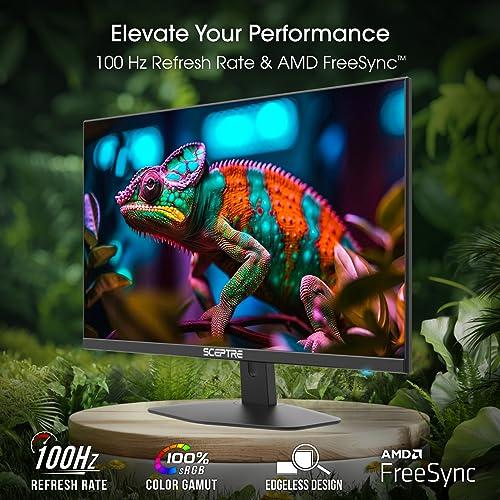
Refresh rate differences are equally dramatic. The Sceptre tops out at 100Hz, meaning it can display up to 100 frames per second. This is a meaningful improvement over standard 60Hz monitors and does provide smoother motion in games. However, the Samsung's 360Hz refresh rate allows for display of up to 360 frames per second – assuming your graphics card can generate that many frames.
Now, you might reasonably ask whether anyone actually needs 360Hz. The honest answer is that it depends on what you play and how competitive you are. For casual gaming or single-player adventures, 100Hz is perfectly sufficient and the difference may not be immediately noticeable. But for competitive multiplayer games, especially first-person shooters, the combination of high refresh rates and near-zero response times can provide measurable improvements in reaction time and target tracking.
Both monitors support adaptive sync technology, which synchronizes the monitor's refresh rate with your graphics card's frame output to eliminate screen tearing – those horizontal lines that appear when the monitor and graphics card fall out of sync. The Sceptre supports AMD FreeSync in the 48-100Hz range, which covers most gaming scenarios for its target market.
The Samsung takes this further with support for both AMD FreeSync Premium Pro and NVIDIA G-SYNC compatibility, with a wider variable refresh rate range. This broader support means smoother gaming regardless of whether you have an AMD or NVIDIA graphics card, and the wider range provides tear-free gaming across more diverse frame rate scenarios.
The Samsung also includes gaming-specific features like Virtual Aim Point (an on-screen crosshair for games that don't provide one) and various picture modes optimized for different game types. While these might seem like minor additions, they reflect the monitor's focus on serious gaming applications.
The design differences between these monitors reflect their different target markets. The Sceptre E275W-FW100T has a straightforward, functional design with slim bezels and a basic stand that only allows tilt adjustment. It's clearly designed to minimize cost while providing adequate functionality. The stand feels somewhat flimsy, and our research suggests many users end up replacing it with a VESA mount for better stability and adjustability.
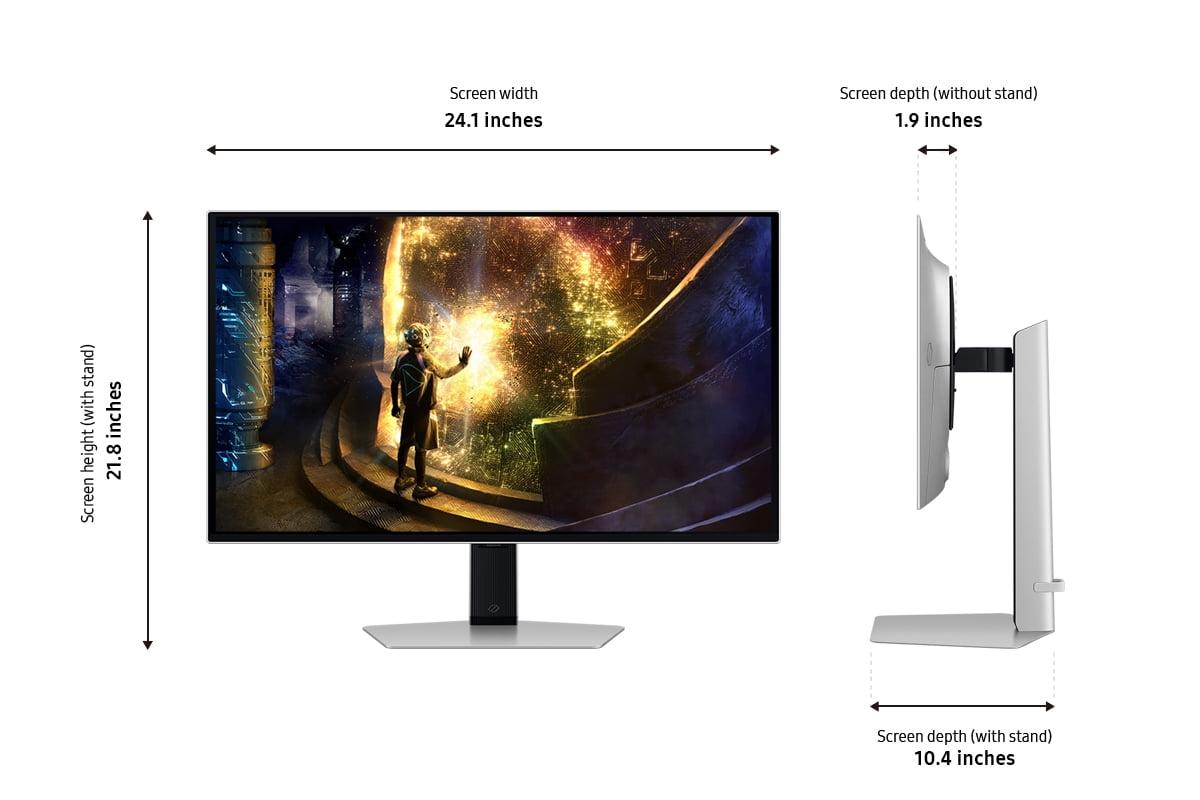
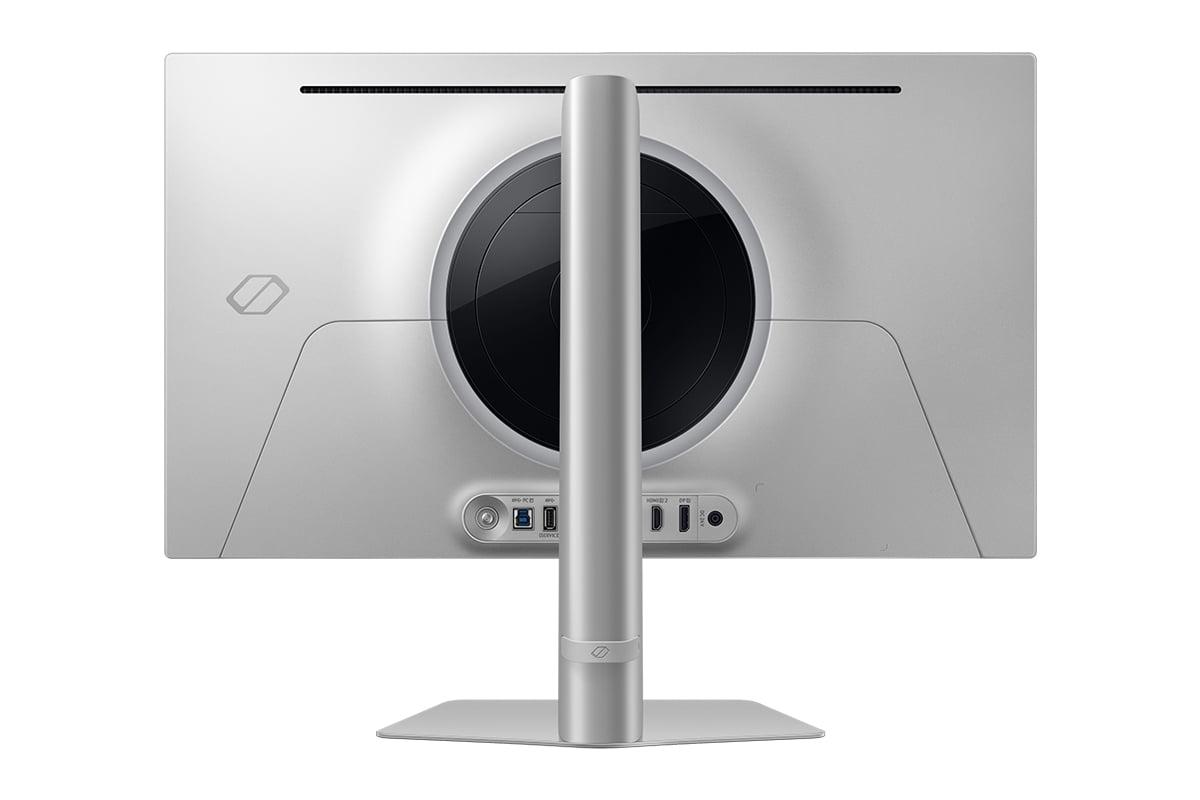
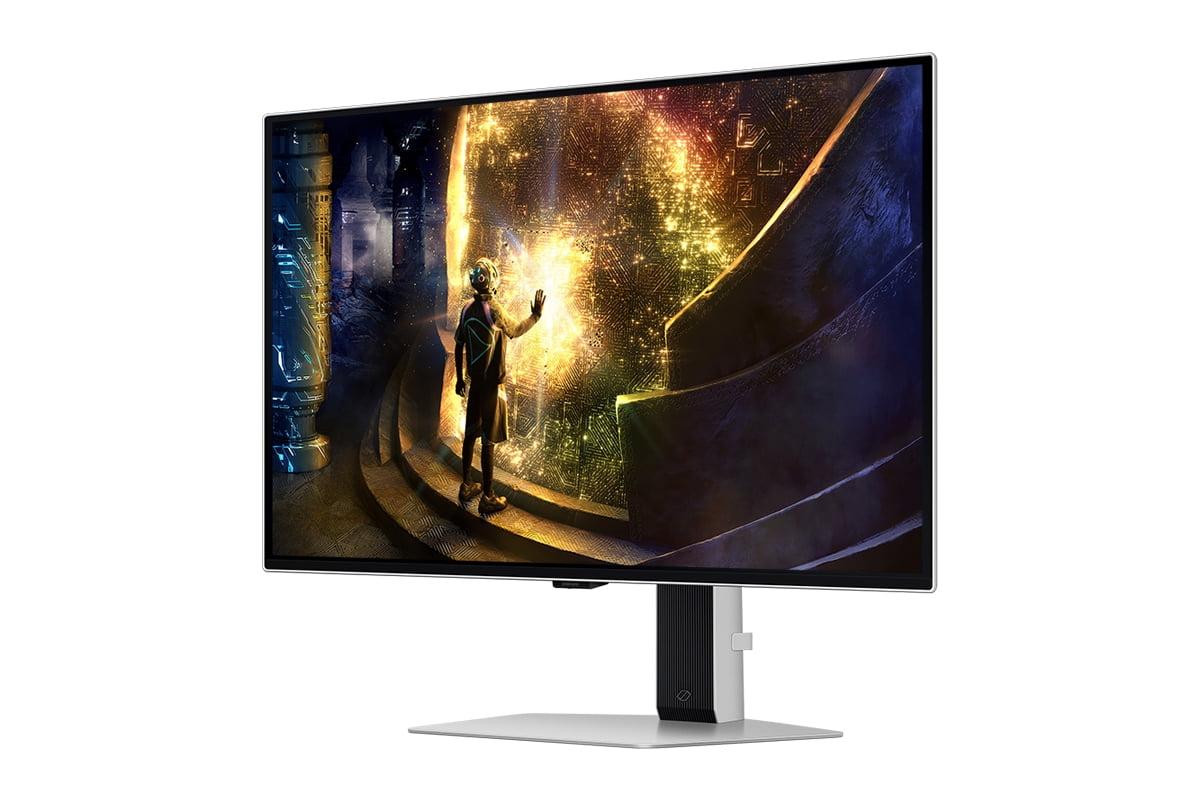
The Samsung Odyssey OLED G6 features a premium metal construction with a fully adjustable stand supporting height, tilt, and swivel adjustments. The build quality feels substantially more robust, and small details like cable management and port accessibility are better thought out. Samsung has also included customizable RGB lighting on the back of the monitor, which adds visual appeal for gaming setups, though this is clearly a matter of personal preference.
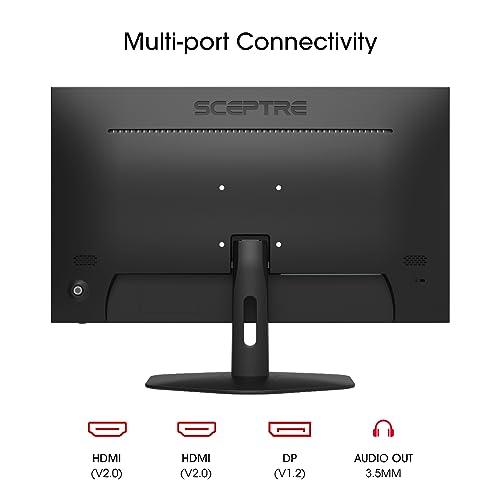
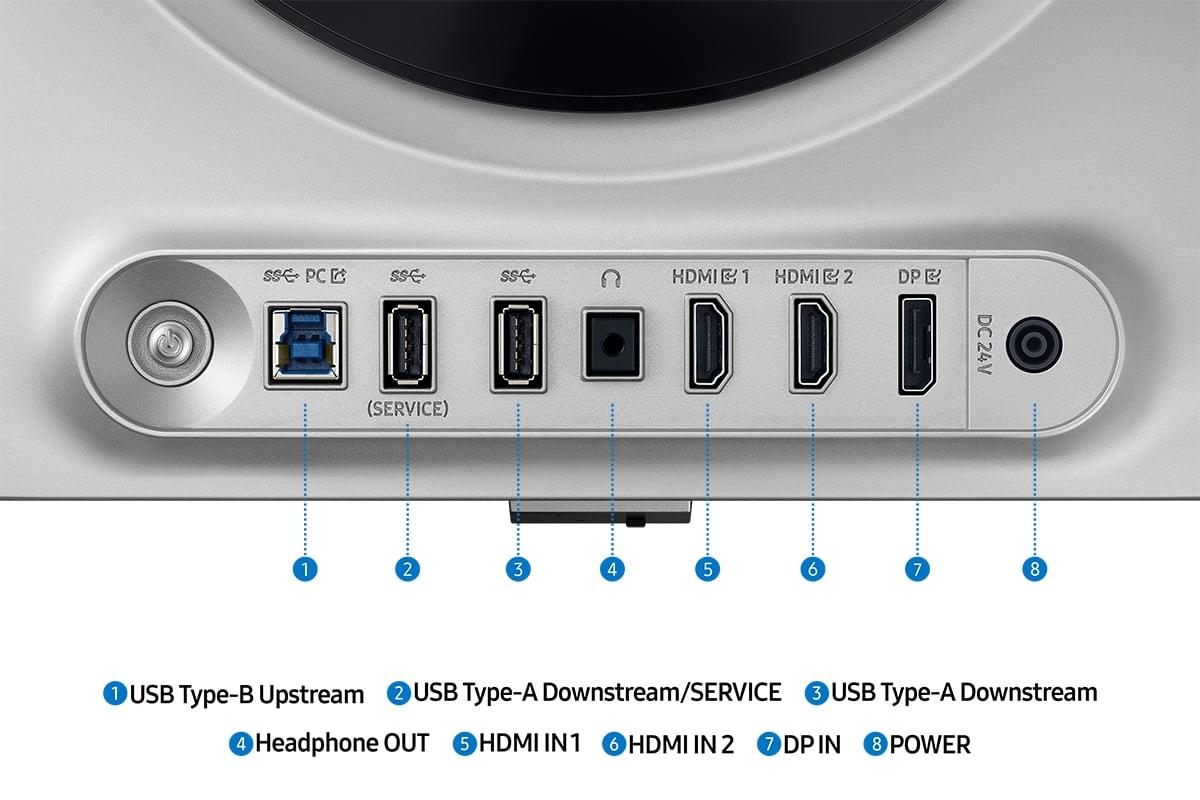
Port selection reveals another practical difference. The Sceptre provides two HDMI 2.0 ports and one DisplayPort 1.2, which covers basic connectivity needs but limits bandwidth for high refresh rate gaming. The Samsung offers two HDMI 2.1 ports and DisplayPort 1.4, along with USB hub functionality. The HDMI 2.1 ports are particularly important for connecting modern gaming consoles like the PlayStation 5 or Xbox Series X at their full capabilities.
This connectivity difference becomes important when considering future-proofing. Gaming hardware continues advancing rapidly, and having ports that can handle higher bandwidth becomes increasingly valuable as frame rates and resolutions continue climbing.
OLED technology brings unique advantages but also some considerations worth discussing. The per-pixel lighting control in the Samsung Odyssey OLED G6 eliminates the backlight bleed and uniformity issues common in LCD panels. Colors appear more vibrant, blacks are truly black, and the overall image quality has a depth that's immediately apparent when switching from an LCD display.
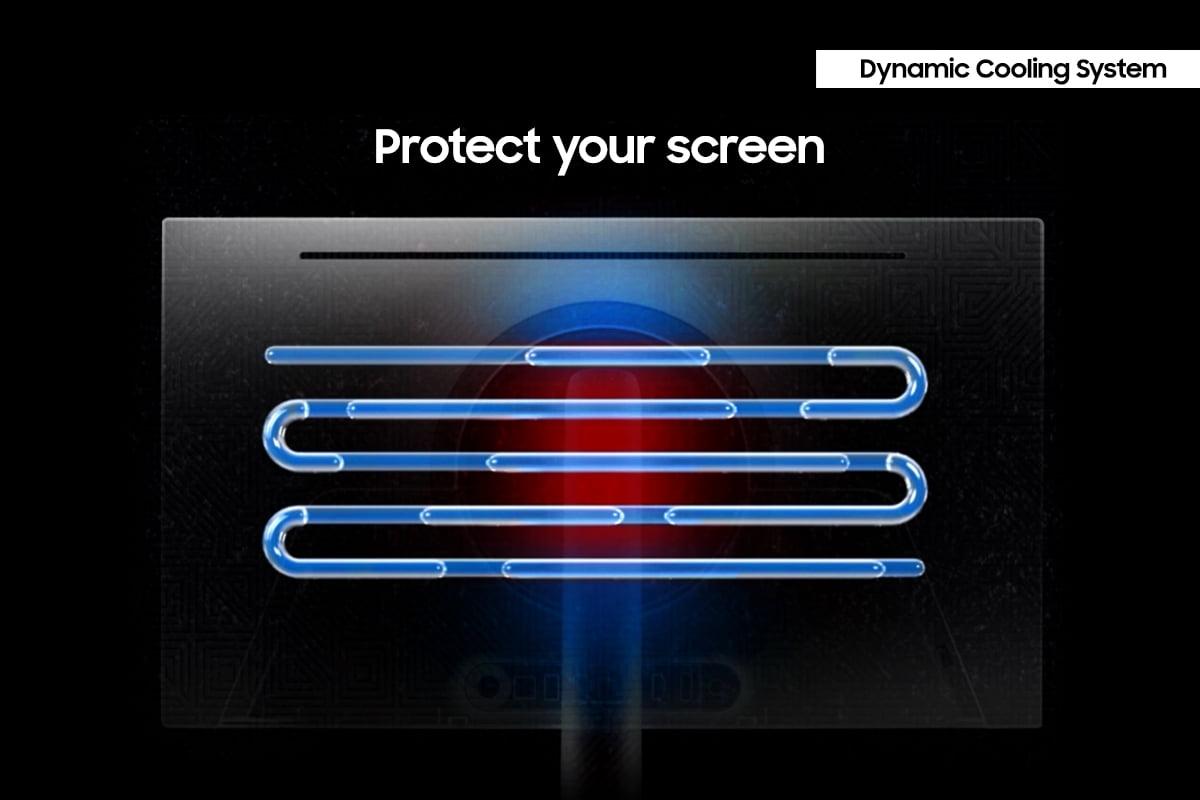
However, OLED panels do carry some long-term considerations. Burn-in – permanent image retention from static elements displayed for extended periods – is a potential concern, though Samsung has implemented various protection technologies including automatic brightness adjustment and pixel shifting to mitigate these risks. Modern OLED monitors are significantly more resistant to burn-in than earlier generations, but it's still worth being mindful of leaving static images displayed for hours at a time.
The Sceptre's VA panel doesn't face burn-in concerns but does have its own limitations, including some color shifting when viewed from extreme angles and the motion blur issues we've discussed.
For competitive gaming, particularly fast-paced shooters like Counter-Strike, Valorant, or Apex Legends, the Samsung Odyssey OLED G6 provides clear advantages. The combination of near-zero response times and high refresh rates can improve target tracking and reduce the blur that might obscure enemies during rapid movements. If you're serious about competitive gaming and have the graphics hardware to support high frame rates at 1440p, the Samsung justifies its premium pricing.
For casual gaming, especially single-player adventures, strategy games, or RPGs, the performance gap becomes less critical. Games like Civilization, Stardew Valley, or even many story-driven action games don't benefit as much from ultra-high refresh rates. The Sceptre E275W-FW100T handles these scenarios perfectly well, and the money saved could be better invested in other parts of your gaming setup.
If you're considering either monitor for movie watching or console gaming from a couch, there are some important factors to consider. The Samsung's superior contrast and color performance make it significantly better for movie watching, especially in darker viewing environments where OLED's perfect blacks create a more cinematic experience.
However, both monitors are designed primarily for desktop use rather than living room entertainment. The stands and port layouts assume you'll be sitting relatively close to the screen. For true home theater use, you'd likely want to consider larger displays or TVs specifically designed for living room viewing distances.
The choice between these monitors ultimately comes down to matching your specific needs and budget with the right level of performance. The Sceptre E275W-FW100T delivers solid value for casual gaming and general computer use. If your gaming consists mainly of slower-paced titles, if you're working with a limited budget, or if you're building a multi-monitor setup where individual display quality is less critical, it's a reasonable choice.
The Samsung Odyssey OLED G6 makes sense when gaming performance is a priority and you have the budget and hardware to take advantage of its capabilities. If you play competitive multiplayer games, if you have a high-end graphics card capable of driving 1440p at high frame rates, or if display quality significantly impacts your enjoyment of games and media, the premium pricing becomes justifiable.
It's also worth considering the longevity factor. Technology moves quickly, and the Sceptre represents current budget technology that will likely feel outdated sooner than the Samsung, which incorporates cutting-edge display technology that should remain competitive for several years.
The performance gap between these monitors reflects genuine technological differences rather than marketing hype. The Samsung Odyssey OLED G6 delivers measurably superior motion clarity, image quality, and gaming features that matter for serious gaming applications. However, these improvements come at a significant cost premium that may not make sense for every user or use case.
For most casual gamers and general computer users, the Sceptre E275W-FW100T provides adequate performance at an accessible price point. For competitive gamers, enthusiasts with high-end hardware, or users who prioritize display quality, the Samsung's premium features justify the higher investment. The key is honestly assessing your specific needs and matching them with the appropriate level of display technology.
| Sceptre 27-inch Gaming Monitor E275W-FW100T | Samsung 27" Odyssey OLED G6 QHD 360Hz |
|---|---|
| Panel Technology - Determines contrast, colors, and response time capabilities | |
| VA (Vertical Alignment) LCD with LED backlight | QD-OLED (Quantum Dot Organic LED) |
| Resolution - Higher resolution means sharper text and more detail | |
| 1920 x 1080 (Full HD) - 81.59 PPI | 2560 x 1440 (QHD) - 108.79 PPI |
| Response Time - Lower is better for reducing motion blur and ghosting | |
| 5ms (GtG) - noticeable ghosting in fast games | 0.03ms - virtually eliminates motion blur |
| Refresh Rate - Higher rates provide smoother motion in fast-paced games | |
| 100Hz - smooth for casual gaming | 360Hz - ultra-smooth for competitive gaming |
| Contrast Ratio - Higher ratios provide deeper blacks and more immersive visuals | |
| 3,000:1 (good blacks for LCD) | Infinite (true blacks, each pixel turns off) |
| Peak Brightness - Higher brightness better for bright rooms | |
| 280 cd/m² (adequate for most lighting) | 250 cd/m² typical, up to 1,000 cd/m² HDR peaks |
| Color Gamut - Wider gamuts provide more vibrant, accurate colors | |
| 100% sRGB (good for basic use) | 99% DCI-P3 with quantum dot enhancement |
| HDR Support - Enhances contrast and colors in compatible content | |
| None | HDR10 and HDR10+ Gaming |
| Adaptive Sync - Eliminates screen tearing when GPU and monitor sync | |
| AMD FreeSync (48-100Hz range) | AMD FreeSync Premium Pro + G-SYNC compatible |
| Connectivity - More modern ports support higher bandwidth gaming | |
| 2x HDMI 2.0, 1x DisplayPort 1.2 | 2x HDMI 2.1, 1x DisplayPort 1.4, USB hub |
| Ergonomics - Better adjustability improves comfort during long sessions | |
| Tilt only (-5° to 15°) | Full adjustment (height, tilt, swivel) |
| Built-in Audio - Convenience feature for setups without external speakers | |
| 2x 2W speakers (basic quality) | No built-in speakers |
| Anti-Glare Technology - Reduces reflections from ambient lighting | |
| Standard matte finish | OLED Glare Free technology (advanced anti-glare) |
| Burn-in Protection - Important for OLED longevity | |
| Not applicable (LCD technology) | OLED Safeguard+ with dynamic cooling system |
| Target Use Case - Who each monitor serves best | |
| Budget gaming, office work, casual use | Competitive gaming, enthusiast use, content creation |
| Value Proposition - Cost vs performance consideration | |
| Excellent value for basic gaming needs | Premium features justify higher cost for serious gamers |
The primary difference is panel technology and performance level. The Sceptre E275W-FW100T uses a budget VA LCD panel with 1080p resolution and 100Hz refresh rate, while the Samsung Odyssey OLED G6 features premium QD-OLED technology with 1440p resolution and 360Hz refresh rate. The Samsung offers significantly better motion clarity, color accuracy, and gaming performance at a much higher price point.
The Samsung Odyssey OLED G6 is far superior for competitive gaming due to its 0.03ms response time and 360Hz refresh rate, which virtually eliminates motion blur and provides ultra-smooth gameplay. The Sceptre E275W-FW100T has a slower 5ms response time that can cause noticeable ghosting in fast-paced games, making it less ideal for competitive scenarios.
It depends on your needs and budget. The Samsung Odyssey OLED G6 costs significantly more but delivers professional-grade display quality, OLED technology, and gaming features that justify the premium for serious gamers with high-end hardware. The Sceptre E275W-FW100T offers excellent value for casual gaming and office work at a fraction of the cost.
The Samsung Odyssey OLED G6 has dramatically better picture quality with its OLED panel providing infinite contrast, deeper blacks, wider color gamut, and sharper 1440p resolution. The Sceptre E275W-FW100T offers decent picture quality for its price range with good contrast from its VA panel, but can't match OLED's visual performance.
The Sceptre E275W-FW100T supports AMD FreeSync in the 48-100Hz range but isn't officially G-SYNC compatible. The Samsung Odyssey OLED G6 supports both AMD FreeSync Premium Pro and is NVIDIA G-SYNC compatible, providing broader graphics card compatibility and smoother adaptive sync performance.
The Samsung Odyssey OLED G6 is better for console gaming thanks to its HDMI 2.1 ports that support full bandwidth for PlayStation 5 and Xbox Series X, plus superior HDR performance and OLED picture quality. The Sceptre E275W-FW100T has older HDMI 2.0 ports that may limit console performance at higher refresh rates.
Both monitors include eye care features, but the Samsung Odyssey OLED G6 offers superior ergonomics with full stand adjustability and advanced anti-glare technology. The Sceptre E275W-FW100T has basic eye care features like flicker-free backlighting but only tilt adjustment, which may require a VESA mount for optimal positioning.
The Samsung Odyssey OLED G6 offers more modern connectivity with HDMI 2.1, DisplayPort 1.4, and USB hub functionality. The Sceptre E275W-FW100T provides basic connectivity with HDMI 2.0 and DisplayPort 1.2, which is adequate for most users but lacks the bandwidth for high-end gaming scenarios.
The Samsung Odyssey OLED G6 includes OLED Safeguard+ technology with dynamic cooling and burn-in prevention features that significantly reduce risk compared to earlier OLED displays. While burn-in is still a theoretical concern with static images, modern OLED monitors are much more resistant than previous generations. The Sceptre E275W-FW100T doesn't face burn-in issues as it uses LCD technology.
For basic office work, the Sceptre E275W-FW100T provides good value with adequate screen real estate and decent text clarity. However, the Samsung Odyssey OLED G6 offers sharper text at 1440p resolution, better color accuracy for design work, and superior ergonomics that make it more comfortable for extended productivity tasks.
The Samsung Odyssey OLED G6 is excellent for movies with its infinite contrast, deep blacks, HDR support, and vibrant colors creating a cinematic experience. The Sceptre E275W-FW100T provides decent movie watching with good contrast from its VA panel, but lacks the HDR and color performance of the Samsung for premium entertainment.
The Sceptre E275W-FW100T is the clear choice for budget-conscious buyers, offering solid gaming performance and large screen size at an affordable price. While the Samsung Odyssey OLED G6 provides superior performance, its premium pricing makes it unsuitable for tight budgets unless gaming performance is absolutely critical to your needs.
We've done our best to create useful and informative comparisons to help you decide what product to buy. Our research uses advanced automated methods to create this comparison and perfection is not possible - please contact us for corrections or questions. These are the sites we've researched in the creation of this article: pcvarge.com - walmart.com - cubed.run - productchart.com - displayninja.com - target.com - youtube.com - versus.com - youtube.com - youtube.com - sceptre.com - sceptre.com - bestbuy.com - gamesradar.com - gamesradar.com - versus.com - lowyat.net - youtube.com - player2.net.au - versus.com - rtings.com - youtube.com - samsung.com - files.bbystatic.com - bestbuy.com - samsung.com - samsung.com - bestbuy.com - de.shi.com - bhphotovideo.com - pangoly.com - youtube.com

Privacy Policy
Terms and Conditions - Affiliate Policy
Home Security
© Copyright 2008-2026.
11816 Inwood Rd #1211, Dallas, TX 75244