

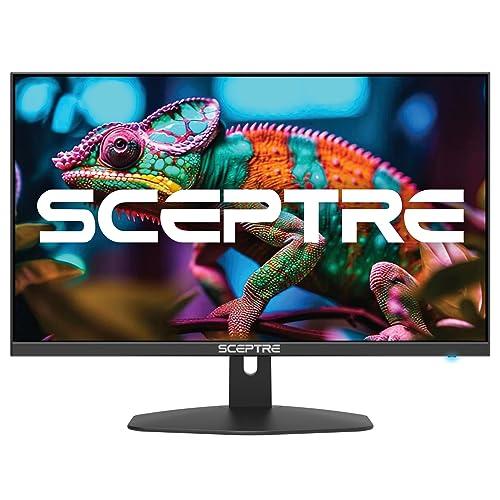




Gaming monitors have evolved dramatically since the early 2020s, when 1080p displays dominated the market and OLED technology was just beginning to make its way from televisions to desktop displays. Today, we're comparing two monitors that represent entirely different philosophies in gaming display design: the budget-focused Sceptre E275W-FW100T and the premium ASUS ROG Strix OLED XG27UCDMG.
At the time of writing, these monitors sit roughly $800 apart in pricing, which immediately tells you they're targeting completely different audiences. But both claim to be gaming monitors, so understanding their approaches and trade-offs becomes crucial for making the right choice for your setup.
Before diving into specifics, let's establish what makes a monitor good for gaming. The core elements include refresh rate (how many times per second the screen updates), response time (how quickly pixels change color), input lag (delay between your action and seeing it on screen), and adaptive sync technology (which eliminates screen tearing when your graphics card's frame rate doesn't perfectly match the monitor's refresh rate).
Panel technology forms the foundation of everything else. LCD panels with LED backlights have been the standard for years, using liquid crystals that twist to block or allow light through colored filters. OLED panels, by contrast, use organic compounds that emit their own light when electricity passes through them. This fundamental difference affects everything from contrast ratios to response times.
The Sceptre E275W-FW100T uses a VA (Vertical Alignment) LCD panel, which represents a middle ground between the wide viewing angles of IPS panels and the deep blacks of OLED technology. VA panels typically offer better contrast than IPS displays while maintaining reasonable color accuracy and viewing angles.
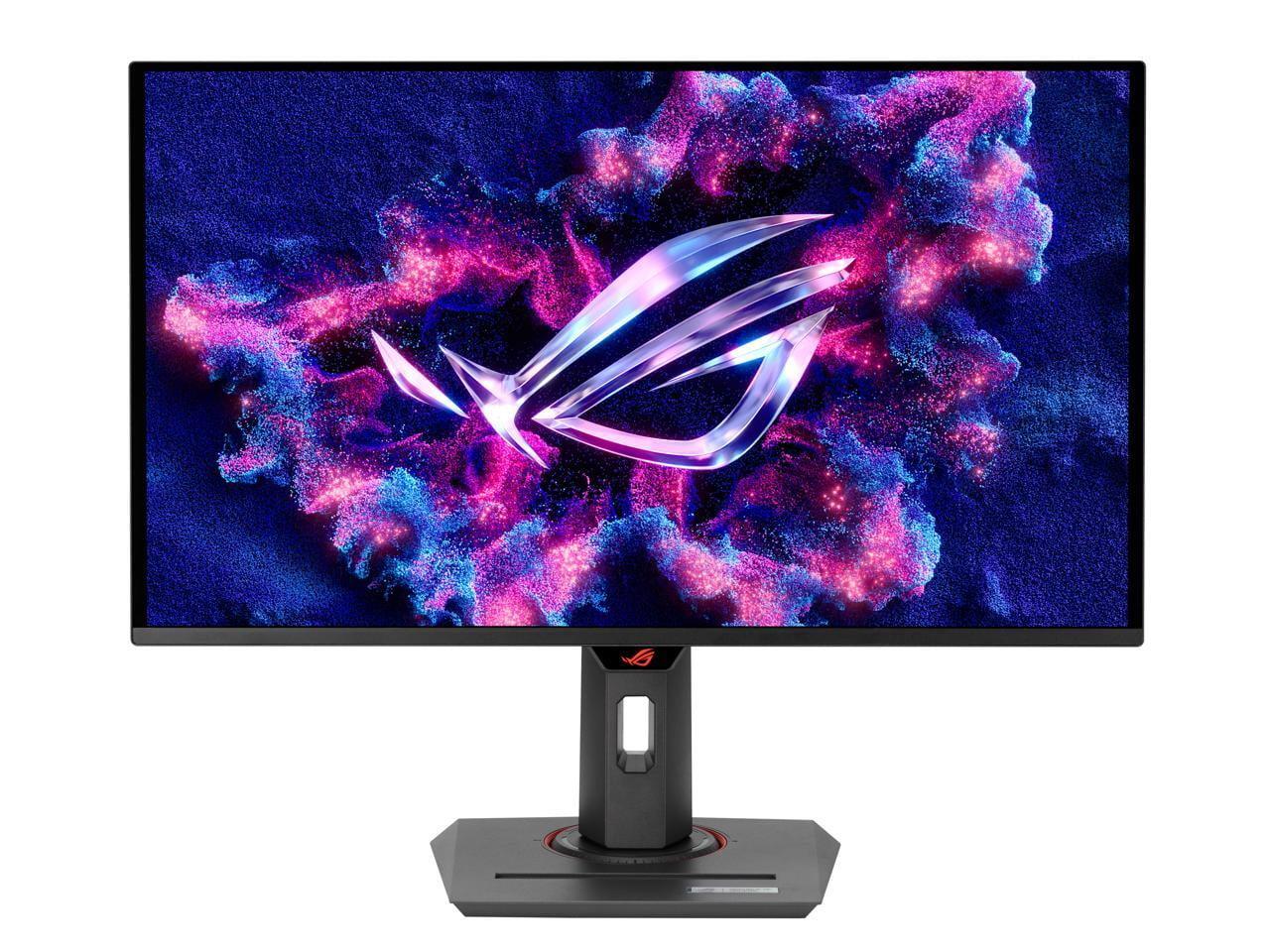
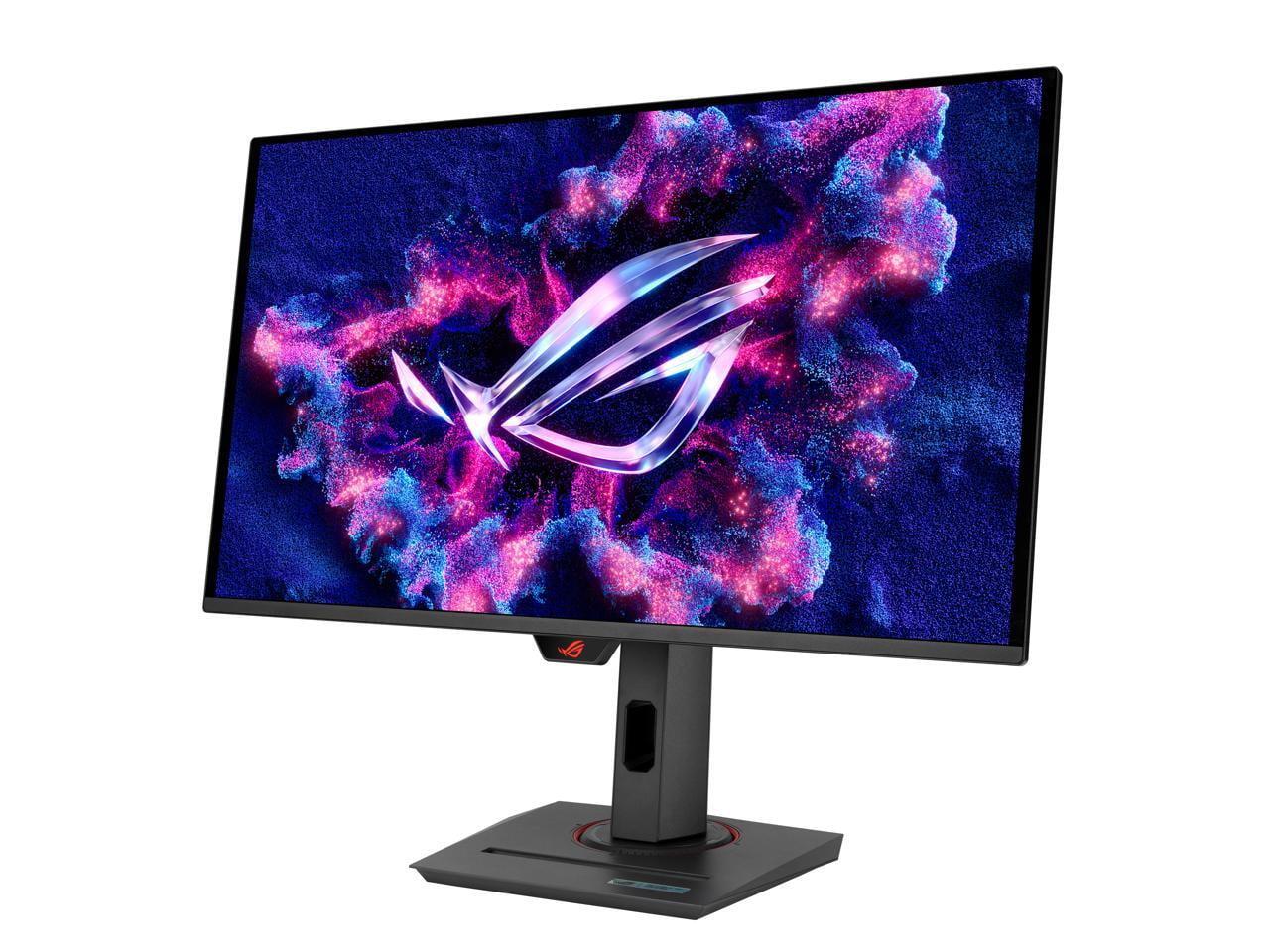
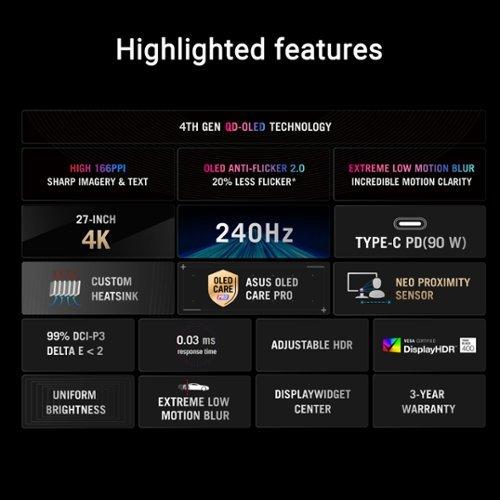
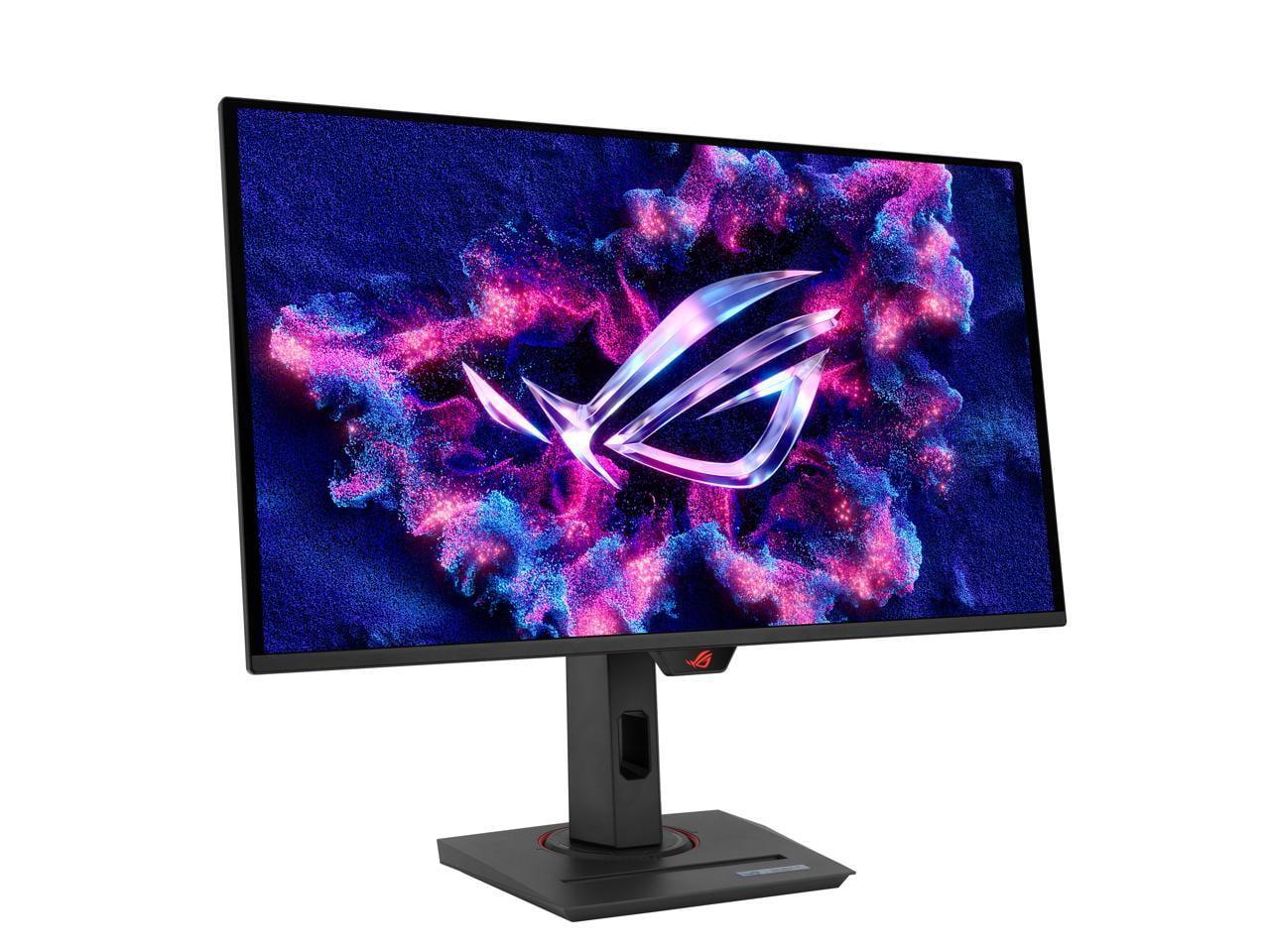
The ASUS ROG Strix OLED XG27UCDMG, released in 2024, employs fourth-generation QD-OLED technology. QD-OLED combines quantum dots (tiny particles that emit specific colors when hit by light) with OLED's self-emissive pixels. This creates incredibly vibrant colors while maintaining OLED's signature perfect blacks.
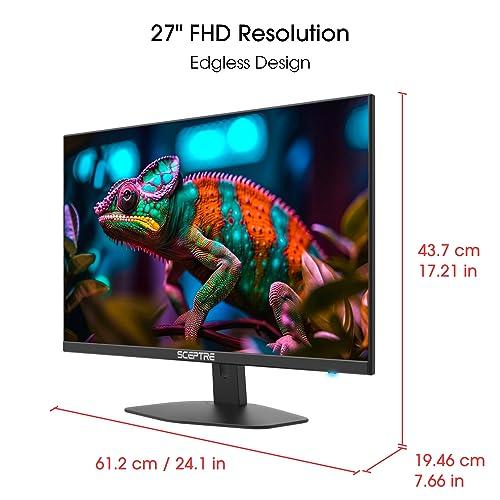
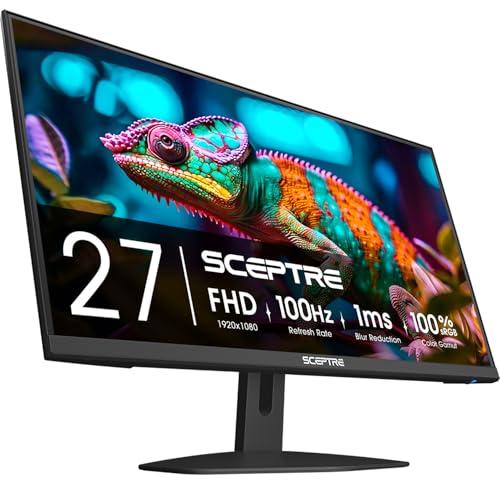
Resolution differences between these monitors are immediately apparent. The Sceptre delivers 1920 x 1080 pixels across 27 inches, resulting in about 81 pixels per inch. For many users, especially those coming from smaller 1080p displays, this pixel density feels adequate for gaming and general use. Text remains readable, and games look sharp enough for immersive experiences.
The ASUS pushes 3840 x 2160 pixels into the same 27-inch space, achieving roughly 163 pixels per inch. This dramatic increase in pixel density makes text crisp, game details more defined, and overall image quality noticeably superior. However, driving 4K at high frame rates demands significantly more graphics processing power.
Color reproduction tells another important story. The Sceptre covers 100% of the sRGB color space, which encompasses the colors most web content and standard games are designed around. For typical gaming and office work, this coverage proves perfectly adequate. Colors appear vibrant without being oversaturated, and the VA panel's 3,000:1 contrast ratio helps darker scenes maintain detail while keeping bright areas from washing out.
The ASUS covers 99% of DCI-P3 and 145% of sRGB, representing a much wider color gamut. DCI-P3 is the cinema standard, covering more reds and greens than sRGB. This wider gamut means games and movies with HDR (High Dynamic Range) content can display colors that simply don't exist on standard monitors. The OLED's infinite contrast ratio, where blacks are truly black rather than dark gray, creates an almost three-dimensional depth to images.
Through extensive research and user feedback, OLED's visual impact becomes clear in dark room gaming scenarios. Horror games, space simulations, and movies with dark scenes benefit enormously from OLED's ability to display perfect blacks alongside bright highlights. However, in bright rooms, the Sceptre's higher SDR brightness of 280 nits can actually provide better visibility than the ASUS's 250-nit SDR output.
Refresh rate represents one of the most immediately noticeable performance differences. The Sceptre operates at 100Hz, meaning it can display up to 100 unique frames per second. Compared to standard 60Hz displays, this 67% increase in refresh rate creates noticeably smoother motion in games, reduced input lag, and less eye strain during extended gaming sessions.
The ASUS takes this much further with its 240Hz capability. This ultra-high refresh rate primarily benefits competitive gamers and those with high-end graphics cards capable of pushing frame rates above 100 FPS. The difference between 100Hz and 240Hz is less dramatic than the jump from 60Hz to 100Hz, but competitive players often report improved tracking of fast-moving targets and reduced motion blur.
Response time measurements reveal a massive technological gulf. The Sceptre's 5ms gray-to-gray response time means pixels take 5 milliseconds to change from one shade of gray to another. While this sounds fast, it can create visible ghosting or trailing behind fast-moving objects in games. Most users find 5ms acceptable for casual gaming, but competitive players might notice the artifacts.
The ASUS achieves an extraordinary 0.03ms response time, essentially instantaneous pixel switching. OLED technology enables this because individual pixels don't need to physically twist like LCD crystals; they simply turn on or off. This translates to virtually zero ghosting, making fast-paced games like first-person shooters or racing games appear incredibly crisp during rapid movements.
Adaptive sync technology helps both monitors, but with different capabilities. The Sceptre supports AMD FreeSync within a 48-100Hz window, eliminating screen tearing when your graphics card's output falls within that range. This works well for most gaming scenarios, especially with mid-range graphics cards that typically output 60-90 FPS in modern games.
The ASUS supports both FreeSync Premium Pro and G-SYNC Compatible certification across a wider range, plus it includes additional features like Low Framerate Compensation that keeps sync working even below the minimum range. The broader compatibility means it works seamlessly with both AMD and NVIDIA graphics cards.
HDR represents perhaps the starkest difference between these monitors. The Sceptre simply doesn't support HDR at all, limiting it to standard dynamic range content. While this doesn't affect most PC games, it does mean missing out on the enhanced contrast and color range that HDR-enabled games and streaming content can provide.
The ASUS supports HDR10 with VESA DisplayHDR 400 True Black certification. The "True Black" designation is significant because it recognizes OLED's ability to display perfect blacks alongside bright highlights. When playing HDR-enabled games like "Cyberpunk 2077" or watching HDR movies, the difference is striking. Neon signs pop against truly dark backgrounds, explosions bloom with realistic intensity, and sunset scenes display gradations of color impossible on standard monitors.
Peak brightness handling differs significantly between the technologies. The Sceptre maintains consistent brightness across all content, which works well for productivity and ensures good visibility in bright rooms. The ASUS can boost brightness to 1,000 nits for HDR highlights while maintaining deep blacks, creating dramatically higher contrast ratios that make images appear more realistic.
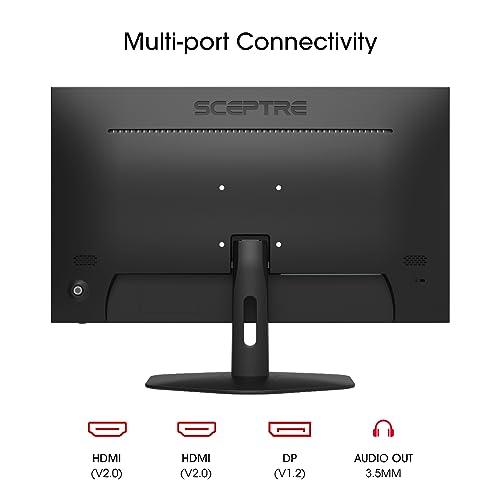
Port selection reflects each monitor's target market. The Sceptre provides two HDMI 2.0 ports and one DisplayPort 1.2 connection, sufficient for connecting a gaming PC, console, and perhaps a streaming device. The HDMI 2.0 ports can handle 1080p at 100Hz without issues, making console gaming straightforward.
The ASUS offers more sophisticated connectivity with two HDMI 2.1 ports, DisplayPort 1.4, and crucially, a USB-C port with 90W Power Delivery. HDMI 2.1 enables full 4K 120Hz from modern consoles like PlayStation 5 and Xbox Series X. The USB-C port can simultaneously carry video signal and power a laptop, essentially turning the monitor into a docking station.
Additional features highlight the philosophical differences. The Sceptre includes built-in 2W speakers, which while modest, eliminate the need for separate speakers in basic setups. Blue light reduction and flicker-free technology help with eye strain during long sessions.
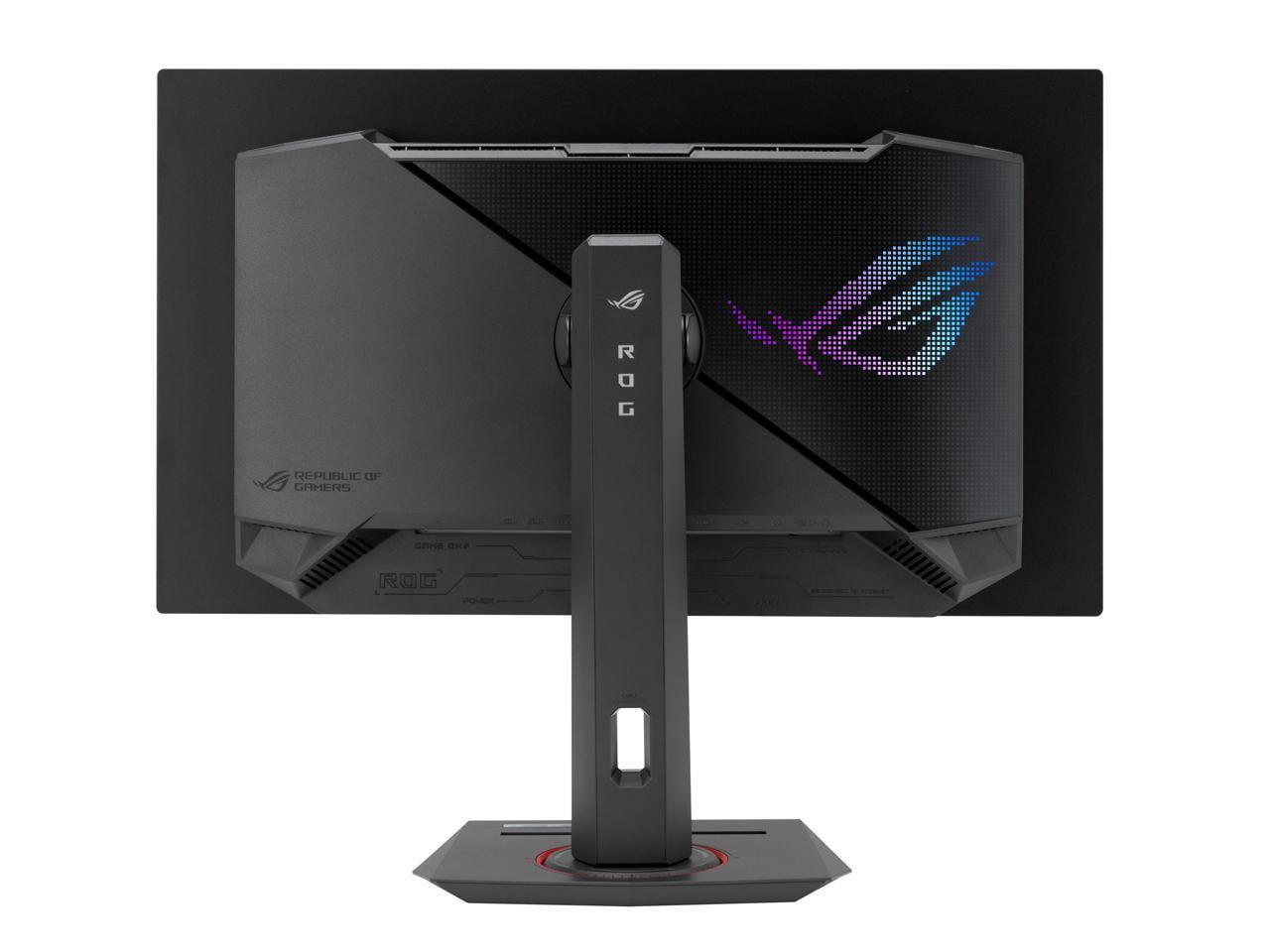
The ASUS forgoes built-in speakers in favor of more advanced features like a KVM switch (allowing control of multiple computers with one keyboard and mouse), a proximity sensor that dims the display when you step away, and comprehensive OLED care functions designed to prevent burn-in. The monitor also includes Aura Sync RGB lighting for those who enjoy customizable gaming aesthetics.
Physical adjustability significantly impacts daily use comfort. The Sceptre offers only tilt adjustment, though it includes VESA mounting compatibility for aftermarket arms. The simple stand keeps costs down but limits positioning options, potentially causing neck strain in non-ideal desk setups.
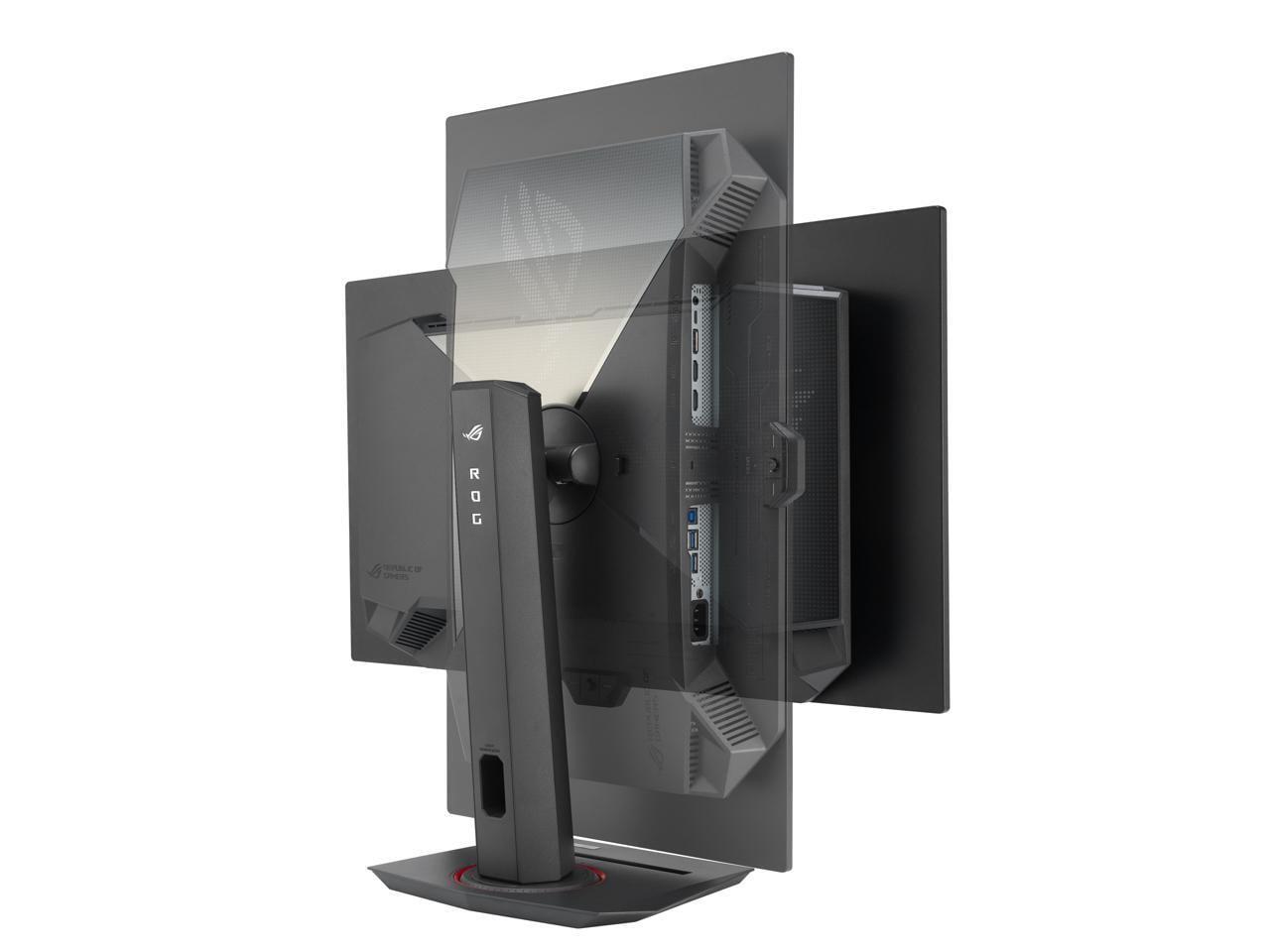
The ASUS provides full ergonomic adjustment including height, tilt, swivel, and pivot (rotation to portrait mode). This flexibility proves invaluable for achieving proper viewing angles and accommodating different users or tasks. The pivot function particularly benefits content creators who work with vertical social media content or coding applications.
Build quality differences reflect the price gap. The Sceptre uses sturdy plastic construction that feels solid without being premium. The design prioritizes function over form, with modest bezels and a basic aesthetic that won't distract from content.
The ASUS employs premium materials with a gaming-focused design. The stand feels robust, adjustments operate smoothly, and the overall construction suggests longevity. The thinner bezels and RGB accents cater to enthusiast gaming setups.
For living room or bedroom entertainment setups, each monitor presents different advantages. The Sceptre works well as a large computer monitor or secondary display for streaming content. Its built-in speakers eliminate cable clutter, though audio quality remains basic. The 100Hz refresh rate smooths motion in movies and shows, while the VA panel's good contrast helps in moderately lit rooms.
The ASUS excels in dedicated home theater applications. Its 4K resolution matches premium streaming content, while HDR support reveals details and colors impossible on standard displays. OLED's perfect blacks create cinema-like experiences in dark rooms. However, the lack of built-in speakers requires external audio solutions, and OLED's susceptibility to burn-in makes it less suitable for static content like news channels or computer interfaces left on for hours.
The Sceptre E275W-FW100T makes sense for specific user profiles. Students and budget-conscious gamers get genuine gaming improvements over basic monitors without breaking the bank. The 100Hz refresh rate and FreeSync support provide noticeably better gaming experiences than standard displays, while 1080p resolution ensures good frame rates even with modest graphics cards. Office workers who occasionally game will find the built-in speakers convenient and the display quality adequate for productivity tasks.
However, the Sceptre shows its limitations with demanding games or professional work. The 5ms response time creates visible ghosting in fast-paced competitive games, and the lack of HDR means missing modern gaming's visual advances. Content creators will find the 1080p resolution restrictive for detailed work.
The ASUS ROG Strix OLED XG27UCDMG targets serious gamers and professionals who prioritize visual quality. Competitive players benefit from the 240Hz refresh rate and 0.03ms response time, while the 4K resolution and wide color gamut serve content creators. The USB-C connectivity and KVM features appeal to professionals who need versatile workspace solutions.
At the time of writing, the ASUS represents one of the more affordable entries into premium OLED gaming, though "affordable" remains relative given its substantial price premium. The technology delivers genuinely superior visual experiences that justify the cost for users who can appreciate and utilize the capabilities.
These monitors succeed in their respective markets because they understand their audiences. The Sceptre E275W-FW100T doesn't try to compete with premium displays; instead, it delivers essential gaming improvements at a price that makes sense for budget-conscious users. The 100Hz refresh rate, decent color accuracy, and FreeSync support create a meaningfully better gaming experience than basic monitors.
The ASUS ROG Strix OLED XG27UCDMG justifies its premium pricing through cutting-edge technology that delivers genuinely superior performance. The OLED panel, 4K resolution, and comprehensive feature set create experiences impossible at lower price points.
Your choice ultimately depends on your budget, usage patterns, and performance priorities. If you're building a budget gaming setup or upgrading from a basic monitor, the Sceptre provides excellent value and noticeable improvements. If you're invested in high-end gaming hardware and want the best possible visual experience, the ASUS delivers premium performance that matches its premium price.
Both monitors serve their intended audiences well, proving that good products exist at every price point when manufacturers understand their target market and optimize accordingly.
| Sceptre 27-inch Gaming Monitor E275W-FW100T | ASUS ROG Strix OLED XG27UCDMG |
|---|---|
| Display Technology - Foundation that determines contrast, colors, and longevity | |
| VA LCD with LED backlight (proven reliability) | 4th-gen QD-OLED (cutting-edge with perfect blacks) |
| Resolution - Affects image sharpness and GPU requirements | |
| 1920 x 1080 Full HD (easier on graphics cards) | 3840 x 2160 4K UHD (dramatically sharper, needs powerful GPU) |
| Refresh Rate - Higher rates provide smoother motion in fast games | |
| 100Hz (solid improvement over 60Hz) | 240Hz (competitive gaming advantage) |
| Response Time - Lower means less ghosting in fast-paced games | |
| 5ms GtG (minor ghosting visible) | 0.03ms GtG (virtually zero ghosting) |
| Contrast Ratio - Higher ratios create more immersive dark scenes | |
| 3,000:1 (decent blacks for LCD) | 1,500,000:1 (perfect OLED blacks) |
| Color Gamut - Wider coverage displays more vibrant colors | |
| 100% sRGB (adequate for standard content) | 99% DCI-P3, 145% sRGB (professional-grade colors) |
| HDR Support - Enhanced contrast and colors in compatible content | |
| None (limited to standard range) | HDR10 with True Black certification (cinema-like experience) |
| Brightness - Higher levels better for bright rooms | |
| 280 nits (good for office environments) | 1,000 nits peak HDR, 250 nits SDR (excellent HDR, modest SDR) |
| Adaptive Sync - Eliminates screen tearing | |
| AMD FreeSync 48-100Hz | FreeSync Premium Pro + G-SYNC Compatible (wider range) |
| Connectivity - Determines what devices you can connect | |
| 2x HDMI 2.0, 1x DisplayPort 1.2 | 2x HDMI 2.1, 1x DisplayPort 1.4, USB-C with 90W Power Delivery |
| Built-in Audio - Saves desk space but affects sound quality | |
| 2x 2W speakers (basic but included) | None (requires external speakers) |
| Ergonomics - Affects comfort during long sessions | |
| Tilt only (basic adjustment) | Full adjustment: height, tilt, swivel, pivot (premium flexibility) |
| Special Features - Value-added functionality | |
| Blue light reduction, game modes | KVM switch, proximity sensor, OLED care, RGB lighting |
| Target User - Who gets the best value | |
| Budget gamers, students, office workers | Serious gamers, content creators, professionals |
| Best Use Case - Where each monitor excels | |
| Casual gaming, productivity, bright rooms | Competitive gaming, HDR content, dark room setups |
The ASUS ROG Strix OLED XG27UCDMG delivers superior gaming performance with its 240Hz refresh rate, 0.03ms response time, and OLED technology that eliminates ghosting. However, the Sceptre E275W-FW100T offers excellent value for casual gamers with its 100Hz refresh rate and AMD FreeSync support at a fraction of the cost.
The primary difference is display technology and resolution. The Sceptre E275W-FW100T uses traditional VA LCD technology with 1080p resolution, while the ASUS ROG Strix OLED XG27UCDMG features cutting-edge QD-OLED technology with 4K resolution, delivering dramatically better image quality and performance.
The ASUS ROG Strix OLED XG27UCDMG excels for competitive gaming with its 240Hz refresh rate and virtually instant 0.03ms response time. The Sceptre E275W-FW100T can handle competitive gaming adequately with 100Hz and 5ms response time, but serious esports players will prefer the ASUS model's superior motion clarity.
Only the ASUS ROG Strix OLED XG27UCDMG supports HDR with HDR10 compatibility and True Black certification, offering enhanced contrast and colors. The Sceptre E275W-FW100T does not support HDR, limiting it to standard dynamic range content.
The ASUS ROG Strix OLED XG27UCDMG is superior for modern consoles like PS5 and Xbox Series X, offering 4K resolution, HDR support, and HDMI 2.1 connectivity for 4K 120Hz gaming. The Sceptre E275W-FW100T works well with consoles but is limited to 1080p resolution.
Both monitors can work in home theater setups, but with different strengths. The ASUS ROG Strix OLED XG27UCDMG provides a cinema-like experience with perfect blacks, 4K resolution, and HDR support. The Sceptre E275W-FW100T includes built-in speakers for convenience but lacks the premium visual quality for dedicated home theater use.
The ASUS ROG Strix OLED XG27UCDMG offers superior connectivity with HDMI 2.1, DisplayPort 1.4, USB-C with 90W Power Delivery, and USB hub functionality. The Sceptre E275W-FW100T provides basic connectivity with HDMI 2.0 and DisplayPort 1.2, sufficient for most standard gaming setups.
Only the Sceptre E275W-FW100T includes built-in 2W speakers, which are convenient for basic audio needs. The ASUS ROG Strix OLED XG27UCDMG does not have built-in speakers, requiring external audio solutions for sound.
The Sceptre E275W-FW100T performs better in bright environments with its 280 nits brightness and anti-glare coating. The ASUS ROG Strix OLED XG27UCDMG has lower SDR brightness at 250 nits and works best in controlled lighting conditions to showcase its superior contrast.
The ASUS ROG Strix OLED XG27UCDMG offers full ergonomic adjustments including height, tilt, swivel, and pivot for optimal positioning. The Sceptre E275W-FW100T only provides tilt adjustment, though both monitors support VESA mounting for aftermarket stands.
The ASUS ROG Strix OLED XG27UCDMG excels for content creation with its 4K resolution, 99% DCI-P3 color coverage, and professional-grade color accuracy. The Sceptre E275W-FW100T offers adequate color reproduction with 100% sRGB coverage but is limited by its 1080p resolution for detailed creative work.
Choose the Sceptre E275W-FW100T if you're on a tight budget, primarily do office work with casual gaming, or need built-in speakers. Select the ASUS ROG Strix OLED XG27UCDMG if you're a serious gamer, content creator, or want the best possible visual quality with cutting-edge OLED technology.
We've done our best to create useful and informative comparisons to help you decide what product to buy. Our research uses advanced automated methods to create this comparison and perfection is not possible - please contact us for corrections or questions. These are the sites we've researched in the creation of this article: pcvarge.com - walmart.com - cubed.run - productchart.com - displayninja.com - target.com - youtube.com - versus.com - youtube.com - youtube.com - sceptre.com - sceptre.com - bestbuy.com - rog.asus.com - forum.pcmonitors.info - rog.asus.com - windowscentral.com - versus.com - youtube.com - youtube.com - rtings.com - rtings.com - rog.asus.com - rog.asus.com - rog.asus.com - tenforums.com - rog.asus.com - techpowerup.com - bestbuy.com - newegg.com - displayspecifications.com - youtube.com - tftcentral.co.uk - displayninja.com

Privacy Policy
Terms and Conditions - Affiliate Policy
Home Security
© Copyright 2008-2026.
11816 Inwood Rd #1211, Dallas, TX 75244