


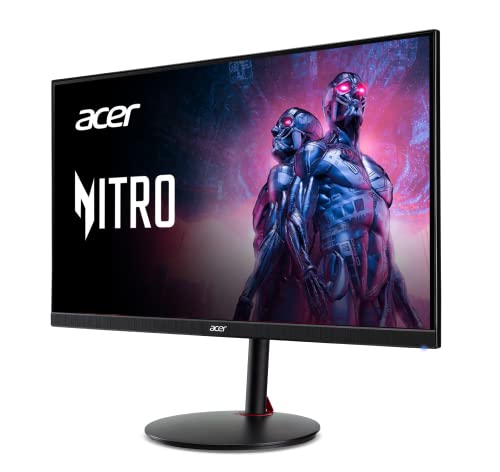


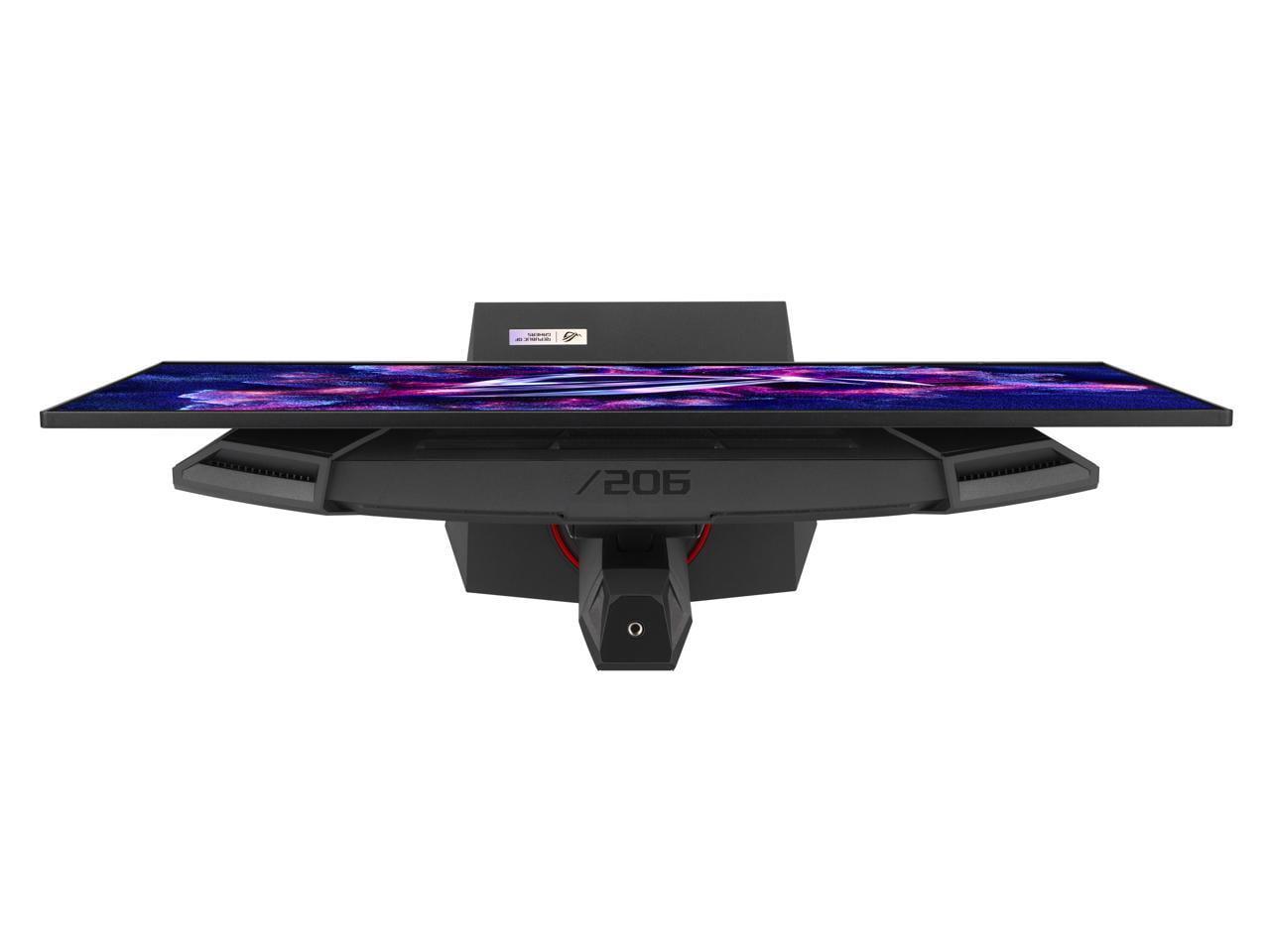
Finding the right gaming monitor can feel overwhelming with so many options flooding the market. Today we're comparing two monitors that represent very different philosophies: the budget-friendly Acer Nitro XV1 and the premium ASUS ROG Strix OLED XG27UCDMG. These aren't just different price points – they're fundamentally different approaches to gaming displays.
Before diving into these specific models, let's establish what matters most in gaming monitors. Refresh rate measures how many times per second your screen updates the image – higher numbers mean smoother motion. Response time indicates how quickly pixels can change colors, with lower numbers reducing ghosting and blur. Resolution determines image sharpness, while panel technology affects everything from color accuracy to contrast ratios.
The gaming monitor landscape has evolved dramatically since 2020. We've seen OLED technology finally become viable for PC gaming, refresh rates climb beyond 240Hz, and 4K gaming become more accessible. These technological leaps create interesting choices between cutting-edge features and practical value.
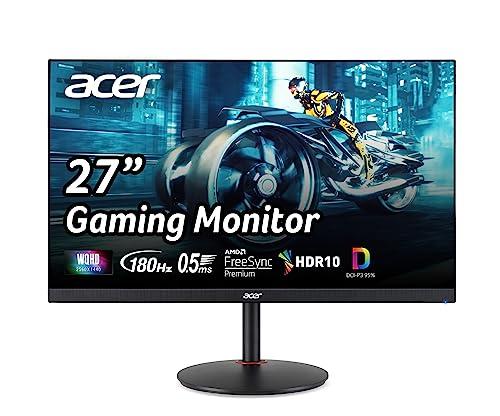
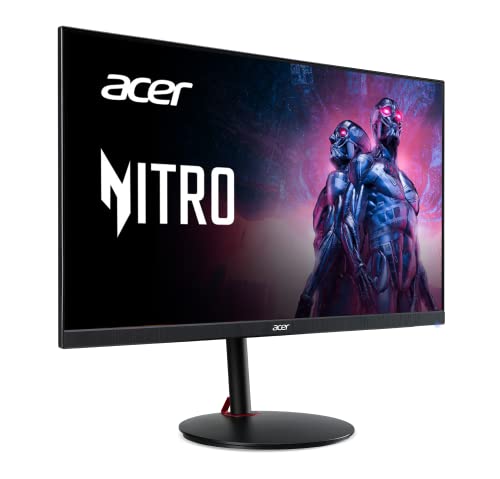
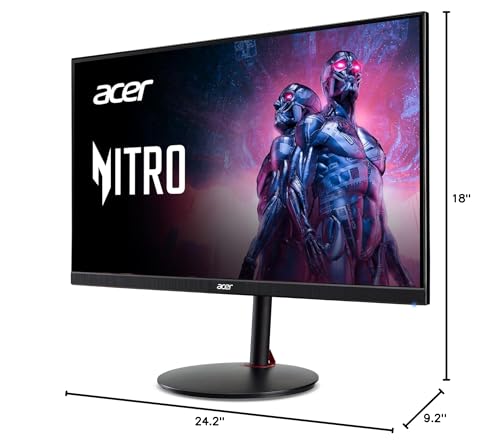
The Acer Nitro XV1, released in 2024, represents the sweet spot for budget gaming. At the time of writing, it costs roughly one-fifth the price of premium alternatives while delivering surprisingly robust performance. This 27-inch monitor targets gamers who want high refresh rates without breaking the bank.
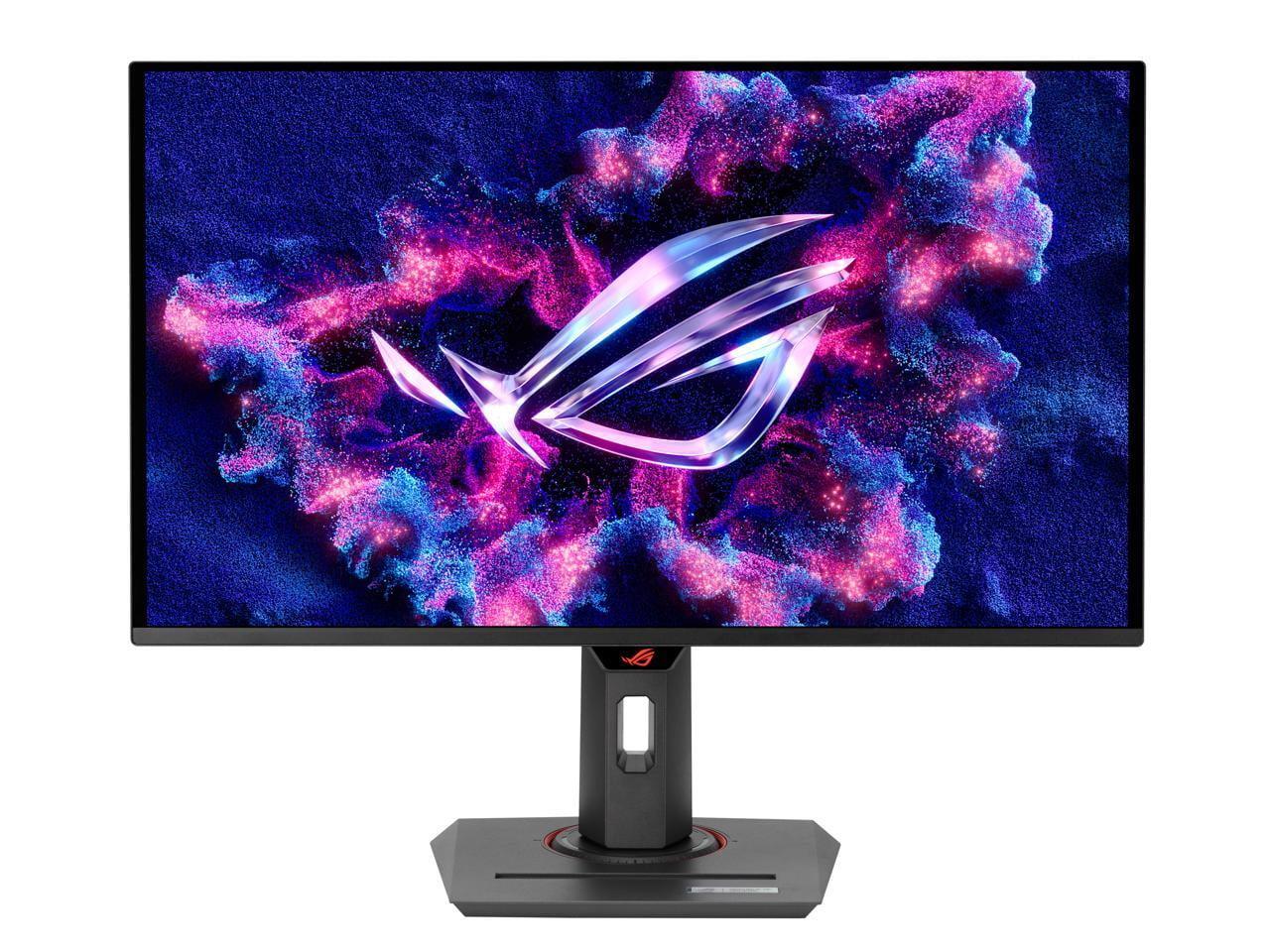
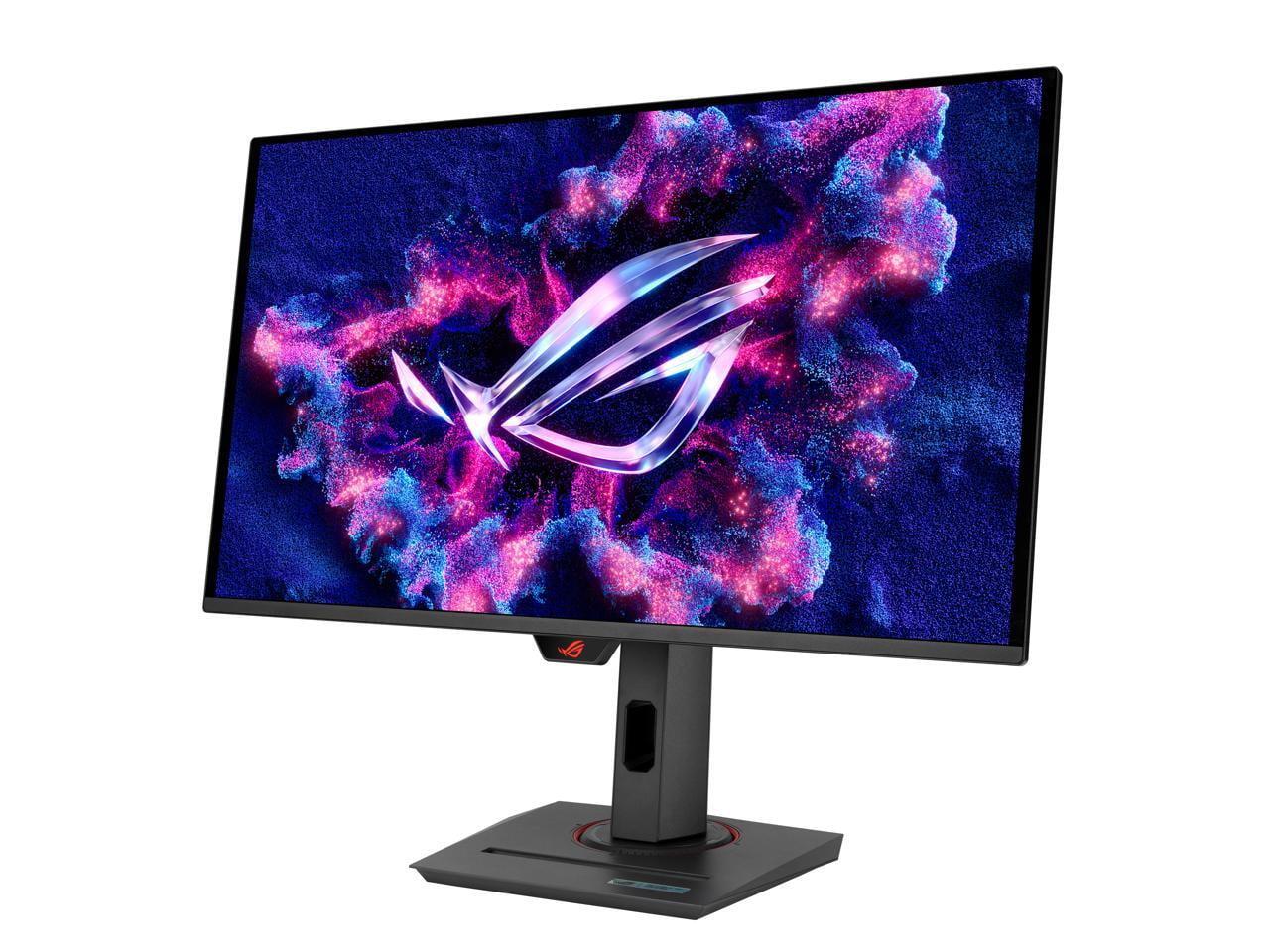
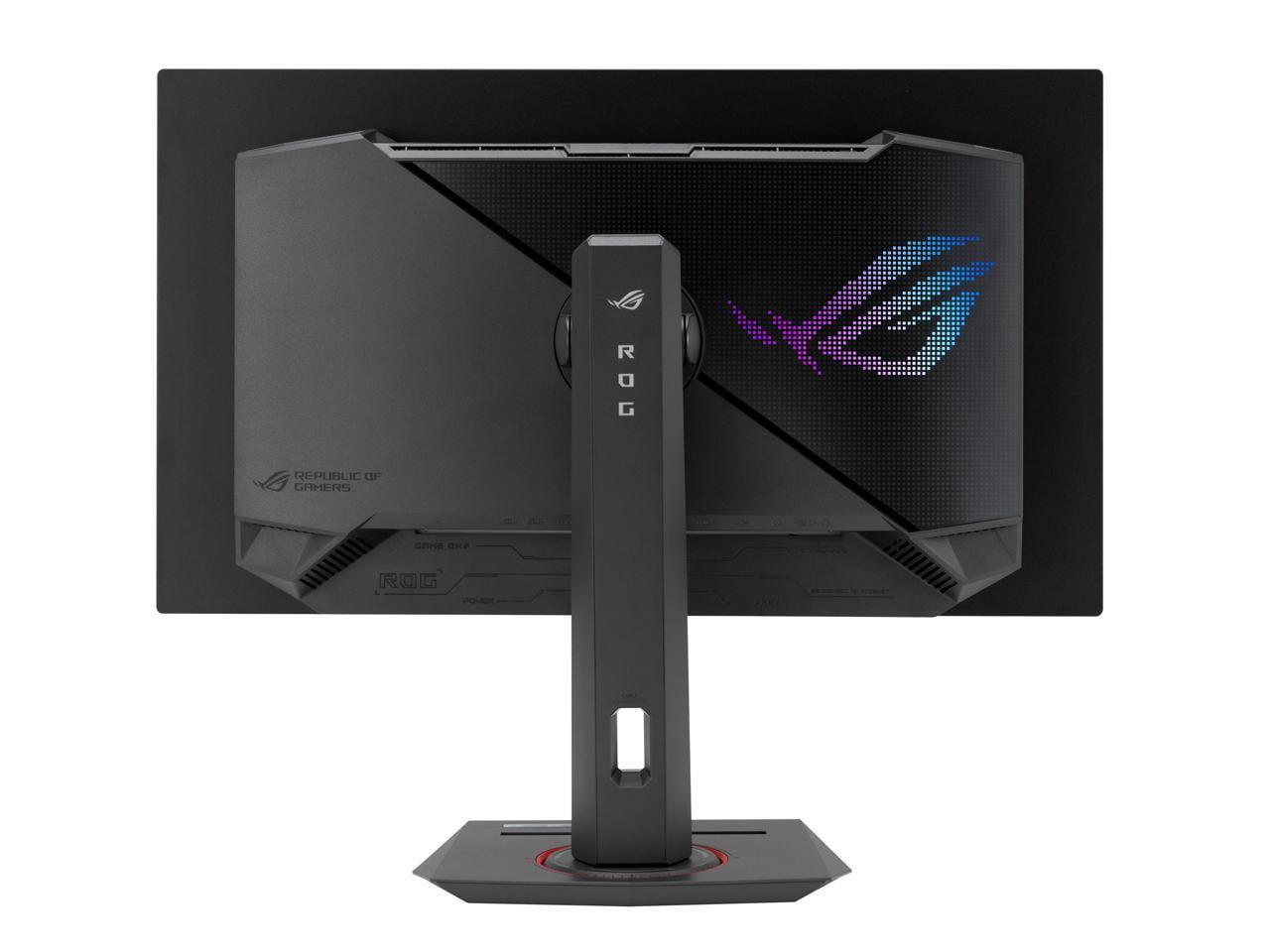
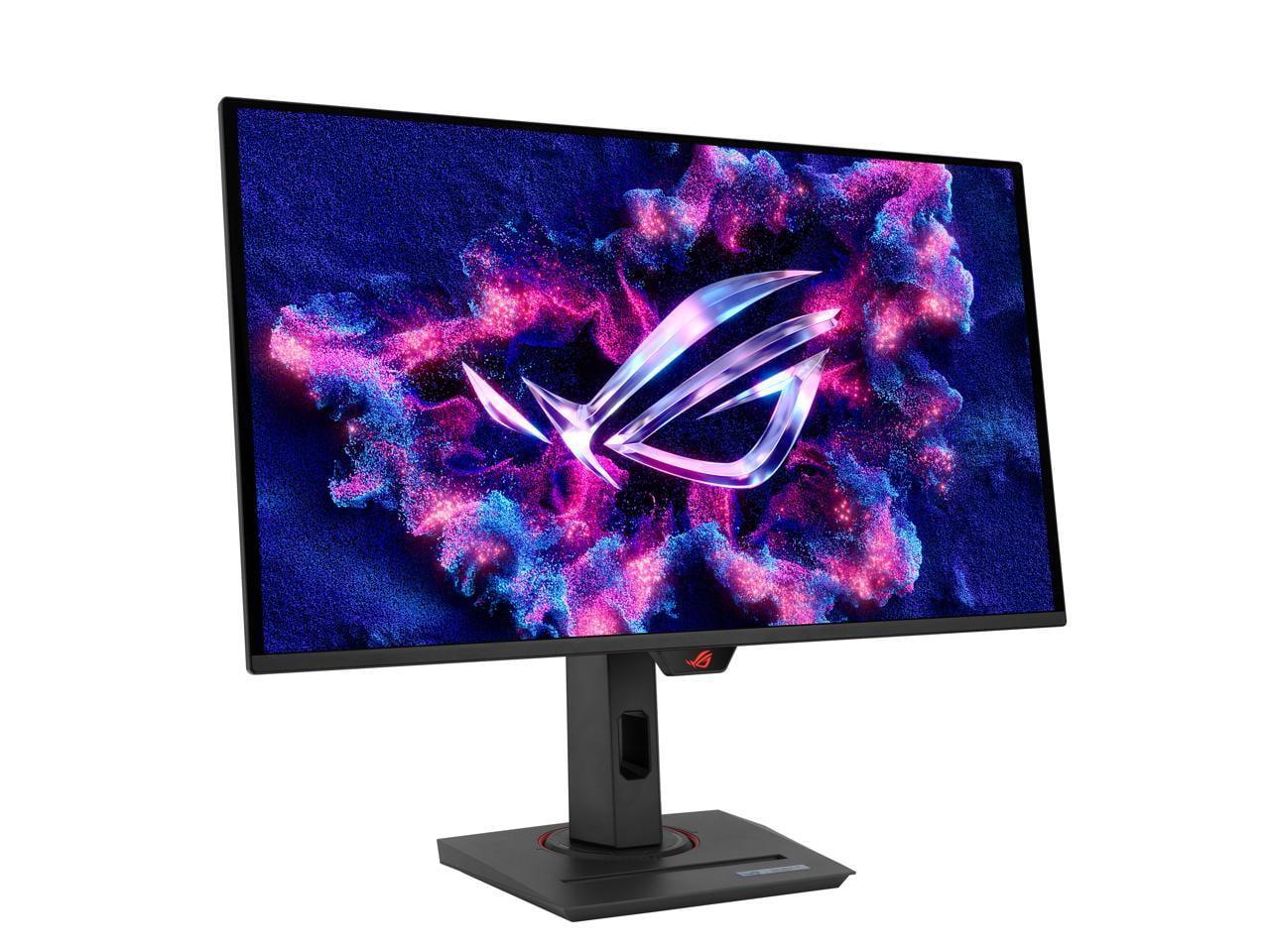
The ASUS ROG Strix OLED XG27UCDMG, launching in early 2024, showcases what happens when manufacturers push gaming monitor technology to its limits. This premium display costs significantly more but brings cutting-edge OLED technology to mainstream gaming setups.
Here's where these monitors diverge most dramatically. The Acer Nitro XV1 uses IPS (In-Plane Switching) technology, a mature LCD approach that's dominated gaming monitors for years. IPS panels excel at color consistency and viewing angles – you can look at the screen from almost any position without colors shifting or brightness dropping. The trade-off? Contrast ratios remain limited, meaning blacks look more like dark gray.
The ASUS ROG Strix OLED employs QD-OLED (Quantum Dot Organic Light Emitting Diode) technology, representing the newest evolution in display panels. Unlike LCD monitors that require backlights, each pixel in an OLED display generates its own light. When displaying black, pixels simply turn off completely, creating perfect blacks that no LCD can match.
This fundamental difference impacts everything else. The Acer achieves a respectable 1000:1 contrast ratio – meaning white pixels are 1000 times brighter than black pixels. The ASUS technically has infinite contrast since its black pixels emit zero light. In practical terms, this means the OLED delivers dramatically more realistic shadows, deeper night scenes in games, and more vibrant colors overall.
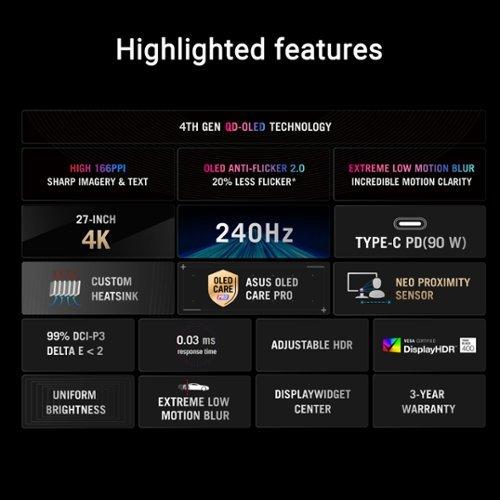
However, OLED technology brings challenges. Burn-in occurs when static images permanently damage pixels, though modern OLED monitors include protection features. The ASUS incorporates ASUS OLED Care Pro, which includes pixel cleaning cycles and a proximity sensor that dims the display when you're away.
The resolution difference between these monitors is substantial. The Acer Nitro XV1 displays 2560x1440 pixels (called WQHD or 1440p), while the ASUS ROG Strix OLED pushes 3840x2160 pixels (4K or UHD). That's nearly four times as many pixels on the ASUS.
More pixels mean sharper text, clearer details in games, and better screen real estate for productivity. At 27 inches, 4K provides roughly 166 pixels per inch compared to 109 PPI on the 1440p Acer. The difference is immediately noticeable when reading text or examining fine details in games.
But here's the catch: those extra pixels demand serious graphics power. A graphics card that easily pushes 180 frames per second at 1440p might struggle to maintain 60 fps at 4K in demanding games. This creates an interesting dynamic where the Acer might actually provide smoother gaming on mid-range systems, while the ASUS requires high-end hardware to reach its potential.
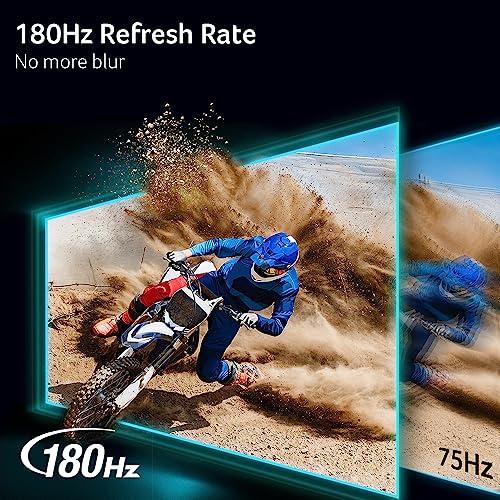
Both monitors offer impressive refresh rates, but with different targets. The Acer Nitro XV1 reaches 180Hz via DisplayPort, delivering noticeably smoother motion than standard 60Hz displays. The difference between 60Hz and 180Hz is dramatic – camera movements feel fluid, fast-paced games become easier to track, and input lag decreases measurably.
The ASUS ROG Strix OLED pushes even higher to 240Hz. While the jump from 180Hz to 240Hz is less dramatic than 60Hz to 180Hz, competitive gamers often swear by every additional frame. The real advantage here isn't just refresh rate – it's the response time.
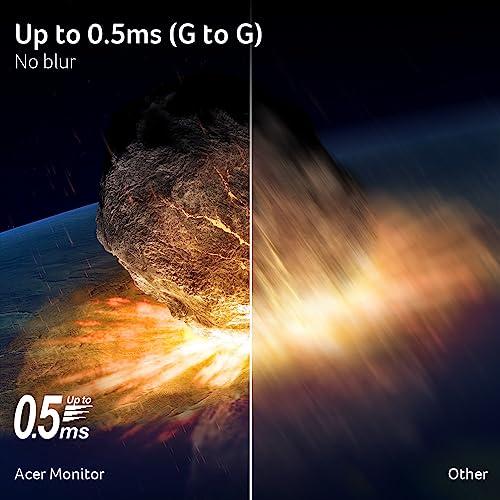
Gray-to-gray response time measures how quickly pixels change between different shades of gray, simulating real-world color transitions. The Acer achieves a solid 1ms response time, which eliminates most ghosting and trailing behind moving objects. The ASUS delivers an almost unbelievable 0.03ms response time thanks to OLED's instant pixel switching.
In practice, both monitors feel incredibly responsive. The OLED has a slight edge in motion clarity during extremely fast movement, but the IPS monitor performs excellently for all but the most demanding competitive scenarios.
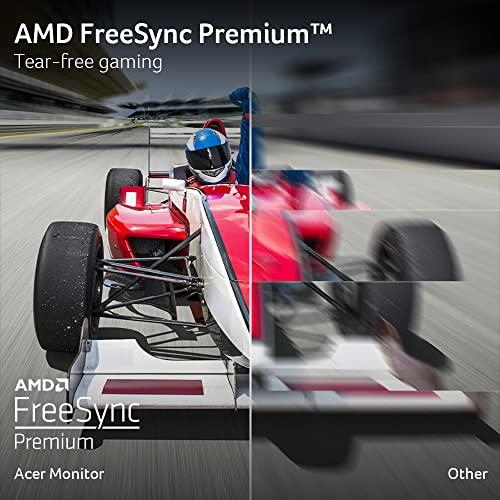
Both monitors support variable refresh rate (VRR) technology, which synchronizes the monitor's refresh rate with your graphics card's frame output. This eliminates screen tearing (where parts of different frames display simultaneously) and reduces stuttering when frame rates fluctuate.
The Acer Nitro XV1 includes AMD FreeSync Premium with a 40-180Hz range, plus unofficial NVIDIA G-SYNC compatibility. This works across a wide range of graphics cards and frame rates, making gaming feel smoother even when performance varies.
The ASUS ROG Strix OLED supports multiple VRR standards and includes advanced gaming features like GameFast Input (which reduces processing delays) and Shadow Boost (which brightens dark areas without overexposing highlights). The OLED also features Extreme Low Motion Blur, using backlight manipulation to further reduce perceived motion blur.
HDR (High Dynamic Range) expands the range between brightest whites and darkest blacks while supporting wider color palettes. Proper HDR can make games look dramatically more realistic, but it requires adequate brightness and contrast to work effectively.
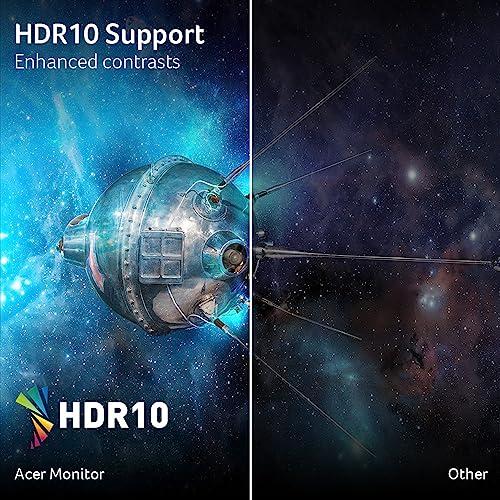
The Acer Nitro XV1 includes basic HDR10 support, but with only 250 cd/m² peak brightness and limited contrast, the HDR experience remains underwhelming. Colors might appear slightly more vibrant, but you won't see the dramatic lighting improvements that make HDR worthwhile.
The ASUS ROG Strix OLED delivers legitimate HDR performance with 1,000 cd/m² peak brightness and infinite contrast ratios. It's VESA DisplayHDR 400 True Black certified, meaning it meets strict standards for HDR displays. Games like Cyberpunk 2077 or Horizon Zero Dawn showcase dramatic improvements in lighting, shadow detail, and color depth on the OLED.
For home theater use, this difference becomes even more pronounced. The ASUS can handle HDR movies and streaming content with the visual impact that HDR was designed to provide, while the Acer treats HDR more as a checkbox feature.
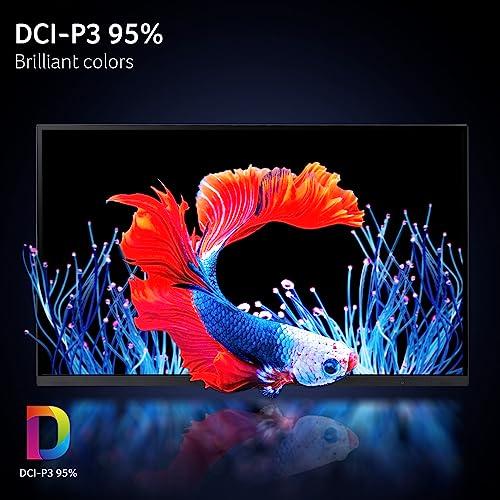
The Acer Nitro XV1 covers 95% of the DCI-P3 color space – the standard used in digital cinema – with decent factory calibration. This provides vibrant, accurate colors for gaming and basic content creation. The IPS panel ensures consistent colors across different viewing angles, making it suitable for collaborative work or gaming with friends nearby.
The ASUS ROG Strix OLED achieves 99% DCI-P3 coverage with Delta E < 2 color accuracy, meaning colors are virtually indistinguishable from reference standards. This level of precision makes it suitable for serious photo editing, video production, or any work requiring accurate color representation.
The wider color gamut on the OLED also means more vibrant, lifelike colors in games and movies. Sunsets look more natural, explosions appear more dramatic, and character skin tones seem more realistic.
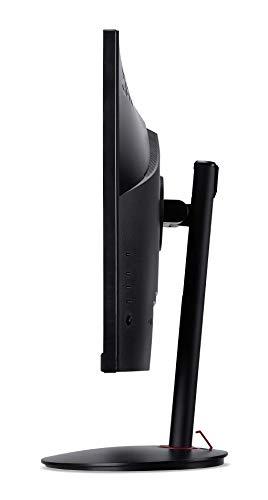
The Acer Nitro XV1 provides essential connectivity: DisplayPort 1.2, two HDMI 2.0 ports, and a headphone jack. This covers most gaming setups adequately, though the older HDMI standard limits refresh rates with gaming consoles.
The ASUS ROG Strix OLED offers comprehensive connectivity including DisplayPort 1.4, two HDMI 2.1 ports, and USB-C with 90W Power Delivery. The USB-C port can power and display from laptops simultaneously, while HDMI 2.1 supports full 4K 120Hz from PlayStation 5 or Xbox Series X consoles.
The ASUS also includes a KVM switch feature, allowing you to control multiple connected devices with a single keyboard and mouse – incredibly useful for users switching between gaming PCs and work laptops.
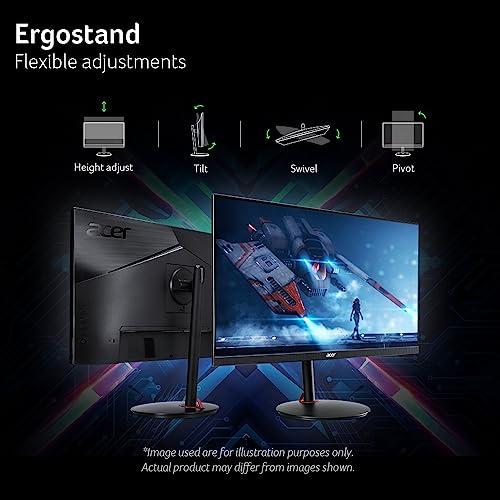
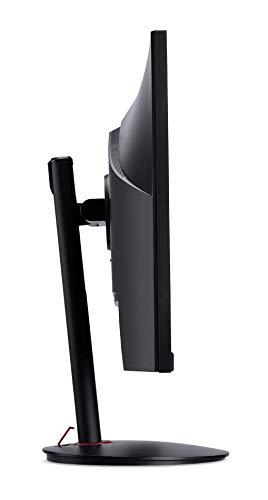
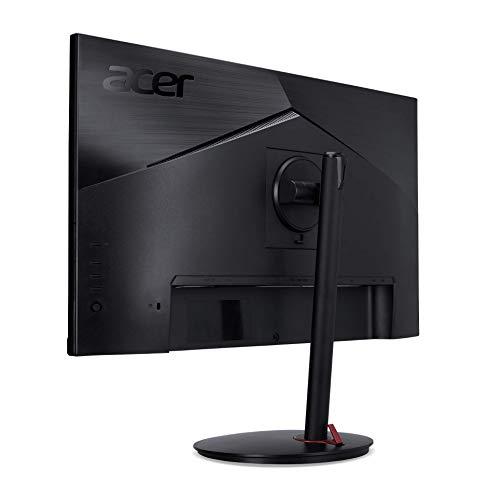
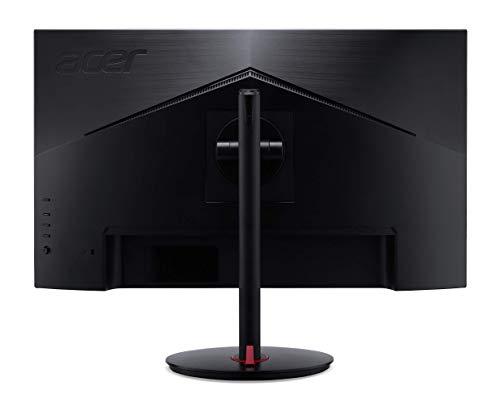
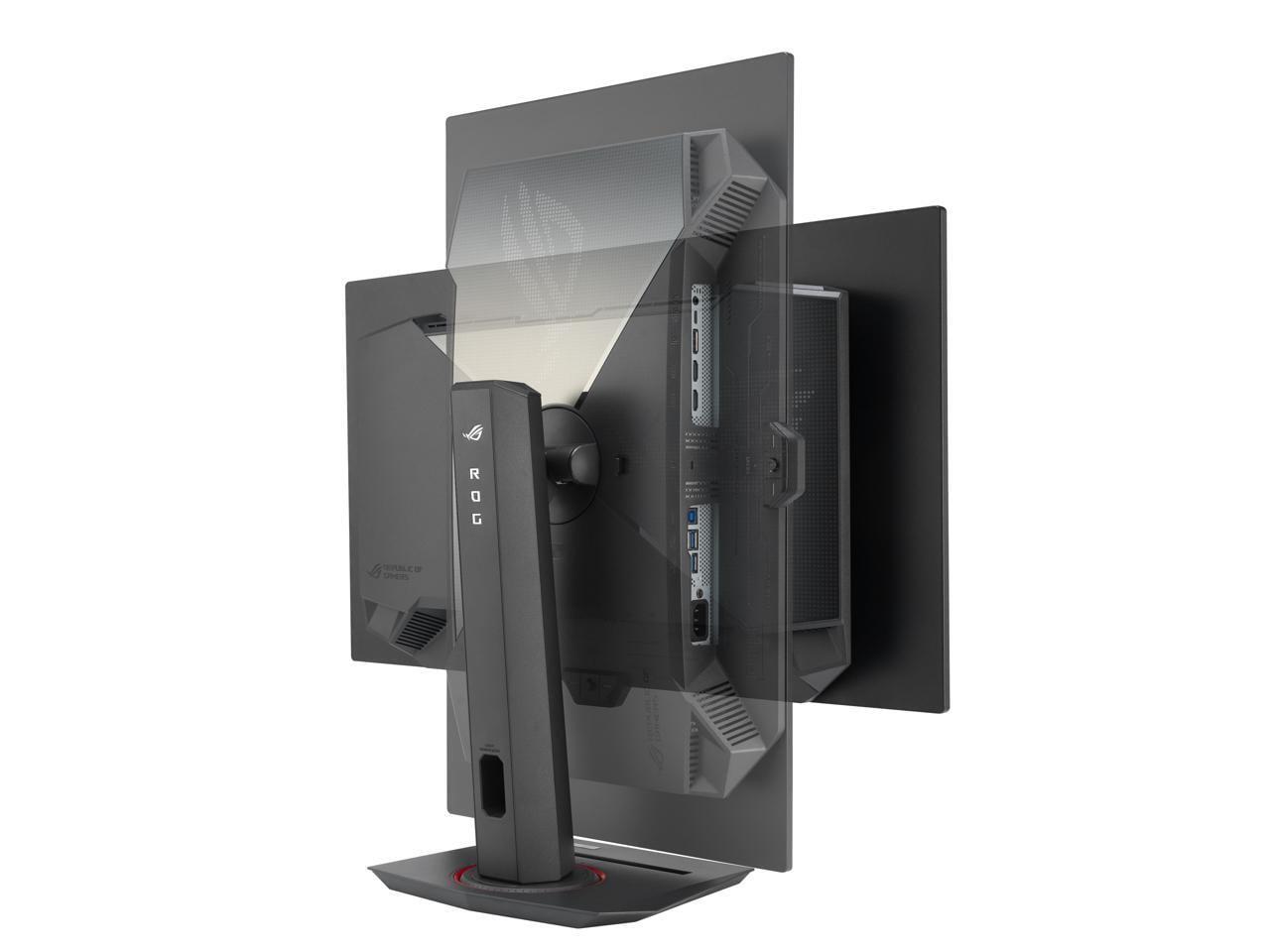
The Acer Nitro XV1 focuses on functional design with full ergonomic adjustability – height, tilt, swivel, and pivot. The stand feels solid for the price range, though not premium. The overall aesthetic remains understated, fitting well in most setups without drawing attention.
The ASUS ROG Strix OLED showcases premium construction with customizable Aura Sync RGB lighting, a more sophisticated stand design, and gaming-focused aesthetics. The build quality reflects its premium positioning, with better materials and more refined details throughout.
Unique to the ASUS is a Neo Proximity Sensor that detects when you're away from the monitor and automatically switches to a black screen, helping prevent OLED burn-in while saving energy.
For competitive esports gaming, both monitors excel but in different ways. The Acer Nitro XV1 offers the sweet spot of high refresh rates at a resolution that mid-range graphics cards can drive effectively. Games like Counter-Strike 2, Valorant, or League of Legends will easily maintain high frame rates at 1440p, taking full advantage of the 180Hz refresh rate.
The ASUS ROG Strix OLED provides even higher refresh rates and superior motion clarity, but 4K gaming requires significant GPU power. For competitive gaming, you might need to reduce resolution or settings to maintain frame rates that justify the 240Hz capability.
For single-player adventure games, the story reverses. The ASUS transforms games like Red Dead Redemption 2, The Witcher 3, or Elden Ring with its superior contrast, HDR performance, and 4K detail. The visual improvement is immediately apparent and enhances immersion dramatically.
The Acer still delivers excellent single-player gaming, especially considering its price point. Colors look vibrant, motion stays smooth, and 1440p provides plenty of detail for most games.
At the time of writing, the pricing difference between these monitors is substantial – the ASUS costs roughly four to five times more than the Acer. This creates very different value propositions.
The Acer Nitro XV1 delivers exceptional value for budget-conscious gamers. You're getting 90% of the gaming performance at roughly 20% of the premium cost. It's perfect for students, anyone building their first gaming setup, or experienced gamers who prioritize frame rates over ultimate visual quality.
The ASUS ROG Strix OLED targets enthusiasts willing to pay premium prices for cutting-edge technology. The visual improvements are real and meaningful, but they come at a significant cost that only makes sense if you truly value the enhanced experience.
For dual-purpose setups serving as both gaming stations and home theater displays, the ASUS ROG Strix OLED clearly wins. Its superior HDR performance, 4K resolution, and excellent contrast ratios make movies and streaming content look dramatically better. The multiple HDMI 2.1 ports accommodate gaming consoles alongside streaming devices.
The Acer can certainly display movies and shows adequately, but the limited HDR performance and 1440p resolution make it less compelling for dedicated media consumption.
Choose the Acer Nitro XV1 if you're building a gaming setup on a budget, prioritize high refresh rates for competitive gaming, or use mid-range graphics cards that pair well with 1440p resolution. It's also ideal if you want solid gaming performance without paying for premium features you might not fully utilize.
Choose the ASUS ROG Strix OLED XG27UCDMG if you have the budget for premium technology, own high-end graphics cards capable of 4K gaming, value exceptional visual quality for single-player games, or want a display that excels at both gaming and media consumption.
The decision ultimately comes down to priorities and budget. Both monitors excel in their respective categories, but they serve very different audiences. The Acer proves that great gaming monitors don't have to cost a fortune, while the ASUS demonstrates what's possible when cost isn't the primary constraint.
For most gamers, the Acer provides everything needed for an excellent gaming experience. For enthusiasts seeking the absolute best visual quality and willing to pay for cutting-edge technology, the ASUS delivers an experience that justifies its premium positioning.
| Acer Nitro XV1 27" WQHD 180Hz IPS Gaming Monitor | ASUS ROG Strix OLED XG27UCDMG 27" 4K 240Hz Gaming Monitor |
|---|---|
| Display Technology - Determines contrast, color quality, and longevity | |
| IPS LCD with LED backlight (proven reliability, good colors) | 4th-gen QD-OLED (perfect blacks, superior colors, burn-in risk) |
| Resolution - Higher resolution means sharper visuals but requires more GPU power | |
| 2560 x 1440 (WQHD) - 109 PPI (great balance for mid-range GPUs) | 3840 x 2160 (4K UHD) - 166 PPI (requires high-end GPUs for full potential) |
| Refresh Rate - Higher rates provide smoother motion in fast games | |
| 180Hz via DisplayPort, 144Hz via HDMI (excellent for competitive gaming) | 240Hz across all connections (marginal improvement over 180Hz) |
| Response Time - Lower times reduce ghosting and blur in fast motion | |
| 1ms gray-to-gray (eliminates most ghosting effectively) | 0.03ms gray-to-gray (virtually instantaneous, imperceptible improvement) |
| Contrast Ratio - Affects how deep blacks appear and overall image depth | |
| 1000:1 static (typical IPS limitation, blacks appear grayish) | Infinite contrast (perfect blacks, dramatically better dark scenes) |
| Peak Brightness - Determines HDR quality and visibility in bright rooms | |
| 250 cd/m² (adequate for gaming, limited HDR impact) | 1,000 cd/m² HDR peak (true HDR experience, excellent brightness) |
| Color Accuracy - Important for content creation and realistic visuals | |
| 95% DCI-P3, good factory calibration (suitable for gaming and basic work) | 99% DCI-P3, Delta E < 2 (professional-grade accuracy) |
| HDR Support - Enhanced contrast and color range for compatible content | |
| Basic HDR10 (minimal visual improvement due to brightness limits) | HDR10 with VESA DisplayHDR 400 True Black (meaningful HDR experience) |
| Variable Refresh Rate - Eliminates screen tearing and stuttering | |
| AMD FreeSync Premium (40-180Hz), G-SYNC compatible | FreeSync Premium Pro, G-SYNC Compatible, VESA AdaptiveSync |
| Connectivity - Determines compatibility with devices and future-proofing | |
| 1x DisplayPort 1.2, 2x HDMI 2.0, 3.5mm jack | 1x DisplayPort 1.4, 2x HDMI 2.1, USB-C (90W PD), USB hub |
| Gaming Features - Specialized enhancements for competitive and casual gaming | |
| Basic gaming overlays, crosshairs, VRB motion blur reduction | Advanced GameFast Input, Shadow Boost, KVM switch, RGB lighting |
| Ergonomics - Physical adjustability and mounting options | |
| Full adjustment (height, tilt, swivel, pivot), VESA 100x100mm | Full adjustment plus phone holder, tripod socket, premium build |
| OLED Care Features - Protection against burn-in (OLED only) | |
| Not applicable (LCD technology doesn't suffer from burn-in) | OLED Care Pro with proximity sensor, pixel cleaning, anti-flicker 2.0 |
| Target User - Who should consider each monitor | |
| Budget gamers, esports players, mid-range GPU owners | Enthusiasts, high-end GPU owners, content creators, home theater users |
The ASUS ROG Strix OLED XG27UCDMG offers superior gaming performance with its 240Hz refresh rate, 0.03ms response time, and perfect OLED blacks. However, the Acer Nitro XV1 provides excellent gaming performance at 180Hz and 1ms response time for a fraction of the cost. For competitive esports, both perform exceptionally well, but the Acer offers better value for most gamers.
The primary difference is display technology and resolution. The Acer Nitro XV1 uses IPS LCD technology with 1440p resolution, while the ASUS ROG Strix OLED features cutting-edge QD-OLED technology with 4K resolution. This means the ASUS offers dramatically better contrast, colors, and sharpness, but requires much more powerful hardware to drive effectively.
The Acer Nitro XV1 provides exceptional value, delivering roughly 90% of premium gaming performance at about 20% of the cost. The ASUS ROG Strix OLED offers cutting-edge technology and superior visual quality, but at a premium price that's only justified for enthusiasts who demand the absolute best experience.
The Acer Nitro XV1 works excellently with mid-range graphics cards like RTX 4060 or RX 7600, easily achieving high frame rates at 1440p. The ASUS ROG Strix OLED requires high-end GPUs like RTX 4080 or RTX 4090 to take full advantage of its 4K resolution and 240Hz refresh rate.
The ASUS ROG Strix OLED XG27UCDMG excels for HDR content with its 1,000 nit peak brightness, infinite contrast ratio, and VESA DisplayHDR 400 True Black certification. The Acer Nitro XV1 offers basic HDR10 support, but with limited brightness and contrast, the HDR experience is minimal. For home theater use, the OLED is significantly superior.
The Acer Nitro XV1 uses proven IPS LCD technology with no burn-in risk and excellent long-term reliability. The ASUS ROG Strix OLED uses OLED technology, which can suffer from burn-in with static images, though it includes advanced OLED Care Pro features like proximity sensors and pixel cleaning to mitigate these risks.
The ASUS ROG Strix OLED XG27UCDMG offers superior color accuracy with 99% DCI-P3 coverage and Delta E < 2 precision, making it suitable for professional work. The Acer Nitro XV1 provides good color accuracy with 95% DCI-P3 coverage, which is excellent for gaming and adequate for basic content creation tasks.
The Acer Nitro XV1 includes essential connectivity with DisplayPort 1.2, two HDMI 2.0 ports, and a headphone jack. The ASUS ROG Strix OLED offers comprehensive connectivity including DisplayPort 1.4, two HDMI 2.1 ports, USB-C with 90W power delivery, USB hub, and KVM switch functionality for multi-device setups.
Both monitors excel for competitive gaming. The Acer Nitro XV1 offers 180Hz refresh rate with low input lag at a resolution that maintains high frame rates on mid-range hardware. The ASUS ROG Strix OLED provides 240Hz and faster response times, but 4K gaming may require settings adjustments to maintain competitive frame rates.
The Acer Nitro XV1 delivers 180Hz, which provides dramatically smoother motion than standard 60Hz displays. The ASUS ROG Strix OLED reaches 240Hz, offering a marginal improvement over 180Hz that's mainly noticeable to competitive players. Both refresh rates eliminate motion blur and provide responsive gaming experiences.
The ASUS ROG Strix OLED XG27UCDMG is better suited for modern consoles with its HDMI 2.1 ports supporting 4K 120Hz from PlayStation 5 and Xbox Series X. The Acer Nitro XV1 works with consoles but is limited by HDMI 2.0 ports, which cap performance at 1440p 120Hz or 4K 60Hz.
Choose the Acer Nitro XV1 with IPS technology if you prioritize reliability, have budget constraints, use mid-range hardware, or primarily play competitive games. Choose the ASUS ROG Strix OLED if you want the best possible visual quality, have high-end hardware, enjoy single-player games with stunning visuals, or use your monitor for movies and HDR content.
We've done our best to create useful and informative comparisons to help you decide what product to buy. Our research uses advanced automated methods to create this comparison and perfection is not possible - please contact us for corrections or questions. These are the sites we've researched in the creation of this article: bestbuy.com - tomshardware.com - displayninja.com - youtube.com - youtube.com - youtube.com - store.acer.com - manuals.plus - displayspecifications.com - pangoly.com - pcpartpicker.com - casariolab.art - store.acer.com - versus.com - youtube.com - bestbuy.com - rog.asus.com - forum.pcmonitors.info - rog.asus.com - windowscentral.com - versus.com - youtube.com - youtube.com - rtings.com - rtings.com - rog.asus.com - rog.asus.com - rog.asus.com - tenforums.com - rog.asus.com - techpowerup.com - bestbuy.com - newegg.com - displayspecifications.com - youtube.com - tftcentral.co.uk - displayninja.com

Privacy Policy
Terms and Conditions - Affiliate Policy
Home Security
© Copyright 2008-2026.
11816 Inwood Rd #1211, Dallas, TX 75244