




Gaming monitors have evolved dramatically over the past few years, and the gap between budget and premium options has never been wider. Today we're comparing two monitors that represent opposite ends of the spectrum: the budget-friendly Sceptre E275W-FW100T, released in 2024, and the premium MSI MAG 271QP QD-OLED X24, which launched in early 2025 with cutting-edge display technology.
At first glance, both are 27-inch gaming monitors, but that's where the similarities end. The Sceptre aims to get you into higher refresh rate gaming without breaking the bank, while the MSI pushes the boundaries of what's possible with the latest OLED technology. The question isn't which is better—it's which makes more sense for your specific needs and budget.
Before diving into specifics, let's establish what makes a monitor "gaming-focused." The key factors are refresh rate (how many times per second the screen updates), response time (how quickly pixels change colors), input lag (delay between your actions and screen response), and adaptive sync technology (which prevents screen tearing when your graphics card's output doesn't match the monitor's refresh rate).
Traditional monitors refresh at 60Hz, meaning they update 60 times per second. Gaming monitors typically offer 100Hz, 144Hz, 240Hz, or even higher refresh rates. The difference is immediately noticeable in fast-paced games—movement appears smoother, and you can track targets more easily in competitive scenarios.
Response time, measured in milliseconds, determines how quickly pixels can change from one color to another. Slower response times create "ghosting," where you see faint trails behind moving objects. This is particularly problematic in fast shooters or racing games where visual clarity during motion is crucial.
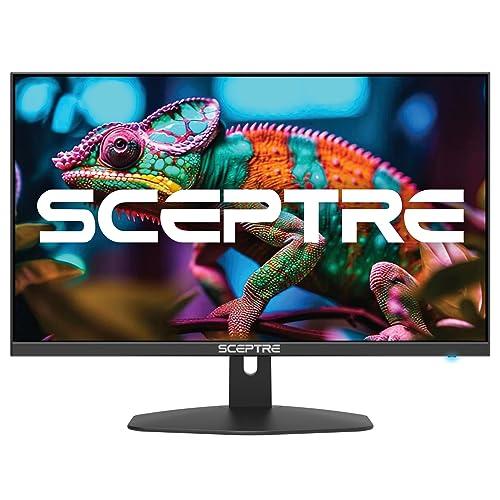
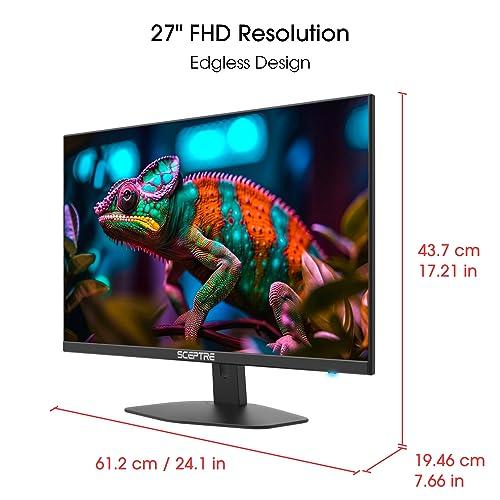
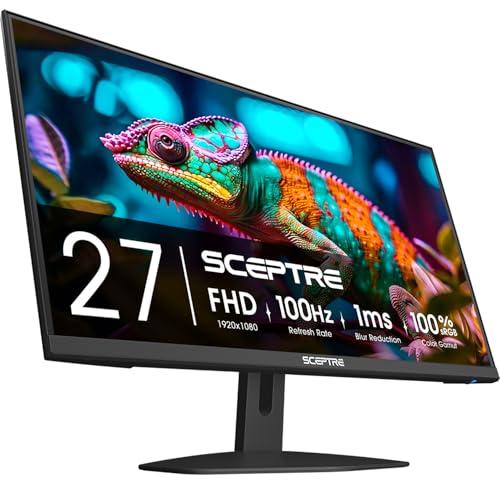
The Sceptre E275W-FW100T represents what I'd call "sensible gaming"—it provides meaningful improvements over basic monitors without requiring a second mortgage. Released in 2024, it uses a VA (Vertical Alignment) panel, which sits between the more common TN and IPS panel types in terms of characteristics.
VA panels offer deeper blacks than IPS displays because they can block more light when showing dark content. The Sceptre achieves a 3,000:1 contrast ratio, which means white pixels are 3,000 times brighter than black pixels. For comparison, typical IPS monitors manage around 1,000:1. This translates to more immersive dark scenes in games like horror titles or space simulators.
The monitor runs at 1920x1080 resolution across 27 inches, resulting in roughly 82 pixels per inch (PPI). This pixel density is where budget monitors make their biggest compromise. Text appears less sharp than on higher-resolution displays, and you might notice individual pixels if you sit close. However, for gaming, especially fast-paced titles where you're focused on action rather than fine details, this resolution remains perfectly adequate.
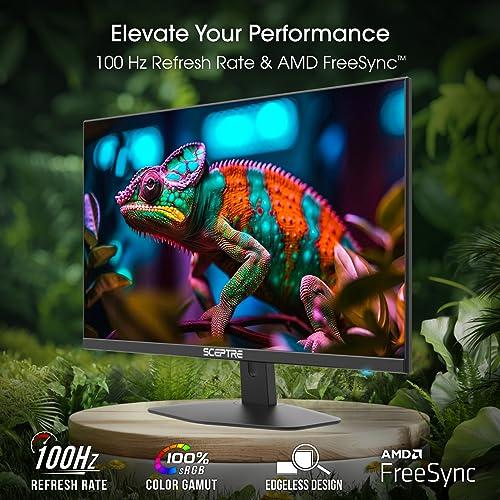
The 100Hz refresh rate is the Sceptre's standout feature at this price point. Many budget monitors still cap out at 75Hz, so the jump to 100Hz provides noticeably smoother motion. Combined with AMD FreeSync support (which also works with modern NVIDIA cards), screen tearing becomes largely a non-issue within the 48-100Hz variable refresh rate range.
Response time is where physics and budget constraints collide. The Sceptre claims 5ms gray-to-gray (GtG) response time, with 1ms MPRT (Moving Picture Response Time) when motion blur reduction is enabled. In practice, user reports suggest some ghosting is visible behind fast-moving objects, particularly in darker scenes. This isn't deal-breaking for most games, but competitive players might find it distracting.
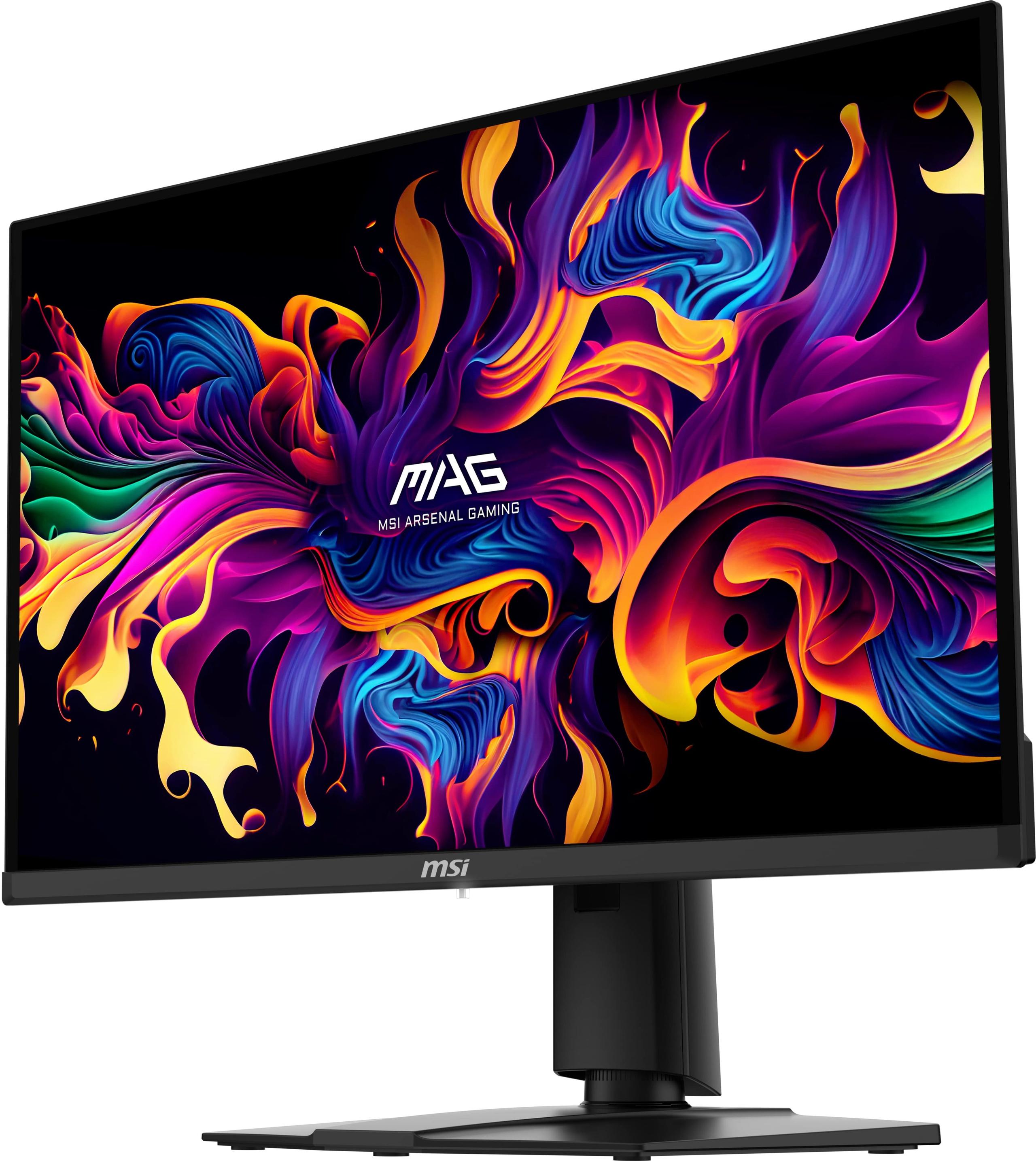
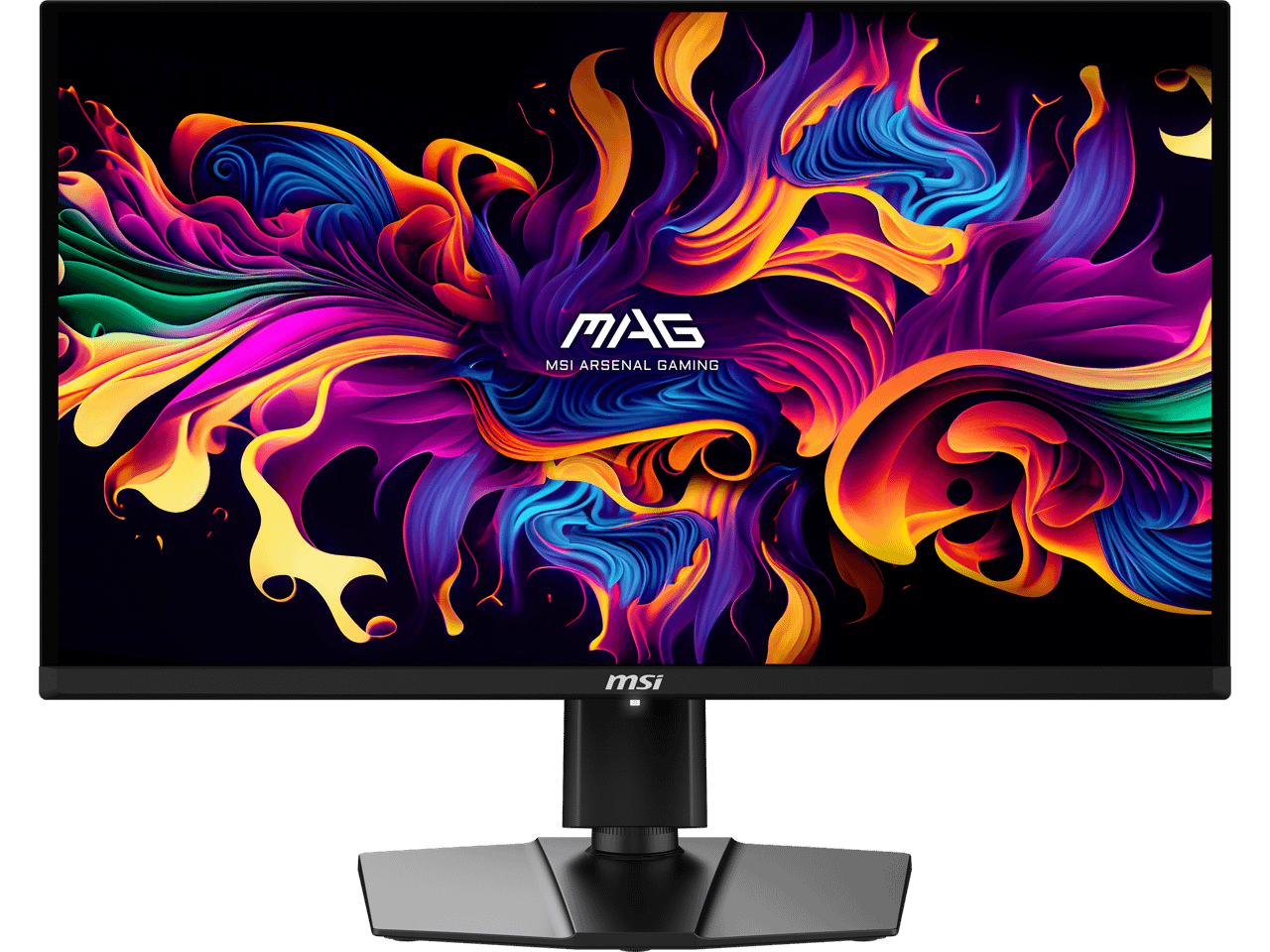
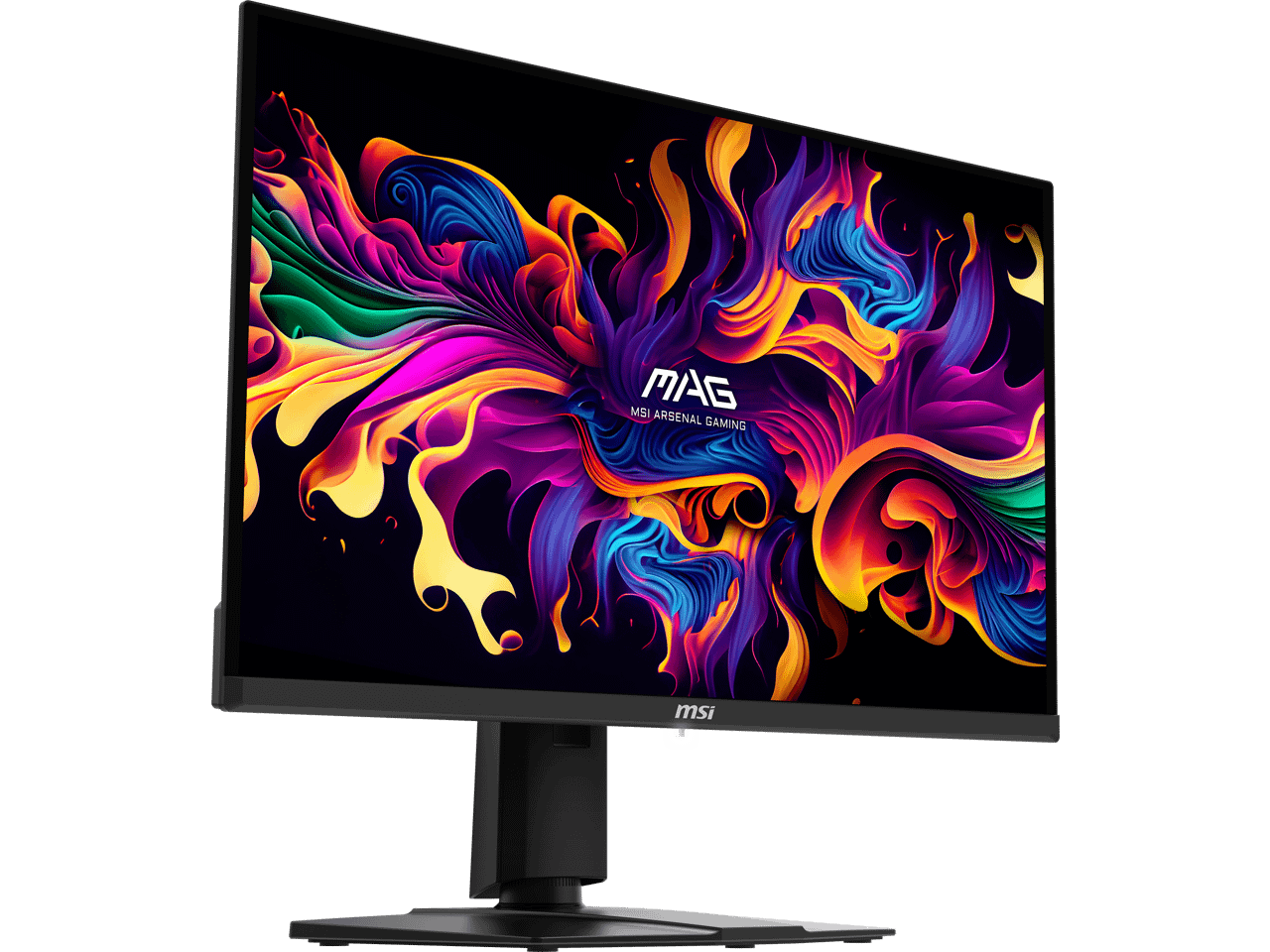
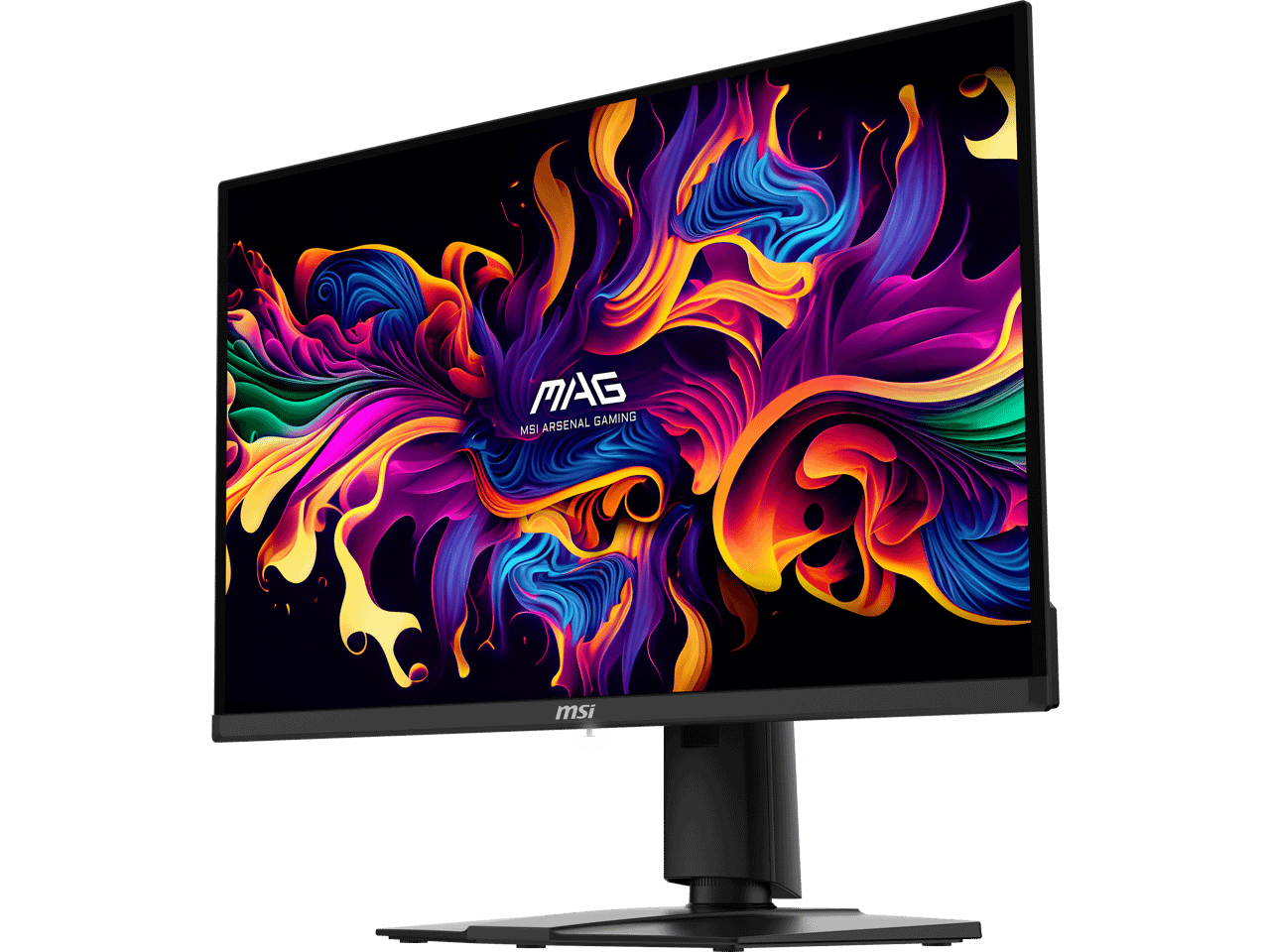
The MSI MAG 271QP QD-OLED X24 represents the current pinnacle of gaming monitor technology. Launching in early 2025, it incorporates third-generation QD-OLED (Quantum Dot OLED) panels, which combine the perfect blacks and infinite contrast of OLED technology with the wide color gamut benefits of quantum dot enhancement.
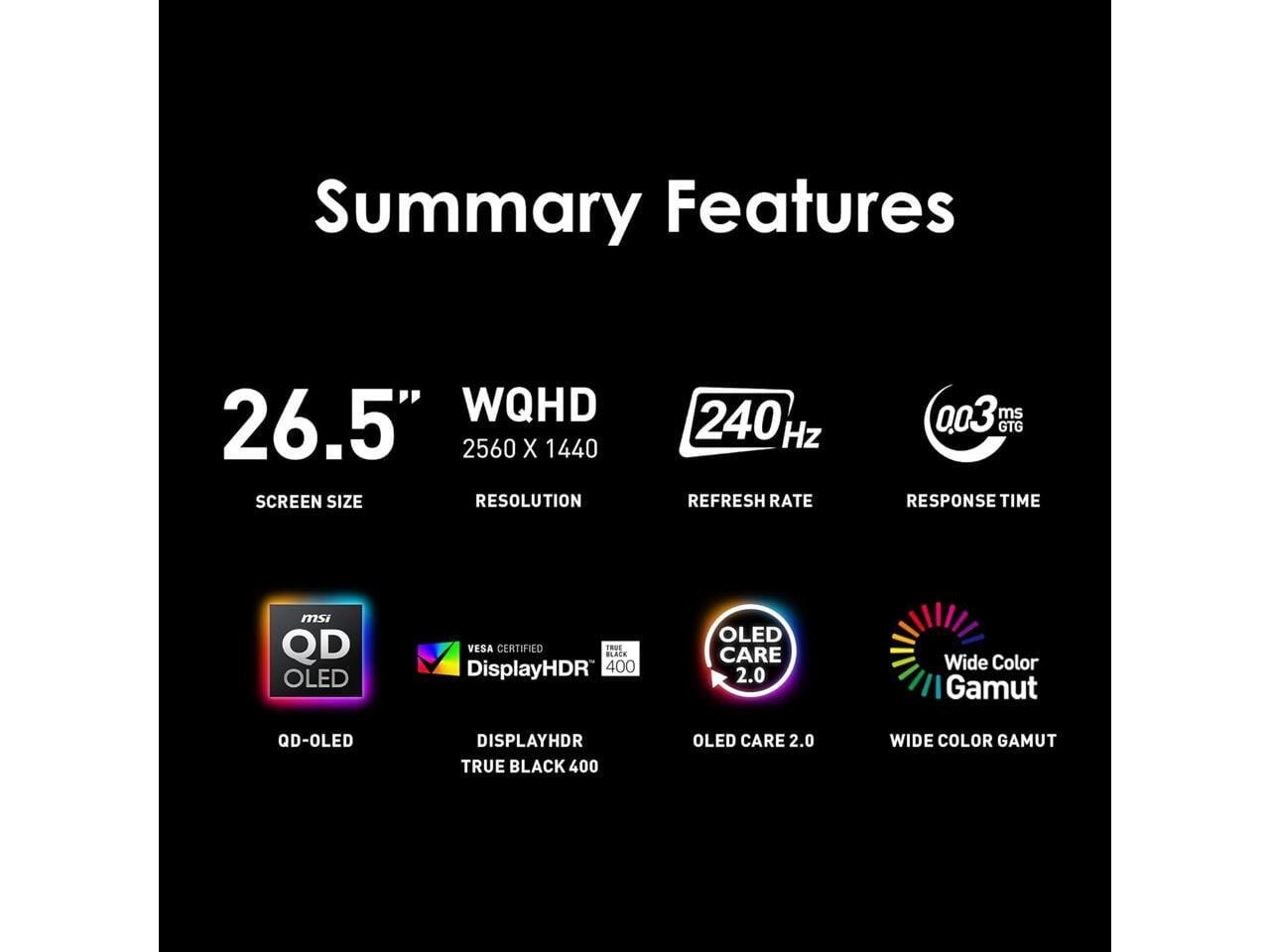
OLED displays work fundamentally differently from traditional LCD monitors. Instead of a backlight shining through liquid crystals, each pixel generates its own light. When displaying black, pixels simply turn off completely, resulting in true black levels and an effectively infinite contrast ratio (MSI rates it at 1,500,000:1, but mathematically it's unlimited).
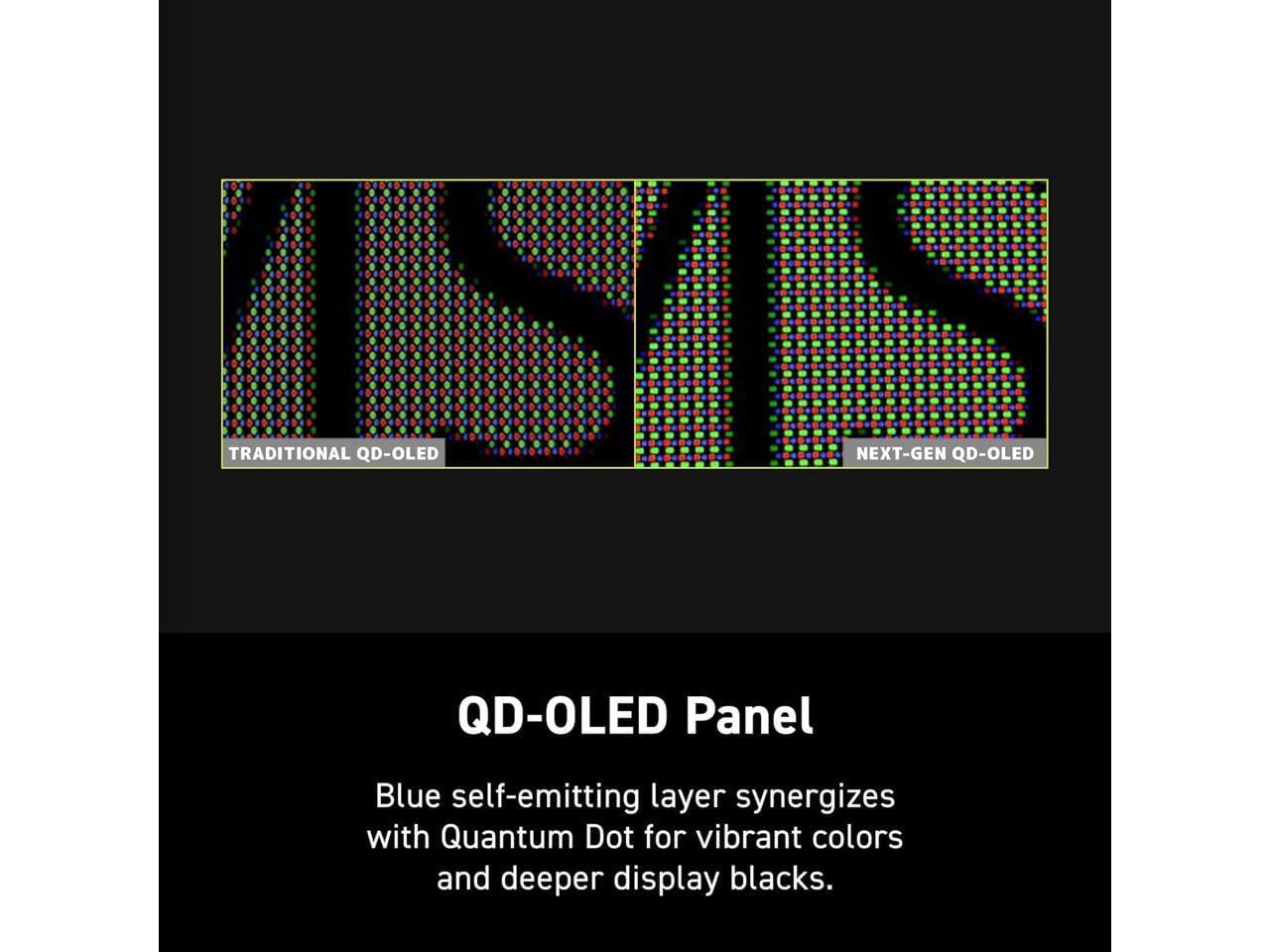
The QD-OLED technology is particularly fascinating. Traditional OLED displays use white organic compounds with color filters, but QD-OLED uses blue OLED emitters combined with quantum dot color conversion. This approach delivers wider color gamuts—the MSI covers 99% of the DCI-P3 color space used in professional video production and 138% of the standard sRGB space most content targets.
At 2560x1440 resolution, the MSI provides roughly 110 PPI, making text noticeably sharper than the Sceptre. This resolution hits a sweet spot for gaming—it's demanding enough to showcase high-end graphics cards but not so pixel-dense that frame rates suffer dramatically.
The 240Hz refresh rate might seem excessive, but it serves two purposes. First, competitive gamers genuinely benefit from the reduced motion blur and input lag. Second, it provides headroom for frame rate variations—games running between 120-240 fps will feel consistently smooth thanks to adaptive sync technology.
The performance gap between these monitors is substantial across every measurable metric. Response time showcases the most dramatic difference—the MSI's 0.03ms GtG response time is essentially instantaneous, while the Sceptre's 5ms creates visible trailing in rapid motion.
To understand why this matters, consider a character running across your screen. With the Sceptre, you might see a faint shadow trailing behind them in high-contrast scenes. With the MSI, movement appears perfectly crisp with zero ghosting artifacts. For single-player adventures, this difference is academic. For competitive multiplayer games where spotting enemies quickly matters, it's significant.
Color accuracy tells a similar story. The Sceptre covers 100% of the sRGB color space, which sounds impressive until you realize sRGB was designed for web content in the 1990s. Modern games and HDR content use much wider color palettes. The MSI reproduces these extended color ranges accurately, making games appear more vibrant and lifelike.
HDR (High Dynamic Range) capability represents perhaps the biggest functional difference. The Sceptre simply doesn't support HDR, limiting you to standard dynamic range content. The MSI carries VESA DisplayHDR True Black 400 certification, meaning it can display both deep blacks and bright highlights simultaneously. In supported games, this creates more realistic lighting with sun rays, explosions, and other bright elements appearing genuinely bright rather than washed out.
Brightness handling differs significantly between the technologies. The Sceptre maintains 280 nits consistently across the entire screen—adequate for typical indoor lighting but potentially insufficient in bright rooms. The MSI operates at 250 nits for standard content but can spike to 1,000 nits for small, bright elements in HDR scenes. This selective brightness creates the dramatic contrast that makes HDR content compelling.
How these differences translate to actual gaming depends heavily on what you play. For story-driven single-player games, the MSI's superior image quality enhances immersion significantly. Games like Cyberpunk 2077 or Red Dead Redemption 2 showcase stunning visuals with proper HDR implementation and accurate colors. The Sceptre will run these games perfectly well, but you'll miss the visual spectacle.
Competitive multiplayer gaming tells a different story. In games like Counter-Strike, Valorant, or Rocket League, the MSI's lightning-fast response time and high refresh rate provide genuine competitive advantages. You'll spot enemies peeking corners milliseconds earlier, track moving targets more easily, and experience less input lag between mouse movements and screen response.
However, there's a crucial consideration: your graphics card must be capable of driving these frame rates. The MSI at 1440p resolution and 240Hz refresh rate demands serious GPU horsepower. You'll need at least an RTX 4070 or RX 7800 XT to maintain high frame rates in modern games, and even then, you might need to adjust settings. The Sceptre at 1080p resolution is much more forgiving—even mid-range graphics cards can hit 100+ fps consistently.
Physical construction reveals another significant difference. The Sceptre uses a basic tilt-only stand that gets the job done but offers limited adjustability. The matte black plastic construction feels adequate but not premium. There's also a notably bright power LED that some users find distracting in dark environments.
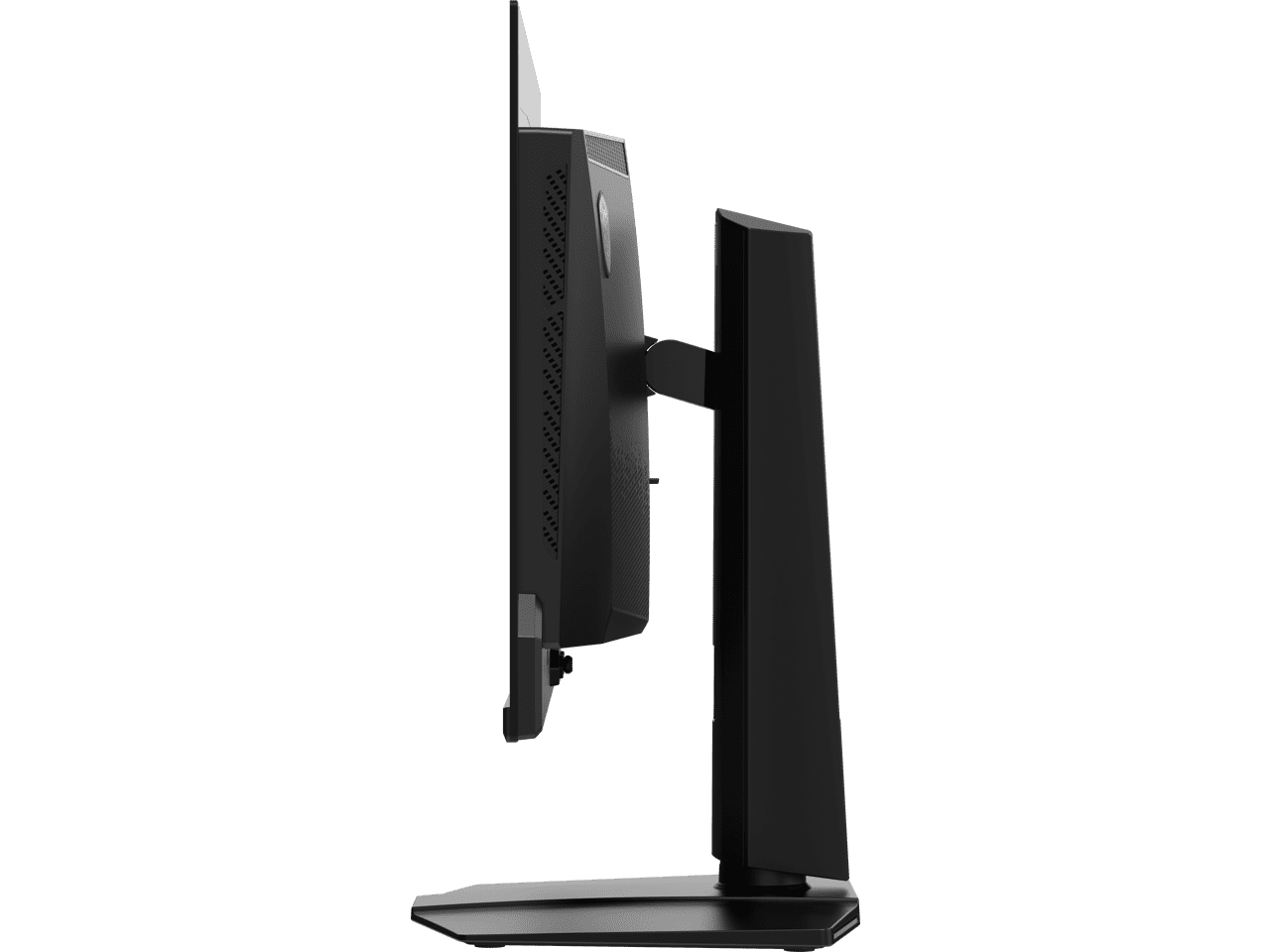
The MSI includes a fully adjustable stand with tilt, swivel, height adjustment, and pivot capability. This flexibility matters more than you might expect—proper monitor positioning reduces neck strain during long gaming sessions and allows optimal viewing angles for the OLED panel.
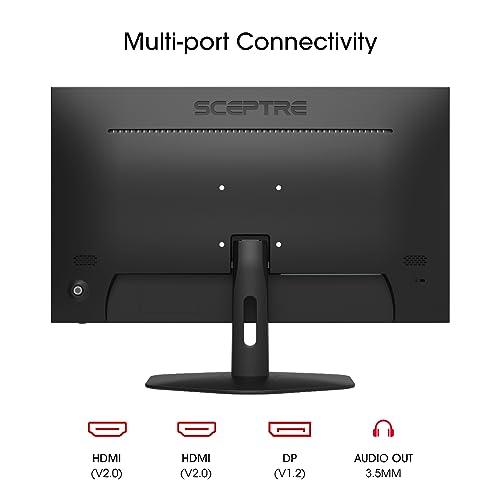
Connectivity options favor the MSI as well. Both monitors include multiple HDMI and DisplayPort connections, but the MSI features HDMI 2.1 ports with full bandwidth support. This enables 120Hz gaming on PlayStation 5 and Xbox Series X consoles, plus features like Variable Refresh Rate and Auto Low Latency Mode for console optimization.
OLED technology's main weakness is potential burn-in, where static elements like game HUDs or taskbars can leave permanent ghostly afterimages. MSI addresses this with their OLED Care 2.0 suite, which includes pixel shifting (subtly moving the image to prevent static elements), panel refresh cycles, and detection algorithms that dim static content automatically.
The MSI includes a three-year warranty that explicitly covers burn-in damage—unusual in the OLED monitor space where manufacturers typically exclude burn-in from coverage. Based on professional reviews and user reports, modern OLED monitors like this one show good burn-in resistance with normal use, but the risk isn't zero.
For typical gaming use with varied content, burn-in shouldn't be a major concern. However, users who leave static desktop elements on screen for hours daily or play the same game with persistent HUD elements for thousands of hours might experience some image retention over time.
At the time of writing, the Sceptre E275W-FW100T costs roughly one-sixth the price of the MSI MAG 271QP QD-OLED X24. This dramatic price difference means the decision often comes down to budget constraints rather than pure performance considerations.
The Sceptre makes sense if you're upgrading from a basic 60Hz monitor and want to experience higher refresh rate gaming without a massive investment. It's also sensible as a secondary monitor, for users who primarily play single-player games, or when your graphics card can't fully utilize a premium display anyway.
The MSI justifies its premium pricing if you're serious about competitive gaming, have a high-end graphics card that can drive 1440p at high frame rates, or want the best possible image quality for both gaming and media consumption. It's also a better long-term investment—while you might outgrow the Sceptre within a few years, the MSI should remain relevant much longer.
For users considering these monitors for console gaming or home theater use, the MSI offers significant advantages. Its HDMI 2.1 connectivity enables full-bandwidth 4K gaming at 120Hz on current consoles (though you'd need to run at 1440p for 240Hz). The HDR support and accurate colors make movie watching more enjoyable, and the OLED technology excels in dark room environments typical for home theater setups.
The Sceptre works fine for console gaming but limits you to 1080p resolution and lacks HDR entirely. For mixed gaming and media use, especially in darker environments, the premium option provides a notably better experience.
The Sceptre E275W-FW100T earns a recommendation for budget-conscious gamers who want meaningful improvements over basic monitors. It successfully delivers higher refresh rate gaming, decent color accuracy, and useful features like built-in speakers and blue light reduction. The compromises in response time, resolution, and build quality are reasonable given the price point.
The MSI MAG 271QP QD-OLED X24 represents the current state-of-the-art in gaming monitors. Its combination of OLED image quality, 240Hz performance, and comprehensive feature set justifies the premium pricing for users who can afford it and have the hardware to maximize its potential.
My take: if you're unsure whether the premium features matter to you, start with something like the Sceptre. You can always upgrade later, and you'll have a better understanding of what improvements matter most for your specific use case. However, if you're already committed to high-end gaming and have the budget, the MSI delivers an experience that's genuinely transformative compared to traditional LCD monitors.
The monitor market continues evolving rapidly, with new OLED options appearing regularly and prices gradually declining. But for now, these two monitors effectively represent the sensible budget choice and the premium performance leader in 27-inch gaming displays.
| Sceptre E275W-FW100T | MSI MAG 271QP QD-OLED X24 |
|---|---|
| Resolution - Higher resolution means sharper text and more detailed visuals | |
| 1920x1080 (Full HD) - adequate for gaming, less sharp text | 2560x1440 (QHD) - significantly sharper, sweet spot for performance |
| Panel Technology - Determines image quality, contrast, and color accuracy | |
| VA Panel with 3,000:1 contrast ratio | QD-OLED with 1,500,000:1 contrast and perfect blacks |
| Refresh Rate - Higher rates provide smoother motion in fast games | |
| 100Hz - noticeable improvement over 60Hz for casual gaming | 240Hz - exceptional for competitive gaming and esports |
| Response Time - Lower times reduce ghosting and motion blur | |
| 5ms GtG (some visible ghosting in fast scenes) | 0.03ms GtG (virtually instant with no ghosting) |
| Color Gamut - Wider coverage shows more vibrant and accurate colors | |
| 100% sRGB (good for basic content) | 99% DCI-P3, 138% sRGB (exceptional for modern games and HDR) |
| HDR Support - Enables brighter highlights and deeper contrast | |
| No HDR support | VESA DisplayHDR True Black 400 with 1,000 nits peak brightness |
| Brightness - Higher values work better in bright rooms | |
| 280 nits (adequate for dim to moderate lighting) | 250 nits SDR, up to 1,000 nits HDR highlights |
| Adaptive Sync - Prevents screen tearing when GPU can't maintain steady framerate | |
| AMD FreeSync (48-100Hz range) | Adaptive Sync compatible with AMD and NVIDIA |
| Connectivity - HDMI 2.1 enables high refresh rates on consoles | |
| 2x HDMI 2.0, 1x DisplayPort 1.2 | 2x HDMI 2.1, 1x DisplayPort 1.4a (console-optimized) |
| Ergonomics - Better adjustability reduces neck strain during long sessions | |
| Tilt-only stand (limited positioning options) | 4-way adjustable stand (tilt, swivel, height, pivot) |
| Warranty Coverage - OLED burn-in protection is crucial for longevity | |
| Standard warranty (no burn-in concerns) | 3-year warranty including OLED burn-in coverage |
| Target Use Case - Who this monitor serves best | |
| Budget gaming, casual use, first upgrade from 60Hz | Competitive gaming, premium experience, content creation |
The MSI MAG 271QP QD-OLED X24 is significantly better for competitive gaming due to its 240Hz refresh rate and 0.03ms response time, which provides ultra-smooth motion and virtually eliminates ghosting. The Sceptre E275W-FW100T offers 100Hz refresh rate, which is still good for casual gaming but can't match the competitive advantage of the premium MSI monitor.
The biggest difference is panel technology. The MSI MAG 271QP QD-OLED X24 uses QD-OLED technology with perfect blacks and infinite contrast, while the Sceptre E275W-FW100T uses a VA panel with good but limited contrast. The MSI also offers higher 1440p resolution compared to the Sceptre's 1080p, resulting in much sharper visuals.
The Sceptre E275W-FW100T offers exceptional value for budget-conscious buyers, providing 100Hz gaming at a fraction of the cost. However, the MSI MAG 271QP QD-OLED X24 delivers premium performance that justifies its higher price for serious gamers who want the best possible experience.
The MSI MAG 271QP QD-OLED X24 is much better for console gaming, featuring HDMI 2.1 ports that support 120Hz gaming on PlayStation 5 and Xbox Series X. The Sceptre E275W-FW100T has HDMI 2.0 ports that limit console gaming to 60Hz, though it still works fine for casual console use.
The MSI MAG 271QP QD-OLED X24 excels for media consumption thanks to its HDR support, perfect blacks, and wide color gamut that makes movies look stunning. The Sceptre E275W-FW100T lacks HDR and has limited color coverage, making it adequate but not impressive for movie watching.
The Sceptre E275W-FW100T at 1080p resolution works well with mid-range graphics cards like GTX 1660 or RX 5600 XT. The MSI MAG 271QP QD-OLED X24 at 1440p and 240Hz requires high-end GPUs like RTX 4070 or RX 7800 XT to achieve maximum performance in demanding games.
The Sceptre E275W-FW100T uses LCD technology with no burn-in risk. The MSI MAG 271QP QD-OLED X24 uses OLED technology which has potential burn-in concerns, but MSI includes OLED Care 2.0 protection features and covers burn-in under their 3-year warranty.
The MSI MAG 271QP QD-OLED X24 features premium build quality with a fully adjustable stand (tilt, swivel, height, pivot) and solid construction. The Sceptre E275W-FW100T has basic build quality with a tilt-only stand, which is functional but limited in positioning options.
The MSI MAG 271QP QD-OLED X24 is excellent for productivity work due to its sharp 1440p resolution and accurate colors. The Sceptre E275W-FW100T works for basic productivity but the 1080p resolution at 27 inches makes text less sharp, which can be tiring during long work sessions.
Both monitors offer multiple connections, but the MSI MAG 271QP QD-OLED X24 includes modern HDMI 2.1 ports for full bandwidth gaming. The Sceptre E275W-FW100T has HDMI 2.0 and DisplayPort connections that handle standard gaming well but lack the latest console gaming features.
The MSI MAG 271QP QD-OLED X24 dominates in dark environments thanks to its perfect black levels and infinite contrast ratio, making dark game scenes look incredibly immersive. The Sceptre E275W-FW100T offers decent contrast for a budget monitor but can't match the deep blacks of OLED technology.
Choose the Sceptre E275W-FW100T if you're new to gaming monitors, have a limited budget, or play mostly casual games. Opt for the MSI MAG 271QP QD-OLED X24 if you're serious about competitive gaming, have a high-end graphics card, want the best image quality, or plan to keep the monitor for many years.
We've done our best to create useful and informative comparisons to help you decide what product to buy. Our research uses advanced automated methods to create this comparison and perfection is not possible - please contact us for corrections or questions. These are the sites we've researched in the creation of this article: pcvarge.com - walmart.com - cubed.run - productchart.com - displayninja.com - target.com - youtube.com - versus.com - youtube.com - youtube.com - sceptre.com - sceptre.com - bestbuy.com - youtube.com - xda-developers.com - newegg.com - notebookcheck.net - displayninja.com - ign.com - rtings.com - cdw.com - microcenter.com - bestbuy.com - us.msi.com - colamco.com - msi.com - msi.com - displayspecifications.com - msi.com - storage-asset.msi.com - msi.com - us.msi.com - displayspecifications.com

Privacy Policy
Terms and Conditions - Affiliate Policy
Home Security
© Copyright 2008-2026.
11816 Inwood Rd #1211, Dallas, TX 75244