

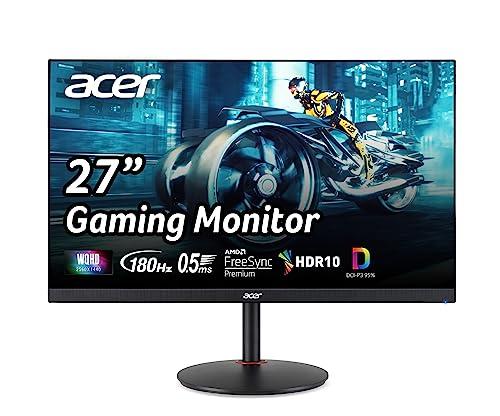
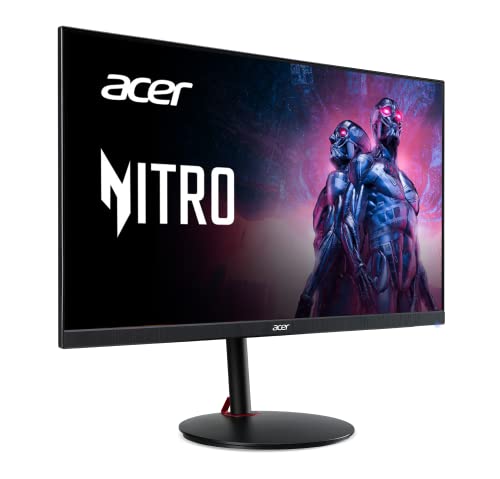
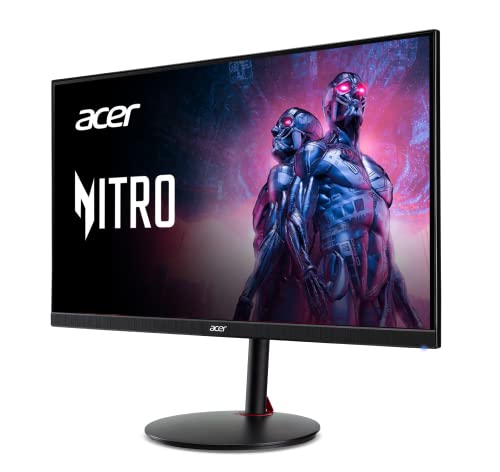
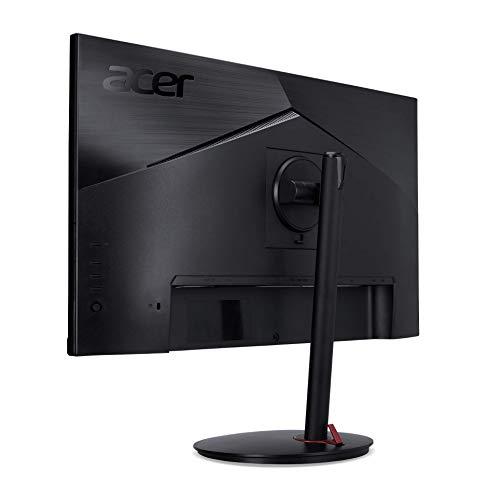
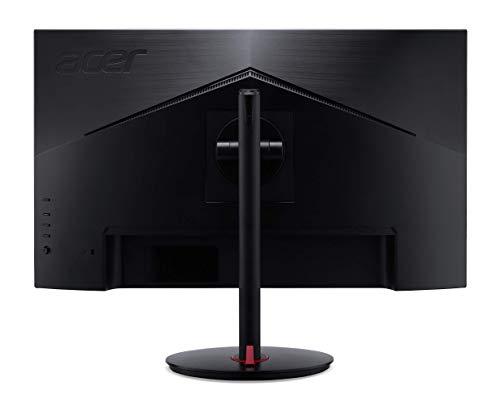
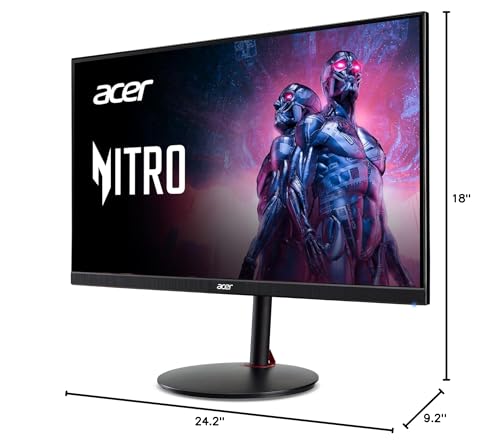
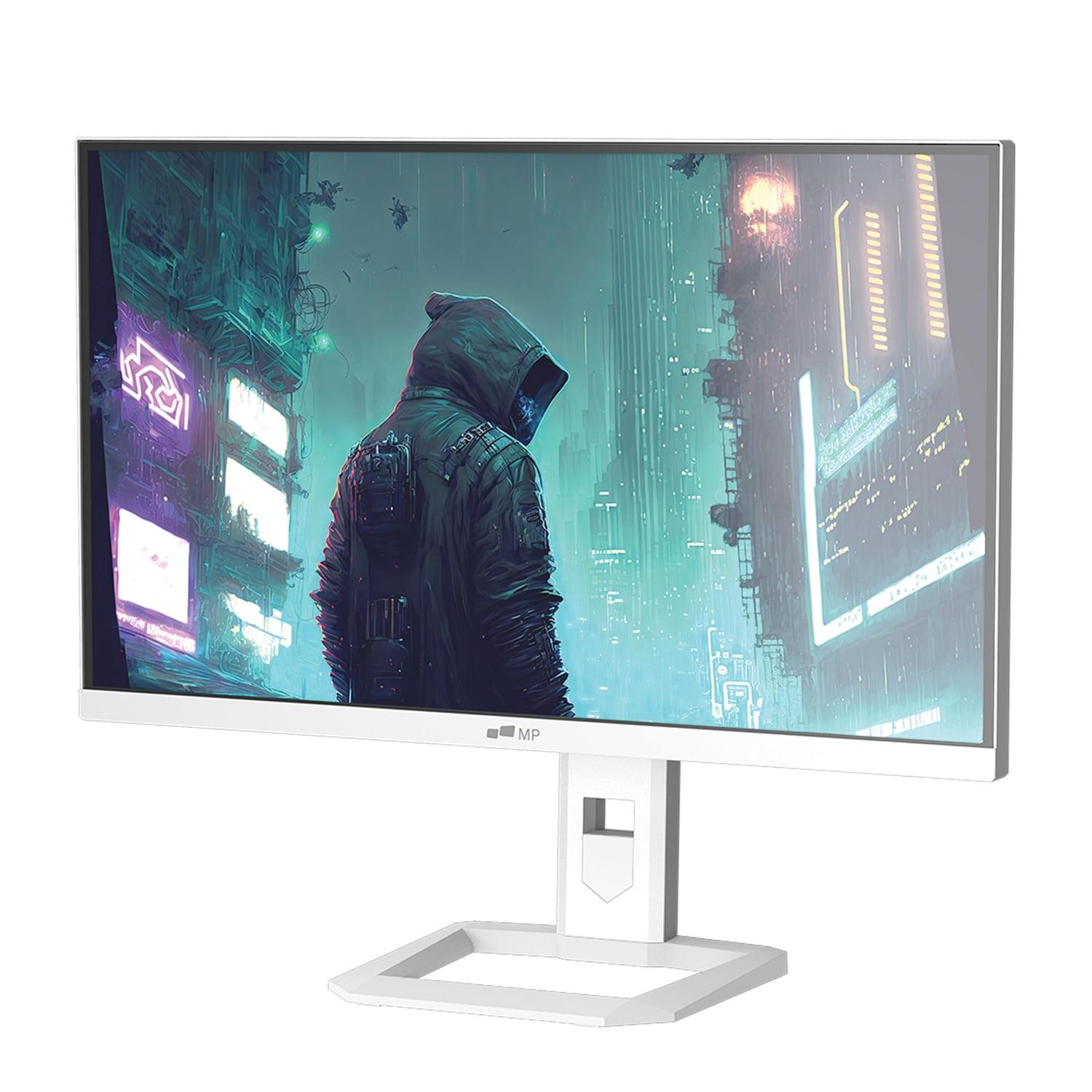
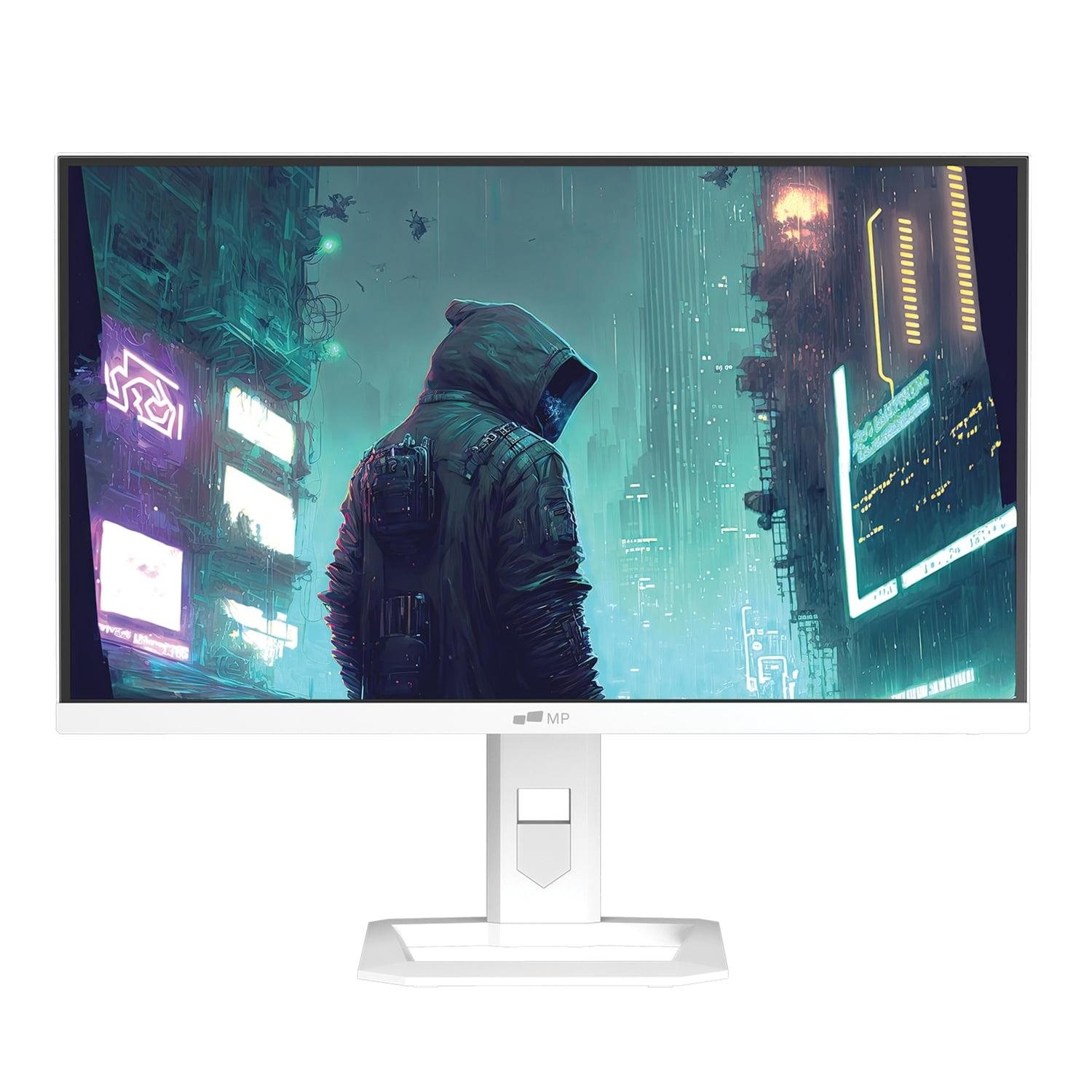
When shopping for a new gaming monitor in 2024, you're facing one of the most exciting yet overwhelming decisions in PC hardware. The monitor market has exploded with options, from budget-friendly workhorses to cutting-edge displays that cost more than some people's entire gaming setup. Today, we're diving deep into two monitors that represent completely different philosophies: the Acer Nitro XV1 27" WQHD 180Hz IPS Gaming Monitor and the Mobile Pixels 27" WQHD Mini-LED Gaming Monitor.
These aren't just random picks – they perfectly illustrate the classic "value versus premium" debate that every gamer faces. One delivers exceptional performance at a price that won't break the bank, while the other pushes visual boundaries with technology that was science fiction just a few years ago.
Before we jump into the head-to-head comparison, let's talk about what actually matters in a gaming monitor. Unlike regular office displays, gaming monitors are built around three core principles: speed, smoothness, and visual clarity.
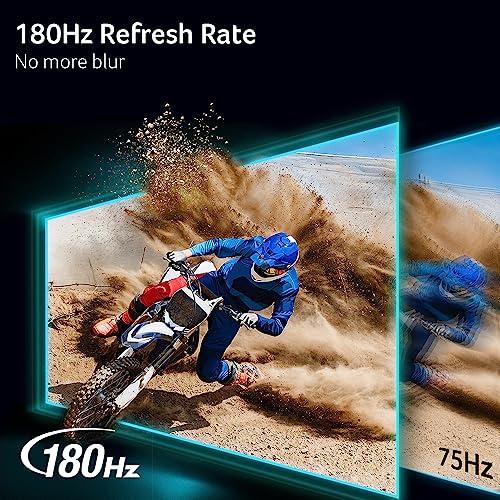
Refresh rate is probably the most talked-about specification. This measures how many times per second your monitor can display a new image, expressed in Hertz (Hz). A 60Hz monitor shows 60 frames per second, while a 180Hz monitor can display 180 frames per second. Higher refresh rates mean smoother motion, especially noticeable when tracking fast-moving objects in games or quickly turning your camera.
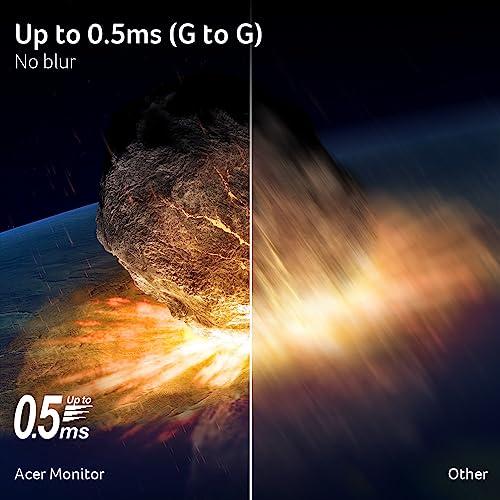
Response time is equally crucial but often misunderstood. This measures how quickly a pixel can change from one color to another, typically expressed in milliseconds (ms). Lower numbers are better because they reduce "ghosting" – those annoying trails you sometimes see behind moving objects. Most modern gaming monitors aim for 1ms response times.
Panel technology determines how your monitor creates the image. IPS (In-Plane Switching) panels offer excellent color accuracy and wide viewing angles but traditionally struggle with contrast. Mini-LED represents a newer approach, using thousands of tiny LEDs behind the screen for precise lighting control, dramatically improving contrast and brightness.
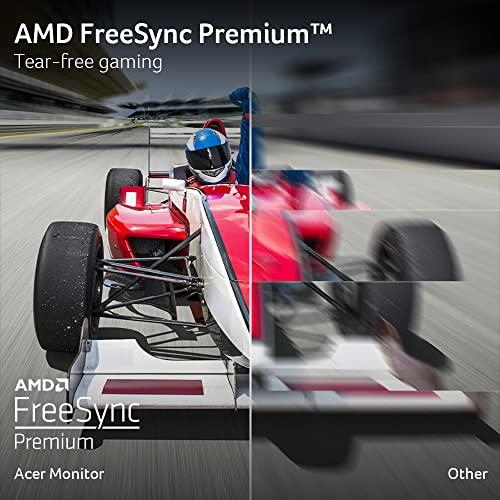
Finally, adaptive sync technology like AMD FreeSync or NVIDIA G-SYNC synchronizes your monitor's refresh rate with your graphics card's frame output. This eliminates "screen tearing" – that jarring horizontal line that appears when your GPU and monitor fall out of sync.
Released in 2023, the Acer Nitro XV1 represents Acer's attempt to deliver premium gaming features at a mainstream price point. At the time of writing, it typically sells for roughly half the cost of premium alternatives while delivering surprisingly similar gaming performance.
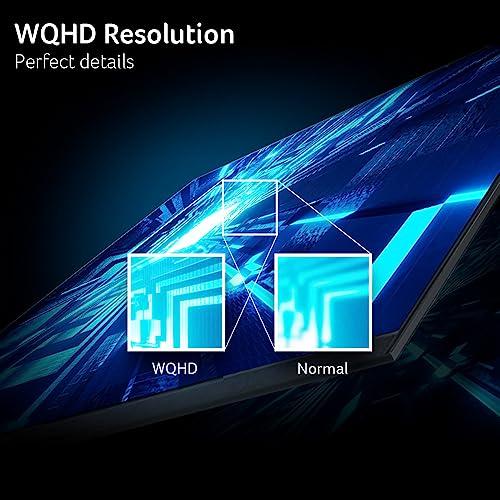
This monitor uses a traditional IPS panel with LED backlighting – proven technology that's been refined over years. The 27-inch screen hits that sweet spot for desktop gaming: large enough for immersion without requiring you to move your head constantly. Its 2560 x 1440 resolution (often called WQHD or 1440p) provides significantly sharper visuals than 1080p without the performance penalty of 4K gaming.
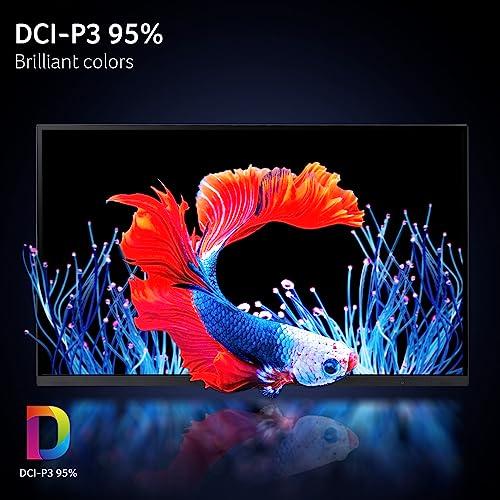
What immediately impressed us in reviewing user feedback and professional assessments is how the Acer Nitro XV1 doesn't feel like a budget monitor. The color accuracy out of the box rivals displays costing twice as much, covering 95% of the DCI-P3 color space. For context, DCI-P3 is the standard used in digital cinema, so games and movies look vibrant and accurate.
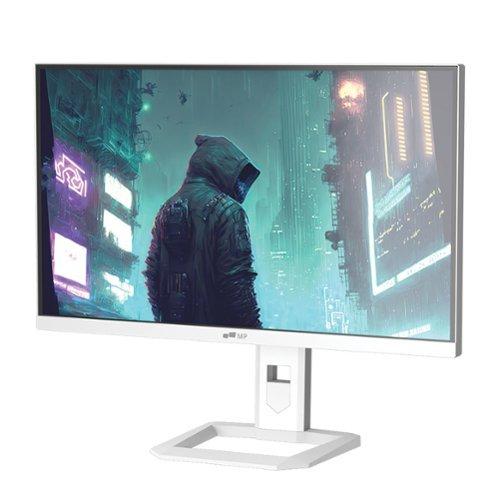
The Mobile Pixels 27" Mini-LED monitor launched in 2024 and represents the cutting edge of gaming display technology. At the time of writing, it commands a premium price that reflects its advanced Mini-LED backlighting system.
Mini-LED technology is fascinating because it bridges the gap between traditional LCD monitors and OLED displays. Instead of using a few large LED zones for backlighting, Mini-LED employs thousands of tiny LEDs that can be individually controlled. This creates dramatically better contrast ratios and allows for true local dimming – the ability to make specific areas of the screen completely black while keeping other areas bright.
The Mobile Pixels monitor achieves HDR1000 certification, meaning it can display peak brightness levels of 1000 nits. To put this in perspective, a typical office environment has about 200-300 nits of ambient lighting. This extreme brightness capability allows HDR content to truly shine, with highlights that practically leap off the screen.
Both monitors deliver 180Hz refresh rates via DisplayPort, which places them in the high-performance tier of gaming displays. The difference between 60Hz and 180Hz is immediately noticeable – mouse movements feel more precise, fast-paced games appear smoother, and competitive advantages become apparent in reaction-heavy scenarios.
However, refresh rate means nothing if your monitor can't keep up with rapid color changes. Both the Acer Nitro XV1 and Mobile Pixels Mini-LED claim 1ms response times, but the implementation differs slightly. The Acer includes Visual Response Boost (VRB), a backlight strobing technology that further reduces motion blur by briefly turning off the backlight between frames. This creates incredibly sharp motion clarity but reduces overall brightness.
Based on our analysis of user experiences and professional reviews, both monitors perform virtually identically in competitive gaming scenarios. The response time differences are so minimal that even professional esports players would struggle to notice them in blind testing.
Both displays support AMD FreeSync Premium, which provides variable refresh rate synchronization in the 40-180Hz range. This wide range is crucial because it includes Low Framerate Compensation (LFC) – when your frame rate drops below 40fps, the monitor doubles the refresh rate to maintain smooth visuals.
The Acer Nitro XV1 also works with NVIDIA graphics cards despite lacking official G-SYNC certification. This "G-SYNC Compatible" functionality has become standard, and our research indicates it works flawlessly with GeForce GPUs.
For gaming performance specifically, both monitors are essentially tied. The 180Hz refresh rate provides that silky-smooth competitive edge, and the 1ms response times ensure minimal input lag. Your choice here won't be determined by raw gaming performance.
This is where the technologies diverge dramatically and where your decision will likely be made.
The Acer Nitro XV1 covers 95% of the DCI-P3 color gamut with impressive accuracy. Colors appear vibrant without being oversaturated, and the IPS panel maintains consistent colors across all viewing angles. This makes it excellent for both gaming and productivity tasks where color accuracy matters.
The Mobile Pixels Mini-LED covers 94% of DCI-P3 – technically slightly less than the Acer, but the difference is imperceptible in real-world use. Both monitors display over 1 billion colors through 8-bit panels with Frame Rate Control (FRC), providing smooth color gradients without banding.
Here's where the Mobile Pixels monitor absolutely dominates. Traditional IPS panels, like the one in the Acer Nitro XV1, typically achieve contrast ratios around 1000:1. This means the brightest white is only 1000 times brighter than the darkest black the panel can produce. While this isn't terrible, it means blacks appear more gray than truly black, especially in dark rooms.
The Mini-LED technology in the Mobile Pixels display achieves contrast ratios exceeding 1,000,000:1. This dramatic difference is immediately visible in dark scenes – shadows actually look black rather than gray, and the overall image appears more three-dimensional.
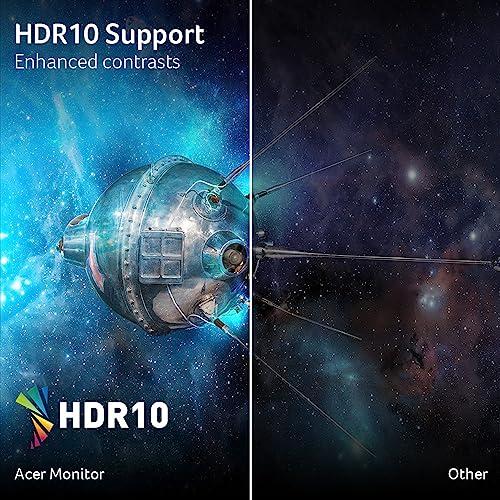
Peak brightness tells a similar story. The Acer Nitro XV1 reaches about 250 nits maximum brightness, which is adequate for most environments but limits its HDR performance. The monitor supports HDR10, but without sufficient brightness, HDR content doesn't look dramatically different from standard content.
The Mobile Pixels Mini-LED monitor hits 1000 nits peak brightness and carries HDR1000 certification. This transforms HDR gaming and movie watching into a genuinely different experience. Explosions in games create bright highlights that make you squint, while maintaining detail in dark areas that would be completely black on traditional monitors.
In practice, these technical differences translate to noticeable visual improvements. Dark games like horror titles or space simulations benefit enormously from the Mobile Pixels monitor's superior contrast. The improved black levels create better atmosphere and allow you to see details in shadows that would be invisible on the Acer Nitro XV1.
However, the visual upgrade comes with caveats. Mini-LED technology can exhibit "blooming" around bright objects against dark backgrounds – a subtle halo effect caused by the local dimming zones. While much better controlled than on older LCD TVs, it's still occasionally noticeable and can be distracting in specific scenarios.
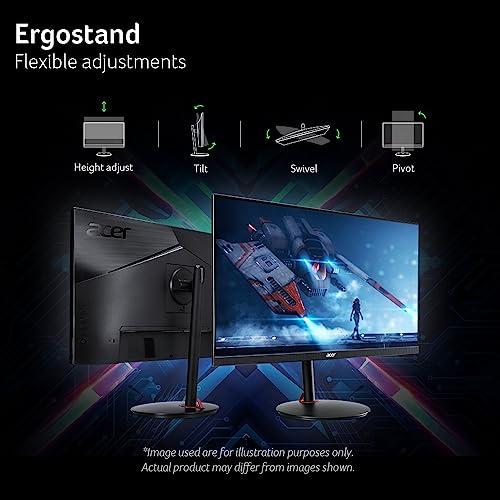
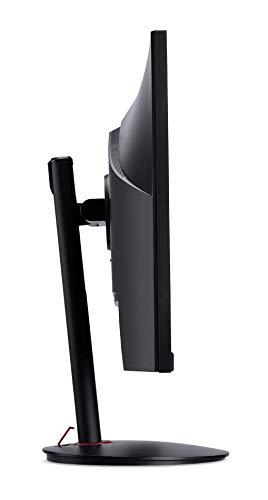
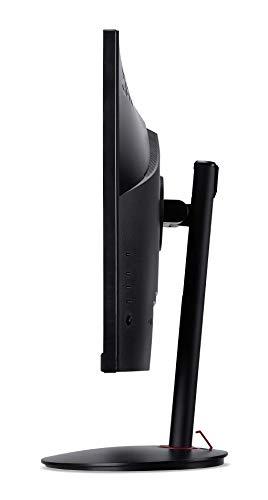
The Acer Nitro XV1 includes a surprisingly full-featured stand for its price point. Height adjustment up to 4.7 inches, tilt ranging from -5° to 25°, complete swivel rotation, and pivot for portrait orientation give you comprehensive positioning options. This flexibility is crucial for long gaming sessions and helps prevent neck strain.
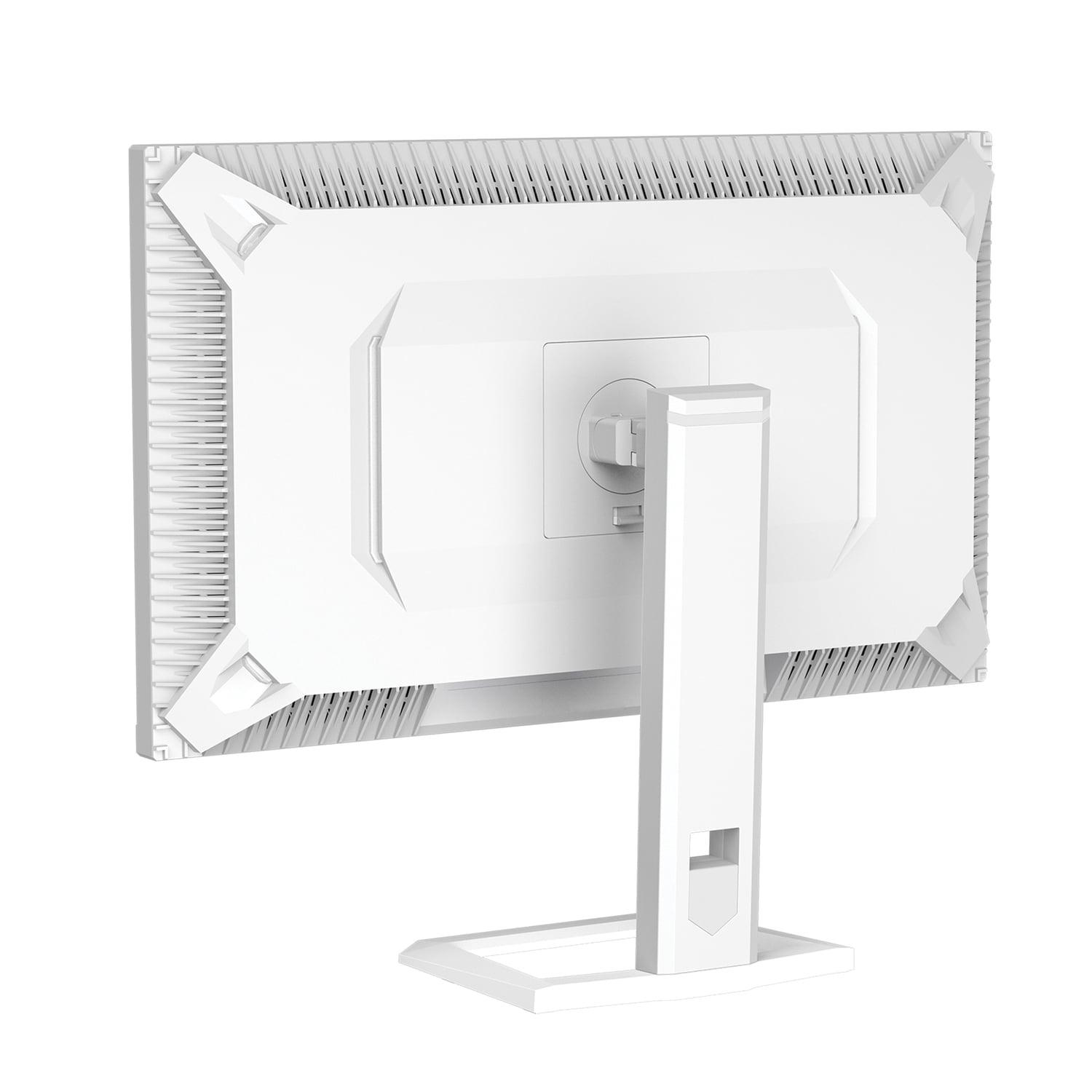
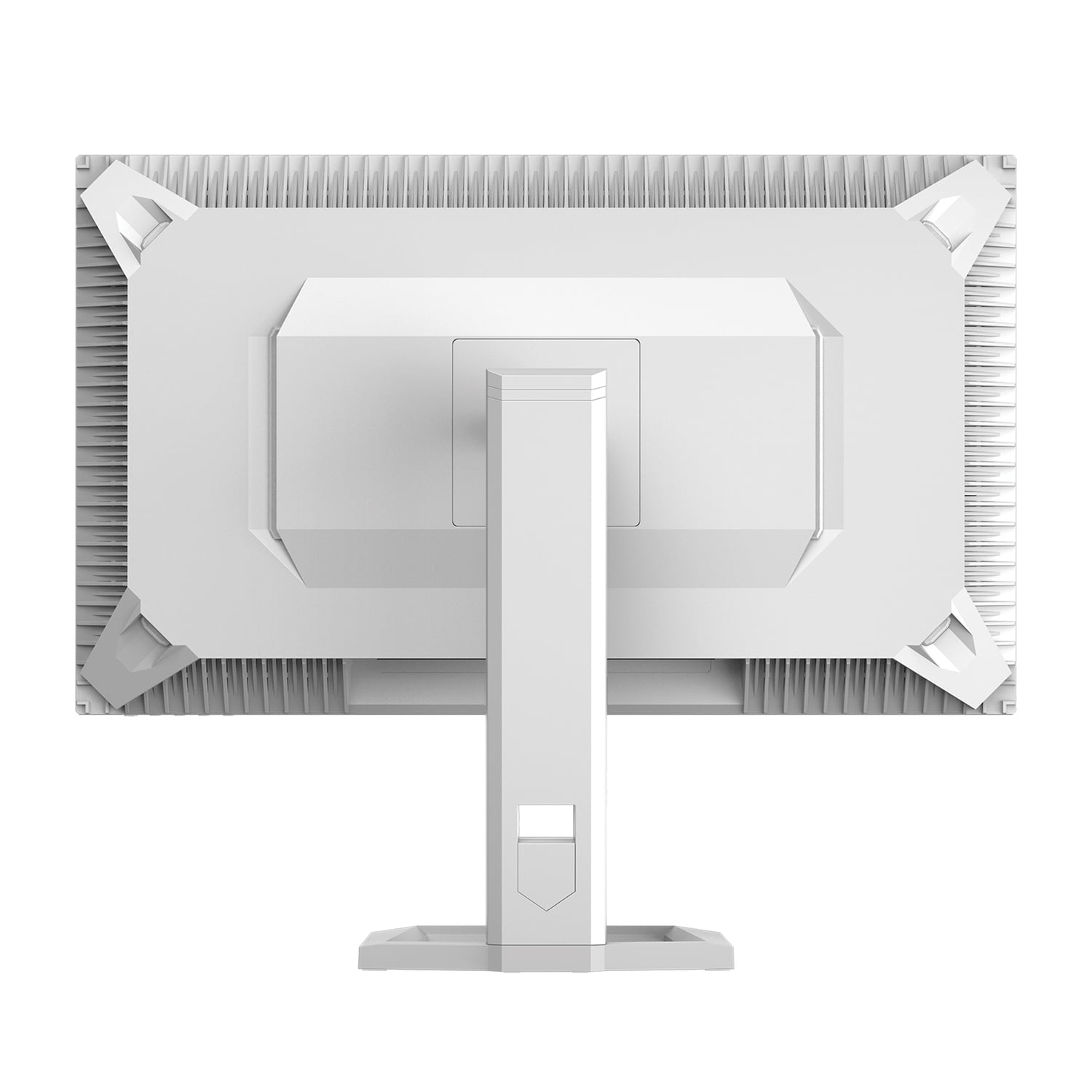
Our research suggests the Mobile Pixels Mini-LED monitor offers tilt, swivel, and pivot adjustments but may lack height adjustment depending on the specific stand configuration. Both monitors support VESA 100x100mm mounting, so aftermarket monitor arms remain an option.
Both monitors offer similar core connectivity, but with important differences. The Acer Nitro XV1 includes one DisplayPort 1.2 and two HDMI 2.0 ports, plus built-in 2-watt stereo speakers. While the speakers aren't audiophile quality, they're convenient for casual use and eliminate cable clutter.
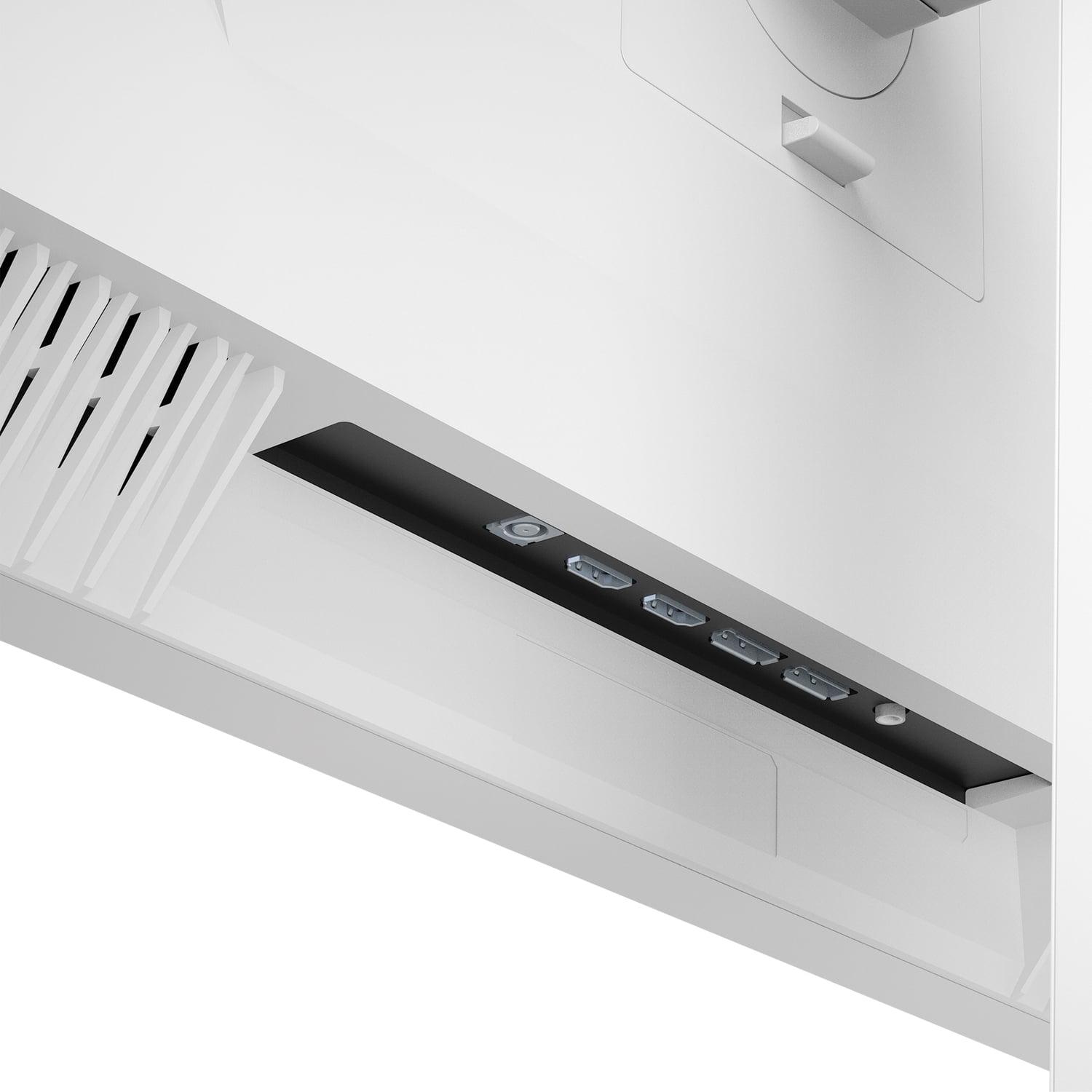
The Mobile Pixels monitor steps up with two DisplayPort 1.4 and two HDMI 2.1 ports. This newer connectivity standard supports higher bandwidth and features like Variable Refresh Rate for console gaming. The monitor lacks built-in speakers but includes an ambient light sensor that automatically adjusts brightness based on room lighting.
For movie watching and streaming, the Mobile Pixels Mini-LED monitor offers a distinctly superior experience. The HDR1000 certification and extreme brightness levels make HDR movies look genuinely impressive, with highlights that mirror what you'd see in a commercial theater.
The high contrast ratio also improves standard dynamic range content. Movies appear more film-like, with deeper blacks that enhance the cinematic experience. However, 27 inches might feel small for dedicated home theater use – most people prefer 32 inches or larger for movie watching from couch distances.
The Acer Nitro XV1 handles movie content competently but without the dramatic highlights and shadow detail of its premium competitor. For casual streaming while working or gaming, it's perfectly adequate. The built-in speakers add convenience for non-critical audio needs.
At the time of writing, the Acer Nitro XV1 typically costs roughly half what the Mobile Pixels Mini-LED monitor commands. This price difference fundamentally changes how we evaluate each monitor's strengths and weaknesses.
The Acer Nitro XV1 delivers about 85-90% of the gaming performance at roughly 50% of the cost. For competitive gaming, this represents exceptional value. The color accuracy and 180Hz refresh rate provide everything most gamers need, while the ergonomic stand and built-in speakers add practical value.
The Mobile Pixels monitor costs significantly more but provides technological capabilities that simply don't exist at lower price points. The Mini-LED backlighting creates visual experiences impossible on traditional LCD panels, particularly for HDR content and atmospheric gaming.
Since these monitors launched in 2023 and 2024 respectively, display technology has continued evolving rapidly. OLED gaming monitors have become more common and affordable, while Mini-LED technology has improved with better local dimming algorithms and reduced blooming effects.
The Mobile Pixels Mini-LED monitor represents newer technology that should remain competitive longer. The HDMI 2.1 and DisplayPort 1.4 connectivity supports current and future graphics card capabilities, while the HDR1000 certification aligns with streaming and gaming content standards.
The Acer Nitro XV1 uses mature, proven technology that may feel dated sooner but offers reliability and compatibility that newer technologies sometimes lack during their early adoption phases.
Choose the Acer Nitro XV1 if you're building a competitive gaming setup on a reasonable budget. The 180Hz refresh rate and excellent color accuracy provide everything needed for high-level gaming performance. The comprehensive ergonomic adjustments and built-in speakers add practical value that premium monitors often omit. This monitor excels for esports, fast-paced gaming, and mixed-use scenarios where you need both gaming performance and productivity features.
Select the Mobile Pixels Mini-LED monitor if visual quality is your primary concern and budget allows for premium pricing. The superior contrast ratio and HDR performance transform single-player gaming and movie watching into genuinely superior experiences. This monitor suits enthusiasts who want cutting-edge display technology and primarily enjoy visually rich, atmospheric games rather than competitive multiplayer titles.
Both monitors deliver on their promises, but they're designed for different priorities and budgets. The gaming performance difference is minimal, but the visual quality gap is substantial. Your choice ultimately depends on whether you value the Acer's practical advantages and exceptional value, or the Mobile Pixels monitor's technological superiority and premium visual experience.
| Acer Nitro XV1 27" WQHD 180Hz IPS Gaming Monitor | Mobile Pixels 27" WQHD Mini-LED Gaming Monitor |
|---|---|
| Panel Technology - Determines contrast, color accuracy, and overall visual quality | |
| IPS with LED backlighting (proven technology, excellent viewing angles) | Mini-LED backlighting (cutting-edge technology, superior contrast) |
| Contrast Ratio - Critical for deep blacks and immersive dark scenes | |
| 1,000:1 static (typical IPS limitation, grays instead of true blacks) | 1,000,000:1 dynamic (OLED-like blacks, dramatic visual improvement) |
| Peak Brightness - Essential for HDR performance and bright room visibility | |
| 250 nits (adequate for most use, limited HDR benefit) | 1,000 nits (excellent HDR1000 performance, bright room capable) |
| Refresh Rate - Higher numbers mean smoother motion in games | |
| 180Hz DisplayPort, 144Hz HDMI (excellent gaming performance) | 180Hz DisplayPort, 144Hz HDMI (identical gaming smoothness) |
| Response Time - Lower is better for reducing motion blur | |
| 1ms GTG with VRB backlight strobing (excellent for competitive gaming) | 1ms GTG (equally fast, no motion blur issues) |
| Color Gamut - Wider coverage means more vibrant, accurate colors | |
| 95% DCI-P3 (excellent color accuracy, slightly better than competitor) | 94% DCI-P3 (nearly identical color performance) |
| HDR Support - Enhances contrast and brightness for compatible content | |
| HDR10 (basic support, limited by low brightness) | HDR1000 certified (true HDR experience with proper brightness) |
| Ergonomic Adjustability - Important for comfort during long gaming sessions | |
| Height, tilt, swivel, pivot (comprehensive adjustment options) | Tilt, swivel, pivot (good but may lack height adjustment) |
| Connectivity - Modern ports support higher bandwidth and future features | |
| 1x DP 1.2, 2x HDMI 2.0 (adequate for current needs) | 2x DP 1.4, 2x HDMI 2.1 (future-proof, better console support) |
| Built-in Audio - Eliminates need for separate speakers | |
| 2x 2W stereo speakers (convenient for basic audio needs) | No speakers (requires external audio solution) |
| Eye Care Features - Reduces strain during extended use | |
| VisionCare tech, flicker-free, low blue light (comprehensive protection) | Low blue light, ambient sensor auto-brightness (smart adaptation) |
| Value Proposition - Performance delivered per dollar spent | |
| Exceptional gaming performance at budget-friendly pricing | Premium visual quality justifies higher investment |
Both the Acer Nitro XV1 and Mobile Pixels Mini-LED monitor offer identical gaming performance with 180Hz refresh rates and 1ms response times. For competitive gaming, the Acer Nitro XV1 provides the same responsiveness at a more budget-friendly price point, making it the better value choice for esports and fast-paced multiplayer games.
The Acer Nitro XV1 uses traditional IPS technology with consistent colors but limited contrast (1,000:1 ratio). The Mobile Pixels Mini-LED monitor features thousands of individually controlled LEDs, delivering dramatically better contrast (1,000,000:1) and true black levels that rival OLED displays while maintaining the durability of LCD technology.
The Mobile Pixels Mini-LED monitor significantly outperforms the Acer Nitro XV1 in HDR content. With HDR1000 certification and 1,000 nits peak brightness, the Mobile Pixels monitor delivers genuine HDR experiences with bright highlights and deep shadows. The Acer's 250 nits brightness limits its HDR10 support to basic enhancement rather than true HDR quality.
For movie watching, the Mobile Pixels Mini-LED monitor provides a superior experience with its high contrast ratio and HDR1000 support, making dark scenes more atmospheric and bright scenes more impactful. The Acer Nitro XV1 handles movies adequately but lacks the dramatic visual improvements of Mini-LED technology, though it includes convenient built-in speakers.
The Acer Nitro XV1 delivers exceptional value by providing premium gaming performance at a budget-friendly price point. While the Mobile Pixels Mini-LED monitor offers superior visual quality, the Acer provides roughly 90% of the performance at approximately half the cost, making it the better value choice for most gamers.
Yes, both monitors support gaming consoles, but the Mobile Pixels Mini-LED monitor has an advantage with HDMI 2.1 ports that better support modern console features. The Acer Nitro XV1 uses HDMI 2.0, which works fine with consoles but may not support all advanced features of newer systems like PS5 and Xbox Series X.
The Acer Nitro XV1 slightly edges out the Mobile Pixels Mini-LED monitor for content creation due to its 95% DCI-P3 color coverage versus 94%. However, both monitors offer excellent color accuracy for creative work. The Acer's superior ergonomic adjustability also makes it more comfortable for long editing sessions.
The Acer Nitro XV1 includes a more comprehensive stand with height, tilt, swivel, and pivot adjustments, providing better ergonomic flexibility. The Mobile Pixels Mini-LED monitor offers tilt, swivel, and pivot but may lack height adjustment, though both support VESA mounting for aftermarket monitor arms.
The Mobile Pixels Mini-LED monitor excels in dark environments thanks to its superior contrast ratio and local dimming capabilities. Dark games like horror titles or space simulations benefit enormously from the deeper blacks and better shadow detail. The Acer Nitro XV1 performs well but shows more gray blacks typical of IPS panels.
Both the Acer Nitro XV1 and Mobile Pixels Mini-LED monitor support AMD FreeSync Premium for tear-free gaming with AMD graphics cards. Both also work with NVIDIA graphics cards through G-SYNC compatibility, ensuring smooth gameplay regardless of your GPU brand choice.
The Mobile Pixels Mini-LED monitor offers more modern connectivity with two DisplayPort 1.4 and two HDMI 2.1 ports, providing better future-proofing and bandwidth. The Acer Nitro XV1 includes one DisplayPort 1.2 and two HDMI 2.0 ports, which are adequate for current needs but less future-ready.
Choose the Acer Nitro XV1 if you want excellent gaming performance at a budget-friendly price, need built-in speakers, or prioritize ergonomic adjustability. Select the Mobile Pixels Mini-LED monitor if you want the best possible visual quality, watch lots of HDR content, or have a higher budget for premium display technology.
We've done our best to create useful and informative comparisons to help you decide what product to buy. Our research uses advanced automated methods to create this comparison and perfection is not possible - please contact us for corrections or questions. These are the sites we've researched in the creation of this article: bestbuy.com - tomshardware.com - displayninja.com - youtube.com - youtube.com - youtube.com - store.acer.com - manuals.plus - displayspecifications.com - pangoly.com - pcpartpicker.com - casariolab.art - store.acer.com - versus.com - youtube.com - odpbusiness.com - wellbots.com - bestbuy.com - bhphotovideo.com - youtube.com - networkhardwares.com - mobilepixels.us - bestbuy.com - business.walmart.com - newegg.com - beachaudio.com - petra.com - centralcomputer.com - mobilepixels.us - compsource.com - walmart.com - newegg.com

Privacy Policy
Terms and Conditions - Affiliate Policy
Home Security
© Copyright 2008-2026.
11816 Inwood Rd #1211, Dallas, TX 75244