

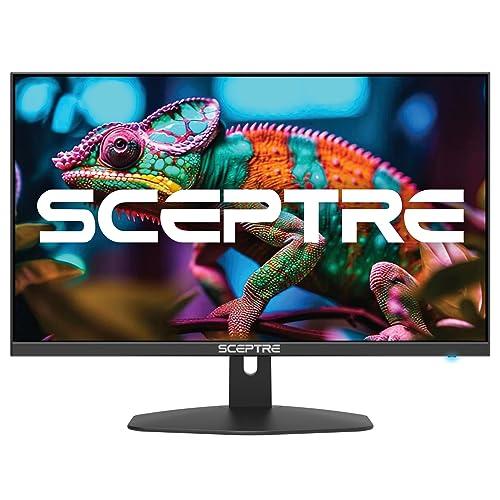
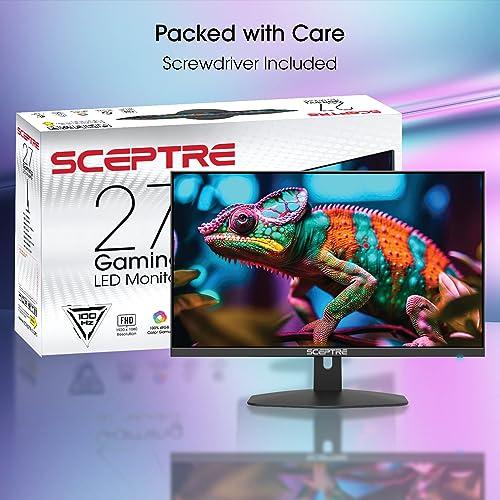
When you're shopping for a gaming monitor, the sheer number of options can feel overwhelming. Do you need 240Hz? Is OLED worth the premium? Can a budget monitor actually deliver decent gaming performance? Today we're diving deep into two monitors that represent completely different philosophies: the Sceptre E275W-FW100T, a budget-friendly 27-inch display that launched in 2023, and the AOC AGON PRO AG276QZD2, a premium QD-OLED powerhouse that hit the market in 2024.
These monitors sit at opposite ends of the price spectrum, with the Sceptre targeting budget-conscious gamers while the AOC aims squarely at enthusiasts willing to pay for cutting-edge technology. At the time of writing, you're looking at roughly a five-fold price difference between these two displays – but does the expensive option deliver five times the performance?
Before we dive into the specifics, let's establish what makes a gaming monitor tick. The most critical factors are refresh rate (how many times per second the screen updates), response time (how quickly pixels can change color), input lag (the delay between your actions and what appears on screen), and panel technology (the underlying display mechanism).
Panel technology deserves special attention because it affects everything else. Traditional LCD monitors use a backlight that shines through liquid crystals, while OLED displays have pixels that light themselves. This fundamental difference creates dramatically different visual characteristics, particularly in how they handle dark scenes and color reproduction.
The gaming monitor landscape has evolved rapidly since 2020. We've seen the mainstream adoption of high refresh rates, the emergence of OLED gaming displays, and significant improvements in adaptive sync technology (which eliminates screen tearing by synchronizing your graphics card's output with the monitor's refresh rate). Both monitors we're examining benefit from these technological advances, though to vastly different degrees.
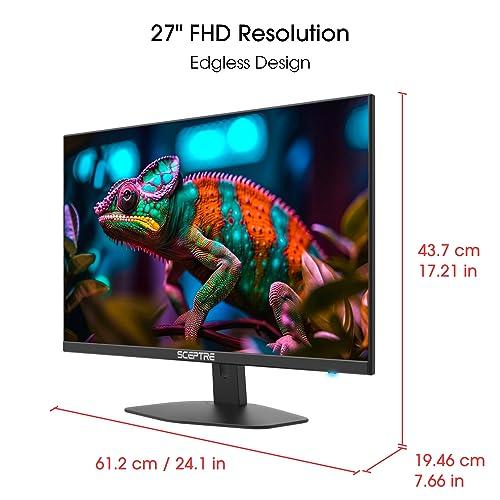
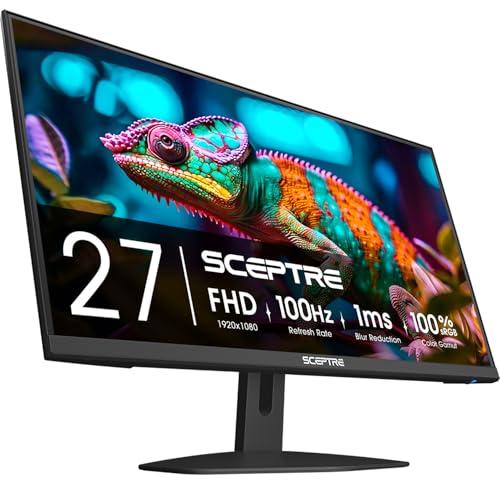
The Sceptre E275W-FW100T represents what I consider the sweet spot of budget gaming monitors. Released in 2023, it uses a VA (Vertical Alignment) panel – a technology that sits between the faster response times of TN panels and the better color accuracy of IPS displays.
VA panels excel at producing deeper blacks than IPS screens because they can block more light when pixels are "off." The Sceptre achieves a respectable 3,000:1 contrast ratio, meaning whites are 3,000 times brighter than blacks. While this can't compete with OLED's theoretically infinite contrast, it's significantly better than most IPS displays, which typically manage around 1,000:1.
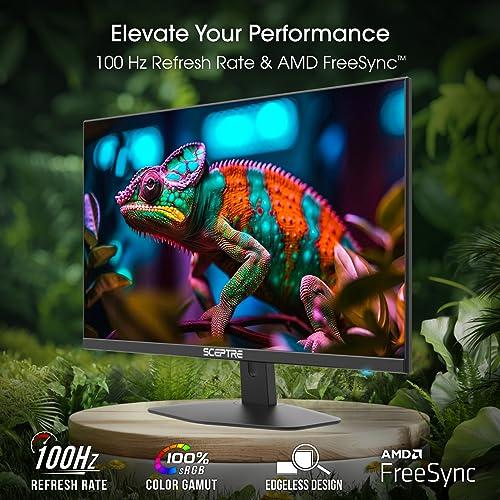
The monitor's 100Hz refresh rate might seem modest by today's standards, but it's a meaningful upgrade from standard 60Hz displays. This higher refresh rate reduces motion blur and provides a noticeable improvement in gaming smoothness, particularly in fast-paced titles. The Sceptre also supports AMD FreeSync, which works within a 48-100Hz range to eliminate screen tearing.
However, the 5ms gray-to-gray (GtG) response time reveals some limitations. Response time measures how quickly a pixel can change from one shade of gray to another – lower numbers are better for gaming because they reduce ghosting (trailing shadows behind moving objects). Based on expert reviews, the Sceptre shows noticeable ghosting in rapid motion scenes, regardless of which overdrive setting you choose.
The 1920x1080 resolution on a 27-inch screen creates another trade-off. At roughly 82 pixels per inch, text won't look as sharp as it would on higher-resolution displays. For gaming, this lower pixel density is less problematic, but if you plan to use this monitor for productivity work, you'll notice the difference in text clarity.
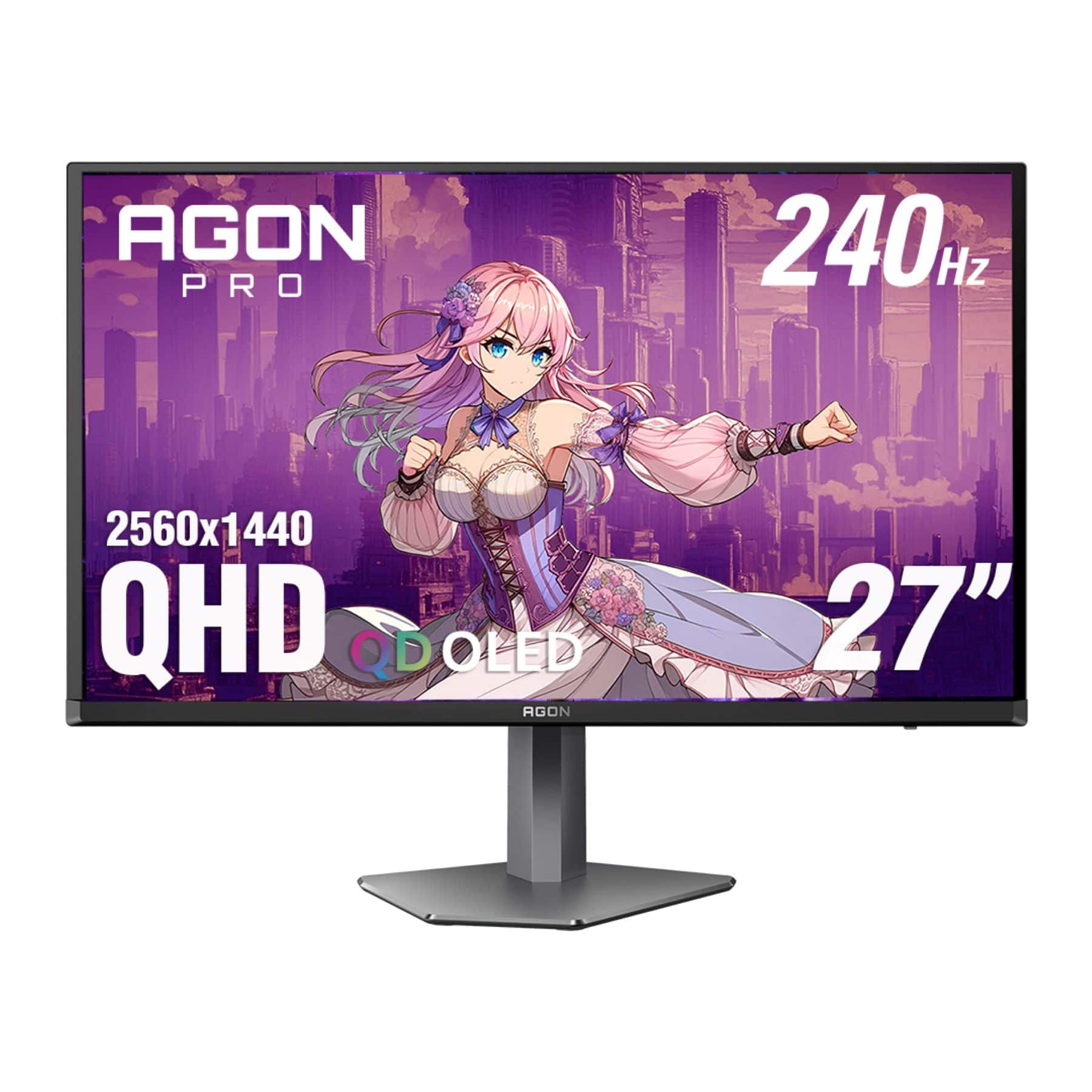
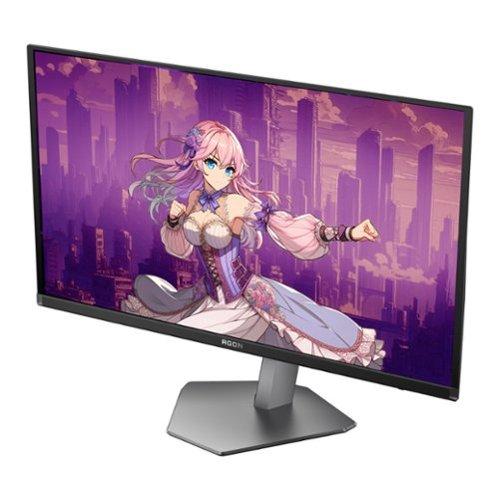
The AOC AGON PRO AG276QZD2, launched in 2024, represents the current pinnacle of gaming monitor technology with its QD-OLED panel. QD-OLED combines quantum dots (which enhance color reproduction) with OLED's self-emissive pixels, creating what many consider the best of both worlds.
The key advantage of OLED technology is that each pixel can turn completely off, producing perfect blacks and theoretically infinite contrast. When you're exploring a dark cave in a game or watching a movie with night scenes, the AOC can display true black while maintaining bright highlights – something impossible with backlit LCD technology.
The 240Hz refresh rate and 0.03ms response time put this monitor in professional esports territory. To put that response time in perspective, it's roughly 167 times faster than the Sceptre's 5ms specification. This translates to virtually eliminated ghosting and motion blur, even in the fastest-paced competitive games.
The 2560x1440 resolution provides approximately 109 pixels per inch, delivering noticeably sharper text and game details compared to the Sceptre's 1080p panel. This resolution strikes an excellent balance – it's sharp enough for detailed visuals without requiring the extreme graphics card power that 4K gaming demands.
For competitive gaming, motion clarity reigns supreme. Based on extensive review analysis, the AOC delivers exceptional performance here. The combination of 240Hz refresh rate and near-instantaneous response time creates what reviewers consistently describe as "sharp motion with fast-moving objects" with no visible blur.
The Sceptre tells a different story. While 100Hz provides a meaningful improvement over standard 60Hz monitors, the slower pixel response creates noticeable ghosting. This doesn't ruin the gaming experience – casual players likely won't find it bothersome – but competitive gamers seeking every advantage will notice the difference.
Input lag, the delay between pressing a button and seeing the result on screen, varies significantly between these monitors. The Sceptre maintains consistent performance across different refresh rates, with approximately 6ms of display lag that most users find imperceptible. The AOC achieves extremely low input lag at its maximum 240Hz refresh rate, but reviewers noted significantly higher lag when running at 60Hz or 120Hz. This quirk makes the expensive monitor less suitable for console gaming, where you might frequently encounter these lower refresh rates.
The visual quality gap between these monitors extends beyond mere specifications. The AOC's QD-OLED panel produces what reviewers describe as "uniform deep and inky blacks" in dark environments, creating an immersive experience that traditional LCD technology simply cannot match. However, OLED displays have a characteristic weakness: their black levels rise in bright ambient light, reducing the contrast advantage.
The Sceptre's VA panel provides deeper blacks than most budget monitors thanks to its superior contrast ratio compared to IPS displays. While it can't approach OLED's performance, it offers a noticeable improvement over cheaper TN or basic IPS monitors in this price range.
Surprisingly, HDR (High Dynamic Range) performance presents an interesting comparison. The Sceptre doesn't support HDR at all, keeping things simple. The AOC includes HDR10 support and VESA DisplayHDR True Black 400 certification, but reviews indicate its HDR color gamut is narrower than expected for QD-OLED technology. Some reviewers noted that "HDR scenes don't look vivid or rich" compared to competing QD-OLED monitors, suggesting AOC made compromises to hit their target price point.
The physical design differences reflect each monitor's target market. The Sceptre features a basic but functional design with a tilt-only stand – a significant limitation for users who need ergonomic flexibility. The monitor does include VESA mounting compatibility, so you can pair it with a third-party arm if needed.
The AOC provides comprehensive ergonomic adjustments including height, tilt, swivel, and pivot capabilities. It also includes premium touches like customizable RGB lighting and more robust build quality. The extensive connectivity options – including USB-C with power delivery – make it suitable for complex setups with multiple devices.
Both monitors include built-in speakers, though neither will replace a decent set of desktop speakers or headphones. The Sceptre provides basic 2W stereo output, while the AOC offers slightly more powerful 5W speakers.
Console compatibility presents an interesting twist in this comparison. The Sceptre actually performs better for console gaming due to its consistent input lag across different refresh rates. PlayStation 5 and Xbox Series X|S users will find reliable performance without the input lag spikes that affect the AOC at 60Hz and 120Hz.
The AOC also has specific console limitations – it cannot downscale 4K at 120Hz signals and lacks VRR support for PlayStation consoles. These aren't deal-breakers, but they're worth considering if console gaming is important to your setup.
For movie watching and media consumption, the AOC's OLED technology provides a cinema-like experience with perfect blacks and excellent contrast. However, the smaller 27-inch size limits its appeal as a primary home theater display compared to larger OLED TVs.
The Sceptre offers decent movie performance for its price point, with the VA panel's improved contrast helping dark scenes look better than they would on a budget IPS monitor. The 1080p resolution becomes more noticeable when watching high-quality video content, but it's perfectly adequate for streaming services and casual viewing.
Both monitors represent their respective eras well. The Sceptre, released in 2023, incorporates the steady improvements in budget display manufacturing – better color accuracy, higher refresh rates, and reliable adaptive sync at accessible prices. These advances have made decent gaming performance available to users who previously had to settle for basic 60Hz displays.
The AOC, arriving in 2024, showcases the maturation of OLED gaming technology. Early gaming OLED monitors suffered from burn-in concerns and limited availability, but recent models like this include better protective features and three-year burn-in warranties that address these historical weaknesses.
Looking forward, QD-OLED technology will likely become more affordable, while budget monitors will continue improving their response times and feature sets. The current price gap between these tiers should narrow over time, though premium displays will always command a significant premium for cutting-edge technology.
The choice between the Sceptre E275W-FW100T and AOC AGON PRO AG276QZD2 ultimately depends on your priorities, budget, and use cases.
Choose the Sceptre if you're working with a tight budget but want meaningful gaming improvements over standard 60Hz monitors. It's ideal for casual gamers who play a variety of titles without focusing on competitive performance. The monitor also works well for users who split time between gaming and general computer use, though the 1080p resolution will limit productivity applications.
The AOC makes sense for enthusiasts who prioritize visual quality and competitive performance above cost considerations. It's particularly appealing for PC gamers who want cutting-edge OLED technology and can take advantage of the high refresh rate. However, console gamers should carefully consider the input lag limitations at lower refresh rates.
Both monitors serve their intended markets well, but neither is perfect. The Sceptre delivers impressive value but makes clear compromises in motion performance and resolution. The AOC provides premium gaming performance but costs significantly more while showing unexpected weaknesses in HDR color performance.
At the time of writing, the price difference between these monitors reflects genuine technological gaps rather than artificial premium pricing. The AOC's QD-OLED panel, advanced electronics, and premium build quality justify much of the cost difference, though budget-conscious buyers will find the Sceptre offers excellent value in its price tier.
Your decision should align with your actual needs rather than aspirational wants. If you primarily play single-player adventures and casual multiplayer games, the Sceptre provides everything you need without unnecessary expense. Competitive gamers and visual enthusiasts will appreciate what the AOC brings to the table, despite its higher cost and specific limitations.
| Sceptre 27-inch Gaming Monitor E275W-FW100T | AOC Agon Pro 27" QD-OLED 240Hz Gaming Monitor |
|---|---|
| Panel Technology - Determines contrast, color accuracy, and response characteristics | |
| VA LCD with LED backlighting | QD-OLED (self-emissive pixels with quantum dots) |
| Resolution - Affects text sharpness and visual detail | |
| 1920 x 1080 (82 PPI - text won't be particularly sharp) | 2560 x 1440 (109 PPI - noticeably sharper for gaming and productivity) |
| Refresh Rate - Higher numbers mean smoother motion in fast games | |
| 100Hz (meaningful upgrade from 60Hz, good for casual gaming) | 240Hz (professional esports level, maximum smoothness) |
| Response Time - Lower is better for reducing ghosting in motion | |
| 5ms GtG (noticeable ghosting in fast scenes) | 0.03ms GtG (virtually eliminates motion blur) |
| Contrast Ratio - Higher numbers mean better distinction between dark and light | |
| 3,000:1 static (decent blacks for LCD technology) | Infinite (perfect blacks, but affected by ambient light) |
| Adaptive Sync - Eliminates screen tearing for smoother gameplay | |
| AMD FreeSync (48-100Hz range) | G-SYNC Compatible + FreeSync (broader compatibility) |
| Input Lag - Delay between your actions and screen response | |
| ~6ms consistent across refresh rates (great for console gaming) | Very low at 240Hz, higher at 60Hz/120Hz (PC gaming focused) |
| HDR Support - Enhanced brightness and color range for compatible content | |
| None (keeps things simple) | HDR10 + DisplayHDR True Black 400 (limited color gamut for QD-OLED) |
| Ergonomics - Stand adjustability affects comfort during long sessions | |
| Tilt only (major limitation, VESA mount compatible) | Full adjustment: height, tilt, swivel, pivot (premium flexibility) |
| Connectivity - Determines what devices you can connect | |
| 2x HDMI 2.0, 1x DisplayPort 1.2, basic speakers | 2x HDMI 2.1, DisplayPort 2.1, USB-C with 65W power, USB hub |
| Target User - Who this monitor is designed for | |
| Budget-conscious casual gamers, basic office use | Competitive PC gamers, visual enthusiasts willing to pay premium |
| Best Use Cases - Where each monitor excels | |
| Console gaming, mixed gaming/productivity on budget | High-end PC gaming, content creation, OLED visual experience |
The AOC Agon Pro 27" QD-OLED 240Hz Gaming Monitor is significantly better for serious gaming, especially competitive PC gaming. It offers 240Hz refresh rate and 0.03ms response time compared to the Sceptre E275W-FW100T's 100Hz and 5ms response time. However, the Sceptre is perfectly adequate for casual gaming and offers better value for budget-conscious gamers.
The Sceptre E275W-FW100T uses a VA LCD panel with LED backlighting, offering good contrast (3,000:1) and decent colors at an affordable price. The AOC AGON PRO features QD-OLED technology with self-emissive pixels that can turn completely off, creating perfect blacks and infinite contrast. OLED provides superior visual quality but costs significantly more.
The AOC Agon Pro 27" QD-OLED delivers superior image quality with perfect blacks, infinite contrast, and 1440p resolution for sharper details. The Sceptre offers decent image quality for its price range with 1080p resolution and respectable contrast, but can't match OLED's visual performance.
The Sceptre E275W-FW100T is actually better for console gaming due to consistent input lag across all refresh rates. The AOC AGON PRO has higher input lag at 60Hz and 120Hz, making it less ideal for PlayStation 5 or Xbox Series X gaming, despite its premium price.
The Sceptre E275W-FW100T offers exceptional value for budget-conscious buyers, providing 100Hz gaming performance and decent image quality at an entry-level price. The AOC AGON PRO provides premium value for enthusiasts willing to pay for cutting-edge OLED technology and professional gaming performance.
The Sceptre has 1920x1080 resolution (82 pixels per inch), which makes text less sharp on a 27-inch screen but is fine for gaming. The AOC AGON PRO offers 2560x1440 resolution (109 pixels per inch), providing noticeably sharper text and game details, making it better for both gaming and productivity work.
The AOC Agon Pro 27" QD-OLED excels for movies with its perfect blacks and high contrast, creating a cinema-like experience. The Sceptre E275W-FW100T provides decent movie performance with its VA panel's improved contrast, though the 1080p resolution becomes more noticeable with high-quality video content.
The AOC AGON PRO offers premium build quality with full ergonomic adjustments (height, tilt, swivel, pivot), RGB lighting, and comprehensive connectivity including USB-C. The Sceptre has basic build quality with tilt-only adjustment but includes essential features like VESA mounting compatibility.
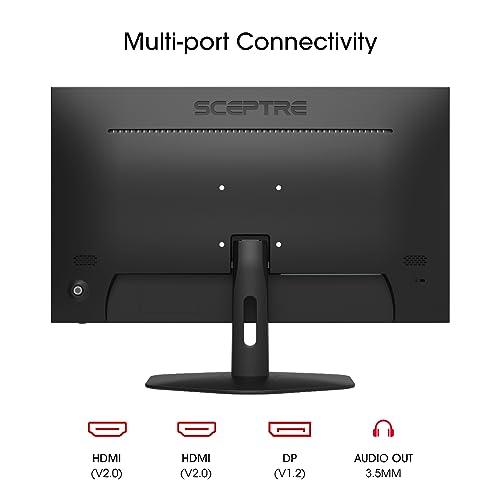
The Sceptre E275W-FW100T provides basic connectivity with 2x HDMI 2.0, 1x DisplayPort 1.2, and built-in speakers. The AOC AGON PRO offers extensive connectivity including 2x HDMI 2.1, DisplayPort 2.1, USB-C with 65W power delivery, and a USB hub for multiple devices.
The AOC Agon Pro 27" QD-OLED is designed for competitive esports with its 240Hz refresh rate, 0.03ms response time, and virtually eliminated motion blur. The Sceptre can handle casual competitive gaming but shows noticeable ghosting in fast-paced scenes that could affect performance in serious competitive play.
The Sceptre E275W-FW100T has limited ergonomics (tilt-only), noticeable ghosting, and lower resolution that affects text sharpness. The AOC AGON PRO suffers from higher input lag at lower refresh rates, limited console compatibility, and OLED's sensitivity to ambient light affecting black levels.
Choose the Sceptre E275W-FW100T if you're budget-conscious, play casual games, or do mixed gaming and general computer use. Select the AOC Agon Pro 27" QD-OLED if you're a serious PC gamer, want cutting-edge OLED technology, and can justify the premium price for superior visual quality and competitive gaming performance.
We've done our best to create useful and informative comparisons to help you decide what product to buy. Our research uses advanced automated methods to create this comparison and perfection is not possible - please contact us for corrections or questions. These are the sites we've researched in the creation of this article: pcvarge.com - walmart.com - cubed.run - productchart.com - displayninja.com - target.com - youtube.com - versus.com - youtube.com - youtube.com - sceptre.com - sceptre.com - tomshardware.com - techpowerup.com - tomshardware.com - aoc.com - tftcentral.co.uk - aoc.com - rtings.com - bestbuy.com - youtube.com - displayspecifications.com - aoc.com - microcenter.com - guru3d.com

Privacy Policy
Terms and Conditions - Affiliate Policy
Home Security
© Copyright 2008-2026.
11816 Inwood Rd #1211, Dallas, TX 75244