


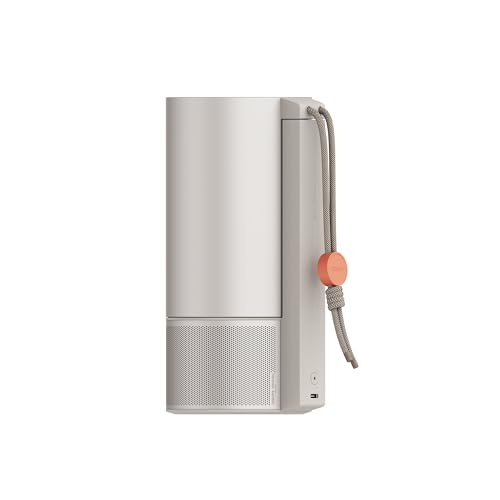
When you think about upgrading your entertainment setup, portable projectors might not be the first thing that comes to mind. But these compact powerhouses have revolutionized how we watch movies, play games, and give presentations. Gone are the days when you needed a massive, ceiling-mounted projector to enjoy big-screen entertainment at home. Today's portable projectors can deliver impressive 1080p visuals in packages small enough to fit in a backpack.
The portable projector market has exploded in recent years, with companies like XGIMI leading the charge in innovation. Two standout models that perfectly illustrate different approaches to portable projection are the XGIMI Elfin Flip and the XGIMI MoGo 3 Pro. Both launched in 2024, representing XGIMI's latest thinking on what portable projection should look like. But despite sharing the same brand and release year, these projectors take remarkably different approaches to solving the same problem.
Before diving into the comparison, it's worth understanding what separates good portable projectors from mediocre ones. The most critical factor is brightness, measured in lumens – think of this as the projector's ability to produce visible light. ISO lumens and ANSI lumens are two different measurement standards, with ANSI typically being more accurate to real-world performance. A projector with 400-500 lumens can produce a watchable image in a darkened room, but you'll struggle in anything brighter than dim ambient lighting.
Resolution determines how sharp your image looks. Both projectors here offer 1080p (1920x1080 pixels), which remains the sweet spot for portable projectors. While 4K portable projectors exist, they're significantly more expensive and often sacrifice brightness for pixel count – not a great trade-off when portability is your priority.
Color accuracy and contrast ratio matter enormously for enjoyable viewing. A projector might be bright, but if colors look washed out or blacks appear gray, your movie night won't be very impressive. DLP (Digital Light Processing) technology, which both these projectors use, generally delivers sharp images with good color reproduction, though each manufacturer implements it differently.
Smart features have become increasingly important. Modern portable projectors often run Android TV or Google TV, giving you direct access to Netflix, YouTube, and other streaming services without needing additional devices. This is a game-changer for portability – you literally just need the projector and a power source.
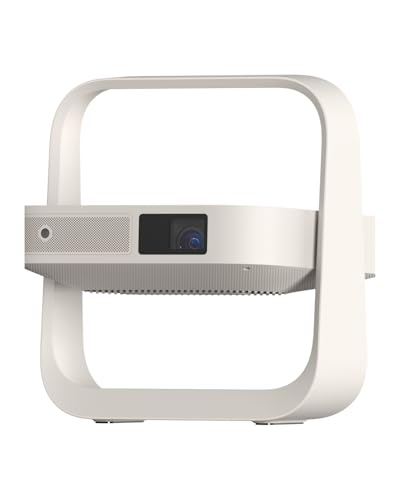
The XGIMI Elfin Flip and MoGo 3 Pro represent two distinct approaches to portable projection. The Elfin Flip prioritizes ultimate portability and image quality, while the MoGo 3 Pro emphasizes versatility and feature richness.
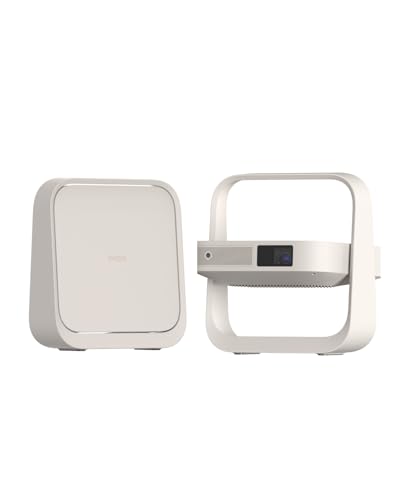
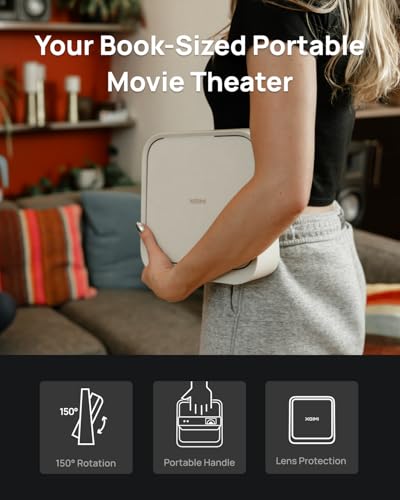
Looking at the Elfin Flip, XGIMI clearly designed it for people who want the smallest possible footprint without sacrificing core performance. At 2.6 pounds and just 2.5 inches thick, it truly lives up to its "book-sized" description. The unique flip mechanism isn't just a gimmick – it provides up to 150 degrees of rotation while protecting the lens when folded. This design makes it incredibly travel-friendly, something I've come to appreciate after years of lugging around bulkier projectors.
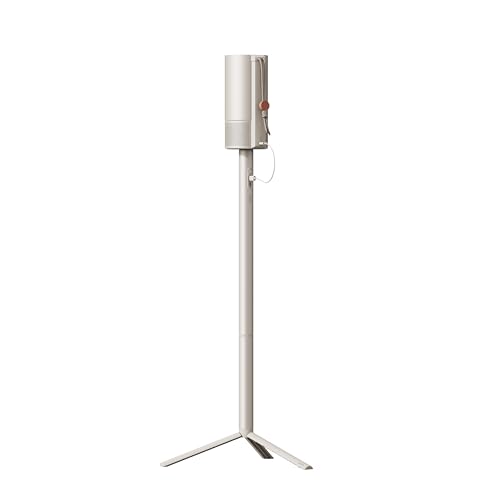
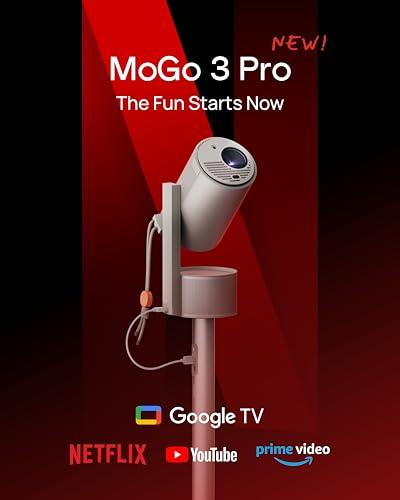
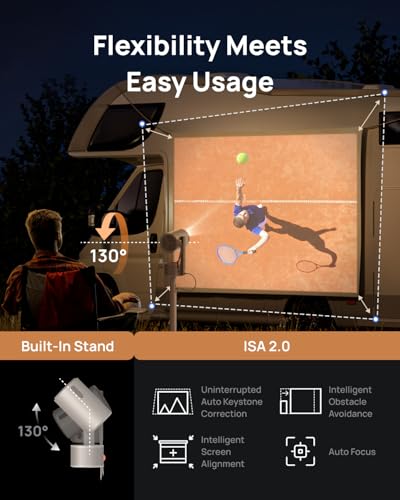
The MoGo 3 Pro, conversely, accepts slightly larger dimensions (though still very portable at 2.4 pounds) in exchange for more flexibility. Its 130-degree adjustable stand opens up projection possibilities that the Elfin Flip simply can't match, including ceiling projection – perfect for those times when you want to watch something while lying in bed.
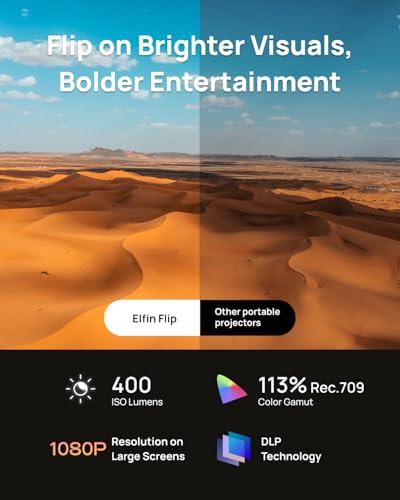
Here's where things get interesting, and where specifications don't tell the whole story. On paper, the MoGo 3 Pro wins the brightness battle with 450 ISO lumens versus the Elfin Flip's 400 ISO lumens. In the real world, however, professional testing reveals that the Elfin Flip actually delivers superior overall image quality despite the lower brightness rating.
This comes down to implementation and calibration. The Elfin Flip covers 113% of the Rec.709 color gamut – that's the color space used for most HD content – meaning it can display more vibrant and accurate colors than many competitors. More importantly, it arrives properly calibrated from the factory. Colors look natural without requiring user adjustment, something that's surprisingly rare in this price category.
The MoGo 3 Pro, despite its higher brightness specification, suffers from calibration issues out of the box. Colors need adjustment to look their best, and there are particular issues with blue accuracy that can make skies and other blue elements appear off. For most users who just want to plug in and watch, the Elfin Flip's superior calibration represents a significant practical advantage.
Contrast performance also favors the Elfin Flip. While neither projector will rival a high-end TV for deep blacks – that's just the nature of projection technology – the Elfin Flip produces noticeably deeper blacks and better shadow detail. This makes a real difference when watching darker content like thriller movies or atmospheric TV shows.
Both projectors support HDR10, which enhances the contrast between light and dark elements in compatible content. However, don't expect the dramatic HDR improvements you'd see on a premium TV. Portable projectors simply don't have the brightness headroom to make HDR truly shine, though it does provide some subtle improvements in supported content.
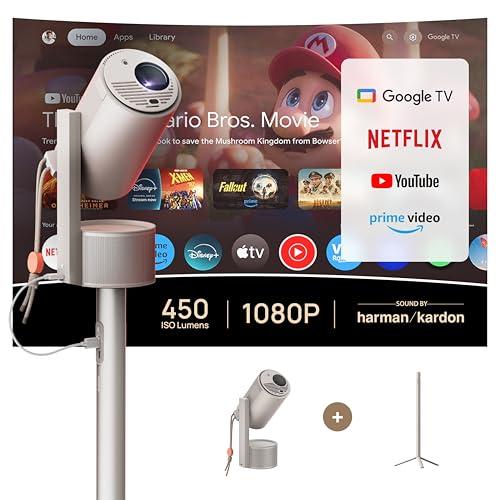
This is where the MoGo 3 Pro fights back and shows its strengths. While both projectors offer smart TV functionality, the MoGo 3 Pro's Google TV platform provides a more polished and comprehensive experience than the Elfin Flip's Android TV implementation.
The MoGo 3 Pro comes with officially licensed Netflix – something that was a major breakthrough when it launched. Previously, portable projector users often had to jump through hoops or use workarounds to access Netflix. Having it built-in and fully functional makes the MoGo 3 Pro feel more like a complete entertainment solution.
Google TV also provides access to over 5,000 apps and 800+ free channels, giving you an impressive content library right out of the box. The interface is smooth and modern, and Google Assistant integration means you can use voice commands to find content or control playback.
The Elfin Flip runs XGIMI's customized version of Android TV, which includes the essential apps but doesn't feel quite as refined as Google TV. It does include licensed versions of major streaming apps, but the overall ecosystem feels less comprehensive.
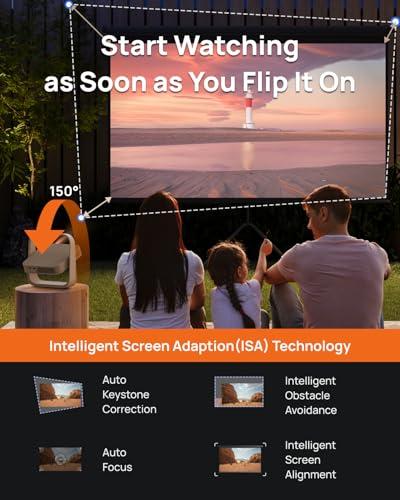
Both projectors feature Intelligent Screen Adaptation (ISA), XGIMI's umbrella term for their automatic setup features. This includes auto-focus, auto-keystone correction (fixing image distortion when projecting at an angle), and obstacle avoidance. The MoGo 3 Pro includes the newer ISA 2.0 with more advanced obstacle detection, but in practice, both systems work well enough that you rarely need to manually adjust the image.
Sound quality often gets overlooked when discussing projectors, but it's crucial for an enjoyable viewing experience. The MoGo 3 Pro has a clear advantage here with its dual 5-watt Harman Kardon speakers. At 10 watts total, they can genuinely fill a room with sound and provide decent bass response for such a compact device.
I've been consistently impressed by how much sound the MoGo 3 Pro can produce. While it's not going to replace a dedicated sound system, it's easily good enough for casual movie nights or even small gatherings. The Harman Kardon branding isn't just marketing – there's real acoustic engineering behind these speakers.
The Elfin Flip takes a more modest approach with dual 3-watt speakers totaling 6 watts. They're adequate for personal viewing but will struggle to fill larger rooms or compete with ambient noise. The smaller form factor simply doesn't allow for larger drivers or more powerful amplification.
Interestingly, the MoGo 3 Pro can also function as a Bluetooth speaker when not projecting, thanks to its Ambient Light Mode. Press down on the projector and it transforms into a mood light with customizable colors that can pulse to music. It's a clever feature that adds value beyond just projection.
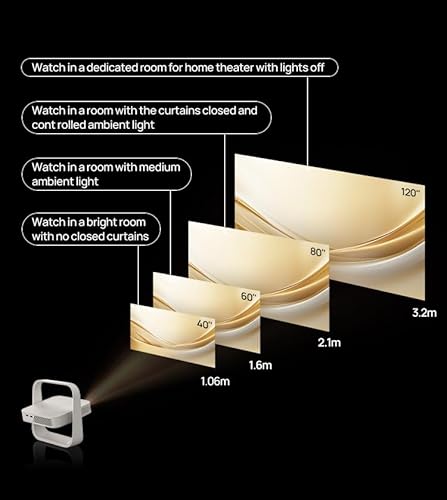
One area where the MoGo 3 Pro absolutely dominates is projection flexibility. Its 40-200 inch projection range means it can handle everything from intimate viewing in small rooms to massive displays for outdoor movie nights. The 130-degree adjustable stand enables ceiling projection, wall projection from various angles, and even creative setups like projecting onto unconventional surfaces.
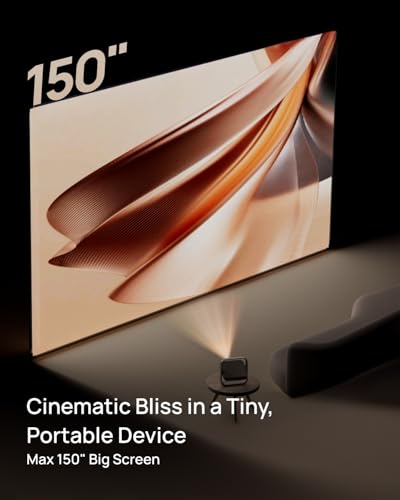
The Elfin Flip is more constrained with its 80-150 inch range, though this still covers most typical use cases. The flip mechanism provides good positioning flexibility within its range, but you won't get the extreme versatility of the MoGo 3 Pro.
For home theater use, this difference becomes particularly important. The MoGo 3 Pro can adapt to almost any room layout, while the Elfin Flip works best in more conventional setups where you can position it directly facing a wall or screen.
Here's where the design philosophies really diverge. The Elfin Flip requires a power outlet to operate – there's no internal battery. This might seem like a limitation, but it keeps the size and weight down while ensuring consistent performance. You'll always get full brightness and features as long as you have power.
The MoGo 3 Pro doesn't have a built-in battery either, but it supports USB-C Power Delivery, meaning you can run it from a 65-watt power bank. This enables true off-grid operation for camping trips or outdoor events. However, when running on battery power, maximum brightness drops to help preserve battery life – a reasonable trade-off for portability.
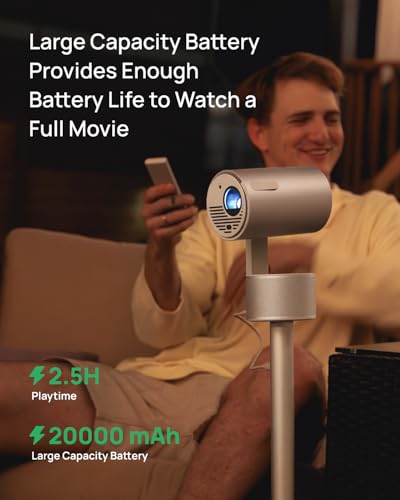
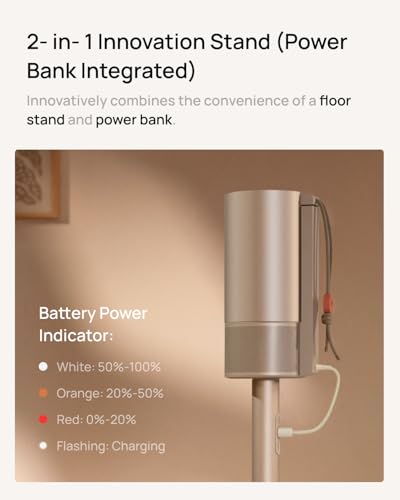
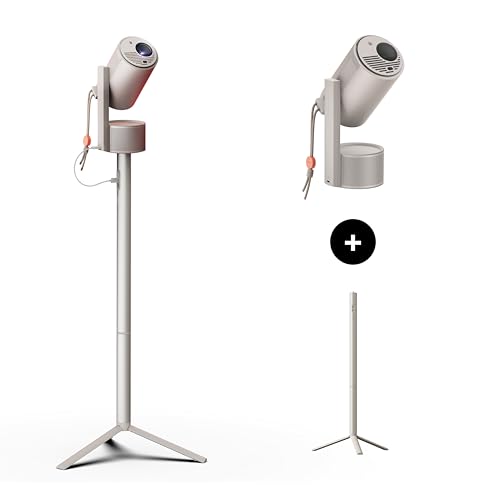
XGIMI offers an optional PowerBase accessory for the MoGo 3 Pro that provides 2-2.5 hours of battery life while maintaining a stable base for the projector. At the time of writing, this accessory adds to the overall cost but significantly enhances the projector's versatility.
After extensive use with both projectors, clear patterns emerge regarding their strengths. The Elfin Flip excels in controlled environments where image quality is paramount. If you're setting up a dedicated movie-watching space in a basement, bedroom, or living room where you can control lighting, the Elfin Flip's superior color accuracy and contrast make every movie look better.
For business presentations, the choice depends on your priorities. The MoGo 3 Pro's greater brightness and size flexibility make it more adaptable to conference rooms and varied lighting conditions. However, if you're presenting color-critical content like marketing materials or product photos, the Elfin Flip's accuracy might be worth the trade-offs.
Gaming performance is comparable on both projectors, with low-latency modes that reduce input lag to acceptable levels for casual gaming. Neither will satisfy competitive gamers who need every millisecond, but they're fine for console gaming on a big screen.
Outdoor use heavily favors the MoGo 3 Pro due to its battery compatibility and louder speakers. The ability to run from a power bank opens up camping trips, backyard parties, and beach movie nights that would be impossible with the outlet-dependent Elfin Flip.
At the time of writing, both projectors occupy similar price ranges in the premium portable projector market, though exact prices fluctuate with promotions and availability. The value equation comes down to what you prioritize: pure image quality or feature versatility.
The Elfin Flip represents better value for image quality purists who want the best possible picture in a truly portable package. If you primarily plan to use your projector in controlled environments and care most about how movies look, the superior calibration and color accuracy justify the investment.
The MoGo 3 Pro offers better value for users who want one device that can handle multiple scenarios. The combination of better audio, more flexible positioning, battery compatibility, and more comprehensive smart features makes it feel like a more complete entertainment solution.
Both projectors use LED light sources rated for 25,000 hours of operation, which translates to many years of typical use. This longevity, combined with solid build quality, means either choice should serve you well long-term.
Choose the XGIMI Elfin Flip if image quality is your top priority and you primarily plan to use it in controlled environments. Its superior color accuracy, better contrast, and ultra-portable design make it ideal for dedicated movie watchers who want the best possible picture quality in a travel-friendly package. It's particularly suited for people who have consistent access to power outlets and don't need the extensive positioning flexibility.
Choose the XGIMI MoGo 3 Pro if versatility and features matter more than absolute image quality. Its flexible positioning, better audio, comprehensive smart features, and battery compatibility make it a more well-rounded entertainment solution. It's the better choice for people who want one projector that can handle multiple scenarios, from business presentations to outdoor movie nights to bedroom ceiling projection.
For dedicated home theater use, the Elfin Flip edges ahead due to its superior image quality, assuming you can accommodate its positioning requirements. For general entertainment and multi-purpose use, the MoGo 3 Pro provides more value through its versatility.
Neither projector will completely replace a good TV for everyday viewing – they still require dark rooms for optimal performance and can't match the brightness of modern televisions. But for anyone wanting big-screen entertainment in a portable package, both represent excellent examples of how far this technology has advanced. The choice ultimately comes down to whether you prioritize image perfection or operational flexibility in your portable projection experience.
| XGIMI Elfin Flip Portable Projector | XGIMI MoGo 3 Pro Portable Projector |
|---|---|
| Brightness - Critical for image visibility in ambient light | |
| 400 ISO lumens (adequate for dark rooms) | 450 ISO lumens (slightly brighter on paper) |
| Image Quality - Most important for movie watching experience | |
| Superior color accuracy, deeper blacks, 113% Rec.709 color gamut | Poor out-of-box calibration, blue accuracy issues, 90% DCI-P3 |
| Projection Size Range - Determines viewing flexibility | |
| 80-150 inches (good for most home setups) | 40-200 inches (excellent versatility for any space) |
| Physical Design - Impacts portability and setup options | |
| 2.6 lbs, book-sized with 150° flip mechanism | 2.4 lbs, coffee cup-sized with 130° adjustable stand |
| Smart TV Platform - Affects streaming app availability and experience | |
| Android TV with XGIMI OS, basic app selection | Google TV with licensed Netflix, 5,000+ apps |
| Audio Performance - Important when external speakers aren't available | |
| Dual 3W speakers (6W total), adequate for personal viewing | Dual 5W Harman Kardon speakers (10W total), room-filling sound |
| Power Requirements - Determines true portability | |
| Requires power outlet, no battery operation | USB-C PD compatible, works with 65W power banks |
| Setup Intelligence - How easily it adapts to different environments | |
| ISA with auto focus and keystone correction | ISA 2.0 with advanced obstacle avoidance |
| Unique Features - Special capabilities that set each apart | |
| Lens protection when folded, ultra-compact travel design | Ceiling projection capability, Ambient Light Mode |
| Best For - Primary use cases where each excels | |
| Image quality purists, controlled lighting, maximum portability | Versatile users, varied environments, feature-rich experience |
The XGIMI Elfin Flip delivers superior image quality despite having lower brightness specs. It offers better color accuracy out of the box, deeper blacks, and covers 113% of the Rec.709 color gamut. The XGIMI MoGo 3 Pro has calibration issues that require user adjustment and struggles with blue color accuracy, making the Elfin Flip the clear winner for picture quality.
The XGIMI MoGo 3 Pro is rated at 450 ISO lumens compared to the Elfin Flip's 400 ISO lumens. However, both projectors still require dark or dimly lit rooms for optimal viewing. Neither is suitable for bright daytime viewing, but the MoGo 3 Pro has a slight advantage in moderately lit environments.
The XGIMI Elfin Flip prioritizes image quality and ultra-portability with a unique flip design, while the XGIMI MoGo 3 Pro focuses on versatility with better smart features, more flexible positioning, and superior audio. The Elfin Flip is better for dedicated movie watching, while the MoGo 3 Pro handles multiple use cases better.
The XGIMI MoGo 3 Pro wins with Google TV platform, offering access to over 5,000 apps including officially licensed Netflix. It also includes Google Assistant and 800+ free channels. The Elfin Flip runs Android TV with XGIMI OS, which has fewer apps and a less polished interface than the MoGo 3 Pro's Google TV experience.
The XGIMI MoGo 3 Pro supports USB-C Power Delivery and can run from a 65-watt power bank, enabling true portable operation. The XGIMI Elfin Flip requires a power outlet and has no battery operation capability, limiting its off-grid portability compared to the MoGo 3 Pro.
For dedicated home theater setups, the XGIMI Elfin Flip is superior due to its better image quality, color accuracy, and contrast. However, the XGIMI MoGo 3 Pro offers more setup flexibility with ceiling projection capability and a wider projection range (40-200 inches vs 80-150 inches), making it better for unconventional home theater configurations.
The XGIMI MoGo 3 Pro has significantly better audio with dual 5W Harman Kardon speakers (10W total) that can fill a room. The Elfin Flip has dual 3W speakers (6W total) that are adequate for personal viewing but lack the volume and clarity of the MoGo 3 Pro's superior audio system.
The XGIMI Elfin Flip is more travel-friendly with its book-sized design, lens protection when folded, and compact 2.5-inch thickness. While the MoGo 3 Pro is also portable at 2.4 pounds, the Elfin Flip's unique flip mechanism and smaller form factor make it easier to pack and protect during travel.
The XGIMI MoGo 3 Pro offers much more flexibility with a 40-200 inch projection range, suitable for everything from small rooms to large outdoor displays. The Elfin Flip supports 80-150 inches, which covers most typical home viewing scenarios but lacks the extreme versatility of the MoGo 3 Pro.
Both projectors feature automatic setup with ISA (Intelligent Screen Adaptation), but the XGIMI MoGo 3 Pro has the newer ISA 2.0 with more advanced obstacle avoidance. The Elfin Flip offers simpler operation with its flip-and-project design, while the MoGo 3 Pro provides more positioning flexibility but requires more setup consideration.
Both the XGIMI Elfin Flip and MoGo 3 Pro offer low-latency gaming modes suitable for casual console gaming. Neither is ideal for competitive gaming due to inherent projection delays, but both provide acceptable performance for most gaming scenarios. Choose based on other priorities since gaming performance is comparable between the two models.
Value depends on your priorities: the XGIMI Elfin Flip offers better value for image quality enthusiasts who want superior picture performance in a compact package. The XGIMI MoGo 3 Pro provides better value for users wanting versatility, with better audio, more smart features, flexible positioning, and battery compatibility making it a more complete entertainment solution.
We've done our best to create useful and informative comparisons to help you decide what product to buy. Our research uses advanced automated methods to create this comparison and perfection is not possible - please contact us for corrections or questions. These are the sites we've researched in the creation of this article: us.xgimi.com - projectorcentral.com - tvsbook.com - us.xgimi.com - bikmantech.com - projectorreviews.com - tvsbook.com - us.xgimi.com - youtube.com - youtube.com - richersounds.com - us.xgimi.com - youtube.com - walmart.com - global.xgimi.com - youtube.com - global.xgimi.com - us.xgimi.com - projectorcentral.com - techradar.com - androidcentral.com - tvsbook.com - techradar.com - thesmarthomehookup.com - whathifi.com - youtube.com - youtube.com - projectorcentral.com - projectorcentral.com - youtube.com - global.xgimi.com - us.xgimi.com - youtube.com - us.xgimi.com - us.xgimi.com

Privacy Policy
Terms and Conditions - Affiliate Policy
Home Security
© Copyright 2008-2026.
11816 Inwood Rd #1211, Dallas, TX 75244