


When shopping for a 1080p projector, you're entering a surprisingly diverse market where "same resolution" doesn't mean "same experience." The world of Full HD projectors splits into distinct camps: ultra-portable smart units that prioritize convenience, and performance-focused models that deliver maximum brightness and gaming responsiveness. Today we're comparing two excellent examples of these different philosophies: the XGIMI MoGo 3 Pro and the BenQ TH575.
These projectors couldn't be more different in their approach, despite both delivering crisp 1920x1080 resolution. One fits in a backpack and runs on battery power, while the other plugs into the wall and lights up entire rooms. Understanding which approach suits your needs will save you from buyer's remorse and ensure you get the projection experience you actually want.
The projector landscape has evolved dramatically over the past few years. Gone are the days when projectors were exclusively bulky, expensive devices relegated to conference rooms and dedicated home theaters. Today's 1080p projectors range from coffee-cup-sized smart devices to gaming-optimized powerhouses, each targeting specific use cases.
The key specifications that matter most are brightness (measured in ANSI lumens or ISO lumens), input lag (the delay between your device sending a signal and the projector displaying it), portability (weight and power requirements), and increasingly, smart features (built-in streaming apps and wireless connectivity). Understanding these metrics helps you match a projector to your actual viewing habits rather than getting swayed by impressive-sounding specs that don't align with your needs.
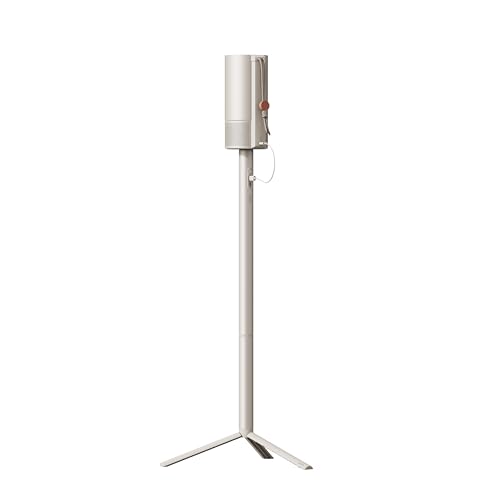
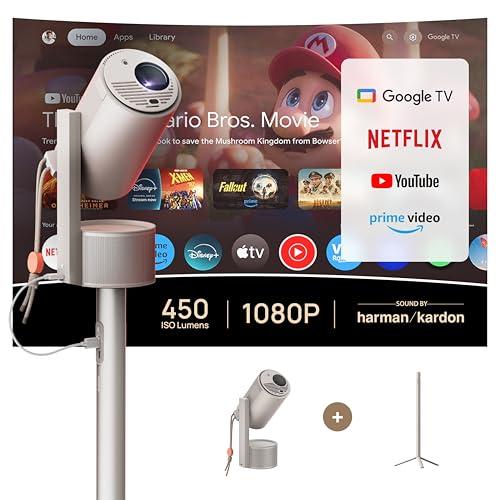
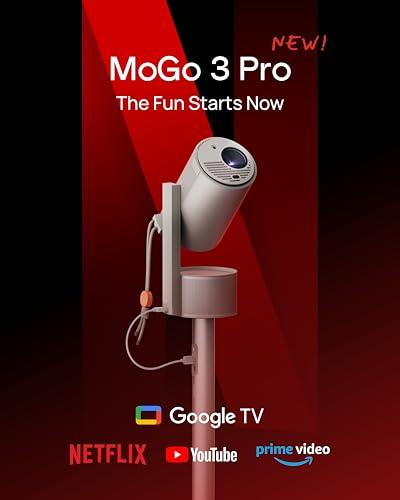
The XGIMI MoGo 3 Pro, released in 2024, represents the cutting edge of portable projection technology. At just 2.4 pounds, it's genuinely portable while packing Google TV with official Netflix support – something that was impossible just a few years ago. This projector embodies the "smart device" approach, where convenience and integration matter as much as image quality.
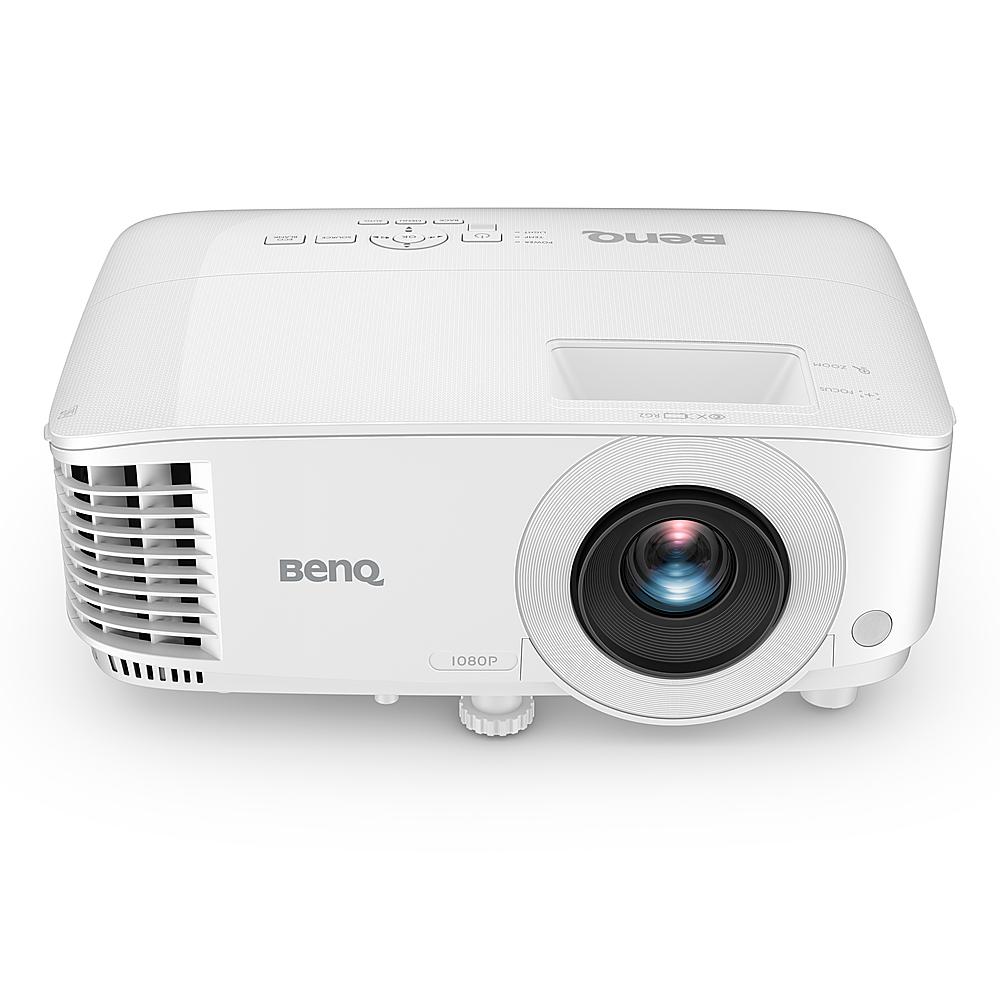
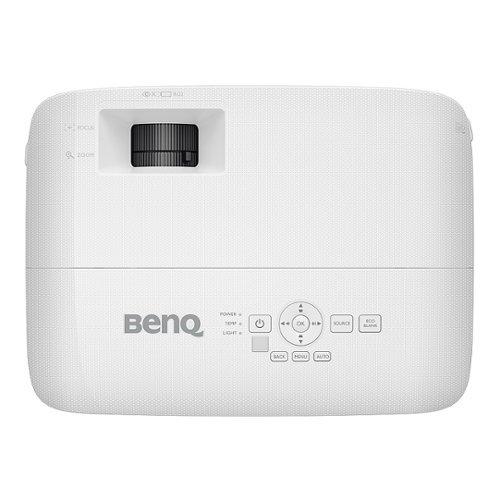
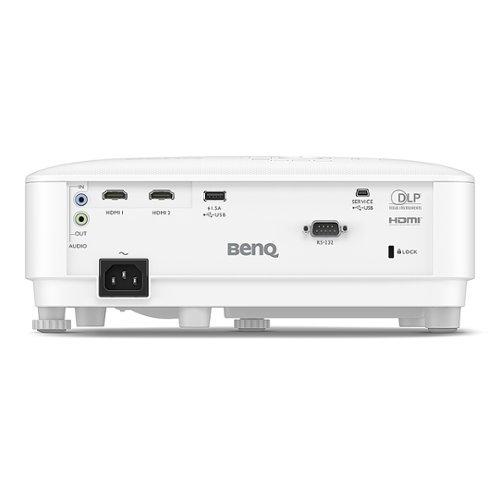
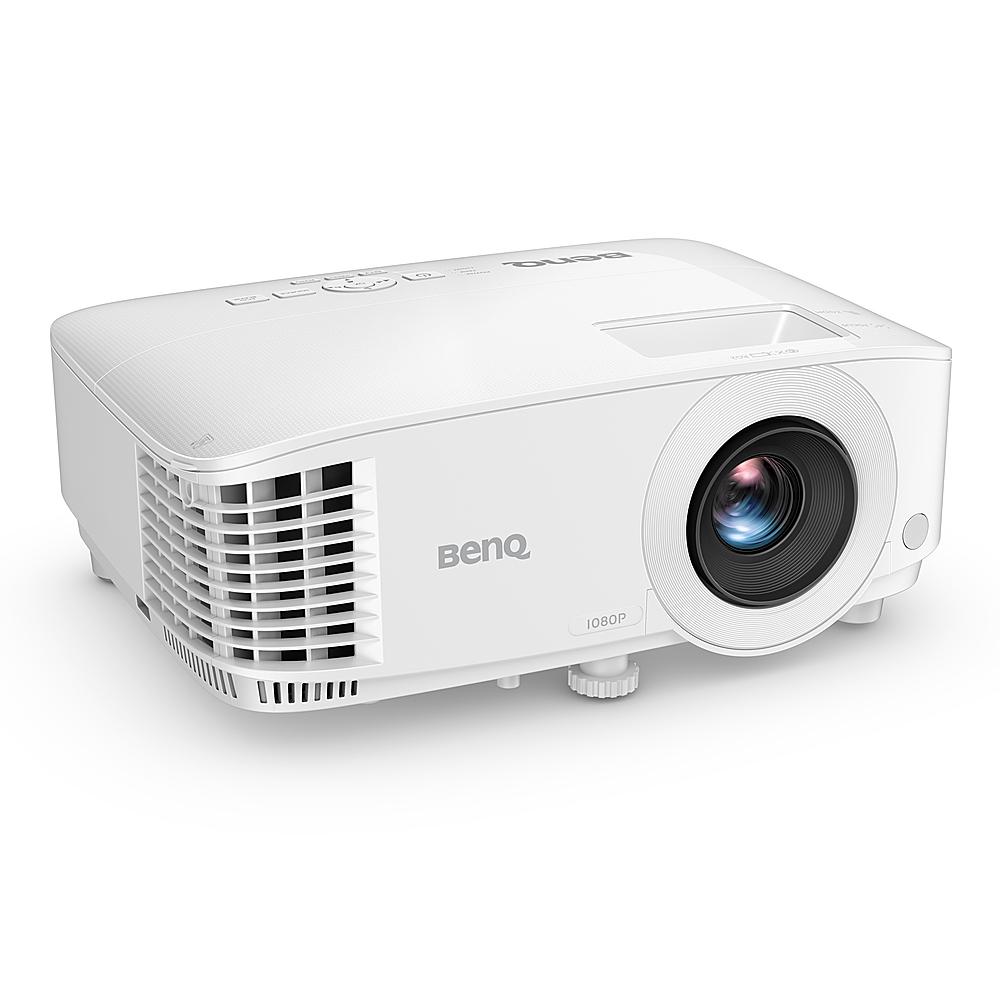
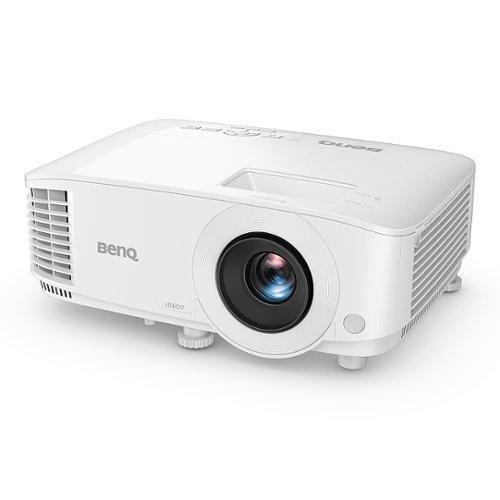
The BenQ TH575, launched in 2022, takes the traditional "performance first" approach. It's designed for users who prioritize brightness, gaming responsiveness, and overall image quality over portability. At 5.5 pounds and requiring wall power, it's clearly meant to stay in one place while delivering the brightest, most responsive projection experience possible at its price point.
Nothing matters more for projector usability than brightness, and here we see the starkest difference between these two approaches. The BenQ TH575 delivers a substantial 3,800 ANSI lumens, while the XGIMI MoGo 3 Pro produces 450 ISO lumens.
To put this in perspective, that's roughly an 8:1 brightness ratio – the TH575 is dramatically brighter. What does this mean in real-world use? The BenQ TH575 can produce a watchable 100-inch image in a normally lit living room, while the MoGo 3 Pro needs blackout conditions or evening darkness for optimal viewing.
This brightness difference fundamentally changes how you use each projector. I've found that projectors under 1,000 lumens require careful light control – you're essentially recreating movie theater conditions in your space. The MoGo 3 Pro falls into this category, making it perfect for evening outdoor movies or darkened bedrooms, but challenging for family movie nights in typical living room lighting.
The TH575, by contrast, handles ambient light with ease. You can leave some lamps on, keep curtains partially open during daytime viewing, or project in spaces with lots of windows. This flexibility makes it far more practical for everyday family use, though it comes at the cost of portability.
For gaming, input lag – the delay between your controller input and seeing the action on screen – becomes critical. The BenQ TH575 delivers an impressive 16.7ms input lag at 1080p/60Hz, which puts it in serious gaming territory. This low latency means responsive controls in fast-paced games and competitive online play.
The XGIMI MoGo 3 Pro measures around 27ms with image correction features disabled, rising to 60ms with auto-keystone enabled. While 27ms is acceptable for casual gaming – think turn-based strategy or RPGs – it's not ideal for competitive shooters or fighting games where every millisecond counts.
The TH575 also includes a dedicated Game Mode that optimizes image settings for gaming, particularly enhancing dark scene visibility. This feature proves invaluable in games where spotting enemies in shadows or seeing details in dark corridors gives you a competitive advantage. The MoGo 3 Pro lacks this specialized gaming optimization, though its overall image quality remains excellent for non-competitive gaming sessions.
Both projectors deliver native 1080p resolution, but their image characteristics differ significantly. The BenQ TH575 uses a larger 0.65-inch DLP chip (DLP stands for Digital Light Processing – a technology that uses millions of tiny mirrors to create images) and achieves a 15,000:1 contrast ratio. This high contrast translates to deeper blacks and more defined shadow detail, particularly important for movie watching and gaming.
The XGIMI MoGo 3 Pro covers 90% of the DCI-P3 color gamut (a wider color space than standard TV broadcasts) and supports HDR10, though its HDR performance is limited by the overall brightness constraints. In dark viewing conditions, the MoGo 3 Pro's colors appear vibrant and accurate, with excellent color reproduction that rivals much more expensive projectors.
The TH575 follows the Rec.709 color standard (the broadcast television standard), ensuring accurate colors that match what content creators intended. While it doesn't cover as wide a color gamut as the MoGo 3 Pro, its consistent color reproduction across all brightness levels makes it more reliable for varied content types.
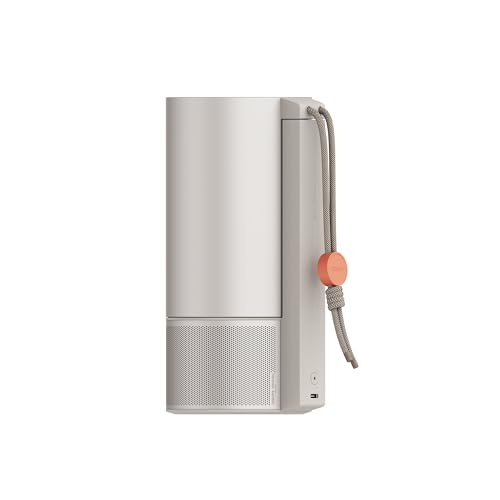
Here's where the XGIMI MoGo 3 Pro genuinely surprises. Its dual 5W Harman Kardon speakers produce room-filling stereo sound that significantly outperforms expectations for such a compact device. The audio quality is clean, well-balanced, and easily handles dialogue, music, and movie soundtracks without external speakers for casual viewing.
The BenQ TH575 includes a basic 10W mono speaker that serves adequately for system sounds and emergency audio, but most users will want to connect external speakers or a sound system for serious viewing. This isn't necessarily a disadvantage – many home theater setups use dedicated audio systems anyway – but it does add complexity and cost to your setup.
The MoGo 3 Pro even includes an "Ambient Light Mode" where it can function as a Bluetooth speaker with customizable lighting effects, essentially doubling as a smart speaker when not projecting. This versatility adds value for users who want multi-functional devices.
The smart feature gap between these projectors is enormous. The XGIMI MoGo 3 Pro runs Google TV with official Netflix support – a major breakthrough since most projectors struggle with Netflix's copy protection requirements. You get instant access to streaming apps, voice control via Google Assistant, and seamless casting from phones and tablets.
This integration eliminates the need for external streaming devices, reducing cable clutter and simplifying your setup. The interface is fast and responsive, matching the experience you'd get from a high-end smart TV. Software updates arrive automatically, ensuring access to new apps and features over time.
The BenQ TH575 offers no smart features whatsoever. You'll need a separate streaming device – whether that's a Roku, Fire TV Stick, Apple TV, or gaming console. While this adds complexity, it also provides flexibility in choosing your preferred streaming platform and ensures you're not locked into any particular ecosystem.
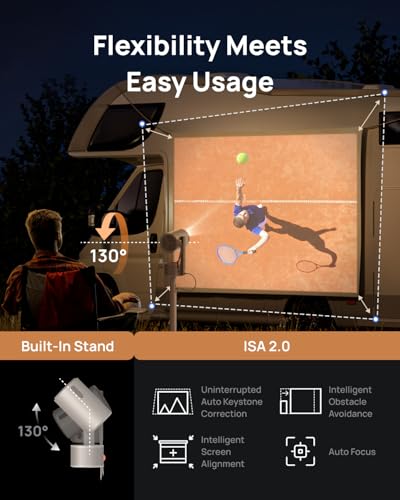
The XGIMI MoGo 3 Pro showcases impressive automation technology. Its ISA 2.0 (Intelligent Screen Adaptation) system automatically handles focus, keystone correction (fixing trapezoidal distortion when projecting at angles), and even obstacle avoidance. If your projection surface has a picture frame or wall socket in the way, the projector automatically adjusts the image to avoid these obstacles.
The built-in 130-degree adjustable stand provides remarkable flexibility in placement. You can position the projector almost anywhere and achieve a properly aligned, focused image within seconds. This ease of setup makes it genuinely practical for spontaneous movie nights or frequently changing locations.
The BenQ TH575 requires traditional manual setup – focusing the lens by hand, adjusting keystone correction if needed, and careful placement to achieve optimal projection angles. While this takes more time initially, it provides precise control over the final image quality. For permanent installations, this manual approach often yields better results since you can fine-tune every aspect of the projection.
The portability difference couldn't be starker. The XGIMI MoGo 3 Pro weighs just 2.4 pounds and can run from any 65W USB-C power source, including portable batteries. This means genuine portability – you can easily take it camping, to friends' houses, or move between rooms without any hassle.
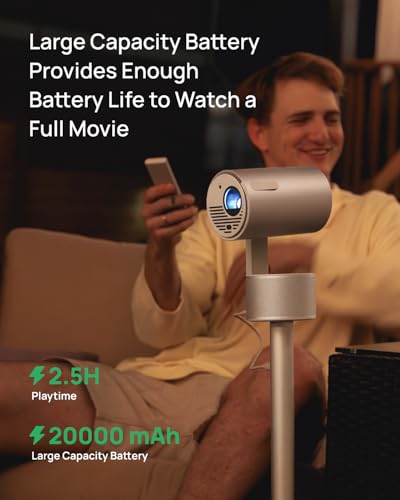
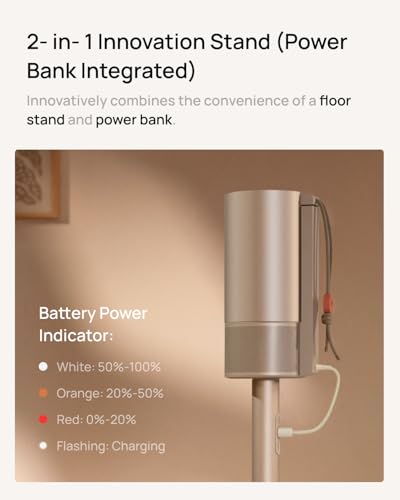
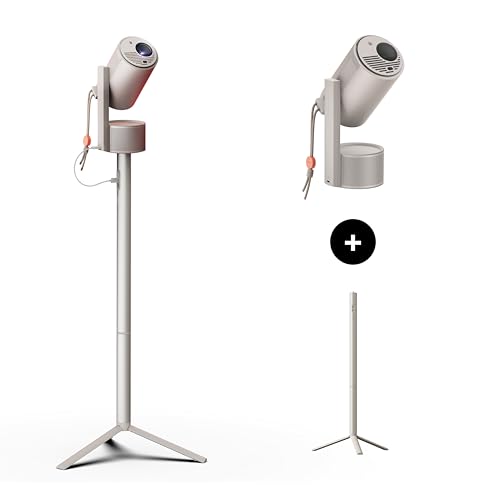
However, the MoGo 3 Pro doesn't include a built-in battery, requiring either wall power or an optional PowerBase accessory for true wireless operation. When running from battery power, brightness drops to preserve power, limiting maximum image size and quality.
The BenQ TH575 at 5.5 pounds and requiring 280 watts of AC power, is clearly designed for semi-permanent installation. While you could move it between rooms, it's not something you'd casually pack for travel. This limitation is offset by its ability to deliver full performance whenever it's plugged in, with no power-related compromises.
The lamp technology difference has long-term implications. The XGIMI MoGo 3 Pro uses an LED light source rated for 25,000 hours of operation. LEDs don't dim significantly over time and never require replacement, eliminating ongoing maintenance costs.
The BenQ TH575 uses a traditional projector lamp rated for 6,000 hours in normal mode or 15,000 hours in eco mode. Eventually, you'll need to replace this lamp, typically costing $50-100. However, traditional lamps can be incredibly bright, which is how the TH575 achieves its impressive light output.
At the time of writing, these projectors occupy similar price ranges, making the value comparison particularly interesting. The XGIMI MoGo 3 Pro commands a premium for its portability, smart features, and convenience, while the BenQ TH575 delivers maximum brightness and gaming performance for the money.
Consider total cost of ownership: the MoGo 3 Pro includes everything needed for streaming (no additional devices required), never needs lamp replacement, but might benefit from the optional battery accessory for true portability. The TH575 requires a streaming device for smart functionality and will eventually need lamp replacement, but delivers unmatched brightness per dollar.
For dedicated home theater use, the choice depends on your room and viewing habits. The BenQ TH575 works better in multi-purpose rooms where you can't completely control lighting. Its brightness allows for comfortable viewing even with some ambient light, making it practical for family movie nights where complete darkness isn't always possible.
The XGIMI MoGo 3 Pro excels in spaces where you can control lighting – bedrooms, dedicated media rooms, or covered outdoor areas. In these controlled environments, its smart features, excellent audio, and ease of setup make it incredibly convenient for regular use.
For screen sizes, the TH575 comfortably handles 100-120 inch images even with some room lighting, while the MoGo 3 Pro works best with 60-80 inch projections in dark conditions. Both can project larger images, but image quality suffers as size increases beyond these optimal ranges.
Choose the XGIMI MoGo 3 Pro if you value convenience, portability, and integrated smart features above maximum brightness. It's perfect for renters who can't install permanent setups, frequent travelers who want projection capability anywhere, or users in smaller spaces where a compact, quiet projector makes sense. The excellent built-in audio and automated setup make it ideal for casual viewing where ease of use matters more than maximum performance.
The BenQ TH575 suits users who prioritize image quality, gaming performance, and room versatility. Choose it if you need to project in normal room lighting, want the most responsive gaming experience possible, or plan to use it as your primary display device. It's also better for larger families or groups where the extra brightness ensures everyone gets a good view regardless of seating position.
These projectors represent two valid but completely different approaches to 1080p projection. The XGIMI MoGo 3 Pro prioritizes modern convenience and portability, delivering a smart, automated projection experience that works anywhere you can control lighting. The BenQ TH575 focuses on traditional projector strengths – maximum brightness, low input lag, and reliable performance in challenging lighting conditions.
Neither approach is objectively better; they serve different needs equally well. Your choice should align with how and where you actually plan to use your projector. If you find yourself drawn to the idea of easy setup, portable movie nights, and integrated streaming, the MoGo 3 Pro delivers on those promises. If you need bright, responsive projection for gaming and family entertainment in normal room lighting, the TH575 provides unbeatable value.
The beauty of today's projector market is that both approaches work well within their intended use cases. Choose based on your lifestyle and viewing habits rather than trying to find the "best" projector overall – because in this comparison, they're both excellent at what they're designed to do.
| XGIMI MoGo 3 Pro Portable Projector | BenQ TH575 1080p Gaming Projector |
|---|---|
| Brightness - Most critical spec for room versatility and daytime viewing | |
| 450 ISO lumens (requires dark rooms or controlled lighting) | 3,800 ANSI lumens (excellent for bright rooms and daytime use) |
| Weight & Portability - Determines if you can easily move or travel with it | |
| 2.4 lbs, coffee cup size with USB-C power (genuinely portable) | 5.5 lbs, requires AC power outlet (semi-permanent installation) |
| Gaming Input Lag - Critical for responsive gaming, especially competitive play | |
| 27ms (acceptable for casual gaming, not ideal for competitive) | 16.7ms (excellent for serious gaming and competitive play) |
| Smart Features - Built-in streaming vs needing external devices | |
| Google TV with licensed Netflix, 10,000+ apps built-in | No smart features (requires streaming stick, game console, or media player) |
| Audio Quality - Whether you need external speakers immediately | |
| Dual 5W Harman Kardon stereo speakers (surprisingly good quality) | Single 10W mono speaker (basic quality, external speakers recommended) |
| Setup Automation - How much manual adjustment is required | |
| Auto-focus, auto-keystone, obstacle avoidance with 130° adjustable stand | Manual focus and keystone correction (more precise but requires setup time) |
| Lamp Life & Maintenance - Long-term ownership costs | |
| 25,000 hour LED (maintenance-free, never needs replacement) | 6,000-15,000 hour traditional lamp (eventual $50-100 replacement cost) |
| Maximum Image Size - Practical viewing size in typical conditions | |
| 60-80 inches optimal in dark conditions (can go larger with dimmer image) | 100-120 inches comfortable even with ambient light |
| Power Requirements - Flexibility in placement and portability | |
| 65W USB-C (works with power banks, optional battery base available) | 280W AC power required (must be near electrical outlet) |
| Best Use Cases - Who should choose each projector | |
| Travel, camping, small spaces, casual viewing, convenience-focused users | Gaming, family entertainment, bright rooms, permanent setups, performance-focused users |
The BenQ TH575 is significantly brighter at 3,800 ANSI lumens compared to the XGIMI MoGo 3 Pro's 450 ISO lumens. This makes the BenQ TH575 much better for daytime viewing and well-lit rooms, while the XGIMI MoGo 3 Pro requires dark or dimly lit environments for optimal viewing.
The BenQ TH575 is superior for gaming with its 16.7ms input lag and dedicated Game Mode that enhances dark scene visibility. The XGIMI MoGo 3 Pro has 27ms input lag, which is acceptable for casual gaming but not ideal for competitive play where every millisecond matters.
The XGIMI MoGo 3 Pro is genuinely portable at just 2.4 pounds and can run on USB-C power, making it perfect for moving between rooms or taking on trips. The BenQ TH575 weighs 5.5 pounds and requires AC power, making it better suited for semi-permanent installation in one location.
The XGIMI MoGo 3 Pro includes Google TV with licensed Netflix and access to 10,000+ apps, eliminating the need for external streaming devices. The BenQ TH575 has no smart features and requires a separate streaming device like a Roku, Fire TV Stick, or gaming console.
The XGIMI MoGo 3 Pro features dual 5W Harman Kardon speakers that provide surprisingly good stereo sound for casual viewing. The BenQ TH575 has a basic 10W mono speaker that's adequate for system sounds but most users will want external speakers for movie watching.
For dedicated home theaters with controlled lighting, the XGIMI MoGo 3 Pro offers excellent image quality and convenience features. However, the BenQ TH575 is better for multi-purpose rooms where you can't completely control lighting, thanks to its superior brightness that handles ambient light effectively.
The BenQ TH575 comfortably handles 100-120 inch images even with some room lighting due to its high brightness. The XGIMI MoGo 3 Pro works best with 60-80 inch projections in dark conditions, though both can project larger images with reduced quality.
The XGIMI MoGo 3 Pro uses an LED light source rated for 25,000 hours with no maintenance required. The BenQ TH575 uses a traditional lamp that lasts 6,000-15,000 hours and will eventually need replacement, typically costing $50-100.
The XGIMI MoGo 3 Pro offers automated setup with auto-focus, auto-keystone correction, and obstacle avoidance, plus a 130° adjustable stand for flexible placement. The BenQ TH575 requires manual focus and keystone adjustment but provides more precise control over the final image.
Value depends on your priorities. The XGIMI MoGo 3 Pro provides premium portability and smart features with no additional devices needed. The BenQ TH575 delivers maximum brightness and gaming performance per dollar but requires additional streaming devices and eventual lamp replacement.
The XGIMI MoGo 3 Pro can run from USB-C power banks or an optional PowerBase accessory for true wireless operation, though brightness is reduced on battery power. The BenQ TH575 requires 280W of AC power and cannot operate on battery power.
The XGIMI MoGo 3 Pro is ideal for outdoor use thanks to its portability, battery power option, automated setup features, and excellent built-in audio. The BenQ TH575 could work outdoors if you have access to AC power, and its higher brightness helps in areas with some ambient light, but it's less convenient for outdoor setups.
We've done our best to create useful and informative comparisons to help you decide what product to buy. Our research uses advanced automated methods to create this comparison and perfection is not possible - please contact us for corrections or questions. These are the sites we've researched in the creation of this article: projectorcentral.com - techradar.com - androidcentral.com - tvsbook.com - techradar.com - thesmarthomehookup.com - whathifi.com - youtube.com - youtube.com - projectorcentral.com - projectorcentral.com - youtube.com - global.xgimi.com - us.xgimi.com - youtube.com - us.xgimi.com - us.xgimi.com - lifeisxbox.eu - ai-techreport.com - electronics.woot.com - ai-techreport.com - laurentwillen.com - bestbuy.com - bestbuy.com - projectorcentral.com - tvsbook.com - shidirect.com - blog.richersounds.com - memoryexpress.com - versus.com - adorama.com - avsforum.com - shi.com - bestbuy.com - bhphotovideo.com - cdw.com - insight.com - shi.ca - projectorcentral.com - insight.com - specsradar.com - touchboards.com

Privacy Policy
Terms and Conditions - Affiliate Policy
Home Security
© Copyright 2008-2026.
11816 Inwood Rd #1211, Dallas, TX 75244