


The living room is getting crowded. Between massive TVs, gaming consoles, and streaming devices, many people are looking for simpler ways to enjoy big-screen entertainment. That's where smart portable projectors come in – devices that can turn any wall into a cinema screen while packing all your favorite streaming apps into one compact package.
Two standout models have emerged as top contenders in this space: the Aurzen BOOM Mini Smart Projector Google TV and the XGIMI MoGo 3 Pro Portable Projector. While both aim to deliver big-screen entertainment in portable packages, they take notably different approaches to getting there.
Before diving into specifics, it's worth understanding what separates excellent portable projectors from mediocre ones. The "portable" part is crucial – these aren't the massive projectors you'd find in commercial theaters. Instead, they're designed to fit in a backpack while still delivering watchable images.
The "smart" aspect is equally important. These projectors run full operating systems (usually Android-based platforms like Google TV) that connect directly to streaming services. This eliminates the need for separate streaming sticks, laptops, or other external devices. You can access Netflix, Disney+, YouTube, and thousands of other apps right from the projector itself.
The key performance factors that determine whether a portable projector will actually get used or collect dust include brightness (measured in lumens – essentially how powerful the light source is), image sharpness, color accuracy, audio quality, and ease of setup. Getting these elements right in a compact, affordable package requires careful engineering compromises.
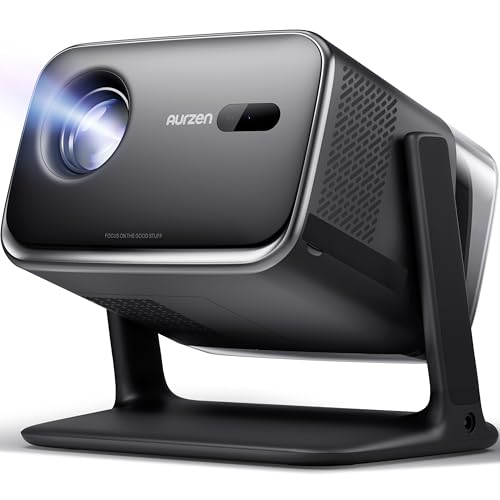
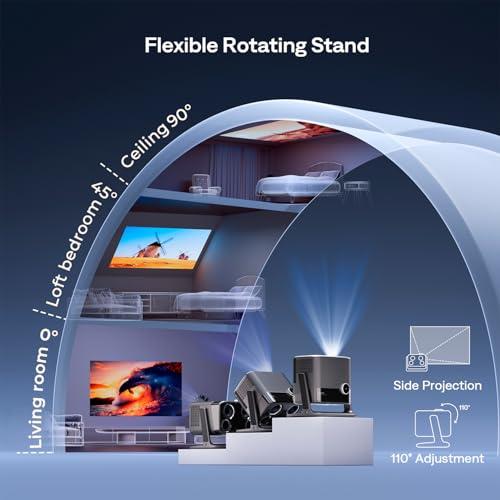
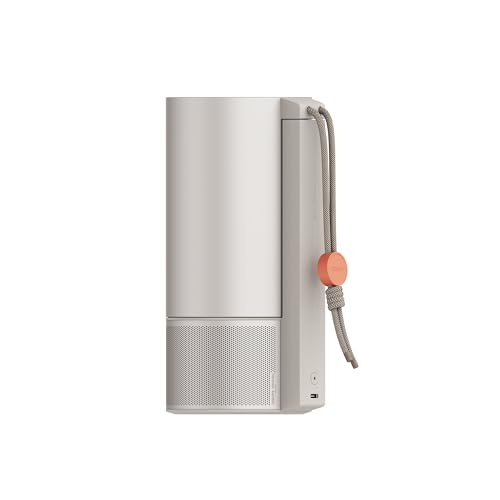
The Aurzen BOOM Mini, released in 2025, represents the latest thinking in semi-portable projectors. At roughly the size of a small speaker, it prioritizes image brightness and audio power while maintaining the convenience of built-in streaming. Aurzen positioned this as their flagship model, focusing on delivering theater-quality experiences without requiring a dedicated home theater room.
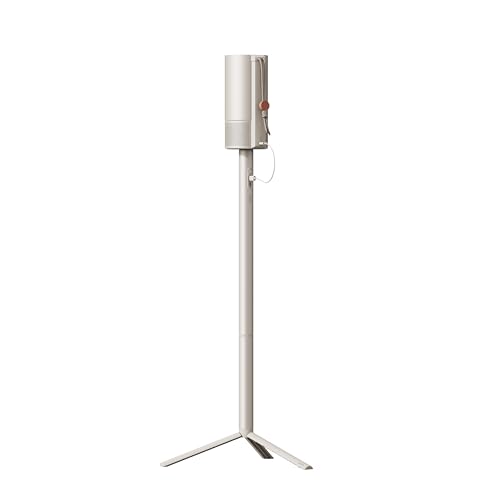
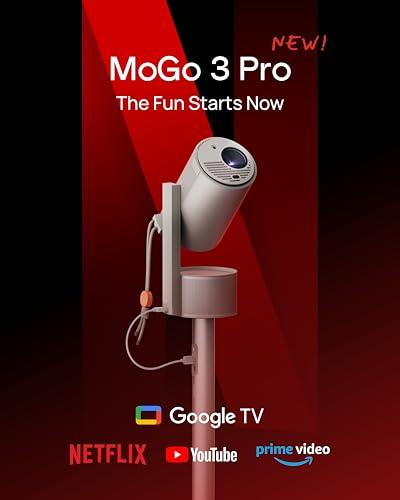
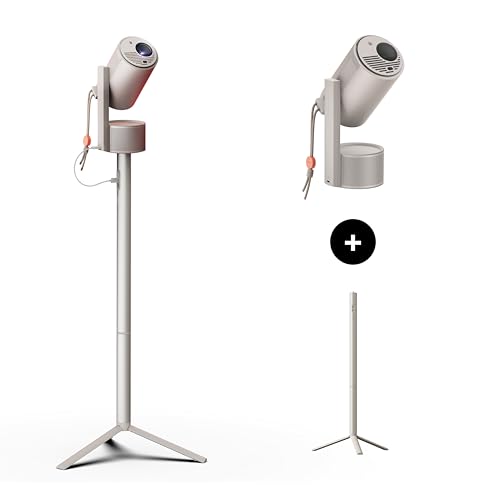
The XGIMI MoGo 3 Pro, launched in 2024, takes a different approach entirely. XGIMI designed it as an ultra-portable solution that you can literally take anywhere – camping trips, hotel rooms, or friend's houses. It includes a built-in battery and advanced automatic setup features that make it nearly foolproof to use.
Both projectors were developed during a period of rapid advancement in LED light sources and miniaturized electronics. Compared to portable projectors from just a few years ago, both offer significantly brighter images, better smart TV integration, and more reliable automatic focus systems.
When evaluating any projector, brightness is the single most important specification because it determines where and when you can actually use the device. Brightness is measured in lumens, with higher numbers meaning brighter images. However, manufacturers sometimes use different measurement standards, making direct comparisons tricky.
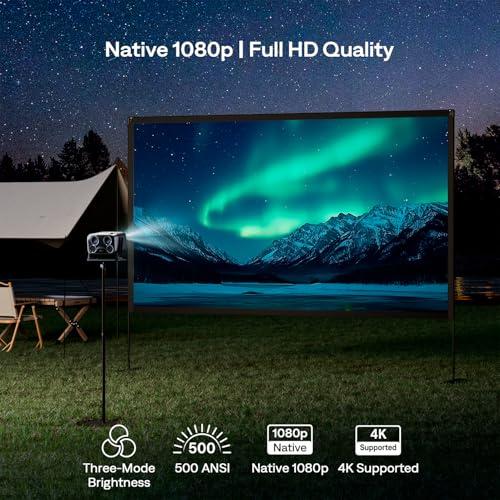
The Aurzen BOOM Mini delivers 500 ANSI lumens, measured according to the industry-standard ANSI specification (American National Standards Institute). This measurement protocol ensures consistent, accurate brightness ratings across different manufacturers. In practical terms, 500 ANSI lumens provides enough light output to create watchable images even in rooms with some ambient lighting – think family room with curtains drawn during evening viewing.
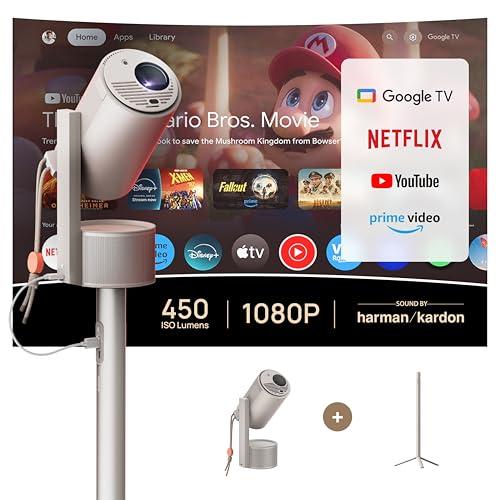
The XGIMI MoGo 3 Pro is rated at 450 ISO lumens. ISO lumens is another standardized measurement that typically produces similar results to ANSI lumens. However, independent testing has found that the MoGo 3 Pro actually delivers closer to 394 ANSI lumens in real-world conditions – still respectable, but noticeably dimmer than the Aurzen.
This brightness difference translates to meaningful performance variations. The Aurzen BOOM Mini can produce usable images in more lighting conditions and at larger projection sizes. If you're planning to use your projector for backyard movie nights or in rooms where you can't completely control lighting, the extra brightness provides valuable flexibility.
The XGIMI MoGo 3 Pro, while dimmer, still delivers excellent image quality in properly darkened environments. Its DLP (Digital Light Processing) technology can actually produce better contrast ratios than LCD projectors in dark rooms, making black areas appear truly black rather than grayish.
The choice between LCD and DLP display technologies represents one of the fundamental differences between these projectors, affecting everything from image quality to long-term durability.
The Aurzen BOOM Mini uses LCD (Liquid Crystal Display) technology with an LED light source. LCD projectors work by shining light through three separate LCD panels (one each for red, green, and blue light), then combining these colored images to create the final picture. This approach typically produces bright, vibrant images with excellent color saturation. LCD panels also tend to show less "rainbow effect" – brief flashes of separated colors that some people notice with DLP projectors.
The XGIMI MoGo 3 Pro employs DLP technology, using a chip covered with millions of tiny mirrors that tilt to reflect light toward or away from the lens. DLP projectors often deliver sharper images with better contrast ratios, particularly in dark environments. They're also generally more reliable over time since DLP chips don't degrade like LCD panels can.
For home theater use, both technologies can produce excellent results, but they have different strengths. LCD tends to be better for brighter environments and delivers more consistent brightness across the entire image. DLP excels in dark rooms where contrast and sharpness matter most.
One area where portable projectors often disappoint is audio quality. Many models include tiny speakers that sound tinny and lack the power to fill even modest-sized rooms. Both of our contenders take audio seriously, but with different approaches.
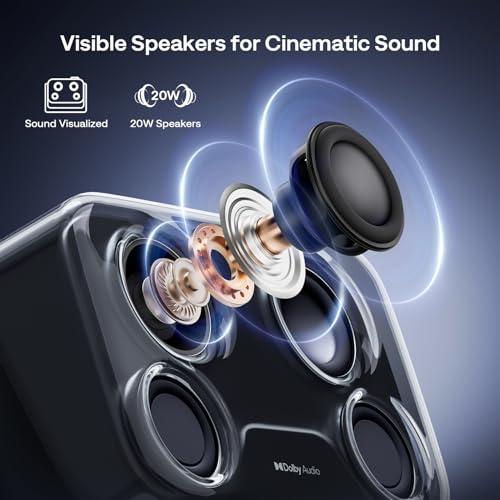
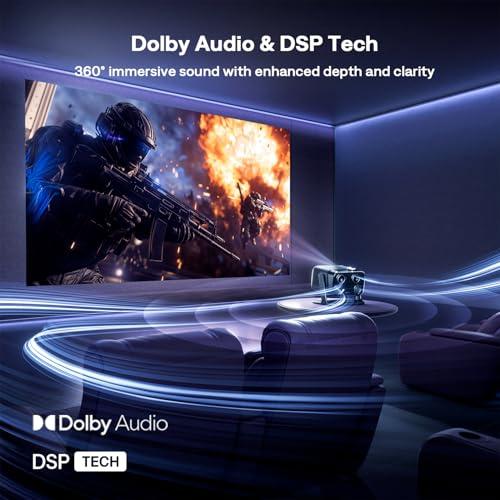
The Aurzen BOOM Mini includes dual 10-watt full-range speakers for a total output of 20 watts. These rear-facing speakers use the projector's housing as a resonance chamber, helping produce fuller sound with more bass response than you'd expect from such a compact device. The inclusion of Dolby Audio processing further enhances the listening experience by optimizing dialogue clarity and dynamic range.
In practice, these speakers can actually fill a medium-sized room with sound that's pleasant enough for most content. The Aurzen BOOM Mini can even function as a standalone Bluetooth speaker, making it useful even when you're not watching video content.
The XGIMI MoGo 3 Pro takes a different approach with dual 5-watt Harman Kardon-tuned speakers. While less powerful than the Aurzen's speakers, these drivers benefit from Harman Kardon's acoustic expertise. They produce cleaner, more refined sound that's particularly good for dialogue and acoustic music, though they lack the power for room-filling bass.
The MoGo 3 Pro also includes a unique Ambient Light Mode that turns the projector into a mood lighting device synchronized with music playback – a nice touch for parties or relaxation.
For serious home theater use, both projectors benefit from external audio systems. However, the Aurzen BOOM Mini comes closer to providing truly satisfying audio on its own.
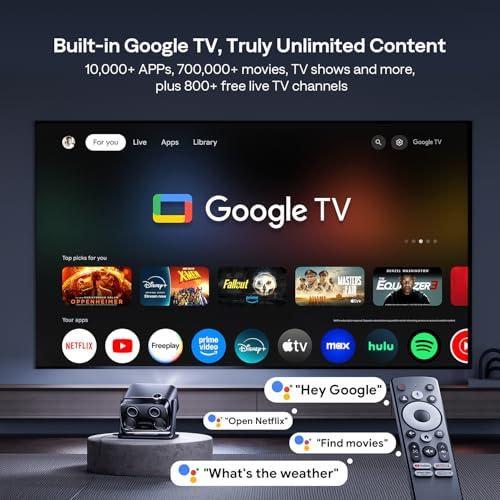
Both projectors run Google TV, Google's latest smart TV platform that replaced Android TV. This means full access to the Google Play Store, with thousands of streaming apps including Netflix, Disney+, Hulu, and YouTube available for direct installation. Importantly, both include properly licensed Netflix support – something that was missing from many earlier smart projectors.
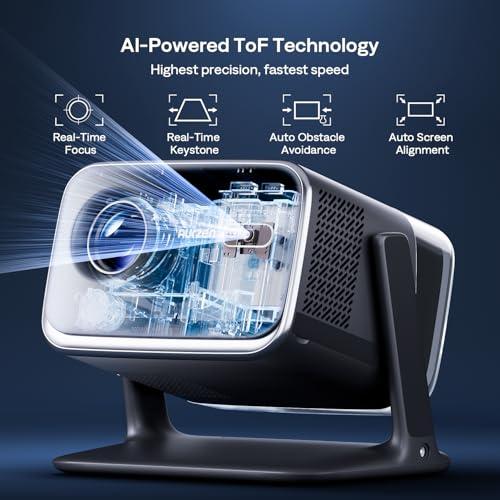
Where they differ significantly is in setup and automation features. The Aurzen BOOM Mini includes real-time autofocus using ToF (Time of Flight) sensors that measure distance to automatically adjust lens focus. It also provides automatic keystone correction, which digitally adjusts the image to appear rectangular even when the projector isn't perfectly perpendicular to the screen.
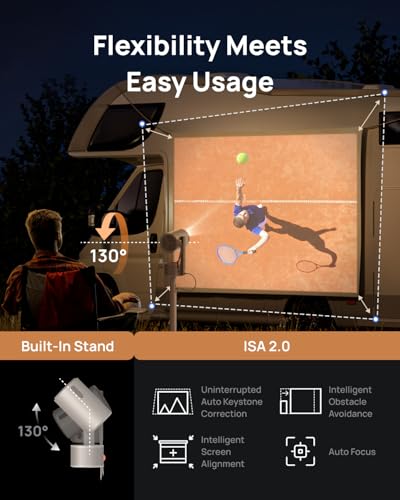
The XGIMI MoGo 3 Pro goes much further with its ISA 2.0 (Intelligent Screen Adaptation) system. This advanced setup includes not only autofocus and keystone correction, but also obstacle avoidance and screen alignment. If you project onto a wall with a picture frame or electrical outlet in the way, the MoGo 3 Pro will automatically resize and reposition the image to avoid these obstacles. It can even detect when people or pets walk in front of the lens and temporarily dim or shut off the light source for eye safety.
These automation features might seem like gimmicks, but they address real-world frustrations. Anyone who's spent twenty minutes manually adjusting keystone settings will appreciate projectors that handle setup automatically.
Here's where the two projectors diverge most dramatically in their design philosophy.
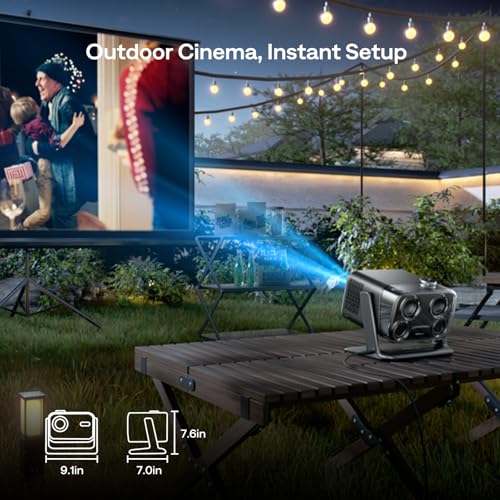
The Aurzen BOOM Mini requires constant AC power through its included power adapter. This limits where you can use it to locations with electrical outlets, but provides unlimited runtime and maintains full brightness throughout viewing sessions. The projector measures about 9 inches wide and weighs enough that you'll want to set it down somewhere stable rather than holding it.
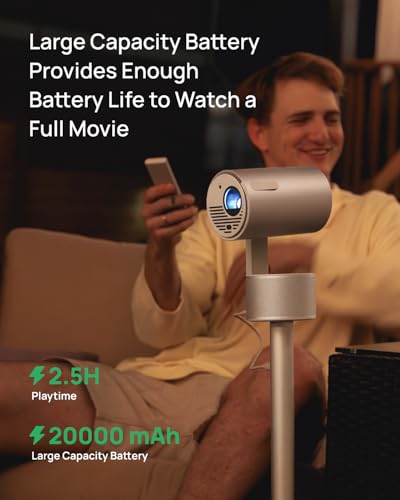
The XGIMI MoGo 3 Pro includes a built-in battery that provides 2-2.5 hours of playback time. At just 2.4 pounds and roughly the size of a large coffee cup, it's genuinely portable in ways the Aurzen isn't. You can take it camping, to friends' houses, or use it in hotel rooms without worrying about power outlets.
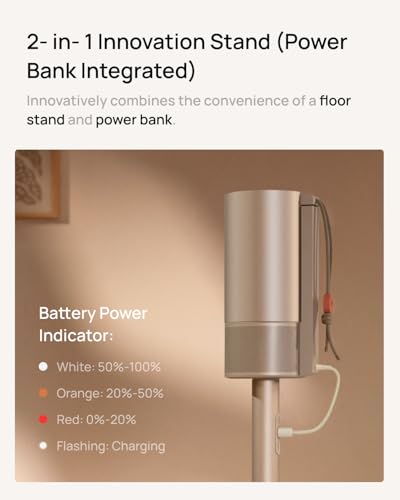
The MoGo 3 Pro also supports USB-C Power Delivery, meaning you can extend its runtime using compatible power banks or charge it from laptop chargers. However, when running on battery power, brightness drops to approximately 235 ANSI lumens – nearly half its plugged-in performance.
This represents the classic portability versus performance trade-off. True portability requires batteries, but batteries limit both runtime and peak performance. Your usage patterns should heavily influence which approach works better for your needs.
Based on extensive research into user experiences and professional reviews, distinct usage patterns emerge for each projector.
The Aurzen BOOM Mini excels in semi-permanent installations where consistent power is available. Users report excellent performance for backyard movie nights, bedroom ceiling projection, and living room entertainment where it can remain plugged in. The combination of higher brightness and powerful audio makes it particularly suitable for outdoor use or rooms where you can't achieve complete darkness.
Gaming performance on the Aurzen BOOM Mini is solid, with input lag low enough for casual gaming sessions. The multiple connectivity options (HDMI, dual USB ports, 3.5mm audio out) make it easy to connect game consoles, laptops, or other devices.
The XGIMI MoGo 3 Pro shines in scenarios requiring true portability. Users consistently praise its performance for camping trips, hotel room entertainment, and situations where the projector needs frequent repositioning. The automatic setup features eliminate the frustration of manual adjustments when moving between locations.
However, the MoGo 3 Pro's lower brightness does limit its versatility. Professional reviews consistently note that it requires properly darkened environments to deliver satisfying image quality. In bright rooms or daylight conditions, the image can appear washed out.
For dedicated home theater use, both projectors represent compromises compared to larger, more expensive models. However, they can still provide enjoyable big-screen experiences with proper setup.
The Aurzen BOOM Mini is better suited for home theater applications thanks to its higher brightness and more powerful audio. In a dedicated theater room with controlled lighting, it can produce surprisingly cinematic results on screens up to 120 inches. The LCD technology provides consistent brightness across the entire image, important for larger projection sizes.
The XGIMI MoGo 3 Pro can also work well in home theater settings, but requires more careful attention to ambient light control. Its DLP technology and color accuracy make it capable of beautiful image quality in dark rooms, though the lower brightness limits maximum screen size for optimal viewing.
Both projectors support HDR10 content, which can enhance contrast and color depth in supported material. However, neither has the brightness headroom to fully realize HDR's potential – a limitation shared by most portable projectors in this price range.
At the time of writing, both projectors occupy similar price points in the premium portable projector category, though the Aurzen BOOM Mini typically costs slightly less than the XGIMI MoGo 3 Pro.
The Aurzen BOOM Mini offers better performance per dollar, delivering higher brightness and more powerful audio at a lower price point. For users who can work with its AC power requirement, it provides excellent value in terms of image quality and features.
The XGIMI MoGo 3 Pro commands a premium for its portability features and premium build quality. The built-in battery, advanced auto-setup capabilities, and Harman Kardon audio partnership justify the higher price for users who need true portability.
Choose the Aurzen BOOM Mini if you prioritize image brightness and audio power over ultimate portability. It's ideal for users who want the best possible viewing experience in semi-permanent setups – think dedicated entertainment areas, bedrooms, or covered outdoor spaces with power access. The superior brightness makes it more versatile for various lighting conditions, while the powerful speakers reduce the need for external audio equipment.
The XGIMI MoGo 3 Pro is the better choice for users who truly need portability and convenience. If you plan to frequently move your projector between locations, take it traveling, or use it in situations without reliable power access, the built-in battery and advanced auto-setup features provide significant practical advantages.
For most home theater enthusiasts who want a secondary projector for casual viewing, the Aurzen BOOM Mini delivers better performance at a lower price. But for digital nomads, frequent travelers, or anyone who values the ability to set up quickly anywhere, the XGIMI MoGo 3 Pro offers capabilities that justify its premium pricing.
Both projectors represent the current state-of-the-art in portable smart projectors, offering genuine big-screen entertainment in remarkably compact packages. Your choice ultimately depends on whether you value maximum performance or maximum portability – fortunately, both deliver on their respective promises exceptionally well.
| Aurzen BOOM Mini Smart Projector Google TV | XGIMI MoGo 3 Pro Portable Projector |
|---|---|
| Brightness - Most critical spec for ambient light performance | |
| 500 ANSI lumens (works well in dimmed rooms) | 450 ISO lumens / 394 ANSI actual (requires darker environments) |
| Display Technology - Affects image quality and durability | |
| LCD with LED light source (vibrant colors, consistent brightness) | DLP with LED light source (better contrast, sharper images) |
| Audio Power - Determines if you need external speakers | |
| Dual 10W speakers (20W total) with Dolby Audio | Dual 5W Harman Kardon speakers (refined but less powerful) |
| Power Requirements - Major portability difference | |
| Plug-in only (unlimited runtime, location-dependent) | Built-in battery (2-2.5 hours, true portability) |
| Smart Features - Setup convenience and automation | |
| Real-time autofocus and keystone correction | ISA 2.0: obstacle avoidance, screen alignment, eye protection |
| Connectivity - Physical ports for devices | |
| HDMI, 2x USB, 3.5mm audio out (versatile connections) | Micro-HDMI, USB-A, USB-C (minimal but sufficient) |
| Size and Weight - Portability considerations | |
| 9.1" × 7.0" × 7.6" (semi-portable, needs stable surface) | 11.77" × 3.74" × 3.74", 2.4 lbs (ultra-portable design) |
| Noise Level - Important for quiet viewing | |
| ≤36dB (moderate fan noise) | 32dB (quieter operation) |
| Gaming Performance - Input lag for console gaming | |
| Low input lag, multiple connection options | ≤60ms input lag with Game Mode |
| Best Use Cases - Who each projector serves best | |
| Semi-permanent setups, backyard movies, brighter rooms | Travel, camping, hotel rooms, frequent repositioning |
The Aurzen BOOM Mini Smart Projector Google TV is brighter at 500 ANSI lumens compared to the XGIMI MoGo 3 Pro Portable Projector at 450 ISO lumens (actually closer to 394 ANSI lumens in testing). This makes the Aurzen BOOM Mini better for rooms with ambient light or larger projection sizes.
No, both the Aurzen BOOM Mini Smart Projector Google TV and XGIMI MoGo 3 Pro Portable Projector have built-in Google TV with native Netflix support. You can directly access thousands of streaming apps including Disney+, Hulu, and YouTube without any external devices.
The XGIMI MoGo 3 Pro Portable Projector is designed for travel with its built-in battery providing 2-2.5 hours of playback, compact size, and 2.4-pound weight. The Aurzen BOOM Mini requires constant AC power, making it unsuitable for outdoor camping without electrical hookups.
The Aurzen BOOM Mini Smart Projector Google TV has more powerful dual 10W speakers (20W total) that can fill larger rooms, while the XGIMI MoGo 3 Pro features dual 5W Harman Kardon speakers that offer refined sound quality but less volume and bass response.
The XGIMI MoGo 3 Pro Portable Projector offers more advanced automation with ISA 2.0, including obstacle avoidance, automatic screen alignment, and eye protection features. The Aurzen BOOM Mini provides real-time autofocus and keystone correction but lacks the advanced positioning features.
Yes, both projectors work well for casual gaming. The Aurzen BOOM Mini Smart Projector Google TV offers multiple connection options and low input lag, while the XGIMI MoGo 3 Pro has a dedicated Game Mode with ≤60ms input lag at 1080p/60Hz.
For dedicated home theater setups, the Aurzen BOOM Mini Smart Projector Google TV is generally better due to its higher brightness, more powerful audio, and unlimited runtime with AC power. The XGIMI MoGo 3 Pro can work well in very dark rooms but requires more careful light control.
Both projectors use LED light sources with excellent longevity. The Aurzen BOOM Mini is rated for 30,000 hours while the XGIMI MoGo 3 Pro offers 25,000 hours. Both should last over a decade with normal use without needing lamp replacements.
The Aurzen BOOM Mini Smart Projector Google TV provides more physical connections with HDMI, dual USB ports, and 3.5mm audio out. The XGIMI MoGo 3 Pro Portable Projector has fewer ports with micro-HDMI, USB-A, and USB-C, prioritizing compact design over connection variety.
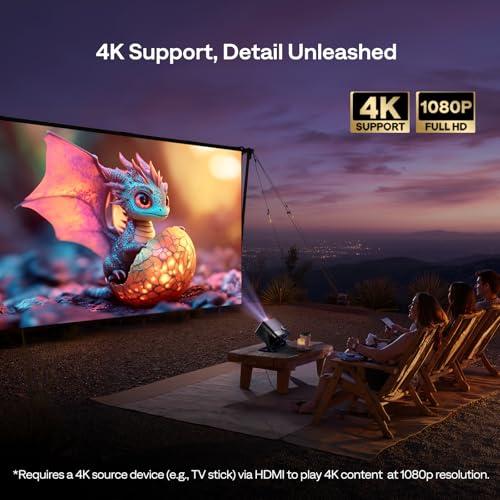
Both projectors have native 1080p resolution but can accept 4K input signals, which are then downscaled to 1080p for display. The Aurzen BOOM Mini and XGIMI MoGo 3 Pro both support HDR10 content for enhanced color and contrast within their brightness limitations.
The XGIMI MoGo 3 Pro Portable Projector operates more quietly at 32dB compared to the Aurzen BOOM Mini Smart Projector Google TV at ≤36dB. Both are relatively quiet, but the XGIMI MoGo 3 Pro is less noticeable in quiet environments.
The Aurzen BOOM Mini Smart Projector Google TV typically offers better value with higher brightness, more powerful audio, and additional connectivity at a lower price point. The XGIMI MoGo 3 Pro commands a premium for its portability features and advanced automation, making it worth the extra cost if you need true mobility.
We've done our best to create useful and informative comparisons to help you decide what product to buy. Our research uses advanced automated methods to create this comparison and perfection is not possible - please contact us for corrections or questions. These are the sites we've researched in the creation of this article: aurzen.com - aurzen.com - the-gadgeteer.com - projectorcentral.com - aurzen.com - aurzen.com - youtube.com - bestbuy.com - bestbuy.com - youtube.com - aurzen.com - youtube.com - hometechnologyreview.com - youtube.com - aurzen.com - projectorcentral.com - techradar.com - androidcentral.com - tvsbook.com - techradar.com - thesmarthomehookup.com - whathifi.com - youtube.com - youtube.com - projectorcentral.com - projectorcentral.com - youtube.com - global.xgimi.com - us.xgimi.com - youtube.com - us.xgimi.com - us.xgimi.com

Privacy Policy
Terms and Conditions - Affiliate Policy
Home Security
© Copyright 2008-2026.
11816 Inwood Rd #1211, Dallas, TX 75244