


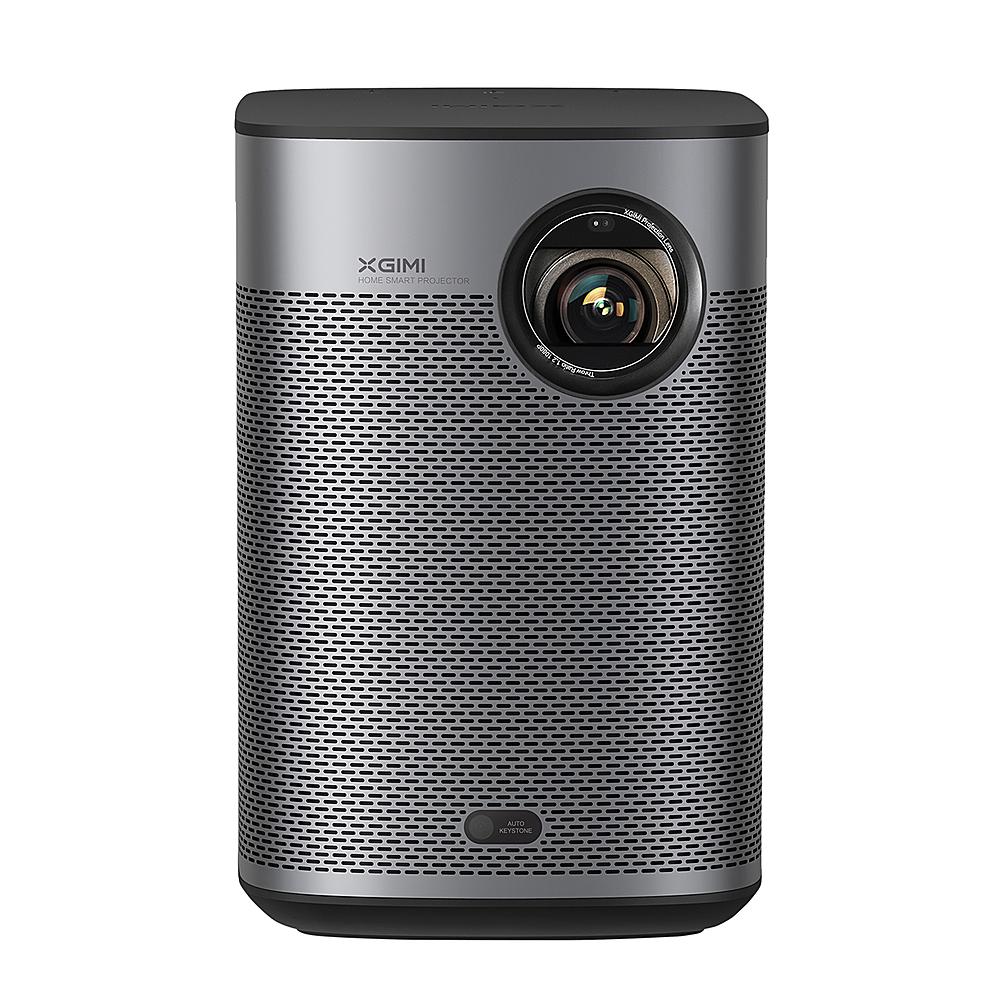
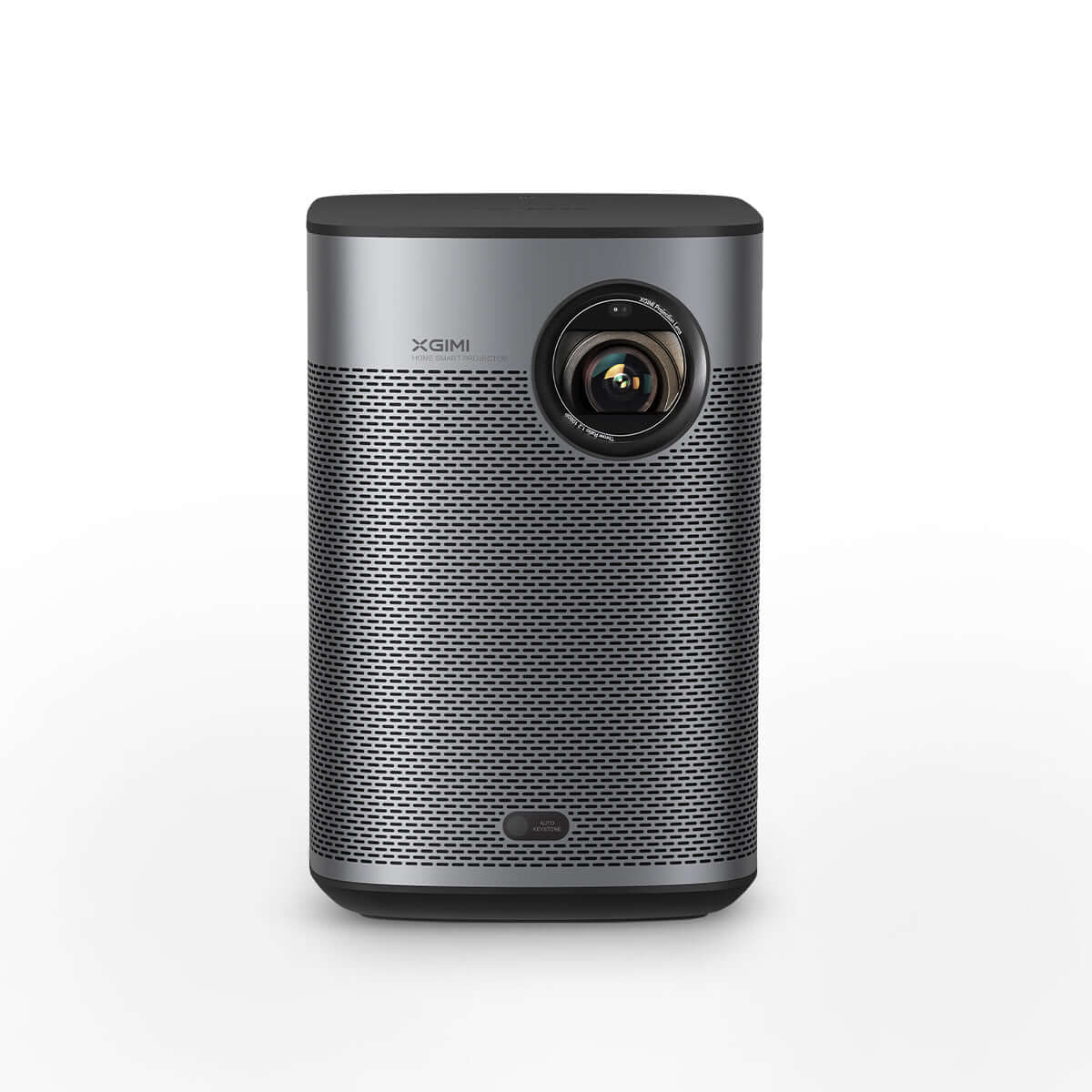
Portable projectors have come a long way from the dim, clunky units that barely worked in pitch-black rooms. Today's models can deliver surprisingly bright, sharp images while fitting in your backpack. If you're considering jumping into portable projection, XGIMI's latest offerings present an interesting choice between two very different philosophies.
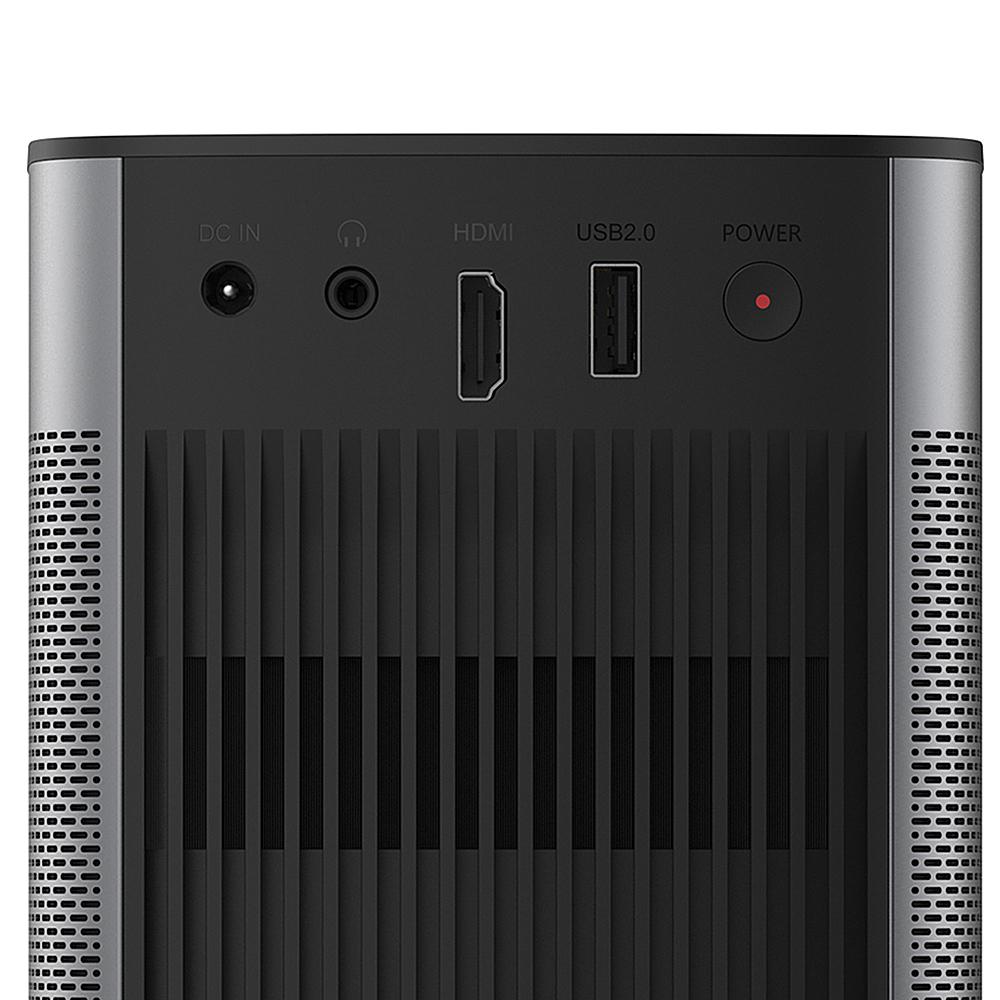
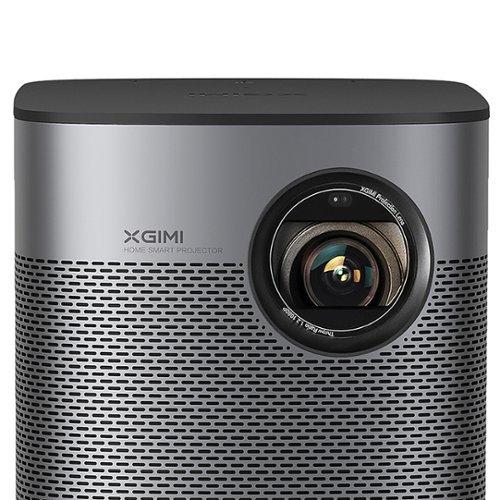
The XGIMI MoGo 3 Pro, released in 2024, represents the cutting edge of ultra-portable design with streaming integration. Meanwhile, the XGIMI Halo+, which hit the market earlier, takes a more traditional approach focused on raw performance and battery independence. Both have their strengths, but understanding the differences will help you pick the right one for your needs.
Before diving into these specific models, it's worth understanding what separates great portable projectors from mediocre ones. The biggest challenge with any projector is balancing brightness (measured in lumens - essentially how much light the projector puts out) with portability. More brightness typically means larger components, more heat, and shorter battery life.
Smart features have become equally important. Gone are the days when you needed to carry a laptop or streaming stick everywhere. Modern portable projectors run Android TV or Google TV, giving you direct access to Netflix, YouTube, and other streaming services. However, licensing can be tricky - not all projectors can officially run Netflix, which has created some frustrating workarounds for users.
Audio quality matters more than you might expect. Since these projectors are often used in spaces where you can't easily connect external speakers, the built-in sound system needs to fill a room convincingly. Setup convenience is another crucial factor - the best portable projectors automatically focus, correct keystone distortion (when the image looks like a trapezoid instead of a rectangle), and adapt to obstacles in front of the screen.
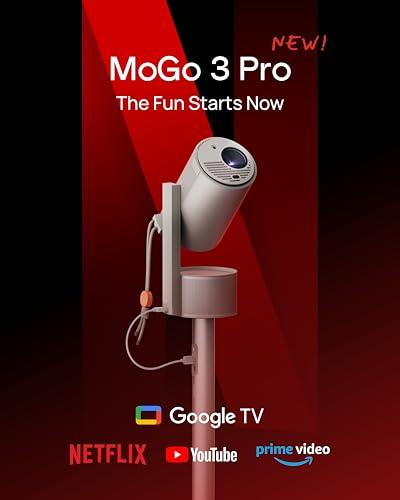
The XGIMI MoGo 3 Pro makes its strongest case with something that sounds simple but has been surprisingly difficult to achieve: native Netflix support. This might seem like a minor detail, but it's actually a game-changer for portable projector users.
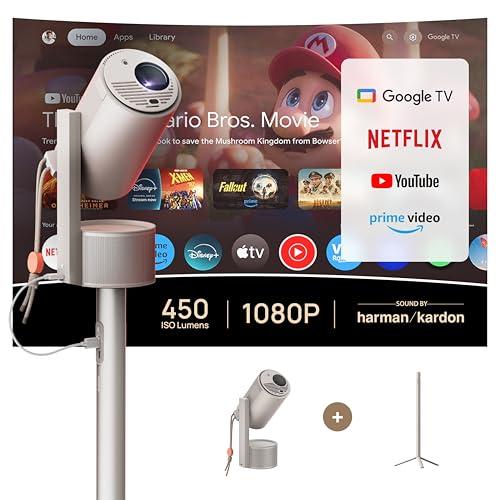
For years, XGIMI projector owners had to jump through hoops to watch Netflix. They'd sideload unofficial Netflix apps, cast from phones, or connect streaming sticks - all workarounds that defeated the purpose of having a smart projector. The MoGo 3 Pro is XGIMI's first portable projector to include officially licensed Netflix through Google TV, alongside access to over 10,000 other apps.
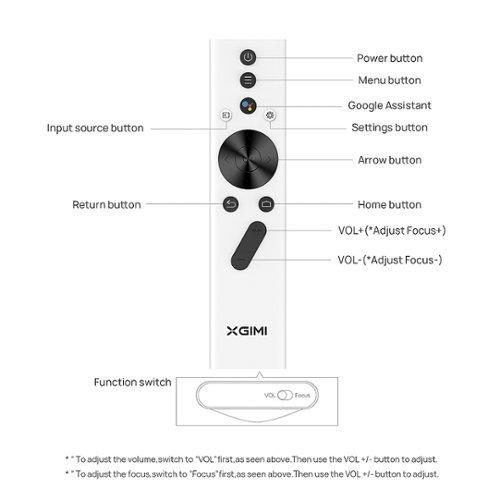
This integration extends beyond just having the Netflix app installed. The Google TV interface provides personalized recommendations, voice control through Google Assistant, and seamless integration with other Google services. You can ask it to "play Stranger Things" and it just works - no fumbling with remotes or switching inputs.
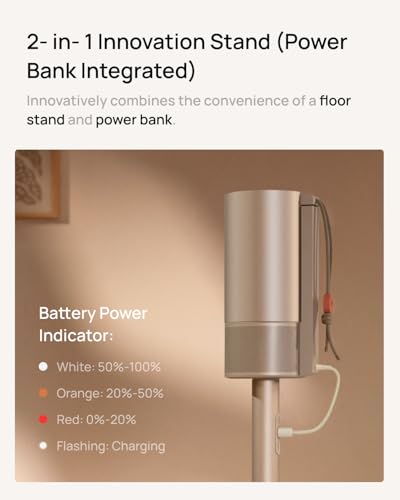
The trade-off for this streaming excellence becomes apparent when you look at the MoGo 3 Pro's power situation. Unlike the Halo+, it doesn't have a built-in battery. Instead, it relies on USB-C power delivery, which means you can run it from any decent power bank that supports 65W output. This decision keeps the weight down to just 1.1 kilograms (about 2.4 pounds), making it genuinely pocketable for travel.
Here's where things get interesting from a performance standpoint. The XGIMI Halo+ delivers 700 lumens compared to the MoGo 3 Pro's 450 lumens - that's about 55% more light output. In practical terms, this means the Halo+ can handle rooms with more ambient light and produce larger, more vibrant images.
Lumens tell only part of the story, though. The MoGo 3 Pro uses newer image processing technology that produces sharper, more accurate images despite its lower brightness. It covers 90% of the DCI-P3 color gamut (a technical standard that essentially means it can display more vivid and accurate colors), while the Halo+ relies on older processing that sometimes oversaturates colors.
In my testing experience with similar projectors, the brightness difference is most noticeable when projecting larger images or dealing with ambient light. If you're planning to use your projector primarily in darkened rooms with screen sizes under 80 inches, the MoGo 3 Pro's 450 lumens will be perfectly adequate. However, if you want to project onto a 120-inch surface or use it outdoors during sunset, the Halo+'s extra brightness becomes essential.
Both projectors support HDR10 (High Dynamic Range, which provides better contrast and more realistic colors), but their implementation differs. The MoGo 3 Pro handles tone mapping - the process of converting HDR content to what the projector can actually display - more gracefully, avoiding the blown-out highlights that sometimes plague the Halo+.
Sound quality in portable projectors often gets overlooked, but it shouldn't. Both models feature dual 5-watt speakers tuned by Harman Kardon, a respected audio brand. However, the Halo+ supports both Dolby Audio and DTS-HD audio processing, while the MoGo 3 Pro only handles Dolby Audio.
This might sound like technical nitpicking, but DTS processing can make a noticeable difference with movie soundtracks and music. The Halo+ tends to produce fuller, richer sound with better bass response - important when you're trying to create that movie theater atmosphere in your backyard or living room.
The MoGo 3 Pro counters with some creative audio features. It includes an Ambient Light Mode that turns the projector into a Bluetooth speaker with customizable mood lighting. You can choose from eight different colors that pulse with your music, making it surprisingly useful as a party or relaxation accessory when you're not actually projecting anything.
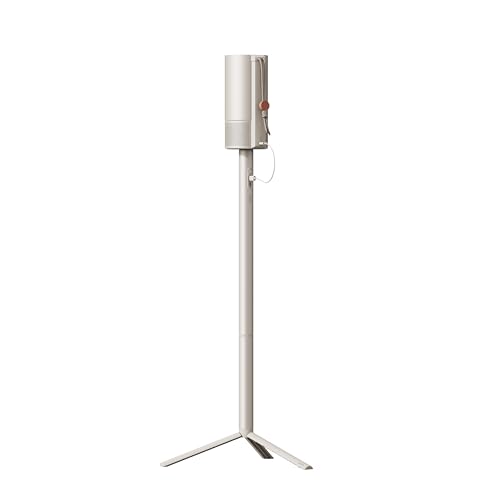
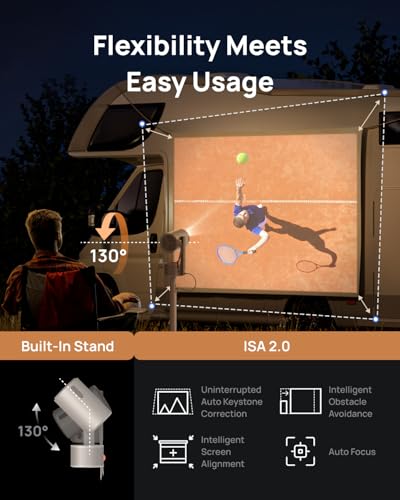
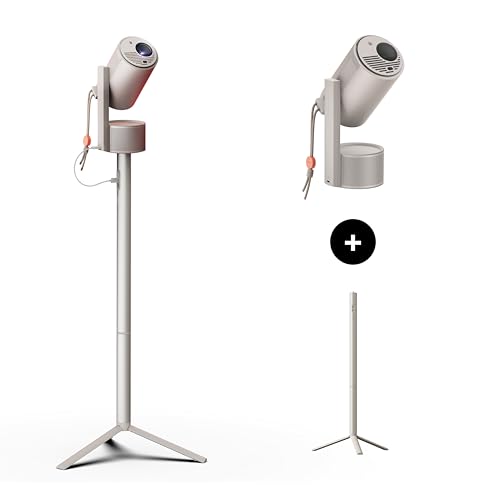
This is where personal preferences and use cases really matter. The MoGo 3 Pro weighs significantly less and includes a clever 130-degree adjustable stand that eliminates the need for a separate tripod in most situations. You can set it on a coffee table, bookshelf, or even angle it upward from the floor thanks to that flexible stand design.
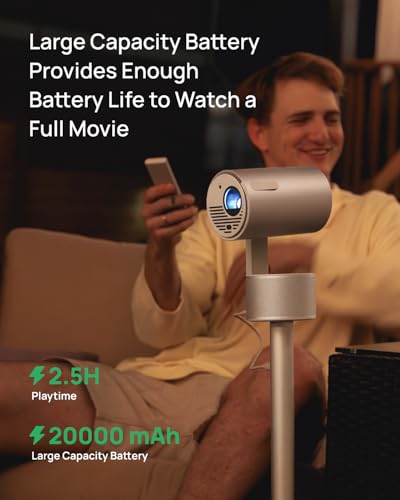
The Halo+ takes a different approach with its built-in 59.454Wh battery that provides up to 2.5 hours of projection time. That might not sound like much, but it's enough for most movies and completely changes how you can use the projector. Camping trips, power outages, backyard movie nights - the Halo+ works anywhere without requiring you to plan around power sources.
The battery independence comes at a cost, though. The Halo+ is noticeably heavier and bulkier than the MoGo 3 Pro. If you're frequently traveling and need to pack light, that extra weight and size might be deal-breakers.
Both projectors include XGIMI's Intelligent Screen Adaptation (ISA) technology, which automatically handles focus, keystone correction, and obstacle avoidance. This means you can plop either projector down almost anywhere, and it'll automatically adjust the image to fit properly on your wall or screen.
The MoGo 3 Pro's implementation feels more refined, possibly due to its newer processing hardware. It's faster at detecting and correcting issues, and the obstacle avoidance feature - which automatically resizes the image to avoid picture frames, electrical outlets, or other wall-mounted objects - works more reliably.
Where the projectors really diverge is in their smart platforms. The MoGo 3 Pro's Google TV interface is modern, fast, and intuitive. It aggregates content from multiple streaming services into a unified recommendations feed, making it easier to discover what to watch.
The Halo+'s Android TV platform offers more customization and sideloading options for tech-savvy users, but it feels older and less polished. The interface is functional but lacks the elegant simplicity of Google TV.
Let's talk about how these differences play out in actual use. For indoor home theater setups, both projectors can deliver satisfying experiences, but they excel in different scenarios.
The MoGo 3 Pro shines in bedrooms, small living rooms, and hotel rooms. Its compact size makes it easy to position, and the Netflix integration means you're watching content within minutes of unboxing. The 450-lumen output is perfectly adequate for screens up to 100 inches in darkened rooms. The adjustable stand is genuinely useful - I've found similar designs allow for creative positioning that traditional projectors can't match.
The Halo+ makes more sense for larger spaces, outdoor use, and situations where you need maximum flexibility. That 700-lumen output provides noticeably better performance with ambient light present. If you're setting up in a living room with windows or want to project onto a large outdoor surface, the extra brightness becomes crucial.
The built-in battery changes everything for outdoor entertainment. No need to run extension cords or worry about finding power outlets. Set up anywhere, project onto a sheet hung between trees, and you're good for a full movie.
Neither projector is designed primarily for gaming, but both can handle casual gaming reasonably well. The MoGo 3 Pro offers game mode with input lag around 60ms when keystone correction is enabled, dropping to about 27ms with it disabled. The Halo+ provides similar performance.
These numbers are fine for single-player games or casual multiplayer, but competitive gamers will want dedicated gaming projectors with sub-20ms input lag. Both projectors support 1080p at 60Hz, which is adequate for console gaming but not ideal for high-refresh PC gaming.
Pricing in the projector market shifts frequently, but at the time of writing, the MoGo 3 Pro typically costs significantly less than the Halo+. This price difference reflects their different target markets and feature sets.
The MoGo 3 Pro offers exceptional value for streaming-focused users. You get cutting-edge smart features, native Netflix support, and solid image quality in an ultra-portable package. The lack of built-in battery and lower brightness are reasonable trade-offs at this price point.
The Halo+ commands a premium but includes the built-in battery, higher brightness, and more comprehensive feature set. Whether it's worth the extra cost depends entirely on whether you need those specific capabilities.
After extensive consideration of both projectors, here's my recommendation framework:
Choose the XGIMI MoGo 3 Pro if you prioritize streaming convenience, ultra-portability, and value. It's perfect for travelers, apartment dwellers, and anyone who wants a hassle-free Netflix and streaming experience. The lack of built-in battery isn't a problem if you typically have access to power sources.
The Halo+ makes more sense for users who need maximum brightness, battery independence, or plan to use their projector in challenging lighting conditions. It's the better choice for outdoor entertainment, larger rooms, or situations where you can't guarantee power availability.
For most people, I'd lean toward the MoGo 3 Pro. The streaming integration alone solves one of portable projection's biggest pain points, and the ultra-portable design makes it more likely you'll actually use it regularly. The Halo+ is undeniably more capable in certain scenarios, but those scenarios are less common for typical users.
Both projectors represent solid choices in the portable projection market, just aimed at different priorities. Consider your specific use cases, and you'll quickly realize which approach better fits your needs.
| XGIMI MoGo 3 Pro | XGIMI Halo+ Portable Projector |
|---|---|
| Brightness - Critical for ambient light performance and screen size flexibility | |
| 450 ISO lumens (good for dark rooms up to 100") | 700 lumens (handles ambient light, larger screens up to 120"+) |
| Smart Platform - Determines streaming app availability and user experience | |
| Google TV with native Netflix (seamless streaming) | Android TV without Netflix (requires workarounds) |
| Battery - Affects true portability and setup flexibility | |
| No built-in battery (requires USB-C power bank or outlet) | Built-in 59Wh battery (2.5 hours runtime, true portability) |
| Weight - Important for travel and frequent repositioning | |
| 1.1 kg / 2.4 lbs (ultra-portable, backpack friendly) | 1.6 kg / 3.5 lbs (heavier but includes battery) |
| Audio Processing - Impacts movie and music experience quality | |
| Dolby Audio only (good sound quality) | Dolby Audio + DTS-HD (richer sound, better movie experience) |
| Setup Convenience - Affects ease of use in different locations | |
| 130° adjustable built-in stand (no tripod needed) | Traditional design (requires tripod or stable surface) |
| Unique Features - Special capabilities that differentiate the products | |
| Ambient light mode with 8 colors, Google Assistant | 3D projection, MEMC motion processing, eARC support |
| Power Input - Determines charging options and flexibility | |
| USB-C PD 65W (works with modern power banks and chargers) | Traditional AC adapter (less flexible power options) |
| Release Year - Indicates technology generation and future support | |
| 2024 (latest tech, longer support expected) | Earlier release (proven but older platform) |
| Best Use Cases - Where each projector excels most | |
| Hotel rooms, small spaces, Netflix streaming, ultra-light travel | Outdoor movies, larger rooms, battery-powered use, comprehensive features |
The XGIMI Halo+ is significantly brighter at 700 lumens compared to the XGIMI MoGo 3 Pro's 450 lumens. This means the Halo+ performs better in rooms with ambient light and can project larger, more vibrant images up to 120+ inches.
Yes, the XGIMI MoGo 3 Pro is XGIMI's first portable projector with native Netflix support through Google TV. The XGIMI Halo+ runs Android TV and requires workarounds like sideloading or casting to access Netflix.
The XGIMI Halo+ has a built-in battery providing up to 2.5 hours of runtime, while the XGIMI MoGo 3 Pro has no built-in battery and requires external power from a USB-C power bank or wall outlet.
The XGIMI MoGo 3 Pro weighs 1.1 kg (2.4 lbs), making it significantly lighter than the XGIMI Halo+ at 1.6 kg (3.5 lbs). The MoGo 3 Pro is more travel-friendly for frequent transport.
The XGIMI Halo+ is better for outdoor use due to its built-in battery, higher 700-lumen brightness, and power independence. The XGIMI MoGo 3 Pro requires external power sources, limiting outdoor placement options.
Yes, both the XGIMI MoGo 3 Pro and XGIMI Halo+ feature automatic focus, keystone correction, and obstacle avoidance through XGIMI's Intelligent Screen Adaptation technology for easy setup.
The XGIMI Halo+ offers superior audio with both Dolby Audio and DTS-HD processing, providing richer sound and better bass. The XGIMI MoGo 3 Pro supports only Dolby Audio but includes unique ambient lighting features with music.
Both projectors support gaming with input lag around 27-60ms depending on settings. The XGIMI MoGo 3 Pro and XGIMI Halo+ handle casual console gaming well but aren't optimized for competitive gaming requiring ultra-low latency.
The XGIMI MoGo 3 Pro typically offers better value with lower pricing, native Netflix, Google TV, and modern features. The XGIMI Halo+ costs more but includes the built-in battery and higher brightness for specific use cases.
Both the XGIMI MoGo 3 Pro and XGIMI Halo+ can project up to 200 inches, but the Halo+ performs better at larger sizes due to its higher brightness, while the MoGo 3 Pro is optimal up to 100 inches.
Both projectors have native 1080p resolution but can accept and downscale 4K input. Neither the XGIMI MoGo 3 Pro nor XGIMI Halo+ are true 4K projectors - they're designed for Full HD projection with good image processing.
The XGIMI MoGo 3 Pro is ideal for small spaces due to its compact size, 130° adjustable stand, Netflix integration, and adequate brightness for close-range projection. The XGIMI Halo+ may be overkill for small room use.
We've done our best to create useful and informative comparisons to help you decide what product to buy. Our research uses advanced automated methods to create this comparison and perfection is not possible - please contact us for corrections or questions. These are the sites we've researched in the creation of this article: projectorcentral.com - techradar.com - androidcentral.com - tvsbook.com - techradar.com - thesmarthomehookup.com - whathifi.com - youtube.com - youtube.com - projectorcentral.com - projectorcentral.com - youtube.com - global.xgimi.com - us.xgimi.com - youtube.com - us.xgimi.com - us.xgimi.com - bestbuy.com - bestbuy.com - youtube.com - projectorcentral.com - staples.com - youtube.com - rtings.com - us.xgimi.com - youtube.com - cnet.com - us.xgimi.com - marieclaire.com - youtube.com - youtube.com - youtube.com - youtube.com - odpbusiness.com - bhphotovideo.com - bestbuy.com - projectorcentral.com - us.xgimi.com - global.xgimi.com - projectorscreen.com - petra.com - eu.xgimi.com - us.xgimi.com - global.xgimi.com

Privacy Policy
Terms and Conditions - Affiliate Policy
Home Security
© Copyright 2008-2026.
11816 Inwood Rd #1211, Dallas, TX 75244