


Portable projectors have transformed from niche gadgets into legitimate entertainment solutions over the past few years. They promise the holy grail of home entertainment: big-screen experiences wherever you go, without the hassle of mounting hardware or permanent installations. But as someone who's spent countless hours testing these compact cinema machines, I can tell you that the devil is absolutely in the details.
The XGIMI MoGo 4 and MoGo 3 Pro represent two generations of portable projector evolution, and the differences between them reveal just how quickly this category is maturing. Both projectors come from XGIMI, a company that's been pushing the boundaries of what's possible in portable projection technology. But should you pay extra for the newer model, or does the older one still hold its own?
Before diving into the specifics, it's worth understanding what we're actually looking for in a portable projector. These devices live in a world of constant compromise. Traditional home theater projectors can weigh 20+ pounds and require dedicated rooms with controlled lighting. Portable projectors, by contrast, need to fit in a backpack while still delivering watchable images in less-than-ideal conditions.
The key considerations boil down to several critical areas: true portability (can you actually take it camping without a generator?), image quality that works in real-world lighting, smart features that eliminate the need for external devices, and audio that doesn't require separate speakers. Getting all of these right in a device you can carry with one hand is genuinely challenging engineering.
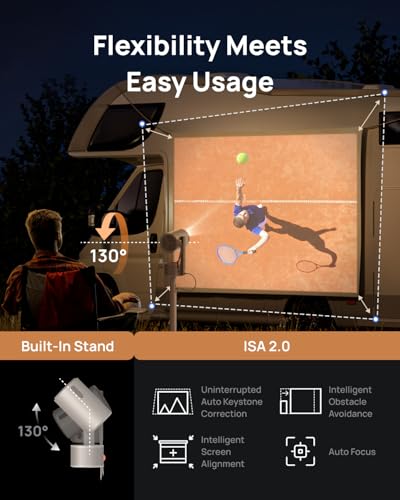
What makes XGIMI's approach interesting is their focus on intelligent automation. Both the MoGo 4 and MoGo 3 Pro feature something called ISA (Intelligent Screen Adaptation) technology, which automatically handles focus, keystone correction (fixing the trapezoidal distortion you get when projecting at an angle), and even obstacle avoidance. This means the projector can literally detect when there's a picture frame or electrical outlet in the way and adjust the image around it.
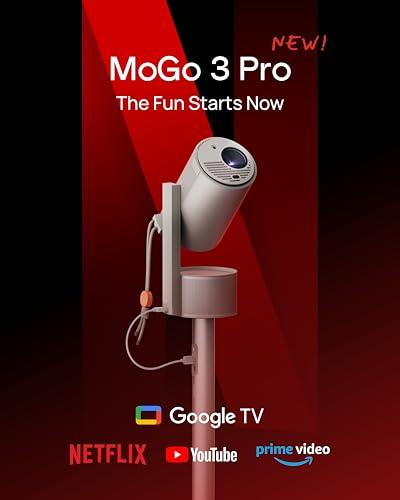
The MoGo 3 Pro launched in 2024 as XGIMI's answer to the growing demand for truly smart portable projectors. It was one of the first in its category to feature native Netflix integration through Google TV, solving a major pain point that had plagued portable projectors for years. Before this, you either had to sideload apps (which often broke) or rely on external streaming devices, defeating the purpose of portability.
The XGIMI MoGo 4 arrived in 2025 with what XGIMI clearly saw as the next logical step in portable projector evolution. Rather than focusing on brighter lights or higher resolutions, they tackled the practical friction points that made the MoGo 3 Pro less portable than it appeared on paper.
The technology improvements between these generations reflect broader trends in the projector industry. LED light sources are becoming more efficient, processors are getting powerful enough to handle real-time image correction, and battery technology is finally catching up to the power demands of projection systems.
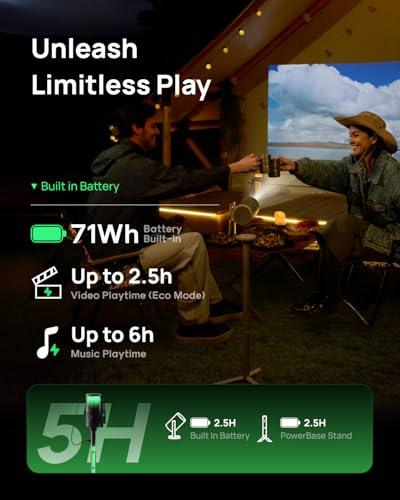
Here's where the MoGo 4 makes its strongest case: it has a built-in battery. That might sound obvious for a "portable" projector, but you'd be surprised how many devices in this category require external power solutions.
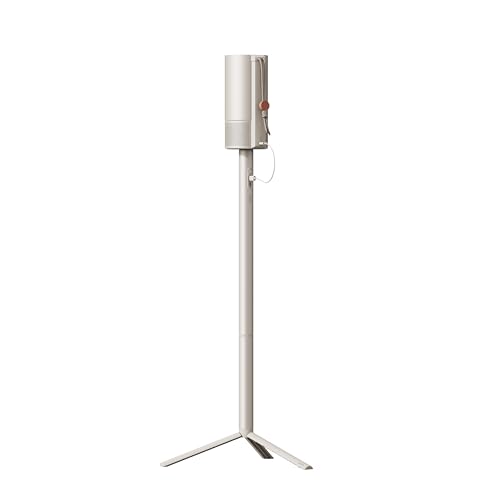
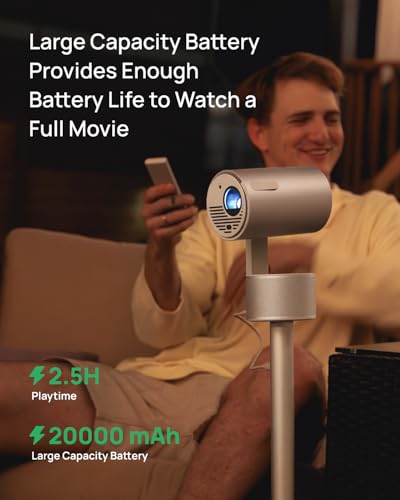
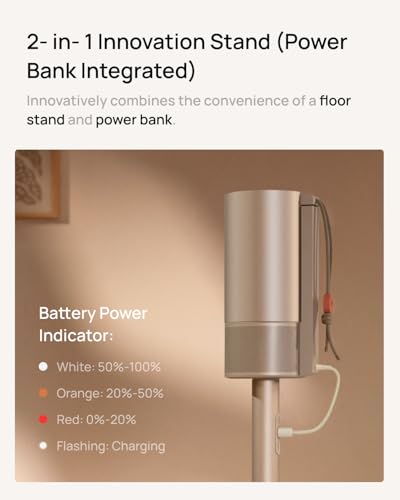
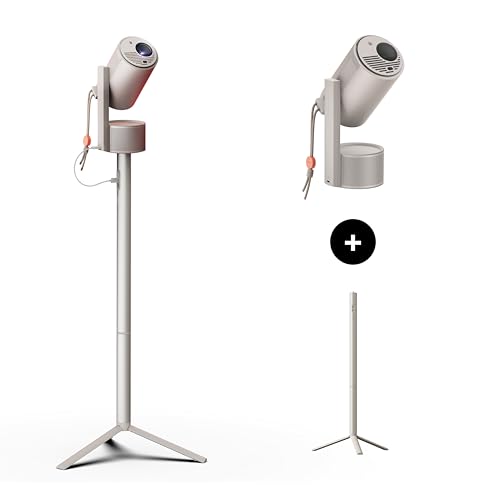
The MoGo 3 Pro technically can run on battery power, but only when paired with XGIMI's separate PowerBase Stand accessory. This means you're carrying multiple components, managing extra cables, and dealing with significantly more setup complexity. I've used the MoGo 3 Pro on camping trips, and while it's certainly possible to make it work, you're essentially building a projector system rather than grabbing a single device.
The MoGo 4 delivers up to 2.5 hours of video playback on its internal battery, which hits the sweet spot for most movie experiences. More importantly, it can extend to 5 hours when paired with the optional PowerBase Stand, giving you serious flexibility for longer viewing sessions or multiple shorter presentations.
What's particularly clever about the MoGo 4's power system is its USB-C Power Delivery support. This means you can run it off any compatible power bank or laptop charger that delivers enough wattage. In practical terms, this transforms how you think about power management during travel or outdoor use.
The design differences between these projectors reveal two completely different approaches to portability. The MoGo 3 Pro follows a modular philosophy where the base projector is supplemented by accessories for specific use cases. Need battery power? Add the PowerBase. Want better positioning? Use the adjustable stand system.
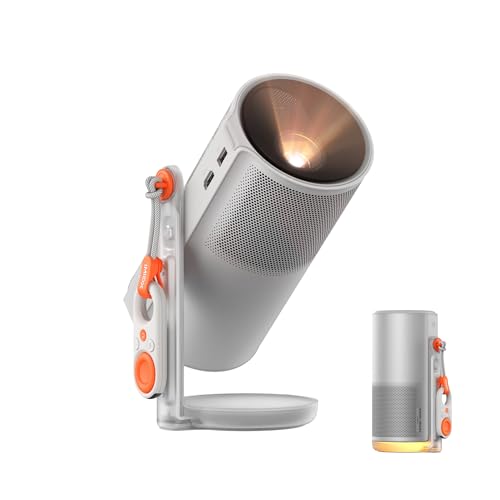
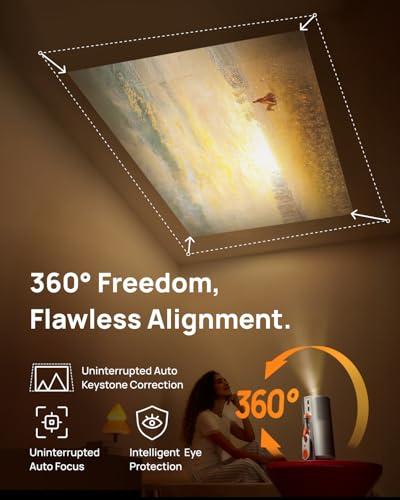
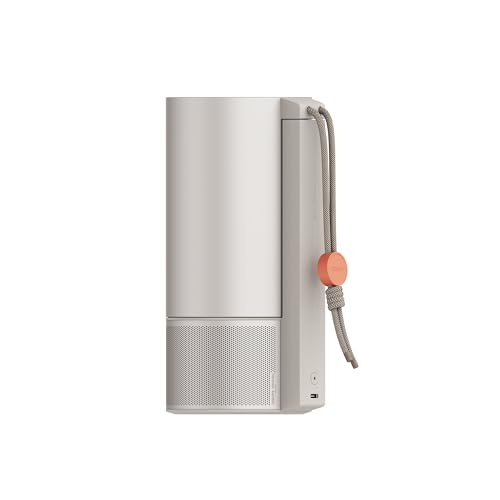
The MoGo 4 takes an integrated approach, building everything into a single, cohesive unit. Its revolutionary feature is the 360° rotatable stand that literally transforms from the projector body itself. You can twist the housing to create a stand, then rotate it to project onto walls, ceilings, or floors from virtually any angle.
I've found this difference becomes crucial in real-world use. With the MoGo 3 Pro, setting up for ceiling projection in a hotel room means assembling components and hoping the tripod base works on the available furniture. The MoGo 4 just requires twisting the body and positioning it appropriately. It's the difference between "setup" and "placement."
The 360° capability isn't just marketing fluff either. Being able to project onto a ceiling for comfortable bed viewing, or onto a floor for presentations where everyone sits around the projected image, opens up use cases that traditional projectors simply can't handle.
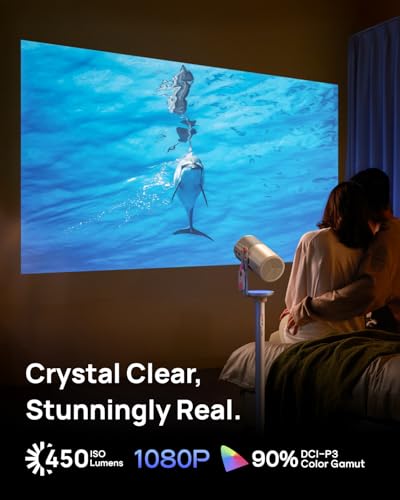
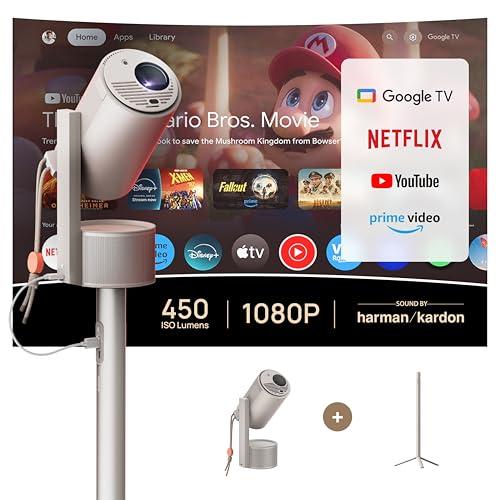
Both projectors deliver 1080p Full HD resolution, which remains the sweet spot for portable projection. While 4K portable projectors exist, they typically sacrifice brightness or battery life, and at the screen sizes these projectors work best with (60-120 inches), the resolution difference is less noticeable than you might expect.
The MoGo 4 produces 450 ISO lumens of brightness, while the MoGo 3 Pro delivers approximately 392 ANSI lumens in real-world testing. These numbers require some explanation because projector brightness specifications can be misleading.
ISO lumens is a standardized measurement that tends to be more optimistic, while ANSI lumens represents a more stringent testing standard. In practical terms, both projectors perform similarly in darkened rooms but struggle in spaces with significant ambient light. This isn't a weakness specific to these models – it's a fundamental limitation of portable projector technology.
Where I notice the most significant difference is in color reproduction and contrast. Both projectors cover 90% of the DCI-P3 color gamut (the color space used in digital cinema), which translates to vibrant, accurate colors that don't look washed out or oversaturated. The MoGo 4 benefits from newer LED technology that provides slightly better contrast ratios, making dark scenes more watchable and colors more punchy.
Both projectors support HDR10, though with important caveats. HDR (High Dynamic Range) requires significant brightness to be truly effective, and portable projectors simply don't have the light output to fully realize HDR content's potential. You'll see some improvement in color gradation and detail, but don't expect the dramatic difference HDR provides on high-end TVs.
The throw ratio of 1.2:1 on both projectors means you need about 8 feet of distance to achieve a 80-inch image. This is reasonable for most living rooms and outdoor setups, but it does limit use in very small spaces.
Gaming on projectors has historically been problematic due to input lag – the delay between when you press a button and when the action appears on screen. Both XGIMI projectors address this with dedicated game modes, but the MoGo 4 represents a significant improvement.
The MoGo 3 Pro achieves input lag of 27ms with auto-keystone correction disabled, rising to 60ms with it enabled. The MoGo 4 dramatically improves this to ≤20ms under optimal conditions. For context, competitive gaming typically requires sub-20ms latency, while casual gaming is comfortable up to about 40ms.
What this means practically is that the MoGo 4 can handle more responsive gaming experiences, including platformers and action games where timing matters. The MoGo 3 Pro works fine for turn-based games, RPGs, and casual gaming but feels sluggish for anything requiring quick reactions.
Both projectors maintain 60Hz refresh rates, which is adequate for console gaming and most PC gaming scenarios. While 120Hz gaming is becoming more common, the additional processing power required would significantly impact battery life on portable projectors.
Portable projectors need good audio because external speaker systems defeat the portability purpose. Both projectors feature Harman Kardon-tuned speakers, but with different configurations and power outputs.
The MoGo 3 Pro uses dual 5W speakers that deliver surprisingly room-filling audio for such a compact device. I've used it for outdoor movie nights where the audio easily covered a group of 8-10 people without feeling strained. However, the audio lacks bass response and can sound thin during action sequences.
The MoGo 4 upgrades to dual 6W speakers with improved tuning that provides slightly better bass response and clearer dialogue. More importantly, both projectors can function as standalone Bluetooth speakers, making them useful even when not projecting.
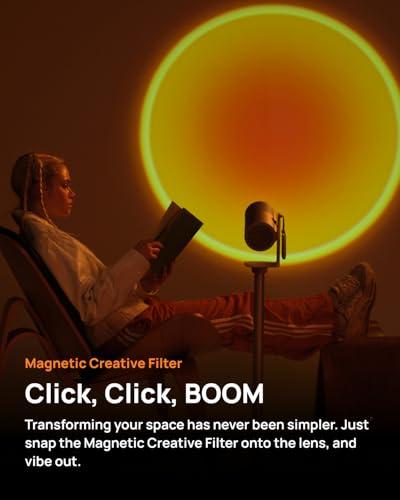
The ambient light mode on both projectors deserves special mention. This feature transforms the projector into a mood light that can pulse with music, creating an interesting party atmosphere or relaxation environment. It's one of those features that seems gimmicky until you use it, then becomes surprisingly compelling for social gatherings.
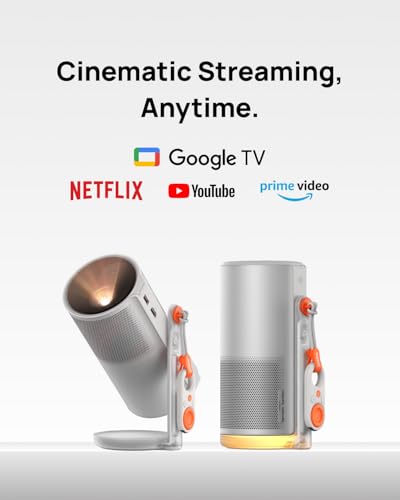
Both projectors run Google TV with licensed Netflix, which represents a major advantage over competitors that require workarounds or sideloading for popular streaming services. Having native access to Netflix, Amazon Prime Video, Disney+, and thousands of other apps transforms these projectors from display devices into complete entertainment systems.
The MoGo 4 benefits from newer hardware that addresses some performance issues present in the MoGo 3 Pro. Boot times are faster, navigation is more responsive, and app switching feels smoother. These improvements might seem minor, but they accumulate into a significantly better user experience.
Voice control through Google Assistant works reliably on both projectors, allowing you to search for content, control playbook, and adjust settings without finding the remote. This becomes particularly valuable when the projector is positioned in hard-to-reach locations.
While both projectors can work in home theater setups, it's important to have realistic expectations. These are not replacements for dedicated home theater projectors that cost thousands of dollars and require controlled environments.
That said, both projectors can create genuinely enjoyable home theater experiences under the right conditions. I've set up the MoGo 4 in a basement media room with moderate light control and achieved 100-inch images that provided an immersive viewing experience for family movie nights.
The key is understanding their limitations. Ambient light is the enemy of portable projectors. Even small amounts of room lighting will wash out the image and reduce contrast. For serious home theater use, you need either a dedicated dark room or the ability to control lighting during viewing sessions.
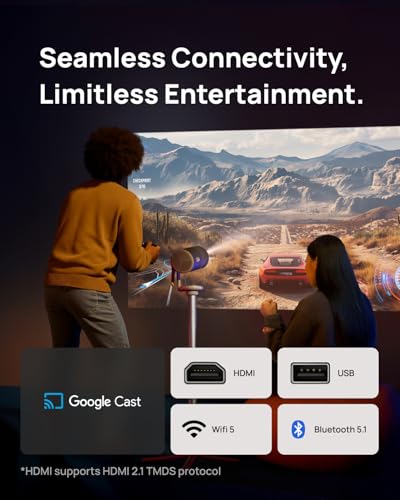
The HDMI connectivity on both projectors (micro HDMI on the MoGo 3 Pro, regular HDMI on some MoGo 4 variants) allows connection to gaming consoles, laptops, or other external devices. However, the smart TV functionality is sophisticated enough that external devices are rarely necessary.
Pricing between these projectors reveals an interesting value proposition at the time of writing. The MoGo 4 commands a modest premium over the MoGo 3 Pro, reflecting its convenience improvements rather than dramatic performance upgrades.
When calculating true value, consider the total cost of achieving equivalent functionality. The MoGo 3 Pro requires the PowerBase Stand accessory to match the MoGo 4's portable capabilities, which narrows the price gap significantly. You're essentially paying a convenience premium for integrated design versus accepting the complexity of a modular system.
The MoGo 4's value proposition becomes clearer when you consider opportunity costs. The time and hassle savings of grab-and-go portability, simplified setup, and integrated battery management can justify the premium for users who frequently move their projector or use it in varied environments.
The decision between these projectors ultimately depends on your usage patterns and priorities.
Choose the MoGo 4 if you prioritize true portability and frequently move the projector between locations. Its integrated battery, 360° stand, and simplified setup make it ideal for camping trips, hotel presentations, backyard movie nights, or any scenario where convenience matters more than cost optimization. The improved gaming performance also makes it a better choice if responsive gaming is important to you.
The MoGo 3 Pro remains compelling for users who primarily plan to use the projector in fixed locations but want the flexibility to occasionally go portable. If you're budget-sensitive and don't mind managing additional accessories when needed, it delivers similar core projection quality at a lower entry price.
For home theater integration, both projectors work adequately, but neither is a true home theater solution. They're best understood as flexible entertainment devices that can create theater-like experiences under the right conditions rather than traditional projector replacements.
The XGIMI MoGo 4 represents thoughtful evolution rather than revolutionary change. It takes the solid foundation of the MoGo 3 Pro and eliminates the friction points that prevented true portability. The integrated battery, 360° stand, and convenience improvements justify the premium for users who value simplicity and flexibility.
However, the MoGo 3 Pro hasn't become obsolete. It remains a capable projector with identical core image quality and smart features. For users who can work within its limitations and appreciate its modular approach, it offers excellent value.
Both projectors succeed at their primary mission: delivering big-screen entertainment in compact, portable packages. The choice between them comes down to whether you're willing to pay for convenience or prefer the flexibility of a modular system. Either way, you're getting access to genuinely impressive portable projection technology that would have been unimaginable just a few years ago.
| XGIMI MoGo 4 Portable Projector 2025 | XGIMI MoGo 3 Pro Portable Projector |
|---|---|
| Built-in Battery - Essential for true portability without power outlets | |
| Yes, up to 2.5 hours video playback (up to 5 hours with PowerBase) | No, requires separate PowerBase Stand accessory for battery operation |
| Brightness - Determines viewing quality in ambient light conditions | |
| 450 ISO lumens (good for darkened rooms, struggles in bright environments) | 450 ISO lumens / 392 measured ANSI lumens (similar performance to MoGo 4) |
| Stand System - Critical for setup flexibility and projection angles | |
| 360° integrated rotatable stand (projects on walls, ceilings, floors) | 130° adjustable separate tripod base (limited positioning options) |
| Weight & Portability - Affects ease of transport and setup | |
| 1.31 kg / 2.9 lbs (single unit with integrated components) | 1.1 kg / 2.4 lbs (requires multiple components for full portability) |
| Gaming Input Lag - Important for responsive gaming experience | |
| ≤20ms (excellent for casual gaming, acceptable for competitive) | 27ms-60ms depending on settings (good for casual, sluggish for competitive) |
| Audio System - Built-in sound quality affects need for external speakers | |
| Dual 6W Harman Kardon speakers (improved bass and clarity) | Dual 5W Harman Kardon speakers (room-filling but thin on bass) |
| Smart Platform - Streaming convenience and app availability | |
| Google TV with licensed Netflix (faster performance, improved boot times) | Google TV with licensed Netflix (slower boot times, occasional lag) |
| Power Options - Flexibility for different usage scenarios | |
| USB-C PD + built-in battery + optional PowerBase compatibility | USB-C PD + PowerBase Stand required for battery operation |
| Remote Control - User convenience and control options | |
| Dual system: mini remote (attaches to projector) + full remote with shortcuts | Single remote only (easy to lose, no external unit controls) |
| Setup Complexity - Time and effort required to start projecting | |
| Grab-and-go single unit (twist body to create stand, automatic corrections) | Multi-component assembly (projector + tripod + battery accessory when portable) |
| Value Proposition - Cost vs. convenience trade-off | |
| Premium pricing for integrated convenience and true portability | Lower entry cost but additional accessory costs for full functionality |
The XGIMI MoGo 4 is significantly better for camping and outdoor use because it has a built-in battery that provides up to 2.5 hours of video playback without needing external power. The XGIMI MoGo 3 Pro requires a separate PowerBase Stand accessory to operate away from power outlets, making it less convenient for true outdoor portability.
Yes, both the XGIMI MoGo 4 and MoGo 3 Pro deliver similar image quality with 1080p Full HD resolution and approximately 450 ISO lumens of brightness. They both cover 90% DCI-P3 color gamut and support HDR10, so you'll get comparable picture quality from either projector in dark or dimly lit environments.
The XGIMI MoGo 4 is much easier to set up thanks to its 360° integrated rotatable stand that transforms from the projector body itself. You can project onto walls, ceilings, or floors from any angle with simple positioning. The MoGo 3 Pro uses a separate tripod base system with 130° adjustment, requiring more components and setup time.
Both projectors work for gaming, but the XGIMI MoGo 4 is better with input lag of ≤20ms, making it suitable for most gaming scenarios including some competitive play. The MoGo 3 Pro has 27-60ms input lag depending on settings, which works fine for casual gaming but may feel sluggish for fast-paced or competitive games.
The XGIMI MoGo 4 works fully portable right out of the box with its integrated battery and stand system. The MoGo 3 Pro requires the separate PowerBase Stand accessory if you want battery operation for portable use, which adds to the total cost and complexity.
The XGIMI MoGo 4 has slightly better audio with dual 6W Harman Kardon speakers compared to the MoGo 3 Pro's dual 5W speakers. Both provide room-filling sound that's impressive for compact projectors, but the MoGo 4 offers improved bass response and clearer dialogue for a better overall audio experience.
Both the XGIMI MoGo 4 and MoGo 3 Pro can work in home theater setups, but they're best suited for casual viewing rather than dedicated home theaters. They excel in darkened rooms and can produce up to 120-inch images, but they lack the brightness and contrast of traditional home theater projectors that cost significantly more.
Yes, both the XGIMI MoGo 4 and MoGo 3 Pro run Google TV with officially licensed Netflix, plus access to thousands of other streaming apps. The MoGo 4 benefits from faster hardware that provides quicker boot times and more responsive navigation compared to the MoGo 3 Pro.
The XGIMI MoGo 4 has a built-in battery providing up to 2.5 hours of video playback, extendable to 5 hours with the optional PowerBase Stand. The MoGo 3 Pro has no built-in battery and requires the PowerBase Stand accessory to achieve approximately 2.5 hours of portable operation.
The MoGo 3 Pro offers better initial value if you primarily use it plugged in, but the MoGo 4 provides better overall value when you consider the cost of adding battery functionality. The convenience and integrated design of the MoGo 4 justify its premium for users who need true portability.
Neither the XGIMI MoGo 4 nor MoGo 3 Pro work well in bright rooms due to their portable projector brightness limitations. Both perform best in darkened environments and struggle with ambient light. For bright room viewing, you'd need a much more expensive and less portable projector with significantly higher brightness output.
The XGIMI MoGo 4 is the clear choice for travel and presentations due to its integrated battery, 360° positioning flexibility, and single-unit design that eliminates the need to pack multiple components. The MoGo 3 Pro requires carrying additional accessories and managing more complex setup, making the MoGo 4 much more convenient for mobile use.
We've done our best to create useful and informative comparisons to help you decide what product to buy. Our research uses advanced automated methods to create this comparison and perfection is not possible - please contact us for corrections or questions. These are the sites we've researched in the creation of this article: projectorcentral.com - whathifi.com - us.xgimi.com - whathifi.com - global.xgimi.com - youtube.com - us.xgimi.com - youtube.com - youtube.com - thesmarthomehookup.com - global.xgimi.com - hometechnologyreview.com - projectorcentral.com - youtube.com - us.xgimi.com - projectorcentral.com - techradar.com - androidcentral.com - tvsbook.com - techradar.com - whathifi.com - youtube.com - youtube.com - projectorcentral.com - projectorcentral.com - youtube.com - global.xgimi.com - us.xgimi.com - youtube.com - us.xgimi.com - us.xgimi.com

Privacy Policy
Terms and Conditions - Affiliate Policy
Home Security
© Copyright 2008-2026.
11816 Inwood Rd #1211, Dallas, TX 75244