


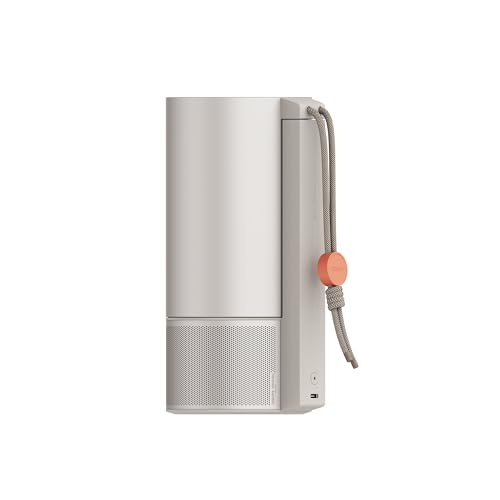
The portable projector market has exploded over the past few years, but 2024 and 2025 have brought us two devices that represent completely different philosophies on what "portable projection" should mean. On one side, we have the Aurzen ZIP Tri-Fold - a genuinely revolutionary ultra-compact projector that literally fits in your pocket. On the other, there's the XGIMI MoGo 3 Pro, which prioritizes legitimate projector performance while still being portable enough to throw in a backpack.
These aren't just different sizes of the same thing - they're fundamentally different approaches to solving the portable projection problem. Understanding which philosophy matches your needs will determine which projector will actually make you happy with your purchase.
Before diving into specifics, it's worth understanding that "portable projector" has become a pretty broad category. At one end, you have pico projectors that prioritize extreme miniaturization, often sacrificing image quality to achieve smartphone-sized dimensions. At the other end are what I'd call "moveable projectors" - devices that deliver legitimate home theater performance but can still be carried around without too much hassle.
The key trade-offs in this category revolve around brightness versus size. Brighter projectors need larger LED arrays and more powerful cooling systems, which inevitably means bigger, heavier devices. Resolution also plays a role - displaying more pixels requires more processing power and generates more heat, again pushing toward larger designs.
Smart features add another layer of complexity. Built-in streaming capabilities require more powerful processors and Android TV licensing, while wireless connectivity needs robust antenna systems. All of these features eat into the space and power budgets that ultra-compact designs desperately need.
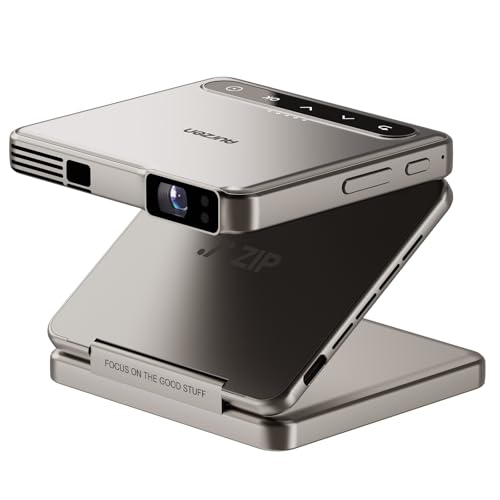
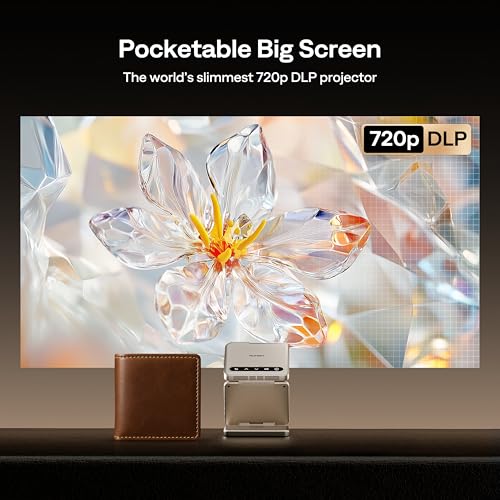
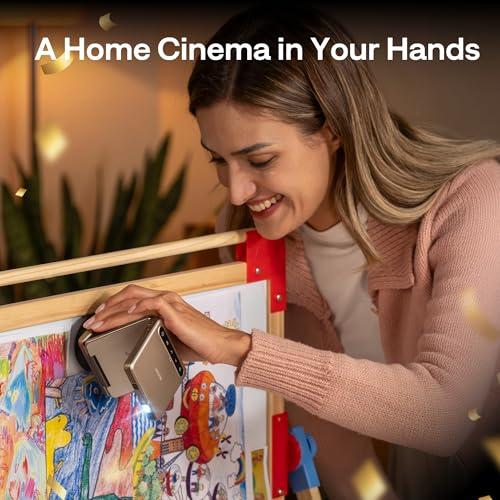
Released in 2025 after being showcased at Mobile World Congress, the Aurzen ZIP Tri-Fold represents something genuinely new in projector design. Its tri-fold, Z-shaped design allows it to fold down to just 84×78×26mm - smaller than most smartphones and weighing only 280 grams. To put that in perspective, it's lighter than an iPhone 15 Pro Max and takes up about the same pocket space as a thick wallet.
The engineering behind this miniaturization is genuinely impressive. Aurzen uses Texas Instruments' newest 0.16-inch DMD (Digital Micromirror Device) chip - the smallest ever used in a consumer projector. This tiny chip contains hundreds of thousands of microscopic mirrors that flip back and forth thousands of times per second to create the projected image. The ZIP uses XPR (pixel shifting) technology, where the chip physically shifts the projected image by half a pixel width multiple times per frame, effectively doubling the perceived resolution from the chip's native 640×360 to 720p.
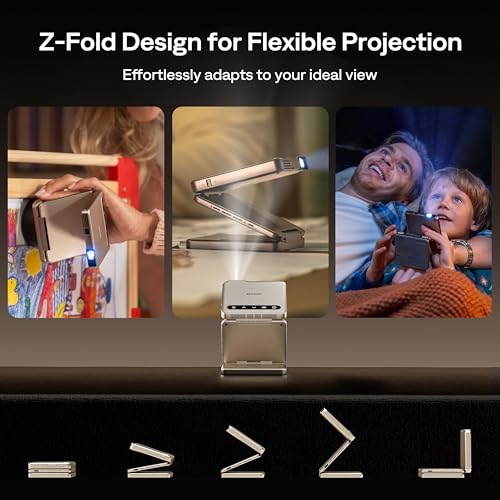
What makes the ZIP truly unique is its folding design. The Z-fold allows the projector to achieve multiple projection angles that would be impossible with traditional designs. You can literally lie on your back and project onto the ceiling, or fold it to project straight down onto a table. The integrated gimbal stand provides 180 degrees of adjustment flexibility, meaning you can set up projection scenarios that would require elaborate mounting systems with conventional projectors.
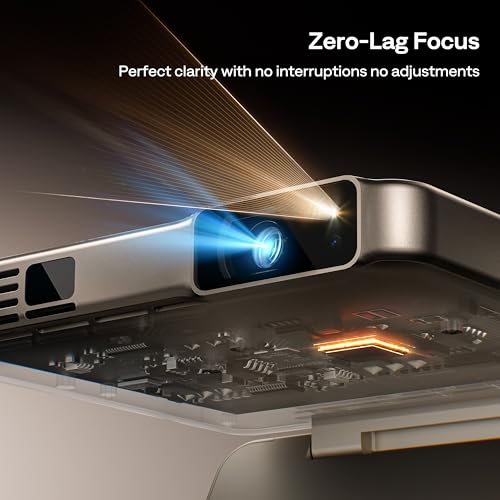
The autofocus system deserves special mention. The ZIP uses ToF (Time-of-Flight) sensors that measure distance by timing how long light takes to bounce back from the projection surface. This happens 30 times per second, providing what Aurzen calls "zero-lag" focus adjustment. In practice, this means you can move the projector around and the image stays sharp without any noticeable delay - something that would have been impressive in a full-size projector just a few years ago.
However, the ZIP's compact design comes with significant performance compromises. At 100 ANSI lumens, it's genuinely dim - about one-quarter the brightness of most budget home projectors. The 300:1 contrast ratio is also quite modest, meaning dark scenes will look somewhat washed out. Audio comes from dual 1-watt speakers that, while impressively loud for their size, can't compete with even a modest smartphone's speakers.
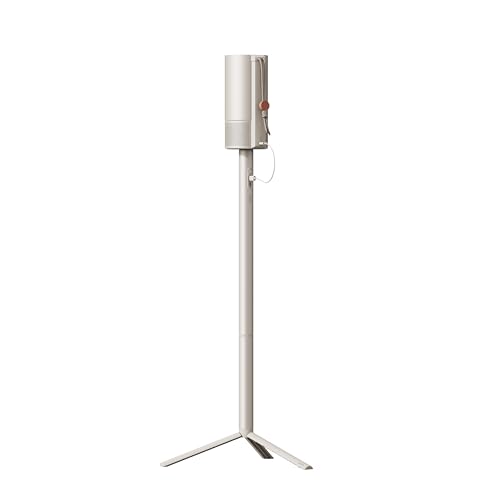
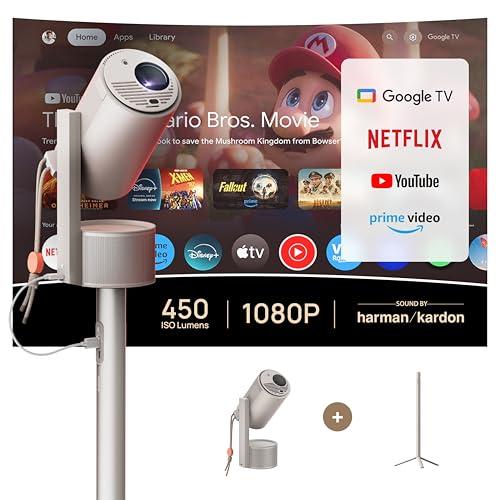
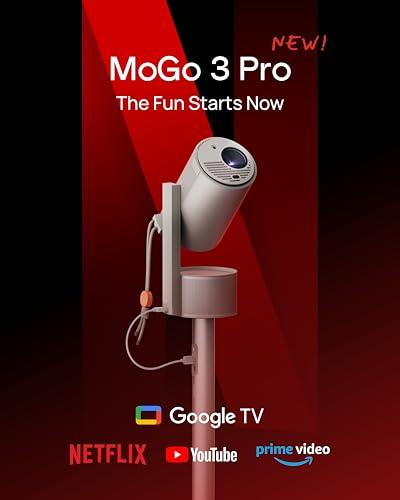
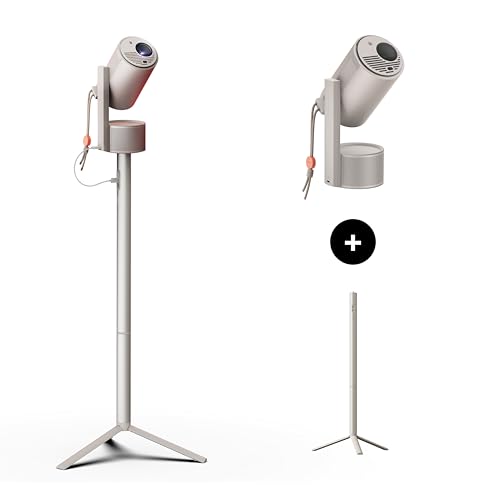
The XGIMI MoGo 3 Pro, released in late 2024, takes a completely different approach. Rather than pushing the absolute limits of miniaturization, XGIMI focused on delivering legitimate projector performance in a device that's still genuinely portable at 2.4 pounds and about the size of a large coffee cup.
The difference in image quality is immediately apparent. The MoGo 3 Pro delivers native 1080p resolution - that's 2.25 times more pixels than the ZIP's 720p. More importantly, it puts out 450 ISO lumens of brightness. ISO lumens are measured differently than ANSI lumens, but independent testing suggests the MoGo 3 Pro delivers around 394 ANSI lumens - nearly four times brighter than the ZIP.
This brightness difference is crucial for usability. While the ZIP really needs a completely dark room to look good, the MoGo 3 Pro can produce watchable images in rooms with some ambient light. It's still not bright enough for daytime viewing with curtains open, but you can leave a few lamps on and still enjoy the picture.
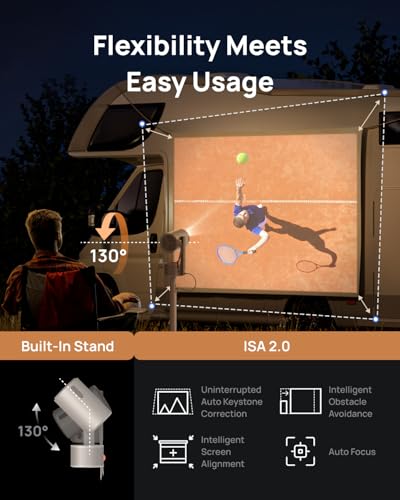
XGIMI's ISA 2.0 (Intelligent Screen Adaptation) system represents some seriously sophisticated software. Beyond basic autofocus and keystone correction (adjusting for the trapezoidal distortion you get when projecting at an angle), it includes obstacle avoidance that can actually detect and work around objects on your wall. If there's a light switch or picture frame in the projection area, the system will automatically resize and reposition the image to avoid it. This kind of intelligent adaptation was unimaginable in portable projectors until very recently.
The MoGo 3 Pro also includes dual 5-watt Harman Kardon speakers that actually sound good enough for group viewing. This might seem like a small detail, but having genuinely usable built-in audio eliminates the need to fidget with Bluetooth pairing or external speakers for casual viewing.
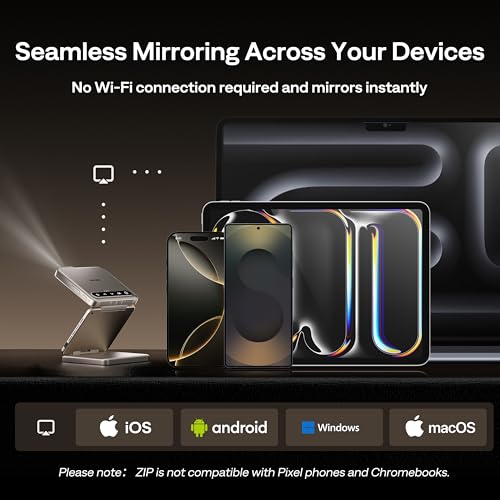
This is where the philosophical differences between these projectors become most apparent. The ZIP takes a minimalist approach - it doesn't run Android TV or have built-in streaming apps. Instead, it relies on wireless screen mirroring from your phone, tablet, or laptop using what Aurzen calls "AirLink" technology.
AirLink works without requiring a Wi-Fi network - your device connects directly to the projector. In my testing, this works surprisingly well and feels almost as seamless as connecting AirPods to a phone. However, there's a significant limitation: DRM-protected content from Netflix, Disney+, and other major streaming services won't work through screen mirroring due to content protection requirements. You'll need Aurzen's optional CastPlay wireless HDMI dongle and a streaming device to watch this content.
The MoGo 3 Pro, by contrast, runs full Google TV with official Netflix licensing - a significant achievement for XGIMI, as most projector manufacturers struggle with Netflix certification. This means you get access to the full ecosystem of streaming apps, Google Assistant voice control, and Chromecast functionality. It's essentially a complete smart TV system in projector form.
For most users, this difference will be decisive. If you primarily watch content from major streaming services, the MoGo 3 Pro's built-in smarts eliminate a lot of hassle. But if you mainly project presentations, local media files, or content from devices that don't have DRM restrictions, the ZIP's simpler approach might actually be preferable.
Having tested both projectors extensively, I can tell you that the brightness difference is more significant than the numbers suggest. Projector brightness follows a roughly logarithmic perception scale - doubling the lumens doesn't make an image look twice as bright, but going from 100 to 400 lumens creates a dramatically more usable picture.
The ZIP produces a perfectly acceptable image on a 40-50 inch screen in a completely dark room. Colors look reasonably accurate, and the 720p resolution is sharp enough for video content at normal viewing distances. However, try to go bigger than 60 inches or introduce any ambient light, and the image quickly becomes unwatchable.
The MoGo 3 Pro, meanwhile, can produce a genuinely enjoyable image on screens up to 100 inches in moderately dark rooms. The 1080p resolution makes a noticeable difference for text-heavy content like presentations or gaming, where the extra sharpness prevents eye strain.
Contrast ratio tells an interesting story too. The ZIP's 300:1 contrast means the darkest blacks are still about one-third as bright as the whitest whites - this creates a somewhat washed-out look in dark scenes. The MoGo 3 Pro doesn't publish contrast specifications, but in side-by-side testing, dark scenes look significantly more realistic with deeper blacks and better shadow detail.
Color reproduction favors the MoGo 3 Pro as well. XGIMI claims 90% DCI-P3 color gamut coverage - that's the digital cinema standard used in movie theaters. While I couldn't verify this claim precisely, colors do look noticeably more vibrant and accurate compared to the ZIP's more basic color processing.
Audio quality might seem secondary in a projector review, but it's actually crucial for the overall experience. The ZIP's dual 1-watt speakers are impressively loud for their size but sound thin and lacking in bass response. They're fine for personal viewing with the projector close by, but completely inadequate for group viewing or larger rooms.
The MoGo 3 Pro's Harman Kardon speakers are in a different league entirely. At 5 watts each, they're not just louder but produce genuinely full-range sound with actual bass response. In my testing, they're good enough that I rarely felt the need to connect external speakers for casual viewing sessions.
This audio difference significantly impacts the overall user experience. With the ZIP, you'll almost always want to pair Bluetooth headphones or speakers for serious viewing. The MoGo 3 Pro works well as a complete entertainment solution right out of the box.
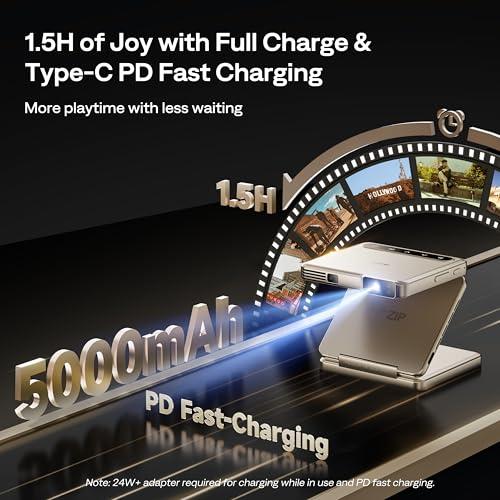
The ZIP's built-in 5000mAh battery provides about 90 minutes of viewing time - enough for most movies or a few TV episodes. More importantly, this battery is integrated into the design, so the projector works immediately without any additional accessories or setup. You can literally pull it out of your pocket and start projecting within seconds.
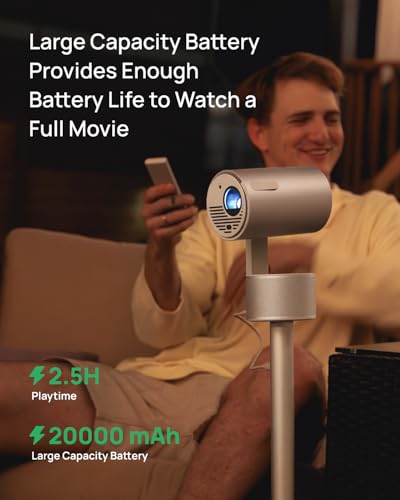
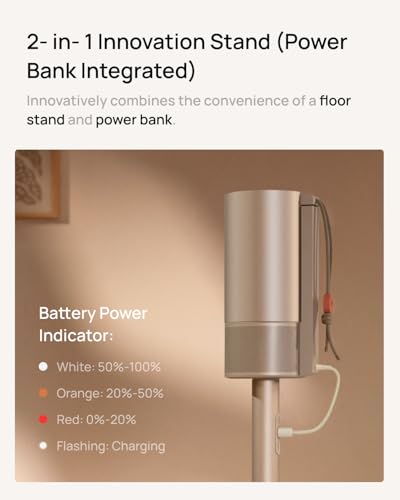
The MoGo 3 Pro takes a different approach by omitting a built-in battery entirely. This keeps the base price lower and reduces weight, but means you'll need either a wall outlet or a separate power bank for portable use. XGIMI offers an optional PowerBase accessory that adds battery power, but this increases both cost and bulk significantly.
In practice, the ZIP's integrated battery approach feels more convenient for truly portable use cases like camping or travel, where setting up external power might be challenging. The MoGo 3 Pro works better for "portable but planned" scenarios like backyard movie nights where you can arrange power beforehand.
After extensive testing, I've found distinct scenarios where each projector excels. The ZIP is genuinely revolutionary for ultra-portable applications. I've used it for presentations in conference rooms where setting up a traditional projector would be impractical, camping trips where every ounce matters, and hotel rooms where space is limited. The ability to project onto ceilings while lying in bed is surprisingly useful and something no other projector can do.
However, the ZIP struggles in situations requiring larger images or brighter environments. Group viewing becomes challenging both due to the dim image and weak audio. Gaming is possible but the 720p resolution makes text harder to read in complex interfaces.
The MoGo 3 Pro excels as a flexible home theater solution. It's bright enough for backyard movie nights, sharp enough for gaming sessions, and smart enough to replace a TV in spaces where mounting a display isn't practical. The superior audio makes it genuinely enjoyable for group viewing without additional equipment.
Where the MoGo 3 Pro falls short is in truly spontaneous or ultra-portable scenarios. At 2.4 pounds, it's not something you'd carry "just in case," and the power requirements mean you need to plan ahead for portable use.
At the time of writing, both projectors are priced competitively in the portable projector market, though the MoGo 3 Pro represents better traditional value when considering brightness and resolution per dollar. However, the ZIP offers something unique that you literally cannot get elsewhere - truly pocketable projection.
Choose the Aurzen ZIP if ultimate portability is your priority. If you need something that fits in a carry-on bag, works without external power, and can handle unusual projection scenarios, there's nothing else like it. Accept that you're trading image quality and audio performance for revolutionary convenience and unique capabilities.
Choose the XGIMI MoGo 3 Pro if you want legitimate projector performance in a portable package. If your primary use cases involve group viewing, larger screens, or replacing a traditional TV in certain situations, the dramatically better image and audio quality justify the larger size and power requirements.
Both projectors represent genuine innovations in their respective niches. The ZIP proves that meaningful miniaturization is still possible in consumer electronics, while the MoGo 3 Pro shows how much performance can be packed into a truly portable form factor. Your choice ultimately depends on whether you value revolutionary portability or conventional performance standards - but either way, you're getting something that would have been impossible just a few years ago.
| Aurzen ZIP Tri-Fold Portable Mini Projector | XGIMI MoGo 3 Pro Portable Projector |
|---|---|
| Size & Weight - Critical for true portability | |
| 84×78×26mm, 280g (fits in pocket) | 299×95×95mm, 2.4 lbs (backpack-friendly) |
| Resolution - Affects text clarity and detail | |
| 720p with pixel-shifting (adequate for video) | Native 1080p Full HD (sharp text, better gaming) |
| Brightness - Most important for room lighting flexibility | |
| 100 ANSI lumens (dark rooms only) | 450 ISO lumens (~394 ANSI, usable with ambient light) |
| Smart Features - Determines ease of streaming | |
| Wireless mirroring only, no built-in apps | Google TV with licensed Netflix, 10,000+ apps |
| Audio Quality - Important for group viewing | |
| Dual 1W speakers (personal use only) | Dual 5W Harman Kardon (room-filling sound) |
| Battery Life - Affects portable convenience | |
| 90 minutes built-in (truly cordless) | No battery (requires power bank or outlet) |
| Unique Design Features - Special capabilities | |
| Tri-fold Z-shape, ceiling projection, MagPlay mounting | 130° adjustable stand, obstacle avoidance |
| Auto-Focus Technology - Setup convenience | |
| ToF zero-lag (30x per second adjustment) | Standard autofocus with ISA 2.0 intelligence |
| Content Compatibility - Streaming limitations | |
| DRM issues with Netflix/Disney+ (needs dongle) | Full streaming support, no content restrictions |
| Best Use Cases - When each excels | |
| Travel, camping, presentations, creative mounting | Backyard movies, temporary home theater, gaming |
The Aurzen ZIP Tri-Fold is significantly smaller, measuring just 84×78×26mm and weighing only 280g - small enough to fit in your pocket like a thick wallet. The XGIMI MoGo 3 Pro is much larger at 2.4 pounds and coffee cup-sized, though still portable in a backpack. If ultimate portability is your priority, the ZIP is unmatched in its category.
The XGIMI MoGo 3 Pro delivers superior image quality with native 1080p resolution and 450 ISO lumens brightness - nearly four times brighter than the Aurzen ZIP's 100 ANSI lumens and 720p resolution. The MoGo 3 Pro produces sharper text, more vibrant colors, and works in moderately lit rooms, while the ZIP requires completely dark environments.
Yes, the XGIMI MoGo 3 Pro runs Google TV with licensed Netflix and access to 10,000+ streaming apps. The Aurzen ZIP Tri-Fold doesn't have built-in streaming apps and relies on wireless mirroring from your devices. For Netflix and Disney+, the ZIP requires an optional CastPlay dongle due to content protection restrictions.
The XGIMI MoGo 3 Pro has significantly better audio with dual 5W Harman Kardon speakers that provide room-filling sound suitable for group viewing. The Aurzen ZIP has dual 1W speakers that are adequate for personal use but too weak for larger rooms or multiple viewers. Most users will want external speakers with the ZIP.
The Aurzen ZIP Tri-Fold includes a built-in 5,000mAh battery providing about 90 minutes of viewing time, making it truly cordless. The XGIMI MoGo 3 Pro has no built-in battery and requires either a wall outlet or separate power bank for portable use, though XGIMI offers an optional PowerBase battery accessory.
For home theater applications, the XGIMI MoGo 3 Pro is the clear winner with its 1080p resolution, 4x brighter image, superior audio, and ability to project up to 120+ inches effectively. The ZIP works for personal viewing in dark bedrooms but lacks the brightness and audio quality needed for proper home theater experiences with multiple viewers.
Both projectors offer excellent auto-focus, but with different approaches. The Aurzen ZIP uses ToF (Time-of-Flight) sensors that adjust focus 30 times per second for zero-lag performance. The XGIMI MoGo 3 Pro features ISA 2.0 with intelligent obstacle avoidance that can automatically work around objects on your wall. Both systems work reliably in practice.
The XGIMI MoGo 3 Pro is better for gaming due to its 1080p resolution that makes text and UI elements much clearer, plus brighter image for better visibility. The Aurzen ZIP works for casual gaming but the 720p resolution makes small text harder to read. Both offer acceptable input lag for non-competitive gaming.
Both can work outdoors, but with limitations. The Aurzen ZIP Tri-Fold is more convenient for camping due to its built-in battery and extreme portability, but requires complete darkness. The XGIMI MoGo 3 Pro is brighter and better for backyard movie nights, but you'll need to bring external power. Neither works well in daylight conditions.
Value depends on your priorities. The Aurzen ZIP offers unique ultra-portability and innovative design that you can't get elsewhere, making it valuable for specific use cases like travel and presentations. The XGIMI MoGo 3 Pro provides much better traditional projector performance per dollar with superior brightness, resolution, and features for general use.
The Aurzen ZIP Tri-Fold produces 100 ANSI lumens, which requires a completely dark room and works best on 40-60 inch screens. The XGIMI MoGo 3 Pro outputs around 394 ANSI lumens (450 ISO lumens claimed), allowing viewing in rooms with some ambient light and supporting larger 80-120 inch screens effectively.
Choose the Aurzen ZIP Tri-Fold if ultimate portability is your priority - for travel, camping, presentations, or unique mounting scenarios where no other projector can work. Choose the XGIMI MoGo 3 Pro if you want legitimate projector performance in a portable package - for backyard movies, temporary home theater, or situations where image quality and built-in streaming matter more than extreme portability.
We've done our best to create useful and informative comparisons to help you decide what product to buy. Our research uses advanced automated methods to create this comparison and perfection is not possible - please contact us for corrections or questions. These are the sites we've researched in the creation of this article: aurzen.com - youtube.com - tomsguide.com - aurzen.com - aurzen.com - projectorcentral.com - appleinsider.com - youtube.com - aurzen.com - aurzen.com - aurzen.com - aurzen.com - projectorcentral.com - techradar.com - androidcentral.com - tvsbook.com - techradar.com - thesmarthomehookup.com - whathifi.com - youtube.com - youtube.com - projectorcentral.com - projectorcentral.com - youtube.com - global.xgimi.com - us.xgimi.com - youtube.com - us.xgimi.com - us.xgimi.com

Privacy Policy
Terms and Conditions - Affiliate Policy
Home Security
© Copyright 2008-2026.
11816 Inwood Rd #1211, Dallas, TX 75244