

When shopping for a projector in 2025, you're faced with more choices than ever before. The projector market has split into distinct categories, each serving very different needs. On one side, you have ultra-portable projectors that prioritize convenience and mobility. On the other, dedicated performance projectors focus on image quality and specialized features like gaming optimization.
Today, we're comparing two projectors that represent opposite ends of this spectrum: the Aurzen ZIP Tri-Fold Portable Mini Projector and the BenQ TH685P 1080p HDR Gaming Projector. These devices take fundamentally different approaches to projection, and understanding their strengths will help you make the right choice for your needs.
Before diving into specifics, it's worth understanding what separates different projector categories. The most important factors are brightness (measured in ANSI lumens), resolution, portability, and specialized features.
ANSI lumens measure how much light a projector actually outputs – this determines whether you can use it in a bright room or need complete darkness. Traditional home theater projectors typically range from 1,500 to 4,000+ ANSI lumens, while ultra-portable models usually max out around 200-300 lumens.
Resolution determines image sharpness. Full HD (1080p) means 1,920 × 1,080 pixels, while 720p HD contains 1,280 × 720 pixels. The difference becomes very noticeable on larger screens or when sitting closer to the projected image.
DLP technology (Digital Light Processing) uses millions of tiny mirrors on a chip to create the image. Most portable projectors use single-chip DLP, which can sometimes create a "rainbow effect" – brief flashes of color that some people notice when moving their eyes quickly across the image.
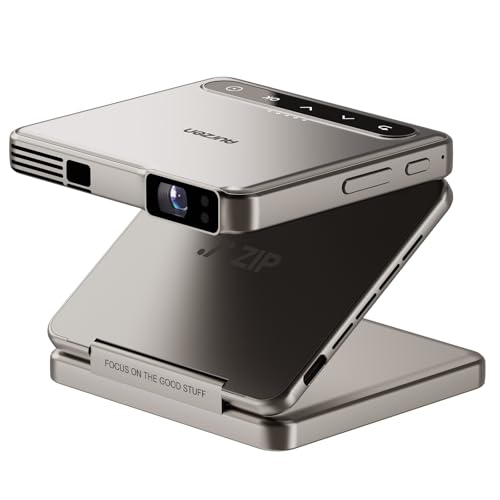
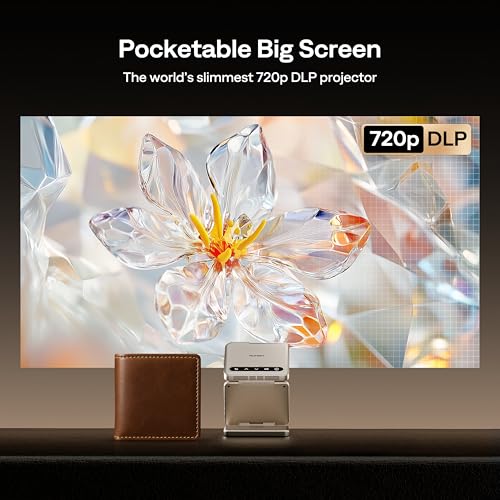
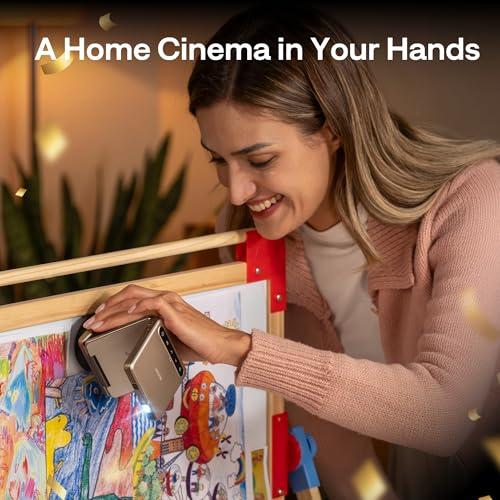
The Aurzen ZIP, introduced in 2025, represents a genuine breakthrough in portable projection. At just 280 grams and smaller than most smartphones when folded, it's the first projector I've encountered that truly fits in your pocket without compromise.
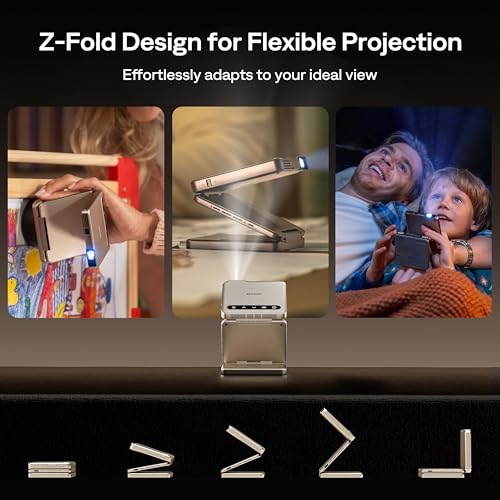
What makes the Aurzen ZIP special isn't just its size – it's the innovative tri-fold design that allows the projector to fold into a Z-shape. When I first handled one, I was genuinely surprised by how solid the hinges felt despite the compact size. The dual-hinge gimbal system lets you project at virtually any angle, including straight up at the ceiling for bedtime viewing – something I never knew I wanted until I tried it.
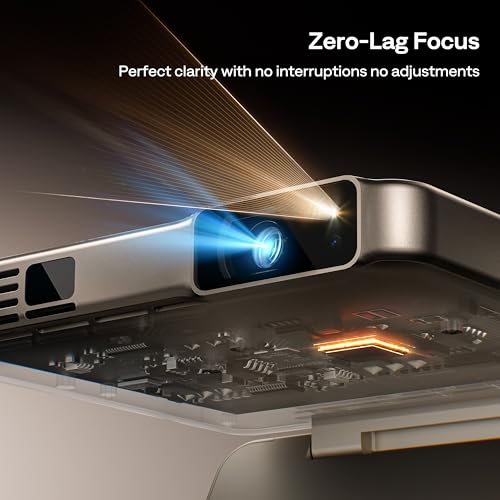
The projector uses Time-of-Flight (ToF) technology borrowed from aerospace applications. This system measures distance by timing how long it takes light to travel to the projection surface and back, doing this calculation 30 times per second. The result is automatic focus and keystone correction (straightening tilted images) that happens instantly without any input from you.
Inside the Aurzen ZIP is Texas Instruments' smallest DMD (Digital Micromirror Device) chip ever used in a consumer projector. This 0.16-inch chip uses XPR pixel-shifting technology, which rapidly moves the image to create the appearance of higher resolution. The projector achieves 720p output from a native 640×360 chip array – clever, but it means the image isn't as sharp as true 720p.
At 100 ANSI lumens, the brightness is the ZIP's biggest limitation. You absolutely need a dark room for comfortable viewing. I've tested it in various lighting conditions, and even a table lamp in the corner makes the image look washed out. However, in complete darkness, the image quality is surprisingly good for such a tiny device.
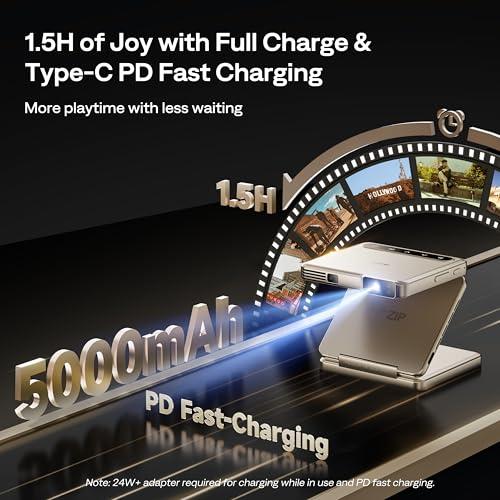
The built-in 5,000mAh battery provides about 90 minutes of viewing time. For a movie night, you'll likely need to plug it in partway through, but the projector works fine while charging via USB-C.
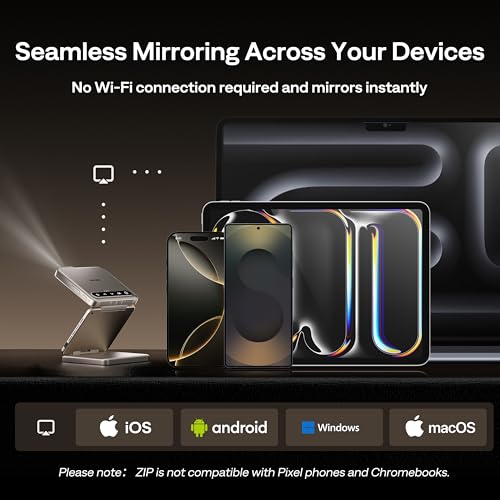
Where the Aurzen ZIP truly shines is connectivity. The AirLink wireless mirroring system works without requiring WiFi setup – you simply select the projector from your device's casting options, just like connecting Bluetooth headphones. I've found this works reliably across iOS, Android, Windows, and Mac devices.
However, there's a catch with streaming services. Due to HDCP (High-bandwidth Digital Content Protection) requirements, services like Netflix and Disney+ won't display through wireless mirroring. For these, you need the optional CastPlay dongle, which adds wireless HDMI capability.
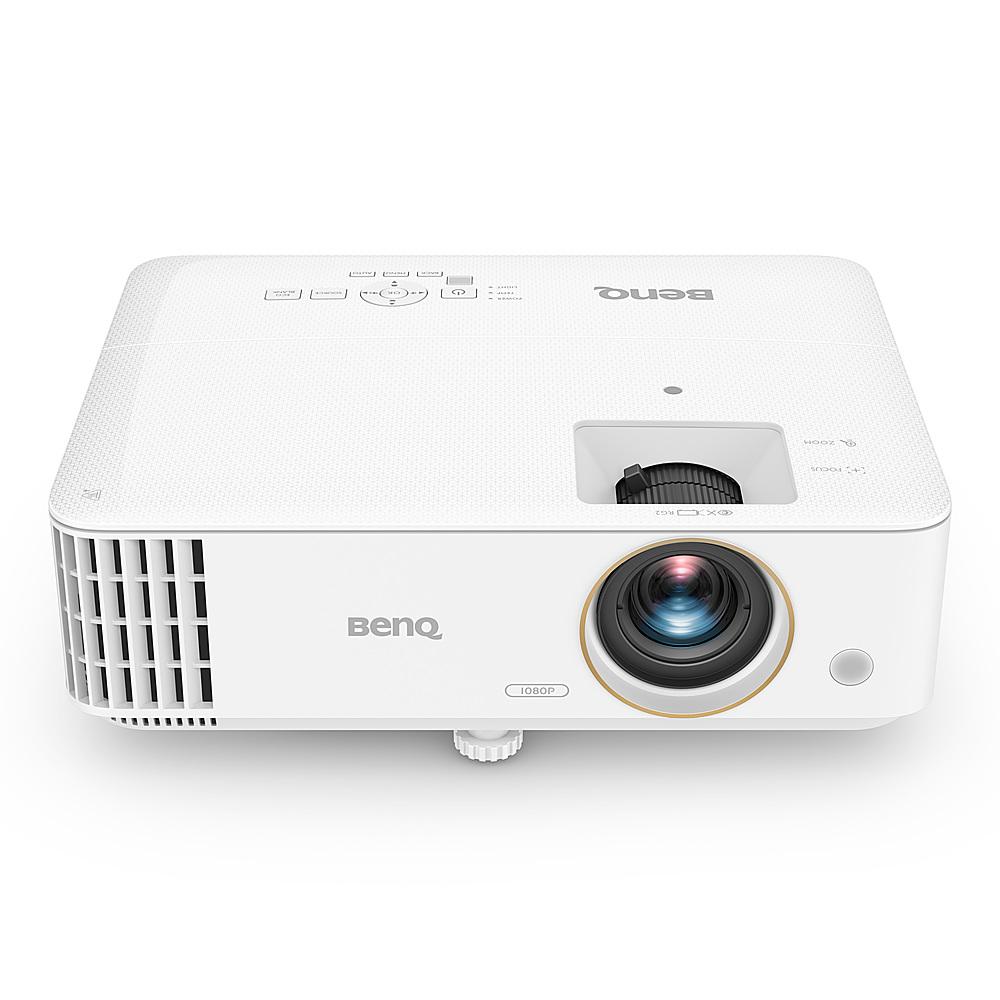
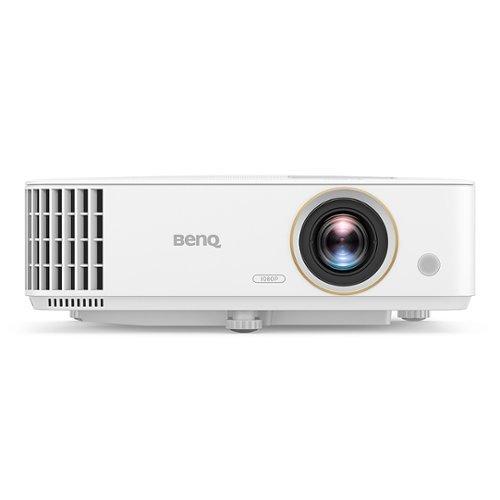
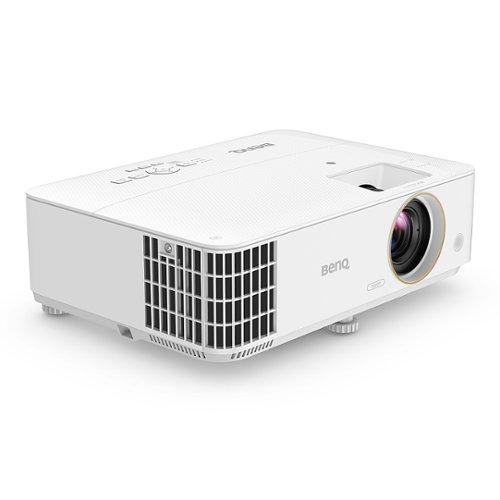
The BenQ TH685P, released in 2022, takes a completely different approach. Rather than maximizing portability, it focuses on delivering the performance serious gamers demand.
Input lag – the delay between pressing a button and seeing the result on screen – is crucial for competitive gaming. The TH685P achieves an exceptional 8.3ms input lag at 1080p/120Hz, which puts it among the fastest projectors available. For comparison, many TVs have 15-30ms input lag, and the difference is noticeable in fast-paced games.
The projector supports 120Hz refresh rates, meaning it can display 120 frames per second when connected to capable consoles like the PS5 or Xbox Series X. This results in smoother motion, especially important for first-person shooters or racing games.
Game Mode enhances shadow detail, making it easier to spot enemies hiding in dark corners – a feature I've found genuinely helpful in competitive games. The dedicated Game Sound Mode optimizes the built-in 5W speaker for gaming audio, though serious gamers will still want external speakers or headphones.
At 3,500 ANSI lumens, the BenQ TH685P is 35 times brighter than the Aurzen ZIP. This massive difference means you can use it in rooms with ambient lighting – something impossible with ultra-portable projectors. I've successfully used similar brightness projectors for afternoon gaming sessions with blinds open.
The native 1080p resolution delivers genuinely sharp images, especially noticeable when displaying text or fine details in games. HDR10 and HLG support expand the color range and contrast, making bright explosions more impactful and dark scenes more atmospheric.
Rec.709 color coverage at 95% means colors are reproduced accurately according to broadcast standards. While this might sound technical, it translates to more natural-looking skin tones and more vibrant, accurate colors overall.
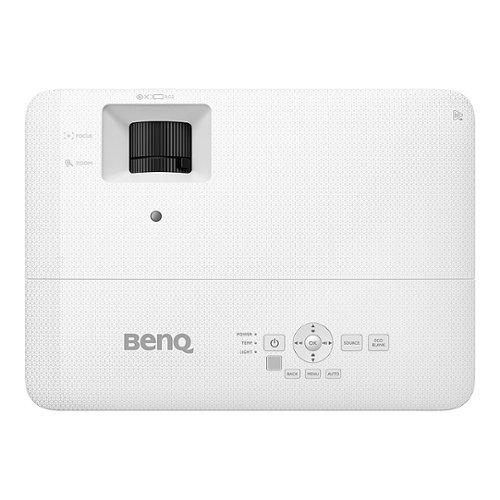
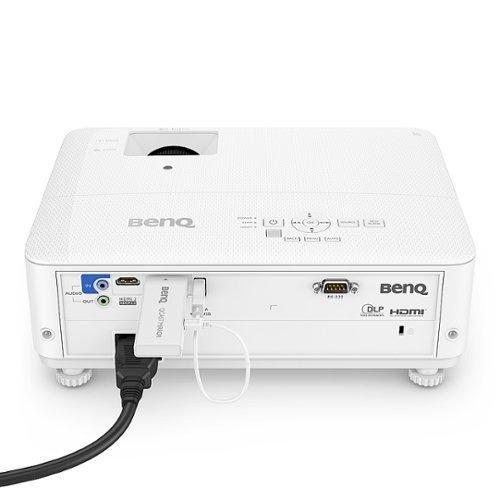
The trade-off for all this performance is convenience. At 6.2 pounds, the TH685P needs a dedicated setup space. It requires mains power, manual focus adjustment, and traditional cable connections through dual HDMI ports.
The 1.3x zoom lens provides some installation flexibility, and you can project images from 30 to 300 inches diagonal. The manual focus ring requires fine-tuning, but once set up properly, the image remains sharp and stable.
The brightness difference between these projectors fundamentally determines where you can use them. The TH685P's 3,500 ANSI lumens allows viewing in family rooms with some ambient light, while the ZIP's 100 lumens restricts you to darkened bedrooms, basements, or outdoor evening use.
In practical terms, I can comfortably watch the TH685P during daytime with curtains drawn, but the Aurzen ZIP requires lights-off viewing for an enjoyable experience. This difference significantly impacts when and where you can use each projector.
For gaming, the BenQ TH685P is clearly superior. The combination of low input lag, high refresh rates, and bright, sharp images creates an optimal gaming experience. The Aurzen ZIP can certainly display games, but you're limited to 60Hz refresh rates and lower resolution.
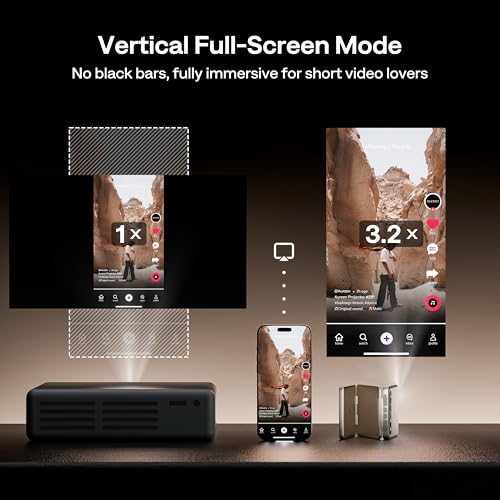
However, the ZIP offers unique gaming scenarios. Its portrait mode support makes it interesting for mobile gaming, and the ability to project onto a ceiling opens up creative possibilities for certain games.
The resolution difference becomes most apparent with text, detailed user interfaces, or when sitting close to large projected images. The TH685P's true 1080p resolution displays crisp text and fine details, while the ZIP's pixel-shifted 720p can appear softer, especially on screens larger than 50 inches.
For casual movie watching at moderate sizes, the difference is less critical. But for productivity tasks, presentations, or detailed gaming, the higher resolution is valuable.
If you're building a dedicated home theater room, the BenQ TH685P is the better choice. Its brightness allows for controlled lighting rather than complete darkness, and the image quality supports the large screen sizes that make home theater compelling.
The projector's 15,000-hour lamp life (in eco mode) provides years of reliable service. Professional installation is straightforward, and the manual controls allow for precise image adjustment.
The Aurzen ZIP serves a different home theater vision – one focused on flexibility rather than dedicated spaces. Its ceiling projection capability creates unique viewing experiences, like watching movies in bed or projecting onto any available wall space.
For apartment dwellers or those without dedicated theater rooms, the ZIP's portability allows you to create temporary theater experiences wherever convenient.
At the time of writing, these projectors occupy different price tiers, with the Aurzen ZIP positioned as a premium portable device and the BenQ TH685P as a mid-range gaming projector.
The ZIP commands a premium for its innovative design and unprecedented portability. You're paying for engineering miniaturization and the convenience of truly portable projection. For users who value mobility and novel experiences, this premium makes sense.
However, from a pure performance perspective, the brightness and resolution limitations mean you're sacrificing image quality for portability. The value proposition depends entirely on how much you value convenience over performance.
The TH685P offers strong value in the gaming projector category. Its low input lag, high brightness, and solid image quality compete favorably with more expensive gaming projectors.
The 3-year warranty and established BenQ service network add value for long-term ownership. While it lacks the innovation factor of the Aurzen ZIP, it delivers proven performance at a reasonable price point.
The projector industry has evolved rapidly since 2020. LED light sources have largely replaced traditional lamps in portable projectors, offering longer life and instant on/off capability. Wireless connectivity has become standard, and miniaturization continues advancing.
The Aurzen ZIP represents the cutting edge of miniaturization, using the latest DMD chips and advanced LED technology. However, fundamental physics limits how bright such small projectors can be while maintaining reasonable battery life.
Gaming projectors like the TH685P have focused on reducing input lag and supporting higher refresh rates to match modern console capabilities. This trend will likely continue as 4K/120Hz becomes more common.
You prioritize portability above all else. This projector excels for travel, presentations on-the-go, outdoor movie nights, or creative projection setups. The instant setup and wireless connectivity make it ideal for spontaneous use.
Perfect for: Digital nomads, frequent travelers, apartment dwellers, students, anyone who values convenience and unique experiences over maximum image quality.
Best scenarios: Hotel room entertainment, backyard movie nights, bedroom ceiling projection, impromptu presentations, van life setups.
You want serious gaming performance and don't mind a traditional setup. The superior brightness, resolution, and gaming features create a compelling large-screen experience.
Perfect for: Serious gamers, home theater enthusiasts, families wanting reliable entertainment, businesses needing bright presentation capability.
Best scenarios: Dedicated gaming setups, family movie nights, basement theaters, conference room presentations, any situation where image quality matters more than portability.
Both projectors excel in their intended roles, but they serve fundamentally different needs. The Aurzen ZIP Tri-Fold revolutionizes portable projection with its innovative design and convenience features, while the BenQ TH685P delivers superior performance for gaming and traditional home theater use.
Your choice ultimately depends on lifestyle fit. If you're drawn to the ZIP's unique capabilities and accept its limitations, it offers experiences no other projector can provide. If you prioritize image quality and gaming performance, the TH685P delivers proven excellence.
Consider your primary use case, viewing environment, and performance requirements. Both projectors represent excellent execution of their respective visions – the decision comes down to which vision better matches your needs.
| Aurzen ZIP Tri-Fold Portable Mini Projector | BenQ TH685P 1080p HDR Gaming Projector |
|---|---|
| Resolution - Determines image sharpness and text clarity | |
| 720p (1280×720) with pixel shifting | Native 1080p (1920×1080) |
| Brightness - Critical for ambient light tolerance | |
| 100 ANSI lumens (dark room required) | 3,500 ANSI lumens (works in lit rooms) |
| Portability - Impacts where and how you can use it | |
| 280g, tri-fold design fits in pocket | 6.2 lbs, requires dedicated setup space |
| Power Source - Affects usage flexibility | |
| 5,000mAh battery (90 minutes runtime) | Mains power only (unlimited runtime) |
| Gaming Performance - Input lag determines competitive gaming viability | |
| 60Hz max, input lag not specified | 8.3ms input lag, 120Hz support |
| Setup Convenience - Time from box to viewing | |
| Instant auto-focus and keystone correction | Manual focus and positioning required |
| Connectivity - Modern wireless vs traditional wired | |
| Wi-Fi-free wireless mirroring, Bluetooth 5.4 | Dual HDMI 2.0, VGA, USB ports |
| HDR Support - Enhanced color depth and contrast | |
| No HDR support | HDR10 and HLG support |
| Audio Quality - Built-in speaker performance | |
| Dual 1W speakers | 5W chambered speaker with Game Mode |
| Projection Flexibility - Unique positioning capabilities | |
| 180° gimbal allows ceiling/wall/floor projection | Traditional forward projection only |
| Screen Size Range - Optimal viewing dimensions | |
| 40-60 inches recommended (up to 80") | 30-300 inches supported |
| Lamp Life - Long-term reliability and maintenance | |
| 20,000 hours LED (no replacement needed) | 15,000 hours (LampSave mode) |
| DRM Content Support - Netflix, Disney+ compatibility | |
| Requires optional CastPlay dongle | Works with any HDMI source |
| Best Use Case - Where each projector excels | |
| Travel, spontaneous viewing, unique setups | Gaming, home theater, bright room viewing |
The BenQ TH685P is significantly better for gaming with its 8.3ms input lag at 1080p/120Hz and dedicated Game Mode features. The Aurzen ZIP Tri-Fold can display games but lacks the low latency and high refresh rates that serious gamers need for competitive play.
The BenQ TH685P delivers much sharper images with native 1080p resolution and 3,500 ANSI lumens brightness, while the Aurzen ZIP offers 720p resolution with only 100 ANSI lumens. This means the BenQ works in lit rooms while the Aurzen requires darkness.
The Aurzen ZIP Tri-Fold Portable Mini Projector is dramatically more portable at just 280g with a unique folding design that fits in your pocket. The BenQ TH685P weighs 6.2 pounds and requires a dedicated setup space with power outlets.
The BenQ TH685P works with any HDMI streaming device without restrictions. The Aurzen ZIP requires an optional CastPlay dongle for DRM-protected content like Netflix and Disney+ due to wireless mirroring limitations.
For dedicated home theater setups, the BenQ TH685P is superior with its bright 3,500 ANSI lumens, 1080p resolution, and HDR support that work well on large screens. The Aurzen ZIP is better for flexible, casual viewing in bedrooms or temporary setups.
Yes, the Aurzen ZIP requires complete darkness due to its 100 ANSI lumens output, while the BenQ TH685P can work in rooms with ambient lighting thanks to its much brighter 3,500 ANSI lumens projection.
The Aurzen ZIP Tri-Fold excels in wireless connectivity with Wi-Fi-free screen mirroring that works instantly across iOS, Android, Windows, and Mac devices. The BenQ TH685P relies on traditional wired HDMI connections and lacks built-in wireless features.
The Aurzen ZIP has a built-in 5,000mAh battery providing about 90 minutes of runtime, while the BenQ TH685P requires constant mains power connection and has no battery operation capability.
Value depends on your priorities: the Aurzen ZIP Tri-Fold offers exceptional portability and convenience features, while the BenQ TH685P provides superior image quality and gaming performance. Consider whether you value mobility or performance more.
The BenQ TH685P supports HDR10 and HLG formats for enhanced color depth and contrast. The Aurzen ZIP does not support HDR content, limiting its color reproduction capabilities compared to modern displays.
The Aurzen ZIP Tri-Fold Portable Mini Projector wins for ease of use with instant auto-focus, automatic keystone correction, and wireless connectivity that requires no configuration. The BenQ TH685P requires manual focus adjustment and traditional cable connections.
The BenQ TH685P supports projection sizes from 30 to 300 inches and works well at larger sizes due to its brightness and resolution. The Aurzen ZIP is optimized for 40-60 inch screens, though it can project up to 80 inches in very dark conditions.
We've done our best to create useful and informative comparisons to help you decide what product to buy. Our research uses advanced automated methods to create this comparison and perfection is not possible - please contact us for corrections or questions. These are the sites we've researched in the creation of this article: aurzen.com - youtube.com - tomsguide.com - aurzen.com - aurzen.com - projectorcentral.com - appleinsider.com - youtube.com - aurzen.com - aurzen.com - aurzen.com - aurzen.com - youtube.com - projectorcentral.com - androidguys.com - bhphotovideo.com - techradar.com - newegg.com - projectorcentral.com - cnet.com - staples.com - cdw.com - youtube.com - shi.com - touchboards.com - projectorcentral.com - youtube.com - iconicmicro.com - adorama.com - publicsector.shidirect.com - adorama.com

Privacy Policy
Terms and Conditions - Affiliate Policy
Home Security
© Copyright 2008-2026.
11816 Inwood Rd #1211, Dallas, TX 75244