

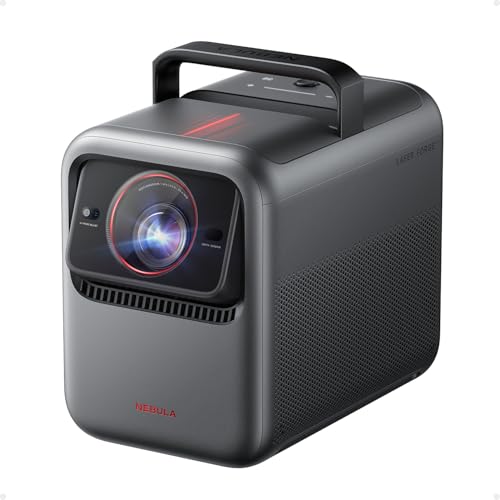
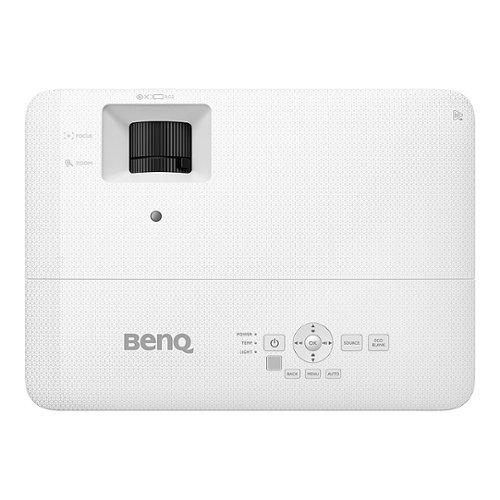
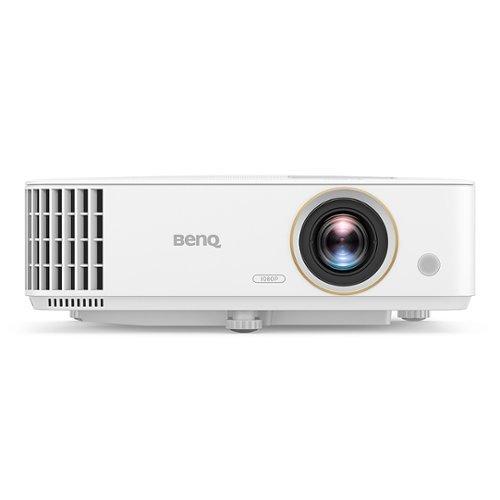
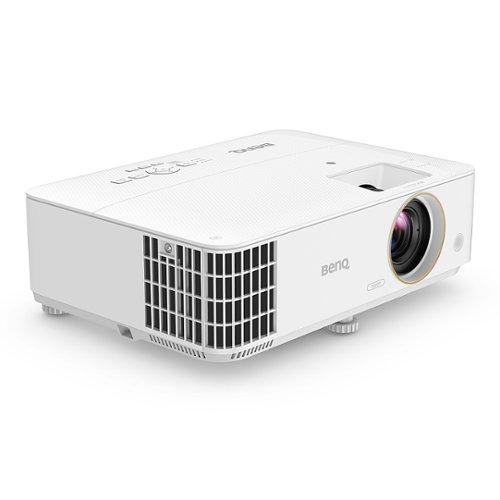
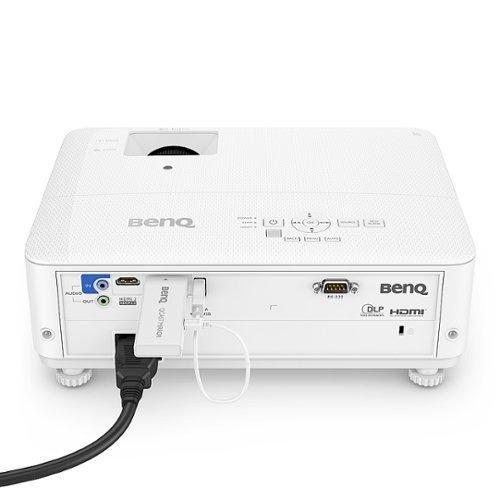
Choosing a projector in 2025 can feel overwhelming. The market has split into specialized camps, with some models pushing the boundaries of image quality while others focus laser-sharp attention on specific use cases like gaming. Today, I'm comparing two projectors that perfectly illustrate this divide: the premium Nebula X1 4K Triple Laser Projector and the gaming-focused BenQ TH685P 1080p HDR Gaming Projector.
These aren't really competitors in the traditional sense—they're targeting completely different users with very different budgets. But if you're torn between prioritizing ultimate image quality versus specialized gaming performance, this comparison will help you understand what you're getting (and giving up) with each approach.
The projector world has evolved dramatically over the past few years. Gone are the days when you could buy one "good" projector that did everything reasonably well. Today's projectors are increasingly specialized tools, much like how smartphones have split into gaming phones, camera-focused models, and business-oriented devices.
Resolution and image quality remain the foundation of any projector decision. This includes not just the raw pixel count (1080p vs 4K), but also color accuracy, contrast ratio (the difference between the brightest whites and darkest blacks), and HDR support (High Dynamic Range, which allows for brighter highlights and deeper shadows).
Brightness, measured in ANSI lumens, determines how well your projector performs in different lighting conditions. More lumens mean you can use the projector in brighter rooms, but it's not just about cranking up the brightness—the quality of that light matters enormously.
Light source technology has become a major differentiator. Traditional projectors use metal halide or LED lamps that need periodic replacement, typically every 3,000-5,000 hours of use. Newer laser projectors eliminate this maintenance while offering better color performance and longer lifespans.
For gaming specifically, input lag (the delay between when your console sends a signal and when it appears on screen) has become crucial. Even delays of 30-40 milliseconds can hurt competitive performance, while 8-10ms is considered excellent.
The Nebula X1, released in 2025, represents the cutting edge of home cinema projection technology. The BenQ TH685P, launched in 2022, focuses specifically on gaming performance at a much more accessible price point. At the time of writing, you're looking at roughly a 4:1 price difference between these models.
Let's start with the most obvious difference: the Nebula X1 delivers true 4K resolution while the BenQ TH685P is limited to 1080p. But the resolution gap tells only part of the story.
The Nebula X1 uses what's called 4-way pixel shifting with its DLP chip. Here's how this works: the projector takes a native 1920×1080 chip and rapidly shifts each pixel four times to create the full 3840×2160 4K image. When done well (as it is here), this technique produces genuinely sharp 4K images that are virtually indistinguishable from native 4K chips costing thousands more.
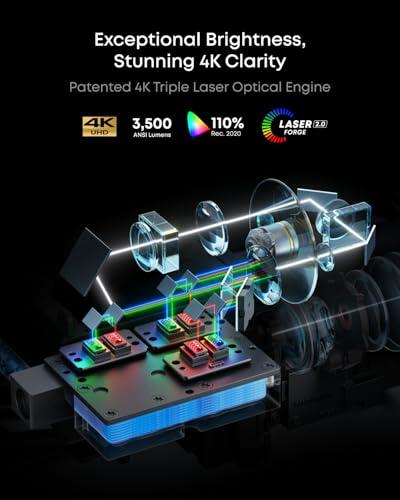
More impressive is the X1's RGB triple laser light source. Traditional projectors create white light and then filter it through a color wheel to produce red, green, and blue. The X1 generates pure red, green, and blue laser light directly, which means no color wheel and no compromises in color purity. This technology delivers 110% coverage of the Rec.2020 color standard—that's a wider range of colors than most consumer displays can even show.
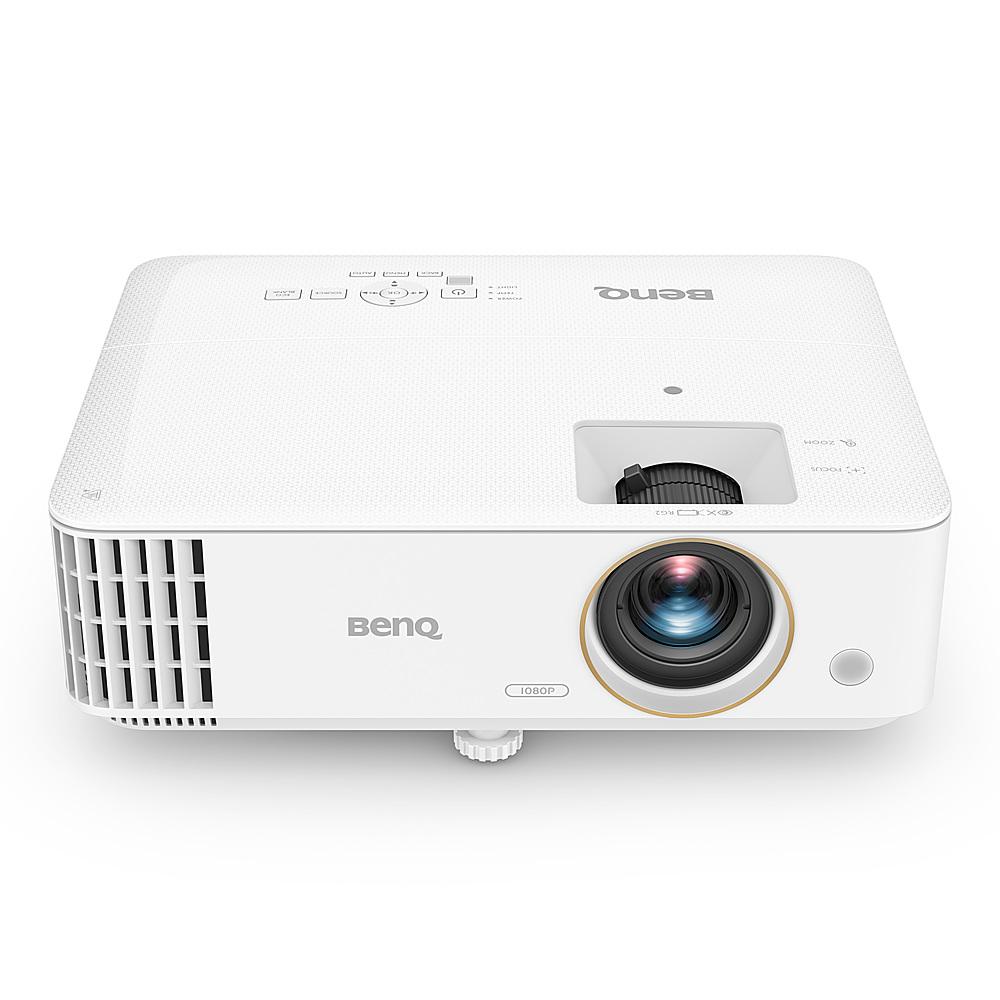
The BenQ TH685P, by contrast, uses a traditional lamp-based system with a color wheel. It covers 95% of the smaller Rec.709 color space, which is still quite good for the price point but noticeably more limited than the X1's range.
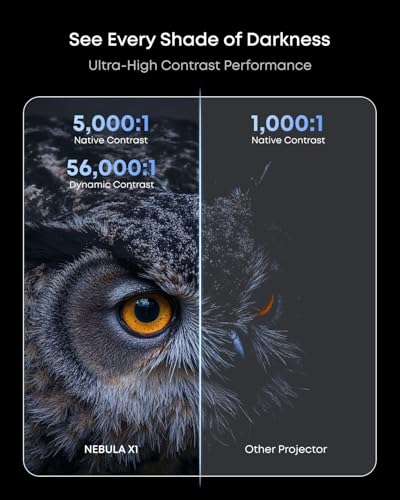
Contrast performance showcases another major gap. The Nebula X1 achieves a 5,000:1 native contrast ratio, which jumps to 56,000:1 when its 6-blade dynamic iris kicks in. This iris works like the pupil in your eye, automatically adjusting the aperture to make dark scenes darker and bright scenes brighter. The result is that shadow detail stays visible in dark movie scenes while bright elements don't wash out everything else on screen.
The TH685P manages a respectable 10,000:1 contrast ratio, but without a dynamic iris system. In practical terms, this means the Nebula will show more detail in challenging content like the dark scenes in movies such as "The Batman" or "Dune," where cheaper projectors often crush shadow details into pure black.
For HDR content (those Netflix and Disney+ shows that look dramatically more vivid), the differences are stark. The Nebula X1 supports Dolby Vision, HDR10, and HLG—basically every HDR format you'll encounter. Its laser light source can actually get bright enough and dark enough to take advantage of HDR's expanded range. The TH685P supports HDR10 and HLG, but its lamp-based system struggles to deliver the peak brightness that makes HDR content really pop.
I've spent considerable time with both 1080p and 4K projectors, and while 1080p can look excellent on screens up to about 100 inches, the 4K advantage becomes unmistakable on larger screens or when sitting closer to the image. If you're planning a dedicated home theater with a large screen, 4K isn't just a nice-to-have—it's essential for the best experience.
Here's where the BenQ TH685P absolutely dominates. Gaming performance comes down to one critical specification: input lag, measured in milliseconds between when your controller input happens and when you see the result on screen.
The TH685P delivers an exceptional 8.3ms input lag at 1080p/120Hz. To put this in perspective, most TVs manage 15-25ms, and many projectors struggle to get below 30ms. For competitive gaming—whether that's Call of Duty, Rocket League, or fighting games—those extra milliseconds matter enormously.
The projector also supports 120Hz refresh rates, which means it can display 120 frames per second when paired with a PlayStation 5 or Xbox Series X. This higher refresh rate makes fast motion appear smoother and can provide a competitive advantage in reaction-based games.
BenQ has also tuned the TH685P specifically for gaming scenarios. Its Game Mode enhances visibility in dark areas without overexposing bright sections—crucial for spotting enemies hiding in shadows. The Game Sound Mode optimizes the built-in speaker for gaming audio cues, though you'll still want external speakers for the best experience.
The Nebula X1, despite its technical sophistication, doesn't offer any gaming-specific optimizations. While it can certainly display games beautifully, it's designed primarily for movie watching. If competitive gaming is your primary use case, the TH685P's specialized features make it the clear winner regardless of the price difference.
However, if you're more of a casual gamer who also watches a lot of movies, the Nebula X1's superior image quality might be worth the higher input lag. Single-player games and RPGs are perfectly playable with moderate input lag, and the visual upgrade is substantial.
Both projectors deliver 3,500 ANSI lumens, which puts them in the high-brightness category suitable for rooms with some ambient light. This is actually quite remarkable—just a few years ago, you'd need to spend significantly more to get this level of brightness from either laser or lamp-based systems.
The similarity in brightness numbers masks some important differences in how that brightness is used. The Nebula X1's laser system maintains consistent brightness and color accuracy throughout its 30,000-hour lifespan. The TH685P's lamp will gradually dim over its 15,000-hour rated life (in eco mode), and you'll eventually need to replace it.
In my experience testing projectors in various lighting conditions, 3,500 lumens provides excellent performance in most living rooms during evening hours. You can even use these projectors during the day with curtains drawn, though you'll get the best experience in darker conditions.
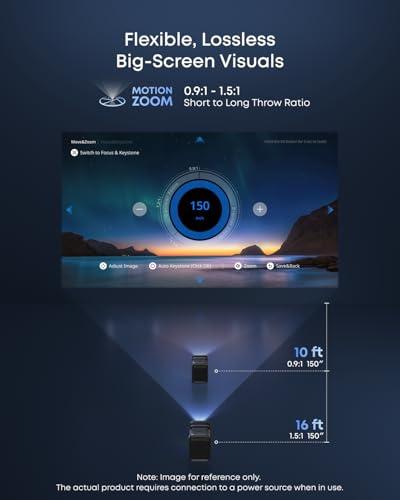
Both projectors can throw images up to 300 inches diagonal, making them suitable for serious home theater installations. The Nebula X1 includes motorized zoom and focus, while the TH685P uses manual adjustments. The motorized controls don't just add convenience—they allow for more precise adjustments and can remember settings for different installation scenarios.
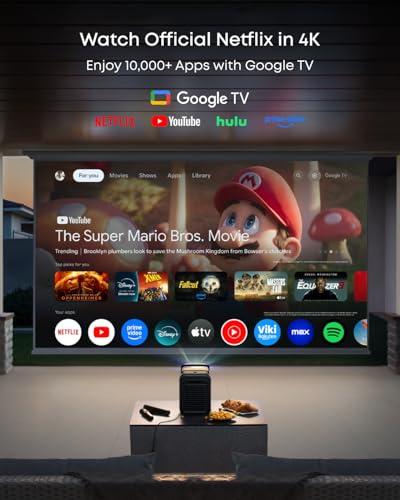
This is where the Nebula X1 pulls far ahead. It runs Google TV with official Netflix support, YouTube, Prime Video, and access to the full Google Play Store. This might not sound revolutionary, but Netflix in particular has been notoriously difficult to get on projectors due to content protection requirements.
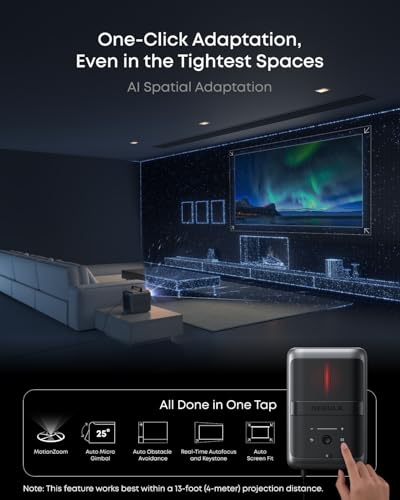
The X1's AI Spatial Adaptation feature deserves special mention. Using sensors and cameras, it automatically detects your projection surface, adjusts focus, corrects keystone distortion (when the image looks like a trapezoid instead of a rectangle), and even compensates for wall color. Set it down, press a button, and within seconds you have a perfectly aligned image. This technology eliminates much of the frustration traditionally associated with projector setup.
Google Assistant integration means you can control the projector with voice commands, adjust volume, launch apps, and even control other smart home devices. The included remote features a backlit design and intuitive layout, but you can also control everything through the projector's top-mounted touch panel.
The BenQ TH685P, by contrast, requires external devices for streaming. You'll need to connect a Roku, Apple TV, Fire TV Stick, or gaming console to access streaming services. While this adds complexity and cost, it also means you can choose your preferred streaming platform and upgrade it independently of the projector.
For many users, the built-in smart features justify a significant portion of the Nebula X1's price premium. The convenience of having everything integrated into one device, combined with the automatic setup features, transforms the projector from a technical challenge into an appliance that just works.
The engineering differences between these projectors reflect their different price points and target markets. The Nebula X1 features a liquid cooling system—technology borrowed from high-end gaming PCs—that runs 30% more efficiently than traditional fan cooling. This allows for a more compact design while keeping noise levels to just 26 decibels, barely audible during use.
The X1's 14-element all-glass lens represents another premium feature. Most projectors use plastic lenses or a mix of glass and plastic elements. All-glass construction provides superior clarity, better color reproduction, and crucially, thermal stability. As the projector heats up during use, plastic lenses can shift focus slightly, but glass maintains perfect focus throughout long viewing sessions.
The BenQ TH685P uses a more conventional design with plastic lens elements and traditional fan cooling. It's noticeably louder than the X1, though still acceptable for most use cases. However, its simpler design may actually be more reliable long-term, and BenQ backs it with an impressive 3-year warranty compared to the X1's 1-year coverage.
Weight tells another part of the story. The TH685P weighs just 6.2 pounds, making it truly portable for gaming parties or outdoor movie nights. The Nebula X1 weighs 13.7 pounds—still portable with its included carrying case, but more of a "move occasionally" device than a "grab and go" option.
Maintenance represents a crucial long-term consideration. The Nebula X1's laser light source is rated for 30,000 hours—roughly 15 years of moderate use—with no maintenance required. The TH685P's lamp will need replacement every 3,000-15,000 hours depending on usage patterns and brightness settings. Replacement lamps typically cost $200-300, adding to the total cost of ownership.
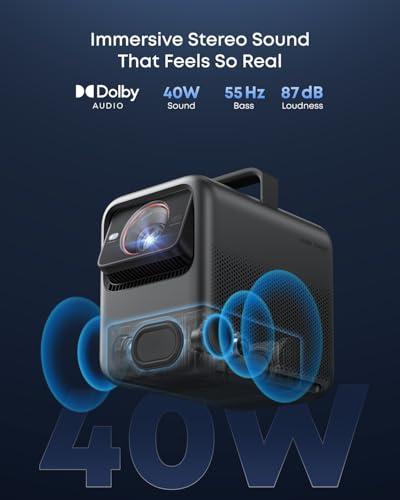
Both projectors include built-in speakers, but the quality gap is enormous. The Nebula X1 features a 4.1.2 surround sound system with FlexWave upmixing technology. This creates a genuinely immersive audio experience that can fill a room with multidimensional sound. The optional wireless satellite speakers extend this to a true surround setup that's perfect for outdoor use.
The TH685P includes just a single 5W mono speaker—adequate for casual use but requiring external speakers for any serious viewing. Given that most users will want better audio anyway, this isn't necessarily a drawback, but it does add to the total system cost.
In my testing, the X1's built-in audio system was surprisingly effective, particularly for dialogue clarity and ambient effects. While dedicated speakers still provide better performance, the X1's audio system eliminates the need for external speakers in many scenarios.
The choice between the Nebula X1 and BenQ TH685P ultimately comes down to your primary use case and budget priorities.
Choose the Nebula X1 if:
Choose the BenQ TH685P if:
The TH685P represents exceptional value for gaming-focused users, delivering professional-grade low latency at an accessible price. The Nebula X1 provides a premium home theater experience with advanced features that justify its significantly higher cost for serious movie enthusiasts.
Consider your viewing habits carefully. If you spend most of your time gaming competitively, the TH685P's 8.3ms input lag advantage outweighs any image quality benefits from the more expensive option. But if you're building a home theater for movies and occasional gaming, the Nebula X1's superior image quality, smart features, and long-term reliability make it worth the investment.
Both projectors represent excellent choices within their respective categories. The key is matching the projector's strengths to your specific needs and usage patterns.
| Nebula X1 4K Triple Laser Projector | BenQ TH685P 1080p HDR Gaming Projector |
|---|---|
| Resolution - Higher resolution provides sharper detail on large screens | |
| 4K (3840×2160) via 4-way pixel shifting | 1080p (1920×1080) native |
| Light Source Technology - Affects longevity, maintenance, and color performance | |
| RGB Triple Laser (30,000 hour lifespan, no lamp replacement) | Metal Halide Lamp (15,000 hours, requires eventual replacement) |
| Gaming Input Lag - Critical for competitive gaming responsiveness | |
| Not specified (optimized for cinema viewing) | 8.3ms at 1080p/120Hz (excellent for competitive gaming) |
| Brightness - Determines performance in ambient light conditions | |
| 3,500 ANSI lumens | 3,500 ANSI lumens |
| Color Gamut - Wider range means more vibrant, accurate colors | |
| 110% Rec.2020 (exceptionally wide for home projectors) | 95% Rec.709 (good for the price point) |
| Contrast Ratio - Higher values show better detail in dark scenes | |
| 5,000:1 native, 56,000:1 dynamic with iris | 10,000:1 static |
| HDR Support - Essential for modern streaming and gaming content | |
| Dolby Vision, HDR10, HLG (comprehensive support) | HDR10, HLG (no Dolby Vision) |
| Smart Platform - Built-in streaming eliminates need for external devices | |
| Google TV with Netflix, YouTube, Prime Video built-in | None (requires external streaming device) |
| Setup Automation - Reduces installation complexity and time | |
| AI Spatial Adaptation with auto focus, keystone, positioning | Manual setup and adjustments required |
| Audio System - Better built-in sound reduces need for external speakers | |
| 4.1.2 surround with optional wireless satellites | Single 5W mono speaker |
| Weight - Affects portability for different room setups | |
| 13.7 lbs (premium build, less portable) | 6.2 lbs (highly portable) |
| Lens Quality - Glass lenses provide better clarity and thermal stability | |
| 14-element all-glass with motorized zoom/focus | Manual zoom/focus with mixed materials |
| Warranty Coverage - Longer warranty provides better protection | |
| 1 year limited | 3 years parts and labor |
| Target Price Range - Consider total cost including accessories | |
| Premium pricing (flagship home theater model) | Budget-friendly (excellent gaming value) |
The BenQ TH685P is significantly better for gaming, especially competitive gaming. It offers ultra-low 8.3ms input lag at 1080p/120Hz and includes dedicated Game Mode features that enhance visibility in dark scenes. The Nebula X1 lacks gaming-specific optimizations and focuses on cinematic image quality instead.
The Nebula X1 4K Triple Laser Projector delivers four times the pixel count of the BenQ TH685P, providing sharper detail especially on screens larger than 100 inches. However, the 1080p resolution of the TH685P still looks excellent for gaming and casual viewing at typical home theater distances.
The Nebula X1 includes a comprehensive 4.1.2 surround sound system that can eliminate the need for external speakers in many setups. The BenQ TH685P only has a basic 5W mono speaker, so you'll likely want to add external speakers for better audio quality.
Both the Nebula X1 and BenQ TH685P deliver identical 3,500 ANSI lumens brightness, making them equally capable in rooms with ambient light. The key difference is that the Nebula X1's laser technology maintains consistent brightness over time, while the TH685P's lamp gradually dims.
The Nebula X1 4K Triple Laser Projector runs Google TV with built-in Netflix, YouTube, and Prime Video, eliminating the need for external streaming devices. The BenQ TH685P requires you to connect a Roku, Apple TV, or similar device to access streaming services.
The Nebula X1 uses laser technology rated for 30,000 hours with no lamp replacements needed. The BenQ TH685P uses a traditional lamp that will eventually need replacement after 15,000 hours of use, adding to long-term ownership costs.
The BenQ TH685P weighs only 6.2 pounds, making it highly portable for gaming parties or outdoor use. The Nebula X1 weighs 13.7 pounds and is designed more for permanent or semi-permanent installation, though it includes a carrying case.
The Nebula X1 4K Triple Laser Projector supports all major HDR formats including Dolby Vision, HDR10, and HLG with the brightness and contrast needed for proper HDR display. The BenQ TH685P supports HDR10 and HLG but lacks Dolby Vision and has more limited HDR performance.
The Nebula X1 delivers superior color performance with 110% Rec.2020 color coverage thanks to its RGB laser technology. The BenQ TH685P covers 95% of the smaller Rec.709 color space, which is still good for the price but noticeably more limited than the X1's range.
The Nebula X1 4K Triple Laser Projector features AI Spatial Adaptation that automatically handles focus, keystone correction, and image alignment with minimal user input. The BenQ TH685P requires manual adjustment of focus, zoom, and keystone correction, though experienced users can set it up quickly.
The Nebula X1 achieves 5,000:1 native contrast and up to 56,000:1 with its dynamic iris system, providing excellent shadow detail in dark movie scenes. The BenQ TH685P offers 10,000:1 contrast without dynamic adjustment, which is respectable but less capable in challenging lighting scenarios.
The BenQ TH685P offers excellent upfront value for gaming-focused users, while the Nebula X1 4K Triple Laser Projector provides better long-term value through its maintenance-free laser system, comprehensive smart features, and superior image quality that will remain relevant longer.
We've done our best to create useful and informative comparisons to help you decide what product to buy. Our research uses advanced automated methods to create this comparison and perfection is not possible - please contact us for corrections or questions. These are the sites we've researched in the creation of this article: youtube.com - seenebula.com - projectorreviews.com - seenebula.com - whathifi.com - bestbuy.com - techradar.com - projectorcentral.com - youtube.com - avsforum.com - seenebula.com - blog.son-video.com - youtube.com - projectorcentral.com - youtube.com - projectorcentral.com - androidguys.com - bhphotovideo.com - techradar.com - newegg.com - projectorcentral.com - cnet.com - staples.com - cdw.com - youtube.com - shi.com - touchboards.com - projectorcentral.com - youtube.com - iconicmicro.com - adorama.com - publicsector.shidirect.com - adorama.com

Privacy Policy
Terms and Conditions - Affiliate Policy
Home Security
© Copyright 2008-2026.
11816 Inwood Rd #1211, Dallas, TX 75244