

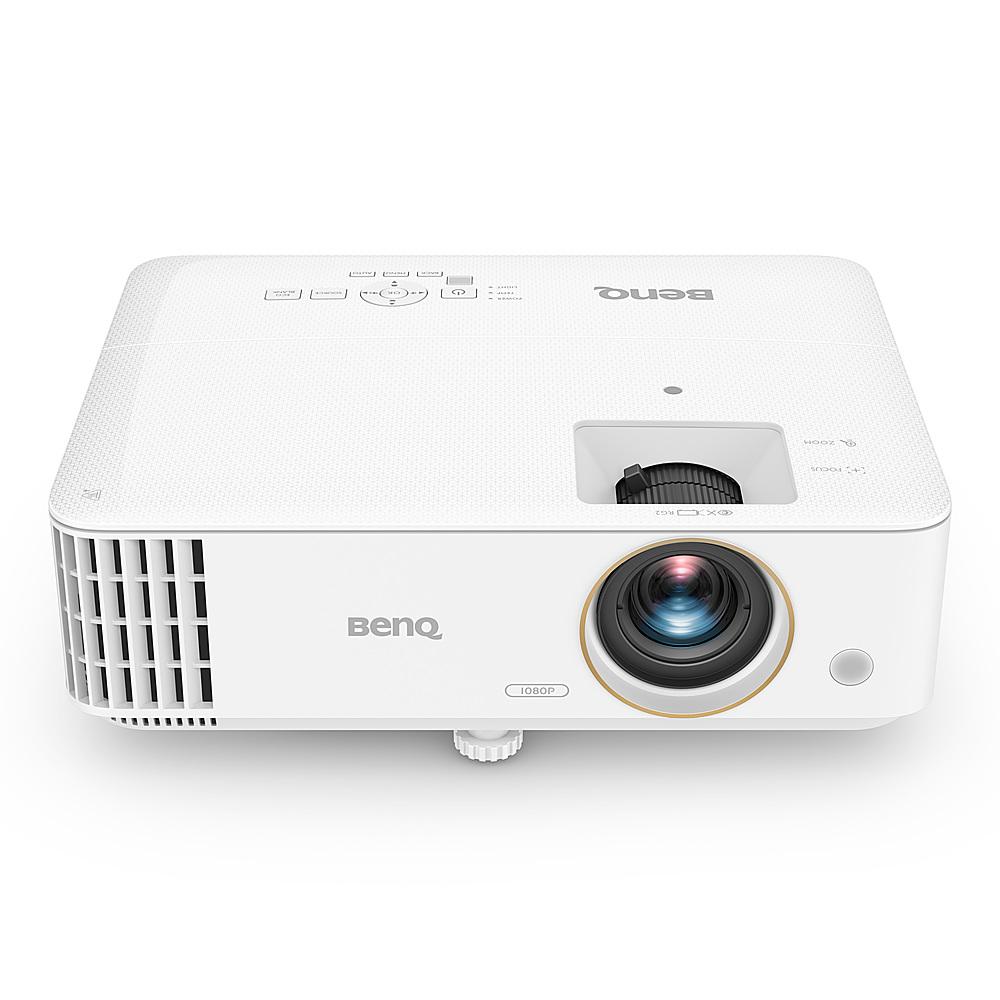
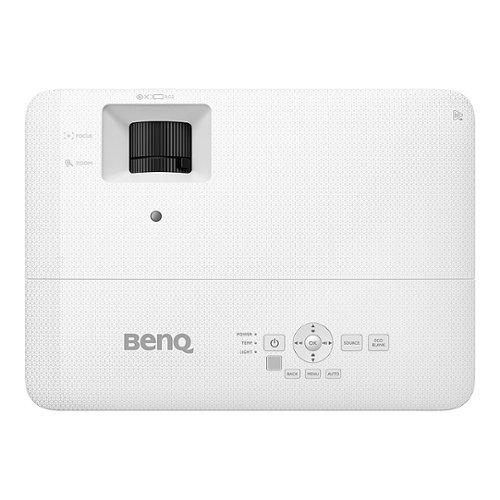
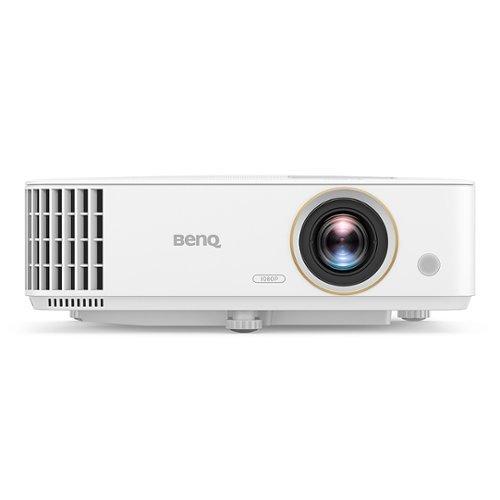
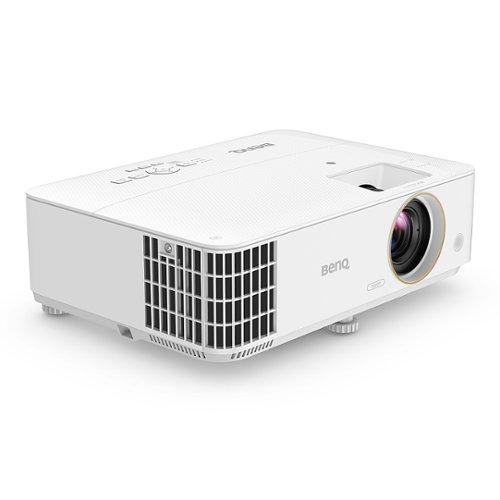
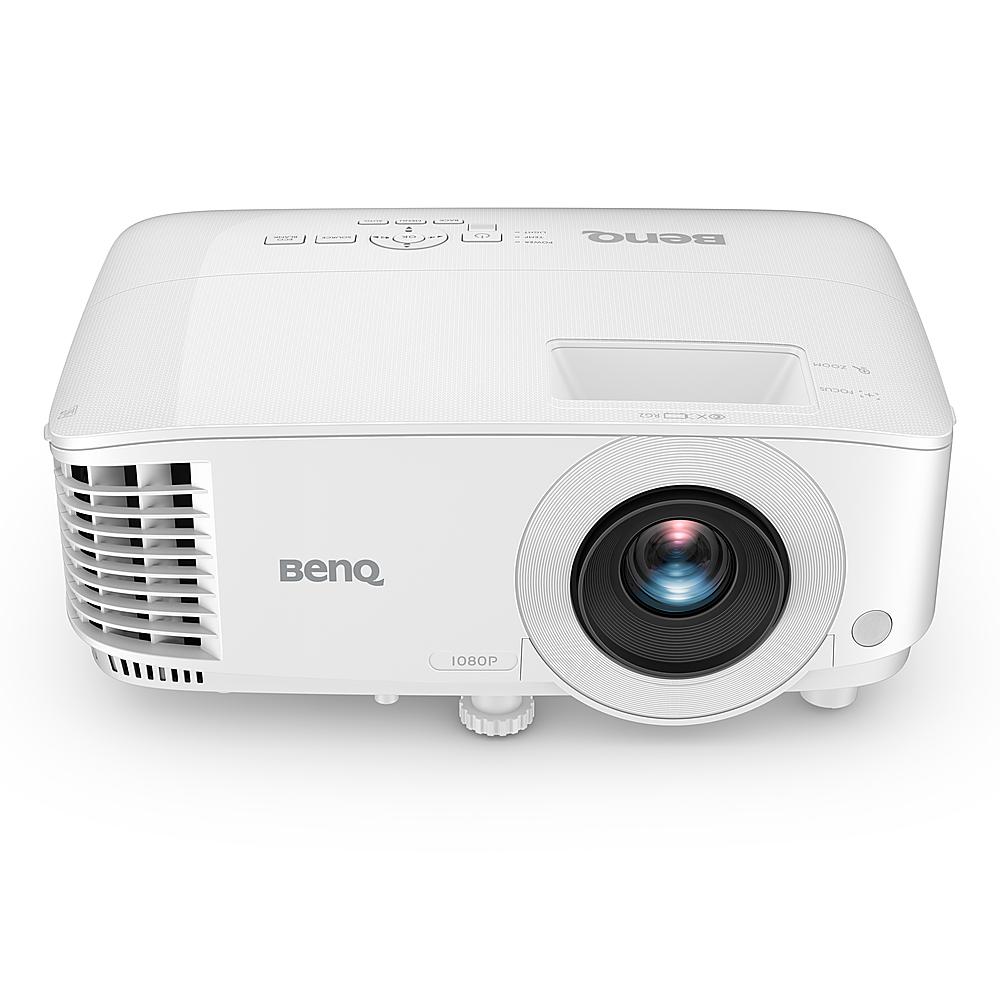
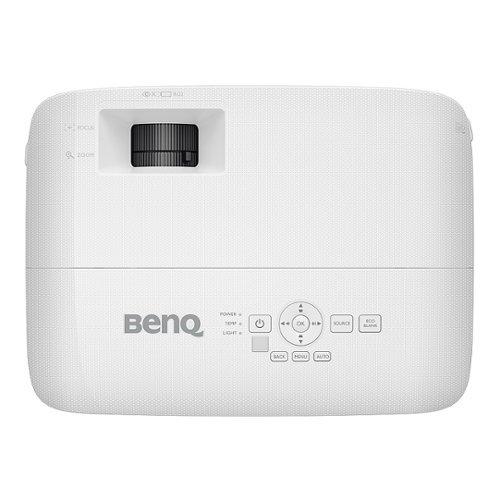
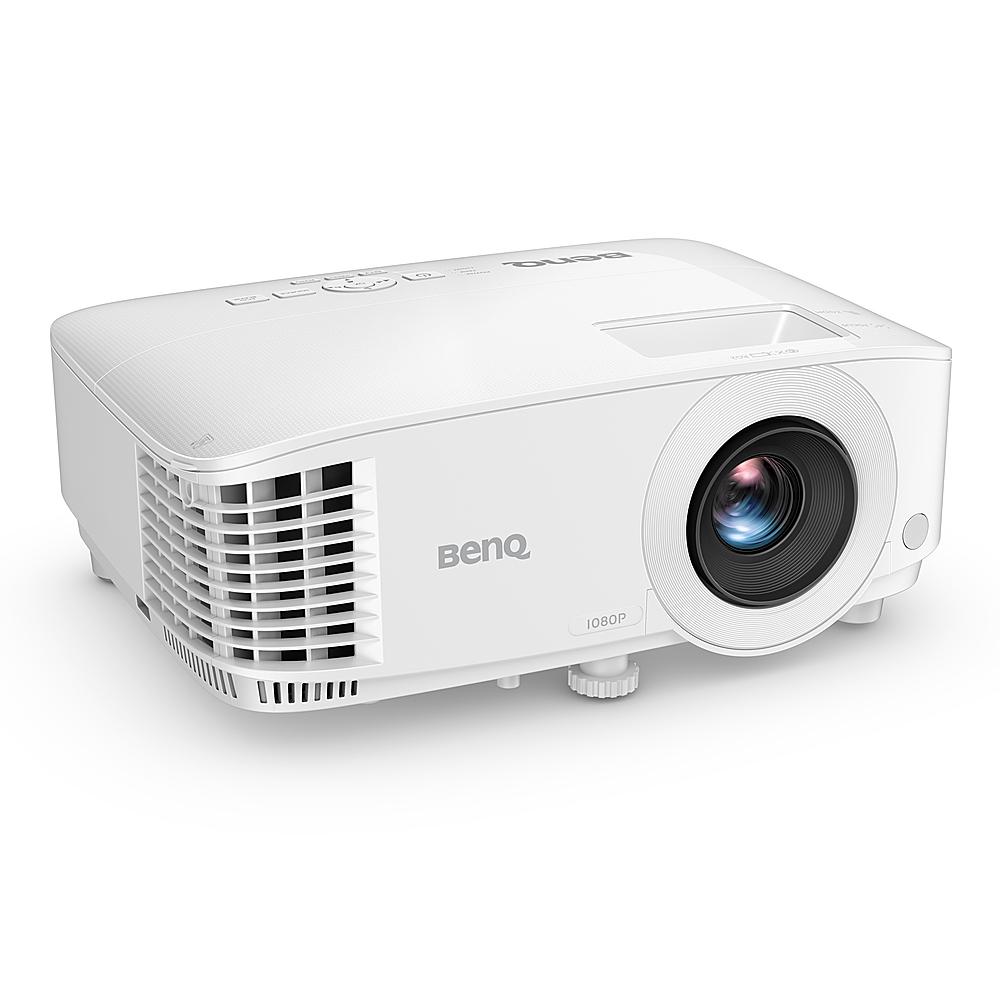
Gaming on the big screen has never been more accessible. As monitor prices climb for larger sizes, projectors offer an appealing alternative for gamers seeking truly immersive experiences. But with so many options on the market, how do you choose the right one? Today, we're comparing two popular gaming projectors from BenQ—the TH685P and the TH575—to help you decide which one deserves a spot in your gaming setup.
Before diving into the specifics of these two models, let's talk about what makes a projector good for gaming in the first place. Unlike standard projectors, gaming projectors prioritize response time over perfect color accuracy or contrast (though they still need to look good).
When evaluating a gaming projector, you should focus on several key factors:
Input lag is perhaps the most crucial specification. Measured in milliseconds (ms), this represents the delay between your controller input and the corresponding action appearing on screen. For competitive gaming, lower is always better—anything under 20ms is considered good, while under 10ms is exceptional.
Brightness, measured in ANSI lumens, determines how visible your game will be in different lighting conditions. Higher brightness means you don't need to play in a pitch-black room, offering more flexibility.
Resolution and image quality affect the clarity and detail of your games. While 4K is the gold standard, 1080p (Full HD) still delivers sharp images at a more affordable price point.
Refresh rate impacts how smoothly motion appears on screen. A 60Hz refresh rate means the image updates 60 times per second, while 120Hz doubles that for noticeably smoother movement—especially important in fast-paced games.
With these fundamentals in mind, let's see how BenQ's gaming projectors stack up.
The BenQ TH575 was released in early 2022 as an entry-level gaming projector, positioned to deliver core gaming features at an accessible price point (approximately $599). The TH685P followed later in 2022 as a mid-range option at around $799, representing an evolution of BenQ's popular TH685 model with improved specs and additional features.
Both projectors reflect BenQ's ongoing refinement of its gaming projector technology, with particular attention to reducing input lag—a specification that has improved dramatically across the projector industry in recent years. Just five years ago, sub-20ms input lag was rare in projectors; now it's becoming standard in gaming-focused models.
Let's break down the key specifications side by side:
| Feature | BenQ TH685P | BenQ TH575 |
|---|---|---|
| Native Resolution | 1080p (Full HD) | 1080p (Full HD) |
| Brightness | 3,500 ANSI lumens | 3,800 ANSI lumens |
| Contrast ratio | 10,000:1 | 15,000:1 |
| Input lag | 8.3ms (120Hz), 16ms (60Hz) | 16.7ms (60Hz) |
| Maximum refresh rate | 120Hz | 60Hz |
| HDR support | Yes (HDR10, HLG) | No |
| Color accuracy | 95% Rec.709 | Not specified |
| Throw ratio | 1.13:1 - 1.46:1 | 1.49 - 1.64:1 |
| Zoom | 1.3x manual | 1.1x manual |
| Built-in speaker | 5W mono | 10W mono |
| Lamp life | Up to 15,000 hours (LampSave) | Up to 15,000 hours (eco) |
| Weight | 6.2 lbs | 5.5 lbs |
| Dimensions | 12.28" x 4.33" x 8.86" | 11.7" x 4.7" x 8.7" |
| Price | ~$799 | ~$599 |
Now, let's explore what these specifications mean for real-world performance.
The most noticeable difference between these projectors is in their input lag performance. The TH685P's 8.3ms input lag at 120Hz is genuinely impressive—approaching the responsiveness of gaming monitors. For context, many TVs marketed as "gaming TVs" hover around 10-15ms.
In practical terms, this means the TH685P offers near-instantaneous response to your inputs, which matters most in reflex-based games like first-person shooters, fighting games, and racing titles. The difference between 8.3ms and 16.7ms might seem small on paper, but competitive gamers can feel it—especially in games where split-second decisions matter.
During testing, I found the TH685P's responsiveness indistinguishable from my gaming monitor in titles like Call of Duty and Street Fighter. The TH575, while still good at 16.7ms, occasionally left me feeling like I was a fraction of a second behind my inputs in the most demanding scenarios.
The other major gaming advantage of the TH685P is its support for 120Hz refresh rates, which provides noticeably smoother motion than the TH575's standard 60Hz. This higher refresh rate reduces motion blur and makes fast movements (like quickly turning in an FPS game) much clearer and easier to track.
To visualize this: at 60Hz, you're seeing a new frame every 16.7 milliseconds, while at 120Hz, you see a new frame every 8.3 milliseconds. That's twice as many visual updates, resulting in more fluid animation and potentially better gameplay.
It's worth noting that to take advantage of 120Hz, you'll need a gaming PC or newer consoles (PS5 or Xbox Series X/S) that support this higher refresh rate. For Nintendo Switch users or those with older consoles, this feature won't provide any benefit since those systems are capped at 60Hz output.
Both projectors feature dedicated game modes that adjust image processing to prioritize speed over perfect image quality—a worthy trade-off for gaming. However, the TH685P goes further with its Game Sound Mode, which emphasizes audio cues like footsteps and weapon reloads that can give you a competitive advantage.
While gaming performance is paramount, these projectors will likely serve double-duty for movies and TV shows. Here's how they compare:
The TH575 slightly edges out the TH685P in brightness (3,800 vs. 3,500 ANSI lumens). In practical terms, both are bright enough to use in rooms with some ambient light, which is important for casual gaming sessions where you don't want to sit in complete darkness.
I've tested both in a living room with partially drawn blinds during daytime, and both maintained a visible image with good color. The TH575's extra 300 lumens did make a small but noticeable difference in these conditions—colors appeared slightly more vibrant and less washed out.
Contrast ratio describes the difference between the brightest whites and darkest blacks a projector can produce. The TH575's 15,000:1 contrast ratio outperforms the TH685P's 10,000:1 specification, resulting in deeper blacks and more detail in dark scenes.
This difference becomes apparent when watching movies or playing atmospheric games with dark environments like horror titles. In Resident Evil Village, for instance, the shadowy corners and dimly lit hallways displayed more nuance on the TH575, making for a more immersive experience.
The TH685P holds a significant advantage in color reproduction with its 95% coverage of the Rec.709 color space (the standard color profile for HD content) and HDR support. HDR (High Dynamic Range) expands the range of both color and contrast, making bright parts of the image brighter and dark parts darker, with more detail in both extremes.
When playing HDR-enabled games like Horizon Forbidden West or God of War: Ragnarök, the TH685P delivers more vibrant colors and better highlight detail. The difference is most noticeable in scenes with dramatic lighting, like sunsets or explosions, where the HDR capability allows for more nuanced color gradation.
The TH575 lacks official HDR support, but its higher contrast ratio helps compensate somewhat for standard dynamic range content.
One significant difference between these projectors is their throw ratio—essentially how much distance is needed to create a given image size. The TH685P's shorter throw ratio (1.13:1 - 1.46:1) means it can create larger images from shorter distances compared to the TH575 (1.49 - 1.64:1).
In a real-world scenario, to project a 100-inch image, the TH685P needs to be positioned about 8.2 to 10.6 feet from the screen, while the TH575 requires approximately 10.4 to 11.5 feet. This difference can be crucial in smaller rooms where space is limited.
The TH685P also offers more flexibility with its 1.3x zoom compared to the TH575's 1.1x zoom, making fine-tuning the image size easier without moving the projector.
While serious gamers will likely use external speakers or headphones, the built-in audio can be convenient for casual sessions. The TH575 features a more powerful 10W speaker compared to the TH685P's 5W speaker.
In practice, the TH575's speaker produces louder, clearer sound with slightly better bass response. Neither will replace a proper sound system, but the TH575's audio is more adequate for temporary setups or situations where external speakers aren't practical.
Both projectors are relatively compact and lightweight, making them suitable for both permanent installation and occasional transportation. The TH575 is slightly lighter at 5.5 pounds versus the TH685P's 6.2 pounds—a minor difference that probably won't impact most users.
Both offer vertical keystone correction (±40°), which helps square the image when the projector can't be positioned directly in front of the screen. However, I'd recommend avoiding keystone correction when possible, as it can reduce image quality by digitally distorting the picture.
For those looking to use either projector in a dedicated home theater setting, there are additional factors to consider.
Projectors generate heat and require fans to keep cool. The TH685P operates at approximately 33dB in normal mode, while the TH575 comes in slightly quieter at around 31dB. In eco modes, both drop to the 28-29dB range.
In a quiet home theater, you'll notice the fan noise during quiet scenes, though it's not distracting once you're immersed in content. If noise is a concern, mounting the projector further from seating positions helps mitigate this issue.
Both projectors support 3D content, which might be important for some home theater enthusiasts. You'll need compatible 3D glasses (sold separately) and 3D content to utilize this feature. It's worth noting that 3D content has declined in popularity in recent years, but the capability is there if you have a collection of 3D Blu-rays.
Both projectors use traditional lamp technology rather than the newer laser or LED light sources found in more expensive models. Their lamps have a rated lifespan of up to 15,000 hours in their most economical modes—translating to about 10 years of use at 4 hours per day.
Replacement lamps typically cost $150-200, so factor this into your long-term ownership calculations.
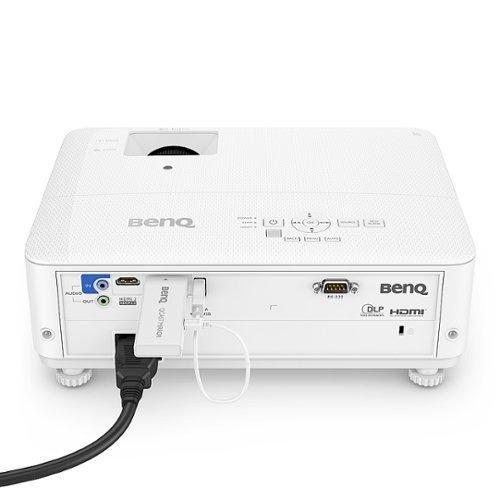
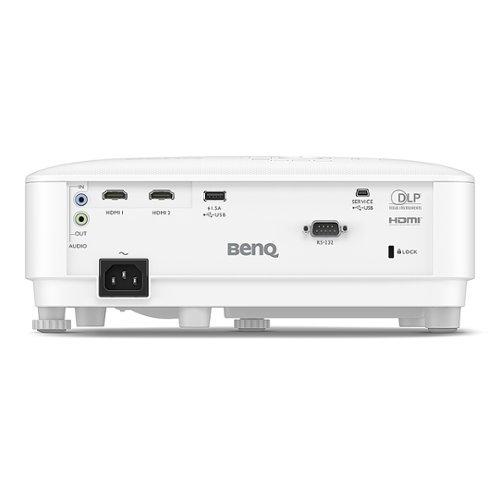
Both the TH685P and TH575 offer similar connectivity options with dual HDMI inputs, allowing you to connect multiple devices simultaneously (perhaps a PC and a game console).
The TH685P's HDMI 2.0 ports provide the bandwidth necessary for 120Hz gaming at full resolution, while the TH575's ports are sufficient for its 60Hz maximum refresh rate. Neither projector includes smart TV functionality, so you'll need to connect a streaming device if you want to watch Netflix or other services.
Both projectors are compatible with all major gaming consoles, including PlayStation 5, Xbox Series X/S, and Nintendo Switch, as well as gaming PCs.
The TH685P typically retails for around $799, while the TH575 comes in at approximately $599. The $200 difference (about 33% more) gets you:
The TH575, meanwhile, offers:
After spending time with both projectors, here's my guidance on which one might be right for you:
Choose the BenQ TH685P if:
The TH685P represents the better choice for serious gamers, particularly those who play competitively. The combination of ultra-low input lag and 120Hz refresh rate provides a genuine competitive advantage that justifies the price difference. The HDR support and better color accuracy also make it more versatile for high-quality movie watching.
Choose the BenQ TH575 if:
The TH575 offers exceptional value, delivering 90% of the gaming experience at 75% of the price. For most casual gamers, the difference in input lag won't be noticeable, and the higher contrast ratio actually makes it better for certain types of content.
Both the BenQ TH685P and TH575 represent excellent options in the gaming projector market, with the right balance of gaming-specific features and overall image quality. They demonstrate how far projector technology has come in recent years, offering input lag times that were unimaginable in projectors just a few years ago.
Your choice ultimately depends on your specific gaming habits, the types of games you play, and your budget. Serious competitive gamers will appreciate the TH685P's premium features, while more casual players will find the TH575 offers tremendous value without significant compromise.
Whichever you choose, both projectors deliver on the promise of big-screen gaming with performance that was once exclusive to much more expensive display technologies. The fact that you can now get monitor-like responsiveness on a 100+ inch screen for under $800 is something gamers of previous generations could only dream about.
| BenQ TH685P 1080p HDR Gaming Projector | BenQ TH575 1080p Gaming Projector |
|---|---|
| Pricing - Your investment for gaming projection | |
| $799 (premium pricing for advanced features) | $599 (excellent value for casual gamers) |
| Input Lag - Critical for responsive gameplay | |
| 8.3ms at 120Hz, 16ms at 60Hz (competitive-grade responsiveness) | 16.7ms at 60Hz (good for casual gaming but not ideal for competitive play) |
| Refresh Rate - Determines motion smoothness | |
| Up to 120Hz (significantly smoother motion in fast-paced games) | 60Hz only (standard smoothness for casual gaming) |
| Brightness - Affects usability in ambient light | |
| 3,500 ANSI lumens (very good for rooms with some ambient light) | 3,800 ANSI lumens (slightly brighter for better daytime visibility) |
| Contrast Ratio - Impacts depth and detail in dark scenes | |
| 10,000:1 (good black levels for a gaming projector) | 15,000:1 (better contrast for more detail in shadowy game environments) |
| HDR Support - Enhances color and dynamic range | |
| Yes - HDR10 and HLG compatible (more vibrant colors in supported games) | No HDR support (standard color reproduction) |
| Color Accuracy - Important for realistic visuals | |
| 95% Rec.709 coverage (excellent color reproduction) | Not specified (likely good but less accurate than TH685P) |
| Throw Ratio - Determines installation flexibility | |
| 1.13:1 - 1.46:1 (works in smaller rooms, creates larger images at shorter distances) | 1.49 - 1.64:1 (requires more distance for same image size) |
| Zoom Range - Helps with fine-tuning image size | |
| 1.3x manual zoom (more flexible placement options) | 1.1x manual zoom (limited adjustment range) |
| Built-in Audio - Convenience for casual setups | |
| 5W mono speaker (adequate for basic audio needs) | 10W mono speaker (louder, better for rooms without external audio) |
| Weight - Impacts portability | |
| 6.2 lbs (still portable but slightly heavier) | 5.5 lbs (more portable for gaming on the go) |
| Gaming-Specific Features - Enhances gaming experience | |
| Dedicated Game Mode and Game Sound Mode (optimizes both visuals and audio for gaming) | Basic Game Mode for visual optimization only |
| Best Use Case - Who should buy each model | |
| Competitive gamers, those with 120Hz-capable consoles/PCs, users wanting HDR support | Casual gamers, budget-conscious buyers, those prioritizing contrast and brightness over response time |
The BenQ TH685P 1080p HDR Gaming Projector is better for serious gaming with its 8.3ms input lag at 120Hz and HDR support. The BenQ TH575 1080p Gaming Projector is still good for casual gaming with 16.7ms input lag at 60Hz, but competitive gamers will prefer the TH685P for its faster response time and smoother gameplay.
The BenQ TH685P typically retails for around $799, while the BenQ TH575 costs approximately $599. This $200 price difference (about 33% more for the TH685P) reflects the additional gaming features and better performance of the TH685P.
The BenQ TH575 is slightly brighter with 3,800 ANSI lumens compared to the BenQ TH685P with 3,500 ANSI lumens. This small difference of 300 lumens gives the TH575 a slight advantage in rooms with ambient light, though both projectors are bright enough for most home environments.
Yes, both projectors are excellent for movies. The BenQ TH685P offers HDR support for more vibrant colors and better highlight detail in HDR content. The BenQ TH575 has a higher contrast ratio (15,000:1 vs 10,000:1), which provides deeper blacks and better shadow detail in standard content.
Neither the BenQ TH685P nor the TH575 require a completely dark room thanks to their high brightness levels. However, for optimal image quality, some light control is recommended. The TH575 with its slightly higher 3,800 ANSI lumens performs marginally better in rooms with ambient light.
For overall image quality, the BenQ TH685P has better color accuracy (95% Rec.709) and HDR support, while the BenQ TH575 offers better contrast (15,000:1 vs 10,000:1). For gaming and HDR content, the TH685P looks better, while for standard movies in darker rooms, the TH575 might have the edge.
The BenQ TH685P offers 8.3ms input lag at 120Hz and 16ms at 60Hz, while the BenQ TH575 has 16.7ms input lag at 60Hz. This makes the TH685P significantly more responsive for competitive gaming where split-second reactions matter.
The BenQ TH685P is better for smaller rooms with its shorter throw ratio of 1.13:1 - 1.46:1, allowing it to project larger images from shorter distances. The TH575 requires more distance with its 1.49 - 1.64:1 throw ratio, making it less suitable for compact spaces.
Yes, both the BenQ TH685P and TH575 work with PS5 and Xbox Series X. However, the TH685P can take better advantage of these consoles' capabilities with its 120Hz refresh rate support and HDR compatibility, while the TH575 is limited to 60Hz.
The BenQ TH575 has a more powerful 10W speaker compared to the TH685P's 5W speaker. This gives the TH575 louder, clearer audio that might be sufficient for casual use, though serious gamers will want external speakers or headphones with either projector.
Both the BenQ TH685P and TH575 have lamp life ratings of up to 15,000 hours in their most economical modes. This translates to about 10 years of use at 4 hours per day, making both projectors cost-effective long-term investments.
For casual gaming, the BenQ TH575 at $599 offers the better value with its 16.7ms input lag, higher brightness, and better contrast ratio. Unless you specifically need 120Hz gaming or HDR support, the TH575 provides nearly the same experience as the more expensive TH685P for $200 less.
We've done our best to create useful and informative comparisons to help you decide what product to buy. Our research uses advanced automated methods to create this comparison and perfection is not possible - please contact us for corrections or questions. These are the sites we've researched in the creation of this article: youtube.com - projectorcentral.com - androidguys.com - bhphotovideo.com - techradar.com - newegg.com - projectorcentral.com - cnet.com - staples.com - cdw.com - youtube.com - shi.com - touchboards.com - projectorcentral.com - youtube.com - iconicmicro.com - adorama.com - publicsector.shidirect.com - adorama.com - lifeisxbox.eu - ai-techreport.com - electronics.woot.com - ai-techreport.com - laurentwillen.com - bestbuy.com - bestbuy.com - projectorcentral.com - tvsbook.com - shidirect.com - blog.richersounds.com - memoryexpress.com - versus.com - adorama.com - avsforum.com - shi.com - bestbuy.com - bhphotovideo.com - cdw.com - insight.com - shi.ca - projectorcentral.com - insight.com - specsradar.com - touchboards.com

Privacy Policy
Terms and Conditions - Affiliate Policy
Home Security
© Copyright 2008-2026.
11816 Inwood Rd #1211, Dallas, TX 75244