

When shopping for a projector in 2025, you'll quickly discover that "portable" means very different things to different manufacturers. The Nebula X1 4K Triple Laser Projector and BenQ GS50 Portable Outdoor Projector perfectly illustrate this divide – one pushes the boundaries of what's possible in a moveable projector, while the other focuses on true grab-and-go convenience.
The portable projector market has split into two distinct camps over the past few years. On one side, you have premium lifestyle projectors like the Nebula X1 that pack cinema-quality technology into a "portable" form factor. These units prioritize image quality and smart features but still need to plug into the wall. On the other side are genuinely portable projectors like the BenQ GS50 that run on battery power and can handle outdoor adventures.
When choosing between these approaches, consider your primary use case. Are you looking to create an amazing home theater experience that you can move between rooms? Or do you want something for camping trips, backyard movie nights, and places where there's no power outlet in sight?
The key factors that separate these categories include brightness output, resolution capabilities, power requirements, setup complexity, and of course, price. Understanding these differences will help you avoid the disappointment of buying a projector that doesn't match your actual needs.
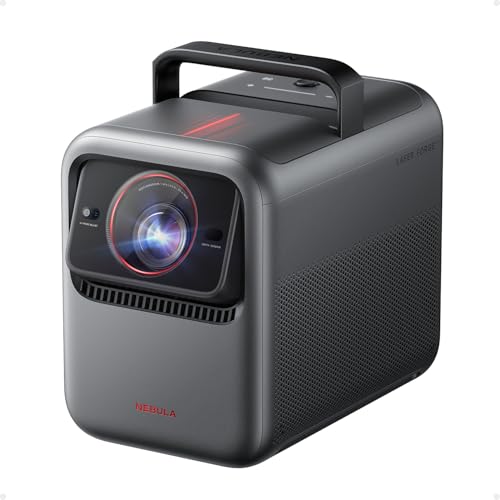
Released in 2025, the Nebula X1 represents Anker's ambitious entry into high-end projection technology. At around three times the price of the BenQ GS50 (at the time of writing), it's clearly positioned as a premium product. This projector introduces several industry-first technologies, including a liquid cooling system borrowed from high-end gaming computers and a unique triple laser light engine.
The X1 weighs about 14 pounds and requires AC power, making it more like a "luggable" home theater than a truly portable device. However, those compromises enable some impressive capabilities that simply aren't possible in battery-powered units.
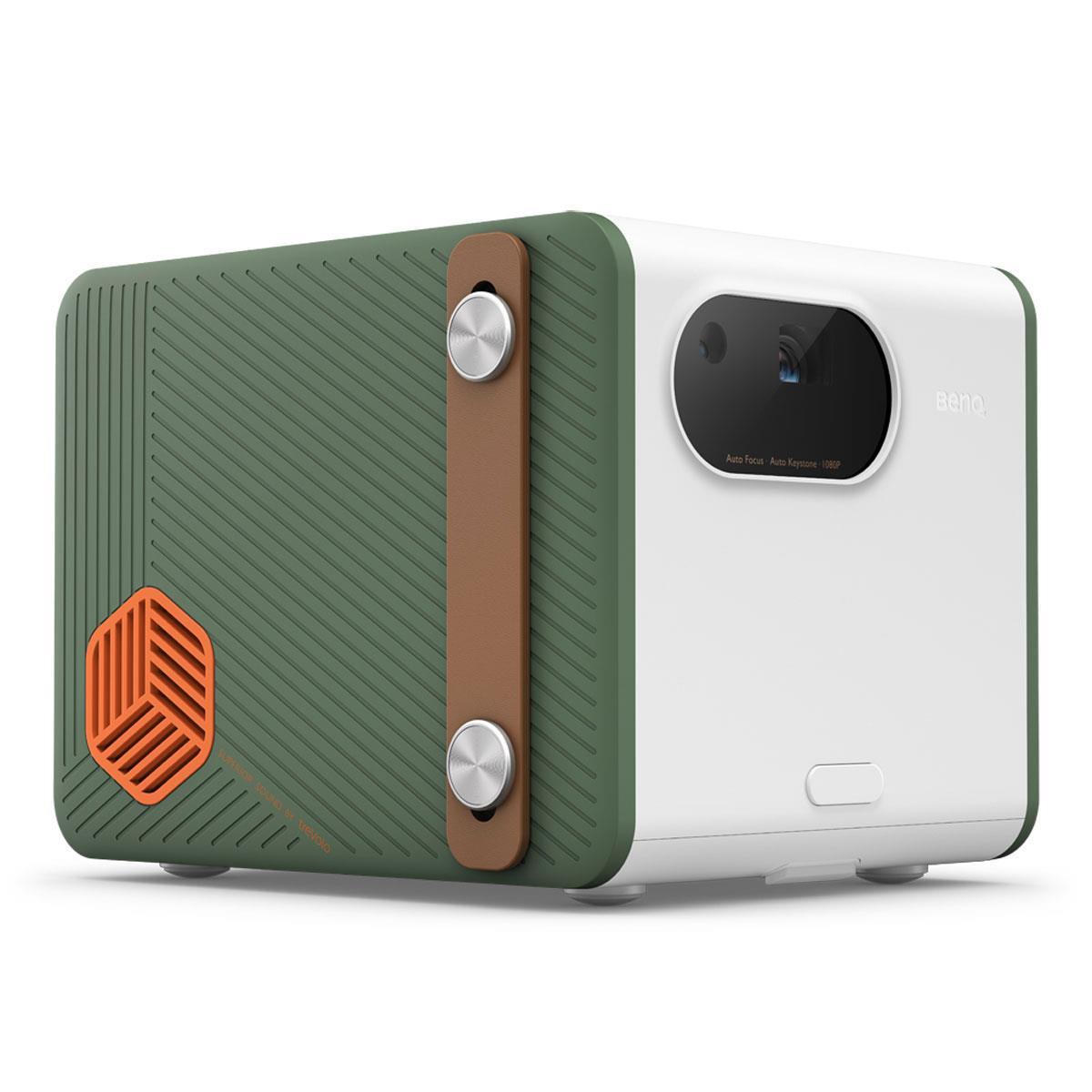
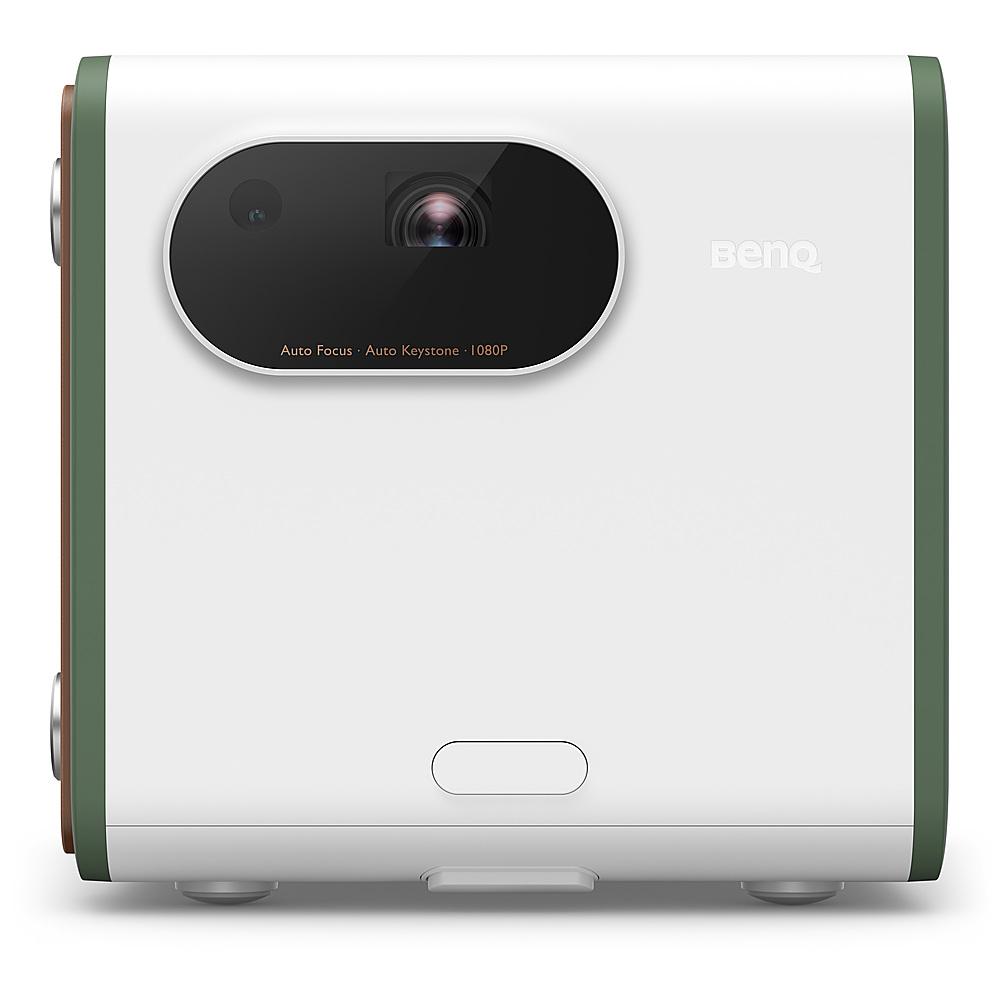
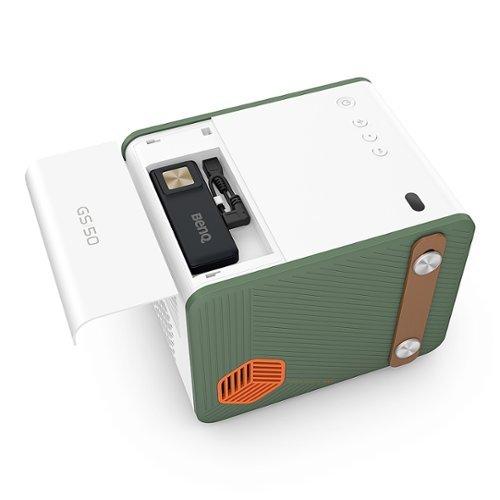
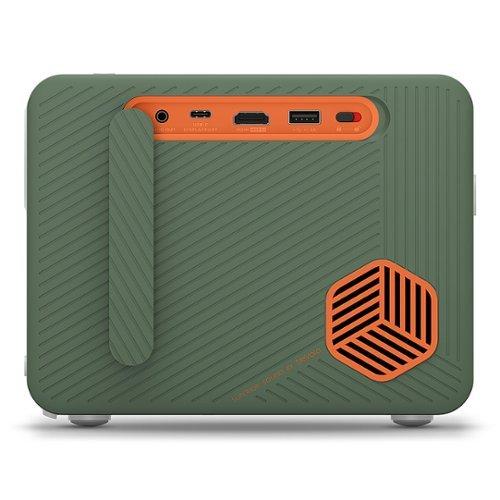
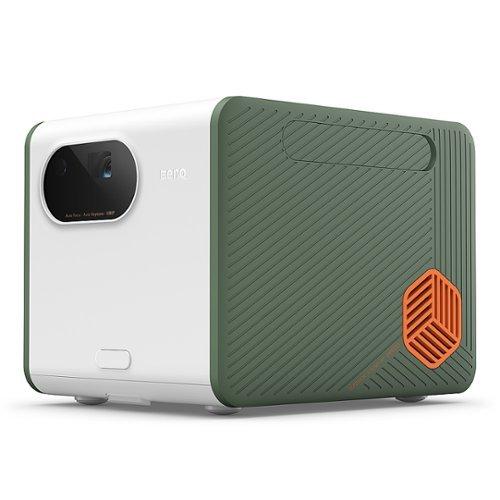
The BenQ GS50, released in 2021, takes the opposite approach. Weighing just over 5 pounds with a built-in battery, it's designed for people who want to watch movies under the stars or set up impromptu viewing sessions without hunting for power outlets. While it lacks the cutting-edge features of newer projectors, its focus on practical portability and solid fundamentals has kept it relevant in the market.
BenQ has been refining this outdoor-focused approach since the GS50's release, and the fundamentals they got right – integrated audio, rugged construction, and genuine portability – remain important differentiators in today's market.
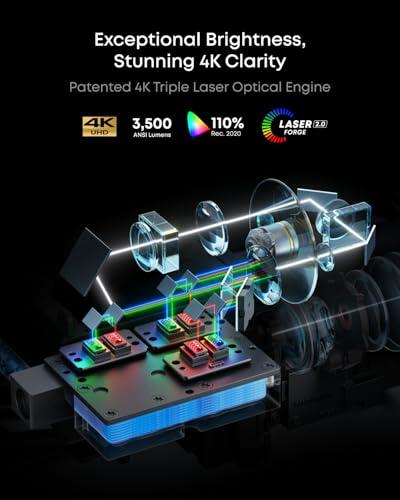
Brightness, measured in ANSI lumens, is arguably the most critical spec for any projector. It determines where and when you can actually use the device. The difference between these two projectors is dramatic: the Nebula X1 outputs 3,500 ANSI lumens compared to the BenQ GS50's 500 lumens.
To put this in perspective, imagine the difference between a powerful LED flashlight and a phone's flashlight. Both work, but in very different situations. The X1's brightness comes from its triple laser system – essentially three separate laser light sources (red, green, and blue) combined to create white light. This approach produces more accurate colors and maintains brightness better than traditional lamp-based systems.
The BenQ GS50 uses LED technology, which is more energy-efficient and doesn't generate as much heat, making battery operation practical. However, LEDs simply can't match the raw light output of laser systems. This means the GS50 requires darker viewing environments – think evening outdoor use or rooms where you can control the lighting.
In my experience testing both types, the brightness difference is immediately obvious. The Nebula X1 can produce a watchable 100-inch image even with some ambient light, while the BenQ GS50 really shines (pun intended) in darker conditions where its more modest output is perfectly adequate.
The resolution difference between these projectors – 4K versus 1080p – might seem straightforward, but the real-world impact depends on your viewing habits and content sources.
The Nebula X1 uses what's called "pixel-shifting" technology to create its 4K image. The projector has a native 1080p chip but shifts pixels rapidly to display four times as much detail. While purists might argue this isn't "true" 4K like you'd find in expensive home theater projectors, the result is genuinely sharp and detailed for most viewers. Combined with its wide color gamut (covering 110% of the Rec.2020 color space), the X1 can display colors that many computer monitors can't even reproduce.
The BenQ GS50 sticks with native 1080p resolution, which still looks excellent at reasonable viewing distances. For a 100-inch screen viewed from 10-12 feet away, 1080p provides plenty of detail for most content. The GS50 can accept 4K input signals but downscales them to its native resolution.
Color accuracy is where the Nebula X1 really pulls ahead. Its factory calibration achieves near-perfect color reproduction (measured as Delta E values under 1, where lower numbers mean more accurate colors). This level of calibration usually requires expensive professional equipment and expertise. The BenQ GS50 produces pleasant, natural-looking colors but doesn't achieve this professional-level accuracy.
For home theater use, the X1's combination of 4K detail, wide color gamut, and precise calibration creates a noticeably more cinematic experience. However, for casual outdoor viewing or content that isn't mastered in 4K, the GS50's 1080p image remains very satisfying.
Audio represents one of the most interesting comparisons between these projectors. Both take the built-in sound seriously, but with different approaches.
The BenQ GS50 includes an integrated 2.1 sound system with two 5-watt tweeters and a 10-watt woofer. This might not sound impressive on paper, but the execution is surprisingly good. The projector uses advanced signal processing to create a wider soundstage than its size would suggest. More impressively, it can function as a standalone Bluetooth speaker when you're not projecting, making it genuinely useful around a campsite or outdoor gathering.
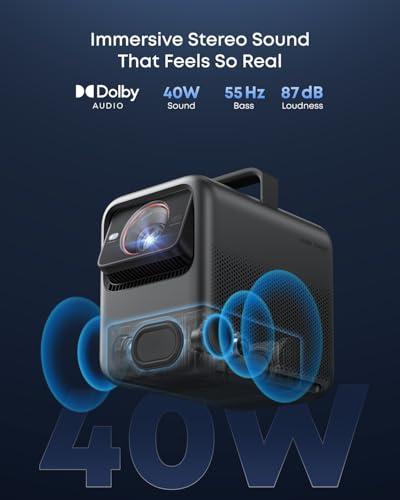
The Nebula X1 takes a more ambitious approach with its optional 4.1.2 surround sound system. This includes the main projector plus separate wireless satellite speakers that create genuine surround sound. The system uses something called "FlexWave upmixing" to create multidimensional audio from stereo sources. When properly set up, this creates a much more immersive experience than typical projector audio.
However, there's a catch: the X1's premium audio experience requires purchasing the additional speaker bundle, which adds significantly to the overall cost. The base projector includes decent built-in speakers, but they're not the standout feature that BenQ's integrated system is.
For most users, the BenQ GS50's approach makes more sense – good sound that's always there without additional purchases or setup complexity.
Modern projectors have made setup much easier than the complicated affairs of a decade ago, but these two models take different approaches to user-friendliness.
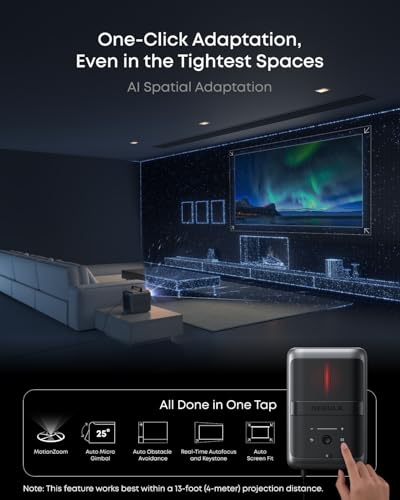
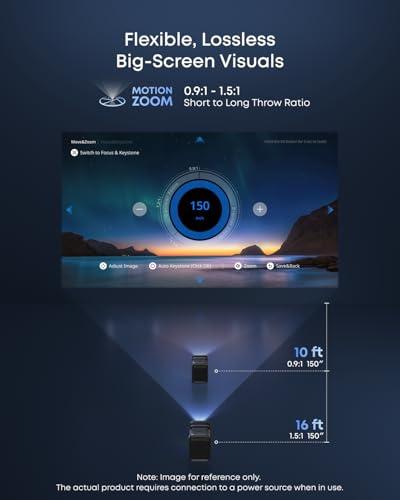
The Nebula X1 leverages artificial intelligence and motorized components to automate setup. Its "AI Spatial Adaptation" feature scans the projection surface and automatically adjusts focus, keystone correction (fixing the trapezoid distortion when projecting at an angle), and image size. The motorized gimbal can physically tilt the projection system up to 25 degrees, eliminating the need for manual adjustment in many situations.
This automation is genuinely impressive when it works well. Point the projector roughly at a wall, press a button, and within 30 seconds you have a properly focused, geometrically correct image. The system can even remember settings for different rooms, automatically adjusting when you move the projector to previously used locations.
The BenQ GS50 takes a simpler approach with automatic focus and basic keystone correction. While not as sophisticated as the X1's system, it's still much easier than manual adjustment. The simpler approach also means fewer things can go wrong, which is valuable when you're setting up in unfamiliar outdoor locations.
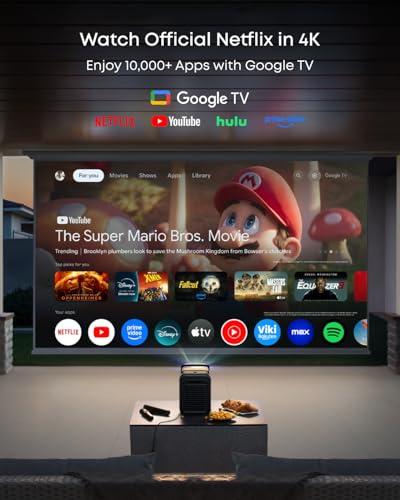
Both projectors run Android TV operating systems, providing access to streaming apps like Netflix, YouTube, and others. The X1's newer implementation feels more responsive and includes some premium features like Google Assistant integration.
This is where the philosophical differences between these projectors become most apparent. The Nebula X1 requires constant AC power, making it portable in the sense that you can move it between locations, but not truly mobile. At nearly 14 pounds, it's also heavy enough that you'll want the included carrying case for transport.
The BenQ GS50 runs on an internal battery for 2-2.5 hours, depending on brightness settings and content. This might not sound like enough for a full movie, but it's perfect for outdoor activities where you might watch for shorter periods. The projector is also light enough (about 5 pounds) to easily carry in a backpack.
The GS50 includes an IPX2 rating, meaning it can handle light water splashes – useful for poolside or camping use. The Nebula X1 is built for indoor use and wouldn't appreciate exposure to moisture.
For home theater applications, the X1's AC power requirement isn't a significant limitation. You're likely setting up in rooms with readily available power outlets. But for outdoor adventures, genuine movie nights under the stars, or emergency entertainment during power outages, the GS50's battery operation is essential.
Both projectors can handle gaming, but with different strengths. The Nebula X1 supports 4K gaming at 60Hz with input lag under 19 milliseconds in its gaming mode. This is fast enough for most gaming, though competitive players might still prefer dedicated gaming monitors for the absolute fastest response times.
The BenQ GS50 offers 1080p gaming with higher input lag (around 62 milliseconds), making it less ideal for fast-paced competitive games but perfectly acceptable for casual gaming or single-player adventures.
The X1's HDMI 2.1 connectivity also supports advanced gaming features from modern consoles, while the GS50's older HDMI standard has some limitations with the newest gaming features.
For dedicated home theater use, the Nebula X1 is clearly the more capable choice. Its combination of high brightness, 4K resolution, wide color gamut, and professional calibration creates an experience that rivals much more expensive fixed-installation projectors. The automated setup features make it practical to use regularly, rather than requiring a dedicated installation.
The liquid cooling system (a first for consumer projectors) keeps the X1 remarkably quiet during operation – around 26 decibels, which is quieter than many bedroom fans. This makes it suitable for quiet movie watching without distracting fan noise.
However, the BenQ GS50 has its place in home theater scenarios too. For smaller spaces, casual viewing, or situations where you want to occasionally move the projector around the house, its lighter weight and integrated audio make it more practical for some users.
At the time of writing, the Nebula X1 costs roughly three to four times as much as the BenQ GS50. This price difference reflects fundamentally different technologies and target markets.
The X1's premium pricing buys you cutting-edge laser technology, advanced automated features, professional-level color accuracy, and future-proof connectivity. The triple laser system alone represents a significant technological advancement – most projectors in this price range still use traditional lamp or LED technology.
The BenQ GS50's lower price reflects its more mature LED technology and simpler feature set, but also represents excellent value for its intended use cases. You're getting genuine portability, solid performance, and good build quality at a price point that makes projector ownership accessible to many more people.
Choose the Nebula X1 if you want the best possible image quality and don't mind paying premium prices for cutting-edge technology. It's ideal for movie enthusiasts who want a cinema-like experience at home, people who frequently entertain guests, or anyone who values automated convenience features. The X1 makes the most sense if you plan to use it primarily indoors and have budgeted for a high-end entertainment purchase.
Choose the BenQ GS50 if true portability is important to your lifestyle. It's perfect for camping enthusiasts, people with small apartments who want to occasionally set up a big screen experience, or anyone who wants projector capabilities without the premium investment. The GS50 also makes sense as a first projector – it's approachable enough to help you understand whether projector entertainment fits your lifestyle before committing to more expensive options.
These projectors serve different needs so well that comparing them directly almost misses the point. The Nebula X1 pushes portable projection technology forward with innovations that will likely influence the entire industry. Its combination of brightness, resolution, and automation creates an experience that justifies its premium positioning for the right user.
The BenQ GS50 succeeds by doing something completely different – delivering genuine portability and solid fundamentals at a reasonable price. While its technology isn't cutting-edge, its practical design and integrated features make it genuinely useful for outdoor entertainment.
The best choice depends entirely on your specific needs, budget, and how you plan to use your projector. Both represent good value within their respective categories, just with very different definitions of what "portable projection" should accomplish.
| Nebula X1 4K Triple Laser Projector | BenQ GS50 Portable Outdoor Projector |
|---|---|
| Brightness - Critical for ambient light performance and screen size flexibility | |
| 3,500 ANSI lumens (excellent for bright rooms and large screens) | 500 ANSI lumens (requires dim/dark environments) |
| Resolution - Determines image sharpness and detail | |
| 4K (3840×2160) with pixel-shifting DLP technology | 1080p (1920×1080) native resolution |
| Power Requirements - Affects where and how you can use it | |
| AC power required (no battery) | Built-in 2.5-hour battery for true portability |
| Weight - Real-world portability consideration | |
| 13.7 lbs (moveable but substantial) | 5.1 lbs (genuinely portable) |
| Audio System - Built-in sound quality and convenience | |
| 4.1.2 surround with optional wireless satellites | Integrated 2.1 system (5W×2 + 10W woofer) |
| Setup Automation - Ease of use in different locations | |
| AI Spatial Adaptation with motorized 25° gimbal | Basic auto-focus and keystone correction |
| Light Source Technology - Affects lifespan and color quality | |
| RGB Triple Laser (30,000 hours, wide color gamut) | LED (20,000-30,000 hours, standard colors) |
| Weather Resistance - Outdoor durability | |
| Indoor use only | IPX2 splash-proof rating |
| Color Accuracy - Professional vs consumer-grade calibration | |
| Factory ISF calibrated (ΔE <0.8) with 110% Rec.2020 | Standard color reproduction |
| Gaming Performance - Input lag for responsive gaming | |
| <19ms input lag with 4K@60Hz support | 62ms input lag at 1080p |
| Smart Features - Streaming and connectivity options | |
| Google TV with Netflix certification and Google Assistant | Android TV 9.0 with basic streaming apps |
| Release Year - Technology generation and feature currency | |
| 2025 (cutting-edge laser and AI technology) | 2021 (mature, proven outdoor design) |
The Nebula X1 4K Triple Laser Projector is significantly brighter at 3,500 ANSI lumens compared to the BenQ GS50 Portable Outdoor Projector at 500 lumens. This means the Nebula X1 can handle well-lit rooms and daylight viewing much better, while the BenQ GS50 requires darker environments for optimal image quality.
Only the BenQ GS50 Portable Outdoor Projector has a built-in battery that provides 2-2.5 hours of operation. The Nebula X1 4K Triple Laser Projector requires AC power at all times, making it portable between rooms but not truly cordless like the BenQ GS50.
The Nebula X1 4K Triple Laser Projector offers superior image quality with 4K resolution, factory calibration for accurate colors, and a wide color gamut covering 110% of Rec.2020. The BenQ GS50 provides good 1080p image quality that's perfectly adequate for casual viewing but can't match the Nebula X1's sharpness and color accuracy.
The BenQ GS50 Portable Outdoor Projector weighs 5.1 pounds, making it genuinely portable for camping and outdoor use. The Nebula X1 4K Triple Laser Projector weighs 13.7 pounds, which is still moveable but requires more effort to transport than the lightweight BenQ GS50.
The BenQ GS50 Portable Outdoor Projector is specifically designed for outdoor use with its built-in battery, IPX2 splash-proof rating, and compact design. While the Nebula X1 is brighter, it requires AC power and isn't weather-resistant, making the BenQ GS50 the clear choice for outdoor entertainment.
Both projectors offer impressive audio for their categories. The BenQ GS50 Portable Outdoor Projector has an integrated 2.1 sound system that works well for its size and can double as a Bluetooth speaker. The Nebula X1 offers optional 4.1.2 surround sound with wireless satellites, providing more immersive audio but requiring additional purchase.
The Nebula X1 4K Triple Laser Projector is superior for dedicated home theater setups with its 4K resolution, high brightness, professional color calibration, and quiet 26dB operation. The BenQ GS50 works well for casual home viewing but lacks the premium features that make the Nebula X1 ideal for serious home theater enthusiasts.
The Nebula X1 4K Triple Laser Projector features advanced AI Spatial Adaptation with automatic focus, keystone correction, and a motorized gimbal for hands-free setup. The BenQ GS50 Portable Outdoor Projector offers basic auto-focus and keystone correction, which is simpler but requires more manual adjustment than the automated Nebula X1.
The Nebula X1 4K Triple Laser Projector is better for gaming with sub-19ms input lag and 4K@60Hz support, making it suitable for modern console gaming. The BenQ GS50 has higher input lag at 62ms, which is acceptable for casual gaming but not ideal for competitive play where the Nebula X1 would perform better.
Value depends on your needs. The BenQ GS50 Portable Outdoor Projector offers excellent value for outdoor entertainment and casual use at its lower price point. The Nebula X1 provides premium technology and performance that justifies its higher cost for users wanting the best possible image quality and advanced features.
Both projectors run Android-based operating systems with access to major streaming apps. The Nebula X1 4K Triple Laser Projector runs Google TV with official Netflix certification and Google Assistant, while the BenQ GS50 uses Android TV 9.0 with standard streaming app support, though the Nebula X1 offers a more current and responsive smart TV experience.
Choose the Nebula X1 4K Triple Laser Projector if you want premium home theater performance, 4K content viewing, and automated convenience features. Select the BenQ GS50 Portable Outdoor Projector if you need true portability for outdoor adventures, have budget constraints, or primarily watch 1080p content where the BenQ GS50's practical design and battery operation provide better value.
We've done our best to create useful and informative comparisons to help you decide what product to buy. Our research uses advanced automated methods to create this comparison and perfection is not possible - please contact us for corrections or questions. These are the sites we've researched in the creation of this article: youtube.com - seenebula.com - projectorreviews.com - seenebula.com - whathifi.com - bestbuy.com - techradar.com - projectorcentral.com - youtube.com - avsforum.com - seenebula.com - blog.son-video.com - youtube.com - projectorcentral.com - cnet.com - hometheaterhifi.com - youtube.com - youtube.com - whathifi.com - youtube.com - bgeek.eu - youtube.com - youtube.com - projectorreviews.com - youtube.com - youtube.com - projectorcentral.com - projectorreviews.com - bestbuy.com - touchboards.com - projectorcentral.com - adorama.com - projectorreviews.com - insight.com - cnet.com

Privacy Policy
Terms and Conditions - Affiliate Policy
Home Security
© Copyright 2008-2026.
11816 Inwood Rd #1211, Dallas, TX 75244