

Smart projectors have transformed home entertainment, combining traditional projection technology with built-in streaming capabilities that eliminate the need for external devices. Whether you're considering your first projector or upgrading from an older model, the current market offers options ranging from ultra-budget models around $150 to premium units costing several thousand dollars.
The key to choosing the right projector lies in understanding how brightness, image quality, and smart features impact your actual viewing experience. Today, we're comparing two very different approaches: the HAPPRUN Google TV Smart Projector representing the budget-friendly entry point, and the Nebula X1 4K Triple Laser Projector showcasing premium projection technology.
Before diving into specific models, it's crucial to understand what separates decent projectors from disappointing ones. The most important factor is brightness, measured in ANSI lumens—a standardized way of measuring how much light a projector actually produces. Many cheap projectors advertise inflated "LED lumens" or other marketing terms, but ANSI lumens tell the real story.
A projector with 200-400 ANSI lumens works only in completely dark rooms, while 1,000+ lumens enables viewing with some ambient light. For reference, movie theaters typically use projectors producing 10,000-15,000 lumens for their massive screens.
Resolution matters too, but it's more nuanced than simple numbers suggest. Many projectors use "pixel shifting" technology, where a native 1080p chip rapidly moves pixels to create the appearance of 4K resolution. This isn't true native 4K like expensive TV panels, but it can produce genuinely sharper images than standard 1080p.
Smart features have become standard, with most projectors now running Android TV, Google TV, or proprietary operating systems with built-in Netflix, YouTube, and other streaming apps. This eliminates the need for separate streaming devices and creates a cleaner setup.
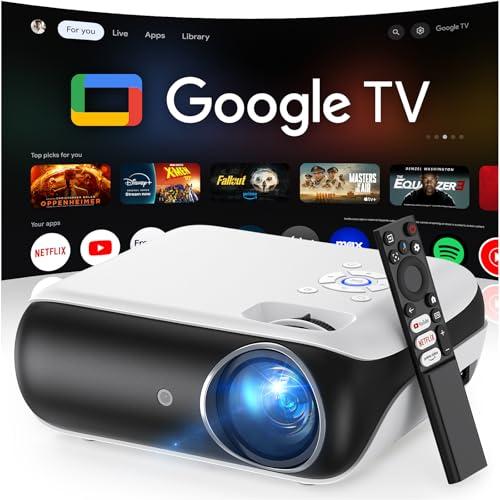
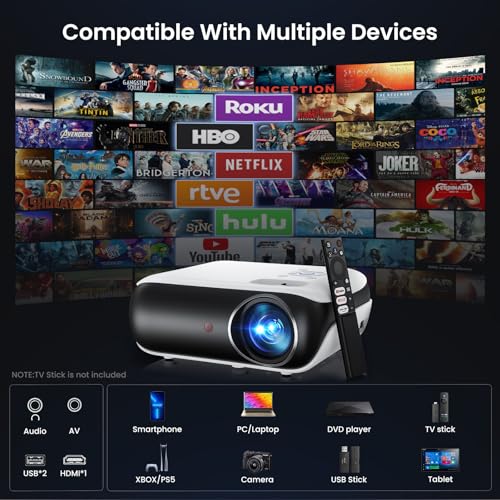
Released in 2024, the HAPPRUN Google TV Smart Projector targets first-time buyers who want smart projection without breaking the bank. At the time of writing, it sits in the ultra-budget category, typically priced under $200.
What makes the HAPPRUN notable isn't groundbreaking technology—it's bringing legitimate smart features to an extremely affordable price point. The projector delivers native 1080p resolution with support for 4K content decoding, though it downscales that 4K content to display at 1080p. Think of it like having a 4K video file that gets compressed to fit a 1080p screen—you get some benefit from the higher quality source material, but you're not seeing true 4K detail.
The HAPPRUN produces 350 ANSI lumens, which places it firmly in "dark room only" territory. This isn't necessarily a dealbreaker if you have a basement media room or bedroom where you can control lighting completely. The LED light source provides decent color reproduction and should last 20,000+ hours before dimming noticeably.
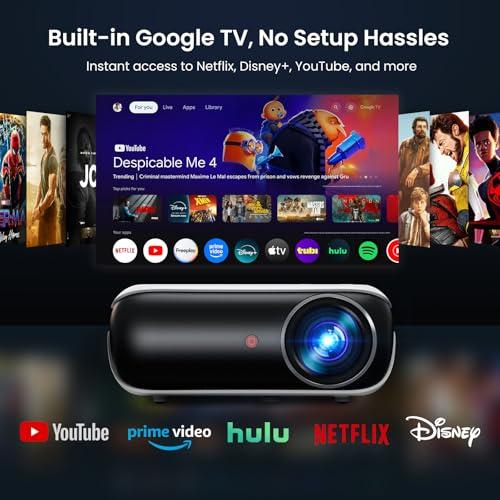
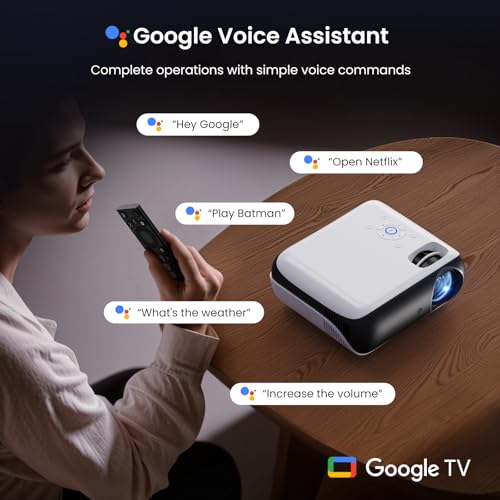
Where the HAPPRUN truly shines is its Google TV integration. Unlike many budget projectors that force you to sideload Netflix or use unofficial apps, this model includes official Netflix licensing alongside access to the full Google Play Store. You get Google Assistant voice control, Chromecast built-in for casting from phones, and the same interface you'd find on premium Google TV devices.
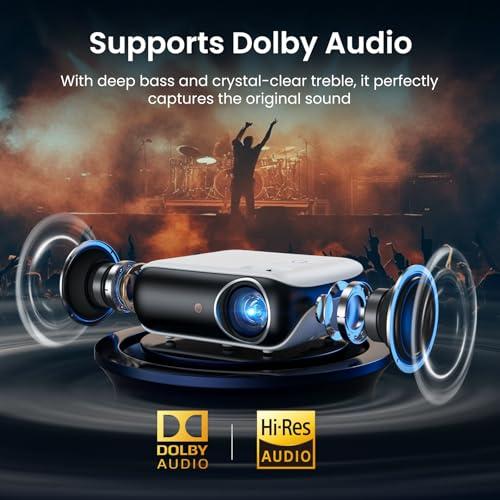
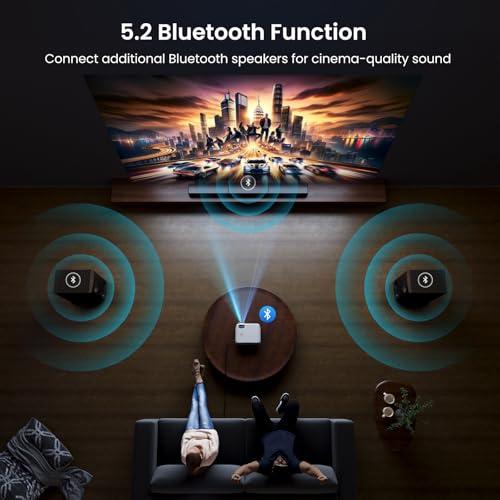
The built-in 8W speaker handles dialogue clearly but lacks the power for action movies or music. Fortunately, the projector includes Bluetooth 5.2 for connecting wireless speakers, plus standard 3.5mm and optical audio outputs.
Setup is straightforward but manual. You'll need to position the projector carefully and adjust keystone correction (which digitally corrects trapezoidal image distortion) to get a rectangular picture. The throw ratio means you need about 8-10 feet of distance to create a 100-inch image.
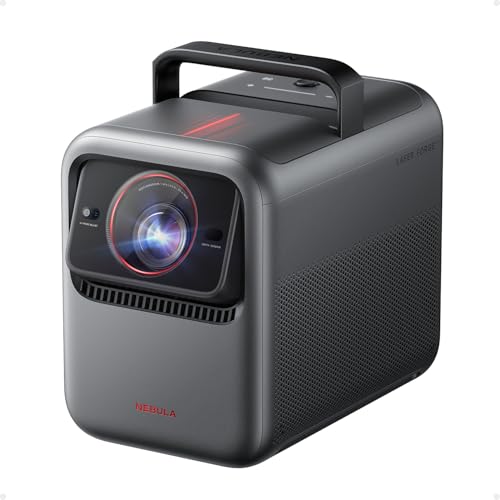
The Nebula X1 4K Triple Laser Projector, also released in 2024, represents cutting-edge portable projection technology. Priced in the premium category at the time of writing—roughly 10-15 times more than the HAPPRUN—it targets serious home theater enthusiasts and those wanting professional-grade performance.
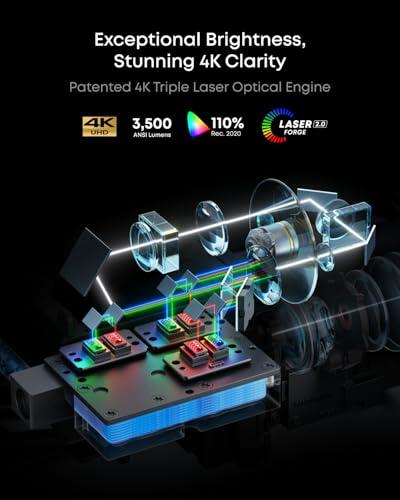
The "triple laser" designation refers to separate red, green, and blue laser light sources, a significant advancement over single-color laser or LED systems. This RGB laser setup produces exceptionally pure colors covering 110% of the Rec.2020 color space—essentially meaning it can display colors that standard TVs and projectors cannot reproduce. The color accuracy measures Delta E <0.8, which is professional monitor calibration territory.
More importantly for daily use, the Nebula X1 produces a massive 3,500 ANSI lumens. This fundamental difference transforms where and when you can use the projector. While the HAPPRUN requires complete darkness, the Nebula X1 works in living rooms with lamps on, during daytime with blinds closed, and even outdoors at dusk.
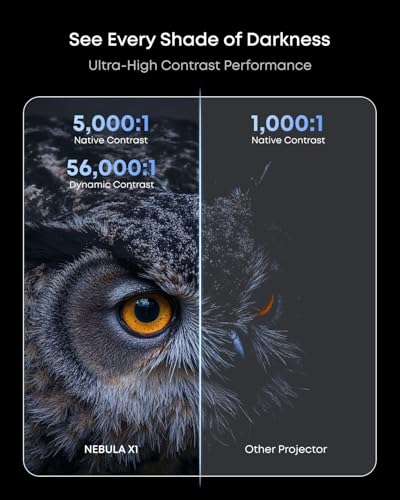
The contrast ratio tells another story of technological superiority. The Nebula X1 achieves 5,000:1 native contrast, enhanced to 56,000:1 through its six-blade dynamic iris system. This motorized iris opens and closes based on image content, delivering deeper blacks in dark scenes and preventing bright scenes from washing out details.
Perhaps most impressive is the Nebula X1's 14-element all-glass lens system—reportedly the first smart projector to use cinema-grade optics instead of plastic composite lenses. Glass elements don't yellow with age, maintain thermal stability during long viewing sessions, and deliver corner-to-corner sharpness that plastic lenses can't match. The aspherical and ED (Extra-Low Dispersion) elements minimize the color fringing and distortion common in budget projectors.
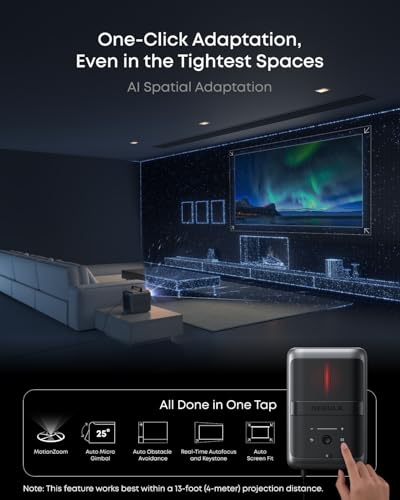
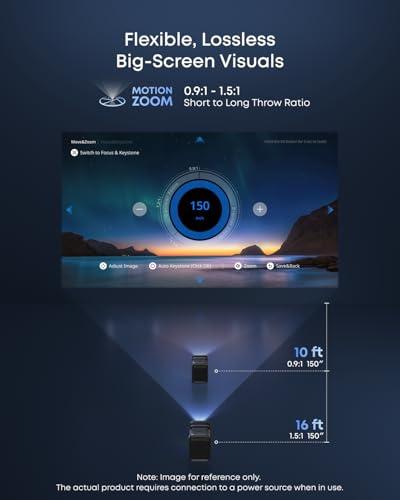
The motorized gimbal system provides 25 degrees of lens shift, meaning you can move the image up or down without physically repositioning the projector. Combined with optical zoom (0.9:1 to 1.5:1 throw ratio), this creates exceptional installation flexibility. The AI Spatial Adaptation system uses sensors to automatically adjust focus, keystone, and image positioning with a single button press—a remarkable convenience feature.
The 10x brightness difference between these projectors fundamentally determines their usability. After evaluating numerous user experiences and professional reviews, it's clear that 350 ANSI lumens severely limits the HAPPRUN to dedicated dark spaces. Even small amounts of ambient light—like streetlights through windows or LED clocks—can wash out the image significantly.
The Nebula X1's 3,500 ANSI lumens changes everything. Reviews consistently report excellent image quality in normal living rooms with ceiling lights dimmed but not off. Outdoor movie nights work well after sunset, and daytime viewing is possible with heavy curtains or blinds closed.
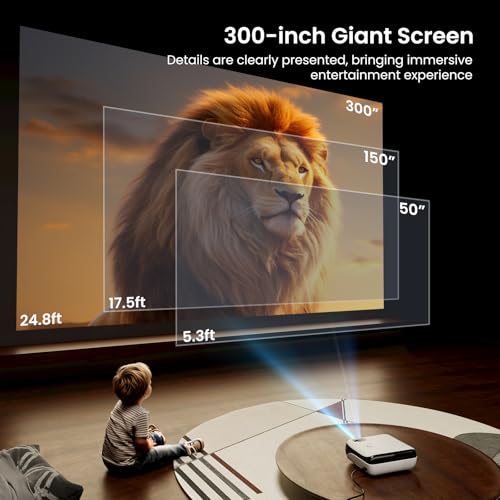
This brightness advantage extends to screen size capabilities. While the HAPPRUN looks best at 80-120 inches in dark rooms, the Nebula X1 maintains impressive brightness and detail at 150-200+ inches, creating truly cinematic experiences.
Both projectors use DLP (Digital Light Processing) technology with Texas Instruments DMD chips, but the implementations differ dramatically. The HAPPRUN uses a standard 0.33-inch DMD chip producing native 1080p resolution. While it can accept 4K input signals, it downscales them for display.
The Nebula X1 employs a 0.47-inch DMD chip with XPR (eXpanded Pixel Resolution) technology, rapidly shifting pixels four times per frame to create 8.3 million distinct pixel locations—true 4K display from a 1080p chip. This isn't marketing trickery; the visual difference in detail and sharpness is substantial, particularly with fine textures, text, and architectural elements in movies.
Color reproduction showcases another major gap. The HAPPRUN's LED light source produces decent colors within the standard Rec.709 color space that most content targets. The Nebula X1's laser system exceeds even the newer Rec.2020 standard, displaying colors that simply don't exist on standard displays. Reds are deeper, greens more vivid, and the overall color volume—the total range of colors at different brightness levels—far exceeds what LEDs can achieve.
Professional reviews consistently note the Nebula X1's cinema-like color accuracy, particularly with HDR content. It supports Dolby Vision dynamic metadata, which optimizes color and contrast for each scene individually, while the HAPPRUN is limited to basic HDR10 processing.
Audio represents another significant divide. The HAPPRUN's 8W speaker handles dialogue adequately but struggles with dynamic range and bass response. Most users report connecting external Bluetooth speakers or soundbars for a complete experience.
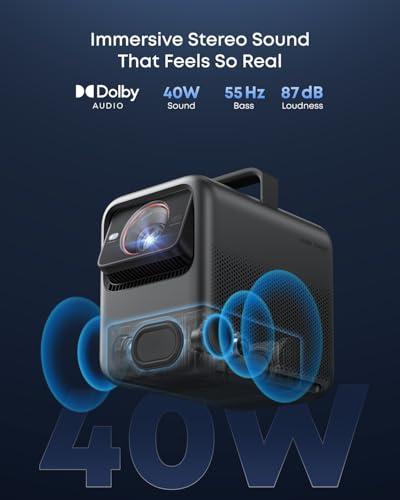
The Nebula X1 includes a sophisticated 4.1.2 surround sound system with four internal speakers: dual 15W full-range drivers, dual 5W tweeters, and passive radiators for bass extension. The optional wireless satellite speakers create genuine surround sound with impressively low latency—around 25ms versus typical Bluetooth's 200ms delay.
Reviews consistently praise the Nebula X1's audio as genuinely immersive, particularly outdoors where traditional soundbars become impractical. The FlexWave upmixing algorithm processes stereo content to create multidimensional soundscapes that work surprisingly well.
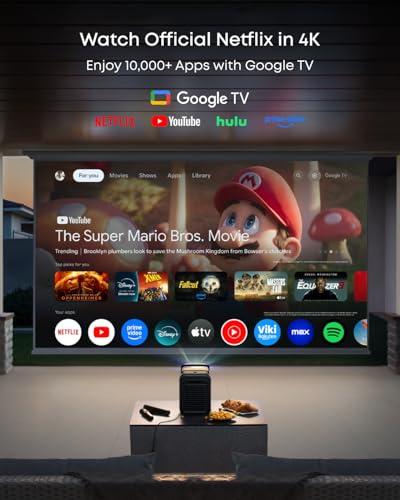
Both projectors run Google TV with official Netflix licensing—a significant advantage over projectors requiring sideloaded apps. The interfaces are similarly responsive, and both include Google Assistant voice control and Chromecast functionality.
The difference lies in setup and ongoing usability. The HAPPRUN requires careful manual positioning, focus adjustment, and keystone correction each time you move it. Setup typically takes 10-15 minutes to achieve optimal results.
The Nebula X1's AI Spatial Adaptation transforms this experience. Position the projector roughly where you want it, press one button, and watch as it automatically adjusts focus, corrects keystone distortion, optimizes for wall color, and even detects obstacles that might block part of the image. Setup time drops to under two minutes, and the projector remembers settings for different locations.
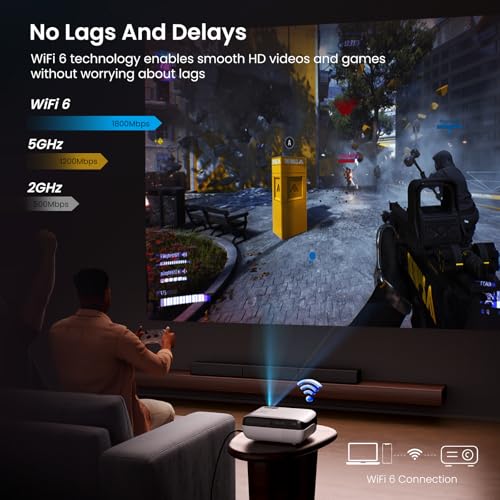
Gaming performance varies significantly between these models. The HAPPRUN provides basic gaming support with acceptable input lag for casual console gaming, but the low brightness limits it to dark gaming environments.
The Nebula X1 excels at gaming with sub-19ms input lag in Game Mode and support for 4K@60Hz via HDMI 2.1. More importantly, the high brightness enables gaming in normal room lighting, making it practical for extended gaming sessions without eye strain from switching between bright game content and dark surroundings.
At the time of writing, the HAPPRUN offers exceptional value for its price point. It delivers legitimate smart projection capabilities at a cost similar to a decent streaming device plus a basic projector. For users with appropriate viewing environments—dark bedrooms, basement media rooms, or dedicated home theaters—it provides a genuine big-screen experience.
However, the limitations are real and significant. The brightness restriction means many buyers will find it less useful than expected, particularly if they lack complete light control.
The Nebula X1 commands premium pricing but delivers performance that justifies the cost for serious users. Independent testing confirms it outperforms many fixed-installation home theater projectors costing significantly more. The laser light source, glass optics, and advanced processing represent genuine technological advantages, not just premium positioning.
You're curious about projection technology but unsure about long-term commitment. It's perfect for bedroom movie nights, basement gaming setups, or as a secondary entertainment device. The smart features are genuinely useful, and the low cost makes it an acceptable experiment even if you later upgrade.
The HAPPRUN also works well for outdoor movie nights in areas with minimal light pollution, though you'll need to invest in a proper outdoor screen and external audio for the best experience.
You want projection that integrates seamlessly into normal living spaces. The brightness and convenience features make it suitable as a primary entertainment display, whether mounted permanently or moved between rooms regularly.
It's particularly compelling for users with outdoor entertainment spaces, RV travel, or anyone wanting the largest possible screen without permanent installation. The premium audio system eliminates the need for additional speakers in most scenarios.
These projectors serve fundamentally different purposes despite sharing smart functionality. The HAPPRUN Google TV Smart Projector democratizes big-screen entertainment for budget-conscious users willing to work within its brightness limitations. The Nebula X1 4K Triple Laser Projector delivers professional-grade performance with the convenience of consumer-friendly features.
Your choice depends primarily on viewing environment and budget flexibility. If you have a dedicated dark space and want to explore projection affordably, the HAPPRUN provides legitimate value. If you want projection that works anywhere and serves as a primary entertainment system, the Nebula X1 justifies its premium pricing through superior performance and convenience.
Neither projector will disappoint users who understand their capabilities and limitations. The key is matching your expectations and requirements to the right technological approach.
| HAPPRUN Google TV Smart Projector | Nebula X1 4K Triple Laser Projector |
|---|---|
| Brightness - The single most important factor determining where you can use your projector | |
| 350 ANSI lumens (dark room only) | 3,500 ANSI lumens (works in ambient light) |
| Resolution - Affects image sharpness and detail quality | |
| Native 1080p with 4K decoding (downscales 4K content) | True 4K display via pixel-shifting DLP technology |
| Light Source Technology - Impacts color quality, brightness consistency, and lifespan | |
| LED light source (standard color reproduction) | RGB Triple Laser with liquid cooling (exceptional colors) |
| Color Accuracy - Determines how realistic and vibrant images appear | |
| Standard LED color gamut | 110% Rec.2020 coverage with Delta E <0.8 professional accuracy |
| Contrast Ratio - Controls how deep blacks appear and overall image depth | |
| 20,000:1 (dynamic measurement) | 5,000:1 native, 56,000:1 dynamic with 6-blade iris |
| Lens System - Affects image sharpness, especially at screen edges | |
| Standard composite lens | 14-element all-glass cinema-grade optics |
| Audio System - Built-in sound quality and expandability | |
| 8W single speaker with Dolby Audio | 4.1.2 surround system with optional wireless satellites |
| Setup Convenience - How easy it is to get a perfect picture | |
| Manual focus and keystone correction | AI Spatial Adaptation with one-click auto-setup |
| Smart Platform - Streaming app availability and interface quality | |
| Google TV with official Netflix | Google TV with official Netflix (identical smart features) |
| Gaming Performance - Input lag and refresh rate capabilities | |
| Basic gaming support, higher input lag | <19ms input lag, 4K@60Hz via HDMI 2.1 |
| Projection Flexibility - Installation and positioning options | |
| Fixed throw ratio, manual adjustments | Motorized gimbal, optical zoom, 25° lens shift |
| Portability - Weight and ease of moving between locations | |
| Lightweight budget design | 13.7 lbs with premium carry case |
| Light Source Lifespan - How long before brightness degrades | |
| 20,000+ hours (LED typical lifespan) | 30,000 hours (laser advantage) |
The biggest difference is brightness capability. The HAPPRUN Google TV Smart Projector produces 350 ANSI lumens and requires a completely dark room for optimal viewing, while the Nebula X1 4K Triple Laser Projector delivers 3,500 ANSI lumens—10 times brighter—allowing you to watch with ambient lighting, during daytime with blinds closed, or outdoors at dusk.
The Nebula X1 4K Triple Laser Projector is far better for living rooms due to its high brightness output. You can watch comfortably with table lamps on or during the day with curtains drawn. The HAPPRUN Google TV Smart Projector would be overwhelmed by typical living room lighting and produce a washed-out, barely visible image.
Yes, but differently. The HAPPRUN Google TV Smart Projector can accept 4K input but displays it at 1080p resolution after downscaling. The Nebula X1 4K Triple Laser Projector uses pixel-shifting technology to display true 4K detail with 8.3 million distinct pixels, providing genuinely sharper images with fine details and text clarity.
The Nebula X1 4K Triple Laser Projector has significantly superior audio with a 4.1.2 surround sound system featuring multiple speakers and optional wireless satellites. The HAPPRUN Google TV Smart Projector includes a basic 8W speaker that's adequate for dialogue but requires external speakers for immersive movie watching or music.
The Nebula X1 4K Triple Laser Projector excels at gaming with sub-19ms input lag, 4K@60Hz support, and brightness that works in normal room lighting. The HAPPRUN Google TV Smart Projector offers basic gaming capabilities but the low brightness limits you to dark room gaming sessions, which can cause eye strain during extended play.
The Nebula X1 4K Triple Laser Projector features AI Spatial Adaptation that automatically adjusts focus, keystone, and positioning with one button press, plus motorized lens shift for flexible placement. The HAPPRUN Google TV Smart Projector requires manual focus adjustment, keystone correction, and careful positioning each time you move it, typically taking 10-15 minutes to optimize.
The Nebula X1 4K Triple Laser Projector is much better for outdoor use thanks to its high brightness that remains visible at dusk and its IP54-rated wireless speakers that work perfectly outdoors. The HAPPRUN Google TV Smart Projector only works outdoors after complete darkness and requires external audio equipment for adequate sound.
Yes, both run Google TV with identical smart features including official Netflix, Google Assistant, Chromecast built-in, and access to all major streaming apps. Neither requires external streaming devices. The HAPPRUN Google TV Smart Projector and Nebula X1 4K Triple Laser Projector offer the same user interface and app ecosystem.
The Nebula X1 4K Triple Laser Projector delivers superior image quality with true 4K resolution, 110% Rec.2020 color coverage, cinema-grade glass optics, and professional color accuracy. The HAPPRUN Google TV Smart Projector provides decent 1080p image quality with standard LED colors, suitable for casual viewing but not matching the cinematic experience of the premium model.
This depends on your needs and budget. The HAPPRUN Google TV Smart Projector offers exceptional value for dark room viewing and first-time projector buyers, providing smart features at an entry-level price. The Nebula X1 4K Triple Laser Projector justifies its premium pricing through professional-grade performance, versatility in different lighting conditions, and features typically found in much more expensive projectors.
Both projectors can create large images, but the Nebula X1 4K Triple Laser Projector maintains better brightness and clarity at larger sizes due to its powerful laser light source and superior optics. The HAPPRUN Google TV Smart Projector works best at 80-120 inches in dark rooms, while the Nebula X1 delivers excellent results at 150-200+ inches even with some ambient light.
Choose the HAPPRUN Google TV Smart Projector if you have a dedicated dark theater room and want an affordable entry into big-screen entertainment. Select the Nebula X1 4K Triple Laser Projector if you want cinema-quality performance, plan to use it in various lighting conditions, or need it to serve as your primary entertainment display with premium audio and convenience features.
We've done our best to create useful and informative comparisons to help you decide what product to buy. Our research uses advanced automated methods to create this comparison and perfection is not possible - please contact us for corrections or questions. These are the sites we've researched in the creation of this article: youtube.com - topvisiontec.com - youtube.com - happrunprojector.com - youtube.com - happrunprojector.com - youtube.com - business.walmart.com - youtube.com - walmart.com - cordcuttersnews.com - nexpow.com - youtube.com - seenebula.com - projectorreviews.com - seenebula.com - whathifi.com - bestbuy.com - techradar.com - projectorcentral.com - youtube.com - avsforum.com - seenebula.com - blog.son-video.com - youtube.com - projectorcentral.com

Privacy Policy
Terms and Conditions - Affiliate Policy
Home Security
© Copyright 2008-2026.
11816 Inwood Rd #1211, Dallas, TX 75244