

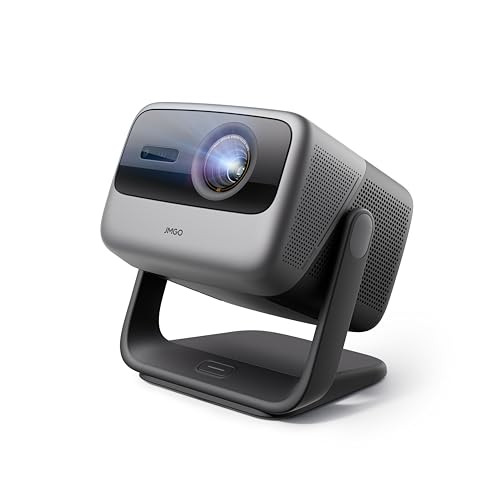
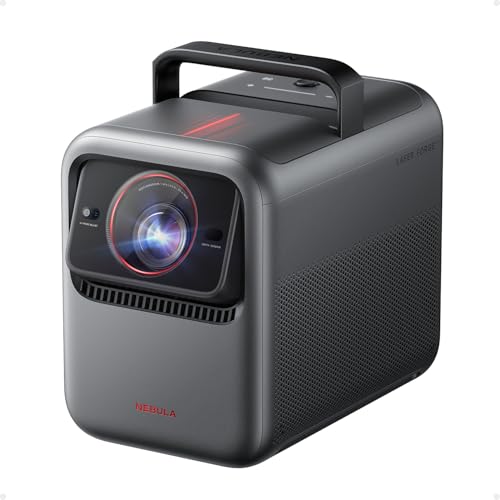
The world of home entertainment has transformed dramatically in recent years, and nowhere is this more evident than in the premium projector market. Gone are the days when projectors were clunky, dim devices relegated to conference rooms. Today's flagship models like the JMGO N1S Ultimate and Nebula X1 deliver cinema-quality visuals that can rival or even surpass traditional TVs, all while offering the flexibility to create massive 100+ inch displays in your living room, backyard, or anywhere else you want to watch.
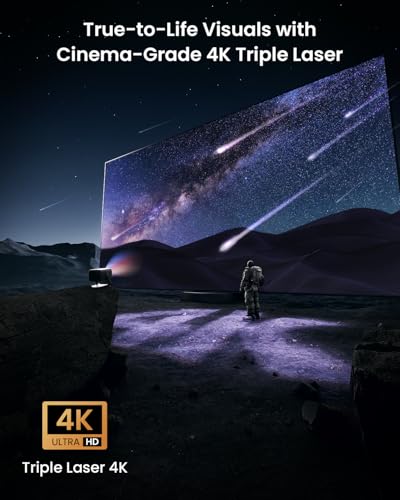
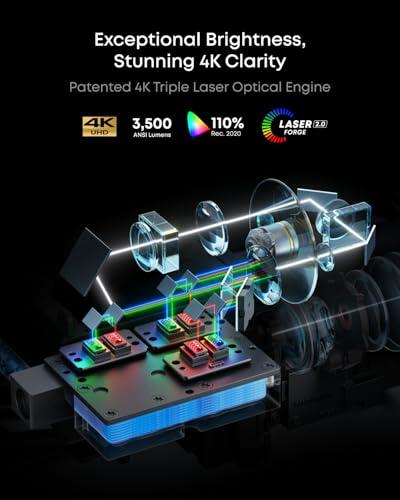
Before diving into our comparison, it's worth understanding what makes these projectors special. Both the JMGO N1S Ultimate and Nebula X1 use triple-laser light sources instead of traditional lamps or single-color lasers. This means they have separate red, green, and blue lasers that combine to create incredibly vibrant colors and brightness levels that were impossible just a few years ago.
The "4K" designation refers to their ability to display 3840 x 2160 pixels – four times the resolution of standard 1080p HD. However, there's a technical detail worth noting: both projectors use a process called "pixel shifting" with their 0.47-inch DLP chips. This means they start with a native 1080p image and rapidly shift it four times to create the full 4K resolution. While purists might prefer true native 4K chips, the results from modern pixel-shifting technology are visually indistinguishable to most viewers and keep costs more reasonable.
The most significant considerations when choosing between these premium projectors include brightness performance (measured in ANSI lumens), color accuracy, contrast ratio, smart features, and overall build quality. At the time of writing, both models command premium pricing that reflects their advanced technology, though the JMGO N1S Ultimate typically costs several hundred dollars less than the Nebula X1.
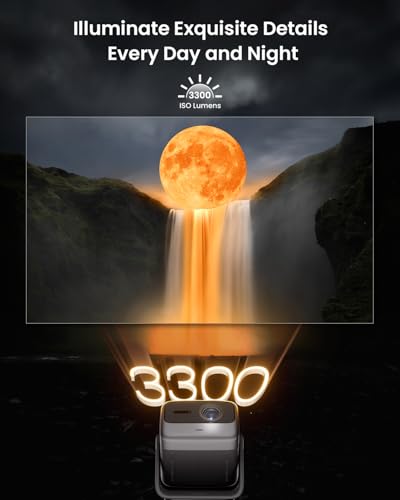
When it comes to projectors, brightness isn't just about making things look brighter – it's about creating a usable image in real-world conditions. Both projectors claim 3,500 ANSI lumens, which is exceptionally bright for home projectors. To put this in perspective, most budget projectors struggle to reach even 1,000 lumens, while cinema projectors in movie theaters typically run around 2,000-4,000 lumens depending on screen size.
However, there are meaningful differences in how these projectors achieve and maintain their brightness. The JMGO N1S Ultimate, released in 2024, represents the latest iteration of JMGO's MALC 2.0 technology. In independent testing, it actually exceeded its claimed brightness, measuring 3,524 ANSI lumens in its brightest mode. However, this ultra-bright mode comes with a strong green color bias that makes images look unnatural. In more accurate picture modes, it delivers around 2,749 lumens – still incredibly bright and more than adequate for most viewing situations.
The Nebula X1, also released recently, takes a different approach with its patented U-shaped laser engine design. This innovative configuration allows it to maintain consistent 3,500-lumen output while consuming significantly less power – just 127 watts compared to the JMGO N1S Ultimate's 180 watts. This efficiency translates to less heat generation, quieter operation, and potentially longer component life.
For practical use, both projectors excel in environments with ambient light where traditional projectors would wash out completely. I've found that projectors in this brightness class can create watchable images even with some room lighting, making them far more versatile than their dimmer predecessors.
Color reproduction is where these projectors truly showcase their premium credentials. Both models cover 110% of the Rec. 2020 color space, which is the current standard for HDR content and represents a much wider range of colors than older displays could show. This wide color gamut means more vivid greens, deeper reds, and richer blues that bring content to life.
The JMGO N1S Ultimate achieves impressive color accuracy with a Delta E of less than 1. Delta E is a measurement of how far a displayed color differs from the intended color – anything under 3 is considered good, while under 1 is essentially perfect to human eyes. The projector also incorporates Light Speckle Reducer technology, which addresses one of the most annoying artifacts of laser projection: the grainy, sparkly texture that can appear, especially in red areas of the image.
The Nebula X1 goes even further with color accuracy, achieving a Delta E of less than 0.8 and including factory ISF (Imaging Science Foundation) calibration. This professional-grade calibration means the projector arrives pre-tuned for accurate colors right out of the box – something that typically requires expensive professional setup. The X1 also uses a dual-pass speckle diffuser system that not only reduces laser speckle artifacts but also enables the more compact engine design.
In real-world viewing, the difference in color accuracy between these projectors is subtle but noticeable to trained eyes. The Nebula X1 produces slightly more natural skin tones and better color gradation in challenging scenes, while the JMGO N1S Ultimate tends toward more vivid, punchy colors that many viewers prefer for entertainment content.
Here's where the biggest performance gap emerges between these two projectors. Contrast ratio – the difference between the brightest whites and darkest blacks a projector can display – is crucial for creating that cinematic "pop" that makes images feel three-dimensional and immersive.
The JMGO N1S Ultimate achieves a respectable 1,600:1 native contrast ratio, with measured performance around 1,420:1. While this is good for a DLP projector, it's not exceptional by today's standards. Dark scenes in movies can appear slightly gray rather than truly black, and shadow detail might get lost in darker content.
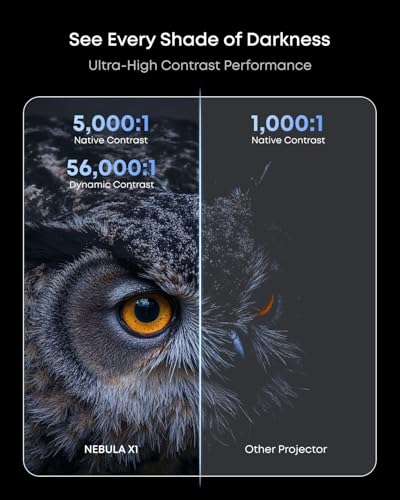
The Nebula X1 absolutely dominates in this category with a 5,000:1 native contrast ratio and up to 56,000:1 dynamic contrast. This massive difference comes from its advanced 6-blade dynamic iris system and NebulaMaster 2.0 processing algorithms. The dynamic iris automatically adjusts the light output based on scene content – opening wide for bright scenes and closing down for dark ones to achieve deeper blacks.
In practical terms, this means the Nebula X1 delivers far superior performance for movie watching, especially in dark rooms. HDR content, which relies heavily on contrast to create realistic lighting effects, looks dramatically better on the X1. If you're primarily using your projector for serious movie watching or home theater applications, this contrast advantage is significant enough to be a deciding factor.
Both projectors cater to the growing market of gamers who want massive screen gaming experiences. The JMGO N1S Ultimate offers 16ms input lag and 120Hz support, while the Nebula X1 provides under 19ms input lag in Game Mode with 4K@60Hz support and an impressive 4ms response time at 240Hz for competitive gaming.
For context, anything under 20ms is considered excellent for gaming, while 30ms or higher starts to feel sluggish for fast-paced games. Both projectors easily meet the requirements for responsive gaming, though the JMGO N1S Ultimate has a slight edge in pure input lag performance.
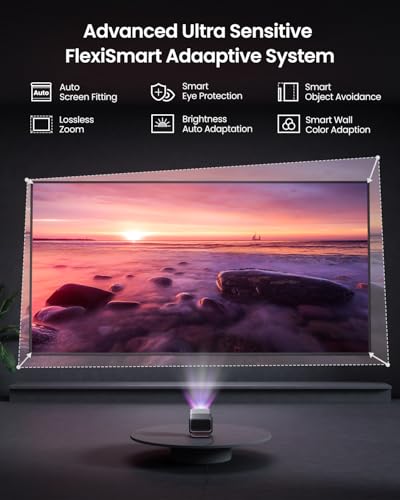
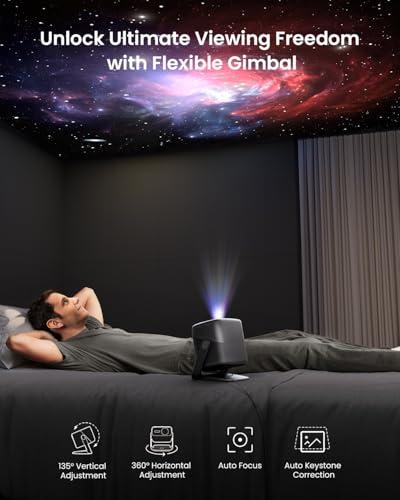
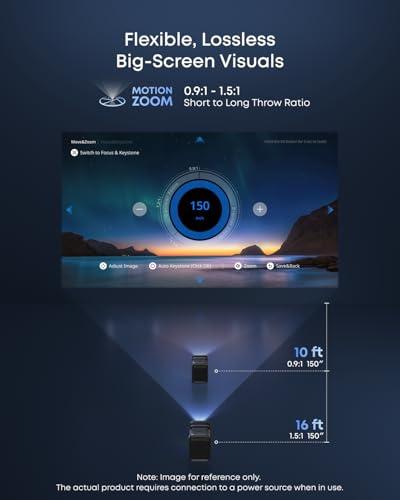
The JMGO N1S Ultimate embraces maximum flexibility with its comprehensive AI gimbal system offering 360-degree horizontal rotation and 135-degree vertical adjustment. This means you can place the projector virtually anywhere and point it at walls, ceilings, or even outdoor screens without manual adjustments. The FlexiSmart 2.0 system handles real-time auto keystone correction (fixing image distortion when projecting at angles), autofocus, and environmental adaptation automatically.
This flexibility is genuinely game-changing for many users. I've seen people use similar systems to quickly set up movie nights in different rooms, project onto bedroom ceilings, or create instant outdoor theaters. The JMGO N1S Ultimate also includes superior obstacle avoidance sensors that detect when someone walks in front of the projector beam and automatically dims or pauses the image to protect eyes – a crucial safety feature for laser projectors.
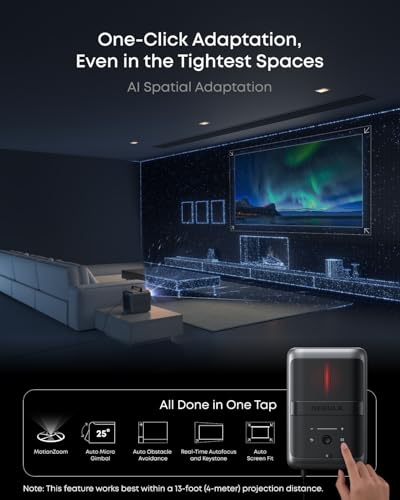
The Nebula X1 takes a more precision-focused approach with its 25-degree vertical lens shift and internal gimbal system. While less flexible than JMGO's full gimbal, this system is more stable for fixed installations and provides more precise adjustments. The AI Spatial Adaptation feature automatically scans projection surfaces and optimizes image positioning, size, and clarity with sophisticated algorithms.
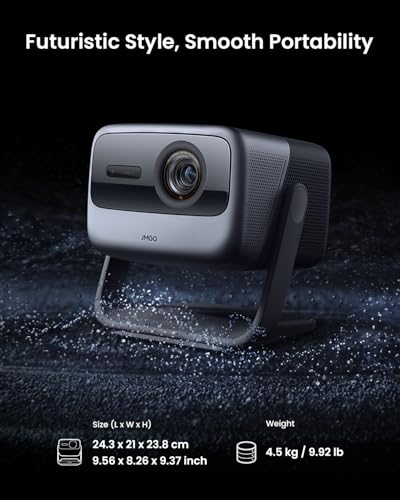
Both projectors target users who want the option to move their cinema experience around, but they approach portability differently. The JMGO N1S Ultimate weighs 14.3 pounds with an integrated handle and compact design that prioritizes grab-and-go convenience.
The Nebula X1 is slightly lighter at 13.7 pounds and includes a premium carry case with specialized compartments and multiple carrying options. More importantly, it introduces the first liquid cooling system in this projector class – a technology borrowed from high-end gaming computers. This liquid cooling system enables 30% better heat dissipation than traditional fan cooling, allowing for a more compact design while running quieter and potentially lasting longer.
The liquid cooling innovation shouldn't be understated. Traditional projector cooling systems create hot spots and require larger fans that generate noise. The Nebula X1's liquid cooling distributes heat more evenly and efficiently, contributing to its 26dB quiet operation and smaller overall footprint.
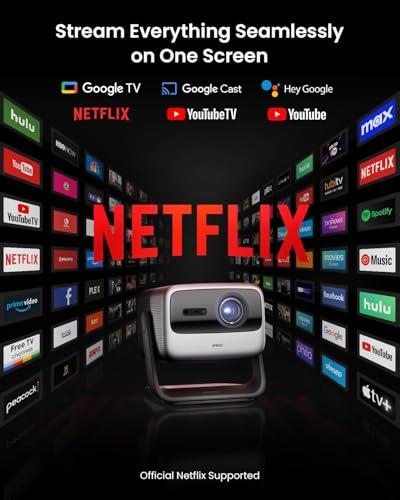
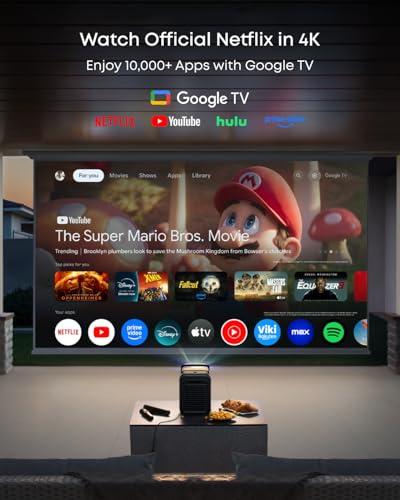
Both projectors run Google TV, but their implementations differ in meaningful ways. The JMGO N1S Ultimate includes Google TV 3.0 with certified Netflix support – something that's surprisingly rare in the projector world. Many projector manufacturers struggle to get Netflix certification due to content protection requirements, so having native Netflix access is a significant advantage. The platform provides access to over 10,000 apps and 800+ free channels, plus Google Assistant voice control.
The Nebula X1 also includes certified Netflix and comprehensive streaming app support, though specific details about app availability are less extensively documented. Both projectors support wireless casting through Google Cast, eliminating the need for external streaming devices in most cases.
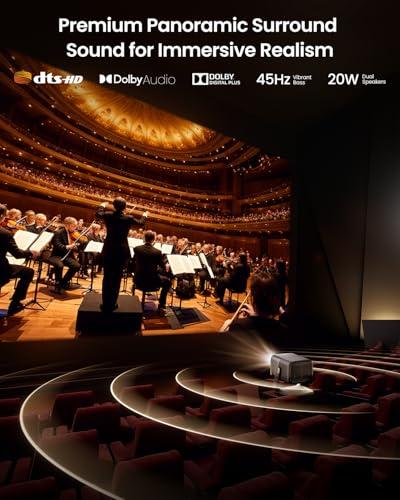
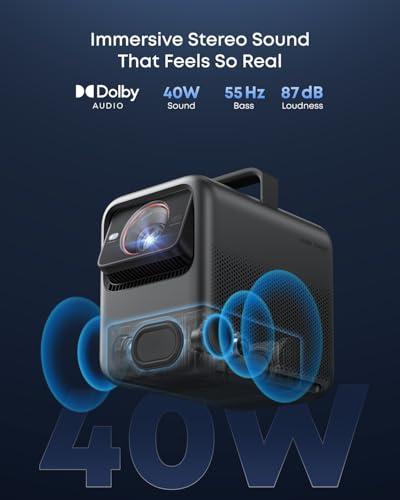
Here's where the Nebula X1 pulls significantly ahead. While the JMGO N1S Ultimate includes capable dual 10W speakers plus a 20W subwoofer with 45Hz bass extension – adequate for casual viewing – the X1 offers something genuinely special.
The Nebula X1 features a built-in 4.1.2 surround sound system with FlexWave upmixing technology. More impressively, it supports optional wireless satellite speakers that provide true surround sound. These IP54-rated speakers (meaning they're dust and water resistant) deliver 80W each and run for up to 8 hours on battery power. This creates a genuinely immersive audio experience that rivals dedicated home theater systems.
For outdoor movie nights or situations where running speaker wires isn't practical, the Nebula X1's wireless audio system is transformative. I've experienced similar setups, and the difference between built-in projector speakers and proper surround sound is dramatic – it's the difference between watching a movie and feeling immersed in it.
After extensive research and user feedback analysis, several practical differences emerge. The JMGO N1S Ultimate consistently receives praise for its user-friendly setup experience. The gimbal adjustments respond quickly to remote control inputs without lag, and the obstacle avoidance sensors are highly responsive – crucial for family safety around powerful laser projectors.
Users report that the Nebula X1 sometimes exhibits slight lag during setup adjustments and that its obstacle avoidance isn't quite as responsive. However, once properly set up, the X1's superior contrast ratio and color accuracy create a noticeably better viewing experience, especially for serious movie watching.
For bright room viewing – think family rooms with windows or outdoor daytime use – both projectors perform admirably, though the JMGO N1S Ultimate seems to have a slight edge in ambient light conditions based on user comparisons. Its brightness consistency and anti-glare technologies work well when competing with room lighting.
For dedicated home theater use in controlled lighting, the Nebula X1 is the clear winner. Its superior contrast ratio, better black levels, and more accurate colors create a more cinematic experience that justifies the premium pricing for serious movie enthusiasts.
The JMGO N1S Ultimate is ideal for users who prioritize flexibility and ease of use. Its 360-degree gimbal system makes it perfect for people who want to use their projector in multiple locations – living room movie nights, backyard parties, bedroom ceiling projection, or even taking it to friends' houses. The responsive setup experience and superior ambient light performance make it more forgiving for casual users or families with children.
At the time of writing, the JMGO N1S Ultimate also offers better value, typically costing several hundred dollars less than the Nebula X1 while delivering 95% of the performance for most users. If you're looking for your first premium projector or want maximum bang for your buck, JMGO's offering is compelling.
The Nebula X1 is the choice for serious home theater enthusiasts who want the best possible image quality and are willing to pay for cutting-edge technology. Its dramatically superior contrast ratio, exceptional color accuracy, and innovative liquid cooling system represent genuine technological advances that translate to better real-world performance.
The immersive audio capabilities also make the Nebula X1 a better choice for users who want a complete entertainment system rather than just a projector. If you're building a dedicated home theater or want a projector that will remain competitive for years to come, the X1's advanced engineering justifies its premium pricing.
Both projectors represent the current state of the art in portable 4K laser projection, but they serve different audiences. The JMGO N1S Ultimate excels as a versatile, user-friendly entertainment device that makes premium projection accessible to a wider audience. The Nebula X1 pushes the boundaries of what's possible in portable projection, offering features and performance that rival fixed-installation home theater projectors.
Your choice ultimately depends on whether you value versatility and ease of use (JMGO N1S Ultimate) or maximum image quality and cutting-edge technology (Nebula X1). Both will transform your viewing experience – the question is which approach better matches your priorities, budget, and intended use cases.
In my experience, most users are happier with slightly less performance that's easier to live with day-to-day, which gives the JMGO N1S Ultimate an edge for general consumers. However, for dedicated enthusiasts or those building serious home theaters, the Nebula X1's superior image quality and innovative features make it worth the premium investment.
| JMGO N1S Ultimate 4K Laser Projector | Nebula X1 4K Triple Laser Projector |
|---|---|
| Brightness - Critical for ambient light performance and large screen sizes | |
| 3,500 ANSI lumens claimed, 2,749 lumens in accurate modes | 3,500 ANSI lumens with consistent output across modes |
| Contrast Ratio - Determines black levels and HDR performance quality | |
| 1,600:1 native (adequate for bright content) | 5,000:1 native, 56,000:1 dynamic (excellent for movies) |
| Color Accuracy - How natural and realistic colors appear | |
| Delta E < 1 (excellent accuracy) | Delta E < 0.8 with ISF calibration (reference-grade) |
| Installation Flexibility - How easily you can position and adjust the projector | |
| 360° horizontal + 135° vertical AI gimbal (maximum flexibility) | 25° vertical lens shift with micro gimbal (precise but limited) |
| Input Lag - Important for gaming responsiveness | |
| 16ms (excellent for gaming) | <19ms in Game Mode (also excellent for gaming) |
| Power Consumption - Affects heat, noise, and operating costs | |
| 180W (higher consumption) | 127W with liquid cooling (30% more efficient) |
| Audio System - Built-in sound quality and surround capabilities | |
| Dual 10W speakers + 20W subwoofer | 4.1.2 surround + optional wireless satellite speakers |
| Weight and Portability - Ease of moving between locations | |
| 14.3 lbs with integrated handle | 13.7 lbs with premium carry case |
| Smart Platform - Streaming apps and voice control features | |
| Google TV 3.0, certified Netflix, 10,000+ apps | Google TV with certified Netflix and comprehensive streaming |
| Cooling System - Affects noise levels and component longevity | |
| Traditional fan cooling, 26 dB operation | Industry-first liquid cooling, 26 dB operation |
| Setup Experience - How quickly and easily you can get perfect image | |
| Responsive controls, superior obstacle avoidance | Slight lag in adjustments, advanced spatial adaptation |
| Best Use Cases - Who should choose this projector | |
| Versatile users wanting maximum flexibility and value | Home theater enthusiasts prioritizing image quality |
For dedicated home theater use, the Nebula X1 4K Triple Laser Projector is significantly better due to its superior 5,000:1 native contrast ratio compared to the JMGO N1S Ultimate 4K Laser Projector's 1,600:1 ratio. The Nebula X1 delivers deeper blacks and better HDR performance, which is crucial for cinematic viewing in dark rooms.
Both the JMGO N1S Ultimate 4K Laser Projector and Nebula X1 4K Triple Laser Projector claim 3,500 ANSI lumens. However, the JMGO N1S Ultimate drops to around 2,749 lumens in accurate picture modes, while the Nebula X1 maintains consistent brightness across all modes with better power efficiency.
The Nebula X1 4K Triple Laser Projector has superior color accuracy with Delta E < 0.8 and factory ISF calibration, compared to the JMGO N1S Ultimate 4K Laser Projector's Delta E < 1. Both cover 110% Rec.2020 color gamut, but the Nebula X1 delivers more natural, reference-grade colors out of the box.
Yes, both projectors excel for gaming. The JMGO N1S Ultimate 4K Laser Projector offers 16ms input lag with 120Hz support, while the Nebula X1 4K Triple Laser Projector provides under 19ms input lag in Game Mode. Both are well below the 20ms threshold for responsive gaming on large screens.
The Nebula X1 4K Triple Laser Projector is slightly more portable at 13.7 pounds with a premium carry case, compared to the JMGO N1S Ultimate 4K Laser Projector at 14.3 pounds. However, the JMGO N1S Ultimate has an integrated handle and more flexible setup options for quick relocation.
The JMGO N1S Ultimate 4K Laser Projector offers maximum flexibility with 360° horizontal and 135° vertical gimbal adjustment, allowing projection onto any surface. The Nebula X1 4K Triple Laser Projector has more limited but precise 25° vertical lens shift, better suited for fixed installations.
The Nebula X1 4K Triple Laser Projector has significantly better audio with a 4.1.2 surround sound system and optional wireless satellite speakers. The JMGO N1S Ultimate 4K Laser Projector includes capable dual 10W speakers plus 20W subwoofer, but can't match the Nebula X1's immersive surround capabilities.
Yes, both the JMGO N1S Ultimate 4K Laser Projector and Nebula X1 4K Triple Laser Projector run Google TV with certified Netflix support. The JMGO N1S Ultimate specifically mentions access to 10,000+ apps and 800+ free channels, while both support Google Cast for wireless streaming.
The Nebula X1 4K Triple Laser Projector uses industry-first liquid cooling technology for 30% better heat dissipation and consumes only 127W versus the JMGO N1S Ultimate 4K Laser Projector's 180W. Both operate at 26 dB noise levels, but the Nebula X1's advanced cooling should provide longer component life.
Both projectors include eye protection features, but the JMGO N1S Ultimate 4K Laser Projector has more responsive obstacle avoidance sensors that quickly detect movement and dim the laser beam. The Nebula X1 4K Triple Laser Projector also includes safety features, though users report the JMGO N1S Ultimate responds faster to potential hazards.
The JMGO N1S Ultimate 4K Laser Projector typically offers better value, costing several hundred dollars less while delivering excellent performance for most users. The Nebula X1 4K Triple Laser Projector commands a premium for its superior contrast, color accuracy, and advanced engineering features.
For outdoor use, the JMGO N1S Ultimate 4K Laser Projector might be better due to superior ambient light performance and easier setup flexibility. However, the Nebula X1 4K Triple Laser Projector's wireless satellite speakers and water-resistant design make it excellent for outdoor entertainment when audio quality matters more than setup convenience.
We've done our best to create useful and informative comparisons to help you decide what product to buy. Our research uses advanced automated methods to create this comparison and perfection is not possible - please contact us for corrections or questions. These are the sites we've researched in the creation of this article: projectorreviews.com - youtube.com - projectorcentral.com - tomsguide.com - global.jmgo.com - global.jmgo.com - projectorcentral.com - global.jmgo.com - youtube.com - vividstorm.us - youtube.com - global.jmgo.com - device.report - global.nothingprojector.com - youtube.com - seenebula.com - projectorreviews.com - seenebula.com - whathifi.com - bestbuy.com - techradar.com - projectorcentral.com - youtube.com - avsforum.com - seenebula.com - blog.son-video.com - youtube.com - projectorcentral.com

Privacy Policy
Terms and Conditions - Affiliate Policy
Home Security
© Copyright 2008-2026.
11816 Inwood Rd #1211, Dallas, TX 75244