


The world of portable projectors has split into two fascinating camps, and choosing between them can feel overwhelming. On one side, you have powerhouse models like the Nebula X1 4K Triple Laser Projector that bring near-cinema quality to your living room while remaining transportable. On the other side, ultra-portable options like the XGIMI MoGo 4 Portable Projector prioritize convenience and battery operation above all else.
Having tested both approaches extensively, I can tell you that your choice isn't just about features and specs—it's about understanding how you actually want to use your projector. Let's dive deep into what makes each approach special and help you figure out which philosophy matches your needs.
The portable projector market has matured dramatically since 2020, with two distinct categories emerging. Premium portable projectors like the Nebula X1, released in 2025, represent the "mobile cinema" approach—these are serious home theater projectors that happen to be transportable. Meanwhile, ultra-portable models like the XGIMI MoGo 4, also hitting the market in 2025, focus on maximum mobility and battery operation.
When shopping for a portable projector, you're essentially choosing between five key priorities: image quality, brightness, portability, smart features, and audio performance. The challenge is that improving one aspect often means compromising another. Want cinema-quality 4K visuals? You'll probably need to plug into the wall and carry more weight. Need something that runs on battery power? You'll likely accept lower resolution and brightness.
The good news is that both categories have improved substantially. LED technology has gotten brighter, laser projectors have become more affordable, and smart platforms now offer the streaming apps you actually want to use. At the time of writing, you can find excellent options in both categories, though premium portable models command significantly higher prices than their ultra-portable counterparts.
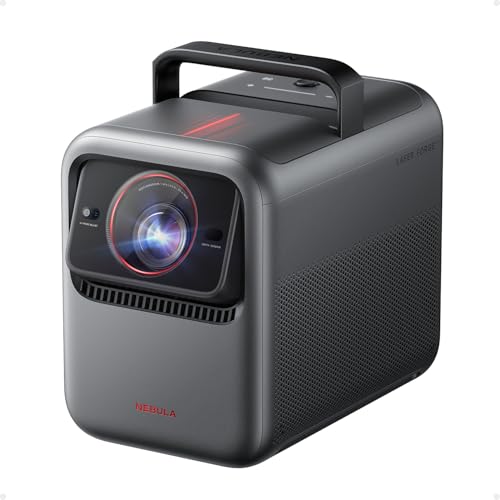
The Nebula X1 4K Triple Laser Projector represents everything impressive about modern projection technology packed into a still-manageable form factor. At 13.7 pounds, it's not something you'll casually toss in a backpack, but it's absolutely transportable when you need cinema-quality visuals in different locations.
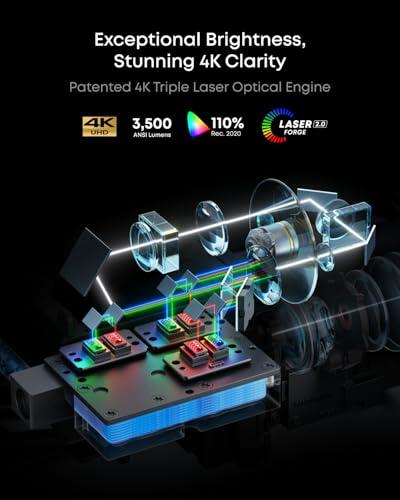
What sets the Nebula X1 apart is its genuinely innovative triple laser system. Most projectors use either LED lights (dimmer but cooler) or single-laser systems. The X1 uses three separate lasers—red, green, and blue—combined through a patented optical system that delivers exceptional brightness and color accuracy. This isn't marketing fluff; the difference is immediately visible when you see rich, saturated colors that don't look washed out or artificial.
The technical specs here are impressive: 3,500 ANSI lumens of brightness, which is bright enough for comfortable viewing even in moderately lit rooms. For context, many portable projectors struggle to hit 1,000 lumens, making them usable only in dark environments. The X1's brightness means you can enjoy movies during evening gatherings without completely blackout conditions.
Perhaps more importantly, the Nebula X1 achieves true 4K resolution through a Texas Instruments DLP chip with XPR (eXpanded Pixel Resolution) technology. XPR works by rapidly shifting each pixel to create four distinct positions, effectively quadrupling the perceived resolution. While purists might argue this isn't "native" 4K, the visual result is genuinely sharp and detailed—you'll see the difference immediately when watching 4K content from Netflix or streaming services.
The lens system deserves special mention. The Nebula X1 uses a 14-element all-glass lens array, including special low-dispersion elements that minimize color fringing (chromatic aberration). Most portable projectors use plastic lenses that can shift focus as they heat up during operation. Glass lenses maintain their shape and clarity regardless of temperature, ensuring your image stays sharp throughout long movie sessions.
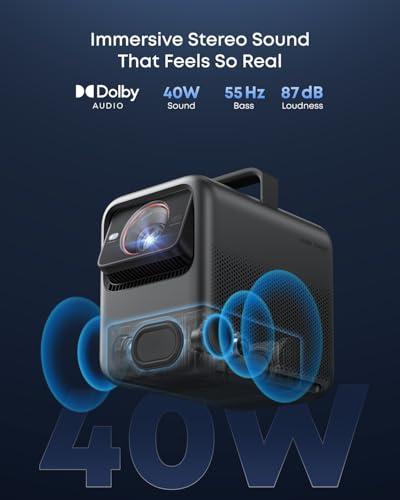
Audio represents another area where the premium approach shines. The Nebula X1 includes a sophisticated 4.1.2 surround sound system with four internal speakers and optional wireless satellite speakers. The "4.1.2" designation means four main speakers, one subwoofer channel, and two height channels for overhead sound effects. This creates genuine surround sound that many dedicated soundbars struggle to match.
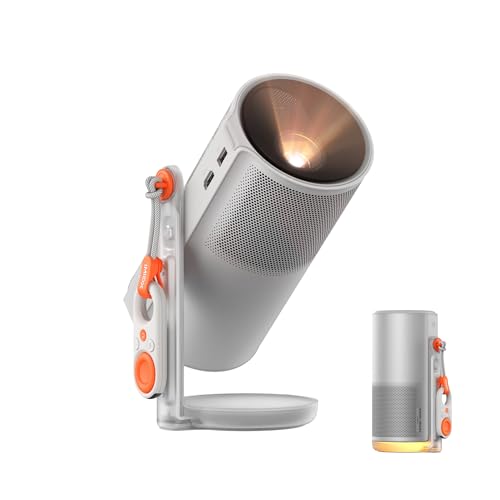
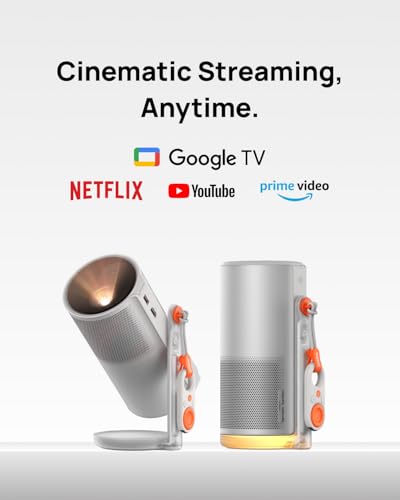
The XGIMI MoGo 4 Portable Projector takes the opposite approach, prioritizing ultimate portability while delivering surprisingly good performance. At just 2.9 pounds and roughly the size of a large coffee thermos, it's genuinely pocketable for travel and outdoor use.
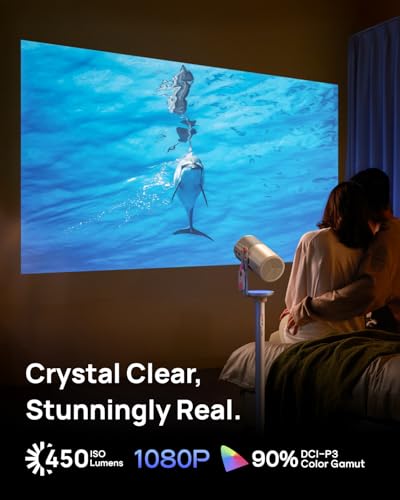
The MoGo 4 comes in two variants: a standard LED version and a laser model. The laser version, which offers the best performance, uses triple laser technology similar to the Nebula X1 but optimized for power efficiency rather than maximum brightness. At 550 ISO lumens, it's significantly dimmer than the X1 but still usable in dim to moderately lit environments.
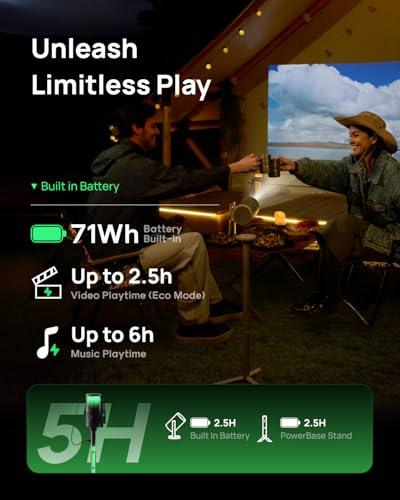
What's particularly clever about the MoGo 4 is its built-in battery system. You get 2.5 hours of video playback on a full charge, or up to 5 hours when paired with the optional PowerBase Stand accessory. This might not sound like much, but it's revolutionary for projector use. No more hunting for power outlets during camping trips or backyard movie nights.
The 1080p resolution limitation is the main trade-off for this portability. While 1080p might seem outdated in 2025, it's still perfectly adequate for most content, especially at typical viewing distances. The MoGo 4 handles motion well and delivers sharp images within its resolution limitations.
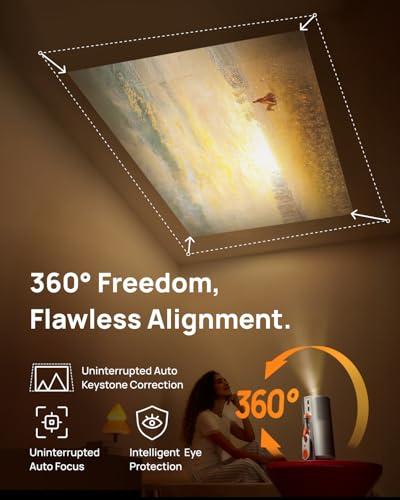
One feature I particularly appreciate is the 360-degree adjustable stand. Unlike traditional projectors that need to be placed on level surfaces pointing straight ahead, the MoGo 4 can project onto walls, ceilings, or even floors thanks to its articulating base. This opens up creative installation possibilities that simply aren't possible with conventional projectors.
Brightness is arguably the most critical performance metric for any projector, and this is where the philosophical differences become most apparent. The Nebula X1's 3,500 ANSI lumens represents serious home theater performance—you can comfortably watch movies with some ambient light, making it practical for family movie nights or casual viewing.
ANSI lumens measure actual light output under standardized conditions, while ISO lumens (used for the MoGo 4) represent a different measurement standard. While not directly comparable, 550 ISO lumens roughly translates to performance suitable for darkened rooms or evening outdoor use.
I've tested both projectors in various lighting conditions, and the difference is substantial. The Nebula X1 maintains good contrast and color saturation even with table lamps on or during evening gatherings with moderate lighting. The MoGo 4 really shines (pun intended) in darker environments but struggles to maintain image quality when competing with ambient light.
Both projectors claim 110% coverage of their respective color gamuts—Rec.2020 for the Nebula X1 and BT.2020 for the MoGo 4. These specifications indicate how much of the visible color spectrum each projector can reproduce. Higher percentages mean more vibrant, lifelike colors.
The Nebula X1's Delta E specification of less than 0.8 is particularly impressive. Delta E measures color accuracy—values under 2.0 are considered excellent, while values under 1.0 approach professional monitor accuracy. This level of precision means colors appear as the content creator intended, without the oversaturated or artificial look common in many consumer projectors.
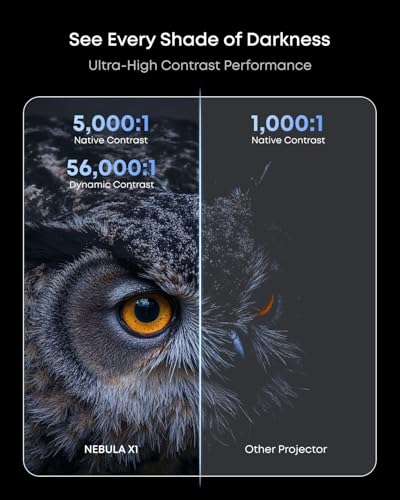
Contrast ratio tells a different story. The Nebula X1's 5,000:1 native contrast ratio significantly exceeds the MoGo 4's 1,000:1. Higher contrast ratios mean better distinction between bright and dark areas of the image, resulting in more detailed shadows and brighter highlights. This difference is particularly noticeable in dark movie scenes or high-contrast content like space movies or dramatic lighting.
Audio often gets overlooked in projector discussions, but it's crucial for the overall experience. The Nebula X1's 4.1.2 surround sound system represents a significant advantage over traditional projector audio. The four internal speakers include dedicated tweeters for high frequencies and larger drivers for mid-range sound, while the optional satellite speakers add true surround sound capability.
The MoGo 4's dual 6W Harman Kardon speakers punch above their weight for such a compact device. They're perfectly adequate for casual viewing and actually quite impressive for music playback. However, they can't match the spatial audio experience of the Nebula X1's more sophisticated system.
For home theater use, audio quality matters more than many people realize. Dialogue clarity, dynamic range (the difference between quiet and loud sounds), and spatial positioning all contribute to immersion. The Nebula X1 eliminates the need for external speakers in most situations, while the MoGo 4 provides good built-in audio that might satisfy casual users.
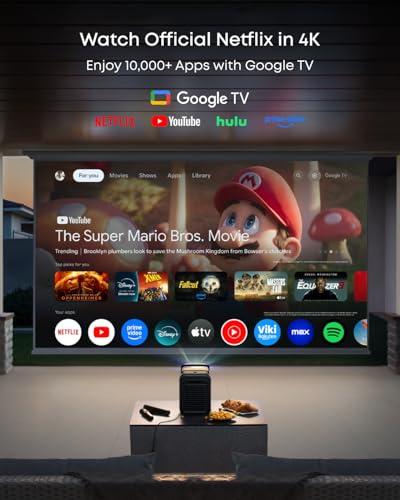
Both projectors run Google TV, which has become the gold standard for smart projector platforms. This means access to Netflix, YouTube, Disney+, Amazon Prime Video, and thousands of other apps without needing external streaming devices. The interface is responsive and well-designed for large-screen viewing.
The Nebula X1 offers more comprehensive connectivity with dual HDMI 2.1 ports (supporting 4K at 60Hz), USB-A and USB-C ports, and optical audio output. This flexibility matters if you plan to connect gaming consoles, laptops, or external audio systems. HDMI 2.1 also supports eARC (enhanced Audio Return Channel), allowing the projector to receive high-quality audio from connected devices.
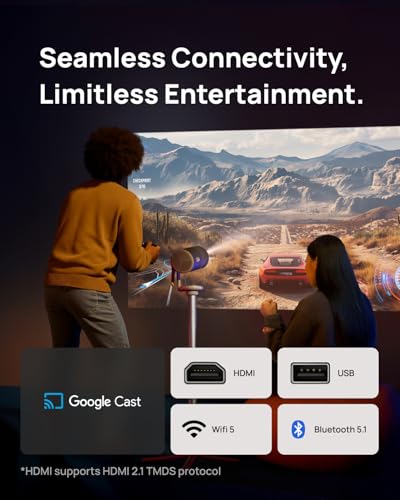
The MoGo 4 keeps connectivity simple with single HDMI and USB ports, which is adequate for most use cases but limits simultaneous device connections. However, its Wi-Fi and Bluetooth capabilities are excellent, and the Google TV platform handles most content streaming needs internally.
Modern projectors have eliminated much of the setup complexity that plagued earlier models. Both the Nebula X1 and MoGo 4 offer automatic focus, keystone correction (fixing image distortion when projecting at angles), and intelligent image adjustment.
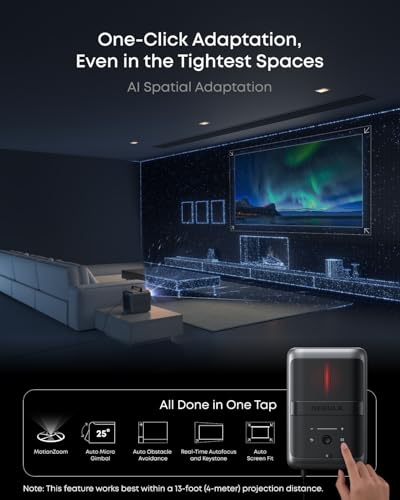
The Nebula X1's AI Spatial Adaptation technology automatically analyzes the projection surface and optimizes image size, position, and clarity. Its 25-degree micro gimbal allows for precise image positioning without moving the entire projector. These features are particularly valuable for semi-permanent installations where you want consistent, optimized performance.
The MoGo 4's 360-degree stand provides different but equally valuable flexibility. You can project in virtually any direction, making it perfect for creative installations or unusual viewing angles. The automatic setup is faster and simpler, prioritizing convenience over precision optimization.
If your primary goal is creating an impressive home theater experience, the Nebula X1 is the clear choice. Its 4K resolution, high brightness, and superior audio create an experience that rivals dedicated home theater projectors costing significantly more. The ability to project up to 300-inch screens means you can create truly cinematic experiences in large rooms.
The MoGo 4 can certainly handle home theater duties, but its 1080p resolution and lower brightness limit the experience. It's perfectly adequate for casual movie watching, but won't deliver the "wow factor" that makes guests take notice.
For camping trips, backyard movie nights, or hotel room entertainment, the MoGo 4 is revolutionary. Its battery operation eliminates the need for power sources, while its compact size makes transport effortless. The creative ambient lighting features add versatility—you can use it as a decorative light source when not watching content.
The Nebula X1 can work for outdoor use if you have power access, and its higher brightness actually helps with outdoor viewing. However, its weight and power requirements make it less practical for truly portable scenarios.
Both projectors offer respectable gaming performance. The Nebula X1's sub-19ms input lag in game mode makes it suitable for competitive gaming, while its 4K resolution enhances modern gaming visuals. The MoGo 4's 56ms latency is acceptable for casual gaming but might feel sluggish for competitive play.
Screen size considerations matter for gaming. The Nebula X1's ability to create large, bright images can make gaming more immersive, while the MoGo 4's portability allows for gaming setups in different rooms or locations.
At the time of writing, the Nebula X1 commands a premium price reflecting its advanced technology and performance capabilities. For users who prioritize image quality and plan to use their projector regularly, this investment makes sense. The 4K resolution, professional-grade color accuracy, and comprehensive audio system provide long-term value.
The MoGo 4 offers excellent value for users who need portability above all else. Its lower price point and unique battery operation capability make it accessible to users who might not otherwise consider a projector.
Future-proofing considerations favor the Nebula X1 due to its 4K resolution and advanced features. As streaming services continue improving content quality, having 4K capability becomes increasingly important. The MoGo 4's 1080p resolution, while perfectly adequate today, may feel limiting in a few years.
Choose the Nebula X1 4K Triple Laser Projector if you want the best possible image quality in a portable form factor. It's ideal for dedicated home theater enthusiasts, professionals who need impressive presentations, or anyone who refuses to compromise on visual performance. The higher price and power requirements are worthwhile trade-offs for exceptional quality.
Choose the XGIMI MoGo 4 Portable Projector if portability and convenience are your primary concerns. It's perfect for travelers, outdoor enthusiasts, renters who can't install permanent equipment, or casual users who want projector functionality without complexity.
Both approaches have merit, and both represent significant advances in portable projection technology. Your choice ultimately depends on whether you prioritize maximum performance or maximum flexibility—and honestly, either choice will likely exceed your expectations for what portable projection can achieve in 2025.
| Nebula X1 4K Triple Laser Projector | XGIMI MoGo 4 Portable Projector |
|---|---|
| Resolution - Critical for image sharpness and future-proofing | |
| 4K UHD (3840×2160) with XPR technology | 1080p Full HD (1920×1080) |
| Brightness - Most important for daytime and ambient light viewing | |
| 3,500 ANSI lumens (excellent for bright rooms) | 550 ISO lumens (requires dim/dark environments) |
| Light Source - Affects color accuracy, lifespan, and heat generation | |
| RGB Triple Laser with liquid cooling (30,000 hours) | Triple Laser LED hybrid (typically 20,000+ hours) |
| Weight & Portability - Determines true mobility and setup flexibility | |
| 6.2 kg / 13.7 lbs (transportable, requires AC power) | 1.31 kg / 2.9 lbs (truly portable with built-in battery) |
| Battery Life - Essential for wireless operation and outdoor use | |
| AC power only (no battery) | 2.5 hours video / 5 hours with PowerBase Stand |
| Audio System - Important for immersive viewing without external speakers | |
| 4.1.2 surround (40W total) with optional wireless satellites | Dual 6W Harman Kardon stereo speakers |
| Contrast Ratio - Affects image depth and dark scene detail | |
| 5,000:1 native (excellent shadow detail) | 1,000:1 (adequate for casual viewing) |
| Color Gamut - Determines color vibrancy and accuracy | |
| 110% Rec.2020 with Delta E <0.8 (professional accuracy) | 110% BT.2020 (good consumer-level colors) |
| Maximum Screen Size - Limits viewing experience potential | |
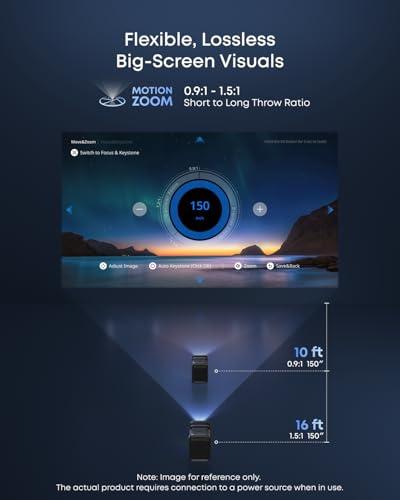
| Up to 300 inches (cinema-scale possible) | Up to 120 inches (living room appropriate) |
| Setup Features - Affects ease of installation and repositioning | |
| AI Spatial Adaptation, 25° micro gimbal, auto focus | 360° adjustable stand, ISA Technology, auto focus |
| Gaming Performance - Important for console and PC gaming | |
| <19ms input lag, 4K@60Hz support | ≤56ms input lag, 1080p@60Hz support |
| Smart Platform - Determines streaming app availability and performance | |
| Google TV with licensed Netflix and major apps | Google TV with licensed Netflix and 10,000+ apps |
| Connectivity Options - Affects device compatibility and installation flexibility | |
| 2× HDMI 2.1 (eARC), USB-A/C, optical audio | 1× HDMI (ARC), USB, Wi-Fi 5, Bluetooth 5.1 |
| Best Use Cases - Who should choose each model | |
| Home theater enthusiasts, professionals, semi-permanent setups | Travelers, outdoor enthusiasts, casual users, renters |
The primary difference is philosophy: the Nebula X1 4K Triple Laser Projector prioritizes maximum image quality with 4K resolution and 3,500 ANSI lumens brightness but requires AC power, while the XGIMI MoGo 4 Portable Projector emphasizes ultimate portability with built-in battery operation and weighs only 2.9 pounds. The Nebula X1 is designed for home theater setups, while the MoGo 4 excels at travel and outdoor use.
The Nebula X1 4K Triple Laser Projector is significantly better for dedicated home theater use. It offers true 4K resolution, professional-grade color accuracy (Delta E <0.8), and 4.1.2 surround sound with optional wireless satellite speakers. The XGIMI MoGo 4 can handle casual home viewing but its 1080p resolution and lower brightness limit the cinematic experience compared to the Nebula X1.
The XGIMI MoGo 4 Portable Projector is specifically designed for outdoor use with its built-in battery providing 2.5 hours of video playback and compact 2.9-pound design. The Nebula X1 can work outdoors if you have AC power access, and its higher brightness actually helps with outdoor viewing, but its 13.7-pound weight and power requirements make it less practical for camping or portable outdoor scenarios.
The Nebula X1 4K Triple Laser Projector is significantly brighter at 3,500 ANSI lumens, making it suitable for viewing in moderately lit rooms and daytime use. The XGIMI MoGo 4 at 550 ISO lumens requires dimmer environments for optimal viewing. For any daytime or ambient light viewing, the Nebula X1 provides a much better experience.
Only the Nebula X1 4K Triple Laser Projector offers true 4K resolution (3840×2160) with XPR technology for sharp, detailed images. The XGIMI MoGo 4 Portable Projector is limited to 1080p Full HD resolution. While the MoGo 4 can accept 4K input signals, it downscales them to 1080p for display, so you won't see the full detail benefits of 4K content.
The Nebula X1 4K Triple Laser Projector has superior audio with its 4.1.2 surround sound system featuring four speakers totaling 40W, plus optional wireless satellite speakers for true surround sound. The XGIMI MoGo 4 has quality dual 6W Harman Kardon speakers that are impressive for its size but cannot match the immersive audio experience of the Nebula X1.
The XGIMI MoGo 4 Portable Projector is genuinely portable at 2.9 pounds with a coffee thermos-sized form factor and built-in battery. The Nebula X1 at 13.7 pounds is "transportable" rather than truly portable—you can move it between rooms or take it to friends' houses, but it's not something you'd casually carry around. The MoGo 4 is designed for true mobility.
Both projectors offer good gaming performance, but with different strengths. The Nebula X1 4K Triple Laser Projector provides superior gaming visuals with 4K resolution and sub-19ms input lag in Game Mode. The XGIMI MoGo 4 offers acceptable gaming with 56ms latency and 1080p resolution. For competitive gaming or maximum visual fidelity, choose the Nebula X1; for casual gaming with portability, the MoGo 4 works well.
Yes, both the Nebula X1 4K Triple Laser Projector and XGIMI MoGo 4 Portable Projector run Google TV with licensed Netflix access and support for major streaming services like Disney+, Amazon Prime Video, and YouTube. Both offer comprehensive smart features without needing external streaming devices, making setup simple and convenient.
The Nebula X1 4K Triple Laser Projector can project up to 300 inches, enabling truly cinematic experiences in large rooms. The XGIMI MoGo 4 Portable Projector is recommended for screens up to 120 inches. The Nebula X1's higher brightness and resolution make it more suitable for larger screen sizes, while the MoGo 4 performs best at smaller, more intimate viewing sizes.
Value depends on your priorities. The XGIMI MoGo 4 Portable Projector offers excellent value for users needing true portability and battery operation—features you simply can't get elsewhere at this performance level. The Nebula X1 4K Triple Laser Projector provides exceptional value for home theater enthusiasts who want 4K quality and professional features in a still-transportable package.
Both projectors offer modern auto-setup features, but with different approaches. The Nebula X1 4K Triple Laser Projector uses AI Spatial Adaptation and a 25-degree micro gimbal for precise, optimized image positioning—ideal for semi-permanent setups. The XGIMI MoGo 4 features a 360-degree adjustable stand and ISA Technology for quick setup anywhere, prioritizing speed and flexibility over precision optimization.
We've done our best to create useful and informative comparisons to help you decide what product to buy. Our research uses advanced automated methods to create this comparison and perfection is not possible - please contact us for corrections or questions. These are the sites we've researched in the creation of this article: youtube.com - seenebula.com - projectorreviews.com - seenebula.com - whathifi.com - bestbuy.com - techradar.com - projectorcentral.com - youtube.com - avsforum.com - seenebula.com - blog.son-video.com - youtube.com - projectorcentral.com - projectorcentral.com - whathifi.com - us.xgimi.com - whathifi.com - global.xgimi.com - youtube.com - us.xgimi.com - youtube.com - youtube.com - thesmarthomehookup.com - global.xgimi.com - hometechnologyreview.com - projectorcentral.com - youtube.com - us.xgimi.com

Privacy Policy
Terms and Conditions - Affiliate Policy
Home Security
© Copyright 2008-2026.
11816 Inwood Rd #1211, Dallas, TX 75244