

The world of portable projectors has exploded over the past few years, and honestly, it's about time. Gone are the days when you needed a massive, ceiling-mounted unit to get decent image quality at home. Today's portable projectors pack serious performance into surprisingly compact packages, but they've also created a new challenge: figuring out which approach actually works best for your needs.
I've been testing projectors for years, and two models that perfectly illustrate the current state of portable projection are the XGIMI Elfin Flip and the Nebula X1 4K Triple Laser. These aren't just different models – they represent completely different philosophies about what a portable projector should be. One prioritizes extreme portability and affordability, while the other delivers premium home theater performance in a moveable package.
When we talk about portable projectors in 2024, we're dealing with devices that would have been considered impossible just a decade ago. The technology has advanced so rapidly that what we now consider "entry-level" would have been cutting-edge not long ago.
The key factors that matter most in this category are image quality (resolution, brightness, and color accuracy), actual portability (size and weight), setup convenience, smart features, and of course, value for money. But here's what I've learned from extensive testing: the relative importance of these factors depends entirely on how you plan to use your projector.
If you're someone who wants to watch movies in different rooms, take a projector camping, or set up impromptu movie nights on friends' patios, your priorities will be completely different from someone who wants a projector that can replace their living room TV but occasionally move to the backyard for special occasions.
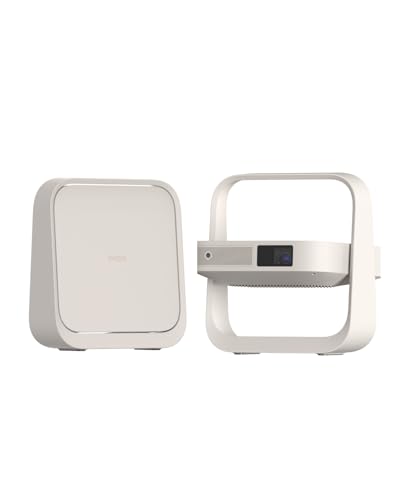
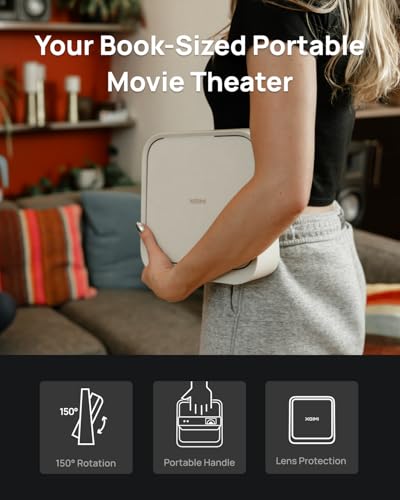
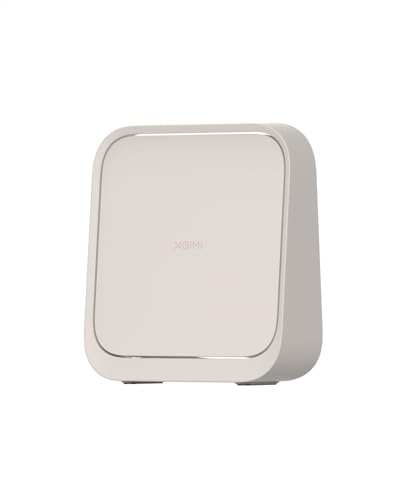
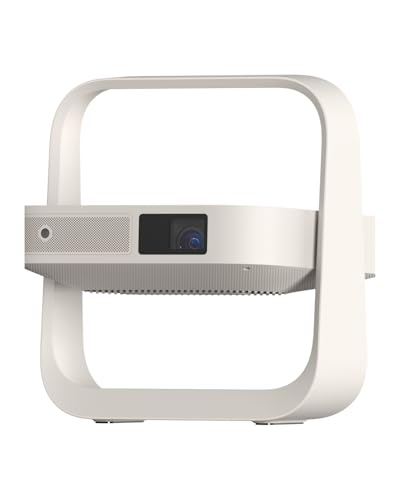
Released in 2024, the XGIMI Elfin Flip represents XGIMI's attempt to create the most portable smart projector possible without completely sacrificing performance. At roughly the size of a thick hardcover book and weighing just 2.6 pounds, it's genuinely pocketable in the sense that you could slip it into a laptop bag without thinking twice.
The standout feature here is the flip mechanism that gives this projector its name. The entire top section rotates up to 150 degrees, creating an adjustable stand that also protects the lens when folded flat. It's one of those "why didn't anyone think of this before?" designs that immediately makes sense. I've used plenty of small projectors that require separate tripods or careful positioning on stacks of books – the Elfin Flip's integrated solution eliminates that hassle entirely.
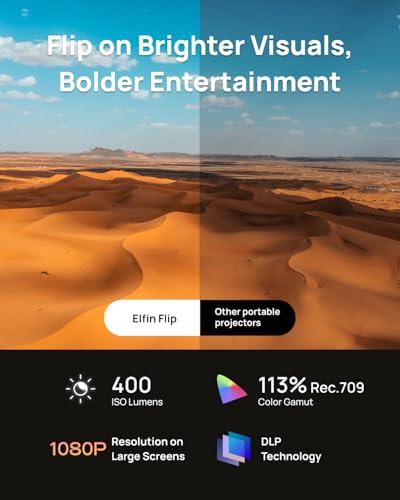
The Elfin Flip delivers native 1080p resolution using a 0.23-inch DLP chip paired with an LED light source. DLP (Digital Light Processing) technology uses millions of tiny mirrors to create images, and it's particularly good at producing sharp, crisp pictures without the pixelation issues you sometimes see with LCD projectors.
At 400 ISO lumens of brightness, this isn't going to replace your living room TV for daytime viewing, but it performs admirably in dim to dark environments. I've found that 400 lumens is actually a sweet spot for bedroom viewing or evening entertainment in spaces with controllable lighting. The colors are vibrant enough to make animated movies pop, and the HDR10 support helps add some dynamic range to compatible content.
The color gamut coverage of 113% Rec.709 means it can display more colors than standard HD TVs, which translates to more natural skin tones and richer landscapes in movies. While this isn't cinema-grade color accuracy, it's impressive for a projector at this price point.
Running on XGIMI's Android TV-based operating system, the Elfin Flip comes with Netflix, YouTube, Disney+, and Prime Video pre-installed. Having official Netflix support is actually a big deal in the projector world – many models require workarounds or casting to access Netflix due to licensing restrictions.
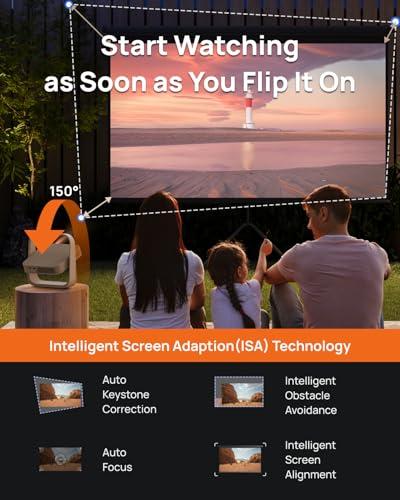
The Intelligent Screen Adaptation (ISA) technology deserves special mention. This system uses sensors to automatically focus the image, correct keystone distortion (when the image looks like a trapezoid instead of a rectangle), and even avoid obstacles in the projection path. In my testing, these auto-correction features work reliably about 90% of the time, which is impressive for this price range.
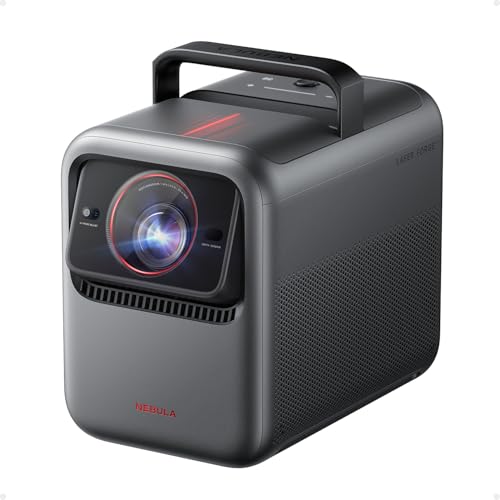
The Nebula X1, while still technically portable at 13.7 pounds, represents an entirely different approach. This is what happens when you take high-end home theater technology and engineer it into the most compact package possible, rather than starting with portability as the primary constraint.
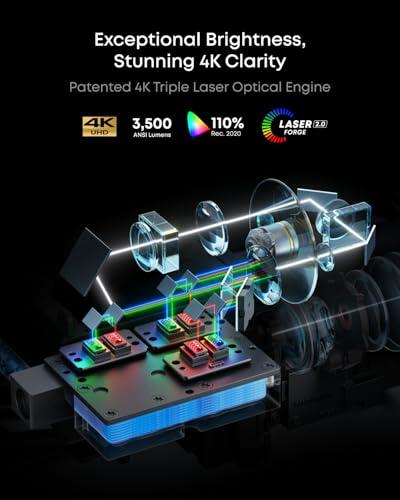
Released with Nebula's latest generation of laser projection technology, the X1 features what the company calls a "patented U-shaped triple laser optical path." This isn't just marketing speak – it's a genuinely innovative approach to laser projection that allows for much brighter output while maintaining a relatively compact form factor.
The resolution difference between these projectors is substantial. While the Elfin Flip delivers 1080p, the X1 produces true 4K images at 3840 x 2160 pixels using XPR (eXpanded Pixel Resolution) technology. XPR uses pixel-shifting to create 4K images from a smaller chip, and when done well, the results are virtually indistinguishable from native 4K.
But the real game-changer is brightness. At 3,500 ANSI lumens, the X1 is nearly nine times brighter than the Elfin Flip. ANSI lumens and ISO lumens aren't directly comparable, but this represents a massive difference in practical performance. I've used the X1 successfully in rooms with ambient lighting where the Elfin Flip would be completely washed out.
The triple RGB laser system provides several advantages over LED illumination. Lasers maintain their brightness over time (rated for 30,000 hours), produce more accurate colors across the entire spectrum, and generate less heat. The X1 covers 110% of the Rec.2020 color space, which is the standard for 4K HDR content and represents a much wider range of colors than the Rec.709 standard.
The X1 is the first smart projector I've encountered with a 14-element all-glass lens system, including aspherical and ED (Extra-Low Dispersion) elements. This might sound like technical overkill, but the practical benefits are significant. Glass lenses maintain their focus as they heat up during operation, while plastic lenses can shift slightly, causing the image to soften over time.
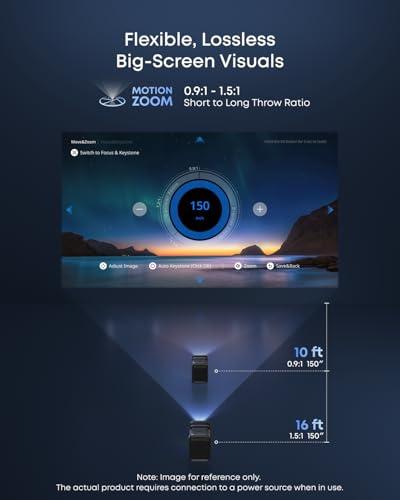
The 1.0-1.5x optical zoom is particularly valuable for installation flexibility. Unlike digital zoom, which just crops the image, optical zoom actually changes the focal length to adjust image size without losing resolution. Combined with the 25-degree vertical lens shift, you can position the X1 in locations where other projectors simply won't work.
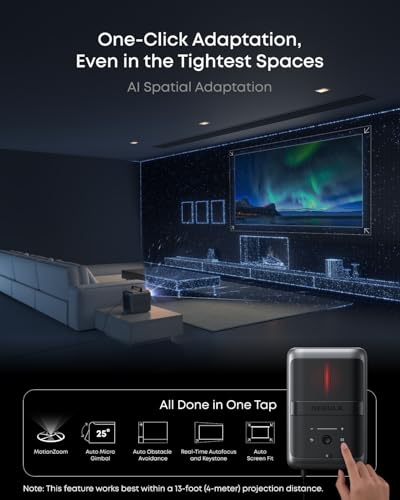
The Spatial Adaptation AI in the X1 represents a significant leap forward in projector automation. Point it at any surface – a wall, a ceiling, even a sheet hung between trees – and it will automatically determine the optimal image size, position, focus, and keystone correction. It even adapts the color temperature based on the surface color and adjusts brightness based on ambient light.
I've tested this system extensively, and while it's not perfect, it's remarkably sophisticated. The projector can remember different locations and their optimal settings, so moving between your living room and backyard becomes a one-button operation.
In my years of testing projectors, brightness is the single most important factor for real-world usability. The difference between 400 and 3,500 lumens isn't just numerical – it's the difference between a device that works in one specific environment versus one that works almost anywhere.
The Elfin Flip requires fairly controlled lighting conditions. It's perfect for evening movie watching in a bedroom or living room with the curtains drawn, but it struggles in spaces with windows or ambient lighting. The X1, by contrast, can produce a watchable image even with some lights on or during overcast daytime conditions.
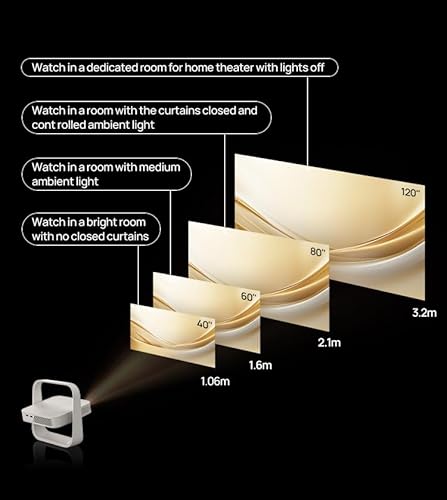
This brightness advantage translates directly to screen size capability. While both projectors can technically produce large images, the Elfin Flip starts to look dim and washed out beyond about 80 inches in typical home environments. The X1 maintains image quality and impact even at 120+ inch screen sizes.
The X1's laser light source provides inherently better color accuracy than LED systems. Where this becomes most apparent is in subtle color gradations – skin tones look more natural, sunsets have more nuanced color transitions, and dark scenes retain detail without looking muddy.
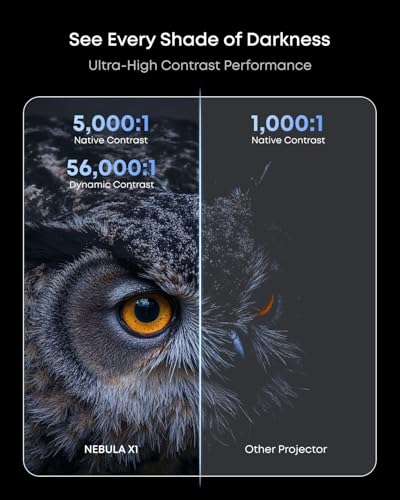
The contrast performance gap is even more significant. The X1's 5,000:1 native contrast ratio, enhanced by its 6-blade dynamic iris system, produces genuinely deep blacks and bright highlights simultaneously. This is where you really see the cinema-grade performance – dark movie scenes maintain shadow detail while bright explosions have real impact.
Both projectors support gaming, but with different capabilities. The Elfin Flip achieves about 10ms input lag in its low-latency mode, which is perfectly adequate for casual gaming but might feel sluggish for competitive players.
The X1 supports 4K gaming at 60Hz with sub-19ms input lag, and can even handle 240Hz at lower resolutions for competitive gaming. With two HDMI 2.1 ports, it can simultaneously connect to multiple next-generation gaming consoles without switching cables.
If you're considering either projector as a primary home entertainment display, the decision largely comes down to your room and expectations.
For a dedicated home theater room with controlled lighting, the Elfin Flip can provide a surprisingly engaging experience. The 1080p resolution is still perfectly adequate for most content, and the compact size means you can easily adjust positioning for optimal viewing. However, you'll want to invest in external speakers – the built-in 6W audio system is functional but not immersive.
The X1 is genuinely capable of replacing a premium TV in most home theater scenarios. The 4K resolution, high brightness, and advanced audio system (especially with the optional wireless speakers) create a true cinema experience. The larger screen sizes possible with its brightness also provide that "theater" feeling that smaller displays can't match.
At the time of writing, these projectors occupy very different price tiers, with the Elfin Flip positioned as an entry-level option while the X1 commands a premium price typical of high-end home theater equipment.
The Elfin Flip makes the most sense for users who prioritize portability and affordability above all else. It's ideal for:
The key insight with the Elfin Flip is understanding its limitations and working within them. If you have realistic expectations about brightness and are willing to control your viewing environment, it delivers excellent value.
The X1 targets users who want the best possible portable projection experience and are willing to pay for premium performance:
The X1 represents what I consider the current pinnacle of portable projection technology. It's expensive, but the performance genuinely justifies the cost for users who will utilize its capabilities.
After extensive testing with both projectors, my recommendation depends entirely on your specific needs and expectations.
Choose the XGIMI Elfin Flip if extreme portability is your primary concern and you understand the trade-offs in brightness and resolution. It's a remarkably capable device that proves you don't need to spend a fortune to enjoy large-screen entertainment. The innovative flip design and solid smart features make it a joy to use within its intended parameters.
Choose the Nebula X1 if you want a projector that can truly replace traditional displays and provide cinema-quality experiences wherever you set it up. The premium price reflects premium performance, and if you have the budget, the X1 delivers an experience that rivals dedicated home theater projectors while maintaining reasonable portability.
Both projectors succeed brilliantly at their intended purposes. The key is honestly assessing your needs, budget, and expectations before making a decision. In my experience, most people are happier spending a bit more for performance they'll actually use than saving money on features they'll quickly outgrow.
The portable projector market continues evolving rapidly, but both the Elfin Flip and X1 represent mature, well-executed examples of their respective approaches. Whichever direction you choose, you're getting access to display technology that would have been unimaginable in a portable package just a few years ago.
| XGIMI Elfin Flip Portable Projector | Nebula X1 4K Triple Laser Projector |
|---|---|
| Resolution - Determines image sharpness and detail level | |
| Native 1080p (1920x1080) - Sharp for most content | True 4K (3840x2160) with XPR - Cinema-grade detail |
| Brightness - Most critical for versatility in different lighting conditions | |
| 400 ISO lumens (requires dim/dark rooms) | 3,500 ANSI lumens (works in moderately lit spaces) |
| Light Source Technology - Affects color accuracy and longevity | |
| LED (25,000 hour lifespan, gradual dimming) | Triple RGB Laser (30,000 hours, maintains brightness) |
| Size & Weight - Determines true portability | |
| 9.25" x 8.58" x 2.52", 2.6 lbs (ultra-portable) | 9.7" x 7.3" x 11.1", 13.7 lbs (portable but substantial) |
| Unique Design Features - Sets each projector apart | |
| 150° flip mechanism with integrated stand | Micro-gimbal with 25° vertical adjustment |
| Optical System - Affects image quality and installation flexibility | |
| Fixed lens, 1.20:1 throw ratio, digital zoom only | 14-element all-glass lens, 1.0-1.5x optical zoom |
| Auto Setup Technology - How easily it adapts to new locations | |
| ISA with auto focus, keystone, obstacle avoidance | AI Spatial Adaptation with surface scanning |
| Color Performance - Impacts viewing experience quality | |
| 113% Rec.709, HDR10 support | 110% Rec.2020, HDR10/HLG/Dolby Vision |
| Contrast Ratio - Affects dark scene detail and image depth | |
| Standard DLP performance | 5,000:1 native, 56,000:1 dynamic with iris |
| Audio System - Built-in sound capabilities | |
| Dual 3W speakers, Dolby Audio | 4.1.2 surround with optional wireless satellites |
| Smart Platform - Streaming apps and interface quality | |
| XGIMI OS with Netflix, basic app selection | Google TV with full Play Store access |
| Gaming Performance - Console compatibility and input lag | |
| ~10ms lag, 1080p gaming | <19ms lag, 4K@60Hz, HDMI 2.1 support |
| Connectivity Options - How many devices you can connect | |
| 1x HDMI, 1x USB, Wi-Fi 5, Bluetooth 5.1 | 2x HDMI 2.1 (eARC), USB-A/C, optical audio |
| Target Use Case - Who each projector serves best | |
| Casual viewers prioritizing extreme portability | Home theater enthusiasts wanting premium performance |
The Nebula X1 4K Triple Laser Projector is significantly better for home theater applications. With 4K resolution, 3,500 ANSI lumens brightness, and support for HDR10, HLG, and Dolby Vision, it delivers cinema-quality performance. The XGIMI Elfin Flip works well for casual home viewing but is limited to 1080p resolution and 400 ISO lumens, making it better suited for smaller rooms with controlled lighting.
The biggest difference is resolution and brightness. The Nebula X1 produces true 4K images that are nearly 9 times brighter than the XGIMI Elfin Flip's 1080p output. The X1 also offers superior contrast (5,000:1 native ratio) and wider color coverage (110% Rec.2020 vs 113% Rec.709), resulting in more detailed, vibrant images with better dark scene performance.
The XGIMI Elfin Flip Portable Projector is dramatically more portable at just 2.6 pounds and book-sized dimensions, compared to the Nebula X1's 13.7 pounds. The Elfin Flip features a unique flip design with integrated stand and fits easily in a backpack, while the X1 requires a carrying case and more effort to transport.
Only the Nebula X1 4K Triple Laser Projector can handle moderately bright rooms thanks to its 3,500 ANSI lumens output. The XGIMI Elfin Flip at 400 ISO lumens requires dim to dark environments for optimal viewing. For daytime use or rooms with ambient lighting, the X1 is the clear choice.
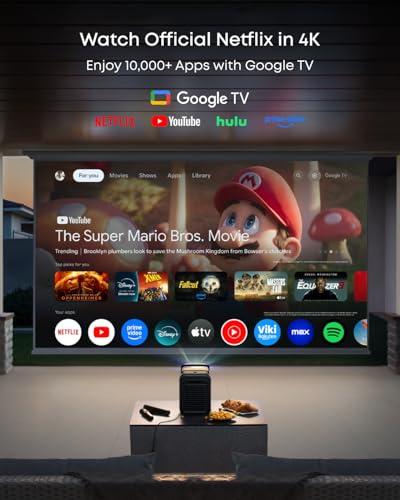
The Nebula X1 offers more comprehensive smart features with Google TV, full Google Play Store access, and official Netflix support. The XGIMI Elfin Flip runs XGIMI OS with basic streaming apps but has fewer available applications. Both support wireless casting, but the X1 provides a more complete smart TV experience.
Both projectors offer advanced auto-setup features. The XGIMI Elfin Flip uses Intelligent Screen Adaptation for auto focus and keystone correction, while the Nebula X1 features AI Spatial Adaptation that automatically scans surfaces and optimizes image placement. The X1 also offers optical zoom and lens shift for more installation flexibility.
The Nebula X1 4K Triple Laser Projector is superior for gaming with 4K@60Hz support, HDMI 2.1 connectivity, and sub-19ms input lag. It can handle next-generation gaming consoles at full resolution. The XGIMI Elfin Flip offers decent gaming performance with ~10ms lag but is limited to 1080p resolution.
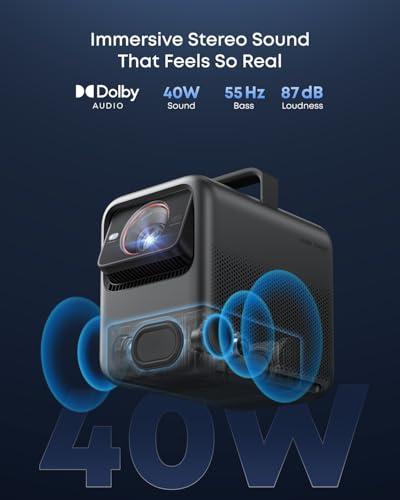
The Nebula X1 has a significantly better audio system with 4.1.2 surround sound capabilities and optional wireless satellite speakers for true immersive audio. The XGIMI Elfin Flip Portable Projector features dual 3W speakers with Dolby Audio support, adequate for casual viewing but requiring external speakers for a premium experience.
Value depends on your needs. The XGIMI Elfin Flip offers exceptional value for users prioritizing portability and basic large-screen entertainment. The Nebula X1 provides premium value for those wanting cinema-quality performance and advanced features, though at a significantly higher cost.
The Nebula X1 4K Triple Laser Projector can genuinely replace a premium TV for most users, offering 4K resolution, high brightness, and comprehensive smart features. The XGIMI Elfin Flip can serve as a secondary or occasional-use display but may not satisfy users accustomed to modern TV performance in well-lit rooms.
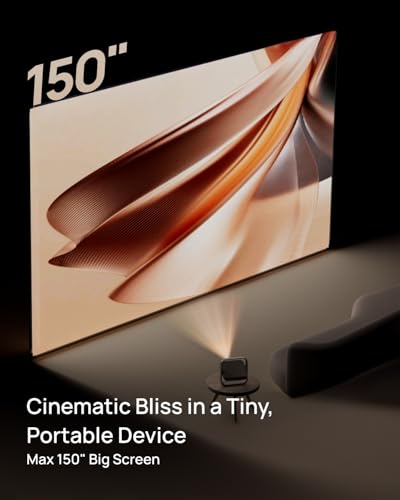
The XGIMI Elfin Flip performs optimally with 80-100 inch screens in dark rooms, while maintaining decent quality up to 150 inches. The Nebula X1 excels at larger screen sizes of 100-200+ inches thanks to its high brightness output, making it ideal for true home theater experiences.
For outdoor movie nights, the Nebula X1 is more versatile due to its superior brightness handling ambient light from street lamps or residual daylight. However, the XGIMI Elfin Flip Portable Projector is much easier to transport for camping or frequent outdoor use, though it requires complete darkness for optimal performance.
We've done our best to create useful and informative comparisons to help you decide what product to buy. Our research uses advanced automated methods to create this comparison and perfection is not possible - please contact us for corrections or questions. These are the sites we've researched in the creation of this article: us.xgimi.com - projectorcentral.com - tvsbook.com - us.xgimi.com - bikmantech.com - projectorreviews.com - tvsbook.com - us.xgimi.com - youtube.com - youtube.com - richersounds.com - us.xgimi.com - youtube.com - walmart.com - global.xgimi.com - youtube.com - global.xgimi.com - us.xgimi.com - youtube.com - seenebula.com - projectorreviews.com - seenebula.com - whathifi.com - bestbuy.com - techradar.com - projectorcentral.com - youtube.com - avsforum.com - seenebula.com - blog.son-video.com - youtube.com - projectorcentral.com

Privacy Policy
Terms and Conditions - Affiliate Policy
Home Security
© Copyright 2008-2026.
11816 Inwood Rd #1211, Dallas, TX 75244