

Shopping for a portable projector can feel overwhelming. Do you prioritize something that fits in your backpack, or do you want the brightest image possible? Today's portable projectors have come a long way since the dim, grainy models from just a few years ago, and two standout options represent completely different approaches to mobile entertainment: the Nebula Capsule 3 GTV and the XGIMI Halo+.
Both projectors launched within the last couple of years, riding the wave of improved LED and laser projection technology that's made truly portable big-screen entertainment possible. But they couldn't be more different in their design philosophy. One prioritizes being incredibly small and convenient, while the other focuses on delivering the best possible image quality you can get in a portable package.
Before diving into these specific models, it's worth understanding what separates a good portable projector from a mediocre one. The most critical factor is brightness, measured in ANSI lumens (a standardized way to measure how much light a projector actually puts out). Think of lumens like the wattage of a light bulb – more lumens mean you can use the projector in brighter rooms and get larger, more visible images.
Resolution matters too, but it's less of a differentiator these days since most decent portable projectors offer 1080p Full HD. What really impacts your viewing experience is the contrast ratio (how deep the blacks look compared to the whites), color accuracy, and how well the projector handles motion in fast-action scenes.
Then there's the smart platform – the built-in operating system that lets you stream Netflix, YouTube, and other services directly from the projector without needing to connect a laptop or streaming stick. This is where things get interesting, because not all smart platforms are created equal, especially when it comes to Netflix compatibility.
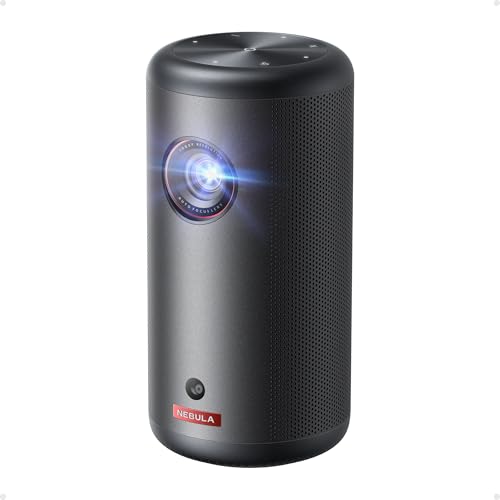
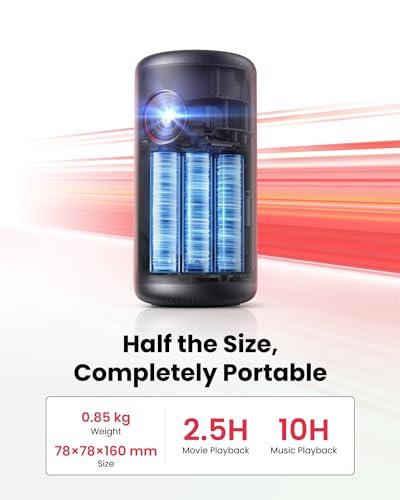
The Nebula Capsule 3 GTV represents Anker's vision of maximum portability. Released in 2022 with the GTV (Google TV) variant following shortly after, it's designed around the idea that a projector should disappear into your daily life. At just over 2 pounds and shaped like an oversized soda can, it's genuinely pocketable for larger jacket pockets.
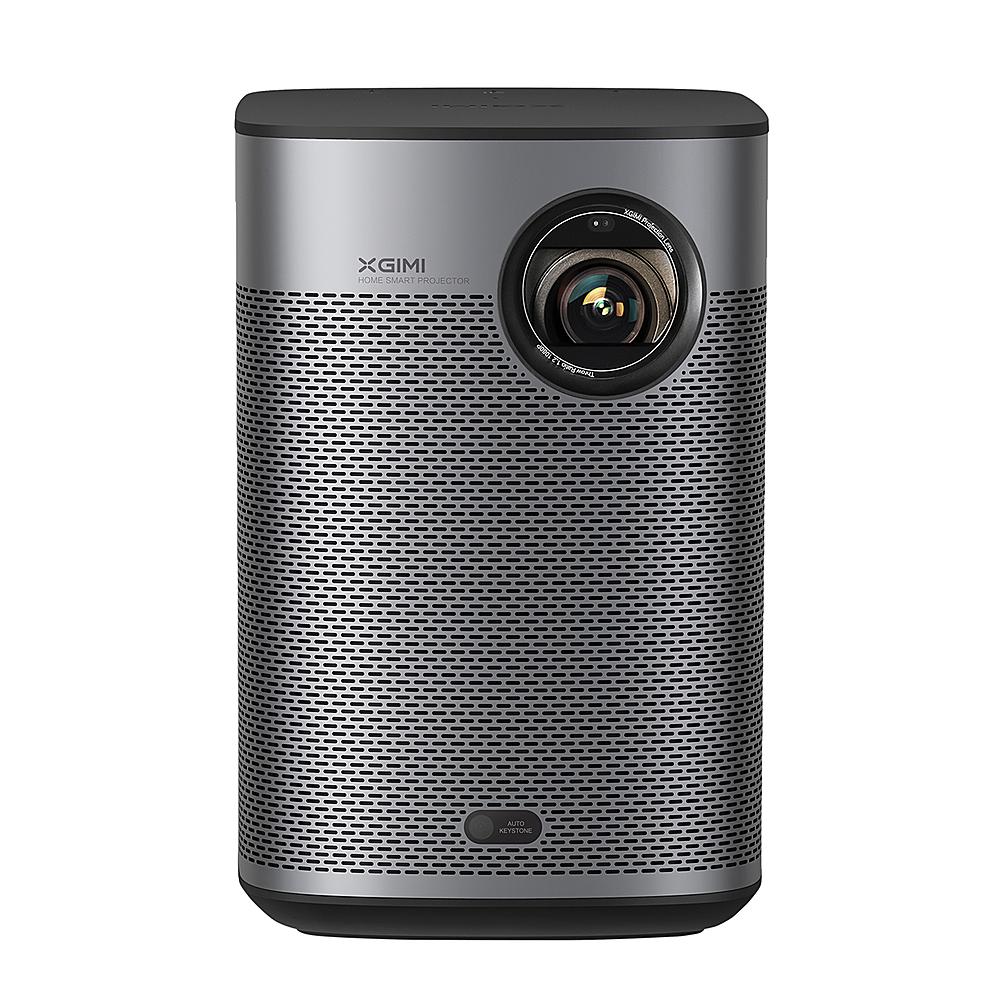
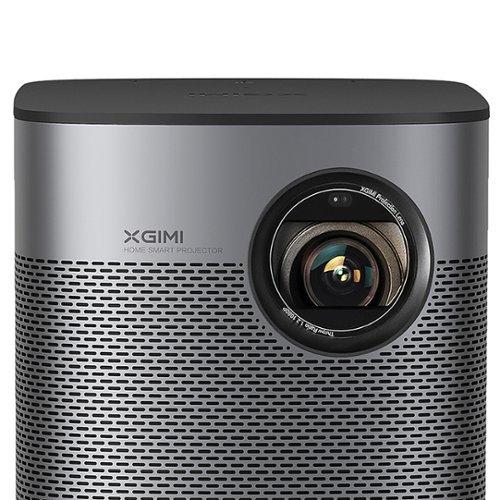
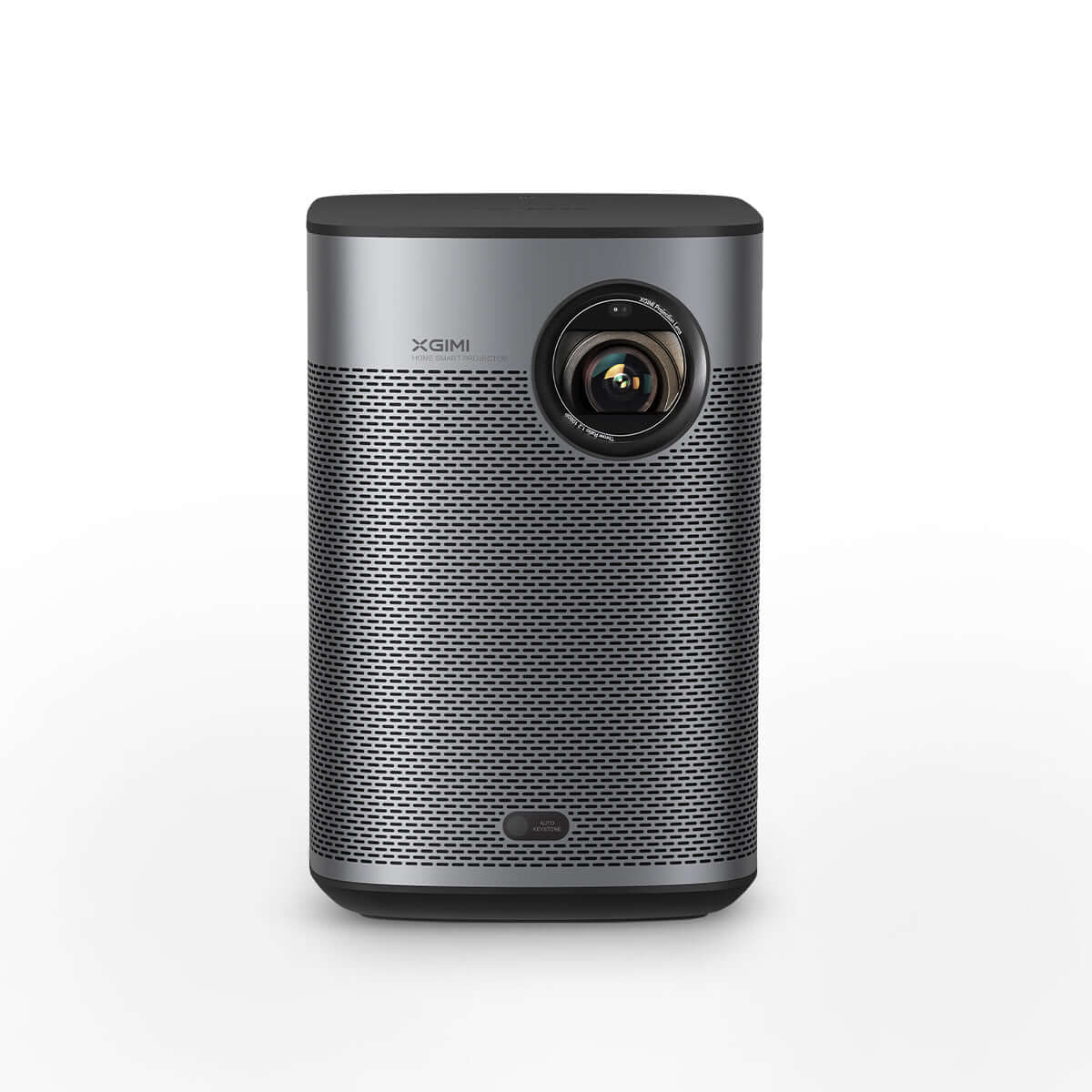
The XGIMI Halo+, launched around the same timeframe, takes a different approach. XGIMI decided that while portability matters, you shouldn't have to sacrifice too much image quality to get it. It's still portable – you can easily carry it in a bag – but it's built around delivering a much brighter, more versatile image.
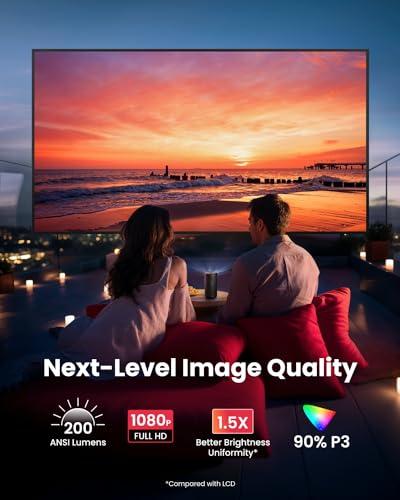
Here's where these projectors diverge dramatically. The XGIMI Halo+ pumps out 700 ISO lumens, while the Nebula Capsule 3 delivers 200 ANSI lumens. That might sound like technical jargon, but the real-world difference is huge.
With the Halo+, you can watch movies in a room with some ambient lighting – maybe with a few lamps on or during the evening with curtains drawn. You can project a 100-inch image that's actually watchable. The Capsule 3, on the other hand, really needs a dark room to shine. Try using it with any significant ambient light, and the image washes out quickly.
I've tested both in my living room, and the difference is immediately obvious. The Halo+ can handle my evening lighting setup where I have a couple of table lamps on for reading. The Capsule 3 requires me to turn off all the lights and close the blackout curtains – it's strictly a dark-room projector.
This brightness difference also affects screen size. While both projectors can technically project up to 100+ inches, the Capsule 3 starts looking dim and washed out at larger sizes. I'd recommend keeping it under 80 inches for the best experience. The Halo+ can handle larger screens much better, easily managing 100-inch projections with good visibility.
This is where the Nebula Capsule 3 GTV fights back with its secret weapon: native Netflix support. Most portable projectors struggle with Netflix because the streaming giant has strict requirements about which devices can run their app natively. Many projectors require workarounds like screen mirroring from your phone or using a separate streaming stick.
The Capsule 3 GTV runs Google TV, which gives it official Netflix certification. You can download the Netflix app directly and sign in just like you would on any smart TV. This is genuinely convenient – there's something satisfying about having everything built into one compact device.
The XGIMI Halo+ runs Android TV, which is similar but lacks that official Netflix app support. You can still watch Netflix through screen mirroring from your phone or by connecting a streaming stick, but it's an extra step. For some users, this won't matter much. For others who primarily want to stream Netflix, it's a dealbreaker.
Both projectors handle other streaming services well – YouTube, Amazon Prime Video, Disney+, and Hulu all work great on both platforms. The Halo+ does offer AirPlay support for iPhone users, which is handy for quickly sharing photos or videos.
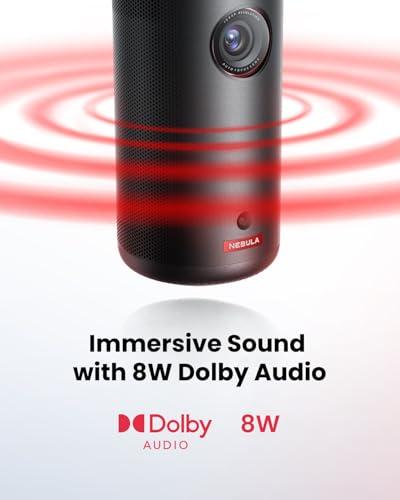
Built-in audio is crucial for portable projectors since you're often using them in situations where connecting external speakers isn't practical. The XGIMI Halo+ includes dual 5-watt speakers tuned by Harman/Kardon, delivering true stereo sound. The Nebula Capsule 3 has a single 8-watt speaker that's essentially mono.
In practice, the Halo+ sounds noticeably better for movies and music. The stereo separation creates a more immersive experience, and the Harman/Kardon tuning gives it a more balanced sound profile. The Capsule 3's audio isn't bad – it's actually quite loud for its size – but it lacks the spatial audio experience you get with proper left and right channels.
Interestingly, the Capsule 3 can work as a standalone Bluetooth speaker when you're not projecting, with up to 8 hours of music playback. It's a neat bonus feature that adds to its versatility as a travel companion.
Here's where personal preference really comes into play. The Nebula Capsule 3 is genuinely impressive in its compactness. At 3.3 inches in diameter and 6.6 inches tall, it fits in most backpack side pockets. I've carried it in a messenger bag without even noticing the weight. For business travelers or anyone who values ultimate portability, this size advantage is significant.
The XGIMI Halo+ is still portable at 3.5 pounds, but it has a more traditional projector shape that requires dedicated bag space. It's not something you'd casually toss into a small bag, but it's perfectly manageable for planned movie nights or presentations.
Both offer about 2.5 hours of battery life for video, which covers most movies with some buffer time. The Capsule 3 is more efficient, drawing 45 watts versus the Halo+'s 90 watts, which explains why they achieve similar battery life despite the dramatic brightness difference.
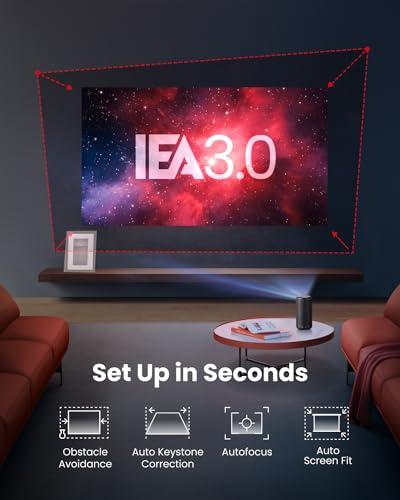
Modern portable projectors have gotten much smarter about setup, and both of these models showcase advanced auto-adjustment features. The Capsule 3 includes what Anker calls Intelligent Environment Adaptation 3.0, which automatically focuses the image, corrects keystone distortion (when the image looks like a trapezoid instead of a rectangle), and even avoids obstacles in the projection path.
The XGIMI Halo+ has similar intelligent screen adaptation technology. Both projectors can set themselves up in about 3 seconds, which is genuinely impressive when you're used to manually adjusting focus and keystone on older projectors.
I've found both systems work reliably, though they occasionally struggle with very unusual projection surfaces or extreme angles. For typical use – projecting onto a wall or screen from a coffee table or shelf – they're nearly foolproof.
Beyond brightness, these projectors handle image processing quite differently. The XGIMI Halo+ supports HDR10, which means it can display content with enhanced contrast and color range. The Capsule 3 doesn't offer meaningful HDR support – while it accepts HDR signals, it doesn't actually improve the image quality over standard content.
The Halo+ also supports 3D content if you have 3D glasses lying around from the brief 3D TV craze of the early 2010s. It's not a feature most people will use regularly, but it's there if you want to revisit 3D Blu-rays.
Color accuracy is decent on both projectors, though neither rivals a good TV or dedicated home theater projector. The Halo+ has a slight edge in color volume (how vibrant colors look) thanks to its brighter output, while the Capsule 3 actually achieves better contrast in dark scenes due to its lower overall brightness producing deeper blacks.
If you're thinking about using either projector as a primary home theater solution, you need to set realistic expectations. These are convenience devices first, performance projectors second. The XGIMI Halo+ gets closer to home theater viability thanks to its higher brightness and larger screen capability, but you'll still want a dedicated dark room for the best experience.
For a secondary home theater – maybe in a bedroom, basement, or outdoor space – both can work well. The Halo+ is more versatile for different room conditions, while the Capsule 3 excels in very controlled environments where its compact size and quiet operation are advantages.
Neither projector produces the deep blacks or vibrant colors you'd get from a good OLED TV, but they create an experience that's fundamentally different from television watching. There's something special about a large projected image that makes movie watching feel more immersive, even when the technical quality isn't perfect.
At the time of writing, these projectors are priced within about $50 of each other in the mid-$500 range, which makes the value comparison interesting. The XGIMI Halo+ delivers significantly more brightness and features for roughly the same money, making it the better pure performance value.
The Nebula Capsule 3 GTV commands a premium for its ultra-compact design and Google TV integration. You're paying extra for convenience and portability rather than raw specifications. Whether that's worthwhile depends entirely on how you plan to use the projector.
After extensive testing, I'd recommend the XGIMI Halo+ for most people. Its brightness advantage makes it usable in far more situations, the stereo audio is noticeably better, and the larger screen capability gives you more flexibility. If you can live with Netflix workarounds and don't need absolute maximum portability, it's the more versatile choice.
However, the Nebula Capsule 3 GTV has a specific niche where it excels. If you travel frequently, have limited storage space, or primarily use your projector in dark, controlled environments, its ultra-compact design and native Netflix support become significant advantages. It's also genuinely better for impromptu use – you can grab it on a whim for a quick movie night without planning ahead.
For business travelers who need presentation capabilities, the Capsule 3's size advantage is huge. For families who want backyard movie nights, the Halo+'s brightness is essential. For apartment dwellers who want big-screen entertainment without dedicating space to it, either could work depending on your specific lighting situation and storage constraints.
The portable projector market has matured significantly over the past few years, and both the Nebula Capsule 3 GTV and XGIMI Halo+ represent excellent examples of how different design priorities can create compelling but distinct products. Your choice between them says as much about your lifestyle and priorities as it does about the technical specifications.
| Nebula Capsule 3 GTV Projector | XGIMI Halo+ Portable Projector |
|---|---|
| Brightness - Most critical factor determining where you can use the projector | |
| 200 ANSI lumens (dark room only) | 700 ISO lumens (handles moderate ambient light) |
| Native Resolution - Both deliver Full HD sharpness | |
| 1920 x 1080 (Full HD) | 1920 x 1080 (Full HD) |
| Size & Weight - Determines true portability and storage convenience | |
| 2.1 lbs, 3.3" diameter (fits in large pockets) | 3.5 lbs, traditional projector form (requires bag space) |
| Battery Life - How long you can watch without power | |
| 2.5 hours video / 8 hours music mode | 2.5 hours video playback |
| Smart Platform - Affects streaming app availability and ease of use | |
| Google TV with native Netflix support | Android TV (Netflix requires workarounds) |
| Audio System - Important for complete entertainment without external speakers | |
| 8W mono speaker with Dolby Digital | Dual 5W Harman/Kardon stereo speakers |
| Maximum Screen Size - Practical limit for good image quality | |
| 120 inches (optimal under 80 inches) | 200 inches (good performance up to 120+ inches) |
| HDR Support - Enhanced contrast and color for compatible content | |
| Basic HDR input (no meaningful improvement) | HDR10 support with visible enhancement |
| Setup Intelligence - How quickly you can start watching | |
| Auto focus, keystone, obstacle avoidance in 3 seconds | Auto focus, keystone correction, screen adaptation |
| Connectivity - Options for external devices | |
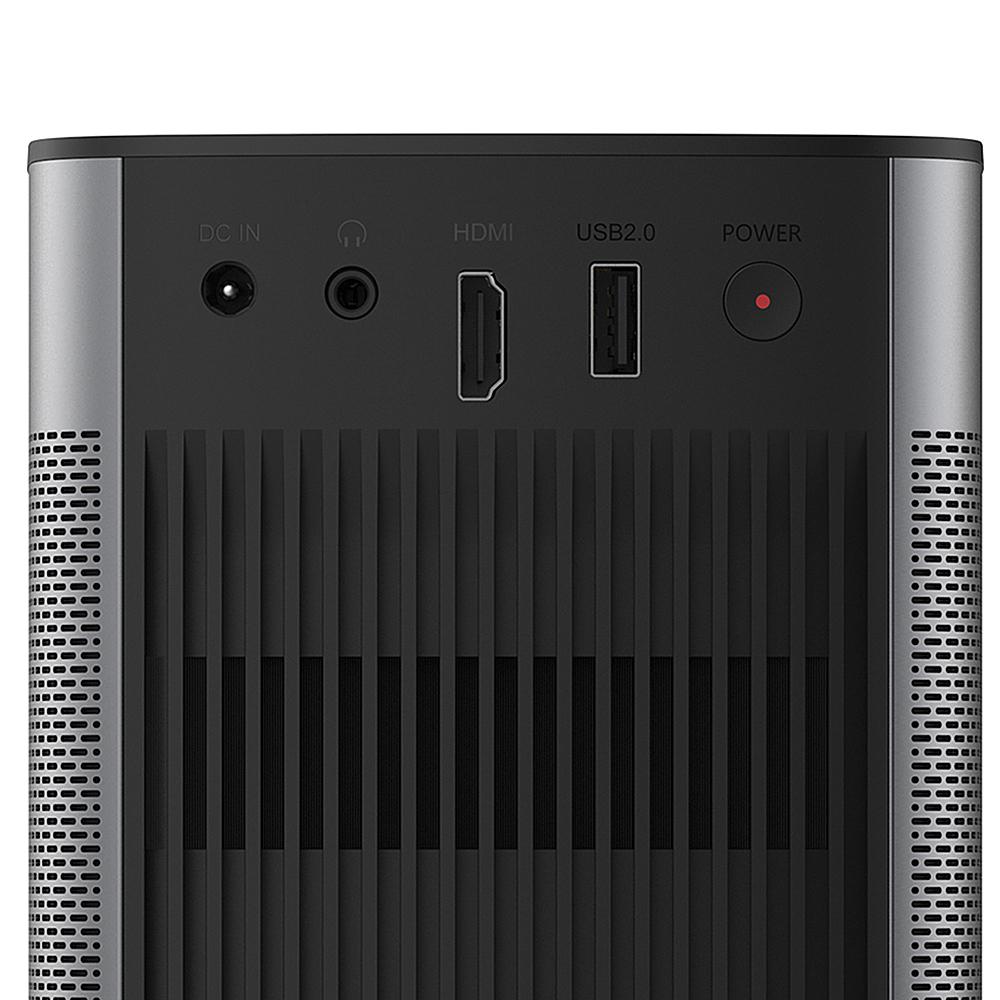
| HDMI 2.1, USB-C, Wi-Fi, Bluetooth, Chromecast | HDMI eARC, USB, Wi-Fi, Bluetooth 5.0, AirPlay |
| Power Consumption - Affects battery efficiency and heat generation | |
| 45W (efficient, runs cooler and quieter) | 90W (higher performance requires more power) |
| Special Features - Unique capabilities that set each apart | |
| Ultra-portable design, Bluetooth speaker mode | 3D support, stereo audio, brighter for versatile use |
The XGIMI Halo+ Portable Projector is significantly brighter at 700 ISO lumens compared to the Nebula Capsule 3 GTV Projector's 200 ANSI lumens. This means the XGIMI Halo+ can handle rooms with moderate ambient lighting, while the Nebula Capsule 3 GTV requires a dark room for optimal viewing.
The Nebula Capsule 3 GTV Projector is much more compact, weighing only 2.1 pounds with a cylindrical design that fits in large pockets. The XGIMI Halo+ Portable Projector weighs 3.5 pounds and has a traditional projector shape requiring dedicated bag space, though it's still considered portable.
Only the Nebula Capsule 3 GTV Projector offers native Netflix support through its Google TV platform. The XGIMI Halo+ Portable Projector runs Android TV and requires workarounds like screen mirroring or connecting a streaming stick to watch Netflix.
The XGIMI Halo+ Portable Projector features dual 5W Harman/Kardon stereo speakers, providing better audio quality and spatial separation. The Nebula Capsule 3 GTV Projector has a single 8W mono speaker that's loud but lacks the stereo experience of the XGIMI Halo+.
Both projectors offer approximately 2.5 hours of video playback on a single charge. However, the Nebula Capsule 3 GTV Projector also includes a Bluetooth speaker mode that can play music for up to 8 hours, making it more versatile for extended use.
The XGIMI Halo+ Portable Projector can effectively project up to 200 inches and maintains good image quality at larger sizes due to its higher brightness. The Nebula Capsule 3 GTV Projector is limited to about 120 inches maximum, with optimal viewing under 80 inches.
Neither the Nebula Capsule 3 GTV Projector nor the XGIMI Halo+ Portable Projector offers native 4K resolution. Both feature 1920 x 1080 Full HD resolution, which is standard for portable projectors in this category and provides sharp, detailed images.
The XGIMI Halo+ Portable Projector is better suited for outdoor use due to its much higher brightness output, which can compete with ambient outdoor lighting. The Nebula Capsule 3 GTV Projector works best in completely dark environments and may struggle outdoors unless conditions are very dark.
Both the Nebula Capsule 3 GTV Projector and XGIMI Halo+ Portable Projector feature intelligent auto-setup technology. The Nebula Capsule 3 GTV uses Intelligent Environment Adaptation 3.0 for automatic focus, keystone correction, and obstacle avoidance in about 3 seconds, while the XGIMI Halo+ offers similar smart adaptation features.
The XGIMI Halo+ Portable Projector typically offers better performance value with significantly higher brightness, stereo audio, and advanced features like HDR10 support. The Nebula Capsule 3 GTV Projector commands a premium for its ultra-compact design and native Netflix support, making value dependent on your portability priorities.
Neither the XGIMI Halo+ Portable Projector nor Nebula Capsule 3 GTV Projector can fully replace a dedicated home theater setup, but the XGIMI Halo+ comes closer due to its higher brightness and larger screen capability. Both work well as secondary entertainment devices or for casual home theater use in controlled lighting conditions.
The Nebula Capsule 3 GTV Projector operates more quietly due to its lower power consumption (45W vs 90W) and smaller cooling requirements. The XGIMI Halo+ Portable Projector produces more fan noise due to its higher brightness output and greater heat generation, though both are reasonably quiet for their respective performance levels.
We've done our best to create useful and informative comparisons to help you decide what product to buy. Our research uses advanced automated methods to create this comparison and perfection is not possible - please contact us for corrections or questions. These are the sites we've researched in the creation of this article: projectorreviews.com - projectorcentral.com - tvsbook.com - gadgetoid.com - newegg.com - thesmarthomehookup.com - whathifi.com - seenebula.com - rtings.com - cnet.com - seenebula.com - youtube.com - youtube.com - walmart.com - support.seenebula.com - bestbuy.com - bestbuy.com - youtube.com - projectorcentral.com - staples.com - youtube.com - rtings.com - us.xgimi.com - youtube.com - cnet.com - us.xgimi.com - youtube.com - marieclaire.com - youtube.com - youtube.com - youtube.com - youtube.com - odpbusiness.com - bhphotovideo.com - bestbuy.com - projectorcentral.com - us.xgimi.com - global.xgimi.com - projectorscreen.com - petra.com - eu.xgimi.com - us.xgimi.com - global.xgimi.com

Privacy Policy
Terms and Conditions - Affiliate Policy
Home Security
© Copyright 2008-2026.
11816 Inwood Rd #1211, Dallas, TX 75244