


In the rapidly evolving world of home entertainment, portable smart projectors have carved out a fascinating niche. These compact devices promise the big-screen experience without the permanence of traditional setups, letting you transform virtually any space into a personal theater. Today, we're comparing two standout options in this category: the Samsung Freestyle 2nd Gen and the XGIMI Halo+, both offering distinct approaches to portable projection.
Remember those bulky, noisy projectors from school classrooms? Today's portable projectors have about as much in common with those as smartphones do with rotary telephones. Modern portable projectors combine sophisticated optics, smart operating systems, and sleek designs to deliver experiences that were unimaginable just a few years ago.
The Samsung Freestyle 2nd Gen, released in mid-2023, builds upon the innovative original Freestyle that Samsung launched in 2022. This second generation maintains the unique cylindrical design while adding new features and refinements. Meanwhile, the XGIMI Halo+ hit the market in late 2021 as an upgrade to the original Halo, bringing improved brightness and more advanced auto-correction features.
What makes these devices particularly interesting is how they've evolved beyond simple projection to become complete entertainment hubs. They're no longer just displaying content from external sources—they're streaming, gaming, and smart home platforms all wrapped into pocket-sized packages.
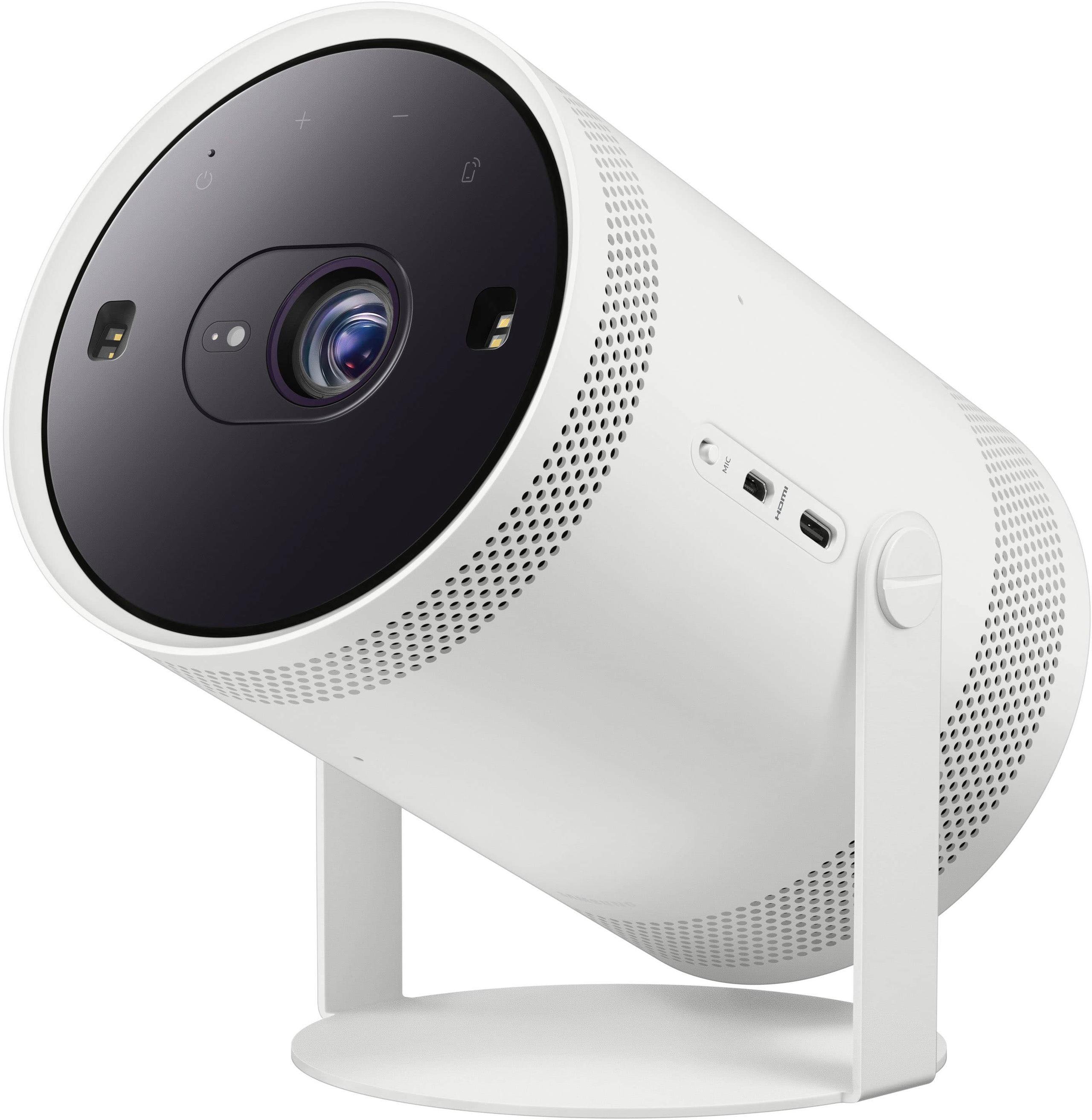
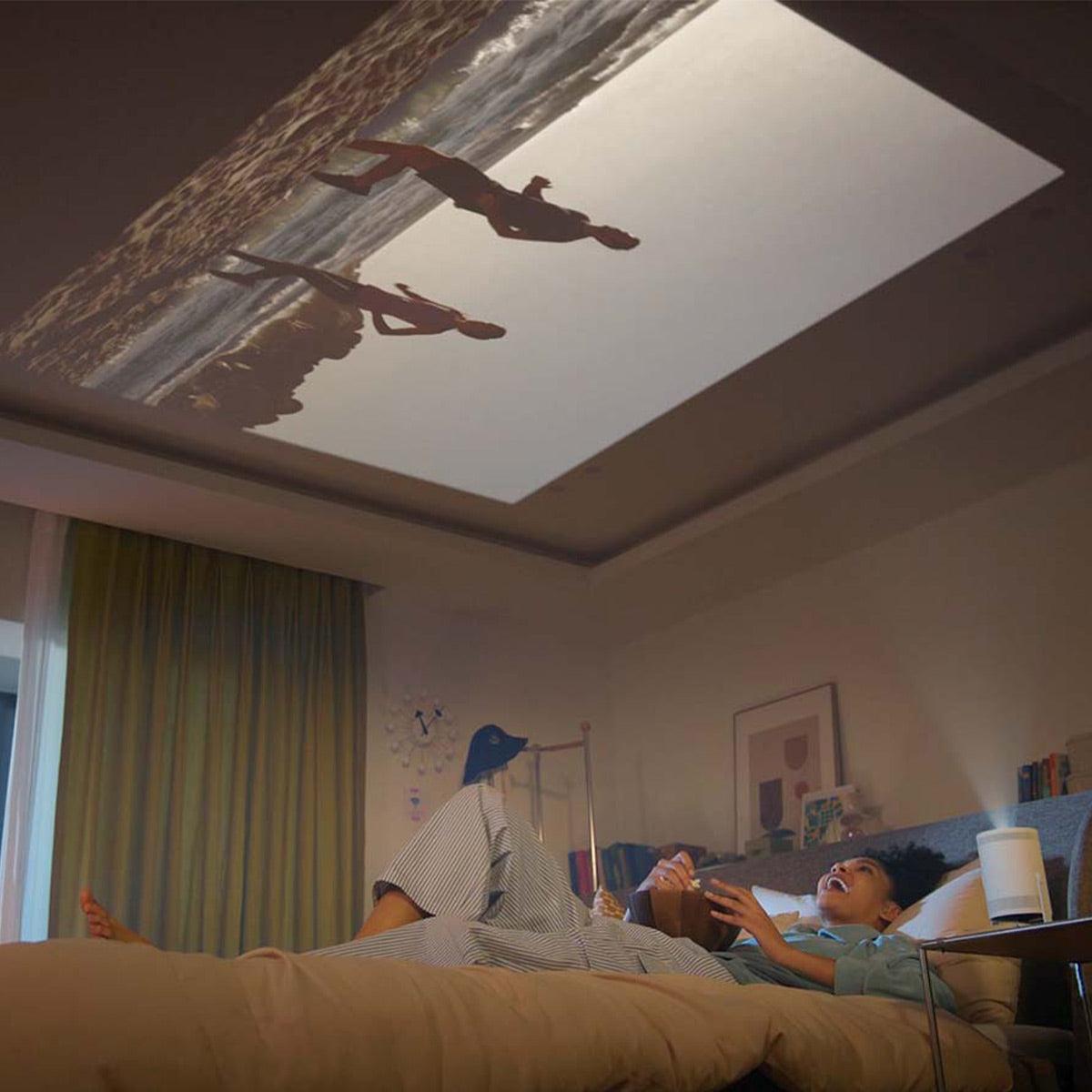
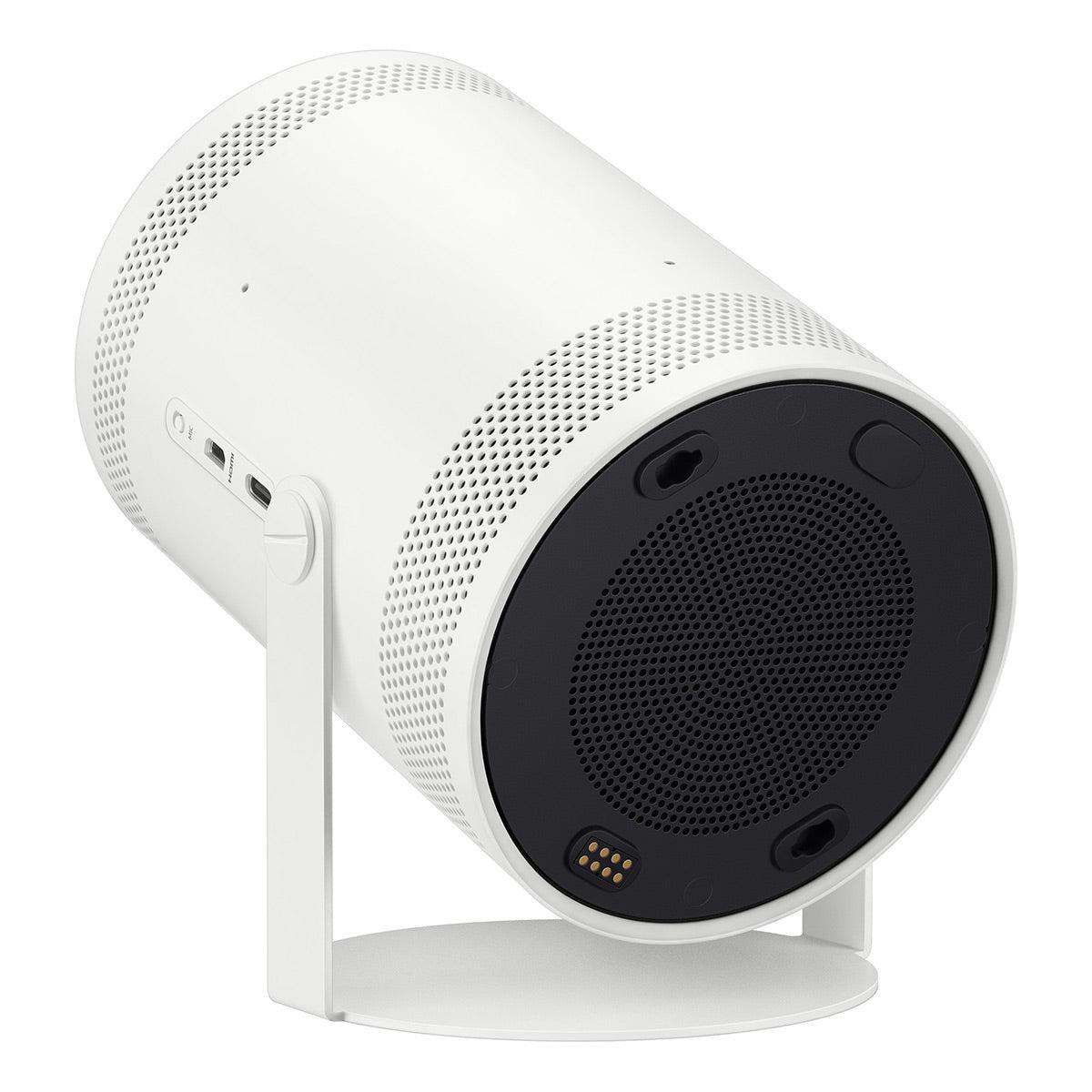
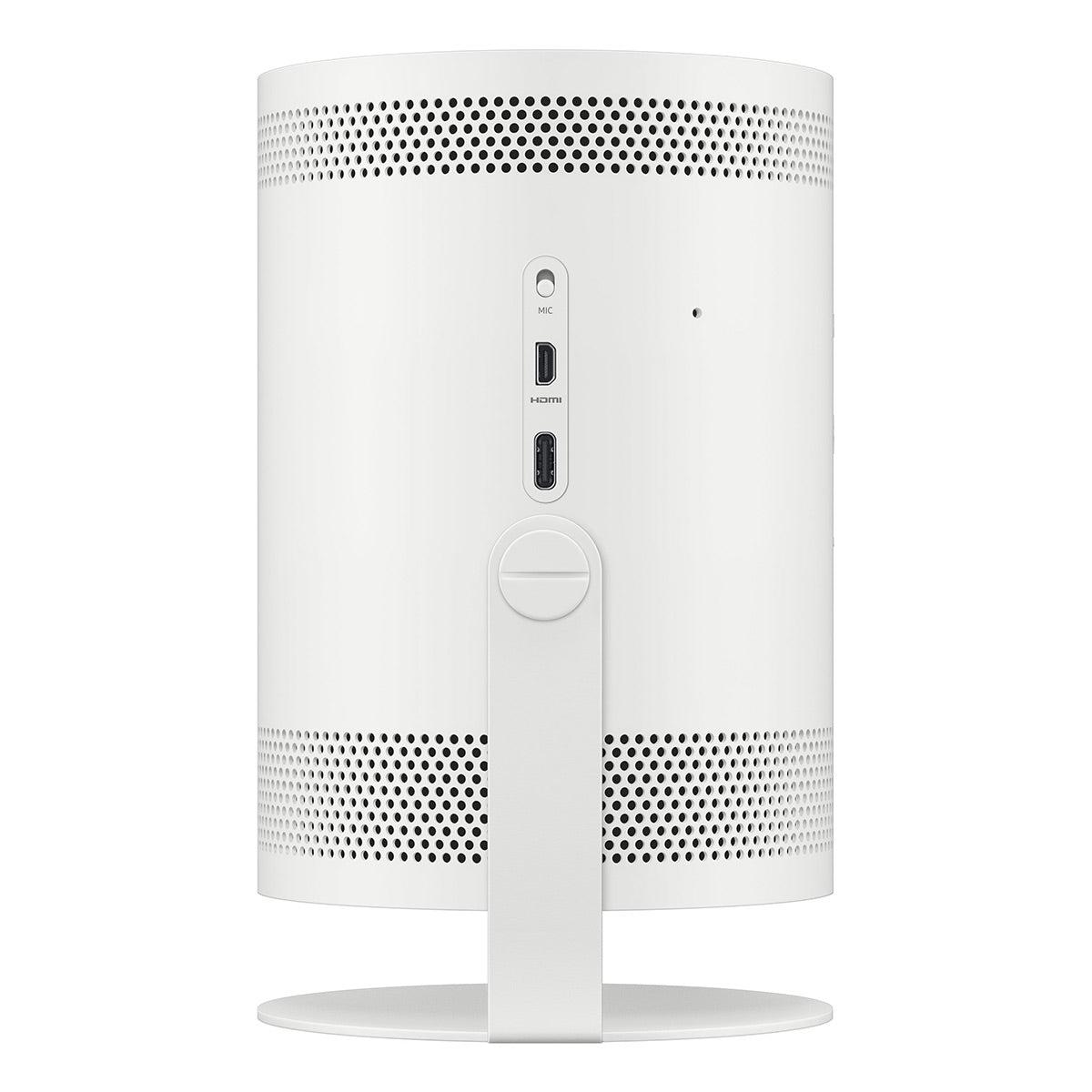
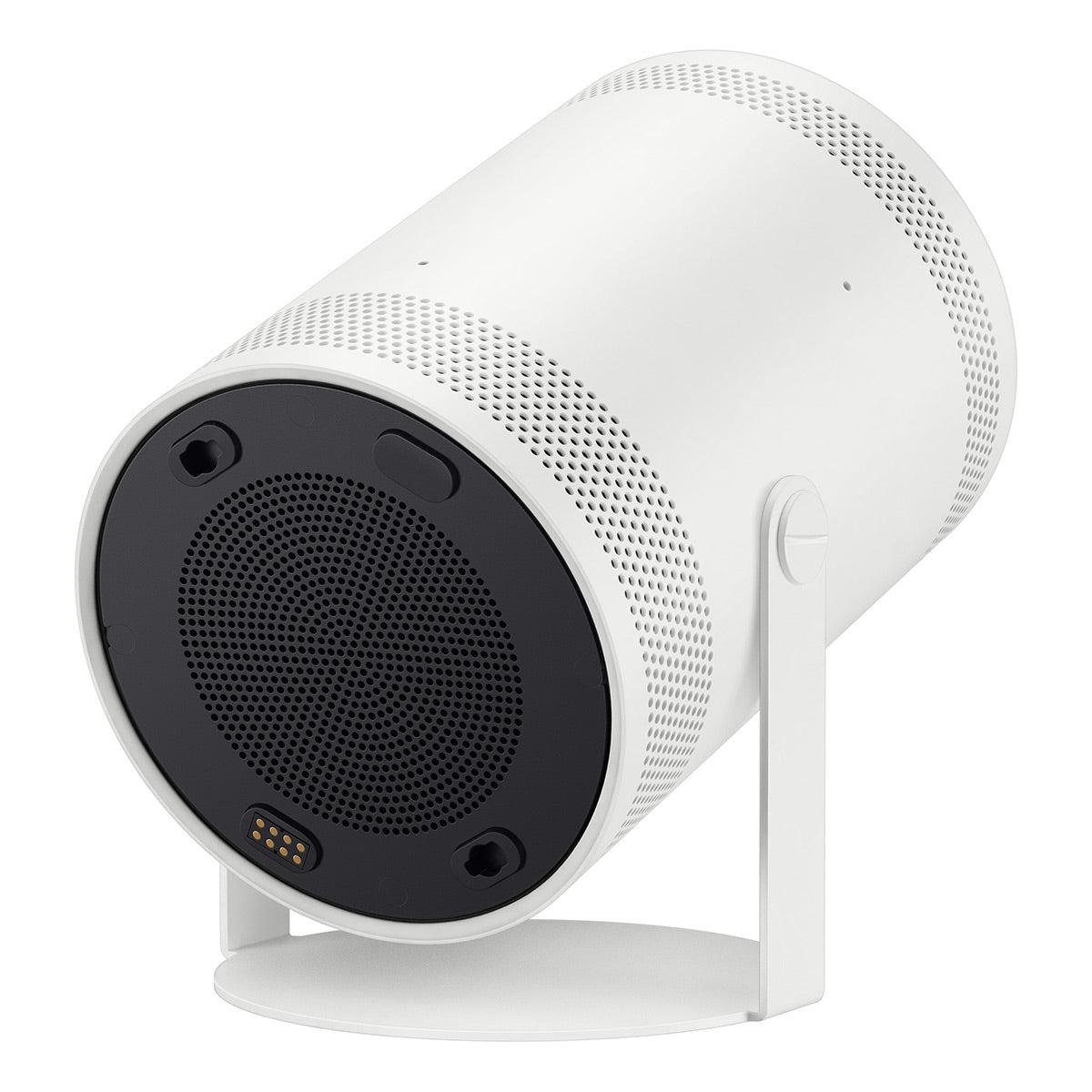
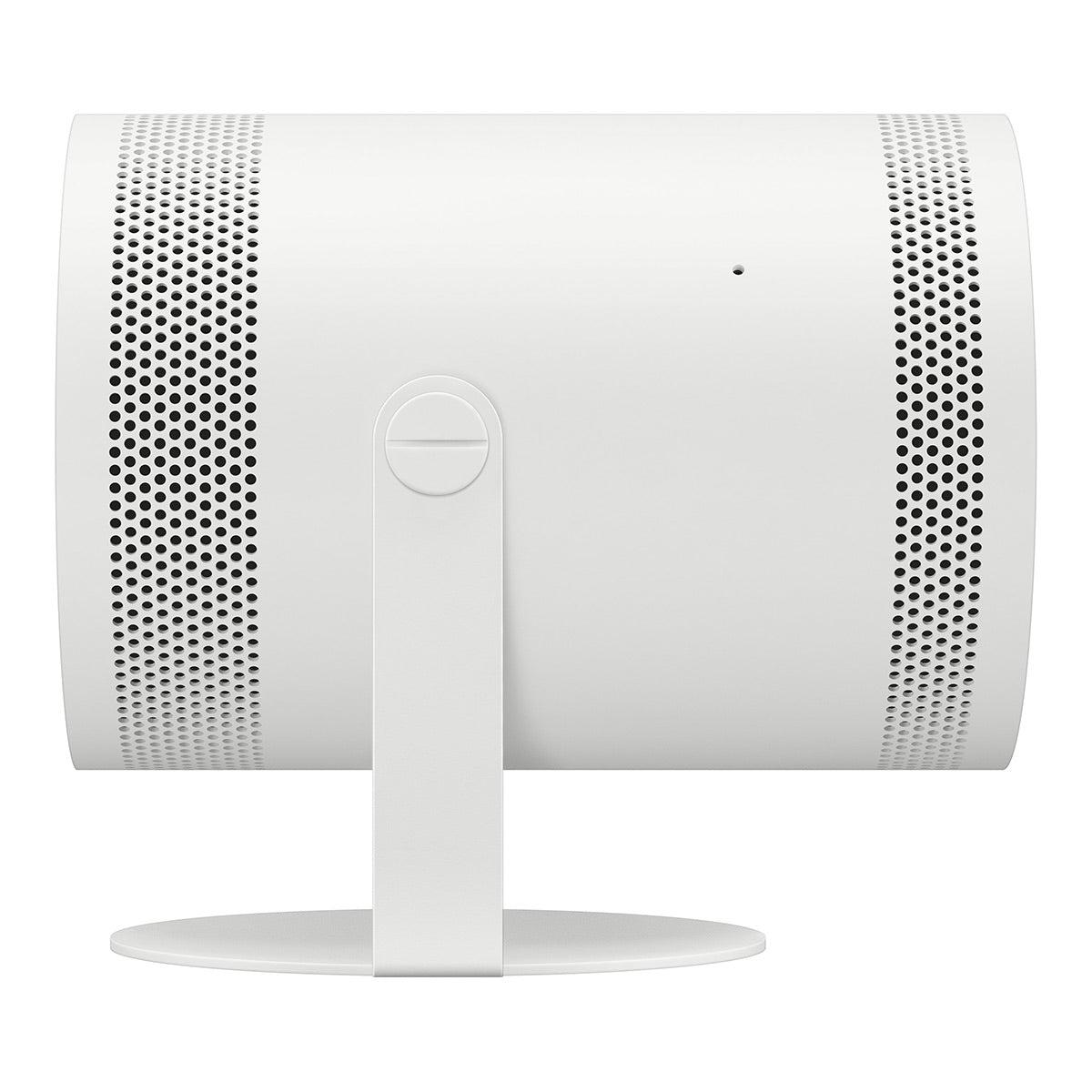
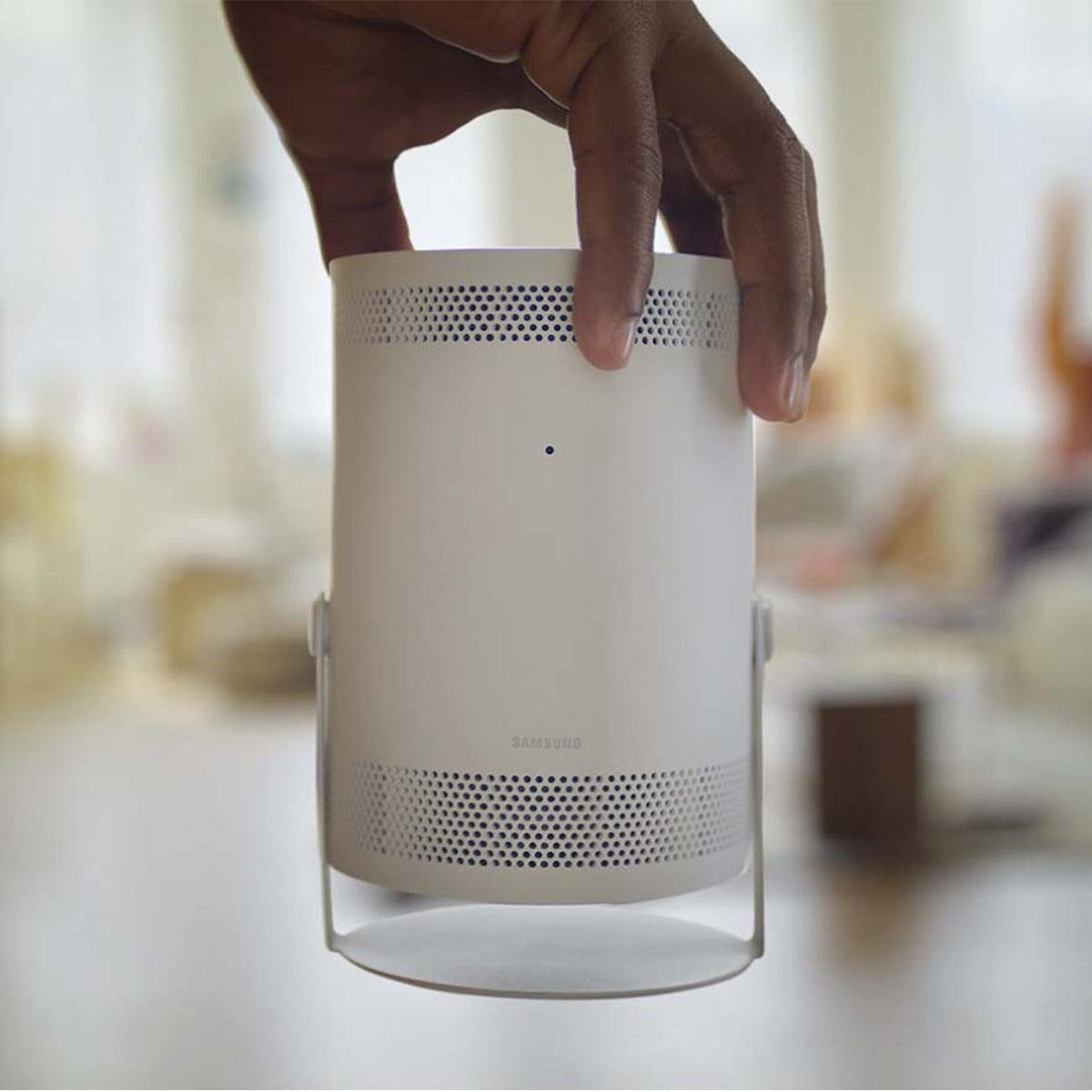
The Samsung Freestyle 2nd Gen immediately stands out with its distinctive cylindrical design. Weighing just 1.8 pounds and standing about 6.5 inches tall with a diameter of 3.7 inches, it resembles a spotlight more than a traditional projector. This unconventional shape serves a practical purpose: the Freestyle can rotate 180 degrees, allowing you to project onto ceilings, walls, or even tables with equal ease.
The white exterior with textured finish feels premium, though it does show fingerprints with regular handling. Samsung's design philosophy prioritizes flexibility—this is a device meant to be moved and adjusted frequently. The integrated cradle stand allows for quick angle adjustments without needing additional equipment.
One significant limitation is the lack of an internal battery. The Freestyle requires constant power, which somewhat undermines its portability. Samsung does offer a separate battery base accessory, but that adds both cost and bulk to the package.
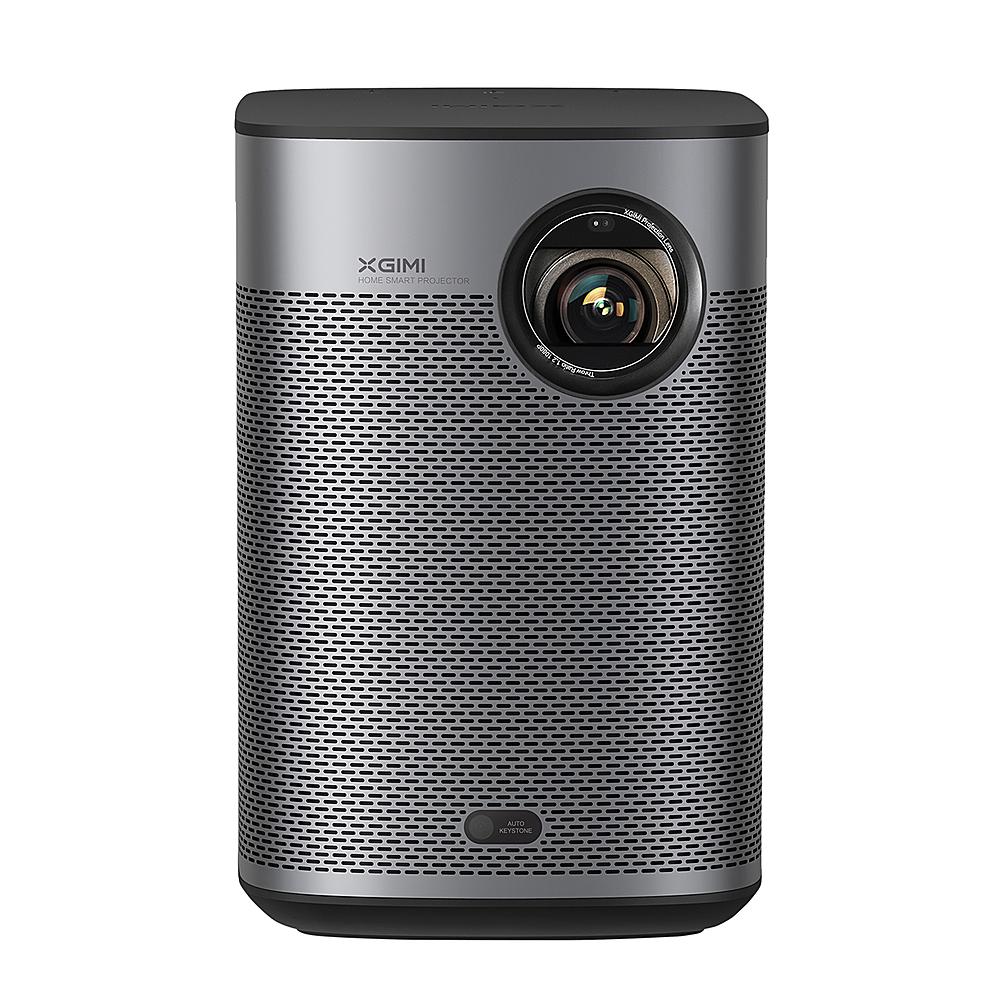
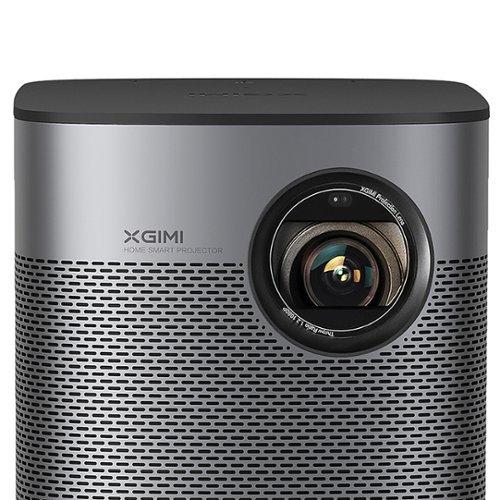
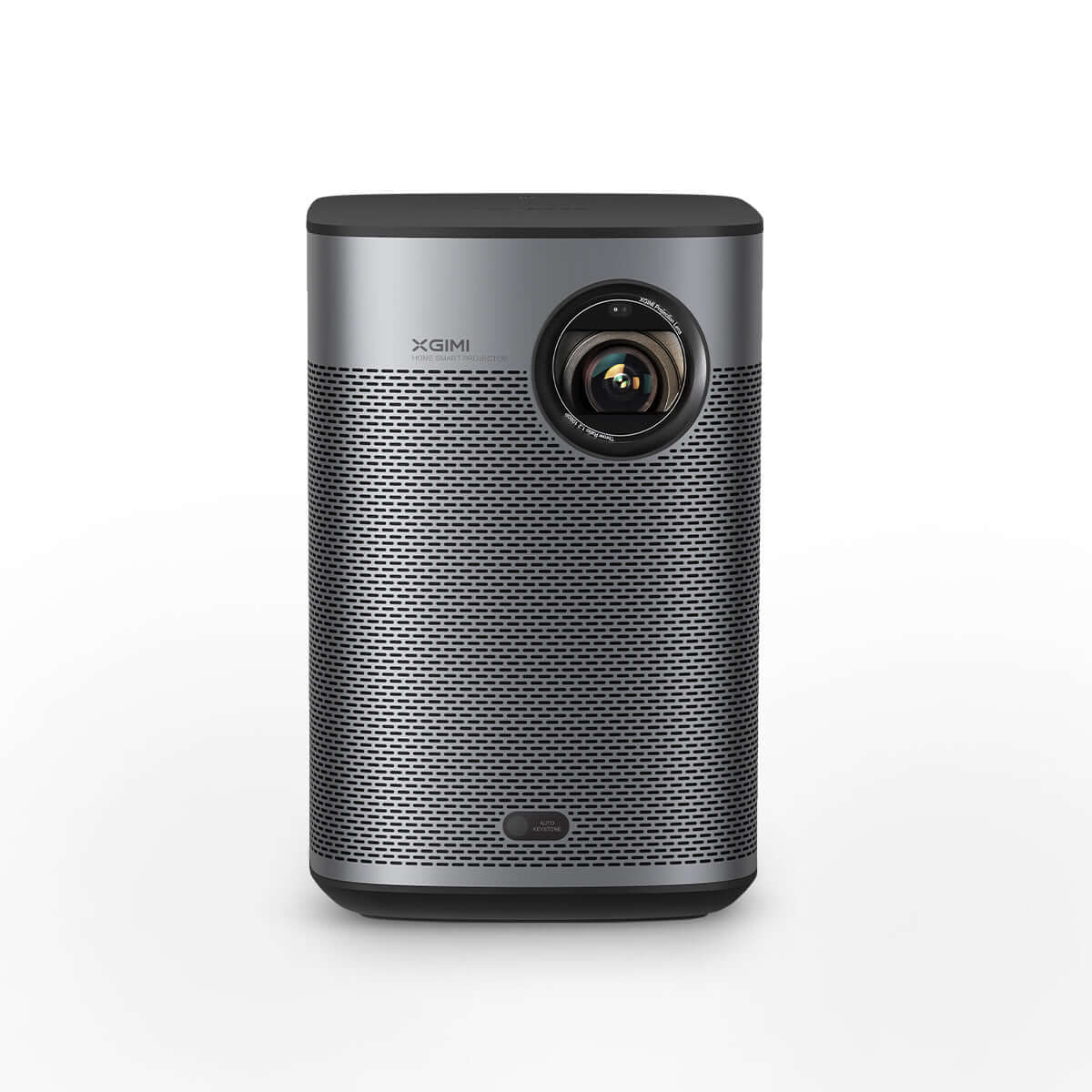
The XGIMI Halo+ takes a more conventional approach with its rectangular design, measuring 6.7 × 4.5 × 5.7 inches and weighing 3.5 pounds. While heavier than the Freestyle, it incorporates a built-in carrying handle that makes transportation surprisingly convenient.
The aluminum body with fabric speaker covering gives the Halo+ a premium feel that would look at home in most living rooms. The slightly larger footprint accommodates its most significant advantage over the Freestyle: a built-in 59Wh battery that provides approximately 2.5 hours of playtime—enough for most movies without needing to hunt for an outlet.
In practice, the XGIMI's design proves more practically portable despite its larger size, primarily because of that integrated battery. I've found myself more likely to actually move the Halo+ between rooms or take it outdoors, while the Freestyle tends to stay where power outlets are easily accessible.
Both projectors offer 1080p (1920×1080) resolution, which remains the sweet spot for portable projectors. While 4K projectors exist, they typically come with significant price and size increases that compromise portability.
Where these projectors truly differentiate is brightness—perhaps the most critical specification for real-world usage. The Samsung Freestyle 2nd Gen outputs around 550 lumens (a measure of light output), while the XGIMI Halo+ delivers 900 ANSI lumens.
This brightness difference isn't just a numbers game—it fundamentally changes when and where you can use these projectors effectively. In completely darkened rooms, both perform admirably. However, introduce even modest ambient light, and the Halo+'s additional brightness becomes immediately apparent. During testing, the XGIMI maintained viewable images in a living room with curtains drawn during daytime, while the Freestyle's image became significantly washed out under identical conditions.
Samsung leverages its television expertise in the Freestyle, offering excellent color calibration out of the box and support for HDR10+ content. The projector's image processing is particularly impressive when handling dark scenes, maintaining detail where many projectors create a muddy black mass.
The XGIMI counters with its own sophisticated image processing and HDR10 support (though not the "plus" version, which offers dynamic metadata for better scene-by-scene optimization). The Halo+ particularly excels in color vibrancy, producing saturated but natural-looking colors that pop on screen. Its higher contrast ratio—the difference between the brightest whites and darkest blacks—also contributes to a more dimensional image with better perceived sharpness.
After extended viewing, I found the XGIMI's image more consistently impressive across various content types, primarily because its additional brightness allows the colors and contrast to maintain integrity even with some ambient light. The Samsung, however, delivers slightly more accurate skin tones and better shadow detail in ideal (completely dark) conditions.
The Freestyle 2nd Gen runs on Samsung's Tizen operating system—the same platform powering their smart TVs. This integration means a familiar, polished interface with access to most major streaming platforms including Netflix, Disney+, Prime Video, and Samsung's own TV Plus service offering free ad-supported content.
New to the second-generation Freestyle is Samsung's Gaming Hub, which allows cloud gaming from services like Xbox Game Pass without additional hardware. The projector also integrates with SmartThings, letting it serve as a control point for compatible smart home devices.
The Tizen interface feels responsive on the Freestyle, with minimal lag when navigating menus or switching between apps. Samsung has clearly optimized the software for the projector's hardware capabilities.
The XGIMI Halo+ runs Android TV 10.0, providing access to the Google Play Store with over 5,000 compatible apps. This breadth of software availability is a significant advantage—virtually any streaming service has an Android TV app available.
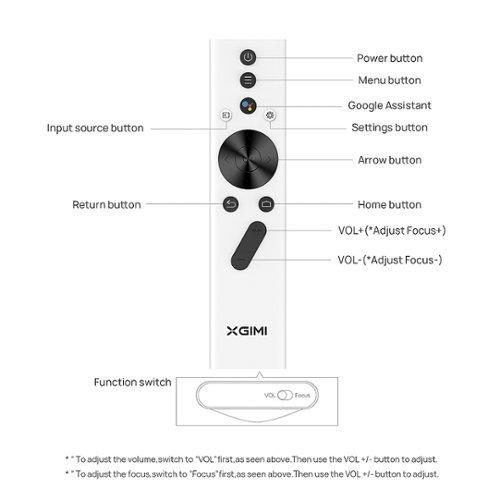
Built-in Chromecast functionality means you can easily cast content from your phone or tablet without navigating through apps on the projector itself. Google Assistant integration also provides voice control for searching content or controlling compatible smart home devices.
In daily use, the Android TV interface occasionally shows moments of lag that the Samsung doesn't experience, but the wider app compatibility and familiar Google ecosystem generally make it more versatile for most users.
Both smart systems have seen multiple updates since their respective launches, with Samsung particularly proactive about adding features to the Freestyle line through software updates rather than hardware revisions.
The Freestyle 2nd Gen features a 5-watt omnidirectional speaker that projects sound in a 360-degree pattern. This design choice aligns with the projector's flexible positioning philosophy—regardless of how you orient the projector, the sound distribution remains consistent.
For its size, the audio quality is impressive, with clear dialogue and surprisingly present bass response. The omnidirectional design creates a wider soundstage than you might expect, though it lacks the directional precision that traditional forward-facing speakers provide.
The XGIMI Halo+ takes audio seriously, featuring dual 5-watt Harman Kardon speakers (10 watts total). This partnership with a respected audio brand pays dividends in sound quality, delivering noticeably fuller audio with better dynamic range than the Freestyle.
The Halo+ can even double as a standalone Bluetooth speaker when you're not watching content—a clever feature that adds value to the package. In practice, the XGIMI's audio output is loud enough to fill a medium-sized room without distortion, something the Freestyle struggles with at higher volumes.
For movie viewing, especially action scenes with complex soundtracks, the XGIMI's superior audio makes a meaningful difference to the overall experience. The separation between dialogue and background effects is more distinct, creating a more immersive viewing experience without requiring external speakers.
The Samsung Freestyle 2nd Gen excels in automatic setup features. Place it near a wall, power it on, and it handles auto-focus, auto-leveling, and automatic keystone correction (adjusting the image to appear rectangular even when projected at an angle) without user intervention.
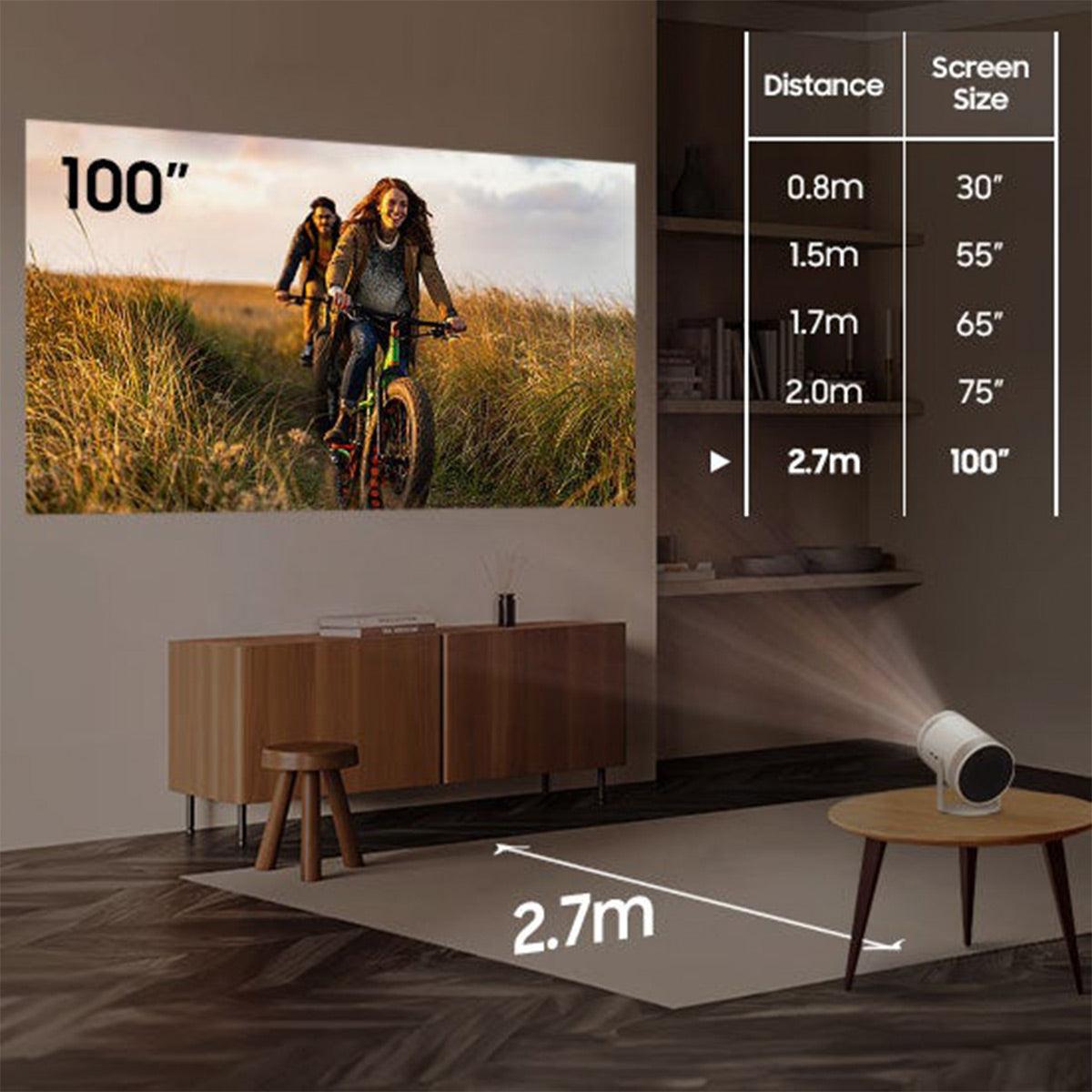
One standout feature is Samsung's Smart Calibration, which adjusts the projected image to compensate for colored walls—meaning you don't necessarily need a white projection surface to enjoy accurate colors. The maximum projection size tops out at 100 inches diagonally, which is sufficient for most home environments.
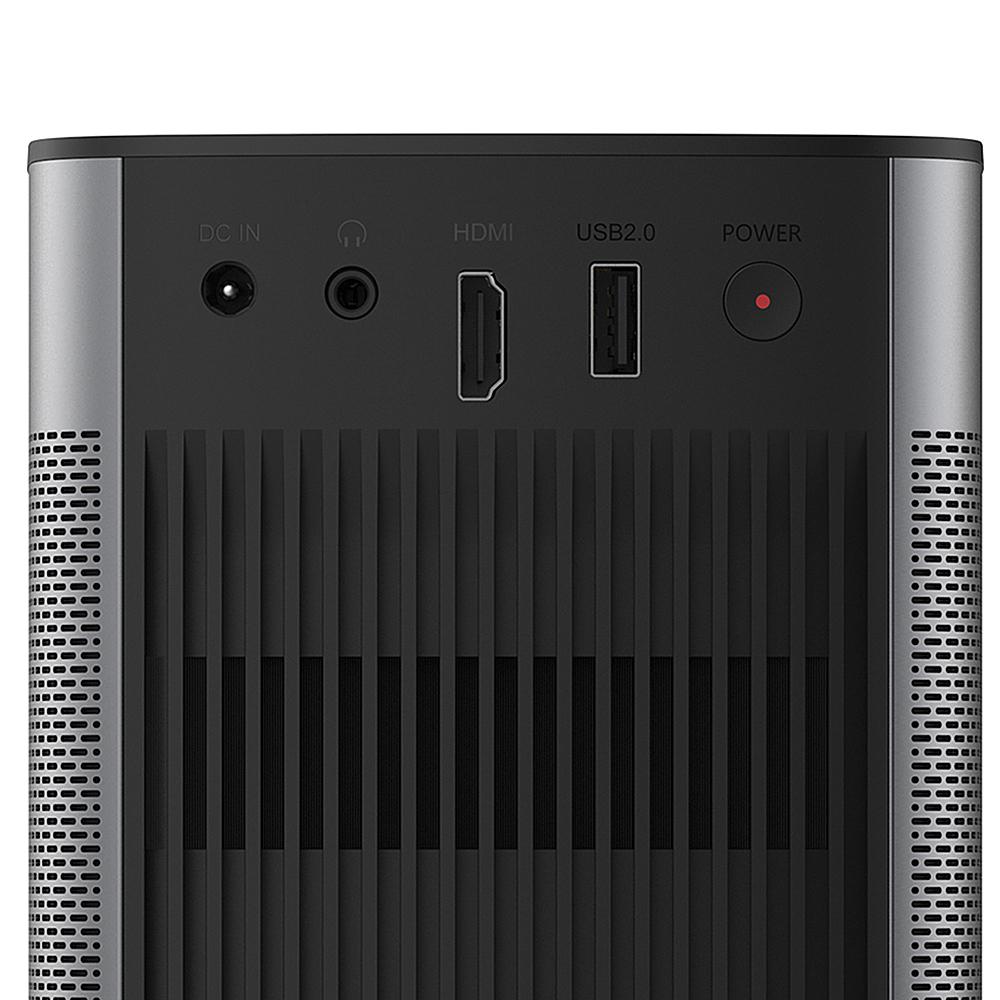
The XGIMI Halo+ matches the Freestyle's auto-focus and adds intelligent screen alignment with both vertical and horizontal keystone correction. It also features obstacle avoidance technology, automatically detecting and resizing the projection to avoid furniture or wall decorations that might interrupt the image.
The Halo+ supports projection sizes up to 200 inches diagonally—double the Freestyle's maximum—though achieving this size requires significant distance and darkness to maintain image quality. An intelligent eye protection sensor detects when someone moves in front of the projector and temporarily dims the light to prevent uncomfortable direct eye exposure—a thoughtful feature for households with curious children.
In practical setup scenarios, both projectors perform admirably, but the XGIMI's obstacle avoidance gives it a slight edge in adaptability to imperfect projection environments.
The Samsung Freestyle 2nd Gen typically retails for $799, while the XGIMI Halo+ comes in slightly higher at $849. This narrow price difference makes the comparison particularly interesting, as neither has an overwhelming price advantage.
The Samsung package includes the projector, remote control, and power adapter. Additional accessories like the battery base or carrying case are sold separately, potentially adding $100-200 to the total cost if these features are important to you.
The XGIMI includes the projector with built-in battery, remote control, power adapter, and a carrying pouch—a more complete package out of the box. The inclusion of the battery alone represents approximately $100 in value compared to Samsung's separate purchase requirement.
When evaluating pure hardware specifications per dollar, the XGIMI offers better brightness, audio, and battery inclusion for just $50 more. However, Samsung's brand reputation for reliability and ongoing software support carries its own value, particularly for those already invested in the Samsung ecosystem.
For dedicated home theater use, both projectors have strengths and limitations. The XGIMI Halo+ makes a stronger case with its superior brightness and audio, creating a more complete theater-like experience without additional equipment. Its higher maximum projection size also aligns better with traditional home theater expectations.
The Samsung Freestyle 2nd Gen becomes more competitive in specialized scenarios—particularly when unusual projection angles are required. Its ability to project onto ceilings is perfect for bedroom viewing, and the compact size allows it to disappear into decor more effectively when not in use.
Neither projector truly replaces a dedicated home theater setup with a traditional projector in the 2000+ lumens range, but the XGIMI comes closer to bridging that gap, particularly in controlled lighting conditions.
One notable consideration for home theater enthusiasts is input lag—the delay between sending a signal to the projector and seeing it displayed. Both projectors hover around 30-50ms depending on the content source, which is acceptable for casual gaming but may frustrate competitive gamers used to gaming monitors with sub-10ms response times.
After extended time with both projectors, clear use cases emerge for each model.
Choose the Samsung Freestyle 2nd Gen if:
Choose the XGIMI Halo+ if:
For most users seeking a versatile portable projector, the XGIMI Halo+ delivers the more complete package with fewer compromises. Its combination of brightness, audio quality, and battery power addresses the core needs of portable projection more comprehensively.
However, the Samsung Freestyle 2nd Gen serves a unique niche with its ultra-compact design and rotational flexibility. For users who prioritize these specific attributes—particularly the ability to easily project in unusual spaces or angles—it remains a compelling option despite its limitations.
Ultimately, both the Samsung Freestyle 2nd Gen and XGIMI Halo+ represent impressive engineering achievements that transform how and where we can enjoy big-screen entertainment. Your specific usage patterns and priorities will determine which of these portable powerhouses deserves a place in your tech lineup.
| Samsung Freestyle 2nd Gen Smart Projector | XGIMI Halo+ Portable Projector |
|---|---|
| Price - Direct cost comparison | |
| $799 (additional accessories sold separately) | $849 (more complete package out of the box) |
| Brightness - Critical for viewing in anything but fully darkened rooms | |
| 550 lumens (requires near-complete darkness) | 900 ANSI lumens (usable with modest ambient light) |
| Battery - Determines true portability | |
| No built-in battery (requires external power source or separate battery base purchase) | Built-in 59Wh battery with 2.5 hours of playtime |
| Weight & Size - Affects ease of transport and placement options | |
| 1.8 pounds, cylindrical design (6.5" tall, 3.7" diameter) | 3.5 pounds, rectangular design (6.7" × 4.5" × 5.7") |
| Resolution - Determines image sharpness and detail | |
| 1080p (Full HD) | 1080p (Full HD) |
| Maximum Screen Size - Limits your largest possible viewing area | |
| Up to 100 inches | Up to 200 inches |
| Smart Platform - Controls available apps and user experience | |
| Samsung Tizen OS with Samsung TV Plus and Gaming Hub | Android TV 10.0 with Google Play Store (5000+ apps) |
| Audio - Affects whether you'll need external speakers | |
| Single 5W 360° omnidirectional speaker | Dual 5W Harman Kardon speakers (10W total) |
| Auto-Correction Features - Simplifies setup and improves image quality | |
| Auto keystone, auto focus, auto leveling, smart color calibration for wall colors | Intelligent screen alignment with obstacle avoidance, auto focus, auto keystone (horizontal and vertical) |
| Projection Angle - Determines placement flexibility | |
| 180° rotation capability (can project on ceilings) | Fixed projection angle (standard forward projection) |
| HDR Support - Enhances color range and contrast | |
| HDR10+ (dynamic metadata for scene-by-scene optimization) | HDR10 (static metadata for overall enhancement) |
| Additional Features - Special capabilities that may influence your decision | |
| SmartThings integration, Gaming Hub for cloud gaming, compact aesthetic design | Can function as a standalone Bluetooth speaker, eye protection sensor, included carrying pouch |
| Ideal Use Case - Who should choose each model | |
| Best for those prioritizing compact size, Samsung ecosystem integration, and flexible projection angles in fully darkened rooms | Best for those needing true portability with battery power, higher brightness for ambient light, and superior built-in audio |
The XGIMI Halo+ Portable Projector is significantly brighter with 900 ANSI lumens compared to the Samsung Freestyle 2nd Gen Smart Projector's 550 lumens. This brightness difference means the XGIMI Halo+ performs better in rooms with some ambient light, while the Samsung Freestyle 2nd Gen requires near-complete darkness for optimal viewing. For home theater use, the XGIMI Halo+ provides more flexibility regarding when you can watch content.
Only the XGIMI Halo+ Portable Projector comes with a built-in battery that provides approximately 2.5 hours of playback time. The Samsung Freestyle 2nd Gen Smart Projector requires constant power connection through its AC adapter. While Samsung offers a separate battery base accessory for the Freestyle, it's an additional purchase. If true portability is important to you, the XGIMI Halo+ offers a more complete solution right out of the box.
The XGIMI Halo+ Portable Projector offers superior audio with its dual 5W Harman Kardon speakers (10W total) compared to the Samsung Freestyle 2nd Gen Smart Projector's single 5W omnidirectional speaker. The XGIMI delivers louder, fuller sound with better bass response and clarity, especially during action scenes. For many home setups, the XGIMI Halo+ may eliminate the need for external speakers, while the Samsung Freestyle might benefit from audio enhancement for larger rooms.
The XGIMI Halo+ Portable Projector can project images up to 200 inches diagonally, which is double the maximum 100-inch screen size of the Samsung Freestyle 2nd Gen Smart Projector. This makes the XGIMI potentially better suited for dedicated home theater spaces where larger screen sizes are desired. However, achieving the maximum screen size with either projector requires sufficient distance and optimal darkness, with the XGIMI Halo+ having more flexibility due to its higher brightness.
Despite weighing more (3.5 pounds vs. 1.8 pounds), the XGIMI Halo+ Portable Projector offers better practical portability than the Samsung Freestyle 2nd Gen Smart Projector due to its built-in battery. The Freestyle requires constant power, limiting where it can be used without additional accessories. The XGIMI includes a carrying handle and pouch, making it easier to transport between rooms or outdoors. For true on-the-go usage, the XGIMI Halo+ has a significant advantage with its self-contained power source.
The Samsung Freestyle 2nd Gen Smart Projector uses Tizen OS which offers a smooth interface and excellent integration with other Samsung devices, while the XGIMI Halo+ Portable Projector runs Android TV 10.0 with access to over 5,000 apps via the Google Play Store. Android TV typically offers more app compatibility and flexibility, plus built-in Chromecast functionality. Samsung's Tizen provides a more streamlined experience with fewer performance issues. Your preference may depend on which ecosystem (Google or Samsung) you're already using with your other devices.
Both projectors offer impressive auto-setup features. The Samsung Freestyle 2nd Gen Smart Projector provides auto-focus, auto-leveling, and automatic keystone correction, plus a unique smart calibration feature that adjusts colors to compensate for colored wall surfaces. The XGIMI Halo+ Portable Projector includes auto-focus, intelligent screen alignment with both vertical and horizontal keystone correction, and obstacle avoidance technology that detects and adjusts around objects in the projection path. For most users, both systems work effectively, though the XGIMI's obstacle avoidance gives it a slight edge in challenging environments.
For gaming, the XGIMI Halo+ Portable Projector has a slight advantage with its higher brightness and superior speakers, creating a more immersive experience. However, the Samsung Freestyle 2nd Gen Smart Projector includes Samsung's Gaming Hub, which allows for cloud gaming from services like Xbox Game Pass without additional hardware. Both projectors have similar input lag (around 30-50ms), which is acceptable for casual gaming but not ideal for competitive play. If you primarily stream games, the Samsung may be preferable, while for console gaming, the XGIMI Halo+ offers better overall performance.
Yes, both the Samsung Freestyle 2nd Gen Smart Projector and XGIMI Halo+ Portable Projector can stream Netflix and other popular services, but with some differences. The Samsung Freestyle with Tizen OS has native support for major streaming platforms. The XGIMI Halo+ with Android TV supports most streaming services, though Netflix sometimes requires additional steps for optimal performance. Overall, both projectors provide good streaming capabilities, with the XGIMI Halo+ offering a wider range of app options through the Google Play Store.
The XGIMI Halo+ Portable Projector at $849 generally offers better value than the Samsung Freestyle 2nd Gen Smart Projector at $799, primarily because it includes a built-in battery, superior brightness, better audio, and a larger maximum screen size. Adding a battery base to the Samsung would increase its total cost beyond the XGIMI's price. For most users seeking a complete portable projection solution, the XGIMI Halo+ delivers more hardware capabilities per dollar, though Samsung's brand reputation and software support also carry value.
The XGIMI Halo+ Portable Projector is better suited for outdoor use thanks to its built-in battery, higher brightness, and louder speakers. It can operate independently for up to 2.5 hours without external power, making it ideal for backyard movie nights. The Samsung Freestyle 2nd Gen Smart Projector requires constant power, limiting its outdoor usability unless you purchase the separate battery base and have access to sufficient darkness. For impromptu outdoor screenings, the XGIMI Halo+ provides a more convenient, all-in-one solution.
For dedicated home theater use, the XGIMI Halo+ Portable Projector generally outperforms the Samsung Freestyle 2nd Gen Smart Projector due to its 900 ANSI lumens brightness (versus 550 lumens), superior dual Harman Kardon speakers, and larger maximum projection size (200 inches versus 100 inches). These specifications create a more cinema-like experience. However, neither projector replaces a dedicated home theater projector with 2000+ lumens. If you have a fully light-controlled room and prefer Samsung's ecosystem, the Samsung Freestyle 2nd Gen can still provide an enjoyable viewing experience for more modest home theater setups.
We've done our best to create useful and informative comparisons to help you decide what product to buy. Our research uses advanced automated methods to create this comparison and perfection is not possible - please contact us for corrections or questions. These are the sites we've researched in the creation of this article: techradar.com - tech.slashdot.org - youtube.com - bestbuy.com - youtube.com - youtube.com - rtings.com - samsung.com - samsung.com - samsung.com - thesmarthomehookup.com - nfm.com - samsung.com - abt.com - projectorcentral.com - valueelectronics.com - target.com - samsung.com - samsung.com - images.samsung.com - abt.com - youtube.com - samsung.com - samsung.com - walts.com - bhphotovideo.com - shi.com - youtube.com - publicsector.shidirect.com - provantage.com - abcwarehouse.com - bestbuy.com - bestbuy.com - youtube.com - projectorcentral.com - staples.com - youtube.com - rtings.com - us.xgimi.com - youtube.com - cnet.com - us.xgimi.com - youtube.com - marieclaire.com - youtube.com - youtube.com - youtube.com - youtube.com - odpbusiness.com - bhphotovideo.com - bestbuy.com - projectorcentral.com - us.xgimi.com - global.xgimi.com - projectorscreen.com - petra.com - eu.xgimi.com - us.xgimi.com - global.xgimi.com

Privacy Policy
Terms and Conditions - Affiliate Policy
Home Security
© Copyright 2008-2026.
11816 Inwood Rd #1211, Dallas, TX 75244