

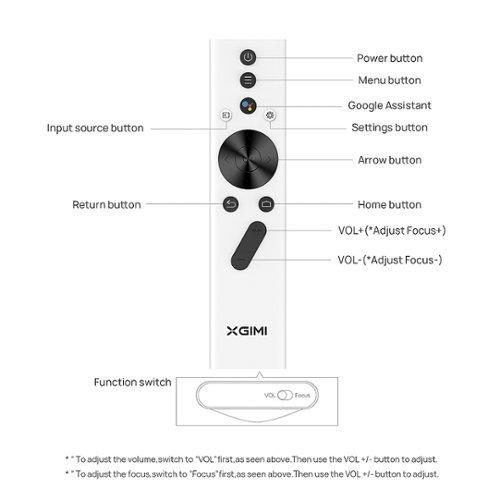
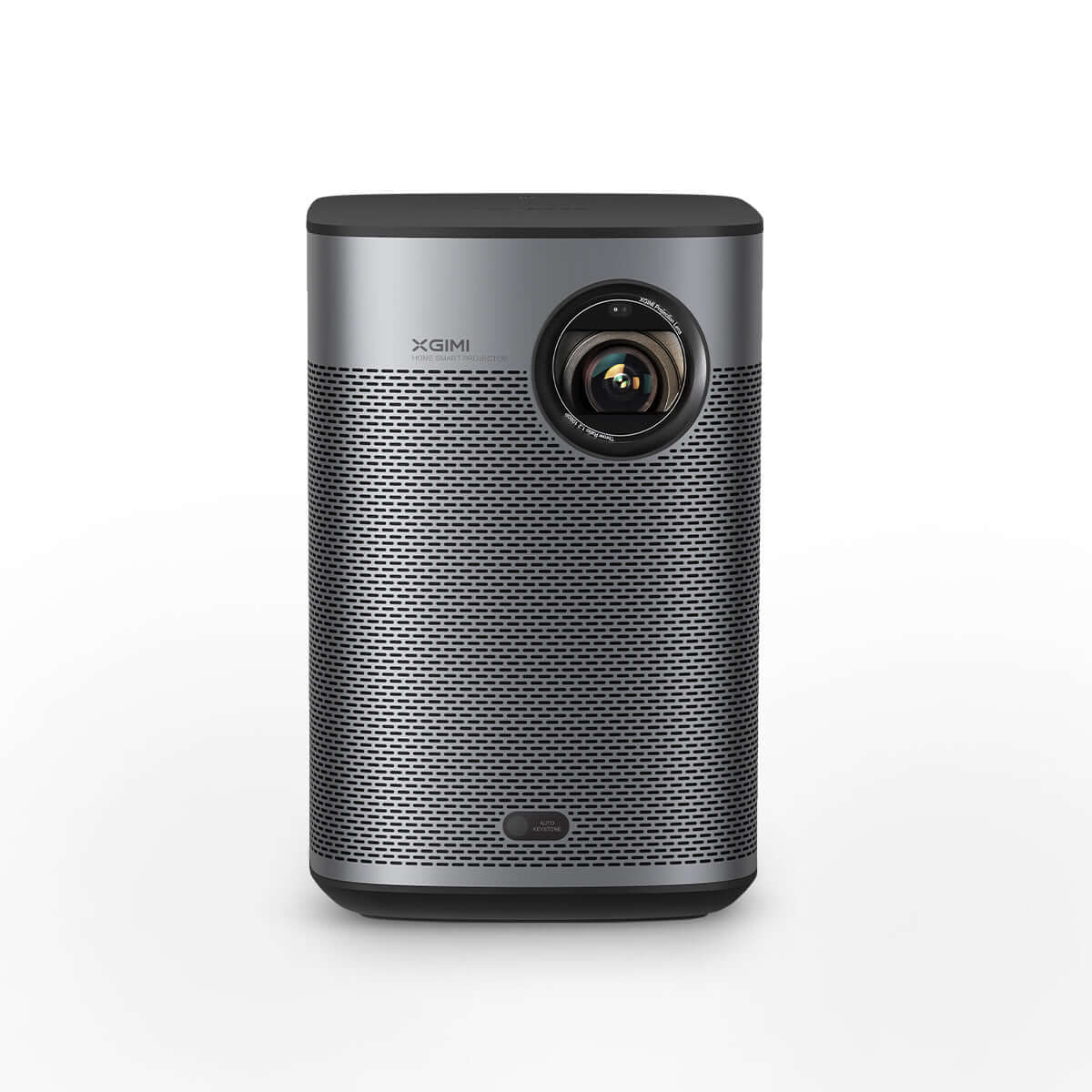
Smart projectors have completely transformed how we think about big-screen entertainment at home. Gone are the days when you needed a dedicated home theater room and complex setup procedures. Today's portable smart projectors pack impressive display technology, streaming capabilities, and surprisingly good audio into compact packages that you can move around your house or even take outside.
The challenge is that "portable projector" now means different things to different people. Some prioritize the absolute best performance you can get in a relatively compact package, while others need genuine mobility – the ability to take their entertainment truly anywhere without worrying about power outlets.
This brings us to two very different approaches to portable projection: the Aurzen BOOM Mini Smart Projector and the XGIMI Halo+ Portable Projector. Released four years apart (the XGIMI in 2021 and the Aurzen in 2025), these projectors represent distinct philosophies about what portable entertainment should look like.
Before diving into specifics, it helps to understand what makes modern projectors tick. The most fundamental choice is between LCD (Liquid Crystal Display) and DLP (Digital Light Processing) technology. LCD projectors like the Aurzen BOOM Mini use liquid crystals and LED light sources to create images, typically delivering consistent brightness and color reproduction across the entire image. DLP projectors like the XGIMI Halo+ use tiny mirrors on a chip (called a DMD or Digital Micromirror Device) that flip thousands of times per second to create the image.
Each technology has its strengths. LCD tends to produce more uniform brightness and works well in varied lighting conditions, while DLP often delivers deeper blacks and higher contrast ratios, making dark scenes in movies look more dramatic. Understanding this difference helps explain why these two projectors perform differently in various situations.
Brightness measurement has also become more standardized. ANSI lumens (American National Standards Institute) provides the most reliable measurement method, while some manufacturers use ISO lumens or other metrics that can be less consistent. This matters because brightness directly affects where and when you can actually use your projector.
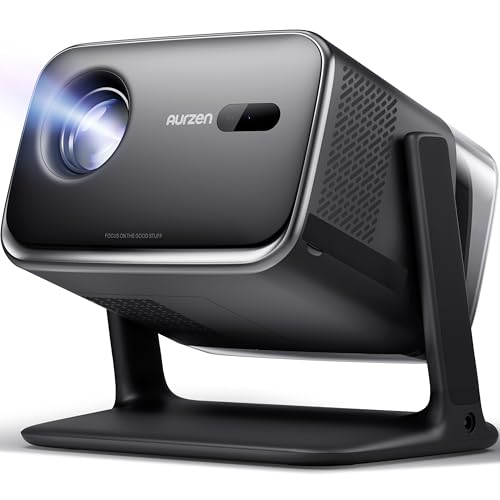
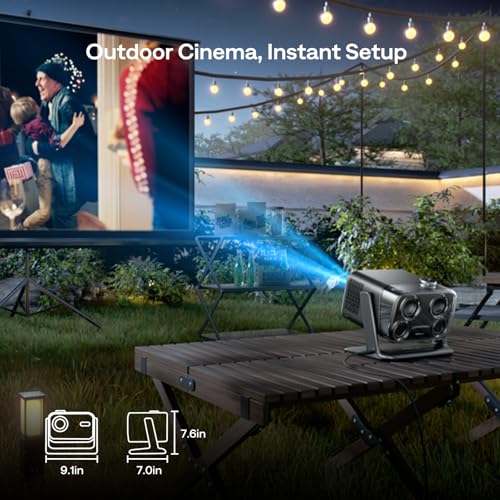
The Aurzen BOOM Mini represents what I'd call the "stationary-portable" approach. At 9.1 x 7 x 7.6 inches, it's definitely compact enough to move between rooms or pack for a vacation, but it needs to plug into the wall to work. This compromise allows it to pack some serious performance into its relatively affordable package.
The heart of the Aurzen BOOM Mini is its LCD display system with LED illumination, rated at 500 ANSI lumens. Based on user reports and expert analysis, this rating appears accurate – a refreshing change in a market where brightness claims often exceed reality. That 500-lumen output means you can actually use this projector in rooms with some ambient light, not just completely dark spaces.
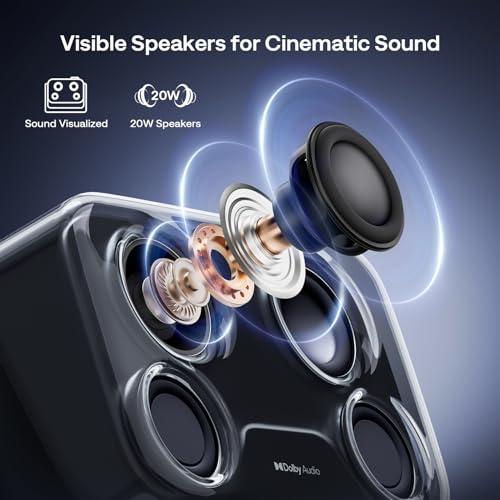
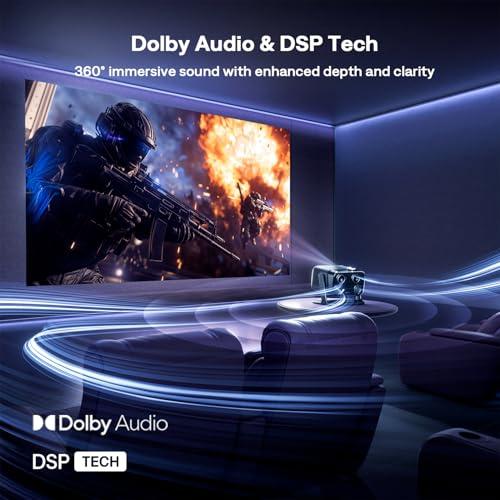
What really sets the Aurzen BOOM Mini apart is its audio system. With dual 10W speakers delivering a total of 20W, it produces significantly more sound than most portable projectors. The rear-facing design helps disperse sound throughout the room, and the Dolby Audio support ensures good dynamic range. Having experienced plenty of projectors with weak, tinny audio, this robust sound system makes a real difference for movie nights where you don't want to mess with external speakers.
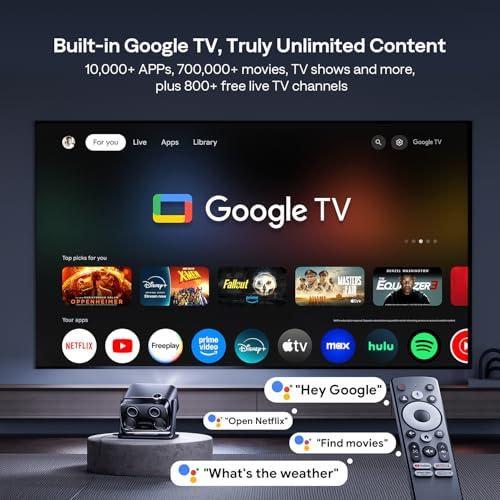
The Google TV integration deserves special mention. Released in 2025, the Aurzen BOOM Mini includes the latest version of Google's smart TV platform, providing access to over 10,000 apps including officially licensed Netflix, Disney+, and Hulu. This matters more than it might seem – many projectors struggle with streaming service compatibility, requiring workarounds or external devices.
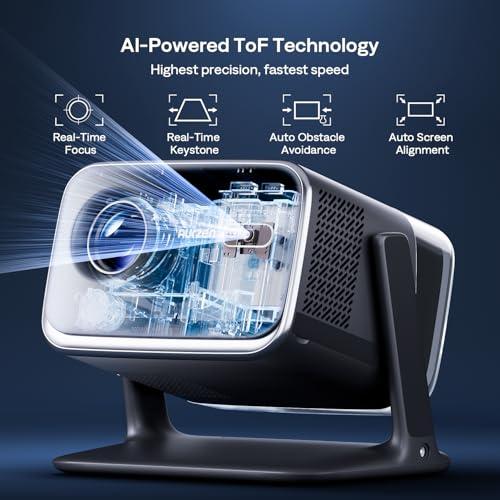
One of the most impressive technical features is the real-time autofocus system using ToF (Time-of-Flight) sensors. These sensors bounce infrared light off your projection surface and measure the return time to calculate distance, automatically adjusting focus in about 3 seconds. Combined with automatic keystone correction (which fixes image distortion when the projector isn't perfectly aligned), setup becomes genuinely plug-and-play.
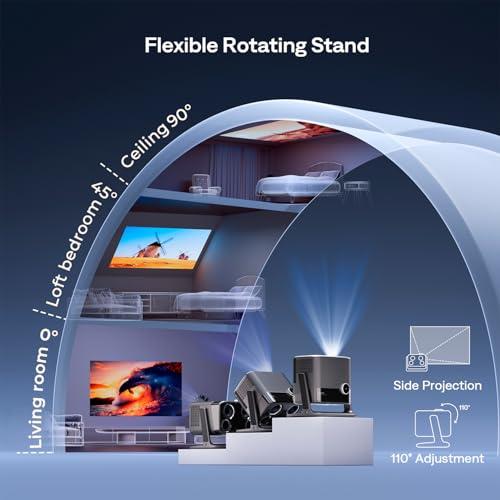
The Aurzen BOOM Mini also includes a flexible 110-degree adjustable stand, allowing for ceiling projection without additional mounting hardware. This versatility makes it practical for bedroom ceiling viewing or unique room configurations.
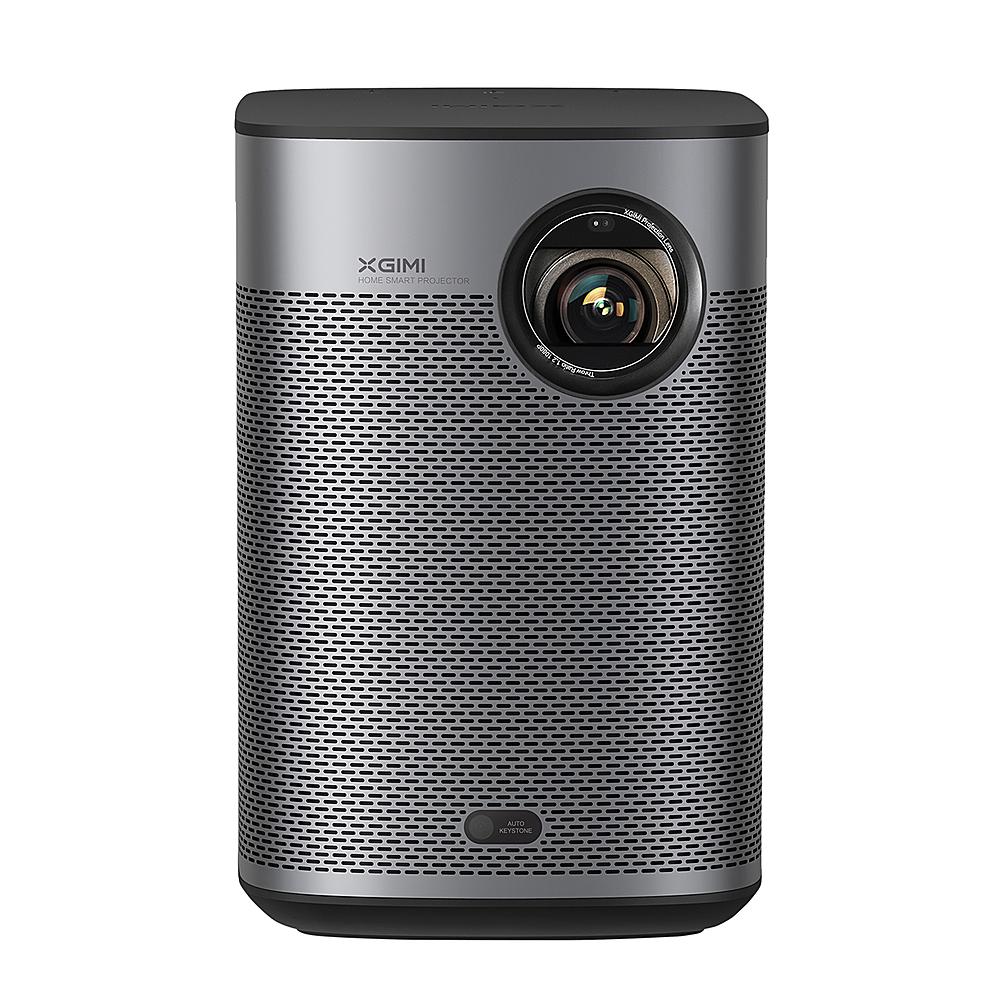
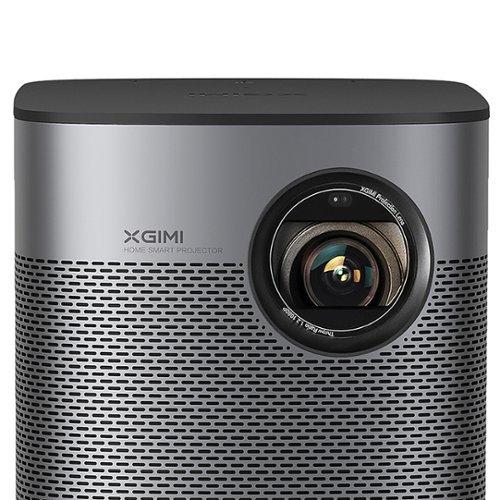
The XGIMI Halo+ takes a completely different approach, prioritizing genuine portability above all else. At 3.5 pounds and measuring just 6.75 x 5.71 x 4.47 inches, it's significantly smaller and lighter than the Aurzen BOOM Mini. More importantly, its built-in 59.454Wh battery provides 2-2.5 hours of operation without any power source.
This battery capability opens up use cases that simply aren't possible with AC-powered projectors. Camping trips, backyard movie nights without extension cords, hotel rooms where outlet placement is awkward – the XGIMI Halo+ handles these scenarios effortlessly.
The XGIMI Halo+ uses DLP technology with a 0.33-inch DMD chip, which helps explain its compact size. DLP projectors can achieve good contrast ratios, and the Halo+ delivers blacks that look genuinely dark rather than gray. This makes a noticeable difference when watching movies with dramatic lighting.
However, there's a significant caveat with brightness claims. While marketed at 700 ISO lumens, real-world testing consistently shows actual output closer to 444-512 lumens. This puts it roughly on par with the Aurzen BOOM Mini's measured performance, despite the higher claimed specification. In practice, this means the XGIMI Halo+ really needs fairly dark environments to deliver its best image quality.
The audio system features Harman/Kardon tuning with dual 5W speakers. While the sound quality is quite good – Harman/Kardon's audio engineering shows – the lower power output (10W total vs 20W for the Aurzen) means it's better suited for personal or small group viewing rather than filling larger rooms.
XGIMI's Intelligent Screen Adaptation (ISA) technology automatically handles focus, keystone correction, and obstacle avoidance. If you place an object in front of the projection area, the system will detect it and adjust the image to project around it. This works well in practice, though the processing takes slightly longer than the Aurzen BOOM Mini's real-time adjustments.
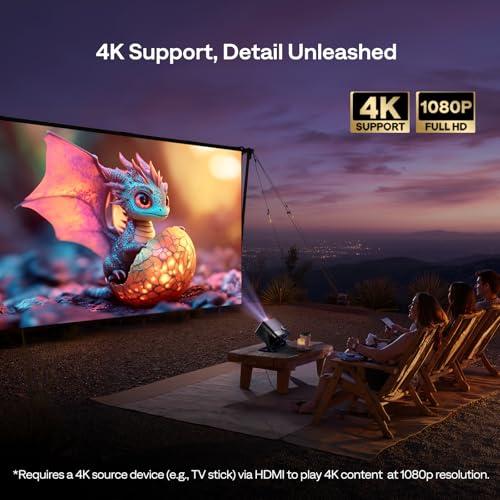
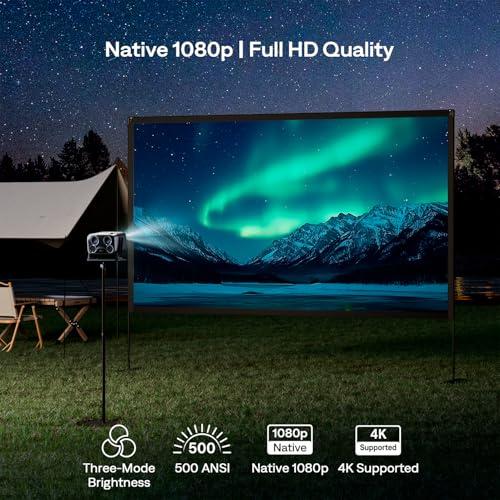
For image quality, both projectors deliver native 1080p resolution, which remains the sweet spot for portable projectors in terms of balancing quality with processing power and cost. The Aurzen BOOM Mini supports 4K input but downscales it to 1080p, while both support HDR10 for improved color depth and contrast.
The brightness difference matters most in practical use. The Aurzen BOOM Mini's consistent 500 ANSI lumens handles rooms with table lamps or evening natural light reasonably well. The XGIMI Halo+, despite higher claimed numbers, performs best in darker conditions due to its actual measured output.
Color reproduction varies based on the underlying display technology. LCD projectors like the Aurzen BOOM Mini typically maintain consistent colors across the entire image, while DLP projectors like the XGIMI Halo+ can produce more vibrant colors but may show slight variations in different image areas.
Audio represents the biggest performance gap between these projectors. The Aurzen BOOM Mini's 20W output creates genuinely room-filling sound that works well for dialogue-heavy content and action sequences alike. Most portable projectors require external speakers for satisfying audio, but the Aurzen BOOM Mini delivers entertainment-grade sound on its own.
The XGIMI Halo+ produces cleaner, more refined audio thanks to Harman/Kardon's tuning, but at half the power output. It's perfectly adequate for personal viewing or small groups, but won't create the immersive audio experience that makes movie nights special.
The streaming platform difference reflects the four-year release gap between these products. The Aurzen BOOM Mini's 2025 Google TV platform includes better app support, faster interface responses, and more reliable streaming service compatibility. Having dealt with projectors that struggle with certain apps or require constant workarounds, this modern platform integration significantly improves the actual user experience.
The XGIMI Halo+ runs Android TV 10.0 from 2021, which works fine but lacks some of the refinements and app optimizations of newer platforms. Some streaming services require alternative installation methods rather than direct downloads from the official app store.
For dedicated home theater use, several factors become particularly important. The Aurzen BOOM Mini excels in this application thanks to its combination of reliable brightness, superior audio output, and stable power delivery. The ability to leave it plugged in permanently eliminates battery degradation concerns, while the 110-degree adjustable stand provides positioning flexibility for optimal viewing angles.
The real-time autofocus becomes especially valuable in home theater setups where you might adjust seating arrangements or projection distance. Manual focus adjustment – common on budget projectors – becomes tedious when you're trying to optimize the viewing experience for different content or seating configurations.
However, the XGIMI Halo+ brings its own advantages to casual home theater use. The ability to quickly relocate it for different viewing situations – bedroom ceiling projection, living room wall, outdoor patio – provides flexibility that AC-powered units can't match.
At the time of writing, these projectors occupy different value propositions that reflect their design priorities. The Aurzen BOOM Mini offers compelling value for users who prioritize performance over portability, delivering specifications typically found in more expensive projectors at a competitive price point.
The XGIMI Halo+ commands a premium for its battery technology and established brand reputation in the portable projector space. While more expensive, that premium pays for genuine mobility that opens up use cases impossible with AC-powered alternatives.
The value equation depends heavily on your priorities. If you need battery power for outdoor use or travel, the XGIMI Halo+ justifies its higher cost by enabling experiences that the Aurzen BOOM Mini simply cannot provide. For home-focused entertainment, the Aurzen BOOM Mini delivers superior performance per dollar.
The decision between these projectors should start with honest assessment of your use cases. If you envision camping trips, backyard gatherings, or travel entertainment where power outlets aren't guaranteed, the XGIMI Halo+ becomes the clear choice despite its limitations and higher cost. The battery capability is irreplaceable for true mobile entertainment.
For users focused primarily on home entertainment with occasional room-to-room mobility, the Aurzen BOOM Mini offers superior performance in the metrics that matter most for regular viewing: brightness consistency, audio quality, and streaming platform integration. The four-year technology advantage shows in its more polished user experience and better long-term software support prospects.
Consider your viewing environment carefully. If you typically watch in darker rooms or can control ambient lighting, both projectors perform well. If you need flexibility to watch with some lights on or during evening hours with natural light, the Aurzen BOOM Mini's consistent brightness becomes more valuable.
Audio preferences also matter significantly. If you plan to use external speakers anyway, the XGIMI Halo+ audio difference becomes less important. If you want great sound without additional equipment, the [Aurzen BOOM Mini](/product1] audio advantage is substantial.
The Aurzen BOOM Mini represents the better choice for most users focused on home entertainment, offering superior performance per dollar and fewer compromises in daily use. The XGIMI Halo+ serves a specific but important niche: users who need genuine portability and are willing to accept performance limitations for that mobility.
Both projectors succeed in their intended roles, but understanding which role matches your needs determines which delivers better value for your specific situation.
| Aurzen BOOM Mini Smart Projector Google TV | XGIMI Halo+ Portable Projector |
|---|---|
| Brightness - Critical for usability in different lighting conditions | |
| 500 ANSI lumens (accurate specification, works in moderately lit rooms) | 700 ISO lumens claimed, ~450-500 actual (requires darker environments for best quality) |
| Power Source - Determines where and how you can use the projector | |
| AC power only (29.0V/3.8A) - consistent performance, no battery concerns | Built-in 59.454Wh battery (2-2.5 hours) - true portability for outdoor/travel use |
| Audio Power - Affects whether you need external speakers | |
| Dual 10W speakers (20W total) - room-filling sound, works as Bluetooth speaker | Dual 5W Harman/Kardon speakers (10W total) - premium tuning but lower output |
| Display Technology - Influences image characteristics and size | |
| LCD with LED light source - consistent brightness, uniform color reproduction | DLP with 0.33" DMD chip - deeper blacks, higher contrast, more compact design |
| Smart Platform - Determines app availability and streaming experience | |
| Google TV (2025) - 10,000+ apps, official Netflix/Disney+/Hulu, Google Assistant | Android TV 10.0 (2021) - standard apps, some streaming workarounds needed |
| Size & Weight - Impacts true portability and setup flexibility | |
| 9.1 × 7 × 7.6 inches, weight not specified - larger but includes 110° flexible stand | 6.75 × 5.71 × 4.47 inches, 3.5 lbs - genuinely portable, travel-friendly |
| Auto Setup Features - Reduces manual adjustments for optimal viewing | |
| Real-time autofocus with ToF sensors (~3 seconds), auto keystone, obstacle avoidance | XGIMI Halo+ ISA technology - comprehensive auto adjustments, slightly slower processing |
| Connectivity Options - Determines compatibility with devices and networks | |
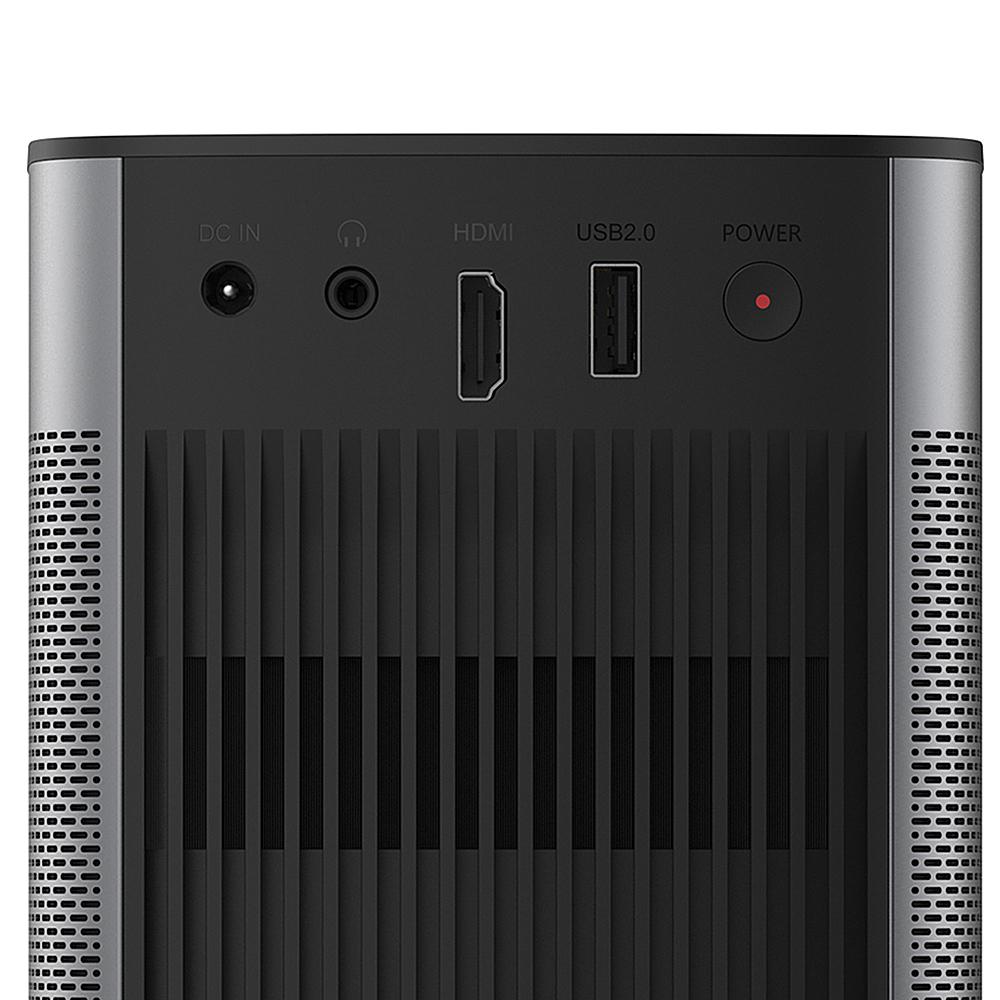
| Dual-band Wi-Fi, Bluetooth 5.1, HDMI ×1, USB ×2, 3.5mm audio out, Google Cast | Dual-band Wi-Fi, Bluetooth 5.0, HDMI ×1 (eARC), USB ×1, Chromecast built-in |
| Projection Range - Flexibility for different room sizes and setups | |
| 40″-200″ screen size, 1.2m-6m throw distance, 1.36:1 throw ratio | 40″-200″ screen size, 1.2:1 throw ratio - similar flexibility |
| Best Use Cases - Who should choose each projector | |
| Home theater priority, consistent power access, superior audio needs, latest streaming | Camping, travel, outdoor events, genuine mobility needs, premium brand preference |
The Aurzen BOOM Mini delivers a consistent 500 ANSI lumens that performs reliably in moderately lit rooms. While the XGIMI Halo+ claims 700 ISO lumens, real-world testing shows it actually outputs around 450-500 lumens. For practical daytime use, the Aurzen BOOM Mini provides more dependable brightness performance.
Only the XGIMI Halo+ works outdoors without power thanks to its built-in battery that provides 2-2.5 hours of runtime. The Aurzen BOOM Mini requires AC power, so you'll need an outlet or power source nearby for outdoor use.
The Aurzen BOOM Mini produces significantly louder, room-filling audio with its dual 10W speakers (20W total) and can even function as a Bluetooth speaker. The XGIMI Halo+ features Harman/Kardon tuned speakers that sound refined but at half the power (10W total), making it better for personal viewing than large room entertainment.
The Aurzen BOOM Mini runs Google TV with official access to Netflix, Disney+, Hulu, YouTube, and over 10,000 other apps. The XGIMI Halo+ uses Android TV 10.0 with most major streaming apps, though some services like Netflix may require workarounds or alternative installation methods.
The XGIMI Halo+ is significantly more portable at 3.5 pounds and compact dimensions, plus its battery power eliminates the need for power cords. The Aurzen BOOM Mini is larger and requires AC power, making it better suited for moving between rooms rather than true travel portability.
Both projectors offer automatic setup features, but the Aurzen BOOM Mini provides faster real-time autofocus using ToF sensors (about 3 seconds) along with automatic keystone correction. The XGIMI Halo+ includes comprehensive Intelligent Screen Adaptation that handles focus, keystone, and obstacle avoidance, though processing takes slightly longer.
The Aurzen BOOM Mini excels for home theater use with its consistent 500 ANSI lumen brightness, powerful 20W audio system, and reliable AC power that eliminates battery concerns. Its 110° flexible stand also provides excellent positioning flexibility for optimal viewing angles in dedicated theater spaces.
The Aurzen BOOM Mini uses LCD technology that delivers consistent brightness and uniform color reproduction across the entire image. The XGIMI Halo+ uses DLP technology that typically produces deeper blacks and higher contrast ratios, making dark movie scenes more dramatic, though brightness may vary slightly across the image.
Yes, both the Aurzen BOOM Mini and XGIMI Halo+ include HDMI ports that support gaming consoles like PlayStation, Xbox, and Nintendo Switch. The XGIMI Halo+ offers eARC support on its HDMI port, while the Aurzen BOOM Mini provides dual USB ports for additional connectivity options.
The Aurzen BOOM Mini typically offers better performance per dollar with superior audio output, accurate brightness specifications, and the latest Google TV platform. The XGIMI Halo+ commands a premium for its battery technology and established brand reputation, justified mainly if you need genuine portability features.
Both projectors use LED light sources rated for 25,000-30,000 hours of use, which equals roughly 10-15 years of typical home viewing. The Aurzen BOOM Mini eliminates battery degradation concerns since it's AC-powered, while the XGIMI Halo+ battery will eventually need replacement after several years of regular use.
The XGIMI Halo+ is the clear choice for camping and outdoor entertainment thanks to its built-in battery, compact size, and genuine portability. The Aurzen BOOM Mini requires constant power access, making it impractical for outdoor use unless you have generator or electrical hookup access.
We've done our best to create useful and informative comparisons to help you decide what product to buy. Our research uses advanced automated methods to create this comparison and perfection is not possible - please contact us for corrections or questions. These are the sites we've researched in the creation of this article: aurzen.com - aurzen.com - the-gadgeteer.com - projectorcentral.com - aurzen.com - aurzen.com - youtube.com - bestbuy.com - bestbuy.com - youtube.com - aurzen.com - youtube.com - hometechnologyreview.com - youtube.com - aurzen.com - bestbuy.com - bestbuy.com - youtube.com - projectorcentral.com - staples.com - youtube.com - rtings.com - us.xgimi.com - youtube.com - cnet.com - us.xgimi.com - youtube.com - marieclaire.com - youtube.com - youtube.com - youtube.com - youtube.com - odpbusiness.com - bhphotovideo.com - bestbuy.com - projectorcentral.com - us.xgimi.com - global.xgimi.com - projectorscreen.com - petra.com - eu.xgimi.com - us.xgimi.com - global.xgimi.com

Privacy Policy
Terms and Conditions - Affiliate Policy
Home Security
© Copyright 2008-2026.
11816 Inwood Rd #1211, Dallas, TX 75244