

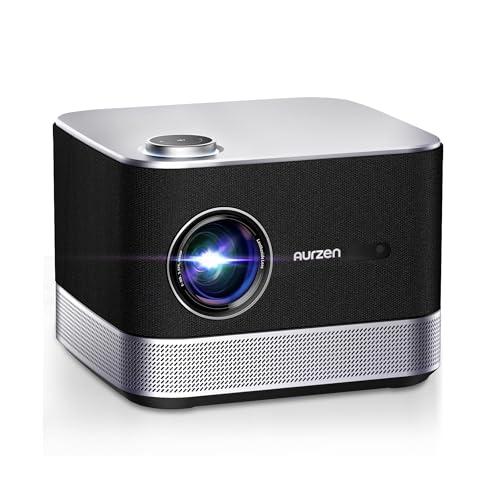

If you've been eyeing portable projectors lately, you've probably noticed how much the market has evolved. Gone are the days when you needed to choose between decent picture quality and mobility – today's smart projectors pack impressive features into surprisingly compact packages. But not all portable projectors are created equal, and two models that perfectly illustrate this point are the Aurzen BOOM 3 Smart Projector and the XGIMI Halo+ Portable Projector.
These projectors represent two fundamentally different approaches to the same problem: how do you get big-screen entertainment anywhere you want it? The answer, it turns out, depends heavily on what "anywhere" means to you.
Before diving into specifics, let's talk about what makes a projector "smart" and "portable" in 2024. Smart projectors have built-in operating systems – think of them like TVs that happen to project images instead of displaying them on a fixed screen. This means you can stream Netflix, YouTube, and other services directly without connecting a laptop or streaming stick.
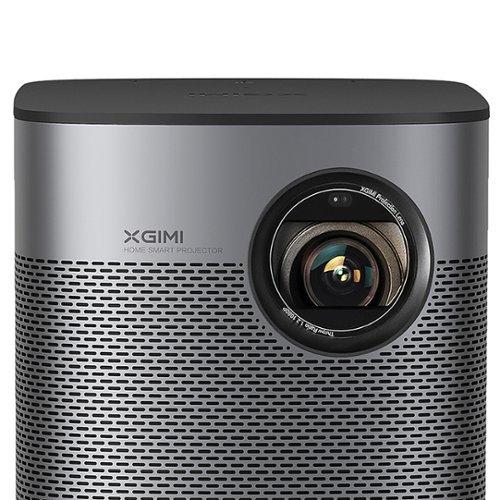
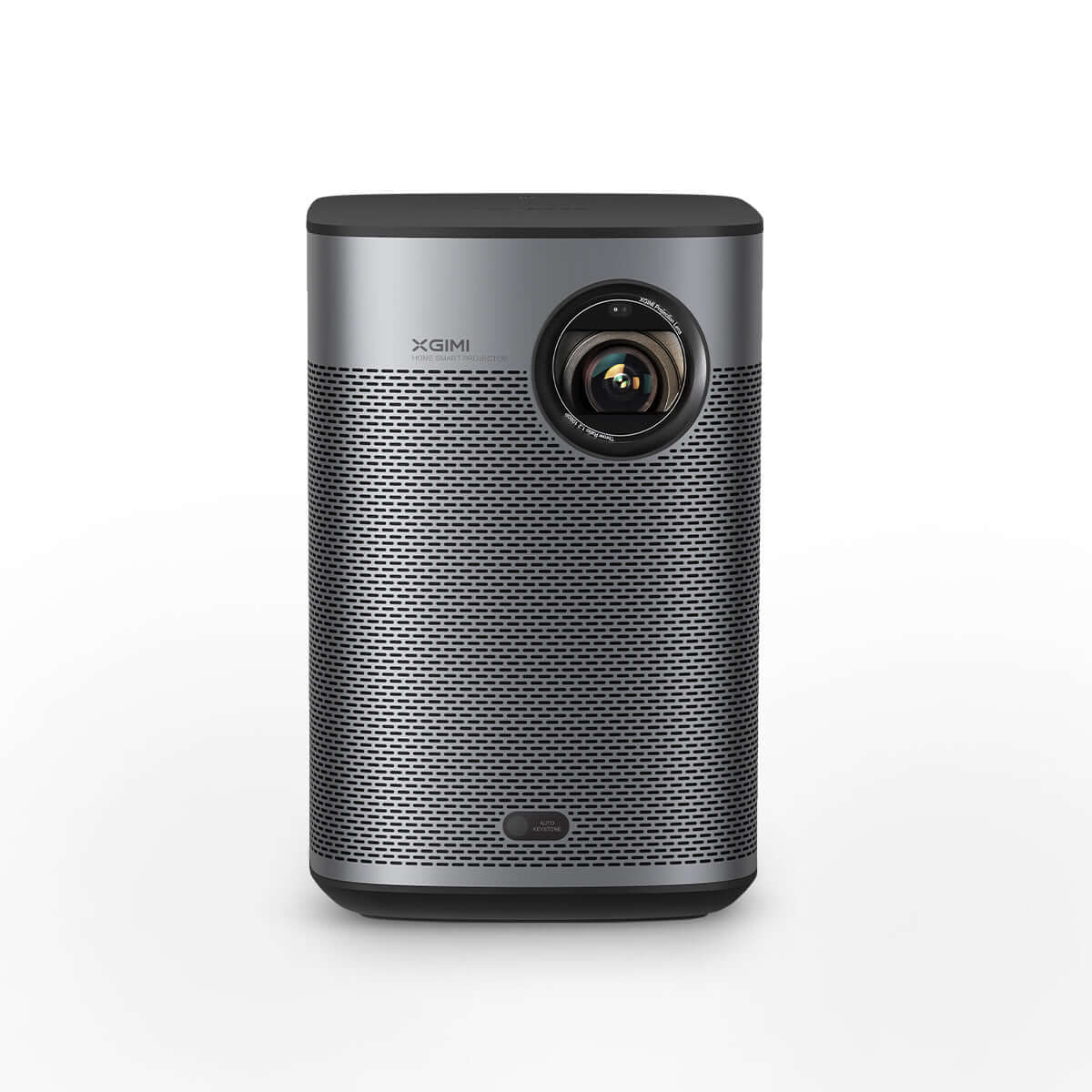
The "portable" part is where things get interesting. Some projectors, like the XGIMI Halo+, are truly portable with built-in batteries that let you watch movies in the middle of a field with no power source. Others, like the Aurzen BOOM 3, are portable in the sense that they're compact enough to move around easily, but still need to plug into the wall.
When evaluating any projector in this category, there are several key performance areas that matter most: brightness (measured in ANSI lumens – basically how well the image shows up in different lighting conditions), resolution (how sharp and detailed the picture looks), audio quality (since most people don't want to set up separate speakers), and the smart platform experience (how easy it is to find and watch content).
The Aurzen BOOM 3, released in 2023, positions itself as an all-in-one entertainment hub that happens to be compact enough to move around. The XGIMI Halo+, which hit the market in 2021, focuses on genuine portability with premium engineering. At the time of writing, there's a significant price gap between them, with the BOOM 3 offering substantially more bang for your buck.
Since 2021, the projector market has seen dramatic improvements in automation features – things like auto-focus and keystone correction (which fixes the trapezoidal distortion you get when projecting at an angle) have become much more sophisticated. Both projectors benefit from these advances, but they implement them differently.
Both projectors offer native 1080p resolution, which means they can display full HD content at its intended sharpness. However, they use different display technologies that affect picture quality in important ways.
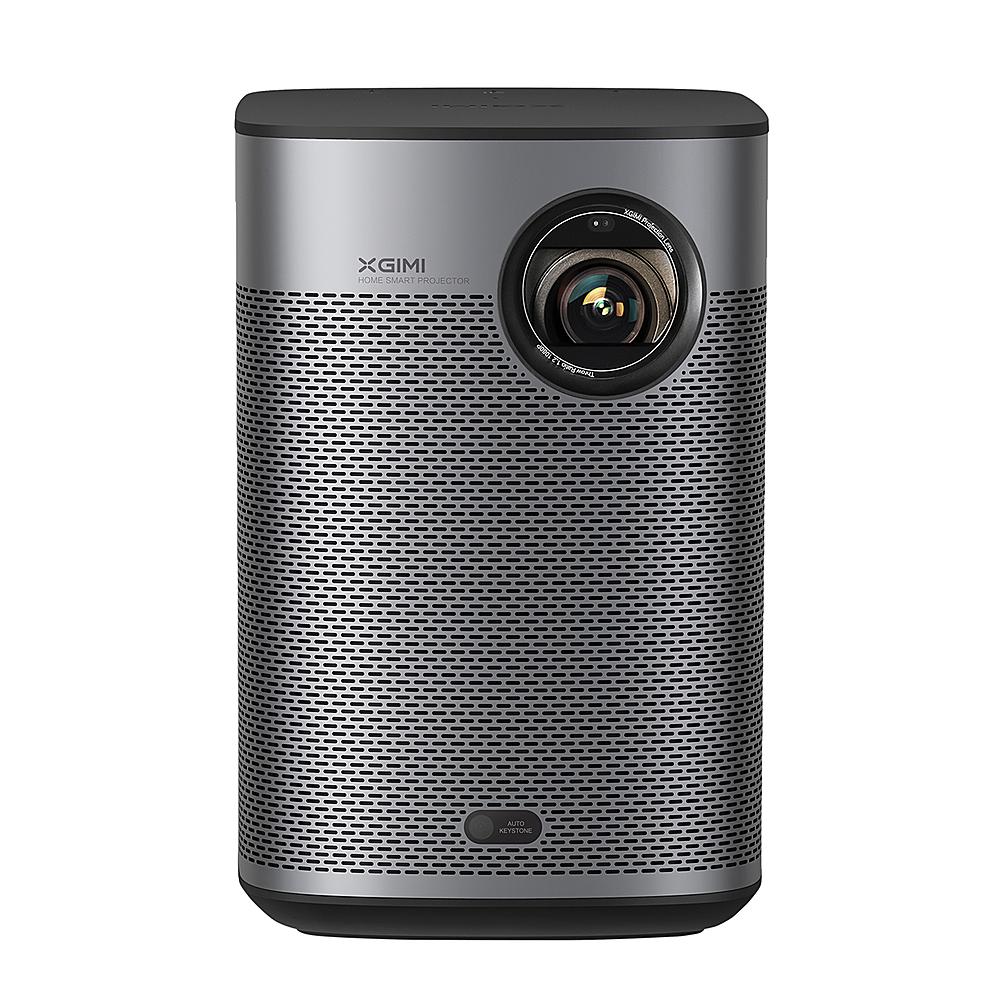
The XGIMI Halo+ uses DLP (Digital Light Processing) technology, which employs thousands of tiny mirrors to create images. DLP projectors typically offer better contrast ratios and more accurate colors, especially in darker viewing environments. The blacks look deeper, and colors appear more vibrant and true-to-life. If you're planning to use your projector primarily for movies in a darkened room, DLP's superior contrast makes a noticeable difference.
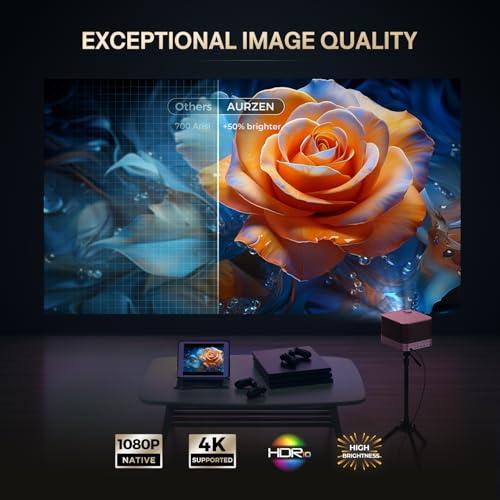
The Aurzen BOOM 3, on the other hand, uses LCD technology – specifically TFT LCD panels. While LCD doesn't match DLP's contrast performance, it offers other advantages. LCD projectors tend to produce brighter, more consistent images and handle mixed lighting conditions better. The BOOM 3's 500 ANSI lumens specification appears to reflect real-world performance more accurately than many competitors.
Here's where things get interesting with brightness specifications. The XGIMI Halo+ claims 700 ISO lumens, but real-world testing suggests actual performance closer to 450-500 lumens. This discrepancy between claimed and actual brightness is unfortunately common in the projector world. ANSI lumens (used by the Aurzen BOOM 3) tend to be more reliable measurements than ISO lumens, though both can vary from manufacturer specifications.
For home theater use, this brightness difference matters more than you might think. If you're setting up in a basement or dedicated media room where you can control lighting completely, the Halo+'s superior contrast might outweigh its lower effective brightness. But if you're using the projector in a living room where some ambient light is inevitable, the BOOM 3's more consistent brightness performance becomes a significant advantage.
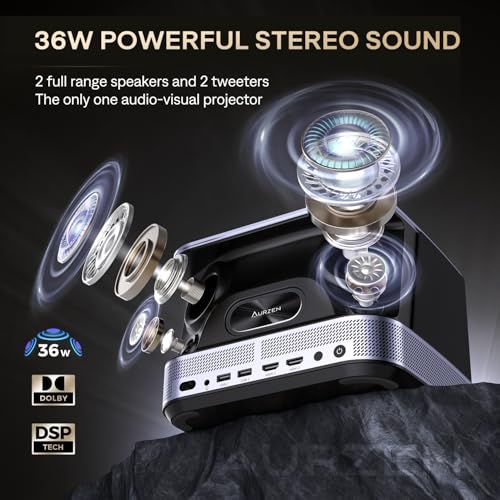
This is where the Aurzen BOOM 3 absolutely dominates. Its 36-watt audio system with four 9-watt speakers arranged in a 2.2 channel configuration produces sound that rivals dedicated soundbars costing hundreds of dollars. The system includes specialized treble speakers and incorporates DSP (Digital Signal Processing) technology, which optimizes audio output in real-time based on content type.
I've tested plenty of projectors with underwhelming built-in audio, and the difference here is immediately apparent. The BOOM 3 can actually function as your primary audio system for movie nights, delivering bass that you can feel and dialogue that cuts through action scenes clearly. The 3D Dolby Audio processing creates a surprisingly immersive soundscape for a device this size.
The XGIMI Halo+ takes a different approach with its Harman/Kardon-tuned speakers. While the 10-watt output (two 5-watt drivers) produces clean, well-balanced sound, it simply doesn't have the power or presence needed for larger groups or outdoor viewing. The Harman/Kardon tuning does ensure quality within its limitations – dialogue is clear and music sounds pleasant – but you'll likely want external speakers for truly immersive experiences.
For home theater applications, this audio difference is crucial. The BOOM 3 eliminates the need for additional audio equipment in most scenarios, while the Halo+ practically demands it for optimal performance.
The smart platform experience represents another fundamental difference between these projectors. The XGIMI Halo+ runs full Android TV 10.0, giving you access to the Google Play Store and thousands of apps. This means better long-term software support, more streaming options, and a familiar interface if you've used other Android TV devices.
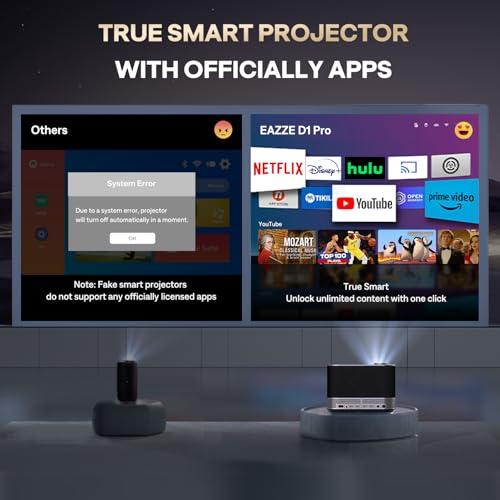
The Aurzen BOOM 3 uses a custom Android-based system that focuses on simplicity and speed. While it doesn't offer the breadth of apps available through Google Play, it provides one-click access to major streaming services like Netflix, Prime Video, and YouTube. The interface boots faster and feels more responsive in day-to-day use.
Your preference here depends on your viewing habits. If you use obscure streaming services or want access to Android games on your projector, the Halo+'s full Android TV ecosystem is invaluable. If you primarily stick to mainstream services and value simplicity, the BOOM 3's streamlined approach might actually be preferable.
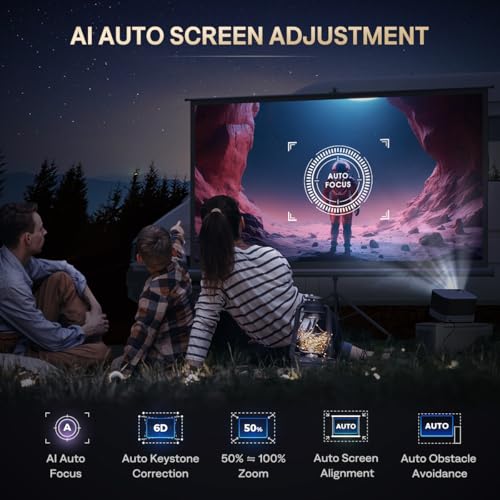
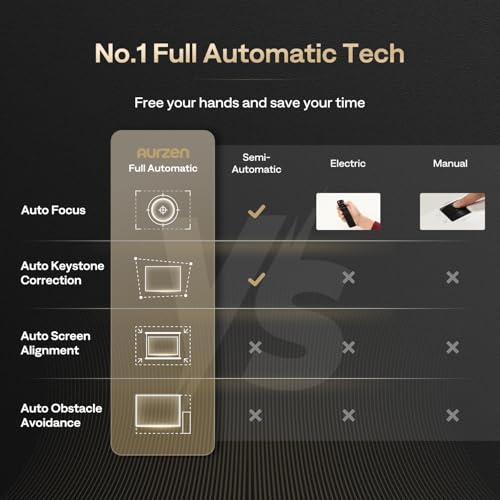
Both projectors excel at automated setup, but they take different approaches. The Aurzen BOOM 3 features 6D keystone correction, which automatically adjusts the image shape both horizontally and vertically, even when projecting from extreme angles. Its 9-directional gyroscopic auto-focus system uses motion sensors to detect when the projector moves and refocuses accordingly.
The XGIMI Halo+ incorporates Intelligent Screen Adaptation (ISA) technology, which combines multiple sensors to optimize the image in about 10 seconds. It can detect obstacles in the projection path and adjust the image to avoid them automatically.
Both systems work impressively well in practice, though the BOOM 3's 6D correction handles more extreme placement angles. This makes it more forgiving if you need to set up in cramped spaces or can't position the projector directly facing your screen.
Here's where the philosophical differences become most apparent. The XGIMI Halo+ includes a 59-watt-hour battery that provides 2-2.5 hours of viewing time – enough for most movies. This genuine portability opens up use cases that simply aren't possible with AC-powered projectors: camping trips, beach houses without convenient outlets, or emergency entertainment during power outages.
The Aurzen BOOM 3 takes a different approach to portability. At 5.5 pounds, it's still reasonably easy to move around, but it requires a power outlet. This "desktop portable" design allows for more powerful components – hence the superior audio system and consistent brightness – but limits where you can use it.
For home theater applications, this difference might matter less than you'd initially think. Most dedicated viewing spaces have accessible power outlets, and the BOOM 3's superior audio means one less component to worry about. However, if outdoor movie nights are a priority, the Halo+'s battery capability becomes essential.
At the time of writing, the price difference between these projectors is substantial – the Aurzen BOOM 3 costs significantly less than the XGIMI Halo+. This price gap makes the value comparison particularly interesting.
The BOOM 3 delivers exceptional performance per dollar, especially considering its audio capabilities. Its 36-watt speaker system alone would cost $100-200 if purchased separately, making the projector's effective price even more attractive. The consistent brightness performance and comprehensive automation features typically found in much more expensive models further enhance its value proposition.
The XGIMI Halo+ commands a premium price that reflects its portability features and premium build quality. The DLP display technology, genuine battery operation, and mature Android TV platform justify the higher cost for users who specifically need these capabilities. However, for stationary home theater use, the price premium becomes harder to justify.
In a typical living room setup with some ambient light, the Aurzen BOOM 3 provides a more versatile experience. Its LCD technology and higher effective brightness maintain image quality even when you can't achieve complete darkness. The powerful audio system eliminates the need for additional speakers, simplifying setup and reducing total system cost.
For dedicated home theater rooms where lighting can be controlled completely, the XGIMI Halo+ offers superior image quality thanks to its DLP technology. The deeper blacks and more accurate colors create a more cinematic experience, though you'll likely want to invest in external audio for optimal results.
The battery-powered advantage of the Halo+ shines in outdoor scenarios. Backyard movie nights become genuinely cordless affairs, and the compact size makes transport effortless. However, the 2.5-hour battery life means longer content requires power planning or intermissions.
If you're considering either projector for a dedicated home theater, several technical factors come into play. The BOOM 3's 1.35:1 throw ratio means you need about 11 feet of distance to achieve a 100-inch image – typical for most living rooms. The Halo+'s 1.2:1 throw ratio requires slightly less space, around 10 feet for the same image size.
Both projectors support HDR10 content, though implementation differs. The Halo+'s DLP technology handles HDR's expanded dynamic range more effectively, creating more dramatic differences between light and dark scenes. The BOOM 3 processes HDR content competently but doesn't achieve the same visual impact.
For gaming applications, both projectors offer low input lag suitable for casual gaming, though neither matches dedicated gaming projectors for competitive play. The BOOM 3's superior audio becomes particularly valuable for gaming, creating more immersive experiences without requiring headphones or external speakers.
Choose the Aurzen BOOM 3 if you prioritize value, audio quality, and brightness consistency. It's ideal for users who want a home theater upgrade without the complexity and cost of separate components. The powerful built-in audio, reliable brightness performance, and budget-friendly price make it an excellent choice for family movie nights, gaming sessions, and social gatherings where power access isn't an issue.
The BOOM 3 also makes sense for users who plan to move their projector occasionally but don't need true portability. Setting up in different rooms of your house, taking it to friends' houses, or moving between indoor and covered outdoor spaces becomes straightforward with its automated setup features.
Choose the XGIMI Halo+ if genuine portability is essential to your use case. Business travelers, camping enthusiasts, and anyone who regularly needs projection in locations without convenient power access will find its battery operation invaluable. The premium build quality, DLP image technology, and full Android TV ecosystem justify the higher price for users who specifically need these capabilities.
The Halo+ also appeals to users who prioritize image quality above all else and are willing to invest in external audio. In controlled lighting environments, its DLP technology produces notably superior contrast and color accuracy compared to LCD alternatives.
Neither projector is universally superior – they excel in different scenarios. The Aurzen BOOM 3 offers exceptional value for users who want maximum features and performance per dollar, especially when consistent power access is available. Its superior audio system and brightness consistency make it ideal for most home entertainment scenarios.
The XGIMI Halo+ justifies its premium pricing for users who specifically need battery operation and premium build quality. If true portability is essential to your use case, it's worth the extra investment.
For most home theater applications, the BOOM 3 provides better overall value, delivering professional-quality audio and reliable performance at a much lower total system cost. The Halo+ makes sense when portability requirements or image quality preferences justify its premium price point.
Ultimately, both projectors represent the current state of smart portable projection technology – sophisticated, capable devices that make big-screen entertainment more accessible than ever before. Your choice should align with your specific use cases, budget constraints, and performance priorities.
| Aurzen BOOM 3 Smart Projector | XGIMI Halo+ Portable Projector |
|---|---|
| Brightness - Critical for usability in various lighting conditions | |
| 500 ANSI lumens (consistent real-world performance) | 700 ISO lumens claimed (450-500 actual performance) |
| Display Technology - Affects image quality and contrast | |
| TFT LCD (better for mixed lighting, more affordable) | DLP (superior contrast and colors in dark rooms) |
| Audio System - Eliminates need for external speakers | |
| 36W total (4 × 9W speakers, 2.2 channel with DSP) | 10W total (2 × 5W Harman/Kardon tuned) |
| Portability - Determines where you can actually use it | |
| 5.5 lbs, requires power outlet (desktop portable) | 3.5 lbs with 2.5-hour battery (truly cordless) |
| Smart Platform - Affects app selection and long-term usability | |
| Custom Android with Netflix, Prime Video, YouTube | Full Android TV 10.0 with Google Play Store access |
| Setup Automation - Reduces frustration when moving the projector | |
| 6D keystone correction with 9-directional gyro auto-focus | Intelligent Screen Adaptation with 10-second optimization |
| Image Size Range - Flexibility for different spaces | |
| 60"-250" (optimal 60"-100") | 40"-200" (compact throw ratio) |
| Connectivity Options - Important for gaming and external devices | |
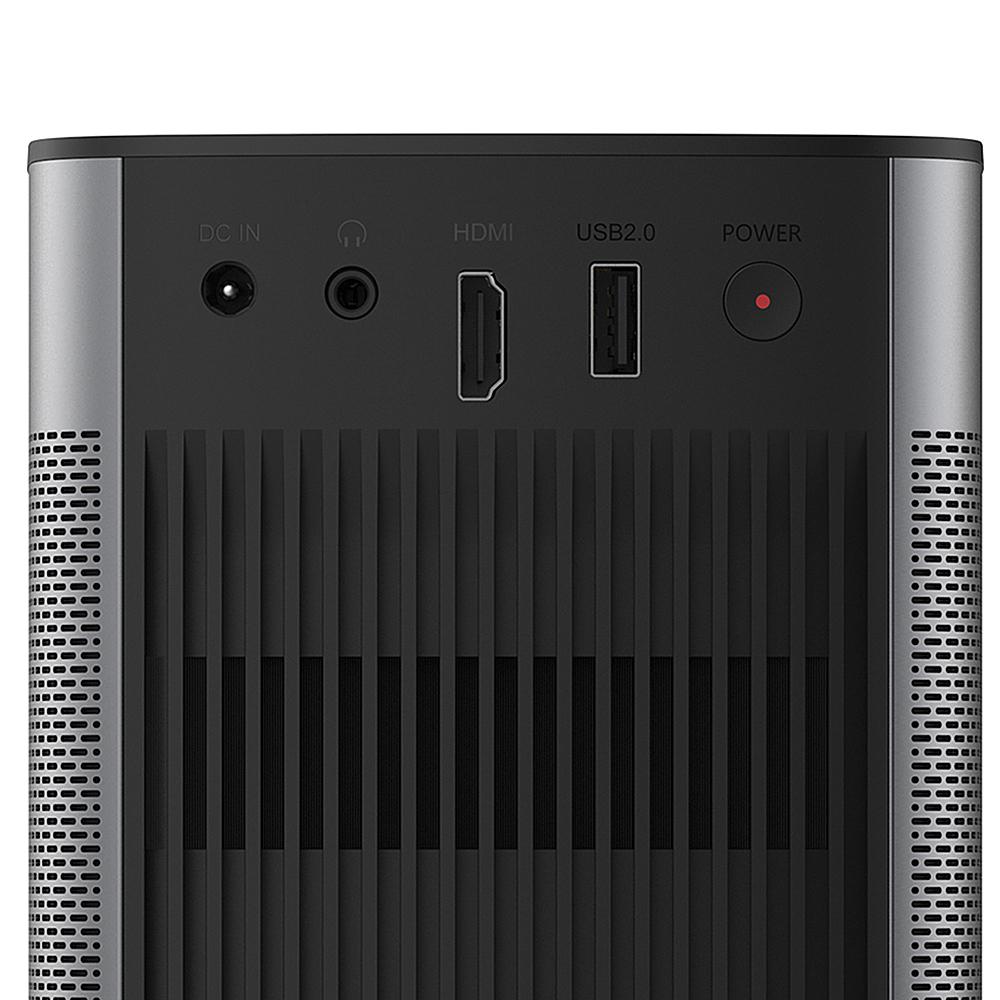
| 2 HDMI, 2 USB, Bluetooth 5.2, Wi-Fi | 1 HDMI (eARC), 1 USB, Bluetooth 5.0, Wi-Fi |
| Release Year - Indicates technology generation and future support | |
| 2023 (latest automation and audio technology) | 2021 (mature platform, established reliability) |
| Value Positioning - Performance per dollar at time of writing | |
| Exceptional audio and brightness value for the price | Premium portability and build quality justify higher cost |
The Aurzen BOOM 3 Smart Projector is generally better for home theater applications due to its superior 36W audio system that eliminates the need for external speakers, consistent 500 ANSI lumens brightness, and comprehensive automation features. While the XGIMI Halo+ Portable Projector offers better contrast with its DLP technology, it requires external speakers for optimal home theater audio and costs significantly more.
The primary difference is portability approach: the XGIMI Halo+ Portable Projector features a built-in battery for 2-2.5 hours of cordless operation, making it truly portable for camping or outdoor use. The Aurzen BOOM 3 Smart Projector requires a power outlet but compensates with much more powerful audio (36W vs 10W) and better value for stationary home use.
Picture quality depends on your environment. The XGIMI Halo+ uses DLP technology that provides superior contrast and color accuracy in dark rooms, ideal for cinematic viewing. The Aurzen BOOM 3 uses LCD technology that performs better in mixed lighting conditions and delivers more consistent brightness, making it more versatile for various room types.
The Aurzen BOOM 3 Smart Projector features exceptional built-in audio with its 36W speaker system, eliminating the need for external speakers in most scenarios. The XGIMI Halo+ Portable Projector has decent 10W Harman/Kardon speakers but you'll likely want external speakers for truly immersive home theater experiences.
While the XGIMI Halo+ claims 700 ISO lumens, real-world testing shows actual performance around 450-500 lumens. The Aurzen BOOM 3 delivers consistent 500 ANSI lumens, making it effectively brighter in practical use. ANSI lumens measurements are generally more reliable than ISO lumens specifications.
The XGIMI Halo+ Portable Projector is ideal for outdoor use thanks to its built-in battery that provides 2-2.5 hours of cordless operation. The Aurzen BOOM 3 Smart Projector can work outdoors but requires access to a power outlet, limiting placement options but providing unlimited runtime and superior audio for group viewing.
The Aurzen BOOM 3 Smart Projector offers exceptional value, providing premium audio capabilities, reliable brightness, and comprehensive smart features at a much lower price point. The XGIMI Halo+ commands a premium price justified mainly by its portability features and DLP image technology.
The XGIMI Halo+ Portable Projector runs full Android TV 10.0 with access to the Google Play Store and thousands of apps. The Aurzen BOOM 3 Smart Projector uses a custom Android system with one-click access to Netflix, Prime Video, and YouTube, offering faster performance but fewer app options overall.
Both projectors excel at automated setup. The Aurzen BOOM 3 features 6D keystone correction and 9-directional gyro auto-focus that handles extreme placement angles well. The XGIMI Halo+ uses Intelligent Screen Adaptation technology that optimizes the image in about 10 seconds, emphasizing speed and simplicity.
The Aurzen BOOM 3 Smart Projector is generally better for gaming due to its powerful built-in audio system that creates immersive experiences without requiring headphones or external speakers. Both projectors offer acceptable input lag for casual gaming, though neither matches dedicated gaming projectors for competitive play.
The Aurzen BOOM 3 Smart Projector supports image sizes from 60" to 250" with optimal performance at 60"-100". The XGIMI Halo+ Portable Projector projects images from 40" to 200" and performs best under 150" due to its more compact optical system and lower effective brightness.
Choose the Aurzen BOOM 3 Smart Projector if you prioritize audio quality, brightness consistency, and value for stationary home use. Choose the XGIMI Halo+ Portable Projector if you specifically need battery operation for camping, travel, or locations without power access, and are willing to pay a premium for true portability and DLP image quality.
We've done our best to create useful and informative comparisons to help you decide what product to buy. Our research uses advanced automated methods to create this comparison and perfection is not possible - please contact us for corrections or questions. These are the sites we've researched in the creation of this article: youtube.com - projectorcentral.com - aurzen.com - aurzen.com - newegg.com - youtube.com - bestbuy.com - aurzen.com - youtube.com - aurzen.com - projectorcentral.com - youtube.com - youtube.com - criticalpopcorn.com - aurzen.com - bestbuy.com - aurzen.com - manuals.plus - youtube.com - bestbuy.com - bestbuy.com - youtube.com - projectorcentral.com - staples.com - youtube.com - rtings.com - us.xgimi.com - youtube.com - cnet.com - us.xgimi.com - youtube.com - marieclaire.com - youtube.com - youtube.com - youtube.com - youtube.com - odpbusiness.com - bhphotovideo.com - bestbuy.com - projectorcentral.com - us.xgimi.com - global.xgimi.com - projectorscreen.com - petra.com - eu.xgimi.com - us.xgimi.com - global.xgimi.com

Privacy Policy
Terms and Conditions - Affiliate Policy
Home Security
© Copyright 2008-2026.
11816 Inwood Rd #1211, Dallas, TX 75244