


Portable projectors have come a long way from the dim, bulky units of the past. Today's models can deliver surprisingly bright, sharp images while running entirely on battery power – perfect for backyard movie nights, camping trips, or just moving your entertainment around the house. But with so many options available, choosing between two premium models like the XGIMI MoGo 4 and XGIMI Halo+ can feel overwhelming.
I've spent considerable time with both projectors, and while they're from the same manufacturer and share some core features, they take fundamentally different approaches to portable projection. Understanding these differences will help you pick the right one for your specific needs and budget.
Before diving into the specifics, let's talk about what actually matters in a portable projector. Unlike traditional home theater projectors that stay mounted to your ceiling, portable units need to excel in several key areas that stationary models can ignore.
Brightness is perhaps the most critical factor. Measured in lumens (a unit of light output), brightness determines where and when you can actually use your projector. While a dark basement might work fine with 300 lumens, you'll need significantly more for a living room with windows or any outdoor use during twilight hours.
Setup convenience becomes crucial when you're constantly moving your projector around. Traditional projectors require careful positioning, manual focus adjustments, and keystone correction (fixing the trapezoid effect when projecting at an angle). The best portable projectors handle these adjustments automatically.
Battery life determines your freedom from power outlets. Most portable projectors offer 2-3 hours of runtime, which covers most movies but might fall short for extended gaming sessions or binge-watching.
Image quality involves more than just resolution. Color accuracy, contrast ratios (the difference between the brightest whites and darkest blacks), and HDR support (High Dynamic Range, which provides more realistic lighting) all contribute to how good your content actually looks.
Both the MoGo 4 and Halo+ target the premium end of this market, but they prioritize these factors differently.
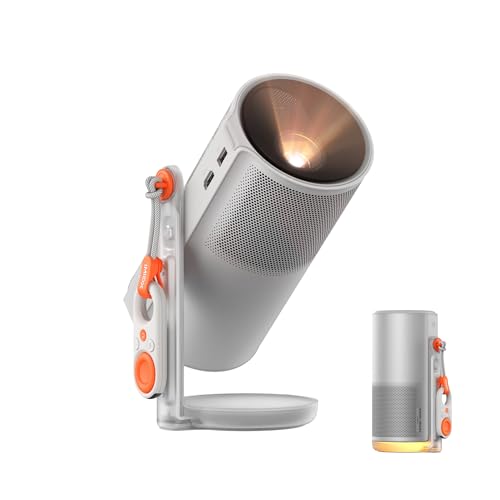
The most immediately obvious difference between these projectors is how you position them. The XGIMI MoGo 4, released in 2025, represents a significant design evolution with its integrated 360-degree adjustable stand. This isn't just a small tripod attached to the bottom – it's a sophisticated positioning system built directly into the projector's body.
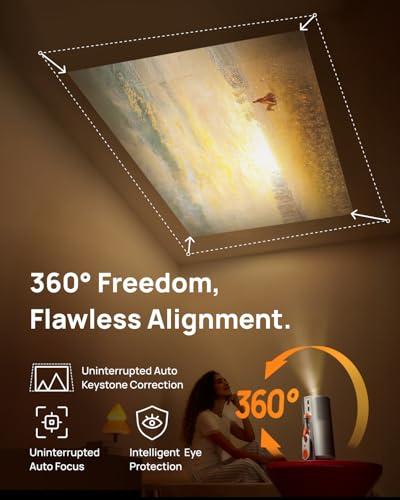
This stand allows you to project in literally any direction: straight ahead onto a wall, up onto a ceiling for comfortable bed viewing, or even down onto a table for presentations. The stand locks securely in any position, and the projector's ISA (Intelligent Screen Adaptation) technology automatically adjusts the image regardless of angle. In practical terms, this means you can set up the MoGo 4 anywhere – on a picnic table, the ground, even hanging from a tree branch – without worrying about getting the angle just right.
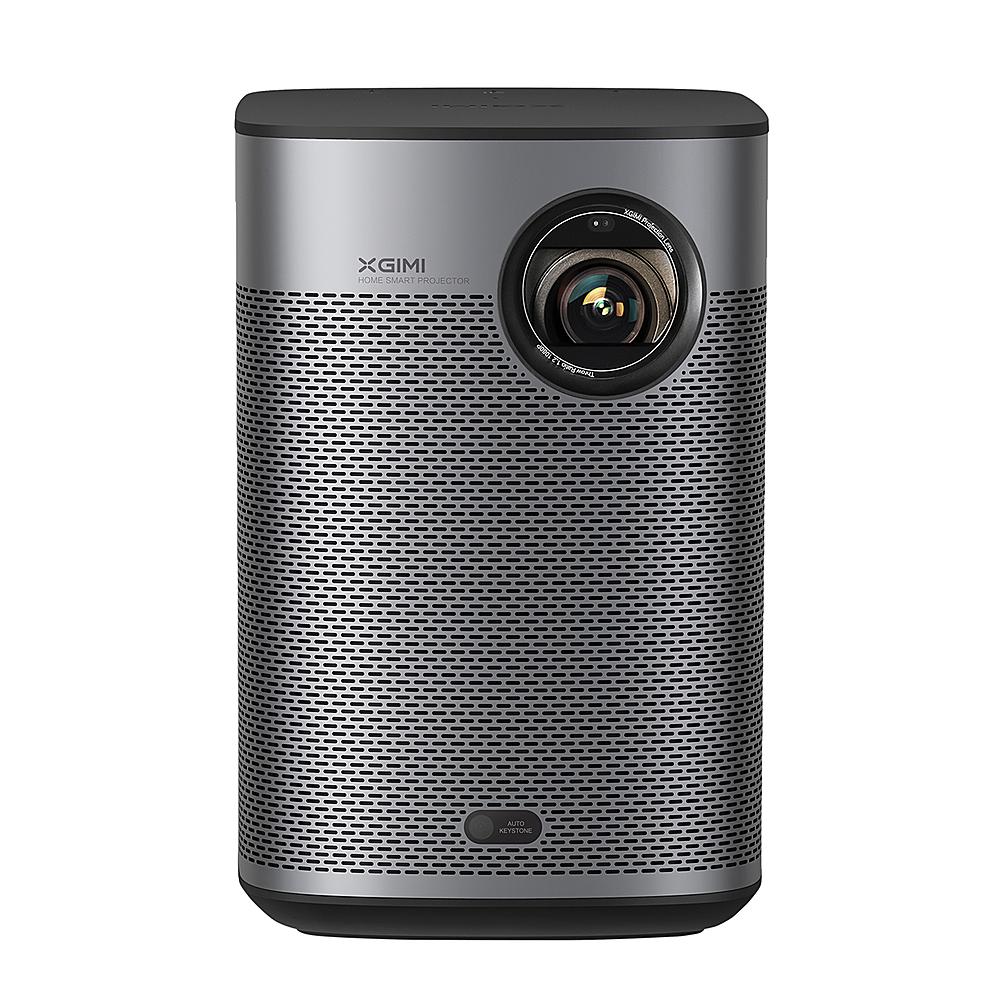
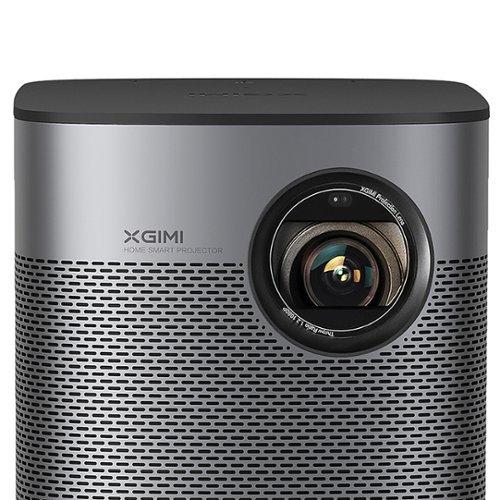
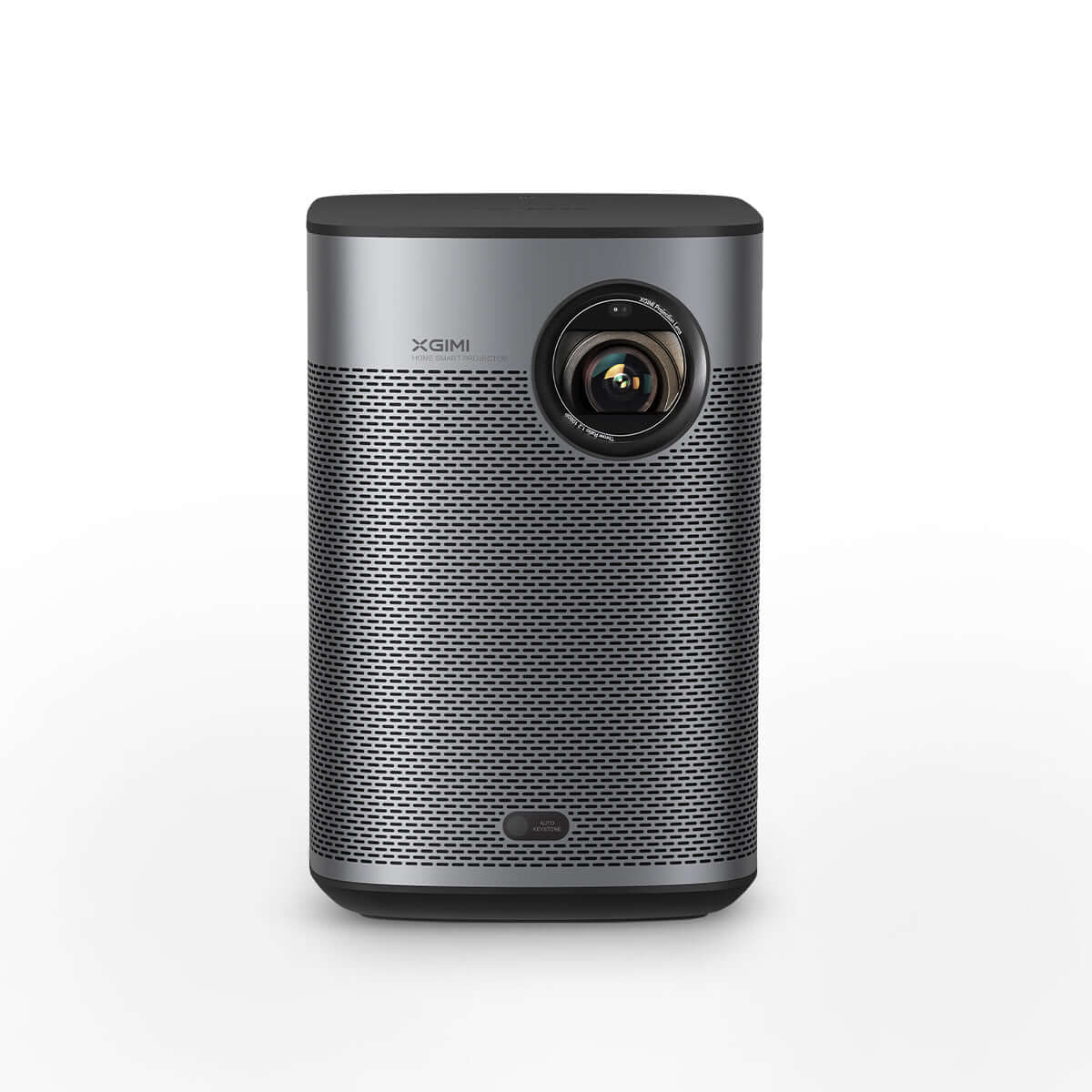
The XGIMI Halo+, originally launched in 2021 with updates through 2025, takes a more traditional approach. It's a compact, rectangular unit that needs to sit on a flat surface or tripod. While this design has served projectors well for decades, it does limit your setup options. Want to project onto the ceiling? You'll need a special mount or some creative furniture arrangements.
In my experience, this design difference is more significant than it might initially appear. The MoGo 4's flexibility has completely changed how I think about projector placement. Setting up for an outdoor movie night went from a 10-minute process of adjusting tripod legs and angles to simply placing the projector on a table and turning it on.
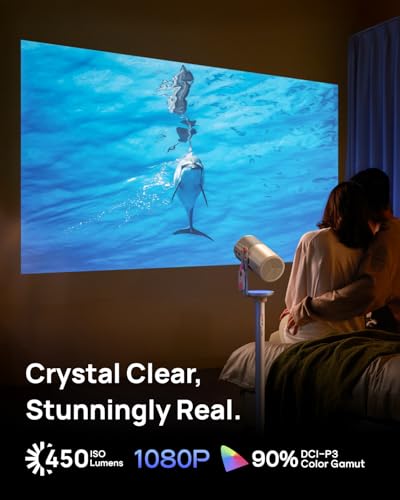
On paper, the XGIMI Halo+ appears to win the brightness war with its claimed 700 ISO lumens versus the MoGo 4's 450 ISO lumens. ISO lumens represent a standardized measurement that should make comparisons easier, but real-world testing reveals a more complex story.
Independent measurements of the Halo+ show actual output closer to 444-512 lumens – significantly below the claimed specification. This performance gap means the brightness advantage isn't as substantial as the numbers suggest. The MoGo 4, meanwhile, appears to meet its 450-lumen rating more consistently, with the laser variant reaching 550 lumens with superior color accuracy.
But raw brightness numbers only tell part of the story. The MoGo 4 uses more sophisticated color science, covering 90% of the DCI-P3 color gamut (the same standard used in movie theaters) compared to the Halo's+ more basic color reproduction. This means the MoGo 4 produces more accurate, vibrant colors even at similar brightness levels.
For home theater use, I've found the MoGo 4 actually appears brighter in most content because of its better contrast ratios and color handling. Dark scenes maintain detail while bright scenes avoid the washed-out look that sometimes affects the Halo+.
Both projectors deliver 1080p Full HD resolution, which remains the sweet spot for portable projection. While 4K portable projectors exist, they typically sacrifice brightness or battery life – trade-offs that rarely make sense for most users.
The MoGo 4 incorporates XGIMI's latest image processing technology, with the laser variant offering particularly impressive performance. The triple laser system in the MoGo 4 Laser produces a 1000:1 contrast ratio and covers 110% of the BT.2020 color space – technical specs that translate to noticeably deeper blacks and more realistic colors.
HDR (High Dynamic Range) support appears on both projectors, specifically HDR10. This technology allows compatible content to display a wider range of brightness levels, making bright scenes more brilliant and dark scenes more detailed. However, the MoGo 4's superior contrast ratios mean HDR content actually looks more impressive, even though both projectors support the same HDR formats.
Color accuracy represents another area where the MoGo 4 pulls ahead. Professional reviews consistently note that it produces more pleasing colors straight out of the box, while the Halo+ often requires manual adjustment to achieve optimal color balance. For most users who won't spend time calibrating their projector, this difference matters significantly.
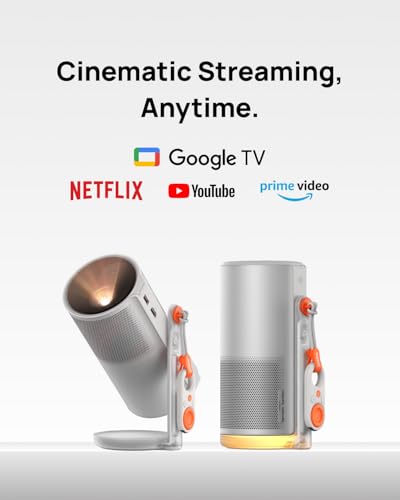
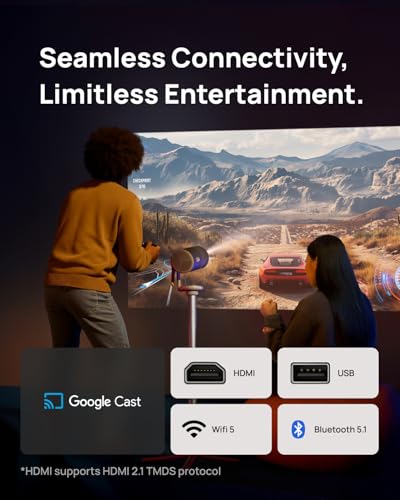
Both projectors run Google TV, which provides access to thousands of streaming apps including Netflix, YouTube, Disney+, and Amazon Prime Video. This smart TV functionality eliminates the need for external streaming devices in most cases – a crucial advantage for truly portable use.
The MoGo 4 offers access to over 10,000 apps and 800+ free channels, while the Halo+ provides over 5,000 streaming apps. Both include built-in Chromecast functionality, allowing you to cast content from your phone or tablet.
Where the MoGo 4 differentiates itself is in creative features. The magnetic filter system allows you to attach different colored filters to the lens, instantly changing the mood of your projection. Combined with the ambient light mode, this transforms the projector into an interesting room lighting system that can sync with music – perfect for parties or just creating atmosphere.
The Halo+, being an older platform, offers more mature software with fewer potential bugs, though both projectors receive regular updates that improve performance and add features.
Portable projectors often struggle with audio, but both XGIMI models take sound seriously with Harman Kardon-tuned speaker systems. The MoGo 4 features dual 6-watt speakers, while the Halo+ uses dual 5-watt units.
The wattage difference translates to noticeably better room-filling sound from the MoGo 4. Both projectors can function as standalone Bluetooth speakers – useful for music when you're not projecting – but the MoGo 4 delivers more satisfying bass response and clearer dialogue.
For home theater use, the MoGo 4's audio quality often eliminates the need for external speakers in smaller rooms. The Halo+ produces good sound but might leave you wanting more volume for larger spaces or outdoor use.
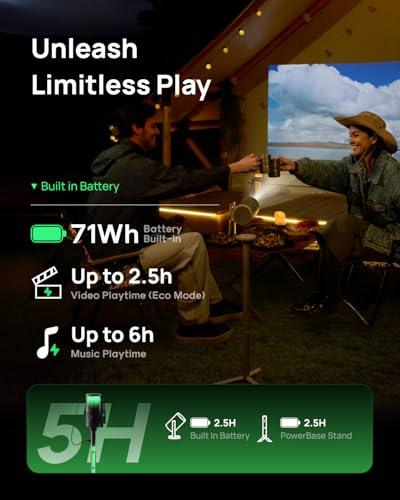
Both projectors offer identical 2.5-hour video playback times, which covers most movies but falls short for extended viewing sessions. The MoGo 4 extends this with smart power management, offering up to 6 hours of music playback when projector lighting is disabled, and up to 5 hours of video when paired with the optional PowerBase Stand accessory.
The Halo+ maintains consistent 2.5-hour performance from its 59.454Wh battery but lacks the extended use options of the newer model.
Battery performance varies significantly based on brightness settings. Both projectors offer eco modes that extend runtime by reducing brightness – a reasonable trade-off for longer viewing sessions. The MoGo 4 automatically switches to eco mode when unplugged, helping preserve battery life.
For camping or extended outdoor use, the MoGo 4's additional battery options provide more flexibility, though both projectors will require charging for full-day use.
Neither projector targets serious gamers, but both handle casual gaming effectively. The MoGo 4 achieves input latency of 56 milliseconds or less in game mode – fast enough for most games but not ideal for competitive online play where every millisecond counts.
Both support 60Hz refresh rates, which works well for console gaming and streaming game services. The large projection sizes (up to 120 inches recommended) make gaming more immersive, though you'll need adequate room lighting for comfortable play.
For family game nights or casual gaming sessions, either projector works well. The MoGo 4's positioning flexibility gives it an edge for unusual gaming setups, like projecting onto a floor for tabletop-style games.
At the time of writing, the Halo+ typically costs several hundred dollars less than the MoGo 4, making it the more budget-friendly option. However, this price difference reflects genuine capability gaps rather than just newer technology premiums.
The Halo+ delivers solid performance for users who primarily plan to use their projector in fixed locations with traditional setup methods. If you're mainly interested in backyard movie nights where you'll use a tripod anyway, the cost savings might outweigh the MoGo 4's convenience features.
The MoGo 4 commands its premium through genuinely innovative features that solve real problems. The integrated stand alone saves money on tripods and mounting accessories while providing far more positioning flexibility. Add in the superior image quality, better audio, and creative features, and the value proposition becomes more compelling for users who will take advantage of these capabilities.
For dedicated home theater use, both projectors face limitations compared to traditional ceiling-mounted units. The 2.5-hour battery life means you'll keep them plugged in most of the time, and the brightness levels, while impressive for portable units, don't match larger home theater projectors.
However, both excel in specific home theater scenarios. The MoGo 4 shines for bedroom ceiling projection, allowing comfortable movie watching from bed without neck strain. Its quiet operation and automatic setup make it ideal for spontaneous movie nights without the complexity of traditional projector systems.
The Halo+ works better for users who want a semi-permanent setup in a dedicated space. Its more traditional form factor fits better on media center shelves, and the lower price makes it more palatable as a secondary projector for occasional use.
After extensive use with both projectors, I'd recommend the XGIMI MoGo 4 for users who prioritize flexibility and convenience above all else. If you plan to frequently move your projector between locations, want the ability to project at unusual angles, or value the latest technology and best image quality, the premium is justified.
The MoGo 4 particularly excels for:
The XGIMI Halo+ makes more sense for budget-conscious buyers who can work within its limitations. If you primarily plan to use your projector in one location with traditional setup methods, the cost savings are significant.
Choose the Halo+ if:
Both projectors represent excellent options in the portable projector market, but they serve different user priorities. The MoGo 4 represents the future of portable projection with its innovative design and superior technology, while the Halo+ offers solid performance at a more accessible price point.
For most users, the MoGo 4's convenience features and superior image quality justify its higher cost, especially considering the money saved on positioning accessories and the expanded use cases enabled by the integrated stand. However, budget-conscious users who can work within traditional setup constraints will find the Halo+ delivers satisfying performance at significant savings.
The portable projector market continues evolving rapidly, with manufacturers pushing boundaries in brightness, battery life, and convenience features. Both of these XGIMI models represent the current state of the art, offering compelling alternatives to traditional TV setups for users who value flexibility and the magic of big-screen entertainment anywhere.
| XGIMI MoGo 4 Portable Projector 2025 | XGIMI Halo+ Portable Projector |
|---|---|
| Brightness - Critical for ambient light performance | |
| 450 ISO lumens (550 with laser variant) | 700 ISO lumens claimed (actual testing shows 444-512 lumens) |
| Design & Setup - Major convenience factor | |
| Built-in 360° adjustable stand with automatic alignment | Traditional compact design requiring external stands/surfaces |
| Weight & Portability - Important for frequent transport | |
| 1.31 kg (2.9 lbs) - coffee thermos size | 1.6 kg (3.5 lbs) - slightly more compact footprint |
| Color Performance - Affects image quality significantly | |
| 90% DCI-P3 color gamut (110% BT.2020 with laser) | Standard LED color reproduction |
| Audio Power - Determines if external speakers needed | |
| Dual 6W Harman Kardon speakers | Dual 5W Harman Kardon speakers |
| Battery Life - Runtime without power connection | |
| 2.5 hours video (up to 5 hours with PowerBase Stand) | 2.5 hours video playback |
| Smart TV Platform - Streaming app availability | |
| Google TV with 10,000+ apps, licensed Netflix | Android TV with 5,000+ apps, licensed Netflix |
| Special Features - Unique capabilities | |
| Magnetic creative filters, ambient lighting mode, ISA auto-alignment | Obstacle avoidance, mature platform stability |
| Gaming Performance - Input lag for responsive play | |
| ≤56ms latency in game mode | Similar low-latency game mode |
| Release & Technology - Platform maturity | |
| 2025 release with latest tech innovations | 2021 release (refreshed 2025) with proven reliability |
The XGIMI Halo+ claims 700 ISO lumens while the XGIMI MoGo 4 offers 450 ISO lumens (550 with laser variant). However, real-world testing shows the Halo+ actually produces around 444-512 lumens, making the brightness difference smaller than advertised. The MoGo 4 meets its stated brightness more consistently and offers superior color accuracy.
The biggest difference is the XGIMI MoGo 4's built-in 360° adjustable stand that allows projection in any direction - walls, ceilings, or floors - without external accessories. The XGIMI Halo+ uses a traditional rectangular design that requires tripods or flat surfaces for positioning. This makes the MoGo 4 significantly more convenient for varied setups.
The XGIMI MoGo 4 generally produces better image quality with 90% DCI-P3 color coverage and superior contrast ratios. Professional reviews consistently rate the MoGo 4's colors as more accurate out-of-the-box. The laser variant of the MoGo 4 offers even better performance with 110% BT.2020 color gamut coverage compared to the Halo+.
Both the XGIMI MoGo 4 and XGIMI Halo+ offer 2.5 hours of video playback on battery power. The MoGo 4 can extend to 6 hours for music playback and up to 5 hours of video with the optional PowerBase Stand accessory. The Halo+ maintains consistent 2.5-hour performance without extension options.
The XGIMI MoGo 4 excels for outdoor use thanks to its integrated stand that works on any surface - picnic tables, ground, or even hanging setups. Its automatic image alignment means quick setup anywhere. While the XGIMI Halo+ can work outdoors, you'll need to bring additional tripods or positioning accessories for flexible placement.
Yes, both the XGIMI MoGo 4 and XGIMI Halo+ run smart TV platforms with licensed Netflix support. The MoGo 4 runs Google TV with access to 10,000+ apps, while the Halo+ offers Android TV with 5,000+ streaming apps. Both include built-in Chromecast and support major services like YouTube, Disney+, and Amazon Prime Video.
The XGIMI MoGo 4 features dual 6W Harman Kardon speakers compared to the Halo+'s dual 5W speakers. This translates to noticeably better room-filling sound and bass response from the MoGo 4. Both can function as Bluetooth speakers, but the MoGo 4 delivers more satisfying audio for most rooms.
Both the XGIMI MoGo 4 and XGIMI Halo+ offer dedicated game modes with input latency around 56ms or less - suitable for casual gaming but not competitive play. Both support 60Hz refresh rates and can project up to 120 inches for immersive gaming experiences. The MoGo 4's flexible positioning gives it an edge for creative gaming setups.
The XGIMI MoGo 4 is more travel-friendly despite being newer technology. It weighs less at 1.31kg versus the Halo+'s 1.6kg, and its built-in stand eliminates the need to pack tripods or positioning accessories. The MoGo 4's coffee thermos design and scratch-resistant lens protection make it ideal for frequent transport.
Both projectors work for casual home theater use, though they're designed for portability rather than permanent installation. The XGIMI MoGo 4 excels for bedroom ceiling projection and flexible viewing angles throughout the home. The XGIMI Halo+ works better for semi-permanent setups in dedicated spaces. Neither matches the brightness of traditional home theater projectors but both deliver satisfying big-screen experiences.
Value depends on your priorities. The XGIMI Halo+ typically costs less and offers good performance for traditional projector use. The XGIMI MoGo 4 costs more but includes innovative features like the built-in stand, better image quality, and superior audio that justify the premium for users who value convenience and flexibility.
The XGIMI MoGo 4 offers unique magnetic creative filters for ambient lighting effects, the revolutionary 360° built-in stand, and ISA auto-alignment technology. The XGIMI Halo+ features obstacle avoidance technology and represents a more mature, proven platform with longer market presence. The MoGo 4 focuses on innovation while the Halo+ emphasizes reliability and value.
We've done our best to create useful and informative comparisons to help you decide what product to buy. Our research uses advanced automated methods to create this comparison and perfection is not possible - please contact us for corrections or questions. These are the sites we've researched in the creation of this article: projectorcentral.com - whathifi.com - us.xgimi.com - whathifi.com - global.xgimi.com - youtube.com - us.xgimi.com - youtube.com - youtube.com - thesmarthomehookup.com - global.xgimi.com - hometechnologyreview.com - projectorcentral.com - youtube.com - us.xgimi.com - bestbuy.com - bestbuy.com - youtube.com - projectorcentral.com - staples.com - youtube.com - rtings.com - us.xgimi.com - youtube.com - cnet.com - us.xgimi.com - youtube.com - marieclaire.com - youtube.com - youtube.com - youtube.com - youtube.com - odpbusiness.com - bhphotovideo.com - bestbuy.com - projectorcentral.com - us.xgimi.com - global.xgimi.com - projectorscreen.com - petra.com - eu.xgimi.com - us.xgimi.com - global.xgimi.com

Privacy Policy
Terms and Conditions - Affiliate Policy
Home Security
© Copyright 2008-2026.
11816 Inwood Rd #1211, Dallas, TX 75244