

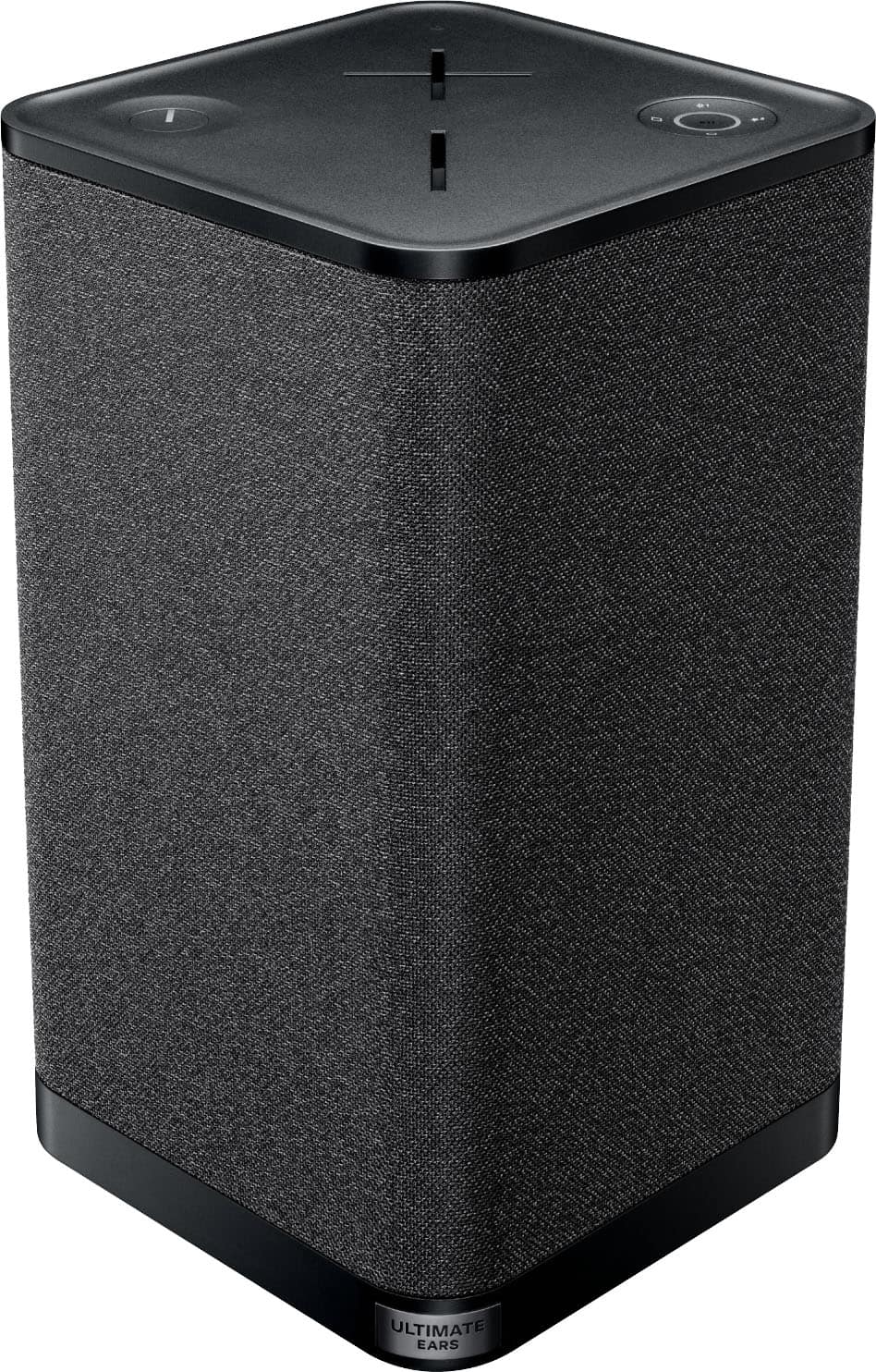
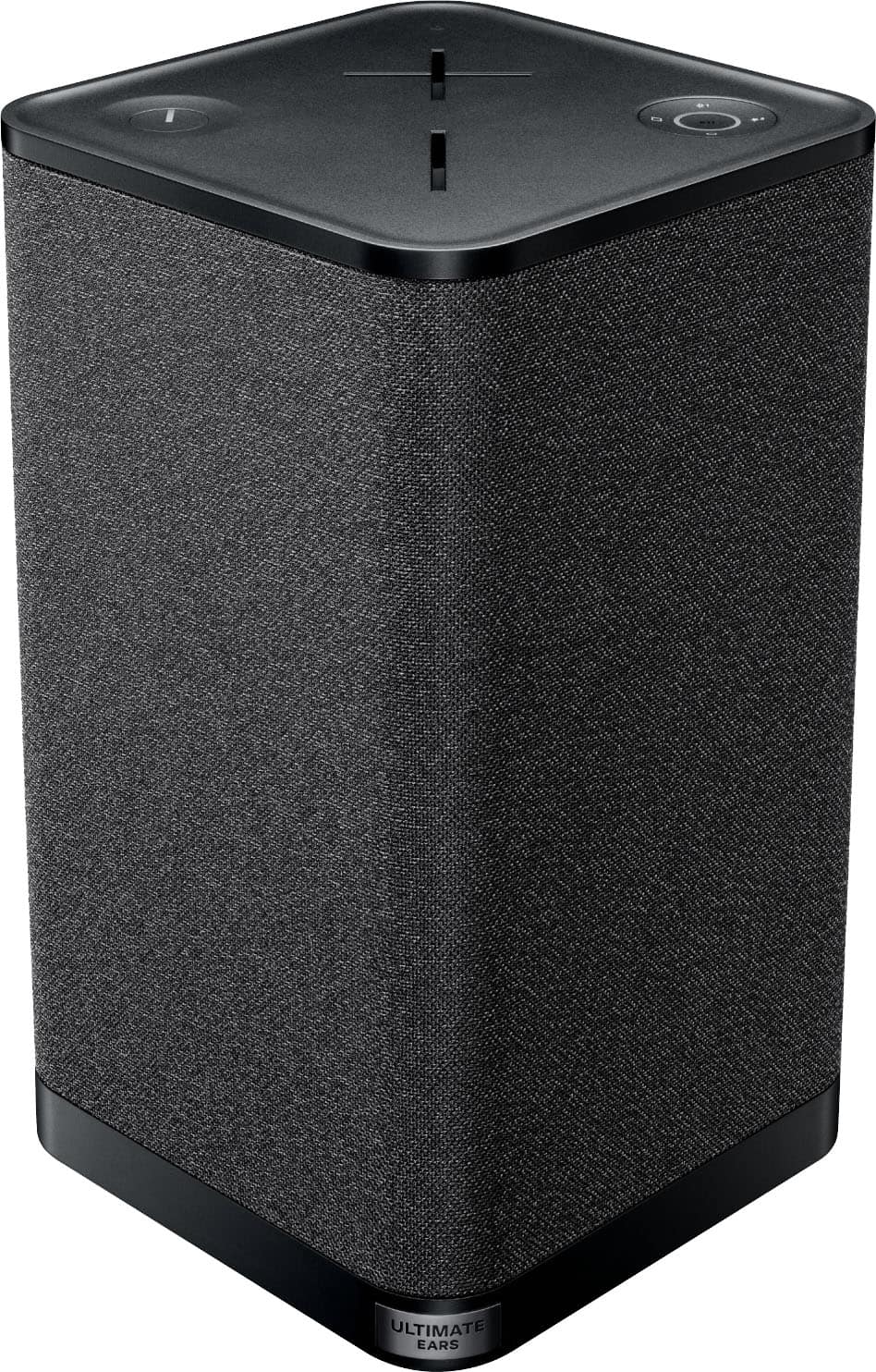

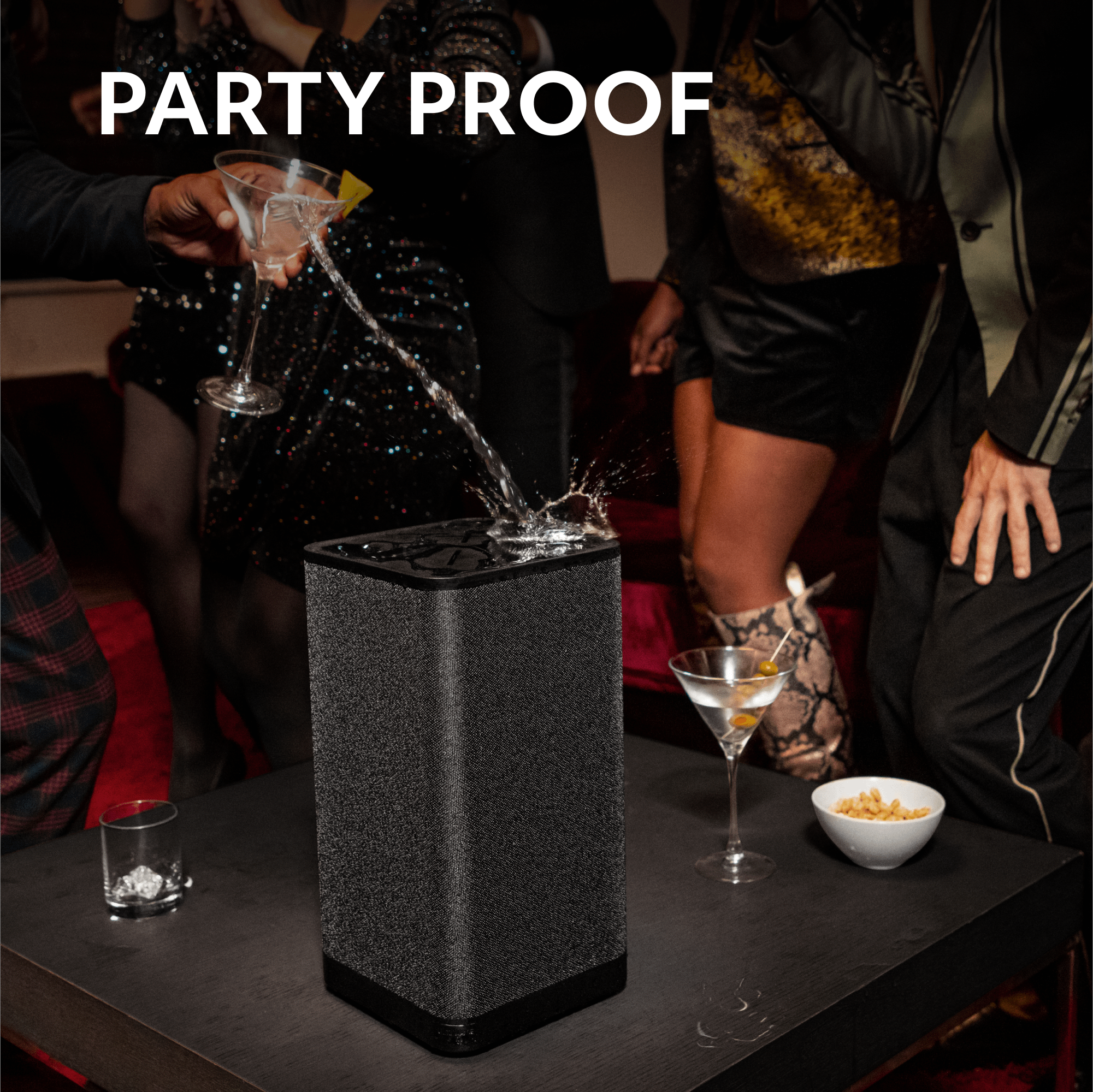


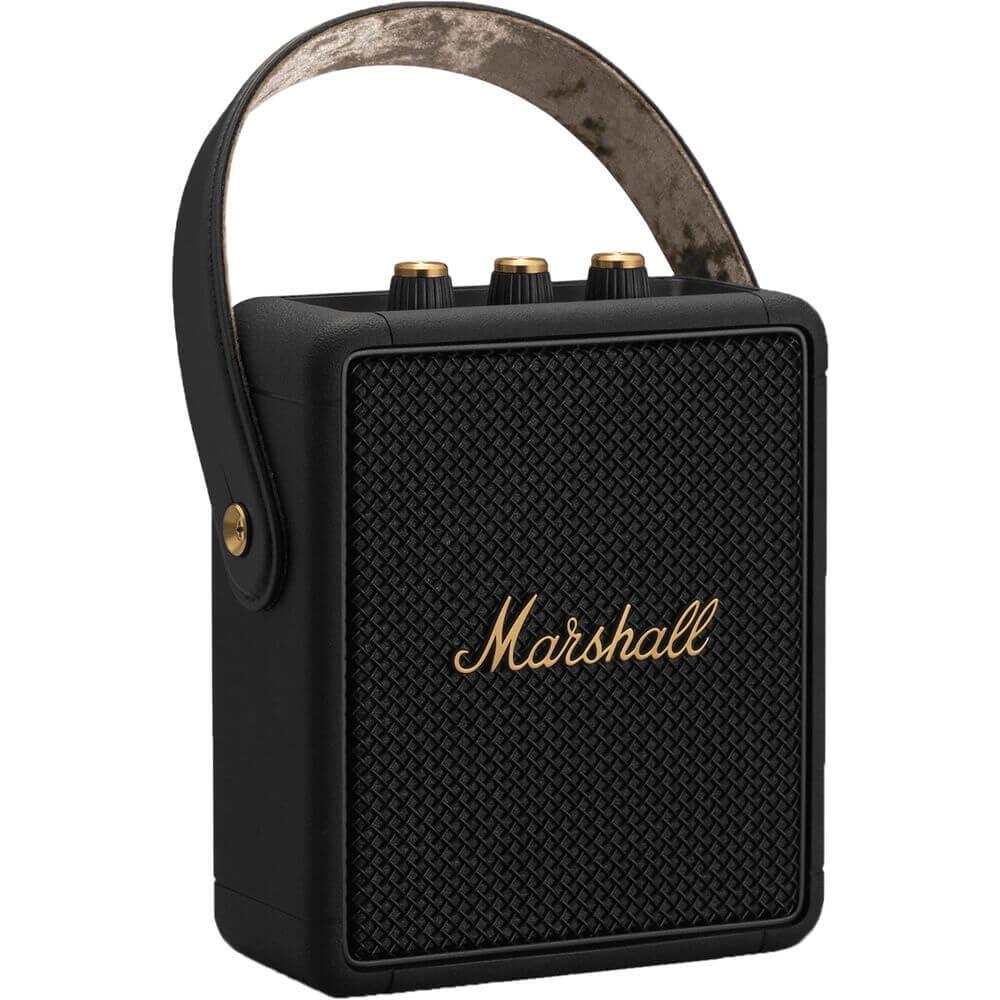

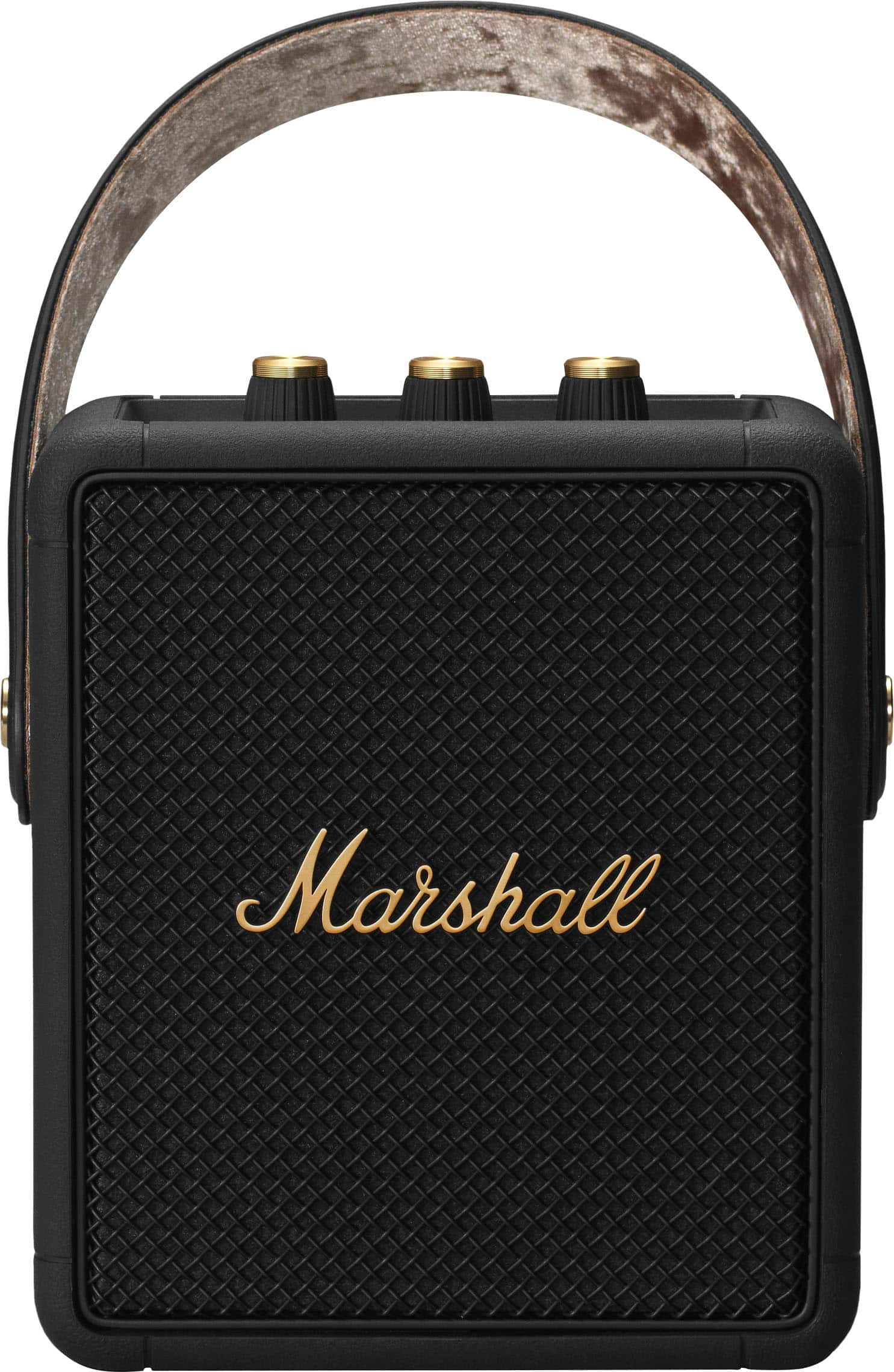
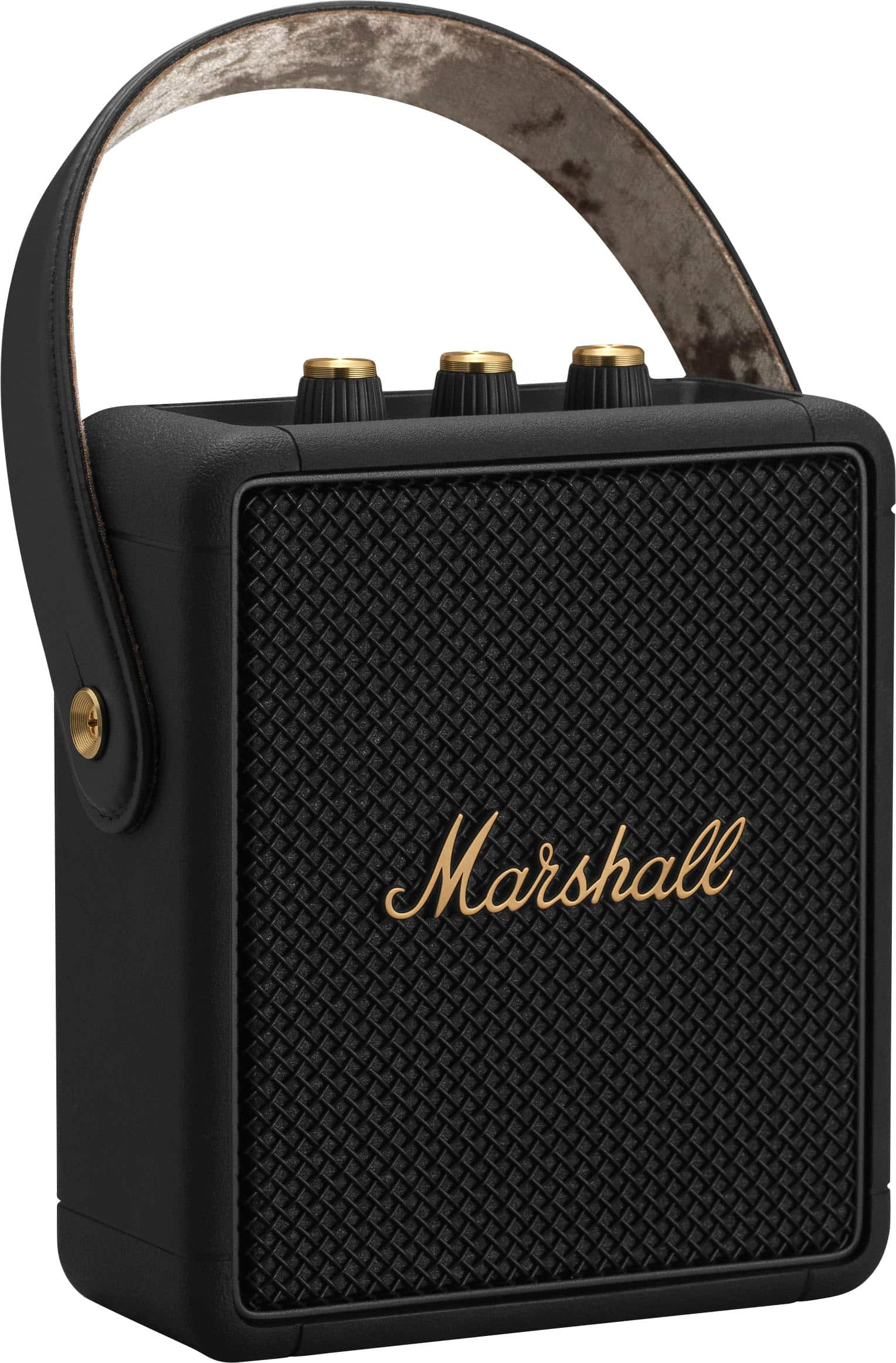
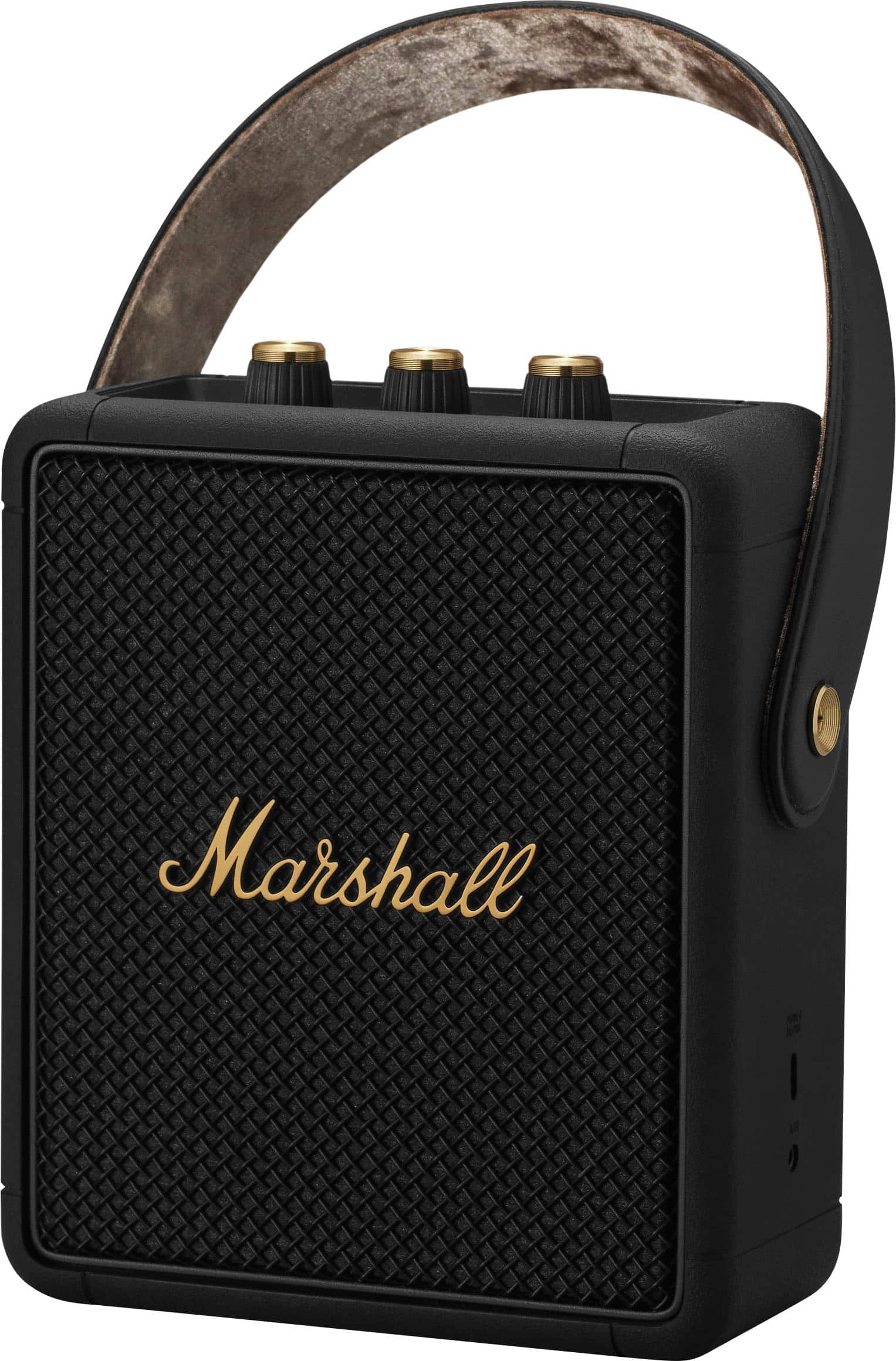
When it comes to portable Bluetooth speakers, two popular options stand out in 2024: the Ultimate Ears HYPERBOOM ($369) and the Marshall Stockwell II ($149). While both fall into the portable speaker category, they serve distinctly different purposes and user needs. Let's dive deep into what makes each unique and help you decide which might be right for you.
The portable speaker market has evolved significantly since these products were released. The HYPERBOOM launched in early 2020, representing Ultimate Ears' entry into the larger party speaker segment. The Stockwell II, released in 2019, continued Marshall's tradition of combining classic amp styling with modern audio technology.
Since their releases, we've seen improvements in Bluetooth technology, battery efficiency, and sound processing. Both speakers remain competitive today, though in different ways. The HYPERBOOM's adaptive EQ technology was ahead of its time, while the Stockwell II's quick-charging capability set new standards for portable audio.
The HYPERBOOM employs a sophisticated speaker array: two 4.5-inch woofers, two 1-inch tweeters, and two passive radiators. This configuration creates what audio engineers call a "balanced acoustic load," meaning the speaker can produce deep bass without distortion while maintaining clarity in higher frequencies.
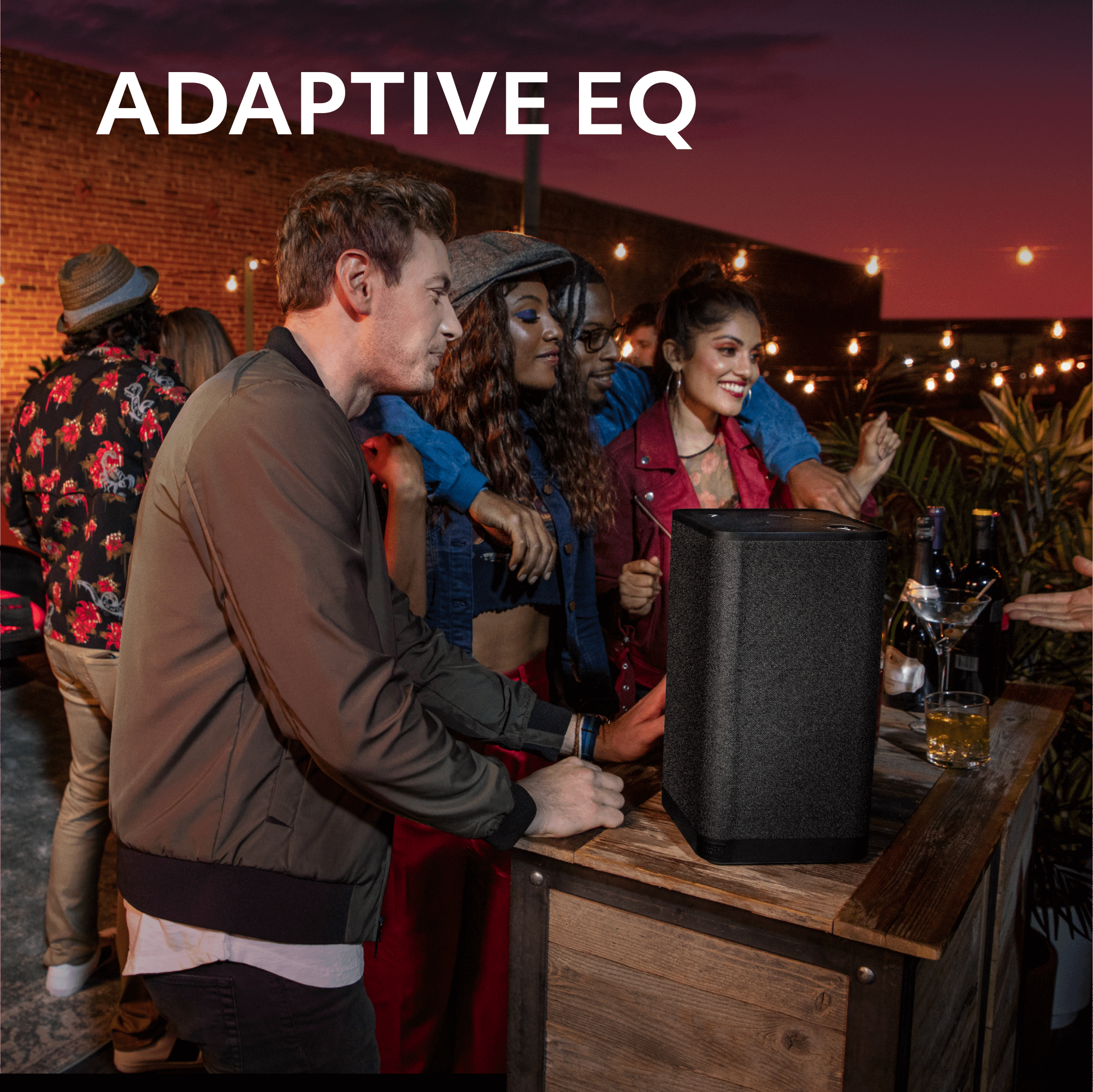
The adaptive EQ (equalization) feature is particularly impressive. Using built-in microphones, it continuously analyzes the acoustic environment and adjusts the sound profile accordingly. If you move the speaker from an open outdoor space to a small room, it automatically compensates for the change in acoustics.
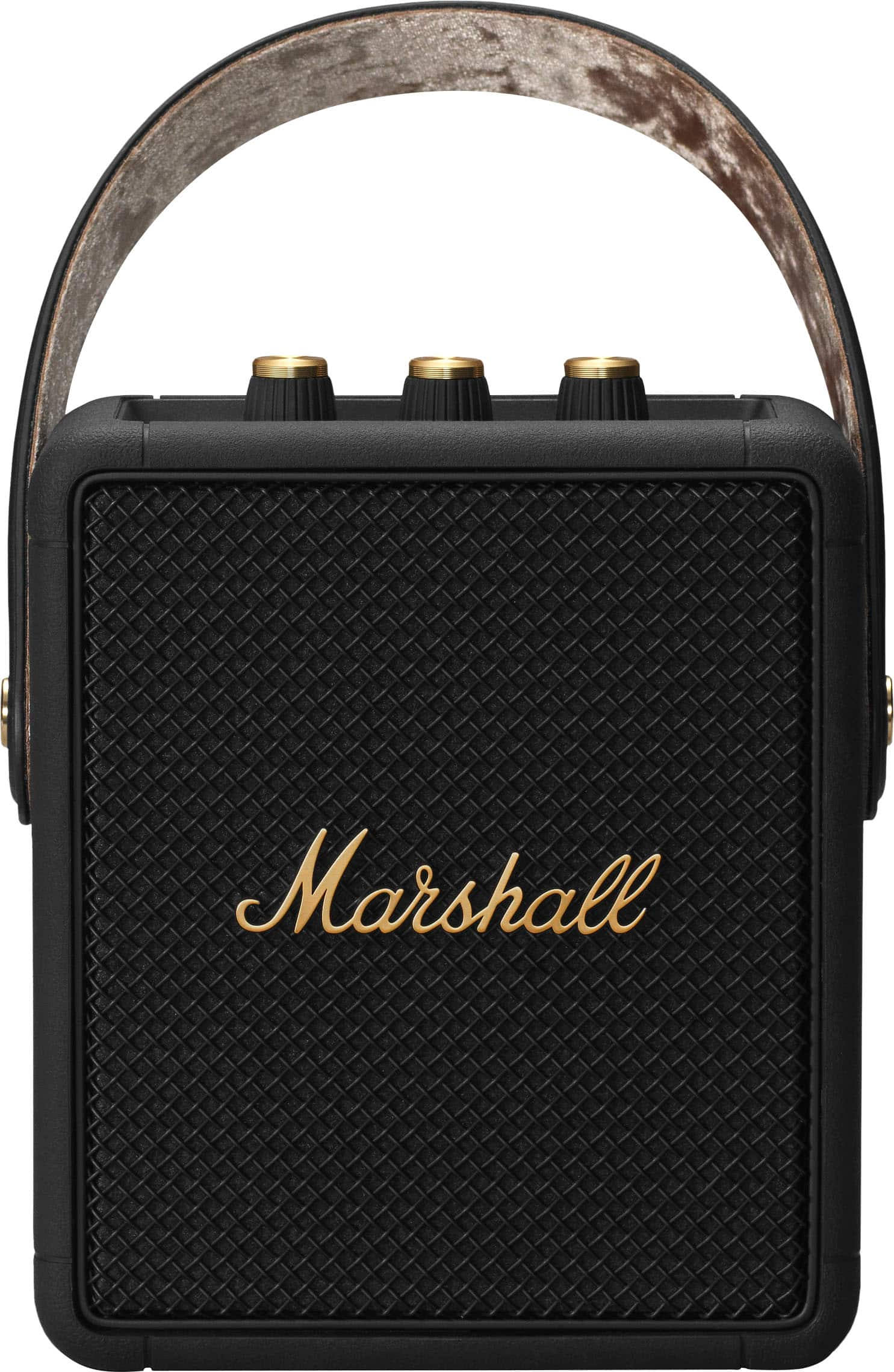
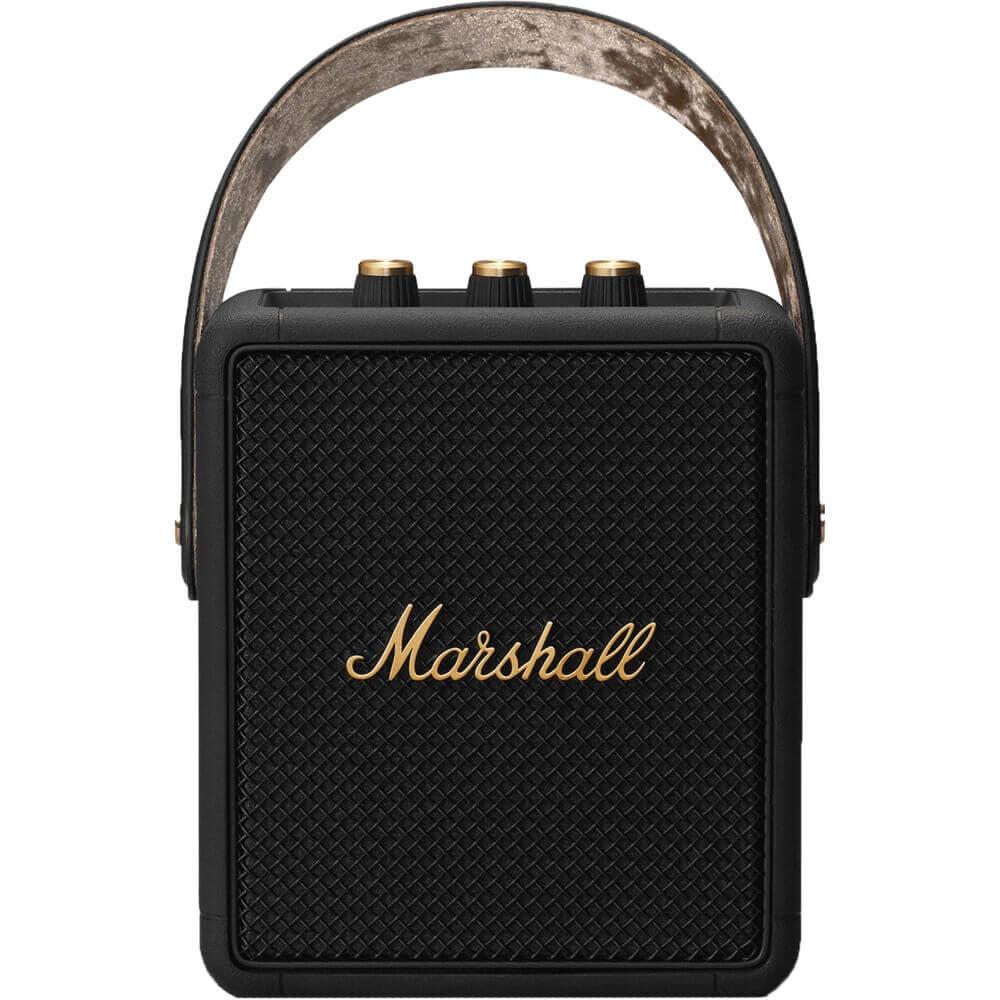
The Stockwell II takes a different approach, using a more compact three-driver system: one 10W woofer and two 5W tweeters. While this doesn't match the HYPERBOOM's raw power, Marshall's engineers implemented something called "True Stereophonic" - a multi-directional sound system that creates an impressively wide soundstage for such a small speaker.
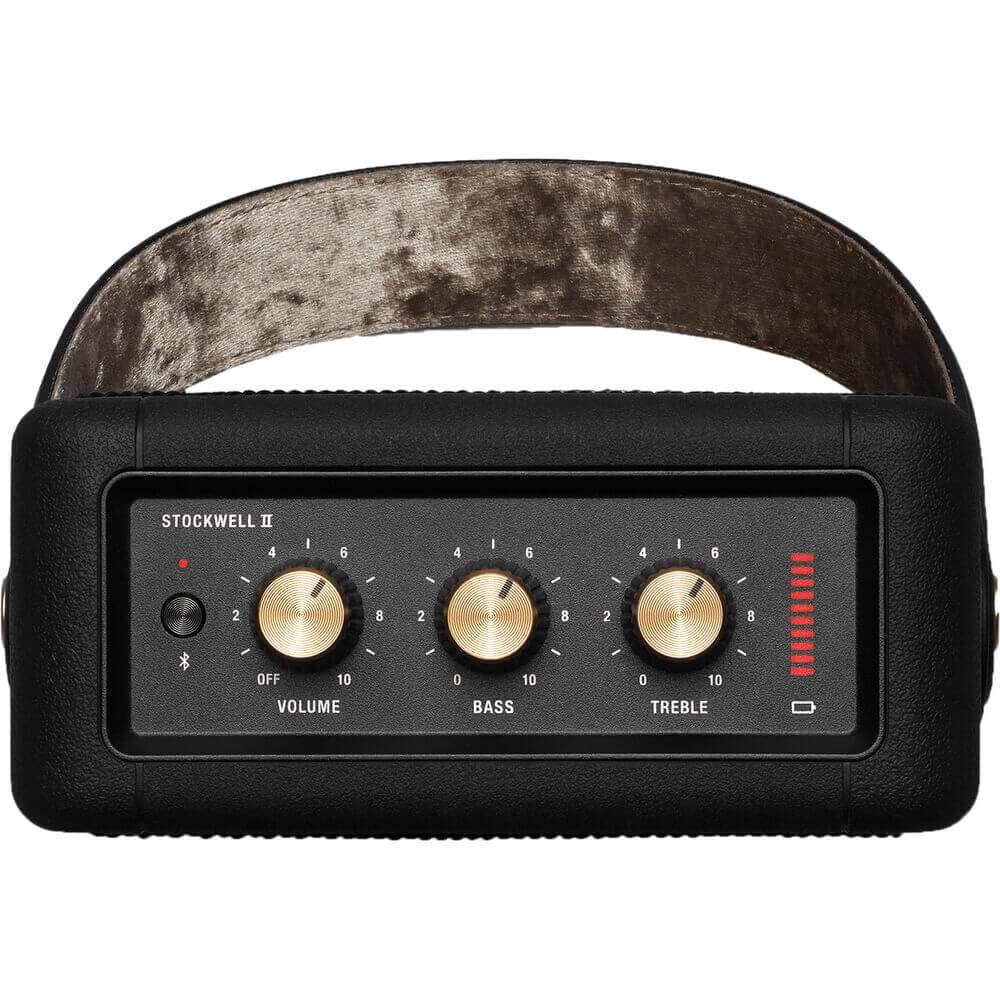
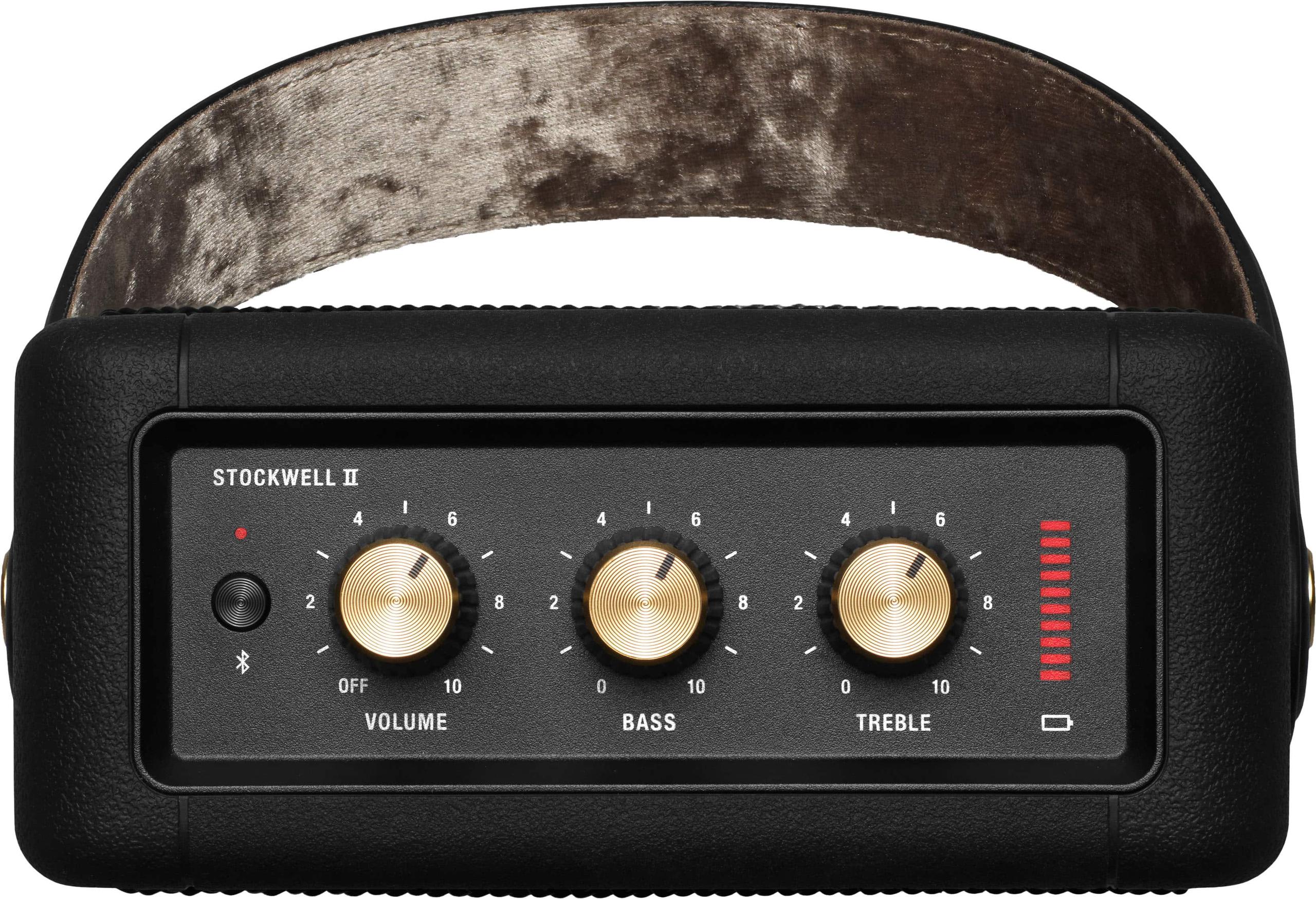
The manual bass and treble controls, while seemingly old-school, actually provide excellent fine-tuning capability. I've found these physical knobs more intuitive than app-based EQ controls, especially during outdoor use.
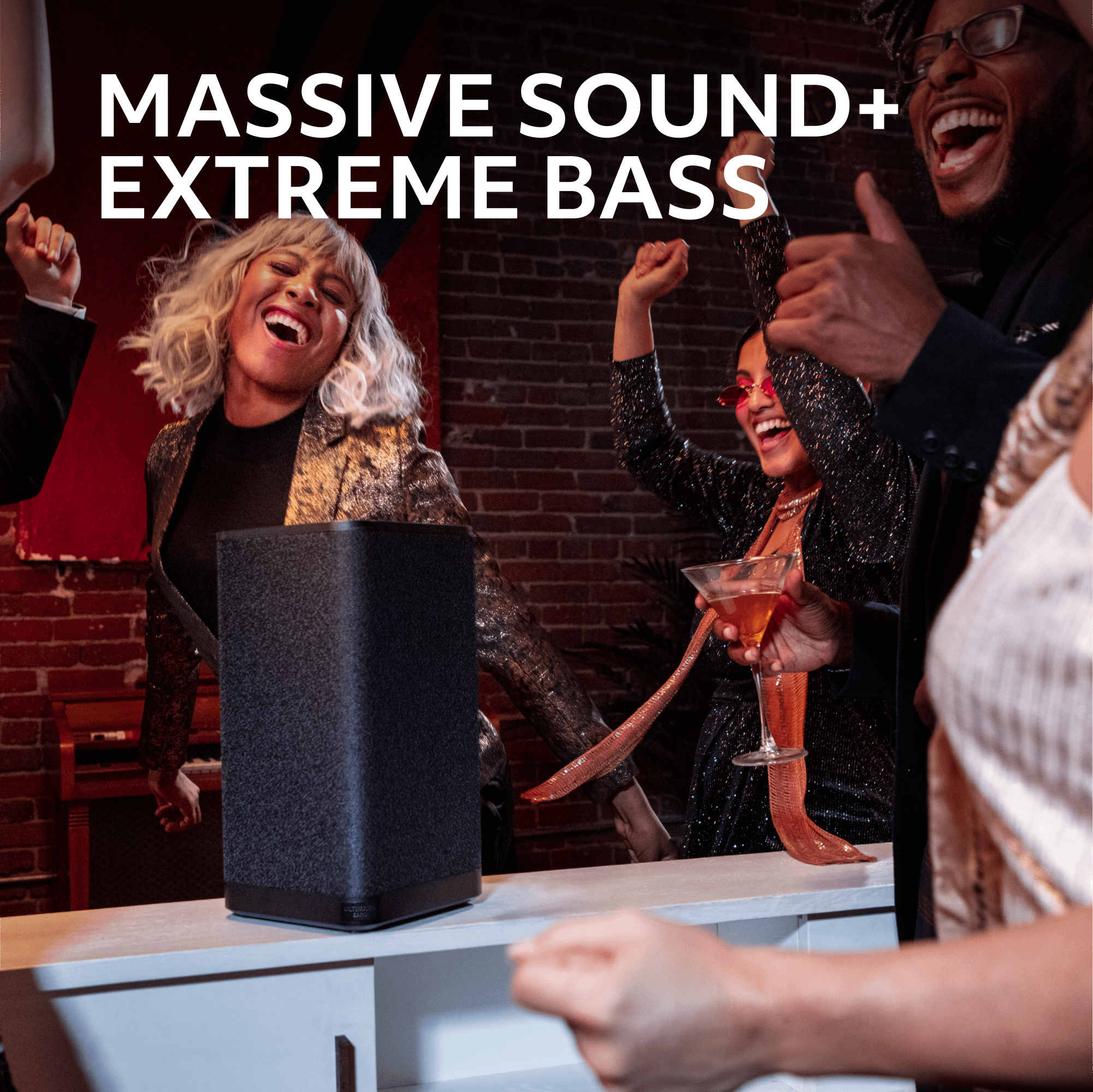
The HYPERBOOM excels in large spaces. With 229 watts of power, it can easily fill a backyard or large room with clean, powerful sound. I've tested it at outdoor gatherings of 100+ people, and it maintained clarity even at high volumes.
The Stockwell II, while significantly less powerful at 20 watts, performs surprisingly well in its intended use case. It's perfect for hotel rooms, small gatherings, or personal listening. The sound stays clear up to about 80% volume, though you'll notice some compression at maximum levels.
The HYPERBOOM's size (14.33 x 7.5 x 7.5 inches) and weight (5.9 kg) make it less portable than traditional Bluetooth speakers. However, the built-in carrying strap makes it manageable for short distances. Think of it as "portable enough" rather than truly portable.
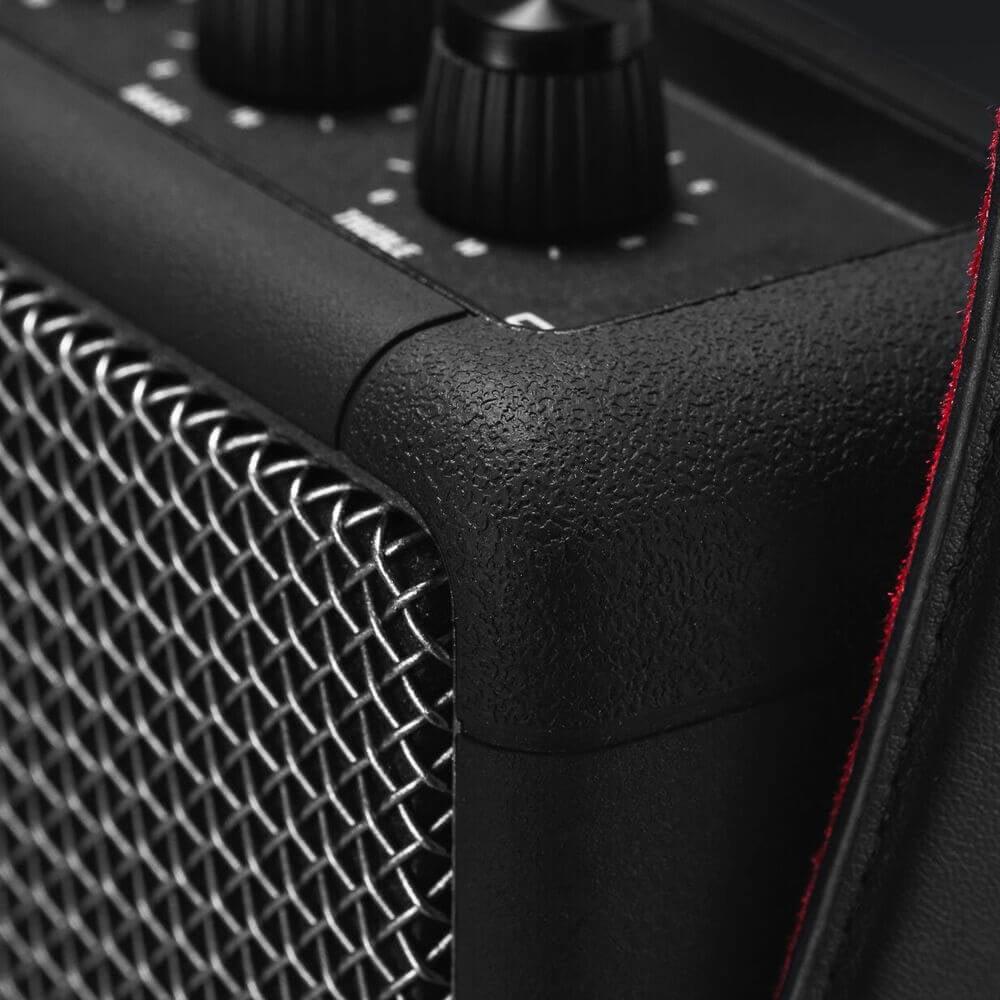
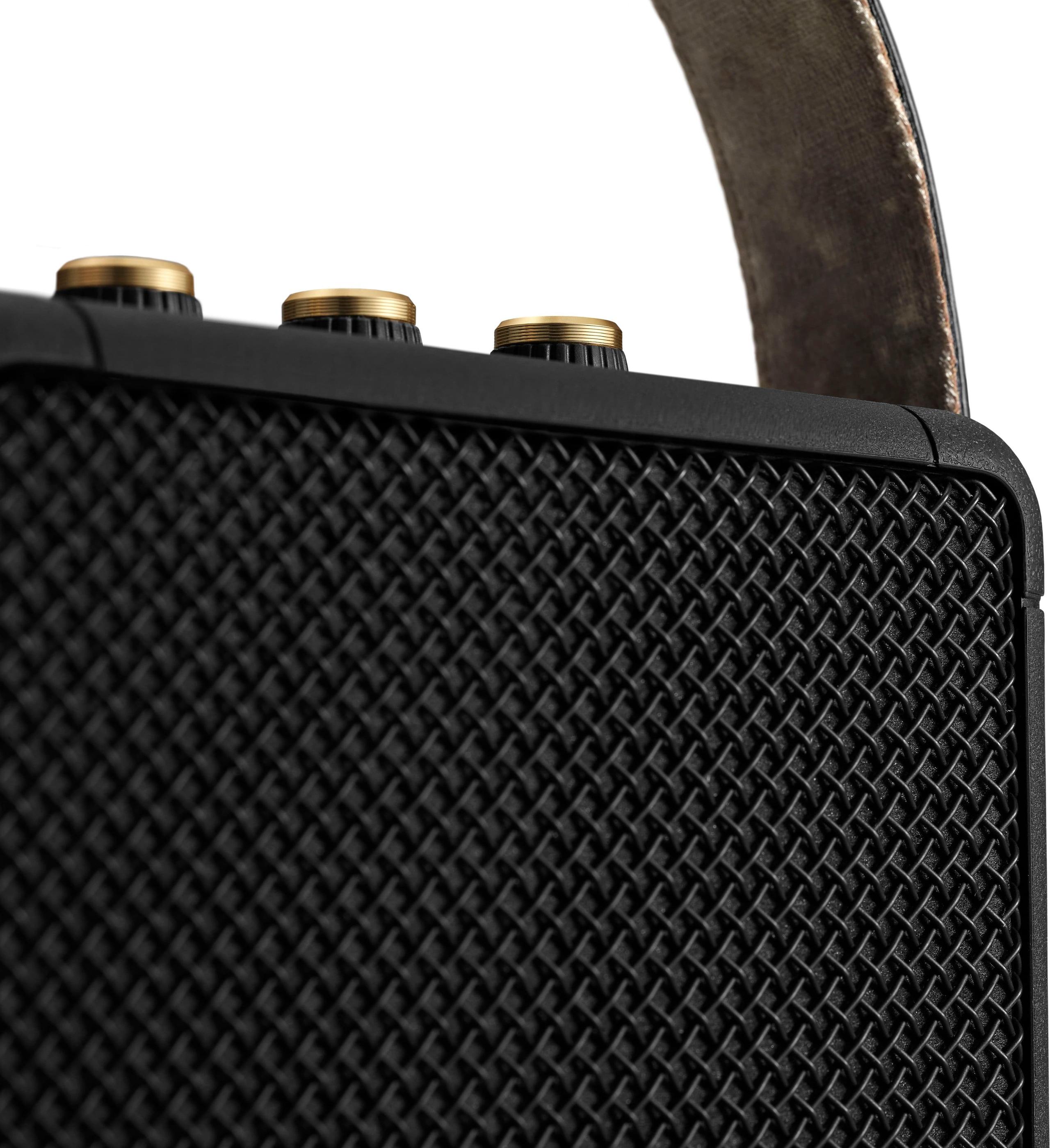
The Stockwell II shines in mobility. At just 1.38 kg and 7.09 x 6.34 x 2.76 inches, it's genuinely portable. The retro Marshall amp design isn't just aesthetic - the durable metal grille and silicone exterior provide real protection.
Both speakers offer impressive battery life:
The quick-charging feature of the Stockwell II is particularly useful for travelers or those who frequently forget to charge their devices.
The HYPERBOOM at $369 represents a significant investment, but it's competitive when compared to other large-format portable speakers. The sound quality, volume capability, and feature set justify the price for users who need a powerful outdoor or party speaker.
The Stockwell II at $149 offers excellent value for its target use case. The build quality, sound performance, and portability make it a strong contender in the personal portable speaker category.
Both speakers excel in their intended roles. The HYPERBOOM is a powerful party speaker that can handle large spaces and outdoor events, while the Stockwell II is a refined personal audio solution that prioritizes portability and style.
For home theater use, the HYPERBOOM's optical input makes it a viable option as a soundbar alternative, particularly in smaller rooms. The Stockwell II, while not designed for this purpose, can serve as a decent TV speaker through its aux input, though this isn't its strongest application.
Consider your primary use case carefully - the best choice depends entirely on how you plan to use the speaker most often. If you're still unsure, think about where you'll use it most frequently and whether portability or power is more important to your needs.
| Ultimate Ears HYPERBOOM ($369) | Marshall Stockwell II ($149) |
|---|---|
| Power Output - Determines maximum volume and sound quality at high levels | |
| 229W total (powerful enough for outdoor parties) | 20W total (suitable for small gatherings) |
| Physical Size - Impacts portability and bass response | |
| 14.33 x 7.5 x 7.5 inches, 5.9 kg (party speaker size) | 7.09 x 6.34 x 2.76 inches, 1.38 kg (truly portable) |
| Battery Life - Critical for extended use without charging | |
| 24 hours, 2.6 hour charging time | 20 hours, quick charge (6 hours from 20 min) |
| Driver Configuration - Affects sound quality and stereo separation | |
| 2x 4.5" woofers, 2x 1" tweeters, 2x passive radiators | 1x 10W woofer, 2x 5W tweeters |
| Frequency Response - Range of bass to treble reproduction | |
| 45 Hz - 20 kHz (deeper bass extension) | 60 Hz - 20 kHz (less low-end reach) |
| Water Resistance - Important for outdoor use | |
| IPX4 (splash resistant) | IPX4 (splash resistant) |
| Connectivity Options - Flexibility for different audio sources | |
| 2x Bluetooth, Aux, Optical, USB charging port | Bluetooth 5.0, Aux input |
| Sound Customization - Ability to adjust audio to taste | |
| App-based EQ + Adaptive EQ technology | Physical bass and treble knobs |
| Special Features - Additional functionality beyond basic audio | |
| PartyUp speaker linking, adaptive EQ, multiple device connection | Multi-host functionality, quick charge, classic design |
| Bluetooth Range - Distance from source device | |
| 45 meters (150 feet) | 30 feet (10 meters) |
| Primary Use Case - Best suited for these scenarios | |
| Large gatherings, outdoor events, home parties | Personal listening, travel, small gatherings |
The Ultimate Ears HYPERBOOM ($369) is significantly better for outdoor parties due to its 229W power output and larger drivers. The Marshall Stockwell II ($149) is designed for personal listening and small gatherings, lacking the volume needed for large outdoor events.
The HYPERBOOM offers 24 hours of playback while the Stockwell II provides 20 hours. However, the Stockwell II features quick charging (6 hours from 20 minutes), while the HYPERBOOM takes 2.6 hours for a full charge.
The HYPERBOOM delivers superior overall sound quality with deeper bass (45Hz vs 60Hz) and more powerful drivers. The Stockwell II offers good sound for its size but can't match the HYPERBOOM's audio performance.
If you need a speaker for large gatherings or outdoor events, the HYPERBOOM justifies its higher price. For personal use or small groups, the Stockwell II offers better value.
The Stockwell II is significantly more portable at 1.38kg versus the HYPERBOOM's 5.9kg. The Stockwell II's compact size makes it ideal for travel, while the HYPERBOOM is more of a transportable party speaker.
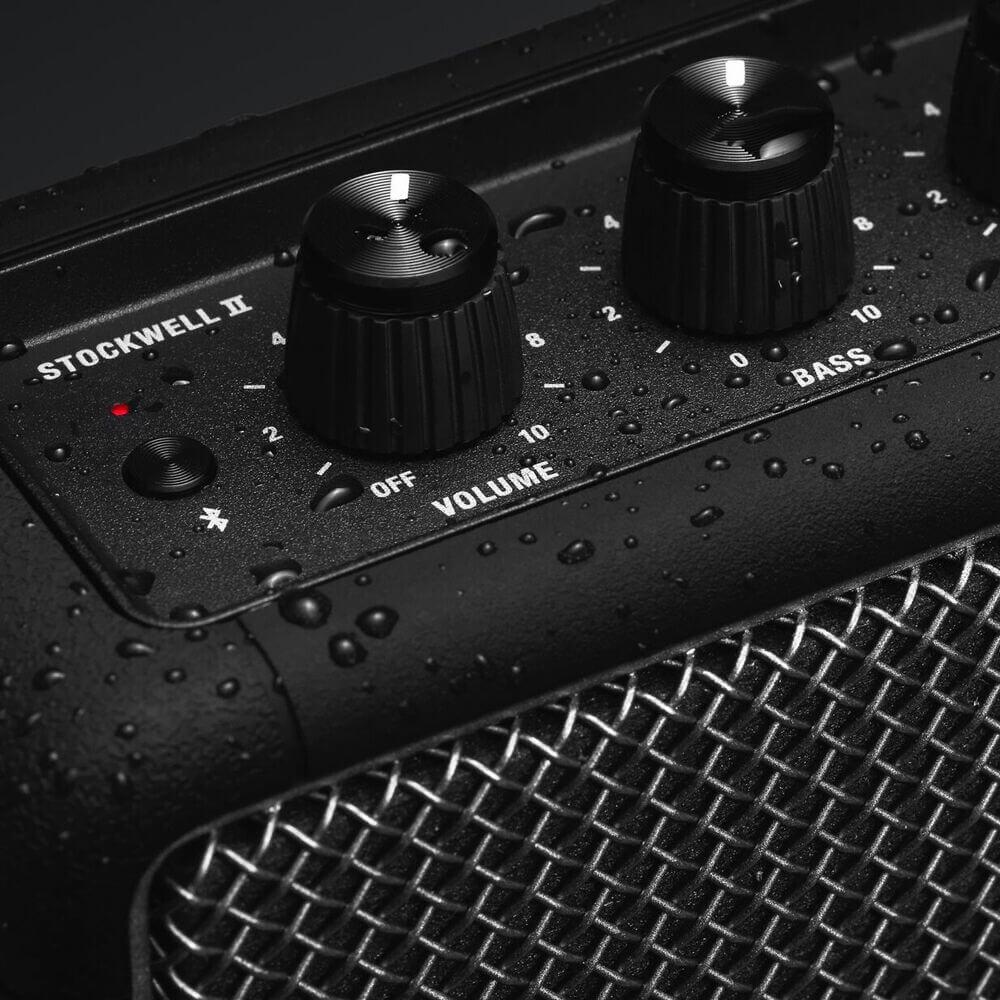
Both speakers have IPX4 water resistance ratings, meaning they can handle splashes but shouldn't be exposed to heavy rain or submersion.
The HYPERBOOM offers better Bluetooth range (45 meters) and can connect to multiple devices simultaneously. The Stockwell II has a standard 30-foot range with multi-host functionality for two devices.
Yes, both the HYPERBOOM and Stockwell II work with any Bluetooth-enabled device, including phones, tablets, and laptops.
Both work well indoors, but the HYPERBOOM might be oversized for small rooms. The Stockwell II is better suited for typical indoor spaces, while the HYPERBOOM excels in larger indoor areas.
The HYPERBOOM offers app-based EQ control and adaptive EQ technology, while the Stockwell II features physical bass and treble control knobs.
Both speakers are well-built, but the Stockwell II's simpler design may offer better long-term durability. The HYPERBOOM has more complex electronics but includes a robust warranty.
The HYPERBOOM can connect to other Ultimate Ears speakers through the PartyUp feature. The Stockwell II doesn't offer speaker linking capabilities.
We've done our best to create useful and informative comparisons to help you decide what product to buy. Our research uses advanced automated methods to create this comparison and perfection is not possible - please contact us for corrections or questions. These are the sites we've researched in the creation of this article: techradar.com - ultimateears.com - youtube.com - youtube.com - rtings.com - provantage.com - target.com - forum.mygolfspy.com - order.staplestechnologysolutions.com - youtube.com - publicsector.shidirect.com - ultimateears.com - bestbuy.com - stuff.tv - idownloadblog.com - stereoguide.com - kendallgiles.com - termagoods.com - aplaze.com - manua.ls - youtube.com - sg.tcacoustic.asia - marshall.com - youtube.com

Privacy Policy
Terms and Conditions - Affiliate Policy
Home Security
© Copyright 2008-2026.
11816 Inwood Rd #1211, Dallas, TX 75244